
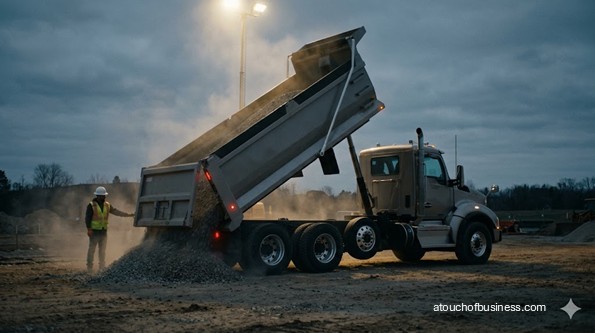
Startup Basics for a Dump Truck Company Explained
A dump truck business provides local hauling for loose bulk materials and jobsite debris. You may haul gravel, sand, crushed stone, topsoil, fill dirt, asphalt millings, excavation spoil, or construction and demolition debris when the material is allowed.
This is a transportation business first. The truck matters, but so do routing, safety, insurance, dispatch flow, legal weight, permits, customer timing, and payment paperwork.
If you’re new to business ownership, it helps to understand the broader startup process. Then bring that process back to the specific needs of dump truck hauling.
Decide if a Dump Truck Business Fits You
First, ask whether this business fits your life, your skills, and your risk tolerance.
You may deal with early mornings, weather delays, tight jobsite timing, traffic, fuel costs, repairs, insurance, slow payment, and equipment downtime.
Don’t start only because you want to escape a job, buy a truck, or call yourself an owner. You need a real interest in the business and a clear view of what the daily work involves.
A good fit usually includes:
- Comfort around construction sites, quarries, landfills, and supplier yards.
- Patience with delays, loading times, and route changes.
- Strong attention to records, tickets, permits, and maintenance.
- Respect for safety around backing, dumping, overhead lines, and unstable ground.
- Enough financial preparation to handle repairs, fuel, insurance, and slow payments.
A dump truck business also affects your household. If your savings, credit, schedule, or family support are weak, slow down. This is not a low-risk way to test business ownership.
Talk With Non-Competing Owners
Next, speak with dump truck owners who are outside your market. Choose owners in another city, county, or service area so you’re not asking direct competitors for help.
Prepare your questions before you call. Experienced owners can explain things that don’t show up on a simple checklist.
Ask about:
- Which truck setup they’d choose again.
- Which loads they avoid.
- How they handle waiting time.
- Which accounts are hard to open.
- What surprised them about insurance.
- How often repairs interrupt their schedule.
- What new owners often forget before opening.
Those conversations matter because these owners have firsthand experience. Their path won’t match yours exactly, but their insight can help you spot problems before you spend money. A deeper look inside real businesses can also help you prepare better questions.
Choose Your Dump Truck Business Model
Then define the exact model. For this guide, the focus is a route and delivery-based dump truck business. That means your operation depends on pickup points, drop-off points, timing, legal weight, route distance, and fast proof that the delivery happened.
In plain terms: route-based hauling means the truck earns money by moving loads between set points, such as a quarry, jobsite, yard, transfer station, or landfill.
Common startup service options include:
- Gravel, sand, crushed stone, road base, or topsoil delivery.
- Fill dirt and excavation spoil hauling.
- Asphalt millings or paving support.
- Construction site hauling for contractors.
- Construction and demolition debris hauling, when the material and disposal rules allow it.
Be careful with unclear cargo. Clean aggregate is different from contaminated soil. Construction debris is different from hazardous waste. Don’t accept material that changes your permit, insurance, disposal, or safety obligations unless you’ve verified the rules first.
You also need to choose your entry path. Starting from scratch can work if you can secure the truck, insurance, credentials, parking, supplier accounts, and first jobs. Buying an existing dump truck business may help only if the truck, records, customer relationships, accounts, and compliance status are clean.
Franchise options are not the usual path for a classic dump truck business. They may appear in related hauling or debris services, but compare the support, cost, control, and risk before signing anything.
Validate Local Demand Before You Buy
Before buying a truck, confirm that your area has enough demand for the type of hauling you plan to provide. A dump truck business depends on local construction activity, supplier access, disposal sites, and route efficiency.
Don’t assume that busy roads mean good demand. Contractors may already own trucks, use established haulers, or rely on brokers.
Check for signs such as:
- New building permits and active development.
- Roadwork, utility jobs, excavation, and paving projects.
- Nearby quarries, gravel pits, asphalt plants, and landscape yards.
- Landfills, transfer stations, and construction debris facilities.
- Independent haulers already serving the same routes.
Also review local conditions before major spending. A stronger view of local supply and demand can help you decide whether your market can support another hauler.
The goal isn’t to run a full marketing campaign. The goal is to answer a go-or-no-go question before you take on truck payments, insurance, and repair risk.
Plan Your Route and Delivery Flow
A dump truck business rises or falls on route details. Your pricing, fuel use, daily capacity, and customer reliability all depend on how each load moves.
In plain terms: a load cycle is the full trip from loading to delivery, dumping, ticket collection, and return for the next load.
Map your likely routes before launch. Include:
- Quarry or supplier yard to jobsite.
- Jobsite to landfill or transfer station.
- Asphalt plant to paving project.
- Jobsite to staging yard.
- Return route for the next load.
Next, estimate each part of the cycle. Count loading time, drive time, dump time, scale time, jobsite waiting time, and empty return miles.
In plain terms: deadhead miles are miles driven without a paid load. They still burn fuel, use tires, and take driver time.
Route planning also affects dispatch. You need a clear way to record the job, confirm the pickup point, reach the site contact, prove the delivery, save the load ticket, and invoice from the correct information.
Opening before this flow is tested can create missed delivery windows, lost tickets, weak billing, fuel overruns, and customer frustration.
Business Plan
Your business plan should turn the dump truck startup path into practical decisions. Keep it focused on launch, not long-term expansion.
Use the plan to organize what must be true before you open. A helpful business plan for this type of startup should be built around the truck, routes, compliance, pricing, records, and opening readiness.
Include:
- Service choices: list the materials you’ll haul and the loads you’ll avoid.
- Route area: define your service radius, typical pickup points, and common dump sites.
- Truck choice: note the truck type, axle setup, payload assumptions, and legal weight limits.
- Driver plan: decide whether you’ll drive or hire a driver before opening.
- Compliance plan: list the registrations, permits, CDL items, testing rules, and records you must verify.
- Parking plan: confirm where the truck will be parked legally.
- Vendor plan: prepare quarry, supplier, landfill, repair, tire, fuel, and towing contacts.
- Pricing plan: decide whether jobs will be hourly, per load, per ton, per mile, or flat route quotes.
- Cash reserve: plan for fuel, repairs, insurance, tires, and payment delays.
- Opening checklist: define what must be ready before the first paid load.
This plan should help you avoid guessing. If you can’t fill in a section, that’s a signal to verify more before spending.
Set Up the Legal and Compliance Base
A dump truck business may trigger several transportation rules. The exact requirements depend on where you operate, what you haul, vehicle weight, whether you cross state lines, and whether you haul for compensation.
First, handle basic business setup. Choose a business structure, register the business if required, apply for an Employer Identification Number when needed, and register an assumed name if your public name differs from the legal name.
Then move into motor-carrier questions. Verify whether you need:
- A USDOT Number.
- FMCSA operating authority or an MC number.
- Form BOC-3 process agent filing.
- Federal insurance filings.
- Unified Carrier Registration.
- State intrastate motor-carrier authority.
- Commercial registration, declared weight, or special plates.
In plain terms: operating authority is legal permission for certain for-hire interstate trucking operations. Don’t assume it applies or doesn’t apply. Verify your exact setup.
Some rules are federal. Others vary by U.S. jurisdiction. Your state may have separate rules for intrastate for-hire hauling, commercial plates, oversize or overweight loads, fuel tax, and employer accounts.
City and county rules also matter. Check business licenses, zoning, home-occupation rules, commercial truck parking, certificate of occupancy for a yard or shop, and disposal-related permits if you haul debris.
Ask these questions before opening:
- Will the truck stay within one state, or will it cross state lines?
- Will you haul for pay, or only haul your own materials?
- What exact materials will you haul?
- Can you legally park the truck at the proposed address?
- Does your state require an intrastate carrier permit for this service?
- Does debris hauling require a waste-hauler permit, landfill account, or special decal?
Keep the legal setup practical. Use the federal agency, state motor-carrier office, state revenue department, local zoning office, building department, and disposal facility to verify what applies to your situation.
Prepare CDL, Driver, and Safety Systems
Most dump truck startups involve commercial vehicles that require careful driver planning. Don’t leave this until the truck is ready to roll.
Check whether you or your driver needs a commercial driver’s license. A straight dump truck often points toward a Class B CDL, while trailer combinations may point toward Class A. Air brakes, gross vehicle weight, trailer rating, and endorsements can change the answer.
First-time Class A or Class B CDL applicants may need entry-level driver training before testing. Certain first-time endorsements may also require training.
If you use covered commercial drivers, set up drug and alcohol testing before launch. This can also apply to an owner-operator who employs himself or herself as a driver under the covered rules.
You may also need:
- Driver qualification files.
- Medical certification records.
- Motor vehicle record checks.
- Drug and Alcohol Clearinghouse queries.
- Hours-of-service records.
- An electronic logging device, if required.
- Driver vehicle inspection reports.
- Maintenance records.
Safety planning should match dump truck risks. Prepare procedures for backing, using spotters, tarping, watching overhead lines, checking tailgates, dumping on stable ground, and supporting the raised dump body during inspection or maintenance.
Choose and Inspect Your Dump Truck
Your truck choice affects startup cost, route limits, payload, maintenance, insurance, and the types of jobs you can accept. Don’t buy on price alone.
Common choices include:
- Single-axle dump truck: smaller jobs, lighter loads, and tighter sites.
- Tandem-axle dump truck: common for local construction hauling.
- Tri-axle or quad-axle dump truck: higher payload where route and weight rules allow it.
- Dump trailer or end dump: a different setup that can change licensing, backing, dumping, and site access.
Before buying, match the truck to your likely material, route distance, site access, loading equipment, and legal weight limits.
Have a heavy-truck mechanic inspect the vehicle. Review the title, lien status, Vehicle Identification Number, mileage, engine hours, maintenance records, tires, brakes, suspension, steering, hydraulic system, power take-off, dump body, tailgate, hoist, frame, lights, mirrors, backup alarm, tarp system, and emissions label where required.
Also check federal and state weight rules. On the federal Interstate System, gross vehicle weight, single axle weight, tandem axle weight, and bridge formula limits can affect legal operation. State, local, and route rules may be stricter.
If you plan to haul overweight or oversize loads, verify permit rules before taking those jobs.
Secure Parking, Supplier, and Disposal Accounts
A route-based dump truck business needs more than a truck. You also need a legal base, supplier access, disposal options, fuel support, and repair backup.
First, confirm where the truck will sit when it’s not on the road. A home office may be possible, but parking a commercial truck at home can be limited by zoning, home-occupation rules, homeowner association rules, noise restrictions, or local vehicle limits.
If you lease a yard or shop, check:
- Zoning.
- Lease permission for truck parking.
- Certificate of occupancy needs.
- Overnight parking rules.
- Repair and maintenance limits.
- Noise and stormwater rules.
Next, set up accounts and contacts before opening. You may need:
- Quarry accounts.
- Sand and gravel pit contacts.
- Landscape supply yard accounts.
- Asphalt plant access, if applicable.
- Landfill or transfer station accounts.
- Construction and demolition debris facility access.
- Diesel repair shop contacts.
- Tire vendor support.
- Heavy towing or recovery contact.
- Fuel card setup.
Confirm each facility’s hours, load ticket process, scale ticket process, accepted material, prohibited material, dump fees, and account terms.
Set Pricing, Funding, Banking, and Insurance
Pricing a dump truck business starts with cost. You need to know what each load, route, and delay costs before you quote.
Common pricing methods include hourly, per-load, per-ton, per-mile, and flat route quotes. A fuel surcharge may also apply when diesel costs rise above a baseline.
Build your pricing around:
- Truck payment or lease cost.
- Commercial insurance.
- Fuel.
- Maintenance reserve.
- Tires and wear items.
- Driver pay or owner draw.
- Permits, tolls, and registration.
- Scale fees and dump fees.
- Waiting time at jobsites.
- Deadhead miles.
- Payment delays.
This is where many new owners underprice jobs. A quote that covers fuel but ignores repairs, tires, waiting time, and empty return miles can create financial stress fast.
For more general guidance, review how to approach pricing decisions. Then adjust the thinking to fit dump truck routes, legal payload, load tickets, and disposal fees.
Funding options may include owner savings, equipment financing, a commercial truck loan, lease financing, an SBA-backed loan through a lender, a line of credit, or vendor credit from fuel, tire, or supplier accounts.
Open a business bank account before taking paid jobs. Keep business transactions separate from personal ones from the start. Set up bookkeeping categories for fuel, repairs, tires, insurance, truck payment, permits, tolls, dump fees, parts, and taxes.
Price out insurance early. Some filings are legally required for certain FMCSA-regulated for-hire carriers. Other coverage may be a risk management choice rather than a legal requirement.
Common coverage to discuss with an insurance professional may include commercial auto liability, physical damage, general liability, cargo coverage when needed, workers’ compensation when hiring, pollution liability for certain material exposure, and umbrella or excess liability.
Use a practical business insurance review to prepare questions. Then confirm what your operation, state, customers, lenders, and regulators require.
Prepare Forms, Records, and Job Paperwork
A dump truck business depends on tickets, records, and clean billing. Prepare the paperwork before the first customer job.
At minimum, prepare:
- Rate sheet.
- Quote template.
- Hauling agreement.
- Load ticket process.
- Scale ticket storage process.
- Invoice template.
- Payment terms.
- W-9.
- Insurance certificate request process.
- Customer credit application, if you extend credit.
- Maintenance record file.
- Driver vehicle inspection report process.
Documentation matters. If you charge by ton, a scale ticket supports the invoice. If you charge by load, a signed load ticket helps confirm the delivery. If the job includes disposal, the dump or transfer station paperwork may matter too.
Your dispatch flow should also be simple. Record who ordered the load, where it starts, where it goes, who the site contact is, what material is allowed, how tickets are handled, and how payment will be made.
Run a Test Route Before Opening
Before you take paid loads, run a full practice route. This test should show whether your dump truck business is ready in the real world, not just on paper.
Use the same steps you’d follow on a customer job:
- Inspect the truck.
- Confirm the route and site contact.
- Load at the supplier or yard.
- Weigh the truck if needed.
- Tarp or secure the load.
- Drive the route.
- Enter the jobsite safely.
- Dump in the correct area.
- Collect the ticket.
- Return and prepare the invoice.
Fix problems before opening. A test route may reveal slow loading, poor navigation, unclear site directions, ticket problems, higher-than-expected fuel use, or a weak invoice process.
This is also the right time to test phone communication, backup contacts, safety gear, and your plan for truck downtime.
Pre-Opening Checklist for a Dump Truck Business
Use this checklist as a final readiness review. Don’t open just because the truck is parked in the driveway.
Before launch, confirm that:
- You’ve checked owner fit, motivation, and household support.
- You’ve spoken with non-competing dump truck owners.
- Your hauling model, material types, and service area are clear.
- Local demand and competition have been reviewed.
- Business registration, name setup, EIN, and tax setup are complete as applicable.
- USDOT Number, operating authority, BOC-3, insurance filings, and Unified Carrier Registration have been checked where applicable.
- State intrastate carrier rules, commercial plates, IFTA, IRP, and overweight permit rules have been checked where applicable.
- CDL, driver training, drug testing, and Clearinghouse items are ready where required.
- Legal truck parking is confirmed.
- Certificate of occupancy has been checked if you use a yard, shop, or commercial base.
- The truck has passed a mechanical inspection.
- Truck registration, plates, decals, cab documents, insurance documents, and permits are ready.
- Supplier, quarry, landfill, transfer station, fuel, repair, tire, and towing contacts are set up.
- Safety gear and dump truck safety procedures are ready.
- Rate sheet, quote template, load tickets, scale ticket process, invoices, W-9, and payment terms are ready.
- A full test route has been completed.
If one item is missing, pause. A small gap before opening can become a costly problem during the first paid load.
Main Red Flags
Some warning signs should make you slow down before starting a dump truck business. These aren’t reasons to quit automatically—they’re signals to verify more before spending money.
- You want to buy the truck before checking local demand.
- You don’t know whether your operation is intrastate or interstate.
- You assume a commercial driver’s license isn’t needed.
- You haven’t priced insurance before buying the truck.
- The used truck has weak or missing maintenance records.
- The truck setup doesn’t match local payload, route, or axle rules.
- You don’t have legal parking.
- You plan to haul debris without checking waste and disposal rules.
- You plan to haul contaminated soil or hazardous material without special verification.
- No heavy-truck mechanic has inspected the vehicle.
- Your pricing ignores fuel, deadhead miles, waiting time, dump fees, repairs, and tires.
- You don’t have enough cash reserve for repairs and slow customer payment.
- Supplier, quarry, landfill, or transfer station accounts are not approved.
- Drug and alcohol testing setup is missing for covered commercial drivers.
- Driver records, inspection reports, or maintenance files are not ready.
- Your insurance doesn’t match the material or operation you plan to handle.
The biggest pattern is opening before the operation is stable. A dump truck business needs the truck, route, paperwork, safety process, and payment process to fit together.
Frequently Asked Questions
These questions focus on startup decisions for a dump truck business. Use them to check your plan before you buy, register, insure, or launch.
Is a Dump Truck Business Good for a First-Time Owner?
It can be, but only if you understand the risks. You’ll need to handle commercial vehicle rules, maintenance, insurance, local demand, legal weight, jobsite safety, pricing, and payment delays.
A first-time owner should talk with non-competing owners and price insurance before buying a truck.
What Should I Verify Before Buying a Dump Truck?
Verify local demand, legal parking, CDL needs, insurance cost, motor-carrier requirements, registration costs, truck condition, maintenance history, payload, axle setup, and route fit.
Also confirm that the truck can legally and safely handle the material you plan to haul.
Does a Dump Truck Business Need a USDOT Number?
It depends on the operation. A USDOT Number commonly applies to certain interstate commercial vehicles that meet weight, passenger, or hazardous-material thresholds.
Some states also require a USDOT Number for intrastate commercial vehicles. Check your exact route, vehicle, and state rules.
Does the Owner Need an MC Number?
An MC number may be needed if the business is an interstate for-hire motor carrier transporting regulated commodities.
Don’t guess. Verify the exact operation before accepting interstate loads.
What CDL Is Usually Needed for a Dump Truck?
The answer depends on the truck and combination. A straight dump truck may point toward a Class B CDL. A tractor-trailer or dump trailer setup may point toward Class A.
Air brakes, gross vehicle weight, trailer rating, and endorsements can change the requirement.
Are Entry-Level Driver Training Rules Relevant?
Yes, they may be. First-time Class A or Class B CDL applicants may need entry-level driver training before testing.
Certain first-time endorsements may also require training.
Does a One-Truck Owner-Operator Need Drug and Alcohol Testing?
It may apply if the owner-operator is a covered commercial driver under FMCSA drug and alcohol testing rules.
Check this before opening. A missing testing setup can stop the business from operating legally.
What Belongs in the Business Plan Before Launch?
Include material types, routes, truck choice, payload assumptions, service radius, compliance checks, CDL or driver setup, insurance, parking, supplier accounts, disposal accounts, pricing method, maintenance reserve, ticket process, invoicing, and opening readiness.
The plan should help you confirm whether the business is ready to operate.
Should I Start From Scratch or Buy an Existing Dump Truck Business?
Starting from scratch can work if you can secure the truck, insurance, credentials, legal parking, accounts, and working capital.
Buying may help only if the truck, records, customer relationships, accounts, contracts, and compliance status are verified.
Is Franchising Realistic for a Dump Truck Business?
Franchising isn’t the main path for a classic dump truck business. Some related hauling or debris-service models may offer franchises.
If you review one, compare the cost, support, control, obligations, and risk against an independent setup.
Can a Dump Truck Business Operate From Home?
Maybe. A home office may be possible, but parking a commercial dump truck at home may be restricted.
Check zoning, home-occupation rules, homeowner association rules, noise limits, and commercial vehicle parking rules before using your home as the base.
What Materials Should a New Owner Avoid at First?
Avoid hazardous materials, hazardous waste, contaminated soil, asbestos-containing material, and unclear construction debris until all permits, disposal rules, insurance, and training requirements are verified.
Clean aggregate and regulated material are not the same thing.
How Should I Price Dump Truck Jobs?
Start with your real costs. Include fuel, driver time, insurance, maintenance, truck payment, permits, tires, tolls, dump fees, waiting time, deadhead miles, and legal payload.
Then choose the pricing method that fits the job—hourly, per load, per ton, per mile, or a flat route quote.
What Records Should Be Ready Before Opening?
Prepare driver files, inspection reports, maintenance records, insurance certificates, authority documents, permits, load tickets, scale tickets, invoices, W-9, fuel receipts, route notes, and drug or alcohol testing records when required.
Good records help you operate legally, bill correctly, and answer questions from customers, agencies, or insurers.
What Is the Biggest Startup Mistake?
The biggest mistake is buying a truck before confirming the full setup. You need to know whether you can park it, insure it, credential it, maintain it, load it, dump legally, price routes, and collect payment fast enough.
If those pieces aren’t ready, the truck can become a financial burden before the business opens.
Tips From Dump Truck Owners and Operators
One of the best ways to understand a dump truck business is to hear from people who have already worked in the industry. Their stories can help you think through truck choice, routing, subcontracting, maintenance, pricing, safety, and the reality of building the business from the ground up.
Use the resources below as added insight, then compare their advice with your own local rules, costs, market demand, and startup plan.
- Dump Trucks Are the Best for One Reason — Buddy Fab, CEO of FAB Trucking, shares lessons from years in the dump truck niche, including buying trucks, brokering, subcontracting, federal contracting, and common myths about the business.
- The Keys to Jumpstarting Your Dump Truck Company — Perry Jones, known as The Country CEO, discusses how he got started, what new dump truck entrepreneurs should think about, and why equipment, client relationships, and persistence matter.
- Which Loads Make Dump Truck Owners the Most Money? — Sean Link of Link Global Transportation shares practical insight on dump truck load types, business decisions, and what can affect returns in the hauling business.
- From End Dump to Pneumatic With John Gray — Owner-operator John Gray talks about end dump trucking, route planning, jobsite realities, equipment fit, safety habits, and lessons from years in trucking.
- Crucial Facts About Making Money With Dump Trucks — A Steel & Dirt Podcast episode from Equipment & Contracting focused on dump truck income realities, business decisions, and what new owners should understand before getting started.
Related Articles
- How To Start a Trucking Company
- How To Start a Dumpster Rental Business
- How To Start a Garbage Pickup Service
- How To Start a Tow Truck Service
- How To Start a Demolition Business
- How To Start a Heavy Equipment Rental Business
Sources:
- FMCSA: USDOT Number Need, USDOT Number Criteria, Get Operating Authority, Operating Authority Types, BOC-3 Filing, Insurance Filing Requirements, New Entrant Program, Drug Alcohol Testing, Drug Alcohol Clearinghouse, ELD Fact Sheet
- FMCSA Training Provider Registry: ELDT Applicability
- IRS: Get EIN, Form 2290 Instructions, Trucking Tax Center
- SBA: Register Your Business, Licenses and Permits, Business Location Zoning
- OSHA: Motor Vehicles Standard
- NIOSH: Dump Truck Safety, Backing Vehicle Safety
- FHWA: Oversize Overweight Permits, Bridge Formula Weights
- UCR Plan: UCR Registration Check, UCR FAQs
- U.S. Census Bureau: Building Permits Survey, New Residential Construction
- USGS: Sand Gravel Statistics, Crushed Stone Statistics
- EPA: C&D Materials Management, C&D Debris Data
- PHMSA: Hazmat Registration
- New York State Tax Department: IFTA Qualified Vehicles
- NAICS Association: Local Specialized Trucking
- OOIDA: Fuel Surcharge Calculator