
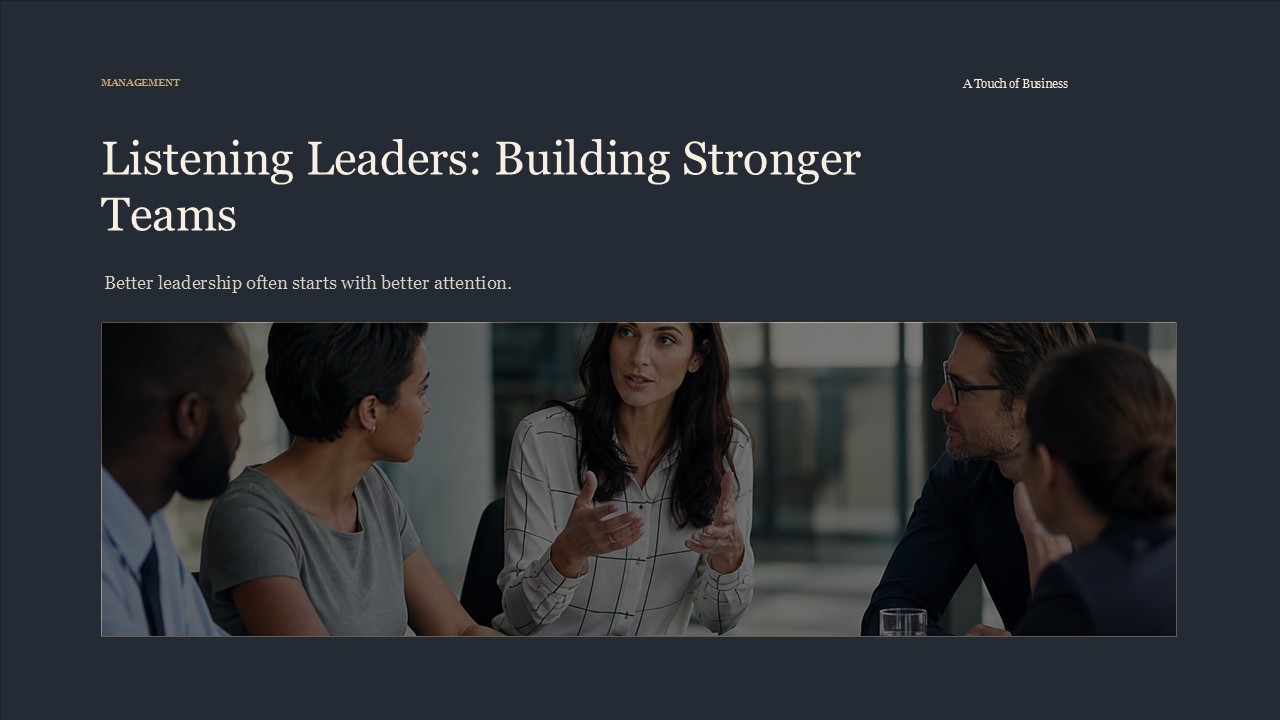
Listening Skills for Managers
This article covers what active listening is and why it matters for managers. It explains the difference between active and passive listening, common mistakes managers make, and specific techniques to use with a team. It is written for small business owners, founders, and managers who want stronger, more trusted working relationships with the people they lead.
What is Active Listening?
Active listening means more than hearing words. It means understanding the speaker’s full message, including the emotions and intentions behind it. A manager who listens actively pays attention to what someone says and to what they mean.
This skill helps create a workplace where people feel heard and respected. Managers who listen actively understand their team’s needs and concerns more clearly. That understanding leads to better solutions and a healthier work environment.
Examples of Active Listening
- Reflective Responses: This involves mirroring the speaker’s message to show understanding. For instance, if an employee expresses frustration about workload, a manager might respond, “It sounds like you’re feeling overwhelmed with the current project demands.”
- Clarifying and Summarizing: This helps ensure the manager correctly understands the speaker’s points. For example, after a discussion, a manager might say, “So, what you’re saying is that you need more resources to meet the project deadline, correct?”
- Non-Verbal Cues: Body language plays a role. Maintaining eye contact, nodding, and leaning forward slightly show the speaker that the manager is engaged and interested in what they say.
Why Managers Need to Listen Actively
Active listening builds trust and respect on a team. It helps managers understand team dynamics, catch problems before they grow, and lead more effectively. This skill also supports conflict resolution and shows team members that their opinions and feelings shape decisions, which helps keep people motivated.
Active vs Passive Listening
Passive listening is when the listener hears the words but doesn’t fully engage with or process the content. In contrast, active listening involves a conscious effort to understand the words and the complete message, which includes paying attention to the speaker’s tone, pace, and body language.
How to Be an Active Listener
- Understand the Purpose: Before engaging in a conversation, identify the objective. Is it to solve a problem, provide support, gather information, or make a decision?
- Full Attention: Put away distractions like phones or laptops. This shows respect and interest in what the speaker has to say.
- Open-Mindedness: Approach each conversation with a willingness to learn and be influenced by the speaker.
- Patience and Non-Interruption: Allow the speaker to finish their thoughts without jumping in with solutions or opinions.
- Encourage Expression: Ask open-ended questions to encourage deeper discussion.
- Feedback: Provide feedback that is constructive and relevant to the discussion.
- Appreciation: Express gratitude for the speaker’s openness and honesty.
Common Listening Pitfalls (and How to Fix Them)
A review of 117 studies on workplace listening, published in Harvard Business Review, found five common reasons managers struggle to listen effectively, along with a fix for each one.
- Haste: Rushing through a conversation instead of giving it space. The fix is to set aside distraction-free time, ask clarifying questions, and schedule a follow-up if needed.
- Defensiveness: Reacting emotionally instead of taking in what is said. The fix is to pause, restate what you heard, and gather more information before responding.
- Invisibility: Listening internally but not showing it. The fix is to use body language and verbal cues, and to summarize what the other person said.
- Exhaustion: Listening is mentally demanding, and fatigue makes it harder to engage. The fix is to set boundaries and recognize your own limits.
- Inaction: Listening but not following through. The fix is to close the loop — confirm what you heard, agree on next steps, and set a time to check back in.
Practical Exercises for Improvement
To build this skill, engage in role-playing exercises or practice active listening in low-stakes situations. Managers can also seek feedback on their listening skills from peers or mentors.
Leadership and Listening
Leaders who listen effectively can create a more inclusive and innovative workplace. Listening fosters a sense of belonging among team members, encouraging them to contribute more openly and creatively.
Turning Feedback Into Action
Listening is only useful if it leads to action. These practices help translate what a manager hears into real change:
- Act on Feedback: Show that feedback matters by acting on it — implement suggestions or address concerns directly.
- Consistent Coaching: Use one-on-one sessions to focus on each team member’s growth and goals.
- Value Opinions: Show genuine interest in team members’ ideas and suggestions.
- Open Communication: Build an environment where team members feel comfortable sharing thoughts and ideas.
- Validate Perspectives: Acknowledge team members’ views and experiences, even when they differ from your own.
Active Listening in Different Contexts
- Active listening can bridge the gap between remote and in-office workers on hybrid teams. Harvard Business Review research points out that hybrid work removes many of the nonverbal cues managers would normally pick up in person, which makes deliberate listening more important.
- Regular “health checks” with your team can uncover underlying issues and dynamics, allowing for a more cohesive and supportive environment.
- Establishing trust through active listening can lead to more open and honest communication, which is essential for effective teamwork and problem-solving.
- Feedback becomes more meaningful and constructive based on a deep understanding of the team’s perspectives and challenges.
Technology and Listening
A number of AI coaching and feedback platforms are built specifically for manager development, including Windmill, Culture Amp, Cloverleaf, Risely, Betterworks, and Mesh. These tools can flag communication patterns, prompt managers before one-on-ones, and suggest specific areas to work on.
Conclusion
Active listening is a skill managers can build with practice. It leads to a more engaged, motivated, and productive team, and it strengthens the trust that holds a team together. Managers who keep practicing it, one conversation at a time, see the difference in how their team works and communicates.
~
Key Points and Facts About Listening Skills for Managers
Concept of Active Listening in Management
- Means fully understanding a speaker’s words, emotions, and intentions, not just hearing them.
- Creates a workplace where people feel heard and respected.
Examples of Active Listening
- Reflective Responses: Mirroring the speaker’s feelings or thoughts.
- Clarifying and Summarizing: Confirming understanding by asking questions or restating key points.
- Non-Verbal Cues: Using body language, like eye contact and nodding, to show engagement.
Why It Matters for Managers
- Builds trust and respect between managers and their team.
- Helps identify problems before they grow.
- Supports conflict resolution and keeps team members motivated.
Active vs. Passive Listening
- Active listening is a deliberate effort to understand a speaker’s words, tone, pace, and body language — not just their words.
Active Listening Techniques
- Identify the purpose of the conversation before it starts.
- Give full attention and avoid multitasking.
- Stay open to being influenced by what the speaker says.
- Be patient and avoid interrupting.
- Ask open-ended questions to encourage the speaker.
- Offer constructive feedback.
- Show appreciation for the speaker’s openness.
Common Listening Pitfalls
- Five pitfalls identified by Harvard Business Review research: haste, defensiveness, invisibility, exhaustion, and inaction.
- Each pitfall has a specific fix, from setting aside distraction-free time to closing the loop after a conversation.
Leadership and Listening
- Leaders who listen effectively create a more inclusive workplace.
- Listening encourages team members to contribute more openly.
Turning Feedback Into Action
- Act on feedback, coach consistently, value opinions, keep communication open, and validate differing perspectives.
Active Listening in Different Contexts
- Helps bridge gaps between remote and in-office workers on hybrid teams.
- Regular check-ins can uncover issues and strengthen team dynamics.
- Builds the trust needed for open, honest communication.
Technology and Listening
- AI coaching and feedback platforms — such as Windmill, Culture Amp, Cloverleaf, Risely, Betterworks, and Mesh — can highlight communication patterns and suggest areas to work on.
~
Action Steps for Enhancing Listening Skills for Managers
Master Active Listening
- Focus on the speaker’s words and emotions, not just what they say.
- Respond in a way that shows you understood.
Refine Your Response Techniques
- Use reflective responses to mirror what the speaker feels.
- Ask questions or summarize to confirm understanding.
- Use non-verbal cues, like eye contact and nodding, to show engagement.
Apply Active Listening Techniques
- Identify the purpose of each conversation before it starts.
- Give full attention and avoid multitasking.
- Stay open to what you hear, and avoid interrupting.
- Encourage the speaker to say more before you respond.
- Offer constructive feedback and show appreciation for the conversation.
Watch for Listening Pitfalls
- Slow down instead of rushing through conversations.
- Pause and gather information instead of reacting defensively.
- Show you are listening through body language and by summarizing what you heard.
- Set boundaries so listening fatigue does not undercut your attention.
- Close the loop after every conversation — confirm what you heard and agree on next steps.
Follow Through on Feedback
- Act on what your team tells you, whether that means a change in process or addressing a specific concern.
- Use consistent one-on-one coaching to focus on each person’s goals.
- Show genuine interest in team members’ opinions and validate perspectives that differ from your own.
Support Hybrid and Remote Teams
- Use regular check-ins to surface issues that distance can hide.
- Pay extra attention to tone and wording when nonverbal cues are not available.
Use Technology as a Support, Not a Substitute
- Try an AI coaching or feedback platform to spot patterns in your communication.
- Use what it surfaces as a starting point for practice, not a replacement for genuine attention.
By following these action steps, managers can build stronger listening habits and communicate more effectively with their team.
~
Checklist for Listening Skills for Managers
- Before the Conversation
- Set aside distraction-free time.
- Identify what you want to understand or accomplish.
- During the Conversation
- Give full attention — no phone, no laptop.
- Use eye contact, nodding, and other body language to show engagement.
- Let the speaker finish before you respond.
- Ask clarifying questions and summarize what you heard.
- Watch for Pitfalls
- Are you rushing? Slow down.
- Are you reacting defensively? Pause before responding.
- Are you showing that you’re listening, or just listening internally?
- After the Conversation
- Confirm what you heard and agree on next steps.
- Set a time to check back in.
- Follow through on any feedback or requests.
- Ongoing Practice
- Practice in low-stakes conversations and role-play situations.
- Ask peers or mentors for feedback on your listening.
- Consider an AI coaching or feedback platform to track patterns over time.
~
Frequently Asked Questions about Listening Skills for Managers
What is Active Listening in Management?
Active listening in management is about fully focusing on the speaker, understanding their message and emotions, and responding in a way that shows comprehension and respect.
It’s crucial for creating a positive and effective work environment.
Why is Active Listening Important for Managers?
Active listening is key for managers to understand and influence their team, demonstrate respect, and build strong relationships.
It’s essential for improving productivity, effective negotiation, and making informed decisions.
What are Some Examples of Active Listening?
- Reflective Responses: Replying in a way that mirrors the speaker’s feelings or thoughts.
- Clarifying and Summarizing: Asking questions to clarify or summarizing points to ensure correct understanding.
- Non-Verbal Cues: Using body language, like maintaining eye contact and nodding, to show you are engaged.
How Does Active Listening Differ from Passive Listening?
Active listening involves intentionally focusing on the speaker’s words and emotions, while passive listening is just hearing the words without fully engaging with the message.
What Techniques Can Managers Use for Active Listening?
- Understand the purpose of the communication and align goals.
- Pay full attention, avoid multitasking, and focus on the speaker.
- Be open to learning from the conversation and patient, avoiding interruptions.
- Encourage the speaker to express themselves and offer genuine feedback.
- Show appreciation for the communication.
What Are Common Listening Pitfalls for Managers?
Common pitfalls include rushing through conversations, reacting defensively, listening without showing it, listening fatigue, and not following through on what you heard. Each has a specific fix, from setting aside distraction-free time to closing the loop after a conversation.
How Can Managers Improve Their Listening Skills?
- Engage in active listening exercises.
- Be self-aware of your listening habits and natural tendencies.
- Eliminate distractions to fully engage in conversations.
- Understand and respond to nonverbal cues.
- Control your body language and reactions.
- Validate and verify information to avoid assumptions.
What’s the Role of Feedback in Active Listening?
Feedback shows that you’ve listened and understood.
It involves following up on employee feedback, offering feedback opportunities in meetings, and using feedback to identify areas for managerial improvement.
How Can Managers Foster Open Communication?
Leaders can establish open lines of communication, ensuring team members feel their voices are heard and valued.
Creating a culture of communication where employees are encouraged to provide honest feedback is also vital.
What’s the Significance of Nonverbal Cues in Listening?
Nonverbal cues, like body language and facial expressions, provide deeper insights into the speaker’s emotions and thoughts.
Paying attention to these cues is an important aspect of active listening.
Can Technology Aid in Developing Listening Skills?
Yes. AI coaching and feedback platforms, such as Windmill, Culture Amp, Cloverleaf, Risely, Betterworks, and Mesh, can highlight communication patterns and suggest specific areas to work on. They work best as a supplement to practice, not a replacement for it.
Why Should Managers Learn from Employees?
Learning from employees can enhance professional relationships and provide valuable insights into team dynamics and individual needs. It’s a key aspect of empathetic leadership.
Watch: Active Listening in Practice
This video walks through the core active listening techniques covered in this article.
References:
- Risely — 7 Proven Ways to Master Active Listening for Managers (With Examples)
- Harvard Business Review — How to Really Listen to Your Employees
- Harvard Business Review — How to Become a Better Listener
- Harvard Business Review — Are You Really a Good Listener?
- Forbes Business Council — 15 Key Tips For Developing Active Listening Skills As A Leader
- Windmill — Best AI Coaching Tools for Manager Feedback in 2026