
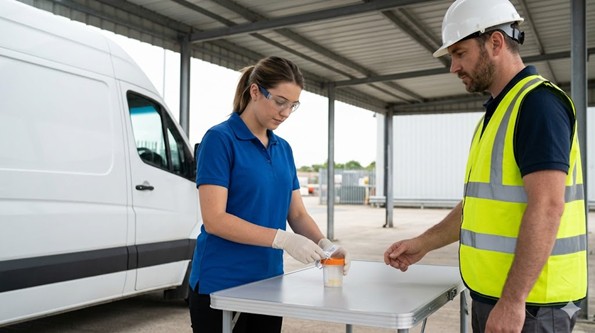
What to Expect From This Guide to Starting a Drug Testing Business
This guide walks readers through the key decisions and practical steps involved in starting a drug testing business, from choosing a service model and validating demand to meeting procedural requirements, testing the collection process, and opening with a controlled service scope. The bullets highlight selected areas explored further.
Inside the guide, you will find:
- Startup roadmap: Follow the progression from owner fit and service selection through compliance, vendor setup, training, systems, test collections, and opening preparation.
- Industry interviews: Learn from people in drug testing who discuss service choices, compliance pressure, vendor relationships, customer trust, and startup realities.
- Startup FAQs: Review answers about collection offices, laboratories, DOT services, CLIA, training, revenue, locations, equipment, and opening requirements.
- Service planning: Compare fixed-site, mobile, DOT, non-DOT, collection-only, alcohol testing, and clinical models before defining the opening service list.
- Compliance requirements: Examine location-dependent licensing, DOT procedures, training qualifications, forms, laboratories, privacy controls, specimen handling, and facility rules.
- Financial planning: Evaluate per-test costs, employer payment timing, service margins, testing volume, slow months, and break-even needs before major spending.
- Opening preparation: Test the complete donor path, forms, specimen security, laboratory access, shipping, billing, privacy, equipment, and staff procedures.
Begin with the personal fit and procedural discipline this sensitive service demands before committing money or choosing a model.
A drug testing business provides specimen collection, alcohol testing, and related testing coordination for employers, applicants, employees, agencies, programs, and individuals. In a clinic-style setup, donors usually come to an office where the owner or trained staff verify identity, collect specimens, complete forms, protect records, and send specimens to a laboratory when lab testing is required.
This isn’t a business to open casually. The service deals with private information, strict procedures, sensitive conversations, and records that must be handled with care. If you plan to serve DOT-regulated clients, the rules become even more exact.
A broader startup checklist can help you see the general path. This guide focuses on the startup decisions that matter for a drug testing business.
Before you go further, ask yourself whether this business fits your personality and life. Can you stay calm with anxious or upset donors? Can you follow written procedures without shortcuts? Can you protect confidential records every day? Can you handle slow opening months while you build employer accounts and finish vendor setup?
Also think about your household. Startup costs, lease decisions, training, insurance, and software may come before steady revenue. You may need enough savings to cover personal living expenses while the business finds its footing.
Speak with owners you won’t compete against before you commit to this business. Prepare questions before those conversations. Each owner’s path will be different, but experienced owners can explain what the job feels like after the excitement fades.
Ask non-competing owners about these points:
- Which services new owners often underestimate
- How DOT and non-DOT testing differ in practice
- Which lab, medical review officer, or third-party administrator relationships matter most
- How often collection errors, rejected specimens, or billing delays happen
- Whether local demand can support a fixed office
You should also think about how you want to enter the business. Starting from scratch gives you the most control. Buying an existing drug testing business may give you vendor accounts, location history, and clients, but you must verify compliance records, contracts, lease terms, and training files. A franchise or branded network may offer systems and support, but it may also limit control and add fees.
The best path depends on your budget, timeline, support needs, risk tolerance, and desire for control. A deeper look at whether to start from scratch or buy a business may help before you choose.
Red Flags Before You Start
Some problems should make you pause before you sign a lease, buy equipment, or order supplies. These aren’t small opening tasks. They affect whether your business should move forward at all.
This business may not fit you if:
- You’re not comfortable handling private, sensitive information.
- You dislike strict procedures and detailed records.
- You’re not prepared for tense donor conversations.
- You can’t cover personal expenses during slow opening months.
- You can’t explain how many tests you need to cover fixed costs.
You also need a clear model. If you can’t explain whether you’re opening a collection-only office, DOT testing site, non-DOT workplace testing service, rapid testing office, mobile service, clinic, or laboratory, pause first.
What this choice changes: your model changes training, facility needs, equipment, cost, risk, and compliance checks.
Another major warning sign is assuming a collection site is the same as a laboratory. A collection-focused office may collect specimens and send them to a lab. A laboratory performs testing and may face a much higher compliance burden.
Location can also stop the plan. If the restroom, privacy layout, zoning, or certificate of occupancy can’t support specimen collection, find out before signing a lease.
Demand matters too. If local employers already use nearby national collection networks, urgent care clinics, occupational health providers, or hospital labs, you’ll need to verify whether enough unmet demand remains. A fixed office needs enough testing volume to cover rent, staff time, software, supplies, insurance, lab charges, and owner income.
Don’t ignore service boundaries. If you want to offer rapid testing, clinical testing, treatment-related testing, blood collection, or DOT services, verify the rules first. Opening before those answers are clear can create problems that are hard to fix later.
Step 1: Decide Whether the Business Fits You
A drug testing business requires calm, careful, private service. The owner or trained staff may deal with applicants, employees, employers, courts, treatment programs, laboratories, and medical review officers.
You don’t need to love paperwork, but you must respect it. Forms, specimen handling, identity checks, and secure records are part of the business.
What this choice changes: poor fit increases the risk of rushed collections, weak records, donor conflict, and privacy problems.
Think about your motivation. Are you interested in owning this type of business, or are you only drawn to the idea of a regulated service? This matters because the daily tasks can feel repetitive and precise.
Ask yourself these questions:
- Can I follow strict procedures even when the office is busy?
- Can I handle donors who feel embarrassed, nervous, or angry?
- Can I protect confidential information without exception?
- Can I afford a slow start while I build local awareness and vendor relationships?
If the answers are weak, pause. Owner fit isn’t a small issue in a drug testing business.
Step 2: Learn From Non-Competing Owners
Before you invest in the business, talk with owners outside your market. You can also speak with occupational health clinics, collection sites, lab representatives, and experienced collectors.
Prepare questions before you contact them. Respect their time and remember that their journey may not match yours.
Ask about practical startup issues:
- Which services were easiest to offer at opening
- Which services created unexpected setup problems
- How often donors arrive without proper identification or authorization
- How they handle rejected specimens or form errors
- Which vendor relationships matter most before opening
What this choice changes: real owner insight can help you avoid a model that looks simple on paper but is too complex for your budget, skills, or location.
You can also review advice from real business owners to prepare better questions before these conversations.
Step 3: Choose the Exact Drug Testing Model
A drug testing business can take several forms. The model you choose affects almost every startup decision that follows.
A clinic-style collection office usually focuses on donors who come to a fixed location. The owner or trained staff may collect urine, oral fluid, or hair specimens, complete chain-of-custody forms, coordinate lab testing, and provide alcohol testing if qualified and equipped.
Common startup models include:
- Collection-only site
- Drug and alcohol testing office
- DOT testing service
- Non-DOT workplace testing service
- Mobile or on-site collection service
- Full laboratory
- Treatment-related or clinical testing clinic
Don’t treat these as the same business. A collection-only office is different from a lab. A DOT testing service is different from a non-DOT workplace testing service. A treatment-related clinic may bring different health care and privacy issues.
What this choice changes: the model affects facility layout, training, forms, software, vendor accounts, insurance, and the rules you must verify before opening.
Step 4: Compare Starting, Buying, or Franchising
You can start a drug testing business from scratch, buy an existing operation, or explore a franchise or branded network. Each path has tradeoffs.
Starting from scratch gives you control over services, vendors, hours, location, and pricing. It also means you build every system before opening.
Buying an existing business may provide clients, staff, vendor accounts, equipment, and location history. Still, you must verify what you’re buying.
Review these items before buying:
- Active client agreements
- Lab and medical review officer relationships
- Collector training files
- Device maintenance records
- Lease terms
- Compliance history
- Revenue by service type
A franchise may offer training, systems, and vendor relationships. It may also involve fees, territory limits, and less control.
What this choice changes: your entry path affects startup speed, control, risk, support, and the amount of setup you must create yourself.
Step 5: Validate Local Demand and Competition
To run a fixed office, you need enough local demand to cover rent, supplies, software, staff time, insurance, and owner income. Do this check before major spending.
Look at the employers and programs in your area. Demand may come from transportation companies, staffing agencies, construction firms, industrial employers, schools, courts, treatment programs, and occupational health providers.
Also check the competition. Nearby urgent care clinics, hospital outpatient labs, occupational health clinics, pharmacies, and national collection sites may already serve the market.
Look for demand by service type:
- Pre-employment testing
- Random testing
- Post-accident testing
- DOT drug and alcohol testing
- Non-DOT workplace testing
- Walk-in testing
- Mobile or after-hours collection
What this choice changes: local demand affects whether a fixed clinic is realistic, whether mobile service is needed, and how much volume you must reach to cover fixed costs.
A guide to local supply and demand can help you think through this part before you start.
Step 6: Choose Services for Opening
Don’t offer every possible test at launch. Choose services you can support with the right training, forms, equipment, lab partners, privacy controls, and facility setup.
A simple opening may focus on urine specimen collection, lab-based testing coordination, and employer testing support. You can add other services only after you verify the setup requirements.
Services to consider carefully include:
- Oral fluid collection
- Hair specimen collection
- Rapid point-of-care screens
- Breath alcohol testing
- DOT collections
- Mobile or after-hours service
- Court-ordered or treatment-related testing
DOT urine collectors, DOT oral fluid collectors, breath alcohol technicians, and screening test technicians must meet specific training and proficiency requirements before performing those services. DOT oral fluid testing also can’t be used until at least two HHS-certified oral fluid laboratories are available and other DOT conditions are met.
What this choice changes: each service can add training, devices, forms, vendor steps, compliance checks, and startup costs.
Step 7: Build a Practical Startup Plan
At this stage, bring your decisions together. Your plan should show how the business can open, serve donors correctly, protect records, and cover costs.
This isn’t about writing a formal document to impress someone. It’s about testing whether your business can function before you sign contracts or buy equipment.
Your startup plan should cover:
- The drug testing model you chose
- Services offered at opening
- DOT and non-DOT boundaries
- Local demand findings
- Facility and restroom setup
- Lab, medical review officer, and third-party administrator relationships
- Training requirements
- Equipment and supply needs
- Pricing decisions
- Break-even logic
- Opening-readiness checks
What this choice changes: a clear plan helps you spot gaps before they become lease problems, compliance issues, or expensive changes.
Step 8: Check Profit Potential Before Major Spending
Revenue in a drug testing business typically comes from per-test fees, collection fees, breath alcohol tests, rapid screens, employer account billing, mobile fees, and sometimes administrative fees.
That doesn’t mean every model is profitable. A collection-only office may need steady volume to cover fixed costs. A DOT-focused service may earn stronger client trust, but it also requires more exacting procedures.
Calculate these points with your own numbers:
- How many tests you need each month to cover fixed costs
- What each service costs after lab, medical review officer, supplies, and staff time
- How long employer accounts may take to pay
- Whether mobile service remains profitable after travel time
- How slow months would affect rent, payroll, and owner income
The goal isn’t to guess. The goal is to know whether the local market can support the service mix you plan to offer.
What this choice changes: profit analysis can stop you from signing a lease or buying devices before the numbers make sense.
You can use a guide to profit and revenue estimates to think through the calculation without inventing sales projections.
Step 9: Register the Business
Choose your legal structure before you open accounts or sign long-term agreements. Many owners compare a sole proprietorship, limited liability company, corporation, or partnership.
The right structure depends on risk, taxes, ownership, funding, and professional advice. Because you’ll be handling sensitive records and carrying service liability, don’t make this decision casually.
After choosing the structure, register the business with the proper state office when required. If you use a name that differs from the legal name, verify whether you need an assumed name or Doing Business As filing.
You may also need an Employer Identification Number from the IRS. Legal entities should generally be formed through the state before applying for an EIN.
What this choice changes: structure affects taxes, banking, contracts, liability planning, and how you separate business transactions from personal ones from the start.
A guide on how to register a business can help with the general process, but you still need to verify state and local rules for your location.
Step 10: Verify Legal and Compliance Rules
Compliance is a critical first step for a drug testing business. Work through it before signing a lease, buying specialized devices, or offering services.
Start by confirming what your business will actually do. Collection-only employment testing is different from clinical testing. DOT testing is different from non-DOT testing. Rapid testing can raise different questions than sending specimens to a lab.
Verify these areas before opening:
- Federal DOT rules if serving DOT-regulated clients
- Collector and alcohol technician training requirements
- Federal custody and control form use for DOT tests
- Approved screening devices and approved evidential breath testing devices if offering DOT alcohol testing
- HHS-certified laboratory needs for DOT and other federally regulated drug testing
- CLIA rules if clinical testing, treatment-related testing, or testing beyond employment drug testing is involved
- HIPAA status if the business is a covered entity or business associate
- OSHA exposure rules if blood or potentially infectious materials are handled
- State workplace drug testing laws
- Local business license, zoning, and certificate of occupancy rules
Some rules vary by U.S. jurisdiction. That includes state lab licensing, sales tax treatment, employer accounts, medical waste rules, privacy rules, home-occupation limits, zoning, business licenses, signage, and certificate of occupancy requirements.
What this choice changes: legal verification can change the location, services, training, equipment, records, and opening date.
Don’t present common insurance, permits, or notices as required unless the proper authority confirms them for your location and service model.
Step 11: Choose the Location and Set Up the Clinic Flow
Your clinic-style drug testing office needs privacy, controlled access, secure storage, and a clear path for donors. The space must support the collection process, not just look professional.
The donor flow usually starts with check-in and identity review. Then the owner or trained staff explain the process, collect the specimen, complete forms, secure the specimen, arrange shipping or pickup, and handle payment or employer billing.
Before signing a lease, verify:
- Zoning for the use
- Certificate of occupancy requirements
- Restroom suitability
- Privacy for donors
- Secure specimen storage
- Waiting area layout
- Parking and access
- Signage rules
- Landlord approval for specimen collection
For DOT urine collections, the collection site must support specific site, privacy, storage, shipping, and security procedures. The restroom choice matters.
What this choice changes: the wrong office can create expensive build-out needs or prevent the business from offering the services you planned.
Step 12: Set Up Labs, Medical Review Officers, and Vendors
Running a collection-focused drug testing office typically means depending on outside partners. You may need laboratories, medical review officers, consortium or third-party administrators, shipping services, software providers, and device suppliers.
Don’t wait until opening week to set these up. Vendor delays can stop you from serving clients even if your office is ready.
Confirm these items with each partner:
- Which tests and panels they support
- Whether they support DOT and non-DOT testing
- Whether oral fluid, hair, or rapid testing fits your plan
- How custody and control forms are handled
- Whether electronic forms are available
- How specimens are shipped or picked up
- How results are reported
- How billing works
- How rejected specimens or form errors are handled
For DOT and other federally regulated drug testing, identify whether HHS-certified laboratory services are needed. If you serve DOT clients, make sure every partner fits the required process. For DOT oral fluid testing, the service can’t be used until at least two HHS-certified oral fluid laboratories are available and the required collection device and qualified collector conditions are met.
What this choice changes: vendor choices affect service scope, pricing, reporting speed, rejected-test risk, and the customer experience at opening.
Step 13: Complete Training and Document Qualifications
Training isn’t optional when you offer regulated services. DOT urine collectors, DOT oral fluid collectors, breath alcohol technicians, and screening test technicians must meet specific qualification and proficiency requirements.
Keep training records organized. Employers, third-party administrators, and agency representatives may need to see proof that collectors and technicians are qualified.
Training may include:
- DOT urine collector qualification training
- Error-free mock collections
- DOT oral fluid collector training
- Device-specific oral fluid training
- Breath alcohol technician training
- Screening test technician training
- Refresher training
- Error correction training after certain problems
Non-DOT services still need careful staff training. Identity checks, donor instructions, specimen handling, privacy, and form completion matter in every model.
What this choice changes: training affects what you can legally and practically offer on opening day.
Step 14: Set Up Forms, Records, and Privacy Controls
Drug testing depends on accurate records. A small form error can create a cancelled test, client frustration, or a privacy problem.
Keep DOT and non-DOT forms separate. DOT drug tests require the Federal Drug Testing Custody and Control Form. Don’t use the wrong form for a DOT collection.
Your records system should cover:
- Donor identity checks
- Chain-of-custody forms
- Employer authorization forms
- Specimen shipping logs
- Training certificates
- Device calibration or maintenance logs
- Incident and correction records
- Confidential result communication
- Secure storage and access controls
Privacy rules depend on your exact role. Determine whether you operate as a covered entity, business associate, or outside HIPAA but still bound by contracts, state privacy rules, and confidentiality duties.
What this choice changes: weak records can damage client trust, delay results, create compliance problems, and expose private information.
Step 15: Buy Equipment, Supplies, and Systems
Buy equipment that matches your opening services. Avoid buying devices or kits for services you aren’t ready to offer.
Your clinic-style collection office will likely need reception furniture, secure file storage, a private collection area, restroom controls, collection kits, forms, shipping materials, software, payment systems, and privacy controls.
Common launch items include:
- Urine collection kits
- Collection containers with temperature strips
- Split specimen bottles when required
- Tamper-evident seals
- Federal and non-DOT custody forms
- Oral fluid devices if offered
- Hair collection kits if offered
- Approved alcohol testing devices if offered
- Shipping containers and lab bags
- Gloves, disinfectant, and safety supplies
- Scheduling, billing, and secure records systems
For DOT alcohol testing, approved screening devices or approved evidential breath testing devices may be used for screening. Confirmation tests must use approved evidential breath testing devices. Device choice should come after you know the services you will offer.
What this choice changes: buying too much too soon can tie up cash, while missing key supplies can delay opening.
Step 16: Arrange Insurance and Risk Controls
Running a drug testing business means handling sensitive services, private information, and the risk of collection errors. Insurance should be part of startup planning, not an afterthought.
Some coverage may be legally required depending on state law, employees, lease terms, or lender rules. Other coverage is risk planning.
Coverage to discuss with an insurance professional may include:
- General liability
- Professional liability or errors and omissions
- Cyber or privacy liability
- Commercial property
- Workers’ compensation if employees are hired
- Commercial auto if mobile collection is added
Don’t assume every coverage is legally required. Verify what applies to your state, lease, staffing plan, and service model.
What this choice changes: insurance affects startup costs, risk tolerance, client trust, and whether landlords or partners will approve the setup.
Step 17: Set Pricing, Billing, and Payment Systems
Pricing should be based on real costs, not guesses. You may charge different fees for collection-only service, lab-based tests, rapid screens, breath alcohol tests, mobile visits, or after-hours service.
Build pricing from vendor quotes and your own cost structure. Include lab fees, medical review officer fees, supplies, staff time, software, rent, payment processing, and billing delays.
Price each service separately:
- Collection-only tests
- Lab-based urine tests
- Oral fluid tests
- Hair tests
- Rapid screens
- Breath alcohol screening
- Confirmation alcohol testing
- Observed collections
- Mobile service
- After-hours service
You also need payment systems before opening. Set up a business bank account, payment processor, invoicing process, employer billing terms, and a way to track delayed payments.
What this choice changes: pricing and billing affect cash flow, margins, employer accounts, and whether the business can survive slow months.
General guidance on pricing products and services can help, but your final prices must come from your own verified costs and local market reality.
Step 18: Prepare Staff, Scripts, and Opening Procedures
Before opening, everyone involved must know how to handle donors, forms, specimens, records, and difficult situations. Even one person working alone should use written procedures.
A drug testing appointment can become stressful if the donor has questions, lacks identification, refuses a step, or can’t provide a specimen. Prepare for these situations before the first paid test.
Prepare procedures for:
- Donor check-in
- Identity verification
- Specimen collection steps
- Refusal situations
- Shy bladder or dry mouth procedures when applicable
- Observed collections when applicable
- Specimen security
- Form completion
- Shipping or courier pickup
- Privacy and record access
Staff should understand boundaries. Their role covers testing and collection procedures, and they shouldn’t give legal, employment, medical, or treatment advice unless qualified and authorized.
What this choice changes: clear procedures reduce confusion, protect privacy, and help the office handle pressure without shortcuts.
Step 19: Run Pre-Opening Test Collections
Don’t wait for a real donor to test your setup. Run internal walkthroughs before opening.
Start at the front door. Follow the full path from appointment check-in to specimen handling, form completion, shipping, billing, and record storage.
Test these steps before opening:
- Scheduling
- Donor check-in
- Identity review
- Restroom control
- Collection instructions
- Specimen sealing
- Form completion
- Lab portal access
- Shipping or courier process
- Payment and invoicing
- Record storage
If alcohol testing is offered, test the device setup, printing, logs, and staff comfort. If electronic forms are used, test access before the first appointment.
What this choice changes: test runs expose gaps while there’s still time to fix them.
Step 20: Open With a Limited Service Scope
Open with the services you can perform correctly. A narrow, ready service list is better than a broad list with weak systems.
Delay services that require extra training, devices, licensing checks, after-hours staffing, mobile transport, or clinical review until those pieces are ready.
Start only when these basics are ready:
- Training is complete and documented
- Forms are correct and separated
- Lab accounts are active
- Medical review officer access is ready if needed
- The location supports specimen collection
- Supplies are stocked
- Payment systems are active
- Privacy controls are in place
- Opening procedures have been tested
What this choice changes: a limited opening reduces risk and helps you avoid preventable errors on your first appointments.
Business Plan
Your business plan should turn the startup path into a practical decision tool. It should show what you’ll offer, who you’ll serve, what must be verified, and whether the numbers can support the business.
Keep it tied to the drug testing model you chose. A collection-only office, DOT testing service, rapid testing site, mobile collector, or clinical testing clinic won’t have the same setup.
Include these drug testing business decisions:
- Fixed office, mobile service, or both
- DOT and non-DOT service boundaries
- Opening services
- Lab, medical review officer, and third-party administrator relationships
- Facility and restroom requirements
- Training plan
- Forms and records process
- Privacy and security controls
- Equipment and supply list
- Insurance and risk planning
Use the plan to test the profit logic before you make major commitments. You need enough appointments, employer accounts, or testing volume to cover fixed costs and owner income.
Financial planning should answer:
- What costs stay the same during slow months?
- What costs attach to each test?
- Which services have the strongest gross margin?
- How many tests are needed to break even?
- How long might employer payments take?
- Can you cover personal living expenses during launch?
Don’t use guessed numbers. Get quotes, compare vendors, verify rent and insurance, and price supplies before you commit.
What this choice changes: a practical plan helps you decide whether to proceed, reduce the service scope, choose a different location, seek funding, or delay opening.
Opening-Day Red Flags
These issues don’t always mean you should abandon the business. They mean the drug testing office may not be ready to open yet.
Delay opening if:
- Collector training is incomplete or undocumented.
- DOT and non-DOT forms are mixed together.
- Lab accounts aren’t active.
- Medical review officer access isn’t ready when needed.
- The restroom setup hasn’t been tested.
- Specimen storage isn’t secure.
- Shipping or courier procedures are unclear.
- Alcohol testing devices aren’t approved, set up, or logged when required.
- Payment and employer billing systems aren’t ready.
- Privacy controls are weak.
Also delay opening if staff can’t explain donor check-in, identity verification, chain-of-custody steps, refusal procedures, or record storage. These aren’t details to figure out during the first appointment.
What this choice changes: delaying a weak opening protects donor privacy, client trust, and your reputation.
Frequently Asked Questions
These questions focus on startup decisions for a drug testing business, not customer-facing service questions.
Is a drug testing business a good fit for a first-time owner?
It can be, but only if you’re comfortable with strict procedures, private records, specimen handling, and sensitive conversations. DOT services add more training and rule-following.
Is this the same as opening a laboratory?
No. A collection office usually collects specimens and sends them to a lab. A laboratory performs testing and may face a much higher compliance burden.
Do I need CLIA to open a drug testing collection office?
Not always. CMS says a CLIA certificate is not required for specimen collections, blood draws, or drug testing for employment unless individual treatment is offered or made available. Clinical testing, treatment-related testing, and some state rules can change the answer, so verify before offering rapid or clinical services.
What should I verify before starting?
Verify the model, DOT scope, CLIA and state lab rules, zoning, certificate of occupancy needs, restroom suitability, lab partners, training, insurance, and local demand.
Can I offer DOT drug testing right away?
Only if the required DOT setup is complete. That includes qualified collectors, correct forms, compliant site procedures, HHS-certified laboratory access for drug testing, and approved alcohol testing devices if alcohol testing is offered. DOT oral fluid testing can’t be used until the required HHS-certified oral fluid laboratories and other DOT conditions are in place.
What services should I offer first?
Start with services you can support correctly. Many owners begin with a limited scope, then add oral fluid, hair, rapid testing, mobile service, or alcohol testing only when setup is ready.
Do I need a laboratory partner?
If you’re not opening a lab, you’ll likely need lab relationships for lab-based testing. For DOT and other federally regulated drug testing, confirm whether HHS-certified laboratory services are needed.
What belongs in the business plan?
Include the model, services, DOT and non-DOT scope, compliance checks, location setup, training, vendor relationships, equipment, pricing, break-even logic, funding, and opening checklist.
How does a drug testing business generate revenue?
It usually generates revenue from collection fees, lab-based test fees, rapid screens, breath alcohol tests, employer billing, mobile fees, and sometimes administrative fees.
What are the biggest startup cost items?
Price out rent, facility setup, collection supplies, lab and medical review officer fees, alcohol devices, training, software, insurance, staff, shipping, licenses, and working capital.
What is the biggest profit risk?
Low testing volume is a major risk. You need enough tests or employer accounts to cover rent, supplies, software, insurance, staff time, and owner income.
Can I operate from home?
Possibly, but it may be difficult. Home-occupation rules, donor visits, parking, privacy, specimen handling, signage, and zoning can make a home-based setup unsuitable.
Should I buy an existing drug testing business?
It may be realistic. Before buying, verify client contracts, training files, lab accounts, device records, compliance history, lease terms, and revenue by service type.
What makes a location suitable?
A suitable location supports privacy, controlled access, restroom procedures, secure specimen handling, waiting space, parking, zoning approval, and certificate of occupancy rules.
What should be ready before opening day?
Training records, lab accounts, forms, supplies, restroom controls, secure storage, shipping procedures, payment setup, insurance, privacy policies, and test-run procedures should be ready before launch.
Advice From People in the Drug Testing Industry
These interviews can help readers learn from people who have already entered the drug testing industry. They offer practical insight into service choices, compliance pressure, vendor relationships, customer trust, and the reality of getting started before committing money.
- Authentic Real Story On Starting a Drug Testing Business — A written interview-style recap and video podcast featuring Brandy Helveston of Straight Line Mobile Testing and Lab Services LLC.
- Failory interview with Colorado Mobile Drug Testing founder Chuck Marting — A detailed founder interview about identifying local demand, starting with mobile testing, and building employer-focused services.
- Training for Starting a Drug Testing Business: Meet Our Reference — A video conversation with Joe Reilly and Jonathan Baktari, MD, discussing what it takes to launch a drug testing business beyond collector training.
- Q&A With Dave Claflin, CEO of Fastest Labs — A written Q&A covering the drug, alcohol, and DNA testing franchise model and what owner-operators should understand.
- Business RadioX interview with Monte McDowell of ARCpoint Labs — An audio interview with an ARCpoint Labs owner about services, customer types, and the role of testing in workplace and health-related decisions.
- How to Become an Entrepreneur in the Drug Testing Industry — A podcast episode from The Sheila Michelle Podcast discussing entrepreneurship in the transportation and medical testing space.
Related Articles
- How To Start a DNA Testing Business
- How To Start an Environmental Testing Laboratory
- How To Start a Background Check Service
Sources:
- U.S. DOT: DOT Part 40 Overview, Urine Collector Training, Oral Fluid Collector Training, Custody Control Form, BAT STT Training, Alcohol Site Security, Approved EBT Devices, Alcohol Screening Devices
- eCFR: Collection Site Rules
- SAMHSA: Drug Testing Resources, Certified Lab List, Federal Testing Laws, Workplace Toolkit
- CMS: Apply for CLIA, CLIA Overview
- CDC: Waived Tests
- OSHA: Bloodborne Pathogens, Urine Container Disposal
- HHS: HIPAA Covered Entities
- IRS: Get an EIN
- SBA: Register Business, Fund Your Business, Business Insurance
- MedlinePlus: Drug Testing Overview