
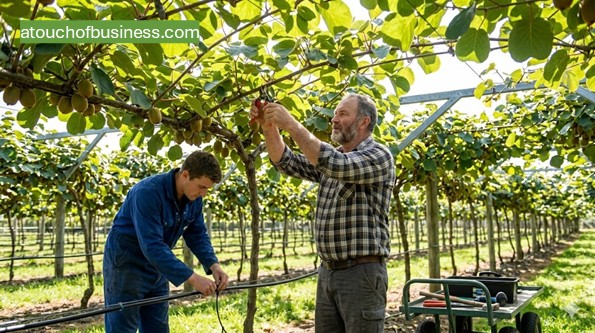
Overview of Starting a Kiwi Farm
A kiwi farm is a fruit-growing business built around long-lived vines, not a quick seasonal crop. You plant the block, train the vines onto a strong trellis, manage water and frost risk, support pollination, and then harvest, cool, sort, and sell the fruit.
For most first-time owners, the real launch version is a production farm with fresh-fruit sales. That means your early decisions center on land, irrigation, trellis design, pollinizers, harvest handling, storage, and local approval.
In plain terms: a trellis is the permanent post-and-wire structure that holds kiwi vines up and shapes how they grow.
You may hear fuzzy kiwifruit, hardy kiwi, and kiwiberries used almost like they mean the same thing. They do not. Fuzzy kiwifruit is the larger brown fruit most people know. Hardy kiwi, often sold as kiwiberries, is smaller, smoother, and has different cold tolerance and storage limits.
A kiwi farm can sell to wholesalers, packers, retailers, restaurants, farmers markets, or direct buyers. Trust, timing, and fruit condition matter as much as price. A buyer who needs steady quality will not care much that your vines were cheap to plant if the fruit arrives bruised or late.
This is also a regulated business. The exact rules depend on your location, your labor setup, your pesticide use, your water source, and whether you stay within normal farm packing or move into broader food processing.
Is This Business The Right Fit For You?
A kiwi farm can be a good fit if you like outdoor production work, long setup timelines, and careful seasonal planning. It is a poor fit if you want fast results, low weather risk, or a business you can run well without close attention to details.
You also need to like the day-to-day work. Think about pruning, tying vines, checking irrigation pressure, watching for frost, managing harvest labor, and protecting fruit quality. That is the real job.
First, ask yourself why you want this business. Are you moving toward this work, or are you only trying to get away from a bad job, immediate financial pressure, or the status of being called a business owner?
That question matters. A kiwi farm takes time to establish, and the work does not get easier just because you own it. Your interest in the work itself helps you stay steady when weather, labor, or crop timing create pressure.
Do a practical reality check too. Can you handle delayed returns, physical work, recordkeeping, local permits, and the risk that one bad frost event can damage the crop? Can your household handle seasonal peaks that pull you into the field early and late?
Before you go further, speak with owners you will not compete against. Talk to kiwi growers in another city, region, or market area. Prepare real questions ahead of time about startup costs, pollination, labor, harvest flow, storage, buyers, and local problems. That kind of firsthand owner insight is hard to replace.
A kiwi farm also asks more from you than crop knowledge. You need some of the core business skills that make a farm launch workable, such as budgeting, scheduling, buying, recordkeeping, and communication with workers and buyers.
Step 1: Choose Your Kiwi Type And Offer
Your first big decision is what kind of kiwi farm you are actually building. That choice changes land fit, labor timing, storage needs, and who is likely to buy from you.
Start with the crop itself. Fuzzy kiwifruit and hardy kiwi do not behave the same way in the field or after harvest. Fuzzy kiwi usually needs more heat and a longer frost-free season. Hardy kiwi can take colder winters, but it still has real risk after bud break.
In plain terms: a pollinizer is a male vine planted so female vines can set fruit.
Next, decide how you will sell the fruit:
- Wholesale through a packer or produce buyer
- Direct sales through a farm stand, market, or local accounts
- A hybrid model with some fresh wholesale and some direct sales
Keep your launch simple. A first kiwi farm usually works best when the offer is clear: whole fresh fruit, packed for the channel you chose, with no extra processing at the start.
If you want to dry fruit, make puree, or turn kiwi into jams later, treat that as a separate layer of complexity. Those activities can change how regulators view the business.
Step 2: Check Demand And Buyers Before You Plant
A kiwi farm can look good on paper and still fail because the sales path was weak. You need buyers before you need a logo.
First, study your local and regional supply and demand. Are nearby stores, wholesalers, or market shoppers already buying kiwi from local growers? If so, what kind of fruit are they taking, in what volume, and in what package?
Then talk to possible buyers early. Ask what they care about most. Size? Grade? Firmness? Storage life? Delivery timing? Packed cartons or loose bins?
A kiwi farm depends on timing. If your harvest window arrives and you are still looking for a sales channel, you are already behind.
Use this step to define your first-stage targets:
- How many acres you will plant first
- Which customers you are trying to serve first
- How much fruit you think you can harvest, cool, and move
- What quality standard you need to meet to stay credible
This is also the right time to start putting your business plan together. Keep it practical. Your early plan should focus on acreage, site work, trellis, irrigation, labor, handling, storage, and sales timing.
Step 3: Pick Land That Fits A Kiwi Farm
A kiwi farm lives or dies by the site. Do not try to force kiwi vines onto land that is cheap but wrong.
You want deep, well-drained soil, reliable irrigation water, and lower frost risk. Kiwi vines do not like standing water. They are also vulnerable to spring frost and wind damage.
Then look at access. Can trucks, labor, supplies, and harvest bins move easily? Can you add a packing area or cold storage later if needed? Can you reach the site fast during frost events?
On a kiwi farm, water is not a side issue. It is a core launch decision. If the site cannot support irrigation and, where needed, frost protection, the block may never work the way you hope.
Test the soil before planting. Confirm pH, drainage, and any needed corrections. Also verify the water source, pumping needs, and local rules tied to wells, ponds, or withdrawals.
Step 4: Choose Your Legal Structure And Tax Setup
Once the land and crop direction look workable, set up the business itself. This step is not just paperwork. It affects taxes, liability, banking, and how the farm operates day to day.
Most owners start by deciding whether they will operate as a sole proprietor, limited liability company, partnership, or corporation. If you need help choosing your legal structure, sort that out before filing anything else.
Then register the business if your state requires it, file a DBA if you will use a different trade name, and apply for an Employer Identification Number when it applies. If you are forming an entity, do that first, then get the tax ID.
Keep this part clean from the start. A kiwi farm has enough moving parts already. You do not want bank, tax, and ownership confusion added to the list.
Step 5: Confirm Permits, Zoning, And Farm Rules
This is where many first-time owners get surprised. A kiwi farm may be agricultural, but that does not mean every parcel, structure, or use is automatically approved.
First, confirm zoning and allowed agricultural use. Then ask about irrigation work, wells, drainage changes, access drives, signs, and any building plans for a shed, cold room, office, or farm stand.
If you are adding a packing shed or public-facing sales area, you may need building permits and a certificate of occupancy before you can use the space. Opening before approvals are in place can create expensive rework.
Local rules vary. That is why permit and license requirements should be checked against your exact parcel, business model, and facility type, not assumed from another farm in another county.
For a kiwi farm, ask local agencies questions like these:
- Is commercial kiwifruit production allowed on this parcel?
- Do my trellis, irrigation, grading, pond, or driveway changes need approval?
- If I add a packing or cold-storage area, what building and occupancy rules apply?
Step 6: Plan The Orchard Layout And Production Flow
Now design the block the way the farm will really work. This is where agriculture and production planning meet.
Most kiwi farms use a permanent T-bar or pergola trellis system. Vine spacing, headlands, row direction, irrigation zones, and male-to-female placement should all be planned before installation starts.
Then think like a production business. Where do workers enter? Where do bins stage? How far does fruit travel from row to shade to cooling? Where will the bottlenecks show up during bloom, pruning, or harvest?
In plain terms: packout is the share of harvested fruit that is good enough to sell in the channel you chose.
Good layout reduces labor waste. Bad layout turns every task into extra walking, extra handling, and extra damage. On a kiwi farm, that adds up fast.
Keep your first block manageable. Starting too large is one of the easiest ways to lose control of water, labor, training, and fruit handling.
Step 7: Build The Physical Setup
The physical setup on a kiwi farm is not optional. Vines need support, water, and a site that can handle the crop safely.
First comes the permanent trellis. You need posts, anchors, cross arms, high-tensile wire, and training materials. Kiwi vines are not self-supporting, so weak structure is a launch problem, not a small repair issue.
Next comes irrigation. Many growers use drip or microsprinklers for vine needs. Frost-prone sites may also use overhead low-volume sprinklers for protection.
Then look at the support spaces around the vines:
- Equipment storage
- Fertilizer and supply storage
- Shade area for field handling
- Cold room or access to refrigerated storage
- Sorting and packing space
A kiwi farm also needs practical movement. Make room for bins, pallets, trucks, and safe worker access. Production flow matters here just as much as crop health.
Step 8: Buy Plants, Equipment, And Supplier Support
Plant material is not the place to gamble. Buy from reputable nurseries and confirm that female vines and male pollinizers are true to type and compatible.
Then line up the suppliers and service partners who make launch possible:
- Nursery for vines and replacements
- Trellis supplier or contractor
- Irrigation supplier or installer
- Bee provider for pollination support
- Packaging supplier
- Cold storage or packhouse partner if you will not build your own
A kiwi farm also needs field and harvest tools. Think pruning tools, tying materials, maturity testing tools, lugs, bins, scales, grading tables, pallets, and labels.
In plain terms: a refractometer is a handheld tool that helps check fruit maturity by reading soluble solids.
Do not forget small items that slow you down when missing. Ties, tags, gloves, cleaning supplies, paperwork, label stock, and replacement parts can all delay work during the busiest weeks.
Step 9: Plan Startup Costs, Funding, And Records
A kiwi farm can be expensive to launch because the spending is front-loaded. Land, site work, trellis, irrigation, vines, labor, and cold handling can all hit before the first real return.
There is no reliable national startup range you can apply to every kiwi farm. Costs swing with land prices, water work, frost protection, structure size, labor rates, and whether you build your own cold-storage or use someone else’s.
First, list the major cost categories. Next, separate one-time setup costs from recurring seasonal costs. Then build your cash plan around how long the block needs to establish and how much working capital you need during that period.
If outside funding is needed, compare owner cash, agricultural lending, and USDA loan programs. Before you borrow, do some early revenue planning based on realistic yield, grade, and sales timing.
Open your banking early too. A kiwi farm should have separate accounts, basic bookkeeping, invoice records, vendor files, payroll records if hiring, and clean expense tracking from day one. This is also the time for getting your business banking in place.
Step 10: Set Pricing And Your Sales Approach
Pricing on a kiwi farm is tied to the market channel, not just your costs. Wholesale, local retail, and restaurant sales all work differently.
For wholesale, buyers usually care about grade, fruit size, appearance, maturity, firmness, pack style, and delivery timing. For direct sales, customers care more about freshness, trust, convenience, and presentation.
Then decide how the fruit will be sold:
- By weight
- By packed unit
- By box or case
- By retail clamshell or display unit
Keep your first pricing decisions simple and consistent. If you need help with the logic behind setting your prices, work from your channel, your handling costs, and the quality level buyers expect.
A kiwi farm also needs a launch sales plan. Who will hear from you first? How will you present your fruit? What sample, grade, or pack information will you show? Simple, clear selling usually works better than broad promises.
Step 11: Set Safety, Insurance, And Compliance Systems
This step matters more than many first-time owners expect. A kiwi farm is not just a field. It can involve workers, pesticides, agricultural water rules, food safety records, and buildings.
If your farm falls under the Produce Safety Rule, set up those records before harvest. If it does not, you still need a clean system for water, harvest tools, sanitation, and traceability.
If you use agricultural pesticides, federal worker protection rules can apply. That may include training, postings, decontamination supplies, restricted-entry controls, and protective equipment. If you use restricted-use pesticides, applicator certification rules may apply too.
Hiring changes the picture again. Field sanitation rules can apply when covered hand-labor thresholds are met. A kiwi farm with seasonal harvest help should not leave this until the last week.
Insurance is part of launch planning too. Your farm may need general liability, property coverage, vehicle coverage, workers’ compensation where required, and other farm-specific protection. Start your review with the basics of insurance coverage for the business, then match the policy discussion to your land, structures, labor, and sales model.
If you plan to market the fruit as organic, certification rules may apply once organic sales cross the federal threshold. If you sell only your own produce, a PACA license is often not required, though some growers still review that issue closely.
Step 12: Build Your Workflow, Forms, And Brand Basics
A kiwi farm runs better when the paperwork is ready before the crop is ready. That means having the simple systems that support the work.
Start with the production flow. A common path is field check, harvest, shaded staging, transport, cooling, grading, packing, labeling, invoicing, and delivery. Write that flow down so you can spot gaps before harvest week.
Then build the core documents:
- Vendor list
- Buyer contact sheet
- Harvest log
- Lot and label records
- Pesticide records
- Worker training records
- Cleaning and sanitation logs
- Invoice and payment terms
Brand basics should stay simple at launch. A clear business name, matching domain, basic signage if allowed, and clean labels usually matter more than elaborate design. Your kiwi farm needs to look reliable, not flashy.
If you plan to sell direct, set up a simple website or profile that shows what you sell, when fruit is available, how pickup works, and how buyers can reach you. That is enough for a first-stage launch.
Step 13: Decide When To Hire And What To Train
Some kiwi farms start with family labor and a few seasonal helpers. Others need outside help much earlier because trellis work, pruning, or harvest timing is too tight for one person.
Be honest about your capacity. If you cannot install, train, maintain, harvest, cool, and sell the fruit on time, you do not have a labor plan yet.
When help is needed, focus training on the few tasks that most affect fruit quality and safety:
- Safe picking and handling
- Bin and lug use
- Sanitation and handwashing
- Pesticide safety rules where relevant
- Harvest maturity checks
- Sorting and packing standards
A kiwi farm loses money when new workers damage fruit because the task looked simple but was never explained clearly.
Step 14: Run Your Pre-Opening Check
Before launch, stop and test the farm as if harvest starts tomorrow. This is where you catch the weak spots.
Walk through these items one by one:
- Land use and facility approvals are in place
- Trellis, anchors, and wires are complete and stable
- Irrigation and frost protection have been tested
- Male and female vines are mapped correctly
- Pollination support is arranged
- Cold storage or cooling access is ready
- Bins, lugs, scales, labels, and packing materials are on hand
- Food safety and pesticide records are set up
- Labor, toilets, water, and handwashing plans are ready if required
- Buyer terms, delivery plan, and payment process are clear
Then run a dry test. Move a mock lot through your full process, from field pickup to packed product. That test tells you more than a long planning note ever will.
This is also the moment to catch red flags. Weak drainage, unclear buyer terms, no cold plan, uncertain labor, and missing approvals are not small issues on a kiwi farm. They can delay opening or ruin your first season.
Step 15: Launch The Farm And Handle The First Sales Well
Your launch is not one grand opening day. On a kiwi farm, launch is the point where the crop, the people, the handling system, and the sales channel all start working together.
First, harvest at the right maturity. Next, protect fruit from rough handling and heat. Then cool it quickly, sort it carefully, and send out only what matches the promise you made to the buyer.
The first season is about control. Keep communication tight. Track what sold, what got rejected, what caused delays, and where the fruit quality held up or broke down.
A short day on a kiwi farm might include checking irrigation at sunrise, walking vines, talking with labor, staging lugs, reviewing harvest lots, calling a buyer, checking cooler space, and finishing records before dark. That is why fit matters so much.
Keep the opening focused. A small kiwi farm that delivers clean fruit, on time, through a simple process has a far better start than a larger one that tries to do everything at once.
FAQs
Question: How much land do I need to start a kiwi farm?
Answer: You do not need a huge property, but you do need enough room for vine rows, turn space, water lines, and access for harvest. Start with a size you can plant, train, pick, and sell without losing control.
Question: Can I start a kiwi farm on any farmland?
Answer: No. The site needs good drainage, dependable water, and lower spring frost risk.
Wind matters too, because it can scar fruit and damage young growth.
Question: Do I need both male and female kiwi vines?
Answer: Most kiwi varieties need female vines plus compatible male vines nearby for normal fruit set. The bloom timing has to match, or pollination can fail.
Question: What is the first equipment I should budget for?
Answer: Invest in the support system first: posts, wire, anchors, irrigation parts, and field tools. If those are weak, the crop will suffer before marketing even matters.
Question: Do I need a building before I open a kiwi farm?
Answer: Not always. Some owners begin with field production and use outside cold storage or packing help.
If you plan to use your own shed, cooler, or sales area, local building approval may apply before use.
Question: What legal steps usually come first for a kiwi farm?
Answer: Most owners start by picking a legal structure, registering the business if required, and getting a tax ID when needed. After that, they sort out state tax accounts, hiring accounts, and any local filings tied to the property or buildings.
Question: Do I need food safety rules in place before my first harvest?
Answer: Maybe. That depends on whether your farm falls under federal produce safety rules and how your fruit is handled.
Even when coverage is limited, clean harvest tools, water records, and lot tracking are smart to set up early.
Question: Will I need a pesticide license to run a kiwi farm?
Answer: You may, especially if you use restricted-use products. State rules can also apply to private applicators and hired handlers.
Question: What insurance should I ask about before opening?
Answer: Ask about farm liability, property coverage, vehicle coverage, and workers’ compensation if you will hire. The right mix depends on your land, buildings, labor, and sales method.
Question: How do I set prices for my first season?
Answer: Start with your sales channel, pack style, and fruit condition, then work back to your handling costs. Wholesale pricing and direct-sale pricing are not built the same way.
Question: What startup mistake hurts new kiwi growers the most?
Answer: Starting too big is one of the biggest problems. A smaller block with solid water, strong support, and a real sales plan is safer than acreage you cannot manage well.
Question: Should I sell only fresh fruit at the beginning?
Answer: That is often the simpler path. Once you move into extra processing, the business can face added rules, more equipment needs, and more handling risk.
Question: What does a normal early-season workday look like on a kiwi farm?
Answer: Early days often include checking water, walking rows, tying growth, watching bloom or fruit set, and keeping records current. During harvest weeks, fruit movement and cooling take up much more time.
Question: When should I hire help for a kiwi farm?
Answer: Hire when key work will slip without help, especially during planting, pruning, or picking. Waiting too long can hurt fruit quality and create safety problems.
Question: What should I teach first-season workers?
Answer: Show them how to handle fruit gently, use bins and tools correctly, follow hygiene rules, and understand any pesticide safety limits. Clear training matters because small handling mistakes can lower saleable fruit fast.
Question: How do I market a new kiwi farm before I have a long track record?
Answer: Keep your message simple and specific. Tell buyers what type of kiwi you grow, when it will be ready, how it will be packed, and how they can order it.
Question: What systems should I have in place before the first fruit comes off the vines?
Answer: Have a basic setup for invoices, expense tracking, harvest logs, lot records, buyer contacts, and supplier lists. You should also know how fruit moves from the field to cooling without confusion.
Question: How much cash should I keep aside for the first month of opening activity?
Answer: Keep enough to cover labor, packing supplies, transport, cooling, and short payment delays from buyers. In the startup phase, operating funds can be tight because of expenses and the gap before revenue starts coming in.
Question: Do I need formal policies when the farm is still small?
Answer: Yes, but keep them simple. Basic rules for harvest handling, food safety, worker conduct, payments, and who can approve spending can prevent early confusion.
Expert Tips From Kiwi Growers And Orchard Pros
Before you invest in land, vines, trellis, irrigation, and harvest setup, it helps to hear from people already doing the work.
Their advice can give you a clearer view of orchard decisions, early pitfalls, disease pressure, labor realities, and what day-to-day success really looks like. Below is a list of resources worth reviewing.
- Growing Hardy Kiwi Vines with Iago Hale — Orchard People
- Organic Kiwifruit And A “Get Stuck In” Attitude With Levi Belcher — Quorum Sense
- New Podcast On Managing Psa — Kiwifruit Vine Health
- Playing The Long Game — NZKGI
- Helen’s Journey From Fruit Picking To Skilled Orchard Manager — NZKGI
- Growing Kiwi(fruit) Connections — Lincoln University
Related Articles
- Starting a Fruit Orchard
- Start a Fig Farm
- Starting a Raspberry Farm
- How To Start Your Ginger Farm
- Start a Mushroom Farm
- How To Start Your Hydroponic Farm Business
- How To Start a Microgreens Farm
- Starting a Honey Production Business
- Start a Plant Nursery
- Start a Greenhouse Business
- Start a Rose Farm
Sources:
- FDA: Produce Safety Rule, Pre-Harvest Water Rule, Farm Activity Classification
- EPA: Worker Protection Standard, Pesticide Applicator Standards
- IRS: Employer Identification Number
- OSHA: Field Sanitation Rule
- SBA: Choose Business Structure, Register Your Business, Apply For Permits
- Oregon State University Extension: Growing Kiwifruit Guide, Coast Kiwifruit Guide
- University Of California Agriculture And Natural Resources: California Kiwifruit Production
- USDA AMS: Kiwifruit Grades Standards, PACA Licensing Program, Organic Certification Need
- Farmers.gov: Farm Loan Programs