
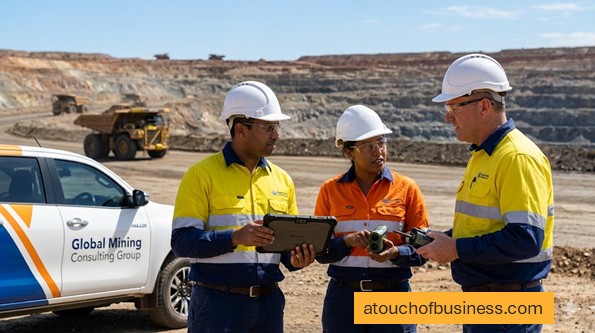
Overview of Starting a Mining Consulting Business
A mining consulting business is a technical advisory firm that helps mining clients make better decisions before, during, and around a project. You are not opening a mine. You are providing expertise, analysis, planning, reporting, and judgment.
Most people think this business is mainly about technical knowledge, but clients also pay for clear scope, clean deliverables, and dependable follow-through. If a client cannot tell what you will do, when you will do it, and what they will receive, your expertise will not carry the sale by itself.
Common services include due diligence, project reviews, mine planning, geological modeling support, risk assessments, prefeasibility or feasibility support, geotechnical input, water-related advice, and technical reporting. Your clients may be mine operators, project developers, exploration companies, investors, lenders, or sometimes legal teams that need expert support.
This is usually a business-to-business service firm with a simple structure at launch. You may start from a home office, a small leased office, or a remote setup and travel to sites when needed. In many cases, your first real assets are your experience, software, contracts, and reputation.
The upside is that you do not need inventory, storefront traffic, or extraction equipment to begin. The harder side is that this business depends on trust, senior-level judgment, and strong writing. Work can also rise and fall with commodity prices, project financing, and mine development activity.
That is why a mining consulting business works best when you start narrow. A small firm with a sharp specialty often launches more cleanly than a broad firm trying to do everything.
Is A Mining Consulting Business Right For You?
Before you worry about software, legal forms, or pricing, ask a more basic question. Do you actually want the day-to-day work? This business is not just site visits and technical problem-solving. It also includes proposal writing, report revisions, document control, client calls, contract review, invoicing, and sometimes long stretches of desk work.
A normal early day might include reviewing project data, joining a discovery call, shaping a scope of work, writing or editing a technical memo, checking a model, answering a client question, and following up on an invoice. If that sounds dull to you, pay attention. The daily work matters more than the business label.
You also need the right kind of pressure tolerance. A mining consulting business can bring tight deadlines, technical responsibility, confidentiality issues, travel, and clients who want fast answers on expensive decisions. If you dislike ambiguity or struggle to set boundaries, this business can wear you down fast.
Now ask yourself this in plain language: Are you moving toward a business you want, or just trying to get away from a job you hate? Starting only to escape a boss, fix immediate financial pressure, or chase the image of being a business owner is a weak reason. You need real interest in the work because passion for the work helps you stay steady when projects slow down or a client sends back a difficult revision.
You also need a reality check. If your experience is broad but your proof is thin, you may need to start with a smaller offer. If your technical skill is strong but your business judgment is weak, you need to close that gap. Running this firm means marketing, scoping, documenting, and protecting the business, not just doing technical work.
Talk with owners who already run firms like this, but speak only with people you will not compete against. Look in another city, region, or market area. Use those talks to ask real questions about pricing, slow periods, software costs, client expectations, proposals, and liability. That kind of firsthand owner insight is hard to replace because it comes from direct experience, even if their path will not match yours exactly.
Choose Your Niche And Service Scope
Your first startup job is to decide what kind of mining consulting business you are actually opening. Do not stop at saying, “I help mining clients.” That is too broad. You need a clear service scope, a clear customer type, and a clear deliverable.
Good early examples include due diligence for investors, mine planning support for operators, technical report support for developers, geotechnical review for project teams, or geological modeling help for exploration-stage work. Each choice changes your software needs, your sales approach, your pricing decisions, and your legal risk.
Keep your first offer easy to explain. A client should understand what problem you solve, what input you need from them, how you work, and what they will get at the end.
- What type of client are you targeting first?
- What specific work will you do for them?
- What will the final deliverable look like?
- What is excluded from the job?
- Will you work remotely, on site, or both?
- Will you use subcontractors for specialist work?
This is where many firms go wrong. They try to serve too many client types at once, offer vague promises, and leave the scope loose. That makes proposals harder to win and projects harder to control.
For a mining consulting business, a narrow starting point is often the safer move. You can still add more services later. Right now, the goal is to launch with something you can deliver cleanly.
Check Whether Your Work Triggers Licensure
This is one of the most important steps in a mining consulting business. Some consulting work stays in general advisory territory. Other work can cross into regulated professional practice, especially if you market engineering services, publicly practice geology in a regulated state, or produce work that must be signed or sealed.
Do this check early. Rules are state-based, not one national rule for every mining consultant. In some states, your own license matters. In others, the firm may also need registration if it is offering regulated services.
Ask yourself a few direct questions before launch. Will you call yourself an engineer or geologist in a way that state law controls? Will you issue sealed engineering work? Will you provide public-facing geologic work in a state that regulates that practice? Will you market across state lines?
- If the answer is yes to any of those, review the state board rules before you provide the work.
- If your role is limited to general advisory support, still verify the boundary so you do not drift into regulated work by accident.
- If you will use subcontractors, make sure their credentials and scope are a good fit.
If your mining consulting business includes mine-site visits, there is another layer to check. Ask the mine operator what contractor onboarding applies, whether a contractor ID is needed, and whether safety training must be completed before anyone enters the site.
You do not need to turn this into a legal study. You do need to know where your service line sits before you go to market.
Set Up Your Business Structure And Name
Once your scope is clear, set up the business itself. In a liability-sensitive field like mining consulting, this is not a detail to leave until later. Your structure affects taxes, contracts, ownership, and how the business is presented to clients.
Many first-time owners compare an LLC, corporation, partnership, or sole proprietorship at this stage. If you need help thinking through your legal structure, do that before you start signing agreements. The right choice depends on ownership, taxes, liability, and how you expect to operate.
After that, register the business name if required in your state. If you plan to use a trade name that is different from the legal entity name, you may also need a DBA filing. Do not assume the name issue is minor. Your business name will show up on proposals, reports, invoices, contracts, insurance documents, and bank records.
This is also a good time to secure your domain and set up a professional email address. A mining consulting firm does not need flashy branding to launch, but it does need a clean and consistent identity.
Get Your Tax ID, Banking, And Bookkeeping Ready
A mining consulting business needs basic financial structure before the first invoice goes out. Get your Employer Identification Number, open a business bank account, and keep the business finances separate from your personal spending from day one.
If you need a simple guide to opening a business bank account, handle that before you start billing clients. Use an account that can support ACH payments, wire transfers, and standard business transactions. Card processing may be useful, but many business-to-business consulting clients pay by invoice rather than card.
You also need bookkeeping in place early. That means a chart of accounts, invoice numbering, expense tracking, contract files, and a clean way to store receipts and payment records. If you do not set that up now, the back office will get messy fast.
Sales tax is another question that varies by state. Some states tax certain services or deliverables, and others do not. Check your state tax department before launch so you know whether your work is taxable.
If you hire employees, you will also need payroll setup and state employer accounts. If you are solo at launch, your setup is simpler, but you still need clean records for taxes and cash flow.
Validate Demand And Pick The Right Clients
A mining consulting business does not need everyone as a client. It needs the right clients. That means you should study who buys your kind of work in your area or target region and why they buy it.
Start with local supply and demand, but think beyond your immediate town if your work can be done remotely or regionally. You may find stronger demand with mine developers, lenders, exploration groups, or operating mines in another state than in your own backyard.
Most people think they need a large firm and a downtown office before serious clients will listen, but many clients care more about technical fit, responsiveness, and proof that you can deliver. A solo or small firm can win contracts if the offer is clear and the trust signals are strong.
Look closely at the firms already serving your target niche. Are they broad generalists? Are they known for a specific technical area? Do they look hard to hire for small jobs? That tells you where a new firm may fit.
Write a short working plan for the first stage of the business. It does not need to be fancy. It does need to answer these questions.
- Which clients are you targeting first?
- What problem are you solving for them?
- How will they find you or hear about you?
- How many paid projects do you need to cover your startup costs and owner draw?
- How much cash reserve do you want before you depend on the business full time?
For a mining consulting business, that kind of planning matters because project work can be uneven. You need a realistic view of demand, not just a belief that technical skill will create sales by itself.
Build Your Offer, Proposal, And Delivery Process
This step turns your knowledge into a real business. In a mining consulting business, the client journey should feel practical from the first inquiry to final payment. If the process feels loose, the client will feel the risk.
A simple launch workflow often looks like this: inquiry, discovery call, data request, proposal, agreement, project kickoff, analysis, review, delivery, invoice, and follow-up. That is the skeleton of the business.
Your proposal should explain the scope, assumptions, timeline, deliverables, fee structure, client responsibilities, revision limits, travel assumptions, and anything excluded from the work. If site work is possible, say how that changes timing and cost. If third-party review or specialist input is needed, say that too.
For many mining projects, the final product is not just advice. It is a memo, model review, risk note, project review, technical report section, or study-stage deliverable that another decision-maker may rely on. That is why scope clarity matters so much.
You also need trust signals. These may include your background, sample deliverable formats, clean proposal design, response time, and a professional discovery process. Do not share confidential client material, but do make it easy for a prospect to see how you work.
Weak proposals, vague offers, and soft boundaries are common early problems in business-to-business consulting. Fix those before launch, not after the first difficult client.
Choose Where The Business Will Operate
A mining consulting business usually does not need a storefront, but it still needs a base. That base may be a home office, a leased office, or a remote setup with travel. Your choice affects zoning questions, home-occupation rules, overhead, privacy, and how you meet clients.
If you work from home, check whether your city or county allows that use and whether home-occupation approval is required. If you lease office space, ask about zoning, sign rules, and whether a certificate of occupancy is required for your use or any build-out.
Keep the physical setup simple at first. This is a service firm. Your goal is a professional work environment that supports secure data handling, reliable calls, and good report production.
If site work is part of your offer, think through travel before you launch. How often will you visit sites? What will clients expect you to bring? What safety gear or onboarding will be required? A remote-first setup is still workable, but only if the field side has been thought through.
Buy The Software, Equipment, And Basic Office Setup
For a mining consulting business, software is often one of the biggest startup decisions. Your exact stack depends on your niche, but common needs include geological modeling tools, mine design or scheduling software, GIS tools, spreadsheet modeling, PDF markup, and secure file storage.
Do not buy software just because it is common in the industry. Buy what fits the service you are offering. If your first offer is due diligence and project review, your needs may be lighter than a firm doing detailed mine planning or complex subsurface modeling.
Your physical setup is usually straightforward.
- Workstation-grade laptop or desktop
- Dual monitors
- High-speed internet
- Webcam and headset
- Printer or scanner if needed
- Secure cloud storage and backup
- Document version control system
- Reliable PDF and spreadsheet tools
If your mining consulting business includes site visits, add personal protective equipment such as a hard hat, safety glasses, high-visibility vest, boots, gloves, a field notebook, and a practical way to capture notes or photos in the field.
There is usually no inventory to manage here. Your real capacity is your time, your review discipline, your software access, and your ability to finish work on schedule.
Create Contracts, Forms, And Internal Documents
This is where the business starts to feel real. A mining consulting business runs on documents. If those documents are weak, the whole business feels weak.
At minimum, build a basic set of internal and client-facing documents before launch.
- Master service agreement
- Scope of work template
- Non-disclosure agreement
- Data request list
- Conflict-check form
- Proposal template
- Review and signoff checklist
- Invoice template
- Travel and expense policy
- Subconsultant agreement template
You may also need reliance language, report transmittal language, and a clear system for tracking versions and review notes. That is especially important when a client decision may depend on your written work.
Think about workflow in order, not just documents in isolation. How does an inquiry become a proposal? How does a signed job move into delivery? Where are files stored? Who approves the final draft? When is the invoice sent? A business-to-business service firm feels stronger when these handoffs are clear.
For a mining consulting business, strong documents also help with confidentiality, scope control, and client onboarding. They protect both the project and the business.
Plan Startup Costs, Pricing, And Funding
There is no one clean startup cost range for a mining consulting business. The total depends on your software, travel, insurance, legal setup, office choice, specialist support, and whether you launch solo or with staff.
Your biggest cost drivers are usually software licenses, senior technical labor, office and equipment setup, travel, legal and accounting help, and working capital for slow-paying invoices. If site work is part of the model, field costs can raise the starting budget quickly.
Pricing is one of the hardest early decisions. If you need help thinking through pricing your services, do that before you send proposals. Many firms use hourly rates, daily rates, fixed-fee project pricing, milestone billing, or a monthly retainer for ongoing advisory work.
The right method depends on the scope. Tight, well-defined work is easier to price as a fixed fee. Open-ended analysis or advisory work often fits hourly or daily billing better. If the scope is vague and you still promise a fixed fee, you are inviting trouble.
Do not underprice just to win work. In a mining consulting business, your fee has to cover more than technical time. It also has to cover review time, revisions, coordination, administration, software, taxes, and the risk that the client asks for more than the original scope.
Funding may come from owner savings, a line of credit, or a business loan if the startup budget is larger. Many firms can start lean, but software and working capital can still create pressure. Build your cost plan around real needs, not around what makes the launch look bigger.
Handle Insurance, Vendors, And Hiring Decisions
A mining consulting business needs outside support even if you stay small. You will likely need a broker, accountant, attorney, software vendors, and one or more specialist contacts you can bring in when a project goes beyond your in-house scope.
Insurance is part of that planning. The right coverage depends on your work, your contracts, your state, and whether you visit client sites. Talk with a broker early so you understand what fits your scope. Do not wait until a client asks for a certificate and then try to fix it in a rush.
If you are new to this side of ownership, take time to understand business insurance basics before you launch. That does not replace broker advice, but it helps you ask better questions.
On hiring, be careful. A new consulting firm does not need employees just to look established. In many cases, it is better to launch with a small core and use trusted subcontractors for specialty work. Hire only when the work is steady enough to support payroll and management time.
Your early vendor list may include software providers, cloud storage, payroll support, a CPA, legal help, and technical specialists in areas such as metallurgy, hydrogeology, survey, or advanced geotechnics. Build those relationships before you need them on a live deadline.
Prepare Your Name, Website, And Client-Facing Materials
A mining consulting business does not need a big marketing engine to open, but it does need a professional front door. That usually means a domain, business email, a simple website, a short capability statement, and a clean way to present proposals and credentials.
Your website can stay simple at launch. Focus on who you help, what services you offer, what kind of projects you handle, and how to contact you. If your work involves confidentiality, do not force case studies that you cannot safely share. It is better to describe your background and process clearly than to post vague claims.
Basic identity materials help too. A simple logo, a consistent document style, and business cards can be enough. The goal is not to look flashy. The goal is to look stable, competent, and easy to work with.
Your early sales approach should also match the business model. This kind of firm often grows through direct outreach, industry relationships, former colleagues, professional referrals, and repeat work. Start with the people most likely to need your exact offer.
Client handling matters from the first call. Respond quickly. Ask good discovery questions. Send clear next steps. A mining consulting business wins trust when the process feels organized from the start.
Test The Workflow Before You Launch
Before you open the doors, run the business once without a real client. This is one of the smartest things you can do. A dry run shows you where the weak spots are while the stakes are still low.
Walk through a sample project from inquiry to payment. Test the discovery questions, proposal template, agreement, file storage, review process, delivery method, and invoice. If site work is part of your offer, test the travel checklist and safety gear too.
For a mining consulting business, the final pre-launch check should cover the whole chain, not just marketing.
- Business registration is complete
- Employer Identification Number is in place
- Banking and bookkeeping are ready
- State scope questions have been checked for any regulated work
- Local zoning or office-use questions have been cleared
- Software is installed and working
- Templates and contracts are finished
- Insurance planning is handled
- Subconsultant contacts are lined up if needed
- Website, email, and contact details are live
- Sample proposal, sample report, and sample invoice have been tested
Watch for red flags at this stage. A vague offer, weak contract language, unclear pricing, missing software, messy recordkeeping, or no clear lead source can all slow the launch down. If one of those problems shows up, fix it before you start taking work.
The opening goal is simple. You want a mining consulting business that can take in a client inquiry, scope the work, deliver the project, invoice correctly, and protect itself while doing it. If that system is ready, you are much closer to a clean launch.
FAQs
Question: Do I need a license to start a mining consulting business?
Answer: That depends on the work you plan to offer. General advisory work may not need a professional license, but engineering or public geology work can trigger state board rules.
Question: Can I start this business from a home office?
Answer: Yes, many owners begin that way. You still need to confirm local zoning and home-based business rules before you use your address for the firm.
Question: What is the best first service to offer?
Answer: Start with one service you can explain and deliver without confusion. A focused offer is easier to sell than a long list of loose services.
Question: Should I work alone at first or bring in partners?
Answer: Many new firms open with one owner and a small outside network. That keeps fixed costs lower while still giving you access to specialty support when a job needs it.
Question: What business structure makes sense for a new mining consulting firm?
Answer: Many owners compare an LLC, corporation, partnership, or sole proprietorship before they register. The right fit depends on liability, taxes, ownership, and how you want to run the company.
Question: Do I need an Employer Identification Number before I open?
Answer: In most cases, yes. It is commonly needed for taxes, banking, hiring, and business paperwork.
Question: Will I need special approval or training if I visit mine sites?
Answer: You may need mine-site approval items even if your office setup is simple. Ask the mine operator about contractor ID, access rules, and any required safety training before the visit.
Question: What insurance should I ask about before taking my first project?
Answer: Start by speaking with a broker about the risks tied to your scope of work and any site travel. Coverage needs can change if your work includes technical opinions, field visits, or subcontractors.
Question: How much does it cost to open a mining consulting business?
Answer: There is no single number that fits every launch. The total can change a lot based on software, travel, legal help, office setup, insurance, and whether you hire staff right away.
Question: What software should I buy first?
Answer: Buy software that matches the exact work you plan to offer. Some firms need modeling or mine planning tools, while others can begin with lighter systems for review, reporting, and data analysis.
Question: How should I set prices for my first jobs?
Answer: Match the fee method to the job. Fixed fees work better for tight scopes, while hourly or daily billing often fits work that may shift as new data comes in.
Question: What legal paperwork should I have before I sign a client?
Answer: You should have a solid agreement, a defined scope, and a way to handle confidential information. It also helps to prepare proposal forms, invoice templates, and a short list of project assumptions.
Question: What does the first month usually look like after opening?
Answer: The early phase is often a mix of sales calls, proposal work, setup tasks, and delivery on small projects. You may spend as much time on documents and follow-up as on technical work.
Question: What simple systems should I set up before launch day?
Answer: Put basic systems in place for file storage, backups, version control, invoicing, time tracking, and contract storage. Those tools keep work organized when client requests start to pile up.
Question: How do I keep the scope from getting out of hand on early projects?
Answer: Be specific about what is included, what is not included, and how changes will be handled. A short, clear scope can save you from unpaid work later.
Question: When should I hire an employee instead of using a subcontractor?
Answer: Hire when you have steady work that can support payroll and management time. For many new firms, outside specialists are the safer first option.
Question: How do I handle cash flow in the first few months?
Answer: Keep a reserve because business-to-business payments can move slowly. Shorter invoice cycles, clear payment terms, and quick billing help reduce early strain.
Question: What should my first client intake process include?
Answer: Start with a discovery call, a data request, and a written scope. That gives you enough detail to price the work and avoid confusion later.
Question: What are the most common early mistakes in this business?
Answer: New owners often try to cover too many service lines at once, price too low, or start work with weak paperwork. Another common problem is buying expensive tools before the offer is fully defined.
Expert Advice From People In Mining
You can learn a lot faster by hearing how people already in mining think through risk, project choice, financing, leadership, and technical judgment.
The resources below give your reader direct access to interviews with mining entrepreneurs, operators, and consultants whose experience can help shape smarter early decisions.
- What Every Mining Entrepreneur Needs To Know With Ivan Bebek — Behind Success
Useful for lessons on building companies, forming teams, and getting a venture off the ground in the mining space. - Interview With Ross Beaty — Dig Deep
A strong pick for readers who want to hear from a well-known mining entrepreneur about what it takes to build companies in this industry. - How $2 Million Became $500 Million In Mining — Interview With Bryan Slusarchuk
Helpful for readers who want real-world perspective on opportunity, execution, promotion, and venture-building in mining. - From Equinox To Equinox: Being An Entrepreneur In Mining — The Assay
A detailed Q&A with Ross Beaty that gives practical insight into building mining businesses from scratch. - Interview With Neal Rigby, Corporate Consultant — SRK Consulting
Useful for readers who want a consultant’s view of mining project evaluation, risk, and the kind of thinking clients pay for. - The Northern Miner Podcast: Ross Beaty Interview
A good resource for hearing how an experienced mining builder thinks about commodities, markets, and company direction. - Building A Red Lake Gold Mining Company — The Assay
A useful interview for readers who want to see how an experienced team identified an asset, raised money, and built around location knowledge.
Related Articles
- How To Start a Lithium Mining Company
- Starting a Profitable Quartz Mining Business
- Start a Geology Consulting Business
- Starting an Environmental Consulting Firm
- How To Start Your Successful Energy Consulting Business
- How To Start an Engineering Firm
- How To Start a Risk Management Consulting Business
- How To Start Your Consulting Business
- Start a Land Survey Business
- Starting a Geothermal Drilling Business
- How To Start an IT Consulting Business
Sources:
- SBA: Choose Business Structure, Open Bank Account, Pick Business Location, Licenses And Permits, Fund Your Business
- IRS: Get Employer ID Number, Employment Taxes
- NCEES: Licensing Board Directory
- ECFR: Part 45 Independent Contractors
- MSHA: Contractor ID Request, Part 46 Contractor Training
- SRK Consulting: Mining Project Evaluation, Due Diligence Reviews, Mining Viability Studies
- Seequent: Leapfrog Geo Software
- BLS: Mining Geological Engineers, Geoscientists Outlook