
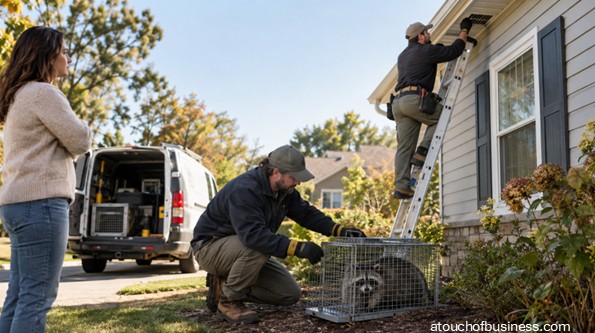
What to Expect From This Guide to Starting a Wildlife Removal Business
This guide walks you through the key decisions and practical steps involved in starting a wildlife removal business. The highlights below show selected areas, and the article goes deeper on each.
Inside the guide, you will find:
- Startup steps: Follow 16 ordered steps from testing your fit and choosing an entry path through funding, pricing, and pre-opening checks.
- Fit and risks: Weigh red flags on demand, credential delays, physical demands, disease exposure, and thin margins before you spend money.
- Local requirements: See why licensing, allowed methods, and bird and bat rules vary by location and should be verified before buying equipment.
- Health protection: Review rabies vaccination guidance, dust protection, and respirator considerations for working around wildlife and droppings.
- Profit and demand: Work through local demand checks, break-even logic, slow-period planning, and operating capital before major purchases.
- Mobile setup: Plan gear, loading routines, and service areas for mobile work, including travel time and vehicle setup.
- Common questions: Find answers on relocation, certification, part-time operation, and whether helpers can work under your license.
Start with the fit questions below to see whether a mobile wildlife removal business matches your strengths, schedule, and tolerance for risk.
Wildlife control operators travel to homes and businesses to inspect for animal activity, remove problem animals, and seal the openings animals use to get in.
As a wildlife removal business owner, you work from a vehicle instead of a storefront.
Your service area, schedule, and equipment routines shape every job.
This guide walks you through the startup steps in order and flags risks where they can hurt you, your customers, or your budget.
Is a Wildlife Removal Business a Good Fit for You?
A wildlife removal business fits best when you can handle heights, live animals, urgent calls, and disease risks with steady, repeatable routines.
Physical demands include ladders, attics, tight crawlspaces, heat, and dust.
Daily tasks include inspecting roofs and attics, trapping, sealing entry points, and handling live wild animals.
Customers hold different views on what “humane” means. Legal methods in some places include euthanasia.
Ask yourself whether you can follow the law even when a customer wants something different.
Consider the personal side too. Can your household handle an income gap while you finish training, credentials, and your first jobs?
Plan for slow months and for the real possibility that this venture doesn’t work out.
Urgent calls make your schedule unpredictable, so talk with family or household members about the time demands before you commit.
Startup costs, operating costs, and access to capital matter here. Steps 8 and 10 show you how to list and price them.
Useful skills include species identification, animal handling, trapping, basic carpentry, customer communication, and estimating.
Learn from experienced business owners you won’t compete against. Step 1 explains how.
Think about who your first customers will be and why they would choose you. Then decide how you’ll reach them at opening.
You can start from scratch, buy an existing wildlife control operation, or explore a franchise. Step 2 compares those paths.
Red Flags Before You Start
Weak local demand, a slow credential path, and legal methods you can’t accept can each stop a wildlife removal startup.
Physical or disease risks you can’t manage can also end a startup before it begins.
Review each red flag below before you spend money. Each one says whether to pause, verify, change your approach, or reconsider.
- Weak demand or a crowded market: Independent operators, franchise owners, and pest control owners who add wildlife services all compete for calls. Verify with local operator directories and owner conversations. Change your species scope or service area if the field is crowded.
- Credential delays: Training, exams, and application processing can delay your opening. Pause spending until you know the timeline.
- Method conflicts: Relocation limits and required euthanasia may clash with your comfort or your customers’ expectations. Reconsider your approach, or the business, if you can’t perform the legal methods.
- Physical demands and disease exposure: Heights, tight spaces, rabies, and histoplasmosis come with the job. Reconsider if you can’t meet the physical demands or follow protective routines.
- Species-specific restrictions: Birds, bats, and listed species carry federal and state rules. Narrow your scope until you’re credentialed.
- Seasonal limits: Some jobs are legally restricted at certain times, and demand can be uneven. Calculate how you’d survive a slow period before you commit.
- Insurance fit and liability: Coverage for wildlife control can differ from general pest control coverage, and repairs add liability. Verify availability before you buy equipment or take jobs.
- Thin margins: Low-value trapping calls that need several follow-up visits can leave little profit. Shift toward higher-value exclusion and repair jobs only if you can perform them legally and skillfully.
Three structural conditions apply to the whole industry, no matter how skilled you are:
- Rules form a patchwork across states and cities.
- Poorly done exclusion work leads to repeat calls and litigation risk, according to NWCOA.
- Waste and carcass disposal come with every job.
Treat these conditions as context for realistic planning, not as reasons to walk away.
Step 1: Test Your Fit With Non-Competing Owners
Talk with experienced owners who won’t compete against you, and prepare your questions before each conversation.
Good choices include wildlife control operators who serve other regions, plus pest control or chimney business owners outside your service area.
Each owner’s path is different, but firsthand experience shows you what the daily job is really like.
Ask each owner about:
- Call patterns by species and season
- The hardest jobs they’ve faced
- The licensing path in their area
- Their insurance experience
- How they price jobs
NWCOA, the National Wildlife Control Operators Association, offers networking and mentorship.
Step 2: Choose Your Entry Path
Your best entry path depends on your budget, timeline, support needs, available operations for sale, desired control, and risk tolerance.
Four entry paths are realistic for wildlife removal:
- Start from scratch as a stand-alone wildlife control business.
- Add wildlife control to an existing pest control or home-service operation.
- Buy an existing operation. Verify whether operator licenses, permits, and pesticide credentials are tied to the individual or transfer with a sale.
- Join a franchise. At least one national wildlife control franchise system exists, so read its Franchise Disclosure Document before comparing support, territory, and obligations.
Decide whether you’ll work solo or with staff, because staffing affects credential rules in Step 4.
Step 3: Define Services, Species, and Service Area
Start with a narrow species list and a defined service radius, then expand as your skills and permissions grow.
Core service lines include:
- Inspection
- Trapping and removal
- Exclusion and entry-point repair
- Dead animal removal
- Droppings cleanup and deodorizing
- Attic and crawlspace restoration
- Bird deterrents and netting
- Bat exclusion and hand capture
- Repellent application, where permitted
Species scope changes your legal and skill demands. Bats bring seasonal and listed-species rules, birds bring federal protection, and snakes add handling risk.
Rabies vector species such as raccoons, skunks, and foxes face relocation limits in some states.
Red flag: Accepting a bat or bird job before you know the federal and state rules can create legal exposure.
Decide whether you’ll serve residential customers, commercial customers, or both.
Weigh these factors before you offer repairs or cleanup:
- Contractor licensing for repair work
- Protection from hazardous dust
- How your insurance treats the work
- Staffing
- The value of each job
NIOSH notes that some large droppings accumulations call for professionals who specialize in hazardous waste.
Trade press suggests keeping trusted electricians, plumbers, and HVAC professionals ready for problems you find but don’t fix.
Map a service radius using travel time, fuel, and response time.
Long drives between jobs cut into your paid hours, so set travel boundaries before you quote.
Decide your method approach. One-way doors and exclusion are common options where relocation isn’t permitted.
Step 4: Verify Your Licensing Path Before Buying Equipment
Requirements vary by location, so confirm your licensing path and allowed methods before you buy any gear.
Start with your state fish and wildlife or natural resources agency.
Ask your state agency what it requires to qualify: a license, permit, registration, approved training, an exam, or documented experience.
Ask your state agency about license tiers, employee rules, and reporting duties.
Ask your agency which methods are allowed. Cover relocation, euthanasia, trap types, trap identification, live-wildlife transport permits, carcass disposal, and required reports.
Then check these other layers:
- Your state pesticide regulator, if you’ll use repellents, rodenticides, or other pesticides commercially
- City and county ordinances on trapping, releasing animals, and local bird protection
- Federal rules on birds and listed species
Federal rules shape bird and bat work:
- The Migratory Bird Treaty Act protects almost all native birds, nests, and eggs.
- Starlings, feral pigeons, and house sparrows aren’t protected by that law, but local ordinances may protect them.
- Destroying an active nest with eggs or chicks requires a permit.
- Inactive nests may be destroyed without a permit if the nest is destroyed, not kept.
- Eagles and federally listed birds fall under separate rules.
- The Endangered Species Act prohibits “take” of listed species without a permit, and some bat species are federally listed.
Check permit and species-status details with the U.S. Fish and Wildlife Service.
National bat guidance offers practices intended to help you avoid violations.
Some states restrict or bar bat exclusions during the season when flightless pups are present. Some limit bat work to non-lethal methods.
Course dates, exam schedules, and application processing can set your opening date, so plan your timeline around them.
Red flag: Buying traps or exclusion products before you confirm legal methods can leave you with gear you can’t use.
Step 5: Complete Wildlife Training and Credentials
Finish the training your state requires, then use industry courses to build the technical skills the job demands.
NWCOA’s two-day operator course serves new and current operators.
The NWCOA course covers bats, birds, squirrels, other common species, animal biology, handling, euthanasia, inspection, and safety.
Some states accept or require NWCOA courses for licensing, and some approve them for pesticide credits.
Where your state requires it, complete the approved training, pass the exam, and submit the application.
The extension manual Best Practices for Nuisance Wildlife Control covers legal issues, job safety, best practices, and business basics.
NWCOA also offers bat standards, rodent management, and bird management courses.
Adopt a written code of ethics: follow wildlife laws and treat people, property, and wildlife with respect.
Step 6: Set Up Health and Safety Protection
Plan your rabies vaccination, dust protection, and injury routines before you handle wildlife or disturb droppings.
CDC guidance places wildlife trappers and animal control workers in an elevated-risk category for rabies.
The guidance recommends a two-dose pre-exposure series with a follow-up titer check or booster.
Workers who frequently contact bats fall in a higher category, with titer checks every two years.
Pre-exposure vaccination doesn’t remove the need for medical attention after an exposure.
Talk with a physician or your local health department before your first animal contact. A vaccine series takes time.
Red flag: Handling bats or other wildlife before you’ve followed vaccination guidance exposes you to rabies risk.
Disturbing accumulated bird or bat droppings can expose you to histoplasmosis.
NIOSH recommends these protections:
- Water spray to limit dust
- Disposable hooded coveralls
- A NIOSH-approved respirator
- Eye protection and gloves
- Disposable shoe coverings
- A site safety plan
- Warning signs on contaminated areas
- Disposal of contaminated material under state and local rules
If employees wear respirators, OSHA’s respiratory protection standard applies. It covers a written program, medical evaluation, fit testing, and training.
Plan for ladder and roof safety.
Set up a routine for reporting bites and scratches to your local health authority.
Step 7: Validate Local Demand and Competition
Confirm that enough customers in your service area need wildlife control, and see who already serves them, before you make major purchases.
Learn which animals cause the most problems locally and when those problems peak.
Competitors include independent operators, franchise owners, and pest control owners who also offer wildlife services.
Some state agencies publish operator directories. Use one to see how many licensed operators serve your counties.
Weigh the number of licensed operators against local supply and demand in your service area.
Likely first customers include:
- Homeowners with animals in attics, walls, chimneys, or crawlspaces
- Property managers
- Commercial property owners
Why would these customers choose you? They want animals out, entry points sealed, and proof of the completed job.
NWCOA’s hiring guidance points customers toward operators with insurance, written contracts, and references.
Reach customers at opening through referral relationships, directory listings where offered, and clear contact details.
Some pest control owners refer wildlife calls to specialists, which makes them useful referral partners.
Step 8: Run the Profit and Break-Even Check
You need enough paid jobs, at prices that cover your costs and time, to justify starting a wildlife removal business.
Revenue comes from a mix of trapping calls, exclusion projects, repairs, and restoration.
Bundled packages raise the value of each job.
Time costs cut into your profit:
- Inspections
- Follow-up trap checks
- Travel across your service radius
- Quoting
- Paperwork
- Material pickups
Demand and the legal windows for certain jobs can vary by species and season. Bat exclusion is restricted in some places during pup season.
List your costs in two groups:
- Fixed costs: insurance, vehicle, loan or lease payments, software, and renewals
- Variable costs: materials, disposal, labor, and fuel
Then calculate with your own prices and your gross margin.
Work out how many jobs per month you need to cover fixed costs.
Test a slow-month scenario. Then test whether your service area supports enough jobs.
Finish your break-even check before you buy a vehicle, equipment, a franchise, or an existing operation.
Red flag: Low-value trapping calls that need several follow-up visits can leave little profit after travel time.
Step 9: Choose a Structure, Register, and Set Up Taxes
Choose a legal structure with an attorney or accountant, then register and set up tax accounts before you take paid jobs.
Compare sole proprietorship, LLC, and corporation. Property-damage and injury claims make liability protection a real question in this trade.
Register your business name or DBA where required. Get an EIN if you form an entity or hire employees.
Verify with your state revenue department how services, repair labor, and materials are taxed.
Open employer accounts if you hire.
Apply for your city or county business license and any permits.
If you run from home, check home-occupation rules, including limits on equipment storage or work vehicle parking.
Check whether repair work requires contractor licensing or building permits.
Step 10: Plan Funding and Operating Capital
List every cost you’ll face and price each item locally, since that gives you your most accurate estimate.
Startup costs vary by entry path, species scope, staffing, equipment, vehicle, and service radius.
Cost categories to price out:
- Training and exam fees
- License, permit, and pesticide certification fees
- Rabies vaccination series and titer check or booster
- Equipment and protective gear
- Respirator program items, if you have employees
- Vehicle and upfitting
- Exclusion material stock
- Software and a business phone
- Registration and local licenses
- Insurance
- Disposal
Plan operating capital to cover the gap between training and your first paid jobs.
Include slow seasons and delayed payments in your operating capital plan.
Funding options to explore:
- Personal savings
- Equipment and vehicle financing
- Small-business loans
- Franchise financing terms in the disclosure document
Confirm funding before you commit to a vehicle, equipment, a franchise, or an existing operation.
Open a business bank account after registration and your EIN. Keep business and personal transactions separate.
Set up on-site payment methods, such as cards and invoices, and test them.
Step 11: Arrange Insurance and Risk Planning
Verify which coverage your state or licensing agency requires.
Then price extra coverage that protects you from property damage, injury, and vehicle claims.
Some pesticide programs ask for proof of liability insurance. Employee rules may trigger workers’ compensation requirements.
Meet an insurance agent who understands wildlife control. Trade press notes that coverage can differ from general pest control.
Learn how business insurance works before you meet an agent.
Coverage to discuss as risk planning:
- General liability for property damage during removal and repair
- Commercial auto
- Workers’ compensation if you hire, subject to state rules
- Coverage for cleanup and restoration work
Have an attorney review your contracts, terms, and disclaimers.
Step 12: Set Up Equipment, Vehicle, and Suppliers
Buy gear in priority order, based on your service scope from Step 3 and the methods your jurisdiction allows.
Core equipment categories include:
- Cage or live traps sized for your species
- One-way exclusion doors and funnels
- Catch poles, nets, and bite-resistant gloves
- Ladders and headlamps
- Thermal imaging or inspection cameras
- Mesh, flashing, sealants, fasteners, chimney caps, and vent covers
- NIOSH-approved respirators and protective coveralls
Lethal traps are legal only in some places, and their sizes and use are regulated.
Snake tools matter only if snakes are in your scope.
Bats can use very small gaps, so seal the whole structure instead of only the obvious openings.
If restoration is in scope, add:
- A HEPA vacuum
- A water sprayer for dust suppression
- Disinfectants and deodorizers
- Disposal bags and containers
- Insulation removal and replacement tools
Choose a vehicle or trailer that carries ladders, traps, and exclusion materials with secure storage. Add vehicle identification.
Build a loading routine so every job starts with the traps, materials, and protective gear you need.
Keep the vehicle maintained and consider carrying backup traps and materials, because a breakdown or missing item costs you jobs.
Compare new, used, and already-owned equipment based on species scope, legal trap specifications, condition, warranty, and replacement needs.
Compare suppliers for traps, exclusion products, and protective gear.
Arrange disposal for carcasses and cleanup waste under state and local rules.
Ask your wildlife agency what to do with sick, injured, or orphaned animals.
Confirm whether transporting live wildlife requires a permit in your area.
Prepare trap identification and logs where required.
Step 13: Set Prices, Contracts, and Documentation
Choose a pricing method that customers can understand, then document every job with a written agreement and photos.
Common pricing methods include:
- Flat quotes for exclusion projects
- Per-visit or per-trap fees
- Tiered packages
- Itemized repair and restoration bids
Regulators generally leave operator fees to you and the customer.
Build these factors into your prices:
- Number of entry points and access difficulty
- Species
- Follow-up trap visits
- Travel distance
- Materials and disposal
- Warranty terms
- Repair scope
- Residential versus commercial work
Create a written service agreement, an estimate template, and an inspection report template with photo capture.
NWCOA advises customers to expect a written contract.
State the scope, methods, warranty terms, and exclusions. Set deposit and payment terms.
Clear scope and clear pricing reduce customer disputes.
A practical job flow looks like this:
- Inquiry and scheduling
- Inspection and estimate
- Signed agreement
- Removal and exclusion work
- Final check of sealed openings, with photos
- Payment
- Follow-up trap checks or warranty visits
Set up trap logs, species and outcome records, and any regulator reports.
Step 14: Build Your Business Identity and Contact Setup
Set up a business name, phone, email, website domain, and vehicle identification.
Clear contact details help customers find and trust you on the first call.
Choose a business name that fits your permits and signage.
Urgent calls make reliable contact details a priority.
Prepare uniforms or ID for on-site visits.
Opt into state operator directories where offered.
Step 15: Hire and Train Staff When You Add Them
Verify how your state treats employee credentials before anyone handles wildlife for you.
Screen candidates for the physical ability to work at heights.
Trade press recommends working with an occupational health specialist on pre-employment screening.
Train staff on inspection, exclusion, and prevention.
Cover vaccination guidance, protective gear, and any respirator program duties.
Set up payroll accounts and verify workers’ compensation rules.
Step 16: Complete Pre-Opening Assessments
Run a full practice cycle and confirm every credential, policy, and piece of gear before your first paid wildlife job.
Complete a mock inspection and estimate to test your paperwork and timing.
Test your loading routine and travel time as part of the practice cycle.
Confirm these items before you accept calls:
- License, permit, and pesticide certification in hand where required
- Training certificates filed
- Rabies vaccination guidance followed
- Insurance certificates in hand
- Business registration, local license, and zoning check complete
- Legal methods confirmed for every species you’ll accept
- Trap tags, logs, and reporting forms ready
- Euthanasia and carcass disposal arrangements confirmed
- Agency contacts for injured or orphaned animals saved
- Referral partners identified for repairs you don’t perform
- Local ordinance review complete
Business Plan
A business plan for a wildlife removal business ties together your startup decisions and the jobs you need to break even.
Organize these startup decisions in one plan:
- Services and species scope
- Service radius and customer types
- Credential and licensing timeline
- Startup cost list and operating capital
- Funding sources
- Pricing method and gross margin
- Break-even jobs per month
- Slow-period scenario
- Insurance and risk plan
- Pre-opening checklist status
Break-even means your jobs earn enough margin each month to cover fixed costs like insurance, vehicle payments, and software.
Use your own local numbers. Prices, costs, and demand differ by area, so another operator’s figures won’t fit your situation.
Add a slow-month scenario. Include dipping calls, restricted bat jobs, and late payments so you know how long you can operate.
Opening-Day Red Flags
The main opening-day red flags are missing credentials, unconfirmed legal methods, and gaps in insurance, payment, disposal, or protective gear.
Any missing credential or setup item can delay your first job or create legal exposure. Fix it before you accept calls.
- Credentials or permits not in hand: A job taken without them puts your legal standing at risk.
- Unconfirmed methods for a species you accept: Confirm what’s legal before you set a trap.
- Insurance that doesn’t match your services: A claim during repair or cleanup work can expose you to uncovered costs.
- Untested payment methods: A failed card reader can stall payment on your first job.
- No disposal plan: Carcasses and cleanup waste need a lawful destination before you fill a container.
- Incomplete protective gear or vaccination guidance: Delay animal contact until both are in place.
- An unstocked or unmarked vehicle: A missing trap or material can waste a trip.
- No plan for injured or orphaned animals: Confirm agency contacts before you meet one on a job.
- Missing agreement, estimate, or inspection templates: Unclear scope invites customer disputes.
Red Flags Before You Spend
Stop and verify before you spend when your credentials, legal methods, profit check, or insurance answers are still open.
- Buying a vehicle or gear before your license path and allowed methods are confirmed
- Signing for a franchise or an existing operation before you verify credential transfer and run your break-even numbers
- Choosing a service radius before you’ve mapped travel time and fuel
- Offering repairs or cleanup before you’ve checked contractor licensing, dust protection, and insurance fit
- Adding staff before you’ve verified how your state treats employee credentials
Each item above connects to an earlier step. Pause spending until that step is settled.
Frequently Asked Questions
Is relocating a trapped animal the kinder or legal choice?
Relocation is not always the kinder or legal choice, and some places prohibit it.
Some agencies advise against relocation because relocated animals may starve, return, or move the problem to someone else.
Many agencies bar release on lands they manage.
Some jurisdictions require euthanasia for certain species.
Check your state wildlife agency before you promise customers relocation.
Do you need the Certified Wildlife Control Professional designation to open?
No. NWCOA’s Certified Wildlife Control Professional designation is a voluntary credential, not a license.
Applicants need three years of full-time experience or a longer part-time equivalent.
Applicants must also pass an exam, pledge to follow an ethics code, and submit an application.
State licensing is separate. Some states accept NWCOA certification or courses toward their own requirements.
Does pest control experience prepare you for wildlife control?
Not automatically. NWCOA says pest control differs from wildlife control.
Trade press says a wildlife technician faces demands that differ significantly from those of a general pest technician.
Can you run a wildlife removal business part-time around another job?
Part-time operation depends on the trap-check rules where you operate.
Many jurisdictions require live traps to be checked at set intervals, sometimes once each calendar day.
Some jurisdictions allow electronic monitoring or a designated agent to do the check.
Trap-check rules limit how many active sites you can hold around a full-time schedule.
Can employees or helpers work under your license?
Whether helpers work under your credentials depends on your state.
Some states require each individual who does wildlife control to hold their own credentials.
Some tiered systems allow supervised helpers, who carry a copy of the supervisor’s license.
Interviews with Wildlife Removal Business Professionals
These interviews share firsthand experiences from wildlife removal business owners and professionals. They cover getting into the field, developing services, humane removal methods, customer relationships, hiring, operations, specialization, and business growth.
Readers can use these experiences to better understand the work behind a wildlife removal company and consider different approaches to services, positioning, problem-solving, and building the business.
Humane Philosophy in Wildlife Control – Gates Wildlife Control
Brad Gates explains how he started Gates Wildlife Control with a used truck and basic equipment and developed an approach centered on humane wildlife removal. He discusses species-specific procedures, one-way doors, customer expectations, and the principles that shaped his company.
This interview is useful for understanding how a clear service philosophy can influence operating methods and business identity. It also provides perspective from an owner with decades of experience in wildlife control.
Interview With Rebecca Dmytryk of Humane Wildlife Control
Rebecca Dmytryk discusses how her wildlife rescue experience developed into a nuisance wildlife control business. She explains her long-term approach to solving wildlife conflicts, including exclusion work, animal behavior, humane practices, and evaluating the conditions that allow animals to enter properties.
This interview offers useful perspective on treating wildlife removal as a problem-solving service rather than simply removing animals. It also shows how specialized knowledge and a distinct operating philosophy can shape a company’s services.
From One Man Show to 20+ Employees with Matthew Eickman
Matthew Eickman discusses his entrepreneurial journey as the owner and president of Abra Kadabra Environmental Services, a pest and wildlife control company. The conversation looks at growing the company from a one-person operation to a business with more than 20 employees.
This interview gives prospective owners a view of how a small wildlife and pest control operation can change as employees and business volume increase. It can help readers think about the operational demands that come with moving beyond working alone.
America’s Largest Wildlife Removal Company | Derek Tolley EP 51
Derek Tolley discusses starting a wildlife removal company in the residential market and later pursuing commercial wildlife work. He explains how he identified an opportunity involving birds inside commercial facilities and developed methods and systems around that specialized service.
This interview is useful for readers considering how specialization and identifying an underserved problem can influence a wildlife removal business. It also provides perspective on moving from residential work toward larger commercial customers.
Bill Dowd: Why Are So Many Entrepreneurs Ignoring Businesses Like This?
Bill Dowd discusses building Skedaddle Humane Wildlife Control from a one-truck operation into a multi-location business. The conversation covers systems, customer service, hiring, training, franchising, operational consistency, and changes in expectations around humane wildlife control.
This interview helps readers see the business side of wildlife removal beyond fieldwork. It provides perspective on creating repeatable processes, building a team, maintaining service standards, and preparing a service company for growth.
Coastal Wildlife & Pest Services
Owner Jason Shepard explains how he moved from the glass industry into wildlife control before starting Coastal Wildlife & Pest Services. He discusses what attracted him to the work, balancing profitability with customer relationships, the company’s service area, property-related wildlife problems, and the importance of trust when hiring.
This interview gives readers a practical look at changing careers, gaining experience in wildlife control, and eventually starting an independent company. It also highlights customer relationships and employee character as considerations when building the business.
Related Articles
Sources:
- NWCOA: Certified Wildlife Control Professional, Wildlife Operator Training Course, Hiring Guidance for Customers
- NWCOA Bat Standards: NWCOA Bat Standards
- Pest Management Professional: NWCOA Training Opportunities, Wildlife Control Add-On Service
- PCT Online: Wildlife Control Certification
- ICWDM: Wildlife Control Operator Terms
- U.S. Fish and Wildlife Service: Depredation Permit FAQ
- White-Nose Syndrome Conservation and Recovery Working Group: Bat Control Management Practices
- Bat Conservation International: Bat Management Practices Release
- Delaware DNREC: Bat Exclusion Best Practices
- CDC: Rabies Pre-Exposure Guidance, Preventing Histoplasma Exposures, Histoplasmosis Prevention Sheet
- OSHA: Respiratory Protection Standard
- Pesticide Stewardship: Vertebrate Pest Pesticides
- IRS: Apply for an EIN
- Connecticut DEEP: Becoming a Wildlife Operator, Operator Brochure
- Iowa DNR: Wildlife Control Operators
- New Hampshire Fish and Game: Wildlife Control Operator Levels, Operator License Application
- Oregon Department of Fish and Wildlife: Wildlife Control Permit
- Ohio Laws and Administrative Rules: Nuisance Animal Control Rule
- Missouri Department of Conservation: Wildlife Control Guidelines
- Indiana DNR: Operator Directory
- Franchising.com: Wildlife Franchise Overview