
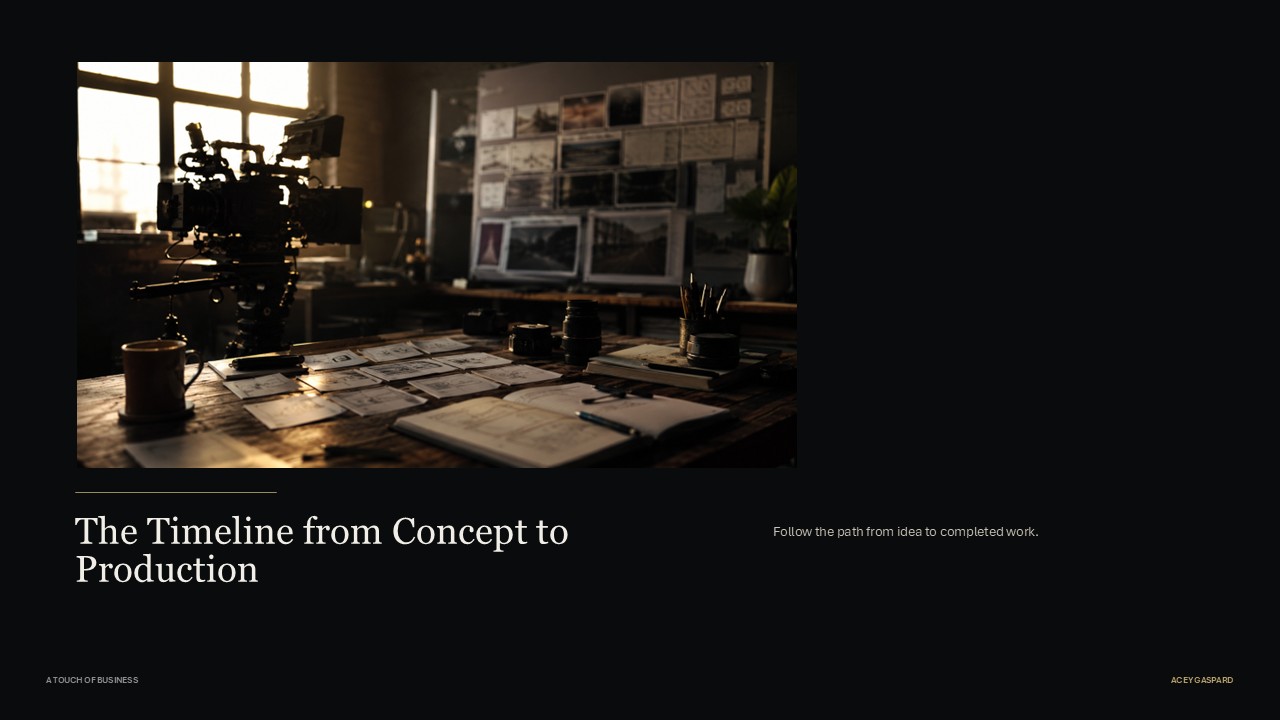
From Concept to Production
This article looks at how product design and manufacturing sped up over the past century, and what that speed means for small business owners and manufacturers today.
Speed matters more than ever in business. Customers place an order and expect it filled fast.
Life didn’t used to work this way. It used to be slower, and people accepted that.
Go back to the age of sailing ships, and crossing the Atlantic could take two months or more, with no guarantee you’d arrive safely or in good health.
By the early 1900s, steam-powered ocean liners had cut that trip to about a week. Today, a flight from Europe to New York takes seven or eight hours. If there’s a delay, people complain. A trip that once took months now takes hours. Yet a small delay still causes chaos.
Here’s how I see it.
Products and services follow the laws of supply and demand. If there’s demand for something, someone builds a business to meet it and turn a profit.
That’s what drives progress. It’s what keeps us innovating.
Back in the ’70s, when I was a kid, new products showed up on department store shelves maybe once or twice a year.
Let’s take a simplified example.
Think of any household appliance. Designers used to sketch the design by hand, then get sign-off from the team.
With sign-off in hand, they’d build a clay model. Once that passed review, they’d build a working prototype.
Sales, marketing, upper management, and other departments all had to give the final go-ahead. Then the product moved to production. From there, it landed on department store shelves.
Let’s look at the timeline for a few of these steps.
Creating the initial design by hand. This could take an artist a few days to a few weeks. With computer-aided design (CAD) programs, the same design now happens in hours. As of 2026, industry benchmarks put CAD-based design cycles 30 to 50 percent shorter than equivalent manual drafting.
Creating the clay model. This process could run weeks or months to get a final model ready for review. Any change meant reshaping the clay to match the new spec, and that ate up the schedule.
Today, CAD programs let you visualize the product on screen. The same program gives exact measurements. What used to run a few months in the ’70s — drawing, visualizing, measuring — now happens in a few days.
Some of the old steps from the ’70s are still used today. But the whole process moves much faster now. People can take a product from design to store shelf at an impressive rate.
Sometimes I walk into a store and see a whole new line of products. I think, “I was just here a couple of weeks ago. When did they come up with this?”
A few weeks go by, and there’s something new again. That’s what technology makes possible.
If you’re a parts manufacturer, 3D printing can turn a design into a physical prototype in as little as one to three business days, according to 2026 figures from rapid prototyping providers.
The future has a lot more in store for us. Hold on to your hats.
That’s The Way I See It
Acey Gaspard
Key Points and Facts About Faster Product Development
- As of 2026, CAD software cuts design cycle time by an estimated 30 to 50 percent compared to hand drafting.
- As of 2026, 3D printing can turn a digital design into a physical prototype in as little as one to three business days.
- Modern transatlantic air travel takes seven to eight hours, versus about a week by steam liner in the early 1900s and months under sail before that.
- Faster design and prototyping tools mean small manufacturers can now compete on speed in ways that used to require a large company’s resources.
Action Steps for Speeding Up Product Development
Evaluate your design process.
- Look at how your team currently creates and revises product designs.
- Identify steps still done by hand that could move to CAD or similar software.
Test with prototypes before committing to full production.
- Use a 3D printing service to build a working prototype before investing in tooling or a full production run.
- Get feedback from real users on the prototype, then revise before scaling up.
Build faster feedback loops.
- Shorten the time between an idea and a testable version of it.
- Treat each prototype as a chance to catch problems while they’re still cheap to fix.
Checklist for Speeding Up Product Development
- Review your current design tools.
- Are you still relying on hand-drawn designs or physical mockups?
- Look into CAD software options.
- Compare a few options suited to your product type and budget.
- Find a 3D printing or rapid prototyping service.
- Get a quote and typical turnaround time for a sample part.
- Run a small pilot.
- Take one product idea through the faster process end to end before rolling it out everywhere.
FAQ: Faster Product Design and Manufacturing
Why has product development gotten so much faster?
- Tools like CAD software and 3D printing replaced slow, manual steps — hand drawing, clay modeling, and outsourced prototyping — with digital and on-demand processes.
Do I need CAD software for a small business?
- If you design or manufacture physical products, CAD software can shorten your design cycle significantly and reduce costly errors before production.
Is 3D printing affordable for a small manufacturer?
- Prototype turnaround through 3D printing services is often measured in days rather than weeks, making it accessible for testing ideas before a full production commitment.
Does faster development mean lower quality?
- Not inherently. Faster prototyping actually allows more rounds of testing and revision before a product goes to market, which can improve quality if used well.
References: