
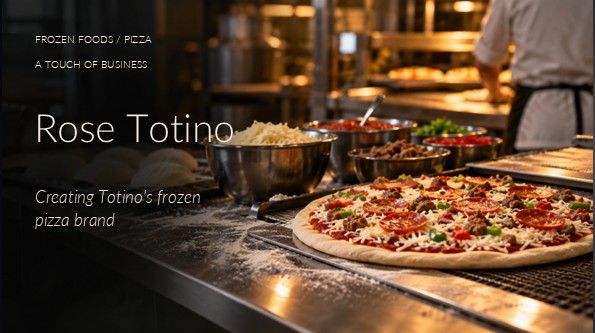
In November 1975, Pillsbury bought the frozen-pizza company Rose Totino and her husband, Jim, had built from a Minneapolis restaurant. Totino’s Finer Foods had recorded approximately $39 million in sales over the previous twelve months. For Rose, the sale marked a change in role: she became Pillsbury’s first female corporate vice president.
The couple had started in 1951 with a neighborhood pizza shop and a loan commonly reported as $1,500. Turning a busy restaurant into a frozen-food manufacturing business would bring new financial and technical problems.
Nor did Rose’s contribution end with the sale. She later worked with three Pillsbury colleagues on a patented process for frozen-pizza dough, addressing a crust problem she had encountered years earlier.
A Quick Look at the Life of Rose Totino
Biography Summary
Rose Totino (1915–1994) was an American food entrepreneur who co-founded Totino’s Italian Kitchen and Totino’s Finer Foods with her husband, Jim. Beyond their pizza businesses, her career included product development at Pillsbury and substantial support for educational and community causes.
Profile
Birth Name: Rosenella Winifred Cruciani
Known As: Rose Totino
Born: January 16, 1915
Died: June 21, 1994, age 79
Birthplace: Minneapolis, Minnesota
Nationality: American
Best Known For: Co-founding the Totino’s pizza businesses and helping develop improved frozen-pizza crust
Companies: Totino’s Italian Kitchen, Totino’s Finer Foods, and Pillsbury
Major Role: Pillsbury’s first female corporate vice president
Honors: First woman inducted into the Frozen Food Hall of Fame (1993); posthumous Minnesota Inventors Hall of Fame inductee (2008)
Minneapolis Roots and a Partnership in Food
Rose was born Rosenella Winifred Cruciani on January 16, 1915, in Minneapolis. She was the fourth of seven children of Peter and Armeta Cruciani, Italian immigrants whose family lived in Northeast Minneapolis.
Money was scarce. Rose left Edison High School at sixteen and cleaned houses to help with family expenses. Family-based accounts put her pay at about $2.50 a week.
Rose married Jim Totino, a baker, at nineteen, around 1934. In their later business, he worked with dough while she prepared sauce and toppings and dealt with customers. Family-related Italian cooking and relatives in Pennsylvania figured in her introduction to pizza, a food still unfamiliar to many prospective Minnesota customers.
A $1,500 Loan and a Neighborhood Pizza Shop
In 1951, Rose and Jim opened Totino’s Italian Kitchen in Northeast Minneapolis. The reported startup loan was $1,500, and accounts of the financing describe a family car pledged as collateral.
According to a much-told account of the restaurant’s beginnings, Rose brought baked pizza samples to bank officers unfamiliar with the food. The demonstration remains part of the family’s origin story rather than a documented account of the meeting.
Totino’s Italian Kitchen began as a takeout shop. When customers began asking to eat there, Rose and Jim added seating. The restaurant grew with the demand.
The work was demanding. Their daughter Joanne Elwell later recalled her parents starting around six in the morning and sometimes working until one or two the next morning. During the restaurant’s busy years, production reportedly reached roughly 400 to 500 pizzas a day. The next step would take the Totinos beyond restaurant service.
Frozen Pizza Brought New Problems
In 1962, Rose and Jim established Totino’s Finer Foods, a separate frozen-pizza manufacturing business with early operations in St. Louis Park, Minnesota. Frozen products could reach customers far beyond the restaurant.
But manufacturing frozen pizza brought problems the restaurant had not faced. The business initially bought frozen crusts from Chicago and added toppings in Minnesota. Rose was dissatisfied with their quality. Equipment needs and mounting financial pressures presented a second challenge.
U.S. Small Business Administration financing helped the venture acquire needed manufacturing equipment during its difficult early years. Despite the setbacks, the business continued to expand.
In 1971, Totino’s expanded into a larger manufacturing plant in Fridley, Minnesota. A business that had begun in a neighborhood kitchen was now operating on a much larger scale.
The Sale That Made Rose a Pillsbury Vice President
By the middle of the 1970s, Totino’s Finer Foods had become a major national frozen-pizza producer. Its sales for the twelve months ending October 31, 1975, were approximately $39 million. The company’s increasing production requirements and Jim’s declining health were among the circumstances behind a sale.
Pillsbury acquired Totino’s Finer Foods in November 1975. Jerry Levin, who took part in the negotiations for Pillsbury, later recalled a $16 million offer and Rose’s insistence on $20 million. Retrospective accounts place the overall deal at roughly $20 million to $22 million, with one estimate of $22.2 million including stock.
After years as a co-owner of an independent manufacturer, Rose became Pillsbury’s first female corporate vice president. Her appointment was a milestone within that company, and her involvement with pizza production continued.
Among the problems she continued to address was the frozen crust that had disappointed her during the company’s early manufacturing years.
Working With a Team to Improve Frozen-Pizza Crust
After the acquisition, Rose worked with Pillsbury colleagues on a method for preparing dough used in frozen pizza. Rather than relying only on conventional prebaking, the process involved treating and frying the dough before it was topped and frozen. The work addressed the texture of the finished product after frozen storage and cooking.
Rose W. Totino, James R. Behnke, Jack D. Westover, and Richard L. Keller were named together on the application for U.S. Patent 4,170,659, Fried dough product and method. The application was filed on July 18, 1977, and the patent was issued on October 9, 1979. Pillsbury was the patent’s assignee.
The company marketed its improved pizza as Totino’s “Crisp Crust.” The patent documents Rose’s contribution as one of four co-inventors of a specific dough process—not as the inventor of frozen pizza itself.
Family, Community Giving, and the Totino-Grace Name
Rose and Jim also made major gifts to educational, religious, and community causes. In 1980, a school was renamed Totino-Grace High School in their honor. Their $1 million contribution supported building expansion and an endowment; the school describes it as the largest gift to a Catholic high school in the nation at that time.
The couple supported fine-arts facilities at Northwestern College, local shelter and mental-health projects, and efforts in Scopoli, Italy, the ancestral village of Rose’s mother. Rose had visited Scopoli with her family in 1956, according to her daughter Joanne’s recollection.
Jim died in 1981. Rose remained involved in work and giving in her later years. Looking back in a 2019 interview, daughter Bonnie Brenny summed up her own view of Rose: “Money never changed her.”
Recognition, Later Years, and a Brand That Continued
In 1993, Rose became the first woman inducted into the Frozen Food Hall of Fame. She died of cancer on June 21, 1994, at age seventy-nine.
The Totino’s packaged-food brand became part of General Mills through its acquisition of Pillsbury in 2001. The family’s original restaurant business followed a separate path: a later restaurant operated by grandson Steve Elwell moved to Mounds View in 2008 and closed in 2011.
Rose received further honors after her death, including induction into the Minnesota Inventors Hall of Fame in 2008 and the Minnesota Women Business Owners Hall of Fame in 2014. In 2022, General Mills reported that Totino’s had become its ninth billion-dollar brand—a milestone for the company rather than a personal sales achievement by Rose.
What Rose Totino Left Behind
Rose Totino’s contribution was more specific than the familiar brand name might suggest. She and Jim built a restaurant into a major frozen-pizza manufacturer; at Pillsbury, she helped a team solve a crust problem that had troubled the earlier business. Totino-Grace High School reflects another lasting part of the couple’s work in Minnesota. Each belongs to a career that extended well beyond the original pizza shop.
Timeline
These milestones trace Rose Totino’s life, the businesses she helped build, and selected developments in the brand’s later history.

1915
Rose is born Rosenella Winifred Cruciani in Minneapolis on January 16.
Around 1934
At age nineteen, Rose marries Jim Totino, a baker.
1951
Rose and Jim open Totino’s Italian Kitchen in Northeast Minneapolis with financing commonly reported as a $1,500 loan.
1962
The couple establish Totino’s Finer Foods as a frozen-pizza manufacturing business.
Early to mid-1960s
The manufacturing venture encounters serious financial difficulties and receives consequential Small Business Administration financing.
1971
Totino’s expands into a larger manufacturing plant in Fridley, Minnesota.
1975
Pillsbury acquires Totino’s Finer Foods in November. Rose becomes Pillsbury’s first female corporate vice president.
1977–1979
Rose and three Pillsbury colleagues apply for a fried-dough patent in 1977; the shared patent is granted in 1979.
1980
A school is renamed Totino-Grace High School in honor of Rose and Jim and their major contribution.
1981
Jim Totino dies.
1993
Rose becomes the first female inductee into the Frozen Food Hall of Fame.
1994
Rose dies on June 21 at age seventy-nine.
2001
The Totino’s packaged-food brand becomes part of General Mills through its acquisition of Pillsbury.
2008 and 2014
Rose receives posthumous recognition from the Minnesota Inventors Hall of Fame in 2008 and the Minnesota Women Business Owners Hall of Fame in 2014.
2022
General Mills reports that Totino’s has become its ninth billion-dollar brand.
FAQs
Did Rose Totino invent frozen pizza?
No. Frozen pizza existed before Rose and Jim Totino established their frozen-food manufacturing venture. Rose helped build a major frozen-pizza business and later shared a patent for a specific improvement to frozen-pizza dough.
Did Rose Totino invent Totino’s Pizza Rolls?
No. Pizza Rolls originated with Jeno Paulucci’s Jeno’s business. Pillsbury bought Jeno’s Pizza Rolls in 1985, and the product was subsequently sold under the Totino’s name. The later branding does not make Rose its inventor.
How did Rose and Jim Totino finance their first restaurant?
The couple opened Totino’s Italian Kitchen in 1951 with a loan commonly reported as $1,500 and a family car pledged as collateral. According to a well-known family story, Rose took pizza samples to bankers who were unfamiliar with the food.
What made Rose Totino’s Pillsbury appointment historic?
Following Pillsbury’s acquisition of Totino’s Finer Foods in 1975, Rose became the first woman appointed to a corporate vice presidency at Pillsbury. The distinction applies to Pillsbury specifically, not to every major American corporation.
What was Totino’s “Crisp Crust” innovation?
“Crisp Crust” was associated with an improved frozen-pizza dough process that included frying the dough before topping and freezing it. The 1979 patent credited four co-inventors: Rose W. Totino, James R. Behnke, Jack D. Westover, and Richard L. Keller.
Interviews
Family Memories and the Pillsbury Sale
Curt Brown’s 2019 Star Tribune feature brings together interviews with Rose’s daughters and a participant in Pillsbury’s acquisition negotiations. It offers firsthand recollections about the family’s life, the growing business, and the sale, while giving readers a sense of how relatives remembered Rose years after her death.
Read the interviews and feature
The Family Restaurant Remembered
Eric M. Hanson’s 2008 Star Tribune report draws on conversations with Rose’s daughter Joanne Elwell and grandson Steve Elwell. Their memories illuminate the demanding work of the original restaurant and explain how the family-run restaurant continued separately from the national frozen-food brand.
Sources
- The Minnesota Star Tribune: Rose Totino brought pizza to masses, A new view for Totino’s restaurant
- Harvard Business School: Rose Totino — Great American Business Leaders
- General Mills: How Totino’s Got Its Start, Totino’s becomes ninth billion-dollar brand
- Minnesota Inventors Hall of Fame: Rose Totino honoree profile
- Minnesota Women Business Owners Hall of Fame: 2014 Inductees — Rose Totino
- U.S. Patent record: US4170659A — Fried dough product and method
- U.S. Federal Trade Commission: Pillsbury Company case record, 93 FTC 966 (1979)
- Supermarket News: Rose Totino obituary (1994)
- Totino-Grace High School: School history
- Bellisio Foods: Company timeline — Jeno’s Pizza Rolls
- St. Louis Park Historical Society: W. 36th Street — Totino’s
- Invention & Technology: Frozen Pizza
- The Boston Globe: Jeno Paulucci obituary and Pizza Rolls history