
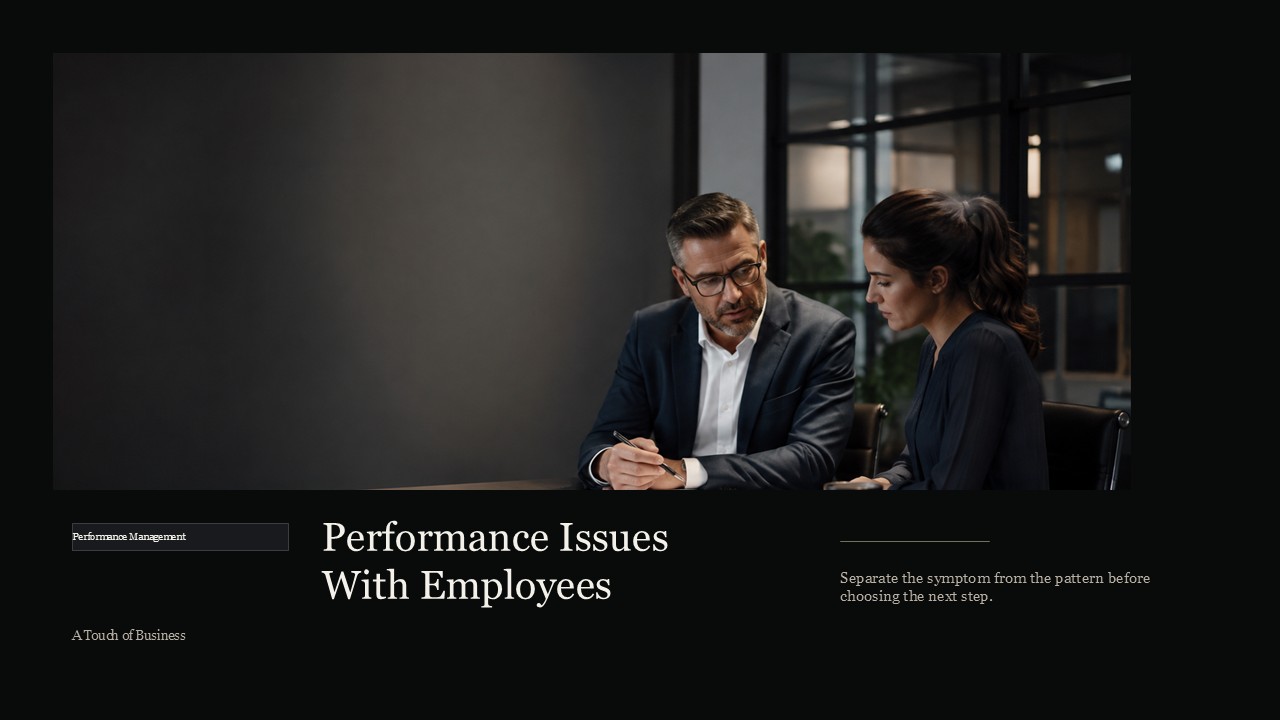
You may have an employee who’s lagging on their tasks and deliverables. Maybe they’re behaving in a way you don’t consider professional. How do you deal with a performance issue like this?
Should you confront it, or let it slide and hope things improve on their own?
Ignoring a performance issue rarely helps anyone. It doesn’t help you, the employee, or the company. Step in to find out why the employee is underperforming, then decide if the problem can be fixed.
Dealing With Employees’ Performance Issues
Confronting an underperforming employee isn’t the most glamorous part of being a manager. It is, however, necessary if you want to grow your team and ensure everyone remains accountable. Monitoring employee performance is vital, whether they work remotely or on-site.
This post will offer you a few tips to handle employee performance issues. You will learn why employees underperform, the types of performance issues, and ways to deal with them.
What Are Some Common Employee Performance Issues?
An employee performance issue doesn’t necessarily have to relate to their quality of work. It can also be anything concerning their conduct while at work. Here are some common employee performance issues you may encounter in the workplace.
Being Late For Work
Employees show up late now and then — that’s part of life. But if an employee is constantly late, you need to address it. Chronic lateness leads to lost time and reduced productivity.
Absenteeism
Absenteeism occurs when an employee habitually fails to show up at work when they should. Like being late, it is typical for employees to miss a day or two at work, whether due to illness or a family emergency.
But when an employee is habitually absent without permission or good reason, you need to confront them about it.
Poor Work Quality
Poor quality of work occurs when an employee’s tasks do not meet your expectations and the company’s standards. For example, the work may have errors and inaccuracies. It may also be a case of spoilage and wastage of materials.
Inappropriate Physical Behavior
An employee’s work might be up to the required standards. But if the employee is behaving inappropriately or unprofessionally, you still need to confront them. Examples of inappropriate physical behavior include drug use, hostility, violence, sleeping at work, and eating in non-designated places.
Failing to Meet Deadlines
If an employee constantly fails to meet the set deadlines, you need to address this performance issue with them. The missing of deadlines usually has a ripple effect.
It may delay the responsibilities of another employee who takes up the task. For example, an employee who fails to submit their morning report on time may affect a manager’s ability to review and present it to his superiors.
Inappropriate Interpersonal Relations
An employee may be displaying inappropriate interpersonal relations with their colleagues. For example, they may start gossiping or bullying other staff members.
They may also insult or engage in avoidable conflicts with coworkers and other business stakeholders.
Integrity Issues
Integrity issues such as theft of workplace property and dishonest practices should not be left unsaid. An example of integrity issues is when an employee forges records or accounting ledgers to balance their financial statements.
Unwillingness to Follow Required Procedure
Employees might deliver their work on time and to the demanded standard, but they may not be following the required procedure. If they are unwilling to follow the SOPs, you need to treat this as a performance issue and handle it.
Why Do Employees Underperform?
The first step to solving an employee’s performance issue is identifying the cause of their behavior. Let’s discuss the reasons why employees underperform.
Lack of Support
Managers need to provide employees with the necessary support to perform their roles properly. This can be anything from training to offering tools and resources. Inadequate support often causes employees to disengage and lose morale for their job. The ultimate effect is that the employee becomes less productive.
Stressful Working Condition
Stress can arise from many sources. It can occur due to a demanding boss, dangerous working conditions, unreasonable deadlines, and a heavy workload. Stress often affects the performance of employees. It may also impact their ability to focus and cause them to have a negative attitude towards work.
Employees that work in stressful conditions are more prone to making errors. As the manager, strive to create a good work environment that allows every employee to be productive.
Lack of Skill
The employee may be underperforming because they don’t know how to perform a task. In this case, you can either offer guidance and on-the-job training or assign them a job that matches their skill and expertise.
Problems at Home
The causes influencing an employee’s performance don’t necessarily have to be work-related. There may be personal issues at home triggering stress and affecting the employee’s ability to focus.
For example, the employee may be mourning the death of a loved one, handling a divorce, suffering financial problems, or dealing with a family emergency. The best ways to help, in such cases, would be to be patient and empathetic and offer emotional support.
Health-Related Issues
Health issues are a common, though often hidden, cause of underperformance. A 2023 survey found more than a third of workers had a health issue — commonly back pain, neck pain, or a mental health concern — that was affecting their work. Many employees don’t mention it because they see their health as a private matter.
Some health conditions also carry a stigma, so an employee may stay silent rather than speak up. As the manager, be approachable, so employees feel comfortable telling you when something is affecting their work.
Lack of Understanding
Does the employee understand what to do and how to do it? They may want to perform well but not fully understand what’s expected of them.
Improving performance starts with understanding your staff and their situation. Put yourself in their shoes. For example, before setting a deadline, ask yourself honestly: could you finish that same task in that same timeframe, with the same resources?
Failing to understand your employees can cause them to disengage. It can also stop them from sharing their views or confiding in you about what’s going on. Over time, this often leads to lower productivity.
Poor Job Design
Job design refers to assigning employees different roles and responsibilities that lead to a bigger goal. It also entails establishing methods, procedures, and protocols for performing the jobs.
A poor job design minimizes efficiency and employee performance. It may also cause dissatisfaction among your staff members and thus reduce their input and productivity. This may be the case when some employees get more tasks than others or when they get assigned tasks unfitting to their skills.
Inadequate Supervision
How closely you manage someone affects their performance, for better or worse. The right amount can boost productivity. Too much or too little can cause employees to disengage.
Aim for moderation. Don’t hover so closely that it feels like micromanaging, but don’t disappear either — both extremes hurt morale.
Research backs this up: a 2025 Gallup analysis found managers account for the large majority of the difference in how engaged a team is, so how you manage really matters. Too little guidance can also mean more absenteeism and lower productivity from employees who aren’t self-motivated, and it can leave them feeling unsupported on difficult or sensitive tasks.
Why You Should Document Employee Performance Issues
Keeping a written record of an employee’s conduct and performance — both good and bad — matters more than most managers realize. Here’s why it’s worth the extra effort.
It Provides Evidence
A written record shows what actually happened and when. Managers and HR can use it to support decisions like a promotion or, on the other end, a termination.
It Strengthens Your Position if a Termination Is Challenged
If a former employee claims their termination was unfair, a consistent paper trail of documented issues and conversations helps you defend that decision. It isn’t a guarantee against a lawsuit, but courts and employment attorneys consistently point to good records as one of the strongest defenses an employer has.
It Lets You Track Progress Over Time
A record built up over time shows an employee’s full history — the setbacks and the improvements. You can use it to justify a raise or promotion, or to judge whether someone is a good fit for a transfer.
How to Document Employee Performance Issues
A few best practices make your documentation more useful and more credible.
Write It Down Right Away
Record the issue during or right after the conversation. If you wait, details get fuzzy and it’s harder to reconstruct exactly what was said.
Put It in Writing
A written record is worth more than a memory. It makes it much harder for either side to later dispute what was actually discussed.
Stick to the Facts
Note the date and place of the meeting. Describe the performance issue in specific, factual terms, explain how it affected the team, and record the agreed next steps and expected change.
Get It Signed
Have both you and the employee sign the document to confirm you both agree on what was discussed. If the employee refuses to sign, have a witness sign instead and note the refusal on the document.
Steps to Deal With Employee Underperformance
Whenever you notice that an employee is not performing at their peak, you shouldn’t be quick to pass judgment and blame on them. There might be an underlying issue affecting their ability to focus. Before you resort to any action, take a day or two to assess the situation. Check out these steps for dealing with employee underperformance.
Identify the Underlying Problem
The first thing you need to do when handling an employee performance issue is to identify the cause of the problem. What problem may be causing the employee to underperform? Is it a lack of skill or motivation? Is the employee sick, or are they dealing with a personal issue at home? Once you identify the underlying point, let it guide you on what action to take next.
Determine Whether It’s a Pattern
Is this the first time the employee has underperformed, or is there a pattern? Try reviewing the employee’s history in the company to assess whether they’ve had this issue before. This is where the employee performance document comes in.
Address the Issue With the Employee
Call the employee to your office and have a one-on-one conversation about their underperformance. Outline your concerns about the underperformance and how it has impacted the rest of the team and the organization. Give the staff a chance to explain what may be causing them to underperform.
Most employees actually want this kind of direct feedback. A 2024 workplace study found employees generally want to have hard conversations at work, even though many don’t feel fully safe having them with their manager. That’s a reason to have the conversation, not avoid it.
Remember to use a neutral tone, if not a positive one. Speaking negatively only makes the employee feel like you are blaming them. They may get defensive. The goal here is to help the employee improve their performance, which requires them to be willing to change.
Assess Whether the Issue Can Be Resolved
Some performance issues can be corrected with planning and the employee’s willingness to change. Some are not, and the only solution may be termination. When determining whether a performance issue is repairable, check the underlying problem, the seriousness of their underperformance, and the presence of patterns.
If termination is the only solution, proceed to let the employee go. If the performance issue can be corrected, then move forward to develop an action plan.
Encourage Open Communication
This time when an employee is underperforming is when they need your support the most. Be approachable and encourage the employee to talk to you on a personal level. Assist them where you need to and acknowledge their views and concerns.
Develop a Clear Set of Actions
Depending on the employee’s underlying issue, your next step should be to develop a set of actions. Draw up a plan on what the worker needs to improve their performance. Highlight also the resources and support necessary. For example, they may have to undergo training in their role. Set a clear deadline on when you’d expect the employee to be back on track in their performance.
It’s better to create the action plan with the employee rather than do it yourself. This way, they will be more in tune with what they need to do to improve performance. You can also encourage the employee to put forward their own goals and recommendations to ensure they feel in control of their situation.
Set Up a Performance Improvement Plan
If informal coaching hasn’t worked, a Performance Improvement Plan (PIP) is the standard next step. A PIP puts the specific concerns, expectations, and support you’ll provide in writing, along with a timeline — typically 30, 60, or 90 days — for the employee to show improvement.
A PIP isn’t meant to be a paper trail toward firing someone. Used well, it gives the employee a clear, fair shot at turning things around, and gives you a documented basis for whatever decision follows if they don’t.
Create a Follow-up Plan On Performance
Having a conversation with the employee doesn’t resolve their underperformance issue. You need to give them reasonable time to follow through on the action plan and improve.
Create a plan for checking in with the employee. For example, you can follow up with them every week to see how they are faring. Recognize and appreciate their progress, and make changes whenever necessary. Let the employee give you feedback on whether the action plan is helping them improve their performance.
Conclusion
One of your roles as a manager is to ensure your employees work at their peak performance. Whenever you notice that one of your staff members is underperforming, talk to them about it. You won’t be helping anyone by letting their performance issue go unsaid.
The first step to handling an employee performance issue is identifying the underlying problem. Many reasons can make an employee underperform. Next up, determine whether it is a pattern and if it can be corrected. You can then move forward to create an action plan or let the employee go if this is the only solution. Don’t forget to document the performance issue.
Key Points and Facts About Employee Performance Issues
- Common performance issues include lateness, absenteeism, poor work quality, missed deadlines, integrity problems, and unprofessional conduct.
- Underperformance often has an underlying cause — lack of skill, lack of support, stress, health issues, or personal problems at home.
- Documenting performance issues protects both the employee and the company, and strengthens your position if a termination is later challenged.
- How engaged a team is depends heavily on the manager, so how you supervise directly shapes performance outcomes.
- A Performance Improvement Plan (PIP), typically run over 30, 60, or 90 days, is the standard formal step when informal coaching hasn’t worked.
Action Steps for Managing Employee Performance Issues
Identify the Real Cause
- Review the employee’s recent work and conduct for a pattern, not just a single incident.
- Ask whether the issue is skill, motivation, health, or a personal circumstance.
Have the Conversation
- Meet privately and describe the specific issue and its impact.
- Use a neutral, non-accusatory tone and let the employee respond.
Document Everything
- Write up the conversation the same day, including date, place, and agreed next steps.
- Have both parties sign, or note a refusal to sign with a witness.
Build a Plan and Follow Up
- Set clear, specific expectations and a deadline for improvement.
- Use a formal Performance Improvement Plan if informal coaching hasn’t worked.
- Check in on a regular schedule and adjust the plan as needed.
FAQ: Employee Performance Issues
What’s the first step when an employee is underperforming?
- Identify the underlying cause before taking any action — underperformance is often a symptom of something else, like a skills gap, stress, or a personal issue.
Should every performance issue go straight to a Performance Improvement Plan?
- No. A PIP is typically used after informal coaching and conversation haven’t resolved the issue. Jumping straight to a PIP can feel punitive and skip a chance to fix things early.
Why does documentation matter if I never plan to fire the employee?
- Documentation isn’t just for termination. It tracks progress over time and gives you a factual record if the situation changes, or if you need to justify a promotion, transfer, or raise later.
What if the employee refuses to sign the documentation?
- Have a witness sign in their place and note on the document that the employee declined to sign.
References:
- Rocket Lawyer — How to Terminate an Employee Legally
- ADP Spark — How Transparency Around Termination Can Protect Your Business
- PMC — Common Health Conditions and Presenteeism Among Workers
- Inclusion Geeks — The Gallup 2025 Workplace Report: Engagement Is Falling and Managers Hold the Key
- Built In — Performance Improvement Plans (PIPs): What They Are and How to Create One
- Achievers Workforce Institute — Getting Comfortable with the Uncomfortable at Work