
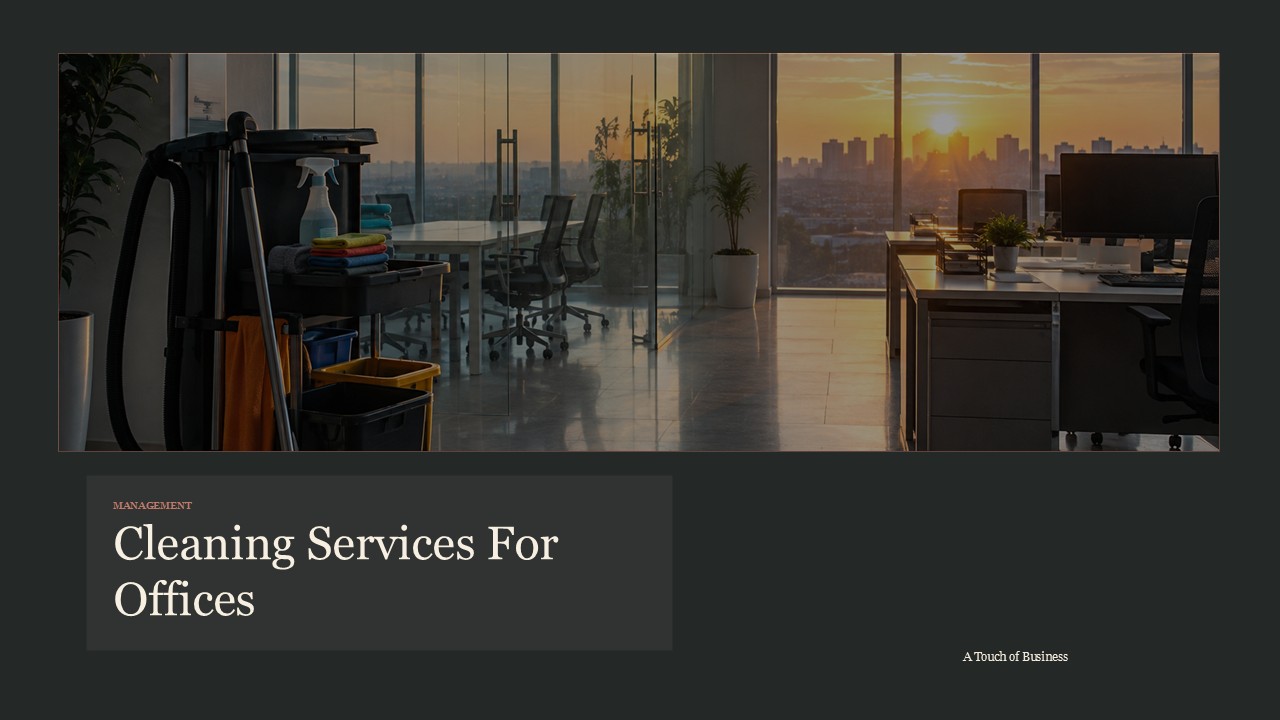
This post offers tips and insights to help you when considering services specializing in office cleaning. We will cover the following:
- Choosing a cleaning service for offices.
- Cleaning service considerations.
- The average cost of office cleaning and the factors affecting it.
- Contract considerations.
- Key points, action steps, and a hiring checklist.
- Frequently asked questions, along with the answers.
- Sources and resources you can use to learn more about office cleaning and the industry.
How To Choose a Professional Office Cleaner
Trust is an important factor when choosing a cleaning service. You won’t be following the crew around as they clean your office.
They will have access to documents, and they may hear private conversations. That means you need a service you can trust and depend on.
To choose a good cleaning company, do a little research. Ask other business owners who they use.
You can also search for online reviews to see what other people have experienced with the company.
You can interview the account representative or business owner. This helps you understand who you’re dealing with and whether you get along with them.
You want a company you feel good about. You can start on a trial basis before signing any contract to see how it goes.
Drop in unannounced during cleaning hours from time to time. This lets you see how the crew is performing and catch any activity you don’t approve of.
Considerations
Look for a service that sticks to a set schedule. Imagine visitors in your office when the cleaning crew shows up unexpectedly — that’s a bad scene.
You’re better off having the crew come in after-hours or in the evening. You don’t want vacuums running and a crew cleaning your office during business hours, especially if you have a lot of meetings and calls.
Choose an office cleaner that is bonded and carries its own insurance policy. That protects you if a crew member gets hurt on the job or damages your property.
Your business may already be insured, but confirm the cleaning company has a policy of its own too. That way, if the crew causes an incident, the claim goes against their policy instead of yours — and your premiums stay put.
Liability and bonding coverage is a normal cost of doing business for a cleaning company. Coverage for a small provider typically runs around $700 a year, so it’s a reasonable thing to expect any vendor to carry.
Consider how long the company has been in business. A company with more experience may be a better match than one just starting out.
Look for a company that understands your needs and can meet them without you having to manage every detail. You may also want to look into the chemicals the company uses.
A cleaning company that uses safe, environmentally friendly disinfectants helps keep your office sanitized without extra risk to your staff.
Office Cleaning Cost
The cost of cleaning your office depends on several factors:
- Whether you want a standard tidy-up or a deep clean.
- How many washrooms and windows are in your office.
- The square footage of the office.
- How often the office is cleaned.
- Whether the crew works on a contract or is called in as needed.
- Your location — a cleaning crew in a large city typically costs more than one in a rural area.
With that many variables, pricing is best understood as a range rather than a single number.
As of 2026, standard recurring office cleaning typically runs $0.07 to $0.20 per square foot, with rates across the broader market spanning roughly $0.05 to $0.35 per square foot depending on region, building type, and how often you’re cleaned. Hourly rates generally fall between $30 and $75 per hour, per cleaner.
Some vendors quote pricing per visit, and others quote it per month. Make sure you know which one you’re comparing — a per-month rate covering four visits is not the same as a per-visit rate, even if the number looks similar.
Should You Sign a Cleaning Contract?
Signing a contract can get you better pricing and lock in a cleaning company’s availability. You can always start with a trial first, and sign a contract once it works out.
Locking in a flat monthly contract instead of paying hourly for recurring work commonly saves 10–15% compared to hourly billing. It’s worth asking any vendor for a flat-rate quote.
You will want to focus on the following when it comes to cleaning contracts.
Regular Cleaning Schedule
One reason to sign a contract is to make sure the cleaning company sticks to a strict schedule. The last thing you need is a company that shows up late, doesn’t show up at all, or comes and goes as it pleases.
What Is Included in a Regular Cleaning
Define what gets cleaned regularly — vacuuming, dusting, wiping down desks, mopping floors, waste removal, and so on.
Deep Cleaning Schedule
Define how often your office gets a deep clean and what’s included — shampooing rugs and upholstery, cleaning hard-to-reach places, mopping floors, and so on.
Cleaning Supplies
Define what chemicals the crew uses, especially if you want to stick to products that are safer for the environment.
Renewal and Termination
Spell out what happens if either party cancels. You don’t want to be locked into a service you no longer need or want.
Define the renewal process too, including any fee increases. When you know what’s agreed upon ahead of time, you skip the yearly negotiation and know what to expect.
Payment Details
Include how to pay for the service and when payment is due. Payment details are not something to leave up in the air.
Key Points and Facts About Office Cleaning Services
- As of 2026, standard office cleaning typically costs $0.07–$0.20 per square foot, with hourly rates generally between $30 and $75.
- Trust matters — cleaning crews often work unsupervised and have access to sensitive areas of your office.
- A bonded, insured cleaning company protects you if a crew member is injured or property is damaged.
- Flat monthly contracts commonly cost 10–15% less than paying hourly for the same recurring work.
- Deep cleaning once a month or every two to three months is standard for most offices.
Action Steps for Choosing an Office Cleaning Service
Research Your Options
- Ask other business owners which cleaning company they use.
- Search online reviews and check the Better Business Bureau.
Vet the Company
- Interview the account representative or business owner.
- Confirm the company is bonded and carries its own insurance.
- Ask what chemicals and disinfectants they use.
Test Before You Commit
- Start with a trial period before signing a contract.
- Drop in unannounced during cleaning hours a few times.
Lock In Your Terms
- Compare per-visit and per-month pricing before choosing a vendor.
- Ask about flat-rate contract pricing to potentially save 10–15% versus hourly billing.
- Put the cleaning schedule, scope of work, and payment terms in writing.
Checklist for Hiring an Office Cleaning Service
- Confirm trust and reputation
- Check online reviews
- Ask other business owners for referrals
- Verify coverage
- Confirm bonding
- Confirm liability insurance
- Understand pricing
- Get a per-square-foot or hourly rate
- Clarify whether it’s quoted per visit or per month
- Test the service
- Request a trial period
- Do an unannounced check-in
- Finalize the contract
- Define the regular cleaning schedule
- Define the deep cleaning schedule
- Confirm renewal, termination, and payment terms
FAQ: Office Cleaning Services
Should You Use a Professional Office Cleaning Service or Do It Yourself?
- If you have a large staff, a busy operation, and the budget for it, a professional cleaning service is worth using — it helps you provide a clean, safe environment for staff and clients.
- If you’re just starting out or running a small one-person operation, you can handle the cleaning yourself.
- A little research will give you tips to keep your office clean and sanitary — see the References section below for sources.
What Is Included in a Deep Clean of an Office?
- A deep clean takes more time and covers more of the office than a regular clean.
A Deep Clean Can Include Cleaning the Following:
- Light Fixtures
- Switches
- Door Handles
- Seating Area and Furniture
- Blinds
- Curtains
- Baseboards
- Ledges
- Carpet Cleaning and Shampooing
- Heating and Cooling Vents
- Windows
- Doors
- Floors
- Kitchens and Bathrooms
Deep Cleaning Can Also Include the Sanitation of the Following:
- Bathrooms
- Kitchens
- Desks
- Keyboards
- Mice
- Printers
- Office chairs
Why Is Deep Cleaning Important?
- Deep cleaning keeps your office sanitary and provides a healthy work environment.
- An office that’s rarely cleaned can feel stale and low-energy — like an outdated, unprofessional space.
How Often Should an Office Be Cleaned?
- A large staff or high visitor traffic usually means cleaning is needed more often — some offices clean daily.
- A smaller office with less foot traffic can often get by with once or twice a week, especially if staff handle their own tidying.
- For deep cleaning, once a month or every two to three months works for most offices, depending on your preference and needs.
How Long Does a Professional Office Cleaning Take?
- Time depends on square footage, crew size, and whether it’s a regular or deep clean.
- More desks, cubicles, washrooms, and kitchens will add time. Ask your vendor for a time estimate specific to your space — this varies enough by layout that it’s best confirmed directly with the company.
How Do You Know if a Cleaner Is Trustworthy?
- Check for a physical address, phone number, and website, and look the company up with the Better Business Bureau.
- Search for online reviews and do a background check on the company.
- If reviews are strong but you don’t feel good about the owner, move on — trust issues rarely improve on their own.
Conclusion
You now have an overview of the office cleaning process. We covered what to look for in a company, contract considerations, average pricing, and frequently asked questions.
When choosing a cleaning service for your office, take your time to find one that’s a good fit for your business.
References: