
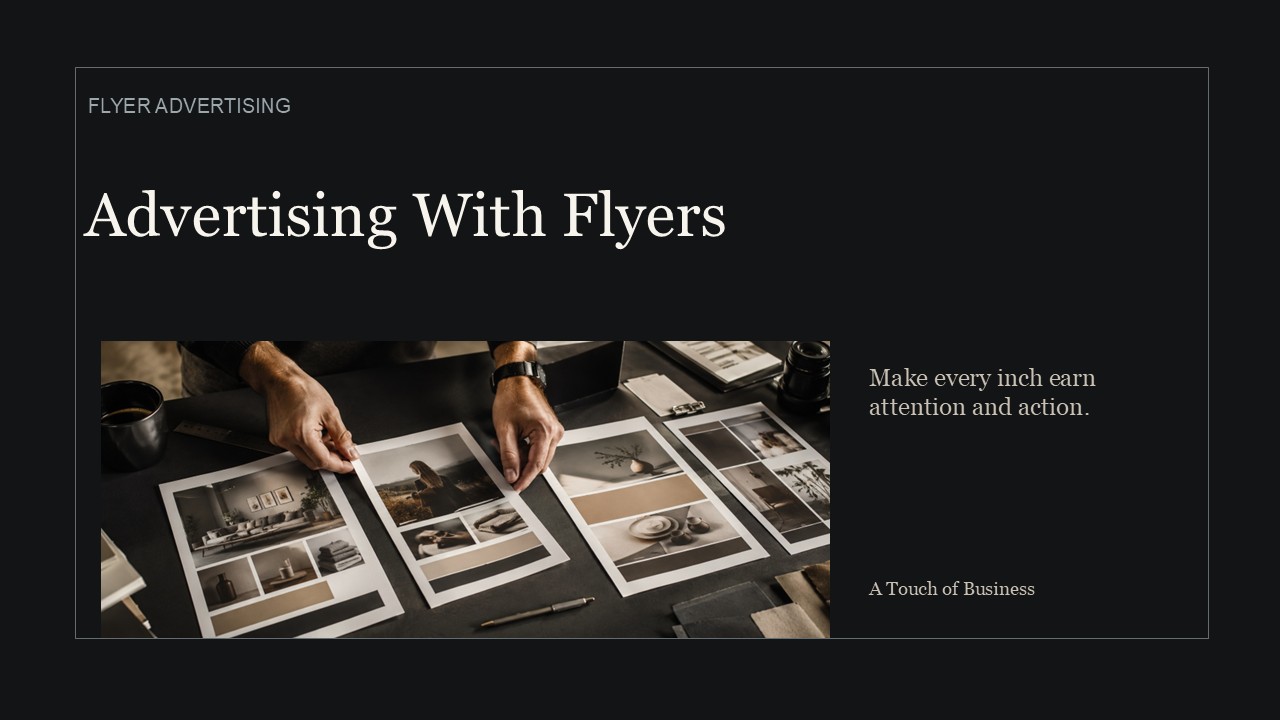
Flyer advertising is a low-cost marketing option you can use to build awareness of your business in your local community. It works well for introducing a new business, announcing an event, or promoting a new product.
The appeal of flyer advertising is that it doesn’t take many resources. You can design, print, and even distribute the flyers yourself.
How to Advertise With Flyers
Flyer advertising works best when you target the right audience with the right message. Some businesses make the mistake of printing large volumes and handing them to anyone willing to take one. Knowing who you’re targeting, and what you want to tell them, makes the difference.
This guide walks through what flyer advertising is, its benefits and drawbacks, and how to do it right.
What Is Flyer Advertising?
Flyer advertising is a paper advertising method where a business hands out flyers in public places or mails them out. A flyer is a one-sheet paper piece used to promote a product or service, or to inform customers about something.
Like most local marketing, flyer advertising works within a specific geographic area. Most businesses use it to reach customers in their town or region. It works especially well for something new — a new business, product, service, or event.
Flyers are a strong choice for announcing a shop’s grand opening. They also work well as a reminder to existing customers about your brand.
Is Flyer Advertising Still Effective?
Flyer advertising dates back to the invention of the movable-type printing press around 1440. That invention made it possible to mass-produce printed material for the first time. Within decades, merchants and businesses across Europe were using printed handbills to reach the public, and by the 1600s and 1700s flyers were a normal part of commercial life in both Europe and colonial America.
Today there are newer channels, like social media, but flyers still work well in the right situations. As of this writing, response rates for flyers typically run between 1% and 5%, and direct mail as a category generally outperforms email’s roughly 0.6% response rate. These figures shift over time as marketing channels evolve, so treat them as a general benchmark rather than a fixed number.
Benefits of Flyer Advertising
Here are eight reasons flyer advertising can work well for your business:
- Affordable Channel — Printing flyers doesn’t require a big budget, and the cost per flyer drops as you print more. Design and production are quick too. Depending on your volume, you can go from design to finished flyers within a day or two. Distribution can be handled by a few hired marketers, or by you and your employees.
- Quick Turnaround — Flyers can be designed, printed, and distributed within a short window. Most people look at a flyer right after it’s handed to them. That means feedback on your campaign comes fast.
- Great for Brand Awareness — Handing out flyers in large numbers within a specific local area is an efficient way to build awareness quickly. You reach a lot of people in the exact market you care about.
- Great for Short Notice Advertising — Flyers work well for spreading time-sensitive information quickly. They’re useful for events, conferences, and grand openings, or for promoting an upcoming sale.
- Flyers Are Tangible — A flyer is something a customer can hold and keep. That physical presence makes it easier to remember, and it can’t get buried in a crowded inbox or social feed the way a digital ad can.
- Measurable — You can add a QR code, promo code, or tracking number to a flyer. A dynamic QR code can log scan time, device type, and general location, which lets you see which flyers and locations are driving results.
- Personal Touch — Handing a flyer directly to a customer creates a moment of interaction. Even if they don’t read it right away, they may recall that interaction later when they do pick it up. Other channels, including social media, generally can’t recreate that in-person contact.
- Versatile — Flyers work for almost any business — a coffee shop, a barbershop, a personal trainer. Political campaigns use them too, to share policies and invite people to events.
Cons of Flyer Advertising
Flyer advertising also has some real drawbacks:
- Labor-Intensive Distribution — Distributing flyers over a large area takes time and often extra hands. Covering a big territory in a single day may mean hiring several people to help.
- Short Lifespan — Most people don’t keep a flyer once they’ve decided whether to act on it. Flyers work best for something happening soon. For an event several months out, most recipients won’t still have the flyer by the time it arrives.
Tips for Advertising With Flyers
The goal with any flyer is to hold your audience’s attention long enough for them to act. Here are some ways to do that.
1. Have a Clear Purpose
Decide on your goal before you design the flyer. That keeps your message and design choices aligned with what you’re trying to accomplish.
If the goal is to promote an event, include the venue, date, and purpose. If the goal is brand awareness, focus on what you sell and the benefits of your product or service.
2. Have a Call-To-Action
A call-to-action tells the customer what to do next — call, book an appointment, visit your store, or something else. Make sure every flyer includes one, so customers know how to engage.
3. Know Your Target Audience
Know who you’re targeting before you create your flyer. That lets you match the tone, style, and message to the people you actually want to reach. Skipping this step, and printing large volumes for anyone willing to take one, wastes flyers and lowers your return.
4. Distribute the Flyers in the Right Places
Where and how you distribute flyers affects how customers see your business. Hand-to-hand distribution in public places — parks, supermarkets, libraries, streets — creates a personal connection. Some people may be uncomfortable receiving flyers at their home in a gated community, so use judgment there.
Non-contact distribution works too, though it’s less personal:
- Using door hangers, which attach to the door rather than the mailbox
- Placing flyers on car windshields in public parking areas
- Putting flyers inside magazines and publications
- Sending flyers through the mail with paid postage
The legal details below reflect federal and city rules current as of this writing. Laws and local enforcement can change, so confirm current rules before a large distribution run.
Federal law prohibits placing anything without paid postage inside a USPS-approved mailbox — this is a nationwide rule, not something that varies by state. Violations can carry meaningful fines. If you want to legally reach every address on a mail route, the USPS’s Every Door Direct Mail (EDDM) program lets you pay for postage and have flyers delivered to a chosen route without needing a mailing list.
Windshield flyering has its own risks. Several cities — including Los Angeles, Chicago, Houston, and New York — have ordinances specifically against placing handbills on vehicles, and private lots like grocery stores or malls require the property owner’s permission regardless of city rules. Check your local ordinances before using this method.
5. Use a Compelling Headline
The headline is often the first thing a customer notices. Keep it short, easy to read, and clear about what the flyer is offering.
Make the headline stand out with a larger font or different color so it’s the first thing people see.
6. Proofread Before Submitting
Proofread the flyer before printing. A misspelled word or wrong contact detail — like an incorrect date or phone number — can mislead customers or make the flyer useless.
7. Consider Using Both Sides
Printing one side is cheaper, but printing both sides costs little extra and gives you more room. Keep your main message on the front, and use the back for supporting details, such as:
- Customer testimonials
- A map to your store or event location
- A list of products and services
8. Perform a Split Test
Split testing — also called A/B testing — isn’t just for digital campaigns. Try two versions of a flyer, maybe with different headline colors or slightly different messaging, and see which one gets a stronger response. Use the better-performing version going forward.
9. Use Visual Elements
Colors, images, and icons make a flyer more attractive, but they should guide the reader’s eye toward the key information rather than distract from it. A clean visual layout keeps attention where it matters.
10. Include a QR Code as a CTA
A QR code can direct readers to your website or another link where they can learn more or engage further. It also lets you track scan time, general location, and device type, so you can see which flyers and placements are performing best.
How Does a Well-Thought-Out Flyer Ad Look?
- Targeted: speaks to your target audience and gets distributed where that audience actually spends time
- Engaging: eye-catching enough to hold interest
- Readable: delivers the message clearly and tells the reader where to learn more
- Convincing: moves the reader toward the action you want them to take
A good flyer isn’t something you throw together. Think about the message you want to send, and deliver it concisely. A compelling headline and strong visual elements go a long way toward getting your flyer noticed.
Key Points and Facts About Flyer Advertising
Effectiveness
- Flyer response rates typically fall between 1% and 5%.
- Direct mail as a category generally beats email’s roughly 0.6% response rate.
- Dynamic QR codes let you track scan time, general location, and device type.
Legal Considerations
- Placing unstamped flyers in a USPS mailbox violates federal law nationwide, not a state-specific rule.
- Every Door Direct Mail (EDDM) is the legal way to pay for postage-based mailbox delivery without a mailing list.
- Windshield flyering is restricted by specific ordinances in some cities and always requires permission on private property.
Action Steps for Flyer Advertising
Define Your Goal and Audience
- Decide what the flyer needs to accomplish — awareness, an event, a sale, or something else.
- Identify who you’re targeting before you write any copy.
Design the Flyer
- Write a clear headline and a specific call-to-action.
- Use visual elements that guide attention to the key information.
- Proofread carefully before sending the file to print.
Choose Your Distribution Method
- Pick hand-to-hand distribution for maximum personal impact, or a non-contact method for scale.
- If using mailboxes, use EDDM rather than depositing flyers directly.
- Check local ordinances before placing flyers on vehicles.
Track Results
- Add a QR code, promo code, or tracking number to measure response.
- Compare results across different versions or locations, and adjust your next print run accordingly.
Checklist for Flyer Advertising
- Purpose and Audience
- Goal for the flyer is defined
- Target audience is identified
- Design
- Headline is clear and stands out
- Call-to-action is included
- Flyer is proofread
- Distribution
- Distribution method is chosen and legal in your area
- Mailbox delivery, if used, goes through EDDM
- Tracking
- QR code, promo code, or tracking number is added
- Plan is in place to review results after distribution
FAQ: Flyer Advertising
Is flyer advertising still worth it for a small business?
- Yes, in the right situations. Flyers work especially well for local, time-sensitive promotions like grand openings, sales, and events, with typical response rates between 1% and 5%.
Can I put flyers in mailboxes myself?
- No. Placing unstamped flyers directly in a USPS mailbox violates federal law nationwide. Use the USPS Every Door Direct Mail (EDDM) program instead to legally reach mailboxes on a chosen route.
Is it legal to put flyers on car windshields?
- It depends on the location. Several cities have specific ordinances against it, and private parking lots always require the property owner’s permission.
How do I measure whether my flyers are working?
- Add a QR code, unique promo code, or tracking number to each flyer design. This lets you see which versions and locations are generating responses.
References: