
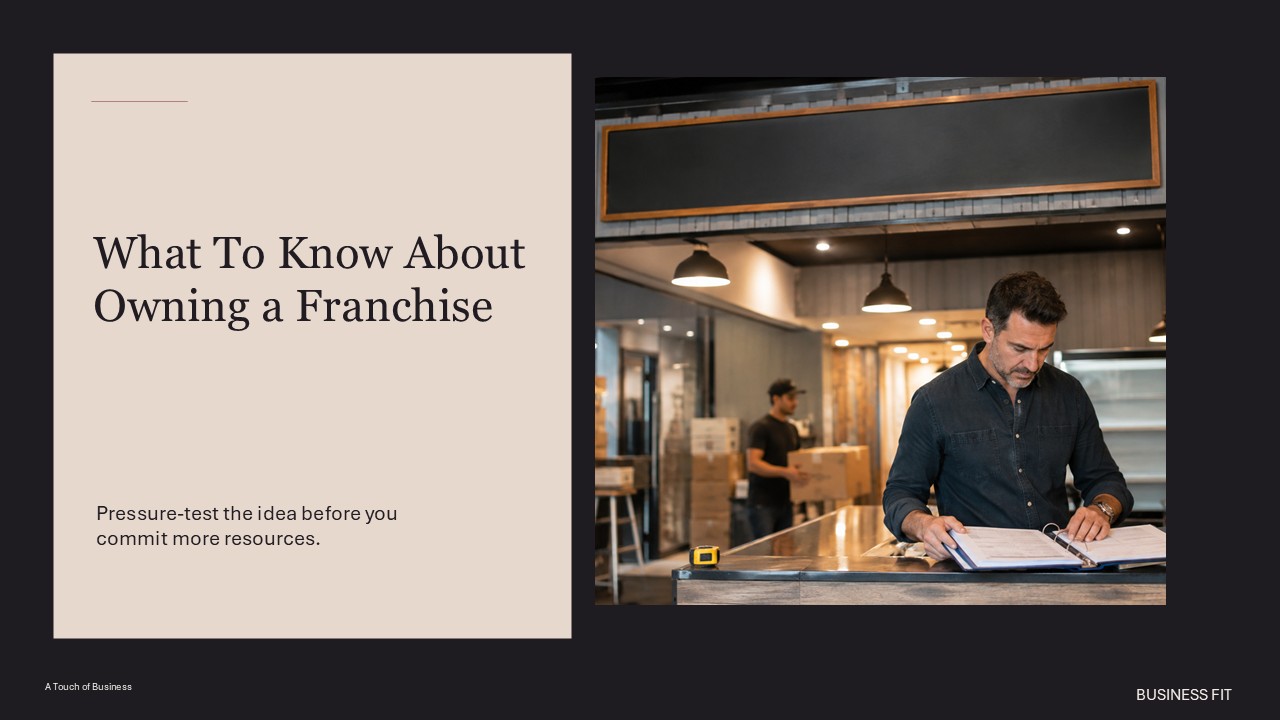
Owning a successful franchise can be very rewarding. It’s a bit like starting your own business from scratch, except you start with a proven business model instead of a blank page. Because of that, your odds of success go up compared to building something entirely new.
The franchise industry is a major part of the U.S. economy. Franchise businesses are projected to add about 12,000 net new locations in 2026, reaching roughly 845,000 units, an estimated $921 billion in economic output, and about 8.9 million jobs nationwide, according to the International Franchise Association and FRANdata’s 2026 Franchising Economic Outlook.
With a franchise, much of the guesswork is already done for you. You don’t have to decide what products or services to offer. The business model is proven, because it’s already working in other locations.
You give up some creativity and freedom you’d have starting your own business. In exchange, you get a model that works. There’s a lot to know before you commit, so this guide covers the key issues to keep in mind, along with a collection of resources for further reading in the References section below.
Is It Better To Start a Business or Buy a Franchise?
Starting a new business from scratch takes time. It usually takes months, sometimes years, before revenue starts flowing at a steady rate and before you’ve built a local reputation.
A franchise skips much of that ramp-up. Because the brand already has a reputation and a proven model, customers are often willing to spend money with you from day one. That head start is the main reason people buy into a franchise instead of building something new.
Pros and Cons
Naturally, there are pros and cons to owning a franchise. Let’s go over a few of them:
The Pros of Owning a Franchise
- Recognition is one of the key benefits of owning a franchise. Building your own brand as a new startup can take years. A franchise, by contrast, comes with immediate recognition.
- A successful franchise is already known, so when you open your doors, you’re ready to generate revenue.
- As a franchise owner, you benefit from corporate advertising and marketing campaigns.
- A successful franchise has a proven business model that already works and is already profitable.
Cons of Owning a Franchise
- For most franchises, there’s a franchising fee you pay for as long as you own it.
- You’re restricted in how you operate your franchise.
- There are strict rules and regulations to follow. Violations can result in the loss of your franchise.
- It takes a significant investment, especially for a high-end franchise.
- You can’t run sales or promotions unless the head office approves them.
- You can’t add or drop products and services unless the head office approves it.
- The look and feel must match other franchise locations. There’s little room for creativity.
Cost
According to a 2026 franchise cost analysis, total franchise investment ranges from about $10,000 for a home-based or mobile setup to several million dollars for major brands. The majority land between $50,000 and $150,000 in total investment.
To get an accurate number, you need to know which specific franchise you’re considering. General averages won’t tell you what you personally need to spend.
Take McDonald’s and Subway as examples of how wide that range can be. A McDonald’s franchise currently requires a total investment of $1.47 million to $2.8 million, per the company’s 2026 Franchise Disclosure Document. A Subway franchise costs far less: current estimates put the total investment between $263,000 and $630,000, depending on location and format. Subway was acquired by Roark Capital in 2024 and has since gone through a menu and operations overhaul, so its numbers have shifted in recent years.
Once you know which franchise you want, it’s easier to find its specific startup costs. Ask the franchisor for Item 7 of its Franchise Disclosure Document (FDD). That section is legally required to list every cost you’ll face, from signing the agreement through your first three months of operation.
Earning Potential
To find out how much a franchise owner makes, you first have to define which franchise you plan to operate. Each one performs differently. A well-known global franchise generally lets the owner earn a healthier profit than an unknown local one. To get an accurate picture, you’ll need to dig a little deeper.
Figure out which franchise you want to start, then do the research to find its average earning potential. See the References section below for resources that can help.
The Success Rate of a Franchise
A well-known, established franchise can have real advantages over starting a business from scratch. The product research, marketing, and business model are already done. The franchisor also studies whether your local market can support a new location before approving it.
You may have heard sweeping claims that franchises fail far less often than independent businesses, sometimes framed as extreme comparisons like “10% fail” versus “60% fail.” Organizations that track franchise data have found that dramatic success-rate claims like these are commonly repeated in franchise marketing without a traceable, credible source behind them.
The real advantage is more modest. A 2019 study from the University of Michigan’s Ross School of Business, using U.S. Census data, found that new franchises have a one-year survival rate about 6.3 percentage points higher than independent businesses, and a two-year survival rate about 8.4 points higher. Much of that edge comes from franchisors screening applicants before approving them, not from something inherent to the franchise model itself.
Not every franchise succeeds. Look for one with a proven track record, and ask to see the numbers and franchisee reviews that back up any claims before you sign anything.
The Process of Owning a Franchise
Every franchise has its own requirements for accepting a new franchisee. Common requirements include the following:
- An interview to determine whether you’re the right fit.
- A financial review, which may include a credit check to see how you handle money.
- Approval of your proposed location. Many franchisors won’t let you open near another franchise owner from the same company.
Franchisors research local markets before approving a location. If a town’s population can’t support the business, the franchisor will likely deny the application. That protects you from investing in a location that’s unlikely to succeed.
Red Flags When Considering A Franchise
Acceptance Guaranteed:
If a franchise accepts anyone who applies, that tells you the company mainly cares about selling the opportunity. Not everyone is a good match to run a franchise.
No Location Restrictions:
If a franchisor doesn’t have a strict policy about location, that suggests they haven’t done the research. Allowing multiple locations with no restrictions puts franchise owners in competition with each other. It’s a sign the company cares more about selling franchises than protecting quality and control.
No or Little Product Restrictions:
If a franchisor lets you change the products or services you offer, it’s not really a franchise anymore. You’d be paying fees and using their name without the proven system that’s supposed to justify those fees.
No Training:
A franchise opportunity that offers little or no training is a red flag. If franchisees are largely doing their own thing, it isn’t really a proven, repeatable business model. For example, one computer repair franchise told me that every technician has their own way of doing repairs. When asked what training they actually provided, the answer was limited to their marketing plan and business systems — not the repair training you’d expect from a real franchise.
Avoiding Direct Questions:
If you ask legitimate questions about results and the franchise representative dodges them, that’s a red flag. You deserve answers backed by proof. If you’re not satisfied with the answers now, you won’t be satisfied with the results later.
Reluctance to Compare Contract Versions:
Franchise agreements get revised over time, and terms can shift between when an existing franchisee signed and what you’d be asked to sign today. Ask the franchisor for a redlined comparison between the current agreement and the one being offered to you. A franchisor that won’t provide one, or treats the request as unusual, is worth a second look.
For a full rundown of your rights and the disclosure rules franchisors must follow, the FTC’s Consumer’s Guide to Buying a Franchise is the definitive resource — see the References section below.
Below, you’ll find a collection of resources with more detail and other perspectives on buying a franchise. You can return to this list anytime you need more information.
Key Points and Facts About Owning a Franchise
Costs vary enormously
- Total investment can range from about $10,000 for a home-based setup to several million dollars for a major brand.
- Most franchises fall between $50,000 and $150,000 in total investment.
- Ask for Item 7 of the FDD to get real numbers for a specific franchise.
The survival advantage is real, but modest
- A 2019 Census-based study found new franchises have roughly a 6.3 percentage point higher one-year survival rate than independent businesses.
- Two-year survival rates run about 8.4 percentage points higher for franchises.
- Much of that edge comes from franchisor screening, not the model itself.
You trade flexibility for a proven system
- You generally can’t change products, pricing promotions, or branding without approval.
- Ongoing franchise fees apply for as long as you own the location.
- You gain a tested model, marketing support, and brand recognition in return.
Approval isn’t guaranteed
- Franchisors screen applicants through interviews and financial reviews.
- Your proposed location must clear market research and territory rules.
- A franchisor that accepts everyone is a red flag, not a reassurance.
Action Steps for Owning a Franchise
Research your options
- Compare a handful of franchises in your price range and industry of interest.
- Request the Franchise Disclosure Document (FDD) for each one you’re seriously considering.
Check the financials
- Review Item 7 of the FDD for the full initial investment range.
- Ask for written substantiation for any earnings or income claims, as required under the FTC’s Franchise Rule.
Talk to current franchisees
- Contact several existing franchisees, not just the ones the franchisor recommends.
- Ask directly about training quality, support, and whether actual costs matched the FDD estimates.
Get professional advice
- Have a franchise attorney review the agreement before you sign.
- Have an accountant review the financial projections against your own budget.
Checklist for Owning a Franchise
- Confirm your budget
- Know your available capital and financing options before you start shopping.
- Request and review the FDD
- Read all 23 items, not just the cost section.
- Verify location approval
- Confirm your target market and territory before committing.
- Talk to existing franchisees
- Ask about real costs, training, and support — not just the sales pitch.
- Review the contract with a franchise attorney
- Ask for a redlined comparison against prior agreement versions.
FAQ: Owning a Franchise
How much does it cost to buy a franchise?
- It depends entirely on the brand. Costs range from about $10,000 for a home-based setup to several million dollars for a major restaurant chain. Most franchises fall between $50,000 and $150,000.
Are franchises safer than starting your own business?
- Somewhat, but not dramatically. A 2019 Census-based study found a one-year survival advantage of about 6.3 percentage points and a two-year advantage of about 8.4 points over independent businesses — much smaller than the sweeping “10% versus 60% failure rate” claims often repeated in franchise marketing.
Can I customize the products or services I offer?
- Generally, no. Franchise agreements typically require you to follow the established business model. A franchisor that allows major changes isn’t offering a true franchise system.
What happens if my location application is denied?
- Franchisors research local markets before approving a site. If your target area can’t support the business, the franchisor will likely deny the application — which protects you from a location that’s unlikely to succeed.
How do I know if a franchise opportunity is legitimate?
- Watch for red flags: guaranteed acceptance, no location restrictions, little or no training, vague answers to direct questions, and reluctance to show you how the contract has changed over time. Review the FDD closely and consult a franchise attorney before signing.
References:
- Federal Trade Commission — Franchise Guidance
- International Franchise Association — FAQ
- BusinessTown — Should I Buy a Franchise? The Pros and Cons of Franchising
- Bplans — Thinking About Buying a Franchise? Consider These Pros and Cons
- GrowthFactor — Average Cost to Buy a Franchise: 2026 Investment Guide
- VettedBiz — McDonald’s Franchise Cost
- FranchiseBreakdown — How Much Does a Subway Franchise Cost?
- 99 Business Ideas — Subway Franchise Cost 2026
- Franchising.com — The Costs Involved in Opening a Franchise
- FranchiseDirect — Franchise Costs: Information and Statistics
- FranchiseDirect — How Much Do Franchise Owners Make?
- Mashed — How Much McDonald’s Franchise Owners Really Make Per Year
- Michigan Ross School of Business — Independent Businesses Measure Up Against Franchises
- VetMyFranchise — Franchise Failure Rate Statistics: Real Data
- Franchise Business Review — Red Flags in Your Franchise Agreement
- Entrepreneur — 7 Things You Need to Know Before Becoming a Franchise Owner
- Forbes — 12 Things To Do Before You Buy A Franchise
- Entrepreneur — The Top Traits of Successful Franchise Owners
- Franchise Law Solutions — Common Mistakes to Avoid When Franchising Your Business
- Inc. — How to Determine Which Franchise Business Is Best for You
- Entrepreneur — 8 Steps to Finding the Franchise That’s the Best Fit for You
- Business News Daily — How to Choose the Right Franchise
- Entrepreneur — 5 Great Ways to Research Franchise Businesses
- Franchising.com — Researching a Franchise Online
- FranchiseDirect — Franchise Directory
- Franchise.com — Franchise Business Directory
- FranchiseDirect — Guide to Buying a Franchise
- Entrepreneur — Buying an Existing Franchise, Part 1
- Entrepreneur — 3 Unique Ways to Sell Franchises
- Vethan Law Firm — Terminating a Franchise Agreement
- Gold Law Group — Options for Getting Out of a Franchise Agreement
- Forbes — Seven Steps to Running a Successful Franchise