
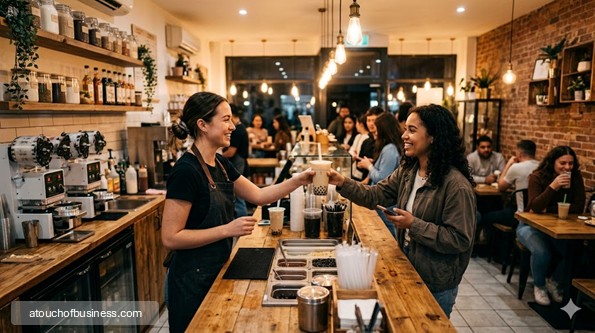
What to Expect From This Guide to Starting a Bubble Tea Shop
This guide follows the key decisions and practical steps involved in starting a bubble tea shop, beginning with entry options and local demand and continuing through setup and opening tests. The preview points below represent selected value from a detailed food-service startup resource.
Inside the guide, you will find:
- Startup roadmap: Work through entry choice, market research, concept, finances, location, registration, permits, build-out, menu, staffing, systems, and soft opening.
- Owner interviews: Explore experiences from shop owners, franchise leaders, and suppliers discussing menus, staffing, locations, product quality, customer experience, and different formats.
- Startup FAQs: Review answers about food-service experience, independent versus franchise ownership, demand, break-even cup volume, and kiosk operations.
- Business fit: Consider counter hours, perishable ingredients, sanitation, customized orders, staff training, income uncertainty, and household support.
- Financial planning: Estimate startup costs, daily cup volume, fixed expenses, gross profit per drink, operating reserves, funding, and sustainable pricing.
- Shop setup: Plan food-service space, permits, sinks, workflow zones, brewing and sealing equipment, supplier backups, menu scope, and ingredient handling.
- Opening checks: Test recipes, equipment compatibility, pearl holding schedules, POS modifiers, payments, staff flow, allergen information, and required permit displays.
The article begins by asking whether food-service pace, daily preparation, and financial uncertainty fit your current circumstances.
How to Start a Bubble Tea Shop
A bubble tea shop — also called a boba shop or boba tea shop — prepares and serves customizable tea-based drinks made with a tea base, milk or fruit flavoring, and toppings like chewy tapioca pearls.
Customers choose their tea base, sweetness level, ice level, cup size, and toppings. That customization is a major part of the appeal — and a big part of what makes this business operationally demanding.
The U.S. market for bubble tea has grown steadily, driven by Gen Z and millennial consumers who treat boba as a social experience. Demand is real, but so is the competition in many markets, and so is the work involved in running a high-volume food service counter well.
This guide walks you through the startup steps in practical order — from fit and planning through permits, build-out, and opening day.
Is This Business a Good Fit for You?
Before anything else, think carefully about whether this business matches your life right now.
Running a bubble tea shop means standing at a counter for long hours, managing perishable ingredients daily, and keeping a food service operation clean, consistent, and compliant. It’s hands-on work, and the pace during busy periods can be intense.
You don’t need to be a boba expert before you start. You do need to be comfortable learning food service skills — brewing tea, cooking tapioca pearls, operating commercial equipment, training staff, and tracking inventory.
Think about your financial position, too. Most shops take time to build a following. Your household needs to handle several months without reliable income from the business while you get established.
Talk with people who run non-competing food or beverage shops — coffee shop owners, juice bar operators, smoothie shop owners. Ask them what they wish they’d known before opening. Their honest perspective is worth more than most guides.
You can learn a lot more about the challenges of owning a business and whether the lifestyle fits before you commit to anything.
Also think about your support system. Does your household understand the income uncertainty and time demands involved? Starting a food service business affects everyone around you.
Red Flags Before You Start
Some of these issues are worth pausing on before you go further. None of them are automatic dealbreakers, but each one deserves a clear-eyed look.
Market saturation in your target area. If several established boba chains already operate within walking distance of your proposed location, opening another shop without a clear difference in concept, quality, or positioning is a real risk. Count your competition carefully.
A weak or marginal location. Bubble tea is largely an impulse, walk-in purchase. A spot with poor visibility, low foot traffic, or a demographic mismatch will struggle regardless of how good your drinks are. This is the single most consequential decision you’ll make — and one of the hardest to reverse after you’ve signed a lease.
High rent relative to realistic sales volume. Run the numbers before you sign anything. If the daily cup volume you’d need to cover rent seems out of reach given the foot traffic, that location probably doesn’t work.
Not enough capital. Startup costs and build-out add up quickly, and the ramp-up period takes time. Many small food service shops close not because they lack customers, but because they run out of cash before the business stabilizes. Plan for operating reserves beyond your launch costs.
No food service experience. This business is more operationally complex than it appears. If you haven’t worked in food service before, consider getting hands-on experience first, partnering with someone who has it, or choosing a franchise model with built-in training.
An overly broad opening menu. A large menu at launch increases training difficulty, slows order times, and creates inventory and waste problems. A focused, manageable opening menu is almost always the stronger choice.
Step 1: Decide How You Want to Enter
Before you look at locations or spend anything, decide which path makes sense for you. All three options are realistic for bubble tea.
Three common entry paths for a bubble tea shop:
- Starting from scratch. You build the concept, source the equipment, develop the menu, and set up supplier relationships yourself. You have full control — and full responsibility for every decision.
- Buying an existing shop. You take over an existing space, equipment, and sometimes a customer base. Before buying, verify the lease terms, equipment condition, actual sales history, and why the owner is selling. Have a commercial real estate attorney and accountant review everything before you commit.
- Franchising. Established brands like Gong Cha, CoCo Fresh Tea, Kung Fu Tea, and Sharetea offer proven recipes, supplier relationships, training, and marketing support. You pay a franchise fee and ongoing royalties in exchange. Have a franchise attorney review the full franchise disclosure document before signing anything.
The right path depends on your available capital, your experience level, how much control you want, and your timeline.
If you’re weighing starting fresh against taking over something already running, this overview of building versus buying a business may help you think it through.
Step 2: Research Local Demand and Competition
Don’t skip this step. Visit competing boba shops and nearby cafes in your target area — at different times of day, on weekdays and weekends.
Count customers. Note price points, peak hours, and wait times. Look for gaps: a neighborhood that’s underserved, a format nobody else is offering, a quality level your competitors aren’t hitting.
Your strongest customer base in the U.S. is typically people roughly 16–35 years old, though boba’s mainstream appeal is widening. Areas near colleges, transit corridors, busy retail strips, and office districts tend to support higher consistent volume.
If you don’t see clear demand in a specific area, pay attention to that. Low competition sometimes signals low demand rather than opportunity.
Understanding local supply and demand before committing to a location is one of the most important early decisions you’ll make.
Step 3: Choose Your Format and Concept
Lock down your business model before spending on anything else. Your format affects everything — equipment needs, lease requirements, staffing, permitting, and cost structure.
Common bubble tea shop formats:
- Storefront or café. A dedicated retail space, typically 800–1,200 square feet. The most common model for a standalone boba shop. Supports a full menu and flexible seating options.
- Kiosk or food court counter. A smaller footprint — sometimes 200–500 square feet — in a mall, food court, or shared retail space. Lower rent, but your menu scope and equipment options may be limited by the space.
- Food truck or mobile unit. Requires separate mobile vendor permits and inspections. More flexibility in location, but regulatory requirements vary more widely.
Also decide on your menu focus now. Are you leading with classic milk teas, fruit teas, brown sugar drinks, blended drinks, or a combination? Your menu scope affects which equipment you need and how much storage space and staffing you require.
Decide on your customization model too: sweetness levels, ice levels, cup sizes, and which toppings you’ll offer. More customization improves the customer experience but adds training complexity and slows order times if your prep flow isn’t designed around it.
Business Plan
Write your business plan before you commit to a lease, buy equipment, or sign a franchise agreement. This is the step that tells you whether the business makes financial sense at your specific location — before you’re locked in.
Your plan should cover your concept and target customer, your local competitive landscape, your location rationale, your menu scope, your startup cost estimate, your revenue model, your break-even analysis, and your funding plan.
The break-even question is the most important one to answer early. Bubble tea has favorable gross margins on ingredients — raw ingredient cost per cup is low relative to what customers pay. But fixed costs like rent, payroll, equipment loans, utilities, and insurance can add up quickly.
Your break-even calculation is straightforward: take your monthly fixed costs, divide by your gross profit per cup, and divide by your operating days. That tells you how many cups per day you need to sell just to cover costs — before you earn anything.
Industry observers note that a mid-sized shop commonly needs somewhere in the range of 100–250 cups per day to cover fixed costs, depending on rent and staffing. Your number could be higher or lower. Know it before you sign a lease, not after.
Plan for slow periods too. Weekday mid-morning and mid-afternoon lulls are common. So are seasonal dips in colder months in some markets. Your plan should show that you can cover costs even during slower stretches.
Toppings sold as add-ons — tapioca pearls, popping boba, jelly, pudding — are high-margin items that meaningfully improve your average ticket. Build that into your revenue model.
Finally, set aside operating reserves beyond your launch costs. Running out of cash in the first six to 12 months before the shop finds its footing is one of the most common reasons food service startups close.
A detailed business plan gives you a clear foundation and makes conversations with lenders and landlords much easier.
Step 4: Secure Funding
Once you know your startup cost categories and your operating reserve needs, confirm you can fund the full picture before committing to anything.
Common funding options for a bubble tea startup:
- Personal savings
- SBA 7(a) loan for working capital and equipment
- SBA 504 loan for major equipment or real property
- Small business loans from community banks or credit unions
- Franchise-specific lender programs (if franchising; many franchisors have preferred SBA lenders)
- Friends and family investment with clear written terms
If you plan to borrow, have your business plan, financial projections, and credit profile ready before approaching lenders. A business loan takes preparation — give yourself time.
Keep your personal living expenses covered separately. Don’t plan on the business supporting your household right away.
Step 5: Find and Evaluate Your Location
Location is the most important physical decision you’ll make. A wrong choice here is expensive to reverse.
Look for a space zoned for commercial food service. Confirm zoning with the local planning or zoning department before you negotiate or sign anything.
High-traffic spots near schools, colleges, transit hubs, shopping centers, and office districts tend to produce the most consistent walk-in volume. Boba is largely an impulse purchase, so foot traffic is your primary sales driver.
When you evaluate a potential space, check for:
- Adequate square footage (roughly 800–1,200 sq ft for a storefront model)
- Commercial plumbing already in place (three-compartment sink, hand-washing sink)
- Electrical capacity for commercial equipment
- Proper ventilation and drainage
- Prior food service use (reduces build-out cost significantly)
Before signing a lease, confirm the space can receive a certificate of occupancy for food service use. Include lease language stating that rent does not begin until that certificate is issued, especially if build-out is required.
Negotiate your lease terms: length, renewal options, a tenant improvement allowance to help offset build-out costs, and an exit clause. A boba shop typically needs at least a three-to-five year lease to justify the build-out investment. Don’t sign a long-term lease without an exit plan.
Step 6: Register Your Business and Handle Legal Setup
Once your location and model are decided, register your business and get your legal foundation in place. This step needs to happen before banking or hiring.
Core legal setup tasks:
- Choose a legal structure. An LLC is common for food service businesses because it offers personal liability protection. Consult a small business attorney or CPA before you decide.
- Register your business name and entity with your state’s secretary of state office.
- Obtain your Employer Identification Number (EIN) from the IRS at IRS.gov. It’s free and required for banking, hiring, and tax reporting.
- Open a dedicated business bank account after your EIN and entity registration are in place. Never mix personal and business funds.
If you’re franchising, your franchisor may direct the entity structure and setup process. Follow their requirements — and still have your own attorney review the paperwork.
Step 7: Obtain All Required Permits and Licenses
This step must be complete before you open. Allow two to eight weeks for permit processing and health inspections, depending on your local government’s timeline. Build that into your launch schedule.
Requirements vary by city and state, but most bubble tea shops need all of the following.
Permits and licenses to obtain before opening:
- Business license from your city or county
- Retail food establishment permit issued by the health department after a facility inspection
- Certificate of occupancy from the local building department, confirming the space meets zoning and building codes for commercial food service
- Seller’s permit / sales tax permit from your state’s revenue or tax agency, required to collect and remit sales tax on beverages sold
- Resale certificate from your state tax authority, allowing you to purchase ingredients for resale without paying sales tax to your supplier
- Food handler’s or food manager’s certification — most jurisdictions require at least one certified person on staff, typically through ServSafe or a state-approved equivalent
- Signage permit, if your city requires one for exterior business signs
Check with your local health department and city or county licensing office early. Your city may have requirements beyond this list, and the specifics vary considerably from one jurisdiction to another.
You can learn more about the general business licensing and permit process to get a sense of what to expect.
A food handler’s card covers basic safety for food-handling employees. A food protection manager certification (such as ServSafe Manager) is a higher-level credential often required for at least one manager per establishment. Your local health department will tell you what’s required in your area.
Step 8: Plan and Complete Your Build-Out
Work with a licensed contractor who has commercial food service build-out experience and understands what your local health department requires. Their knowledge of local code will save you from costly surprises.
Your build-out needs to include:
- Three-compartment sink (required for commercial food service)
- Dedicated hand-washing sink, separate from the prep sink
- Stainless steel prep surfaces (required by most health codes)
- Commercial refrigeration and adequate cold storage
- Proper plumbing, drainage, and electrical capacity for your equipment
- Ventilation as required by local code
Design your prep area with distinct workflow zones: a tea brewing and cooking section, a customization and topping station, a shaking and sealing station, and a customer-facing pickup counter.
Good zone layout reduces how far staff have to move during busy periods. It directly affects service speed and order accuracy — especially when you’re handling a rush of customized orders.
Coordinate your health department pre-opening inspection with your build-out timeline. Don’t order opening inventory until you’re confident the inspection will pass. Passing on the first attempt saves time and keeps your launch on schedule.
Step 9: Source Equipment and Supplies
Set up wholesale ingredient accounts before you finalize your menu. Knowing what’s reliably available — and at what minimum order quantities — directly affects what you can offer and how you price it.
Major U.S.-accessible bubble tea wholesale suppliers include Bossen and Possmei USA, along with other Taiwan-based manufacturers with U.S. distribution. Identify a primary supplier and at least one backup for critical items like tapioca pearls and flavored syrups.
Order a test batch of your core ingredients — tea bases, tapioca pearls, flavor powders, syrups, and toppings — and run recipe tests before you open. Taste and adjust. Know your drinks before your first customer walks in.
Core equipment for a bubble tea prep area:
- Commercial automatic tea brewer or tea urn
- Hot water dispenser
- Automatic tapioca pearl cooker (boba cooker)
- Automatic shaker machine
- Fructose dispenser (automatic sugar dispenser for consistent sweetness across all drinks)
- High-powered blender with sound enclosure (for blended drinks and slushes)
- Cup sealing machine
- Sealing film stock (must match your cup type — PP film for PP cups, PET film for PET cups)
- Commercial ice maker
- Commercial refrigerator and freezer
One compatibility issue that catches people off guard: your cup sealing machine and your sealing film must match your cup type and size. Order a test supply before buying cups and film in bulk. Getting this wrong means your sealer won’t work, and correcting it delays your opening.
Also verify that your equipment matches your local electrical capacity — some commercial machines require different voltage than standard outlets provide.
Step 10: Develop Your Menu and Set Prices
Start with a focused opening menu. A tighter menu is easier to train, easier to stock, and easier to execute consistently while you’re still learning your prep flow and your customers’ preferences.
Common bubble tea menu categories:
- Classic milk teas (black, oolong, jasmine)
- Fruit teas
- Brown sugar milk tea
- Taro milk tea
- Matcha milk tea
- Blended drinks and slushes
- Optional light snacks or desserts
Offer customization as standard: sweetness level (typically 0%, 25%, 50%, 75%, 100%), ice level, cup size, and topping choices.
Price toppings as add-ons, not as part of the base drink price. Tapioca pearls, popping boba, fruit jelly, pudding, and other toppings carry very high margins per serving. Charging separately for them meaningfully increases your average ticket.
Build each price from your actual costs: ingredient cost, topping cost, packaging, labor time, and overhead contribution — then add your target margin. Check local competitor pricing to make sure your prices land within the range your market supports.
For more on how to approach pricing your products and services, that resource covers the core methods in plain language.
Step 11: Hire and Train Your Team
A small bubble tea shop can often open with two to four people including you. Staffing needs grow with your volume and hours.
Hire for reliability and customer interaction first. You can train someone to make a perfect milk tea. It’s much harder to train someone to show up consistently and stay calm during a rush.
Before opening day, every staff member who handles food needs to:
- Hold the required food handler’s certification for your jurisdiction
- Know the preparation sequence for each drink on your menu
- Understand tapioca pearl cooking and holding times (cooked pearls have a short shelf life and must be managed carefully)
- Be comfortable with the POS system and payment processing
- Know your food safety practices and sanitation standards
Cooked tapioca pearls typically hold for four to six hours before they need to be discarded — though this varies by product. Set a clear schedule, communicate it to all staff, and make it part of your daily prep routine from day one.
Set up your payroll system and confirm your employer tax registrations with the state before your first paycheck goes out. Your accountant can walk you through what’s required in your state.
Step 12: Set Up Technology and Payment Systems
Choose a point-of-sale system designed for — or compatible with — bubble tea’s highly customizable orders.
Standard restaurant POS systems often can’t handle the modifier combinations that boba orders require: size, sweetness level, ice level, milk type, and multiple topping add-ons per drink. A system that can’t capture these details clearly will create mistakes and slow down service.
Confirm your POS can handle:
- Multiple custom modifiers per drink
- Kitchen display or order print routing to your prep area
- Real-time inventory tracking
- Sales reporting by drink and category
- Integrated payment processing
Accept credit cards, debit cards, and contactless payments (Apple Pay, Google Pay) from day one. Customers who don’t carry cash will skip a cash-only shop without hesitation.
Set up your merchant account and confirm payment processing is fully tested before your first service day.
Step 13: Arrange Insurance and Risk Coverage
Don’t open without the right coverage in place. Your landlord will likely require proof of insurance before build-out even begins.
Key insurance types for a bubble tea shop:
- General liability insurance. Covers customer injury (slip and fall, hot beverage burns), property damage, and related claims. Strongly recommended and often required by commercial leases.
- Commercial property insurance. Covers your equipment, inventory, and build-out investment if something goes wrong.
- Workers’ compensation insurance. Legally required in most states once you have employees. Covers on-the-job injuries including burns, slips, and repetitive strain. Verify your state’s threshold.
- Product liability insurance. Covers claims from a customer’s adverse reaction to something you served.
- Business Owner’s Policy (BOP). Bundles general liability and commercial property into one policy at a lower combined cost. A practical option for most small food service businesses.
You can read more about business insurance options to understand what each type covers and how to compare policies.
Step 14: Run a Soft Opening Before You Launch
Before you open to the public, run a soft opening with a limited group of invited guests. Use it as a test, not a celebration.
Watch how orders move through your prep area from start to handoff. Identify where things slow down or break down. Check drink quality and consistency across staff members. Verify that the POS and payment systems work under real order pressure.
During your soft opening, confirm:
- All equipment is functioning correctly and producing consistent results
- Staff can handle the full order flow without major bottlenecks
- Tapioca pearl cooking, holding, and discard schedules are working as planned
- Drink quality is consistent across different orders and staff members
- The POS is capturing all modifiers correctly and routing orders to prep accurately
- Payment processing is running smoothly
Fix what you find. Don’t open publicly until the flow feels manageable. A messy first week of service can affect your reputation before you’ve had a chance to build one.
Opening-Day Red Flags
Go through this list before you open. These are the setup issues most likely to cause problems on or around opening day.
Permits not posted. Your retail food establishment permit and other required documents may need to be displayed in a visible location. Verify this with your local health department and have everything posted before service begins.
Pearl holding schedule not established. If your staff isn’t clear on when cooked pearls need to be discarded, you risk serving pearls that have degraded in texture — or that have been held too long from a food safety standpoint. This needs to be a documented routine, not an informal understanding.
Equipment compatibility problems. If your cup sealer film doesn’t match your cups, or your ice maker isn’t sized for your actual volume, you’ll find out at the worst possible time. Test everything thoroughly during the soft opening.
POS can’t handle the order complexity. A system that drops modifiers or confuses drink orders creates mistakes, slows service, and frustrates both staff and customers. If the POS isn’t working cleanly with your full menu during the soft opening, resolve it before your public launch.
Allergen information not available. Customers with food allergies may ask about ingredients in your teas, syrups, powders, and non-dairy milk alternatives. Have your allergen information organized and accessible before you open. Confirm what your local health department requires in terms of posting or disclosure.
No backup supplier plan. If your primary ingredient supplier is out of a key item — tapioca pearls, a signature syrup — know your backup before you need it.
Frequently Asked Questions
Do I need prior food service experience to open a bubble tea shop?
Prior experience isn’t a legal requirement, but it’s a meaningful practical advantage.
Bubble tea prep involves pearl cooking, equipment calibration, food safety compliance, and managing high-volume customized orders under pressure. If you don’t have food service experience, consider working in a food service environment first, partnering with someone who does, or choosing a franchise model that provides comprehensive training.
What’s the difference between starting an independent shop and buying a franchise?
An independent shop gives you full control over concept, menu, pricing, and supplier relationships — but you build everything from scratch.
A franchise provides proven recipes, supplier relationships, training, and brand recognition in exchange for an upfront franchise fee and ongoing royalties. Franchises typically cost more to enter and permanently reduce your net margin, but they can reduce early-stage risk and get you to consistent operations faster. Have a franchise attorney review the full franchise disclosure document before you sign anything.
How do I know whether my area has enough demand?
Visit your target area at different times of day, on weekdays and weekends. Count foot traffic. Look at whether existing boba shops are busy. Talk to nearby business owners about their customer volume.
Then run your break-even math. If the daily cup count you need to cover your costs seems unreachable based on realistic foot traffic, that location may not work — regardless of how much you like the space.
What permits and certifications do I need before opening?
Requirements vary by location, but most bubble tea shops need a business license, a retail food establishment permit (issued after a health inspection), a certificate of occupancy, a state seller’s permit, a resale certificate, and at least one food handler’s or food manager’s certification on staff.
Contact your local health department and city or county licensing office early in your planning process. They’ll give you a complete list for your specific location.
How long does it take to get permits and pass the health inspection?
Typically two to eight weeks, depending on your jurisdiction’s processing times and inspection scheduling. Build this into your launch timeline. Don’t set a public opening date until permits are in hand and the health inspection is passed.
What food handler certifications does my staff need?
Most jurisdictions require at least one person with a food protection manager certification — typically ServSafe Manager or a state-approved equivalent. Many jurisdictions also require all food-handling employees to hold a basic food handler’s card.
Your local health department will tell you exactly what’s required, what the renewal period is, and whether certifications need to be in place before opening.
How many cups per day does my shop need to sell to be profitable?
It depends entirely on your fixed costs and your average selling price per drink.
Start with your monthly fixed costs: rent, payroll, equipment costs, utilities, insurance, and any loan payments. Divide by your gross profit per cup, then divide by your number of operating days. That gives you your daily break-even volume. Know that number before you sign a lease, not after.
Can I start a bubble tea shop as a kiosk instead of a full storefront?
Yes. Kiosk-format boba counters in malls and food courts are a viable lower-footprint option. They typically require less build-out investment, smaller square footage, and fewer staff.
However, kiosks may come with mall-specific lease requirements, equipment and build-out restrictions set by the landlord, and limitations on menu scope due to space constraints. The permit and health inspection process still applies. A kiosk can be a good way to test a market before committing to a full storefront lease.
Advice From Bubble Tea Shop Owners
These interviews share practical lessons from people already working in the bubble tea business, including location choices, menu planning, staffing, franchise growth, customer experience, product quality, and the pressure of running a drink shop day to day.
Amy Lai – From Boba Beginnings to 45+ Locations with TEASPOON
This podcast transcript interview with Teaspoon co-founder and CEO Amy Lai covers opening a boba shop, building a customer experience, simplifying the menu, using samples, training staff, and growing into a franchise model.
Interview with Eric Ling – Bubbles – Owner of The Tea & Juice Company
This written owner interview explains how Eric Ling introduced bubble tea, smoothies, and juices to his market, with advice on finances, people, planning, labor challenges, accounting, and business persistence.
Paul Reynish of Gong cha: How To Grow Your Franchise Business In A Challenging Economy
This interview with Gong cha’s global CEO discusses brand differentiation, product quality, innovation, staffing, franchise profitability, and how a bubble tea brand can compete during uncertain economic conditions.
BOBA EMPIRE Combines The Artistry Of Bubble Tea With Advanced Food Technology
This interview with Mindy Jen of BOBA EMPIRE gives useful supplier-side insight into food safety, product development, local flavor preferences, partnerships, and how bubble tea brands can adapt products for different markets.
Part 1 ~ Real Owner Interview: Opening a Bubble Tea Shop
This video interview from Bubble Tea Kristin features a boba shop owner discussing what it takes to open a bubble tea shop, including owner experience, setup decisions, and practical lessons for beginners.
London Bubble Tea Shop Interview ~ Brand New Business
This video interview with Zain, owner of Boba Coma, looks at opening a new bubble tea shop in London, with useful points on brand style, shop concept, startup pressure, and operating a young beverage business.
Real Owner Interview: Bubble Tea Shopping Mall Kiosk
This video interview focuses on a bubble tea mall kiosk model, which can help readers compare a smaller-format setup against a full storefront location.
Madrid’s Hottest New Bubble Tea Shop ~ Owner Interview
This owner interview gives readers another example of a bubble tea shop in a different market, with lessons on concept development, customer appeal, and entering a local beverage scene.
Related Articles
- How To Start a Café
- How To Start a Juice Bar
- How To Start an Acai Bowl Café
- How To Start a Frozen Yogurt Shop
- How To Start a Gelato Shop
- How To Start an Ice Cream Shop
Sources:
- WebstaurantStore: Open Bubble Tea Shop
- StartUp 101: Bubble Tea Business Licenses
- BusinessDojo: Open Bubble Tea Shop 2026, Open Boba Shop 2026
- TRUiC / HowToStartAnLLC: Start Bubble Tea Business, Bubble Tea Business Insurance
- Jim.com: Start Boba Tea Business
- BubbleTeaology: Equipment Supplies List, Startup Equipment List, Food License Sell Bubble Tea
- KimEcopak: Bubble Tea Equipment Checklist, Best Bubble Tea Franchises
- ProfitableVenture: Bubble Tea Shop Equipment, Food Permit Sell Tea
- Chowbus: Bubble Tea Business Plan
- MenuSifu: Boba Tea Business Guide, POS System Bubble Tea Shops, Bubble Tea Profit Margin
- Fanale Drinks: Bubble Tea Business Plan
- Wanpo Tea: Bubble Tea Shop Profitability
- Mustea: Tea Shop ROI Break-Even
- Verified Market Research: U.S. Bubble Tea Market
- GrowthFactor: Boba Tea Franchise Guide
- Insureon: Food Business General Liability, Food Business Workers Comp
- ZipRecruiter: Hiring Boba Shop Team
- IRS: Get Employer Identification Number
- FDA: Food Allergies Labeling Information
- Taipec: Price Bubble Tea Menu
- Onezo: Bubble Tea Shop Startup