
What You Can Expect From This Guide
This guide walks you through the key decisions and practical steps involved in starting a gutter cleaning business, from testing personal and local fit to building a safe setup and preparing to open. The points below highlight selected areas covered in greater depth.
Inside the guide, you will find:
- Startup roadmap: Follow an ordered path through service definition, demand research, planning, legal setup, pricing, testing, and pre-opening checks.
- Industry interviews: Hear first-hand experiences from gutter cleaning and related home-service professionals on safety, pricing, routes, customers, and startup mistakes.
- Startup FAQs: Review practical answers about equipment, pricing, insurance, home-based operations, service boundaries, hiring, and jobs to refuse.
- Business fit: Consider physical demands, ladder comfort, seasonal income, household finances, travel, weather, and the discipline to reject unsafe jobs.
- Financial planning: Examine startup costs, funding choices, personal expenses, payment systems, and pricing factors tied to each property and service.
- Local requirements: Learn what to verify locally regarding registration, taxes, business licenses, home occupation rules, vehicles, employees, repairs, and insurance.
- Opening preparation: Build equipment, safety procedures, customer documents, route buffers, payment tools, a test job, and final opening checks.
Begin by deciding whether the physical demands, safety responsibilities, and mobile-service lifestyle suit you.
What Starting a Gutter Cleaning Business Really Involves
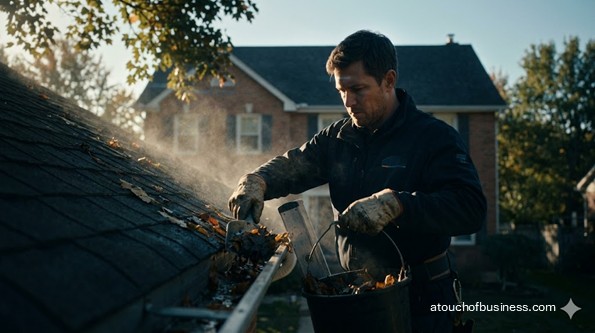
A gutter cleaning business provides gutter and downspout cleaning for homes, rental properties, small commercial buildings, and similar properties. The owner or technician removes leaves, twigs, roof grit, mud, nests, and other debris so rainwater can move away from the roofline and foundation.
This is usually a mobile service. You travel to the customer’s property with ladders, stabilizers, buckets, hose tools, debris bags, safety gear, and payment tools. That sounds simple, but simple doesn’t mean casual. Cheap now vs. expensive later is a real tradeoff in this business. Weak ladders, poor insurance, vague estimates, and rushed safety checks can cost far more than a proper setup.
Before you follow any startup checklist, ask whether this business fits you. Do you like outdoor service jobs? Can you handle heights? Can you work around wet leaves, dirty gutters, blocked downspouts, bad weather, and customer questions?
You also need to think about your life behind the business. Startup income may be uneven. Your household may need to support a launch period with uncertain cash flow. Your personal living expenses still need to be covered while you test demand, price jobs, and build a safe setup.
Are you moving toward something or running away from something?
That question matters. Don’t start a gutter cleaning business only because you dislike your job, feel financial pressure, or want a quick fix for money problems. The business requires physical effort, safety judgment, customer trust, and the discipline to refuse unsafe jobs.
Talk with experienced owners. Speak only with gutter cleaning owners outside your intended service area so you’re not asking competitors for help. Prepare your questions before the call. Ask about ladders, downspout clogs, seasonal demand, insurance, bad estimates, jobs they refuse, and what they wish they had known before opening.
Those owners have firsthand experience. Their path won’t match yours exactly, but their insight can save you from guessing. Advice from real business owners is often most useful before you commit to tools, a vehicle setup, or a service area.
Local demand should also shape your decision. A gutter cleaning business tends to fit areas with many homes that have gutters, mature trees, rain, storms, older housing, or owners who don’t want to climb ladders. But demand alone isn’t enough. You also need to know whether local pricing can support safe equipment, insurance, travel time, and proper cleanup.
Fast vs. correct matters here. Fast validation means glancing at a few competitors. Correct validation means checking the kinds of homes in your area, the height and access challenges, the number of competing services, and whether the available jobs match what you can safely handle.
Red Flags Before You Start
Some warning signs should make you pause before you buy ladders, print cards, or take your first customer job. These are start-or-stop issues, not small details to fix later.
- You dislike heights: A gutter cleaning owner must be comfortable with ladder-based service calls or choose a different model.
- You can’t afford proper safety gear: Poor ladders, no stabilizers, weak personal protective equipment, and missing insurance create serious risk.
- Your local homes are too tall or hard to access: A two-story or steep-roof market may not fit a beginner with basic equipment.
- You plan to offer repairs without checking the rules: Cleaning is different from repair, installation, fascia service, or roof-related tasks.
- Insurance doesn’t match the service: Don’t open if your planned service is excluded or unclear.
- You can’t say no to unsafe jobs: This business needs judgment, not just effort.
- Local pricing is too tight: Low prices may look attractive to customers, but they may not cover travel, gear, insurance, cleanup, and safe service time.
- Demand is too seasonal for your needs: If your personal bills require steady income, seasonal gutter cleaning may need a different plan.
- Your home base isn’t allowed: Local rules may limit trailer parking, ladder storage, signage, employee visits, or outdoor storage.
- You need advanced services to make the numbers work: Pressure washing, roof walking, repairs, and installation can change training, insurance, equipment, and licensing requirements.
Step 1: Check Whether the Business Fits You
A gutter cleaning business is hands-on. The owner or technician climbs ladders, carries equipment, removes wet debris, clears downspouts, and discusses findings with customers.
That makes owner fit a real startup decision. You need physical stamina, patience, balance, safety discipline, and comfort with outdoor service calls. You also need enough confidence to stop a job when the ground is unstable, the ladder angle is unsafe, the weather changes, or the gutter line is beyond your skill.
There’s also a lifestyle tradeoff. Mobile service means driving between properties, watching weather, loading gear, and building travel time into your schedule. A day that looks open on paper can become tight when traffic, rain, blocked access, or a stubborn downspout slows you down.
Correct vs. fast shows up again here. Fast means taking every job. Correct means knowing which jobs fit your tools, training, insurance, and comfort level.
Step 2: Learn From Non-Competing Owners
Talk with people who already run this type of service. Choose owners in another city, county, or market area so you’re not competing with them.
Prepare questions before you reach out. Don’t ask vague questions like “Is it a good business?” Ask about specific startup decisions.
- Which ladders did they buy first?
- Which jobs were harder than expected?
- How do they handle downspout clogs?
- What property types do they avoid?
- What insurance questions came up?
- What causes bad estimates?
- How do they handle debris disposal?
- What would they change if starting again?
Those conversations help you see the business from the owner’s side. A customer sees a clean gutter. The owner sees ladder placement, travel time, scope limits, weather risk, cleanup, payment, and liability.
Step 3: Define the Service You Will Provide
A new gutter cleaning business needs clear service boundaries. If you don’t define the service, customers may assume repairs, roof access, pressure washing, or gutter guard service are included.
Start with the basic model. The owner or technician travels to the property, removes debris from gutters, clears visible blockages, handles downspout openings, cleans up debris, documents visible issues, and collects payment.
Then decide what’s included at launch.
- Gutter debris removal only
- Gutter cleaning plus downspout flushing
- Downspout clog clearing
- Gutter guard cleaning
- Exterior gutter face washing
- Before-and-after photos
- Basic visual notes about loose gutters, seams, hangers, or drainage problems
Keep repair, installation, pressure washing, and roof-related work separate in your plan. These may require different tools, training, insurance, customer paperwork, and local license checks.
Simple now vs. complicated later is the tradeoff. A focused launch offer is easier to train, price, insure, and explain. A broad offer may bring more requests, but it also brings more risk.
Step 4: Decide Whether to Start, Buy, or Franchise
You can start a gutter cleaning business from scratch, buy an existing business, or explore a franchise. Each path changes your startup cost planning, control, support, timeline, and risk.
Starting from scratch can make sense if you want direct control and are willing to build the setup yourself. You still need equipment, insurance, local checks, a pricing method, payment tools, and a safe service process.
Buying an existing business may make sense if there’s a real customer base, clean records, transferable goodwill, and equipment in good condition. But you need proof. Ask for job history, customer records, equipment details, claims history, online reputation, and transfer terms.
A franchise may help if you want a known system, training, and brand support. It may also limit how you operate and add fees or rules. Review the Franchise Disclosure Document before signing or paying anything.
The best path depends on your budget, timeline, support needs, risk tolerance, and how much control you want. A helpful starting point is thinking through whether to start from scratch or buy a business before you commit.
Step 5: Validate Local Demand and Competition
A gutter cleaning business depends on local property conditions. Your market should have enough homes and buildings with gutters, trees, storms, rain, older housing, or owners who prefer to avoid ladder work.
Look beyond population size. A dense area with few gutters may be weaker than a smaller area with tree-lined neighborhoods and many homes with downspouts. The right question isn’t “Are there people nearby?” It’s “Are there enough suitable properties I can safely serve?”
Study competitors with a practical eye. Note what they appear to include, whether they serve one-story or two-story homes, how clear their scope is, and what customers complain about in reviews. Don’t copy their prices blindly. Their equipment, insurance, crew size, and service radius may differ from yours.
Also consider service area size. A wide territory can bring more potential jobs, but it can also create wasted drive time. A tighter territory may make scheduling easier. More miles vs. better margins is an important mobile service tradeoff.
Use local demand research to decide whether this business fits your area before you buy expensive equipment. A broader guide to local supply and demand can help frame that decision.
Step 6: Build Your Startup Plan
Once you know the service model and local demand, organize the startup details into a practical plan. This is where you turn ideas into decisions.
Your plan shouldn’t be a generic document. It should explain how this gutter cleaning business will open safely, legally, and clearly.
- Which property types you will serve
- What service tasks you will include
- What jobs you will refuse
- What equipment you need before opening
- How you will price jobs
- How far you will travel
- How you will handle weather delays
- How you will document customer approval
- How you will collect payment
- Which compliance checks must be completed first
This plan should also include your personal limits. For example, you may decide to start with one-story homes, avoid steep properties, refuse roof walking, or leave repairs to licensed contractors.
Business Plan
Your business plan should turn the startup path into a working launch plan. Keep it focused on opening the business, not on long-term growth.
Start with the service definition. Write down whether you’ll clean gutters only, include downspout flushing, handle gutter guards, or offer limited add-ons. Then write what’s excluded. Clear exclusions prevent customer confusion and protect your time.
Next, map the job workflow from first contact to payment. A simple gutter cleaning workflow might include inquiry, property review, estimate, approval, scheduling, arrival, safety check, cleaning, downspout check, cleanup, final walkthrough, invoice, and payment.
Add your safety rules. Include ladder checks, weather limits, no-go conditions, and what you’ll do when a property is unsafe. Careful planning here beats fast guessing on a customer’s driveway.
Your plan should also cover startup costs, funding options, insurance, local license checks, payment tools, and basic recordkeeping. A practical business plan helps you see whether the idea works before you commit to major spending.
Step 7: Set Up the Business Legally
Before you open a gutter cleaning business, choose a business structure and registration path. This may affect taxes, banking, liability, records, and how you sign customer documents.
You may operate as a sole proprietor, limited liability company, corporation, or another structure depending on your goals and advice from a qualified professional. Don’t choose based only on what sounds easy. Easy now vs. protected later can be a costly tradeoff.
Register the business where required. If you use a trade name that differs from your legal name or entity name, check Doing Business As rules. These vary by state and sometimes by county.
You may also need an Employer Identification Number. The Internal Revenue Service issues this directly, and many banks or payroll setups may ask for it.
This is also the point to keep personal and business transactions separate from the start. Your bank may ask for business registration documents, tax ID details, ownership information, or other records before opening an account.
For more background, review how to choose a business structure before you register.
Step 8: Verify Licenses, Tax Rules, and Local Requirements
Basic gutter cleaning doesn’t have a single national trade license that applies everywhere. But that doesn’t mean you can skip local checks.
Rules vary by U.S. jurisdiction. Check state, city, and county requirements before you take customer jobs. The same business may face different rules in different places.
- Business license: Check whether your city or county requires a local business license.
- Doing Business As: Verify whether your trade name must be registered.
- Sales tax: Ask your state tax agency whether gutter cleaning, exterior cleaning, or related services are taxable.
- Contractor license: Check before offering repair, installation, fascia service, gutter guards, pressure washing, or roof-related tasks.
- Employer accounts: Verify payroll, unemployment, and workers’ compensation rules before hiring.
- Vehicle rules: Check commercial vehicle, trailer, ladder rack, cargo securement, and registration requirements if they apply.
Ask local agencies direct questions. Does a mobile exterior cleaning service need a business license? Is gutter cleaning taxable in this state? Does gutter repair require a contractor license?
If you operate from home, also check home occupation rules. Some jurisdictions limit outdoor storage, trailer parking, signs, customer visits, employee visits, or business activity at a residential address.
A certificate of occupancy may matter if you use a commercial shop, office, warehouse, or storage space. It’s not usually the main concern for a simple mobile service run from home, but verify before signing a lease.
Step 9: Choose Your Base and Service Area
A mobile gutter cleaning business needs a practical base, even without a storefront. You need a place to store ladders, safety gear, buckets, hose tools, debris bags, paperwork, and payment devices.
Your base might be a garage, driveway, home office, storage unit, or small commercial space. Each choice has tradeoffs.
- Home base: Lower setup costs, but zoning, parking, signage, and outdoor storage rules may apply.
- Storage unit: Useful for ladders and tools, but access hours and business-use rules may limit you.
- Commercial space: More room and separation, but lease terms, zoning, and certificate of occupancy checks may apply.
Then define your service area. Don’t make the radius too wide just to look available. Travel time affects pricing, scheduling, fuel, and how many appointments you can safely complete.
A mobile service needs buffers. Weather, traffic, blocked driveways, wet debris, and downspout clogs can all stretch the day. Tight scheduling may look efficient, but a realistic schedule leaves room for actual service conditions.
Step 10: Plan Startup Costs Before You Buy
Don’t start with a rough budget guess. Start with the items you must price out for your actual gutter cleaning model.
Your startup cost planning should reflect your service area, property types, tools, vehicle setup, insurance, local compliance checks, and payment systems. A one-story cleaning-only model has different needs than a two-story service with gutter guard cleaning and downspout flushing.
- Business registration and local license costs
- Legal, tax, or accounting help
- Vehicle readiness
- Ladder rack, trailer, or secure transport setup
- Extension ladders and stabilizers
- Gutter scoops, buckets, hooks, hose tools, and downspout tools
- Personal protective equipment
- Debris bags, tarps, and cleanup supplies
- Insurance
- Payment processor and invoicing tools
- Scheduling and recordkeeping systems
- Basic identity items such as business cards or simple service documents
Some choices raise startup costs. Taller properties may require better ladders and safety gear. A wider service area may require more vehicle planning. Employees add payroll setup, workers’ compensation checks, and training needs.
Cheap now vs. expensive later shows up clearly in equipment. A bargain ladder that doesn’t fit the job isn’t a savings. A missing stabilizer isn’t a shortcut. Price the proper setup before taking jobs.
Step 11: Secure Funding Before Major Commitments
Funding should come before major purchases, leases, franchise payments, or vehicle commitments. You need to know whether the startup plan is affordable before you lock yourself into costs.
Possible funding options include personal savings, equipment financing, vehicle financing, a small business loan, a business line of credit, or an SBA-backed loan through a participating lender.
Match the funding to the need. A ladder purchase, vehicle rack, and tool setup are different from buying an existing business or joining a franchise. Bigger commitments need stronger review.
Also think about personal living expenses. If the business takes time to produce steady income, you’ll need a plan to cover rent, mortgage payments, food, utilities, insurance, and other household needs.
Pressure leads to poor decisions. Taking unsafe jobs because you need quick cash is a bad foundation for this business.
Step 12: Set Up Banking, Records, and Payments
A gutter cleaning business should be ready to estimate, invoice, collect payment, and track records before opening. Don’t wait until after the first job to figure this out.
Set up a business bank account once your registration and tax documents are ready. Keep business income and expenses separate from personal spending from the start.
You also need a payment process. Customers may expect card payments, digital payments, checks, or invoices. Choose tools that let you issue estimates, collect approval, send receipts, and track tax details if sales tax applies.
- Business checking account
- Payment processor
- Invoice and receipt templates
- Expense tracking categories
- Customer contact records
- Sales tax tracking if required
- Photo folders for job documentation
Clear records help with pricing, taxes, customer disputes, and insurance questions. They also help you see whether your service area and job types make financial sense.
Step 13: Arrange Insurance and Safety Planning
Gutter cleaning carries real liability risk. The owner or technician uses ladders, carries tools, works around homes, and handles wet debris near the customer’s property.
Verify any legally required insurance in your state and city. Workers’ compensation is especially important if you hire employees. Rules vary, so check before bringing anyone onto jobs.
For risk planning, price out coverage such as general liability, commercial auto, tools and equipment coverage, workers’ compensation if you hire, and umbrella coverage if an insurance professional recommends it.
Don’t assume personal auto insurance covers business use. Don’t assume a general policy covers every service you want to offer. Cleaning-only, pressure washing, repair, installation, and roof access may be treated differently.
Safety planning should be written down. Include ladder inspection procedures, weather limits, personal protective equipment requirements, job hazard checks, and incident reporting. Business insurance is part of the plan, but it’s not a substitute for safe judgment.
Step 14: Buy and Test the Right Equipment
Buy equipment that fits your launch service, not the largest version of the business you imagine later. A simple gutter cleaning service needs reliable basics before advanced tools.
Core equipment may include extension ladders, ladder stabilizers, ladder levelers if appropriate, gutter scoops, buckets, bucket hooks, contractor bags, tarps, hose tools, spray nozzles, downspout clearing tools, gloves, safety glasses, slip-resistant footwear, and a first aid kit.
Your vehicle setup matters too. Ladders need secure transport. Tools need organized storage. Debris bags need a plan. If loading takes too long every morning, your schedule will suffer before the first appointment of the day.
Optional tools may include a gutter vacuum, telescoping camera, leaf blower attachment, water-fed pole, or pressure washer attachment. Don’t buy them just because they sound professional. Buy them only if they match your service scope, safety plan, and target properties.
The right fit beats impressive equipment. A well-matched ladder and stabilizer may matter more than an advanced tool you rarely use.
Step 15: Create Scope Documents and Safety Limits
Unclear scope causes trouble in home service businesses. A customer may assume a cleaning includes repairs, flushing every underground drain, removing gutter guards, washing the gutter face, or walking the roof.
Write simple documents before you open. They don’t need to be complicated, but they should be clear.
- Estimate form
- Service agreement or approval form
- Job checklist
- Ladder inspection checklist
- Before-and-after photo process
- Damage note form
- Refused-job form
- Invoice and receipt template
Also write your no-go rules. Refuse unsafe ladder placement, unstable ground, ice, high wind, electrical hazards, rotted fascia, damaged gutters, aggressive animals, blocked access, or tasks outside your license, insurance, or skill.
Fast agreement vs. clear agreement is another tradeoff. A quick verbal “yes” may get the job started. A clear written scope helps prevent disputes.
Step 16: Set Pricing Rules Before Opening
Pricing for a gutter cleaning business should reflect the actual job, not just a quick guess. The same property size can require very different effort if access, height, roof slope, debris level, or downspout clogs change.
Build your pricing method around visible factors you can explain.
- Linear feet of gutters
- Number of stories
- Roof slope
- Ladder access
- Landscaping or obstructions
- Debris level
- Wet or compacted material
- Downspout clogs
- Gutter guards
- Travel time
- Disposal needs
- Safety complexity
Common pricing methods include a flat quote after review, pricing by linear foot, tiered pricing by height and access, or add-on pricing for clogged downspouts, gutter guards, or extra safety setup.
Don’t quote as if every home is the same. Simple pricing is good. Blind pricing is not. A guide to pricing products and services can help you think through the method, but your final pricing needs to match your local costs and job conditions.
Step 17: Run a Controlled Test Job Before Opening
Before you open to the public, run at least one controlled test job. Use it to test the full process, not just the cleaning task.
Load the vehicle. Drive to the property. Inspect access. Place the ladder safely. Remove debris. Check downspouts if included. Take photos. Clean the area. Create an invoice. Collect payment or test the payment process. Record the job notes.
This test will reveal weak points. Maybe the ladder rack is awkward. Maybe your bucket setup slows you down. Maybe your invoice template is missing a tax field. Maybe downspout flushing takes longer than expected.
Fix those issues before your public launch. Correct first vs. rushed first is the safer choice.
Step 18: Confirm Pre-Opening Readiness
A gutter cleaning business is ready to open only when the setup can handle a real customer job safely, clearly, and legally.
Use a final readiness check before you accept appointments.
- Business structure selected
- Business name registered if required
- Doing Business As filed if needed
- Employer Identification Number obtained if needed
- State tax registration checked
- Sales tax treatment verified
- City or county business license checked
- Home occupation, storage, parking, and signage rules verified
- Certificate of occupancy checked if using commercial space
- Contractor license checked if offering repairs or installation
- Workers’ compensation rules checked before hiring
- Insurance active or ready
- Ladders and stabilizers inspected
- Personal protective equipment ready
- Debris disposal process confirmed
- Payment processor tested
- Estimate, approval, invoice, and receipt templates ready
- Safety checklist ready
- Refused-job rules written
- Test job completed
This isn’t about looking ready. It’s about being ready. A clean logo won’t help if your ladder setup, insurance, pricing, or scope documents aren’t in place.
Opening-Day Red Flags
These warning signs don’t always mean you should abandon the business. They do mean you should delay opening until the problem is fixed.
- No verified local license or tax answer: Don’t guess on business license or sales tax issues.
- No active insurance for the service offered: Delay launch until coverage fits your actual job scope.
- Uninspected ladders: Don’t take a customer job with untested or damaged access equipment.
- No written scope: Customers need to know what’s included and what’s not.
- No payment process: Test invoices, receipts, and payment tools before the first appointment.
- No debris plan: Decide how debris will be bagged, removed, or left on-site with approval.
- No refused-job policy: You need clear rules for unsafe access, bad weather, damaged gutters, and tasks beyond your service.
- No route buffer: Appointments packed too tightly lead to late arrivals, rushed safety checks, and poor cleanup.
Frequently Asked Questions
These questions focus on startup decisions for a future gutter cleaning owner.
- Is a gutter cleaning business a good fit for a first-time owner?
It can be, but only if you’re safety-minded, physically able, comfortable with ladders, and willing to keep the first service offer simple. - What should I verify before buying equipment?
Check local demand, safe property types, business license rules, home occupation rules, sales tax treatment, insurance availability, and whether repairs or installation require a contractor license. - Do I need a federal license for basic gutter cleaning?
Not typically. Basic gutter cleaning isn’t usually a federally licensed activity. Still, check federal rules if you add a regulated service. - Can I start this business from home?
Often, yes. But check zoning, storage, trailer parking, signs, employee visits, and local business license rules first. - Should I offer gutter repair at launch?
Only if you verify licensing, insurance, tools, and skill. Cleaning is not the same as repair, installation, fascia service, or roof-related work. - What should go into my business plan?
Include service boundaries, safe job limits, target property types, equipment, vehicle setup, pricing method, insurance, compliance checks, customer paperwork, and a test job process. - How should I set prices before launch?
Use job factors such as gutter length, number of stories, roof slope, access, debris level, downspout clogs, gutter guards, travel time, and safety complexity. - Is downspout cleaning included in gutter cleaning?
It can be, but you must define it. Decide whether downspout flushing or clog clearing is included or priced separately. - What insurance should I consider?
Verify legally required coverage locally. For risk planning, consider general liability, commercial auto, tools and equipment coverage, and workers’ compensation if you hire employees. - Can I hire helpers right away?
Yes, if payroll setup, workers’ compensation checks, safety training, supervision, and job procedures are ready before they go to customer properties. - Should I buy a gutter vacuum before launch?
Not automatically. Match advanced tools to your target properties, service scope, safety plan, and expected job conditions. - Which jobs should I refuse?
Refuse jobs with unsafe ladder placement, ice, high winds, unstable ground, electrical hazards, damaged fascia, aggressive animals, blocked access, or tasks outside your license or insurance. - Is buying an existing gutter cleaning business realistic?
Yes, but only after you verify customer records, job history, equipment condition, liabilities, claims, reputation, and transfer terms. - Is franchising realistic for this business?
Yes, if you want systems and support and can accept franchise rules and costs. Review the Franchise Disclosure Document before signing or paying.
Expert Tips From Gutter Cleaning Business Owners
One of the best ways to prepare for a gutter cleaning business is to learn from people who have already worked in exterior cleaning, gutter cleaning, window cleaning, or related home-service businesses.
The interviews below, can help you think through service scope, ladder safety, pricing, route planning, customer expectations, startup mistakes, and the daily reality of running a mobile service business.
- Mike Braun: How to Start a Gutter Cleaning Business – Roofing Insights interviews Mike Braun about building and selling a gutter cleaning business.
- Interview With Johnny Griffith Thomas, Part 2 – The Six Figure Gutter Cleaner podcast covers what Johnny would do differently from day one, review systems, and advice for new gutter cleaners.
- Interview With Brett Patrick, Part 1 – This episode points to an interview with Brett Patrick, owner of Good Boy Gutter Protection in North Carolina, with discussion of his background and door-to-door sales experience.
- Interview With Sonya Brazeal of Amazing Window Cleaners – Business Houston Podcast interviews the owner of a residential and commercial window cleaning, gutter cleaning, and pressure washing company.
- Luke Joyce: Going From Suds to Scale-Up – ThinkBusiness features Luke Joyce, founder of The Cleaning Company, discussing how he built a window and gutter cleaning service from a basic mobile setup.
- Demand for Surface and Gutter Cleaning Is Booming – Eden Exchanges interviews Alan Robertson of The Mighty Fine Soft Wash Company about surface cleaning, gutter cleaning, customer relationships, franchise fit, and training.
Related Articles
- How To Start Your Gutter Installation Business
- Start a Pressure Washing Business
- How To Start a Window Cleaning Business
- How To Start a Roofing Business
Sources:
- U.S. Small Business Administration: Licenses and permits, Register your business, Pick business location, Open bank account, Calculate startup costs, Write business plan, Fund your business
- Internal Revenue Service: Get an EIN, Small business taxes
- Occupational Safety and Health Administration: Residential fall protection
- Centers for Disease Control and Prevention / NIOSH: Ladder safety app
- U.S. Department of Labor: Workers’ compensation, Major labor laws
- Building America Solution Center: Gutters and downspouts
- U.S. Environmental Protection Agency: Redirect downspouts
- Federal Trade Commission: Buying a franchise
- U.S. Census Bureau: NAICS cleaning services
- Avalara: Service taxability guide
- Angi: Gutter pricing factors
- The Home Depot: How to clean gutters