
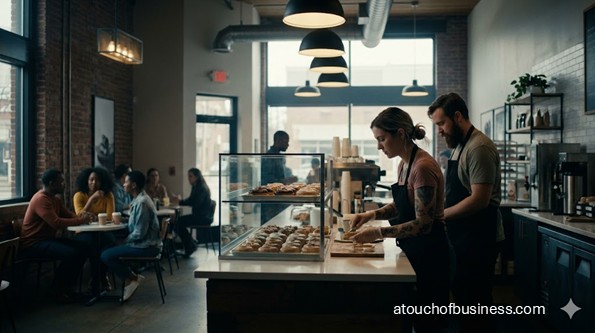
A Donut Shop Startup From Early Planning to Opening Day
A donut shop prepares and sells donuts and beverages directly to customers, usually through a counter with takeout service. Most shops produce everything on-site — mixing dough, proofing, frying, glazing, filling, and decorating — before the morning rush begins.
The core offer is focused: yeast-raised donuts, cake donuts, filled donuts, donut holes, fritters, coffee, and boxed dozens. Some shops add espresso drinks, bottled beverages, or packaged grab-and-go items.
This is a food-service business built around tight morning timing, early production, and consistent quality from batch to batch. If you understand that before you start, you’re already ahead of most first-time owners.
Are You Passionate About Business Ownership?
Before thinking about equipment or locations, be honest about whether this type of business fits your life.
Donut shop owners and their staff typically start production in the early morning — often before most people are awake. The production environment involves hot fryers, frying oil, repetitive prep tasks, and physical labor throughout the shift.
It also helps to be genuinely passionate about the business and the products it provides. That kind of interest tends to carry owners through difficult periods far better than the appeal of being a business owner. Starting a business to escape a bad job or a difficult financial situation is a shaky foundation. A better reason is that you genuinely want to build something in this space — that you care about the product, the craft, and the customers.
Prestige or the image of ownership won’t get you through a week of 4 a.m. fryer sessions, a failed health inspection, or a slow opening month. Real interest in the business will.
Think through these honestly before moving forward:
- Are you comfortable with early mornings, standing for long periods, hot surfaces, and physical cleanup?
- Can you handle the pressure of inspections, staffing issues, and tight daily timing?
- Do you have enough savings or funding to cover startup costs and slow early weeks?
- Are you prepared to work in the production area — not just manage from the sidelines — especially at the start?
There is no shame in deciding this isn’t the right fit. It’s far better to figure that out now than after signing a lease.
Talk to Owners Before You Commit
One of the most useful things you can do before investing is talk with people who already own a donut shop.
Don’t approach owners in your target area — they’re potential competitors. Find owners in another city or region who have no reason to hold back. Firsthand owner insights can surface things no guide will cover — what they wish they had known, what cost more than expected, what they would do differently.
Come prepared with real questions. Ask about production timing, equipment problems, the first health inspection, staffing challenges, early pricing mistakes, and what a typical opening week felt like.
Those conversations are some of the most honest information you’ll get before you spend a dollar.
Start From Scratch, Buy an Existing Shop, or Franchise?
You have a few paths into this business, and each one involves real tradeoffs. Comparing whether to start from scratch or buy an existing business is worth doing before you go further.
Starting from scratch gives you full control over location, layout, equipment, and production model. It also means a longer timeline to opening, more permit work, higher upfront cost, and no existing customer base to build from.
Buying an existing donut shop may give you an established location, existing morning traffic, equipment already in place, and trained staff. But you inherit everything — including lease problems, equipment condition, any reputation issues, and permit history. Have an attorney and an accountant review the deal carefully before you commit.
Franchise options exist in the donut space. A franchise gives you a proven system and brand recognition but comes with ongoing fees, required guidelines, and less flexibility over your own product and operations. Compare the total cost and obligations against your goals before deciding.
None of these paths is automatically better. Be clear about what you need and what you can realistically afford.
Checking Local Demand Before You Open
A donut shop lives or dies on its morning traffic. Before you commit to a market, find out whether the local demand actually supports a new shop.
Count what’s already nearby: other donut shops, bakeries, coffee shops, grocery store bakery sections, convenience stores, gas stations, and national chains. If the area is well-served and you can’t identify a clear reason someone would choose your shop over what’s already there, that’s worth taking seriously.
Also look at the traffic patterns. Morning commuters, nearby offices, schools, hospitals, and industrial areas are the core customer base for most donut shops. A location without those draws — or with poor visibility and limited parking — makes it hard to build consistent morning sales.
Visit the area at 6 to 8 a.m. on weekdays and weekends. Observe the actual traffic. Use Census data to check population density, income levels, and business concentration. Weak local demand isn’t just a challenge — it may mean the area or timing isn’t a good fit right now.
Understanding local demand before you choose a location will save you from one of the most costly early mistakes a new food-service owner can make.
Your Business Plan for a Donut Shop
A business plan doesn’t need to be a thick formal document, but it does need to exist in an organized form before you start spending money.
Write down your production model, product list, target customers, location criteria, startup cost estimates, pricing assumptions, and a realistic picture of the first year financially. Make your assumptions visible so you can test them against reality before you commit.
Your plan should also address staffing, equipment, permits you’ll need, and how long it will realistically take to open. Knowing your timeline helps you plan your cash flow and avoid running out of funds during build-out.
Putting your business plan together before major spending forces you to confront assumptions while changes are still cheap. This groundwork makes every decision that follows faster and more grounded.
Choosing Your Donut Shop Model
Not all donut shops operate the same way. The model you choose affects your equipment, space requirements, permit path, and startup cost — so decide before you look at locations or price out equipment.
The most common setup is a retail food-service storefront with on-site production and counter service. The owner and staff make the donuts, serve them fresh, and sell directly to walk-in customers. For a first-time owner, this is the clearest path.
Other options include:
- Commissary-produced donuts: Donuts are made off-site and delivered to a storefront for sale. This reduces your kitchen requirements but adds production and logistics complexity.
- Wholesale supply: Selling to offices, cafes, or other businesses. This may change your labeling, packaging, and registration requirements at the state or federal level.
- Food truck or pop-up model: Lower upfront cost but a different permit path, commissary requirements, water and wastewater considerations, and location permissions.
The model you select determines nearly everything else about the startup process. Settle it early.
Finding and Confirming the Right Location
Location is one of the most consequential decisions you’ll make. A donut shop with weak morning traffic, poor visibility, or bad parking will struggle regardless of how good the product is.
Do not sign a lease until you have confirmed all of the following:
- Zoning: The address must allow food service, commercial bakery production, customer access, deliveries, waste storage, and early operating hours. Verify directly with the city or county zoning office.
- Health department feasibility: Confirm the space can support your equipment layout — fryer ventilation, grease handling, hand sinks, and warewashing.
- Hood and fire suppression: Find out whether the existing setup meets local requirements or whether you’ll be building from scratch. This has a major impact on build-out cost.
- Grease interceptor: Donut shops using fryers often trigger local fats, oils, and grease requirements. Confirm what the local wastewater authority requires before you commit to a space.
- Lease terms: Review for permitted use, signage rights, responsibility for repairs, and whether you’re allowed to modify or install kitchen equipment.
A second-generation food-service space — a location that previously housed a restaurant or bakery — may already have the hood, floor drains, grease interceptor, and plumbing in place. That can significantly reduce your build-out cost and open timeline.
Confirming these details before signing keeps your opening timeline on track and your budget from unraveling early.
Legal Structure and Business Registration
You’ll need to choose a legal structure before you can register the business, open a bank account, or set up payroll.
The most common options for a small donut shop are a sole proprietorship, a limited liability company, or a corporation. Most first-time owners compare an LLC and a sole proprietorship. An LLC provides a layer of liability separation between you and the business. A sole proprietorship is simpler to form but offers no such separation. Talk with an attorney or accountant before deciding.
Once you’ve chosen a structure, register the business with your state if required. If your shop will operate under a name that differs from your legal name or entity name, file a Doing Business As name — commonly called a DBA — with the appropriate state or county office.
Apply for an Employer Identification Number through the IRS. You’ll need it for your business bank account, payroll, and tax filings. The IRS issues EINs online at no charge.
Register for state sales and use tax. Prepared food and beverages are taxable in most states, but the rules vary. Check with your state Department of Revenue for the specific requirements in your area.
If you’re hiring employees, set up federal and state employer accounts for withholding, unemployment insurance, and new-hire reporting before the first paycheck is issued.
Getting the legal and tax setup done early means banking, payroll, and permit applications can move forward without unnecessary delays.
Permits, Inspections, and Compliance
A donut shop requires several approvals before you can open to the public. The exact list depends on where you’re located, but plan for multiple layers of review.
More than 3,000 state, local, and tribal agencies handle retail food and foodservice regulation and inspections across the U.S. That means your specific fees, forms, and timelines depend entirely on your jurisdiction. Start those conversations with your local and state health department as early as possible.
Common approvals to plan for:
- Retail food establishment permit from the city, county, or state health department
- Health department plan review — a review of your floor plan, equipment layout, food flow, and finish materials before you build out
- Certificate of occupancy confirming the space is approved for retail food service and commercial production
- Building, plumbing, electrical, and mechanical permits for any construction, equipment installation, or utility upgrades
- Fire department review and commercial kitchen ventilation inspection, especially for fryer installation
- Sign permit for exterior or illuminated signage
- General business license from the city or county, if required locally
Fryers used in commercial cooking often require a Type I exhaust hood, make-up air system, and a fire suppression system. NFPA 96 addresses fire safety requirements for commercial cooking operations. Your fire marshal and building department can tell you exactly what applies to your setup.
Food manager certification is required in many jurisdictions. Some areas also require food handler cards for all staff who handle food. Verify through your local health department before hiring begins.
If you’re selling packaged grab-and-go donuts, allergen labeling may apply. The FDA recognizes sesame as a major food allergen, and food packaged for consumer sale must declare all major allergens. Confirm the labeling requirements with the FDA or your state health agency based on your specific product format.
Reviewing what local licenses and permits are required before you spend anything on build-out or equipment prevents the most common reason new shops miss their target opening date.
Equipment and Production Setup
Getting the right equipment in the right layout is one of the most important production decisions you’ll make. The physical flow from ingredient storage to finished donuts to the display case affects your output, your labor time, and your food safety compliance.
Core production equipment includes:
- Commercial mixer with dough hook
- Yeast donut proofer or proofing cabinet
- Donut fryer and fry screens
- Donut cutter or cake donut depositor
- Oil filtration equipment and oil storage containers
- Cooling racks and speed racks
- Glazing table or glazing screen
- Filling injector for filled donuts
- Display case
If you’re offering coffee and espresso drinks, add a commercial brewer, grinder, espresso machine, water filtration, ice machine for iced drinks, and refrigerated milk storage.
Sanitation equipment is not optional. You’ll need a three-compartment sink, hand sinks at required locations, a mop sink, sanitizer test strips, and chemical storage separate from food areas.
Equipment costs for a new donut shop can start around $25,000 and rise quickly depending on fryer capacity, refrigeration needs, coffee program complexity, and whether you’re equipping from scratch. Used equipment can lower that number, but verify condition and compatibility before purchasing.
Plan your equipment layout before finalizing the floor plan. Your health department plan review will typically require a detailed equipment schedule, and changes after that review add time and cost to your timeline.
Tested, working equipment on opening day keeps your production schedule on track and your staff from improvising during the rush.
Suppliers and Ingredient Planning
Your daily production depends on consistent, reliable suppliers. Set up your vendor relationships before opening — not after your first week reveals a gap.
Core ingredients for a donut shop include flour, sugar, yeast, eggs, dairy, frying shortening or oil, glazes, fillings, and toppings. You’ll also need coffee and beverage supplies, cups, donut boxes, bags, bakery tissue, napkins, cleaning chemicals, and uniforms.
For each supplier, confirm:
- Delivery days and minimum order quantities
- Shelf life and storage requirements for each ingredient
- Allergen documentation for ingredients that may affect your labeling
- Whether they can provide a substitute if a product is temporarily unavailable
Set up a used cooking oil pickup vendor before you open. Donut shops running fryers generate significant used oil, and you need a scheduled pickup plan in place from day one.
Identify at least one backup vendor for your most critical ingredients — flour, frying oil, eggs, and dairy. A single supplier disruption shouldn’t be able to stop production.
Having suppliers confirmed and first orders scheduled before opening day removes one more unknown from your launch week.
Startup Costs and Funding Options
Startup costs for an independent donut shop vary widely. Location, build-out condition, equipment choices, and local permit fees all affect the total. As a planning reference, one industry source estimates the range at $50,000 to $150,000 for an independent shop. That number can go higher depending on hood and fire suppression costs, grease interceptor installation, and the scope of your build-out. Treat any published estimate as a starting point, not a guarantee.
The biggest cost drivers include:
- New build-out versus taking over a second-generation food-service space
- Hood, exhaust system, make-up air, and fire suppression installation
- Grease interceptor and plumbing upgrades
- Commercial kitchen equipment — fryer, mixer, proofer, and refrigeration
- Lease deposit and rent during the build-out period
- Permits, plan review fees, and inspections
- Working capital to cover payroll, ingredients, and utilities while demand builds
Don’t underestimate the working capital cushion. Many new owners budget carefully for build-out but don’t account for what it costs to keep the shop running during slow early weeks.
Common funding sources include personal savings, bank loans, SBA-backed loans, equipment financing, and tenant improvement allowances negotiated with the landlord. SBA microloans can provide up to $50,000 for working capital, inventory, supplies, and equipment — though not for real estate purchases or paying existing debt.
If you’re planning to borrow, lenders will want to see your business plan, projected revenue, cost estimates, and evidence that you understand the market. Get that documentation organized before approaching lenders.
Pricing Your Donuts and Beverages
Setting prices based only on what competitors charge is one of the most common early mistakes in a food-service business. Before you open, price from your actual costs.
Start with batch costing. Calculate the ingredient cost for a standard batch, divide by the expected sellable yield, and factor in oil usage, packaging, labor time per batch, and estimated waste. That gives you a real per-item cost foundation to work from.
Not all donuts have the same cost profile. Price separately by category:
- Plain glazed and standard cake donuts — typically the lowest cost and highest volume items
- Filled donuts — higher ingredient and labor cost per unit
- Apple fritters and specialty items — often more complex to produce
- Premium or decorated donuts — account for additional topping and decoration time
- Dozen and half-dozen boxes — confirm your per-unit margin holds at the boxed price
- Coffee and beverages — often carry strong margins, but account for equipment, supplies, and labor time
Also factor in rent, utilities, insurance, payment processing fees, and payroll taxes when confirming whether your prices will support the full cost of running the shop.
Checking local competitor prices is useful as a reality check — not as a substitute for actual cost calculation. Setting your prices from real numbers from the start protects your margins and reduces the risk of underpricing yourself out of profitability in the first year.
Banking, Bookkeeping, and Tax Setup
Keep your business finances completely separate from your personal money from the start. Mixing the two makes recordkeeping harder, complicates taxes, and creates problems if you’re ever audited.
Open a business checking account before you start spending on the business. Banks typically ask for your entity documents, EIN, and in some cases a business license. Keeping business money separate from the start makes supplier payments, payroll, and tax deposits easier to track and reconcile.
Set up a point-of-sale system that handles sales tax settings, cash drawer controls, daily close reports, and refund procedures. Connect it to your business account so deposits post cleanly.
Track ingredient costs, labor, rent, utilities, and card processing fees regularly — at least weekly. These are your key expense variables, and they change. Knowing your actual numbers in real time is the only way to catch problems before they compound. Food, labor, insurance, energy, and payment fees are cited as significant cost pressures by more than nine in ten restaurant operators.
If you have employees, set up federal and state payroll withholding before the first paycheck. Federal employment taxes include income tax withholding, Social Security, Medicare, and federal unemployment tax. State requirements vary — confirm with your state labor agency and Department of Revenue.
Insurance and Risk Planning
A donut shop carries a range of real risks: a customer slipping on a wet floor, a fryer malfunction before the morning rush, a product issue with a packaged item, or a fire in the kitchen. Insurance is how you protect the business before those situations happen.
Common coverage types to review with an insurance agent:
- General liability: Covers customer injury and property damage claims
- Commercial property: Covers damage to the building, equipment, and inventory
- Product liability: Covers claims related to a product you sold causing harm
- Business interruption: Replaces income if the shop must close temporarily
- Equipment breakdown: Covers repair or replacement when key equipment fails
- Spoilage coverage: Covers ingredient and product losses from refrigeration failure
Workers’ compensation may be legally required depending on your state, the number of employees, and your ownership structure. Verify through your state workers’ compensation office before you hire anyone.
Confirm that required coverage is in place before you sign a lease or open for business. Landlords commonly require proof of insurance as a lease condition. Having the right coverage in place before opening day protects everything you’re building.
Hiring and Training Your Opening Team
Unless you’re producing very small volume to start, you will almost certainly need staff on day one. Early morning production, counter service, and cleaning cannot be handled by one person during a real opening rush.
Common opening roles include a baker, fryer operator, decorator, counter server, barista if you’re offering espresso drinks, and a shift lead. In a small shop, some roles may overlap.
The food-service industry has faced consistent hiring challenges. According to the National Restaurant Association’s 2026 report, nearly three-quarters of operators planned to hire but expected difficulty finding experienced managers and kitchen staff. Build extra time into your pre-opening schedule to account for the possibility that hiring takes longer than expected.
Training should cover:
- Food safety procedures and handwashing
- Allergen awareness and cross-contact prevention
- Fryer safety and hot oil handling
- Sanitation and posted cleaning schedules
- Point-of-sale operation and payment handling
- Opening and closing checklists
- Emergency procedures
Food-service workers typically learn duties on the job, but structured training — not just side-by-side observation — produces consistent results on a busy morning. Trained and ready staff make the difference between a smooth opening and a chaotic one.
Business Name, Signs, and Identity
Your shop’s name, signage, and basic contact presence are part of opening readiness — not afterthoughts to handle later.
Choose a name that is available to register in your state and, where possible, has a matching or close domain name available. If your shop name differs from your legal entity name, file a DBA with the appropriate state or county office.
A basic website with your hours, address, phone number, and product information counts as part of your customer-facing presence before you open. You don’t need anything complex — just a page that answers the questions a customer would ask before driving over.
Exterior signage requires a sign permit in most jurisdictions. Apply early. Signs often have longer lead times than expected, and operating without visible signage during your first weeks costs you walk-in traffic.
If you’re selling packaged grab-and-go items, labels with ingredient information and major allergen declarations may be required. Confirm the specific labeling requirements with your state health department or the FDA before finalizing your packaging.
Also post required permits, inspection placards, and any legally required notices where local rules require them. This is part of compliance, not just presentation. Having name, signage, and identity items ready before opening day gives customers a reason to trust you from the first morning.
A Day in the Life of a Donut Shop Owner
Understanding what a typical day looks like helps you plan staffing, equipment, and your own schedule well before opening day.
Early morning (often 3–5 a.m.): The owner or baker arrives to mix dough, proof, fry, cool, glaze, and fill before the display cases open. Coffee is brewed and ready. Boxes and packaging are prepped. The shop is clean and stocked before the first customer arrives.
Morning rush: Counter staff serve walk-in customers, pack dozens, make drinks, refill the display case, monitor oil temperature and donut holding quality, and keep the service area clean. This is the highest-pressure window of the day — every minute of prep from the early morning matters here.
Midday: Production slows. Staff clean fryers, filter oil, count remaining product, log waste, place ingredient orders, and prep for the next morning. The owner handles banking, scheduling, supplier coordination, and administrative tasks.
This is a physically demanding operation. Bakers and food-service workers spend long periods standing, work in hot environments near fryers and ovens, and deal with slippery floors, burns, and cuts as routine occupational realities. Early shifts, weekend hours, and holiday production are standard.
Knowing that daily reality before you commit is part of making a clear-eyed decision about whether this business fits your life and your goals.
Pre-Opening Readiness
In the weeks before opening, shift your focus from planning to confirming. Everything on this list should be done — or firmly scheduled — before you serve the first customer.
Legal and tax:
- Business entity registered
- DBA filed if needed
- EIN obtained
- Sales tax registration complete
- Employer accounts set up if hiring
- Insurance bound before lease or build-out begins
Location and facility:
- Zoning confirmed in writing or through an official portal
- All permits closed — building, plumbing, electrical, mechanical, fire, and sign
- Certificate of occupancy confirmed for retail food service and commercial production
- Hood, fire suppression, and grease interceptor installed and approved
- ADA customer access reviewed for entrance, path, and counter
Health and food safety:
- Health permit approved
- Plan review completed
- Pre-opening inspection passed
- Food manager certification complete if required
- Allergen procedures written and available to staff
- Thermometers calibrated, sanitizer stocked, and cleaning schedules posted
Equipment and supplies:
- Fryer, mixer, proofer, and display case tested under real production conditions
- Refrigeration verified at safe holding temperatures
- Point-of-sale tested with sales tax settings and cash drawer confirmed
- First ingredient and packaging orders delivered
- Used oil pickup vendor scheduled
Staff and production:
- All opening roles filled and confirmed
- Training complete for food safety, fryer operation, point-of-sale, and checklists
- Test production batch completed — proofing time, fry time, glaze setup, and sellable yield confirmed
- Opening-day production quantities set based on actual test results
- Cleaning time measured and scheduled into the daily routine
Do not open with any of these unresolved: pending health approval, incomplete fire suppression, missing hand sinks, unreliable refrigeration, no used-oil disposal plan, unsettled sales tax setup, or staff who haven’t been trained on food safety and fryer procedures.
A test production day — a full dry run before your actual opening — is one of the best investments you can make. It surfaces timing problems, yield gaps, and workflow bottlenecks while there’s still time to fix them without customers watching.
Red Flags to Watch Before You Commit
Some warning signs show up early in the process. Pay attention to them before you invest.
- You signed a lease without checking zoning, hood requirements, and health feasibility first. Build-out costs can spiral if the space can’t support fryer ventilation, plumbing upgrades, or grease handling — and you’re locked in once the lease is signed.
- The location has weak morning traffic. A donut shop without consistent commuter or walk-in traffic in the morning hours will struggle to build volume, no matter how good the product is.
- A national chain, a grocery bakery, and two coffee shops are within the same block. Competition isn’t a reason to stop, but it is a reason to know your differentiation clearly before opening.
- Your build-out budget is fully spent before equipment is purchased. No working capital cushion means one slow week or one equipment failure can create a financial crisis.
- Prices are based on competitors only, not actual batch costs. Food, labor, insurance, energy, and payment processing fees are significant cost pressures in the restaurant sector. Pricing that ignores those inputs won’t hold.
- The production plan requires high volume before demand is established. Overproduction and waste can erode margins before the shop finds its morning rhythm.
- There’s no allergen control plan. Common donut allergens include wheat, milk, eggs, soy, tree nuts, peanuts, and sesame. An allergen error is both a safety issue and a legal exposure.
- Permits and inspections are left until the final week before opening. Health approval, fire review, and certificate of occupancy delays are among the most common reasons shops miss their target opening date.
- The staffing plan assumes one person can handle production, service, and cleaning during the morning rush. That assumption typically fails on the first real busy morning.
None of these are reasons to automatically walk away, but each one is worth confronting directly before you move forward.
Frequently Asked Questions
These questions come up often from people planning to open a donut shop. Use them as a starting point, and verify specifics with the appropriate agencies before making final decisions.
Does a donut shop need a health permit?
Yes, in almost every U.S. jurisdiction. A food-service donut shop that prepares and sells food to the public needs a health permit. The exact process, fee, and inspection schedule vary by location. Check with your city, county, or state health department.
Does a donut shop need to register with the FDA?
Most retail donut shops selling directly to consumers are exempt from federal food facility registration. That changes if your shop starts selling wholesale, shipping packaged food to other businesses, or functioning more as a food manufacturer than a retail food establishment. Review 21 CFR 1.225 and 1.226 if your model involves off-site sales or distribution.
Can a donut shop be run from home?
Not for the standard food-service model. Home-based food businesses typically fall under cottage food rules, which in many states exclude fried donuts, custard fillings, and other time and temperature-controlled foods. Verify with your state health or agriculture department and local zoning office.
What permits do most donut shops need before opening?
Common requirements include business registration, sales tax registration, health permit, health department plan review, certificate of occupancy, building and mechanical permits, fire review, sign permit, and grease-related approvals. Requirements vary by jurisdiction.
What are the most essential pieces of equipment?
At minimum: a commercial mixer, proofer, donut fryer, donut cutter or depositor, cooling racks, glazing station, display case, refrigeration, three-compartment sink, hand sinks, and a point-of-sale system. Sanitation equipment is required, not optional.
How much does it cost to open a donut shop?
There is no reliable universal number. One published planning estimate puts independent donut shops in the $50,000 to $150,000 range, and equipment costs alone can start around $25,000. Location, build-out complexity, hood and fire suppression installation, and local permit fees all affect the final total. Build a working capital cushion on top of your build-out estimate.
What should pricing be based on?
Actual batch cost, ingredient yield, packaging, labor time per batch, expected waste, rent, utilities, and payment processing fees. Checking competitor prices is useful context, but it should not replace cost-based pricing.
Does a donut shop need a grease trap or grease interceptor?
Usually yes if fryers are involved, but the requirement is set locally. Verify with your city or county wastewater authority before you sign a lease or install equipment.
Does a fryer require a hood and fire suppression system?
Often yes, but requirements depend on the equipment, local fire code, and building department rules. Verify with your fire marshal and building department before purchasing the fryer.
Do donuts need nutrition labels?
Federal menu labeling requirements apply to chains with 20 or more locations. An independent single-location donut shop is generally not covered by that rule. Packaged retail items sold to consumers may have separate allergen and labeling requirements under FDA rules.
What allergens matter most for a donut shop?
Wheat, milk, eggs, soy, tree nuts, peanuts, and sesame are the most common. The FDA recognizes sesame as a major food allergen. If you sell packaged items, allergen declarations are required. Even for counter service, having allergen information available to customers is good practice and may be required locally.
What are the biggest startup risks for a donut shop?
Underestimating build-out costs, choosing the wrong location, failing health or fire review, weak morning traffic, overproduction and waste, equipment failures, staffing gaps, allergen errors, and pricing that doesn’t account for the full cost of running the shop.
Learn From Donut Shop Owners
One of the best ways to understand a donut shop is to learn from people who have already opened, operated, or grown one.
The interviews and audio resources offer practical insight into early decisions, product focus, location choices, daily demands, brand identity, and the realities of running a donut business.
- An interview with The Donut Pub’s Buzzy Geduld
- Leslie Polizzotto of The Doughnut Project
- Donut Friend founder interview
- Interview with Cat Daddy of Voodoo Doughnut
- Behind the Scenes of Oh Doughnuts
- Michael Gallegos and Desert Donuts
- Phillip Kuoch bakery and donut interview
Related Articles
- How To Start a Bakery
- Starting a Bagel Shop
- How To Start a Café
- How To Start Your Cupcake Business
- Starting a Coffee Roasting Business
- How To Start a Cake Decorating Business
- How To Start a Cookie Business
- How To Start Your Kosher Bakery
- Starting an Ice Cream Shop
- How To Start Your Breakfast Restaurant
- How To Start an English Muffin Bakery Business From Scratch
Sources:
- Internal Revenue Service: Get employer ID number, Employment taxes
- U.S. Small Business Administration: Apply for permits, Open bank account, Microloans
- U.S. Food and Drug Administration: Retail food protection, FDA Food Code, Sesame allergen update, Menu labeling rules
- eCFR: Food facility registration
- U.S. Department of Labor: Restaurant FLSA rules, Workers comp officials
- USA.gov: State and local taxes, Workers compensation
- ADA.gov: Public business ADA
- U.S. Bureau of Labor Statistics: Bakers outlook, Food service workers
- U.S. Census Bureau: County Business Patterns, Census QuickFacts
- National Restaurant Association: 2026 industry pressures
- NFPA: NFPA 96 cooking
- U.S. Environmental Protection Agency: FOG control program
- Toast: Donut equipment list, Donut startup costs
- WebstaurantStore: Start donut shop