
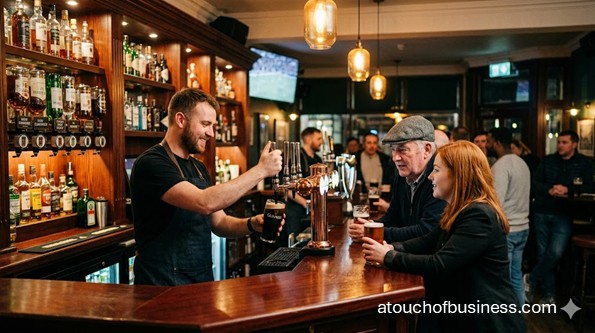
Irish Pub Startup Guide for Owner Fit and Workflow
An Irish pub is a food-and-drink business built around on-site service. In the version covered here, you are opening a public-facing pub with a kitchen, a bar, dine-in seating, and the licenses needed to sell alcohol for on-premise use.
The appeal is easy to see. A good Irish pub can become part of the neighborhood. But the startup side is not simple. You are opening a business that mixes food handling, alcohol sales, tipped staff, sanitation, occupancy rules, and a lot of physical setup in one place. If you skip this, the opening can stall before you serve the first guest.
- Common offers include draft beer, bottled and canned beer, whiskey and other spirits, cocktails, nonalcoholic drinks, and a focused pub-food lineup.
- Typical customers include neighborhood regulars, after-work guests, casual diners, sports-night traffic, and people looking for a relaxed social setting.
- Early strengths can come from a clear concept, a warm room, fast bar service, and a food program you can actually execute.
- Early risks include licensing delays, expensive build-out work, weak kitchen flow, food waste, staffing pressure, and slow service during rush periods.
- An Irish pub is also more regulated than many first businesses. You need to treat approvals, inspections, training, and recordkeeping as part of the setup, not as something to “finish later.”
Is An Irish Pub The Right Fit For You?
Before you think about taps, stools, and signage, think about the work. An Irish pub can look fun from the customer side. From the owner’s point of view, it means long days, late nights, vendor calls, sanitation routines, staff issues, deliveries, inventory checks, and constant attention to service speed. You need to like the day-to-day work, not just the idea of owning a pub.
Ask, Are you moving toward something or running away from something? Do not open an Irish pub only to escape a hated job, fix immediate financial pressure, or chase the image of being a business owner. Passion for the work matters because it helps you stay steady when opening week is messy, expensive, and tiring. If you have not thought much about passion for the work, do that now.
You also need a realistic lifestyle check. Pub hours often pull you into evenings, weekends, and holidays. If your pressure tolerance is low, or if those hours clash hard with family life, that matters. Owning an Irish pub can be rewarding, but it asks a lot from you before it gives much back.
Talk with owners who already run pubs or similar food-and-drink businesses, but only in another city, region, or market area where you will not compete with them. Use those conversations to ask blunt questions about startup costs, staffing trouble, health inspections, liquor delays, food waste, and what opening week really felt like. That kind of firsthand owner insight is hard to replace.
- Can you handle late hours, rush periods, and customer-facing pressure?
- Do you enjoy food service and hospitality, or only the social image of a pub?
- Can you stay calm when a delivery is late, a line is backed up, or an inspector is coming?
- Are you ready to make practical decisions that affect cost, labor, and compliance every day?
Step 1: Decide What Kind Of Irish Pub You Are Opening
Your first job is to narrow the concept until it is workable. An Irish pub can range from a simple beer-and-whiskey room with limited food to a full kitchen with a broad drink list and heavier service demands. The more you add, the more space, labor, equipment, and approvals you usually need.
For a first launch, keep the opening offer tight. A smaller food list is easier to prep, easier to store, and easier to serve well. The same goes for the drink list. A long draft lineup, full cocktail list, and big kitchen can look impressive, but complexity raises opening risk.
- Decide whether you will sell beer and wine only or full spirits as well.
- Choose the food scope: full kitchen, limited hot line, or a narrower pub-food program.
- Set the service style: table service, bar-first ordering, or a hybrid.
- Define the atmosphere early: neighborhood pub, sports-focused pub, dinner-and-drinks pub, or event-friendly pub.
- If you later add brewing or distilling, that is a different startup path with different federal and state requirements.
Step 2: Check Demand And Competition In Your Area
An Irish pub only works if the local market supports it. You need enough demand for dine-in food and on-premise alcohol sales, and you need to know what kind of crowd your area already supports. A downtown location may pull after-work and late-night traffic. A suburban spot may depend more on dinner, weekend groups, and regulars.
Look at nearby bars, pubs, casual restaurants, and sports-focused places. Study their hours, food range, price level, draft focus, and how busy they look at different times. If you skip this, you may build the wrong pub for the wrong area. A closer look at local supply and demand can keep you from choosing a concept that does not fit your neighborhood.
You do not need a long formal document at this stage, but you do need clear startup targets. Put your concept, target customers, hours, offer list, startup assumptions, and first-stage numbers into writing. That is the start of putting your business plan together.
- Visit potential competitors during lunch, dinner, and weekend rush periods.
- Check whether the area supports food-first, drinks-first, or mixed traffic.
- Watch parking, walk-by traffic, visibility, and how easy the area feels at night.
- Notice whether nearby places win on speed, price, atmosphere, sports viewing, or food quality.
Step 3: Choose Your Structure, Name, And Basic Business Identity
Once the concept looks viable, put the legal basics in place. Choose the business structure that fits your ownership and risk situation, register the business with the state if needed, and get an Employer Identification Number if your business structure or hiring plan requires one.
If you plan to use a trade name instead of the legal owner or entity name, you may also need a DBA filing depending on the state and local rules.
This is also the right time to settle the public-facing identity. Your pub name, domain, social profiles, signage plan, and printed materials should all line up with the same business name. If your paperwork says one thing and your storefront says another, you create avoidable confusion for banks, vendors, and regulators.
- Choose the ownership structure before signing major contracts.
- Reserve the business name and confirm it works for signage and web use.
- Get the tax ID and keep formation records organized in one place.
- Set up a simple digital presence with your name, location, contact details, and opening information.
- Keep your brand basics practical at launch: sign design, printed cards, menus, and a clean visual identity are enough to start.
Step 4: Secure A Site That Can Legally Operate As A Pub
Location is not just a customer decision. It is a compliance decision. For an Irish pub, the address has to work for restaurant use, alcohol service, occupancy, kitchen equipment, sanitation, and any planned signage or patio use. Do not lock in a lease until you know the site can legally support the business.
A second-generation restaurant or bar space can reduce risk because some core infrastructure may already be there. Even then, you still need to verify zoning, building status, fire requirements, health approval path, and whether a certificate of occupancy will be needed before opening.
- Confirm zoning or land-use approval for a pub or restaurant with alcohol service.
- Ask whether parking, patio service, entertainment, or late hours trigger extra conditions.
- Check the sign-permit process before ordering exterior signs.
- Find out whether the planned use requires a new or updated certificate of occupancy.
- Ask what inspections must be passed before the public can enter the space.
Step 5: Build Your Food And Alcohol Compliance Plan
An Irish pub opening usually touches three layers of rules at once: federal, state, and city or county. Keep this simple. At the federal level, a pub that sells alcohol to customers usually needs the Alcohol Dealer Registration filed with the Alcohol and Tobacco Tax and Trade Bureau before engaging in business, but it does not normally get a federal retail liquor permit. Food facility registration with the Food and Drug Administration is not typically required for a standard restaurant or pub.
State and local agencies handle most of the rules that matter to your opening. That usually means the liquor license path, food-service permit path, health inspection process, business license where required, and building or fire approvals for the space. Opening before approvals are in place can delay the launch or force expensive rework.
- Federal: Get an Employer Identification Number if your business structure or hiring plan requires one, and file the Alcohol Dealer Registration.
- State: Register the entity if needed, handle sales-tax and employer accounts, and start the retail liquor license process for the exact premises.
- City Or County: Verify zoning, local business license rules, food-service permit requirements, building permits, fire review, sign permits, and certificate of occupancy requirements.
- Training: Food manager certification and alcohol server training often depend on state or local rules. Find out what your exact area requires before hiring week.
- Home-Occupation Rules: Not typically applicable because this setup is a public food-service location, not a home business.
- Insurance: Some coverage may be required by lease terms, lenders, or local conditions. Even when not legally required, a pub should sort out liability, property, workers’ compensation where required, and liquor-related coverage before opening.
Keep a short list of questions for each office. Ask whether your address can support an on-premise food-and-alcohol business, what inspections must happen before opening, and whether the site has any conditions tied to parking, hours, patio use, or entertainment. If you skip this, small local details can become very expensive.
Step 6: Design The Space Around Prep, Storage, And Service Speed
An Irish pub is part atmosphere and part workflow. The room has to feel welcoming, but the back-end flow matters just as much. Food has to move from receiving to storage to prep to service without confusion. Drinks have to move fast from the bar without crowding staff or slowing tables. If the layout is weak, labor costs rise and customer wait times follow.
Build the layout around actual work. Think through receiving, dry storage, cold storage, prep surfaces, cookline position, dishwashing, glassware access, garnish setup, draft access, and how servers move between tables and the bar. A pub can feel relaxed to the customer while still running on a very disciplined setup behind the scenes.
- Keep food receiving and storage practical for your delivery schedule.
- Make prep and cook stations match the opening food list, not a future dream version.
- Give the bar enough room for taps, ice, glassware, garnishes, and fast payment handling.
- Confirm hood, ventilation, and fire-suppression needs before finalizing the equipment list.
- Plan seating and service paths so staff can move during rush periods without constant bottlenecks.
Step 7: Buy Equipment, Software, And Front-Of-House Essentials
Equipment should follow the concept and the layout, not the other way around. For an Irish pub, the list usually includes both kitchen equipment and bar equipment, plus the systems that hold service together. Do not buy broad or fancy equipment before you know what the menu, bar scope, and space really require.
The bar side is more technical than many first-time owners expect. Draft service can require tap towers, faucets, couplers, regulators, gas setup, drip trays, and beer-line cleaning tools. The kitchen side may need ranges, fryers, ovens, grills or griddles, prep tables, reach-ins, freezers, warewashing equipment, and handwashing stations depending on the menu and code requirements.
- Bar: underbar coolers, back-bar refrigeration, draft system parts, ice bins, bar mats, jiggers, shakers, strainers, glass racks, bottle openers, and speed rails.
- Kitchen: cookline equipment, refrigerated prep, hot holding if needed, prep sinks, storage shelving, and cleaning tools.
- Dining Room: tables, chairs, stools, host station, service stations, check presenters, and guest-facing table items.
- Glassware: pint glasses, cocktail glasses, wine glasses, and backup stock for breakage.
- Technology: point-of-sale terminals or tablets, cash drawers, card readers, printers, kitchen display or ticket printers, internet setup, and user permissions.
- Sanitation: sanitizer systems, test strips, mop sink, bins, labels, date-marking tools, and temperature tools.
Step 8: Plan Startup Costs, Pricing, Funding, And Banking
Irish pub startup costs can move fast because you are combining build-out, equipment, alcohol setup, food setup, furniture, and licensing in one project. The range varies too much by location and build-out level to treat any narrow number as standard. What matters more is understanding the drivers: rent, deposits, kitchen scope, hood work, fire work, refrigeration, draft setup, seating, inventory, payroll, and contingency.
Price setting also needs more care than many first owners expect. Food prices should reflect ingredients, labor, utilities, and waste. Drink prices should reflect bottle cost, pour size, garnish cost, overhead, and local expectations. If you have not thought much about setting your prices, do that before you print menus, not after.
Funding can come from your own cash, partners, or loan programs such as Small Business Administration lending options. However you fund the launch, get your financial structure in place early. That includes the business bank account, card processing, bookkeeping method, tax records, and daily closeout process. A simple guide to getting your business banking in place can help you line up the basics before opening week.
- Startup costs often include lease costs, design work, permits, hood and fire work, equipment, furniture, opening inventory, training, payroll, and signage.
- Pricing should be built from real recipe and pour standards, not rough guesses.
- Card processing and point-of-sale setup should be tested before the first guest arrives.
- Bookkeeping and tax records should be ready from day one, especially with tips, payroll, and inventory involved.
Step 9: Set Up Suppliers, Inventory, And Daily Controls
A pub opening does not run on one vendor. You may need separate relationships for food distribution, beer and liquor distribution, cleaning chemicals, smallwares, linens, waste, pest control, and draft support. Choose vendors that can deliver on your schedule and within your storage limits. Supplier consistency matters because late or incomplete deliveries can hurt service fast.
Keep the opening inventory tight. Do not overbuy just because the shelves look empty. Food storage space, refrigerated space, draft capacity, and expected traffic should decide what you bring in. If you skip this, spoilage, waste, and cash drain can show up before the business has even settled in.
- Create item lists for opening food stock, alcohol stock, nonalcoholic beverages, garnishes, paper goods, and cleaning supplies.
- Set par levels that match actual storage and realistic opening demand.
- Write receiving procedures for checking quantities, temperatures, and visible product condition.
- Prepare recipe cards, prep sheets, opening and closing checklists, cleaning logs, and temperature logs.
- Set up tip procedures, ID-check rules, vendor files, and a permit binder in one organized place.
Step 10: Hire, Train, Test, And Prepare For Opening
The final stage is where your Irish pub becomes real. You need enough staff to open safely and serve well, but not so many that payroll gets out of hand before demand stabilizes. Hiring usually starts with key kitchen roles, bartenders, servers, dishwashing coverage, and a floor lead or manager if you are not filling that role yourself.
Training has to go beyond “shadow someone for a shift.” Your team should know how the pub handles food safety, alcohol service, identification checks, tabs, tips, opening tasks, closing tasks, sanitation, and guest issues. This is also the time to test your service speed, your kitchen tickets, your draft system, and your payment flow. If you skip the test run, opening day becomes the test.
A short mock-service day for an Irish pub often looks like this: staff arrives early, checks prep, stocks the bar, chills glassware, tests taps and printers, reviews table sections, runs sample orders, cleans up bottlenecks, and fixes anything that slows the line. That kind of practice can save your launch.
- Complete payroll onboarding, tip handling procedures, and required labor paperwork before live service.
- Confirm whether your state or local area requires food manager certification or alcohol-server training.
- Run a soft opening or mock service with a limited crowd.
- Test seating flow, kitchen timing, bar speed, refunds, split checks, and end-of-day closeout.
- Make sure signs, menus, posted notices, and contact details are all ready before the first public opening shift.
- Publish your opening date, hours, location, and core offer list anywhere customers are likely to look.
Before you open the doors, make sure every approval that applies to your pub is in place. That can include the food permit, liquor approval, business license where required, inspection sign-offs, and certificate of occupancy if the local building office requires it. Opening without the right approvals can stop the business before it starts.
Launch Readiness For Your Irish Pub
Use this as a final gut check. A pub can look ready from the front room and still be unfinished where it matters. Walk the business from the back door to the guest’s bill and ask whether every part works.
If something important is still unclear, get the answer before launch. Waiting one more week is better than opening with unfinished approvals, weak systems, or a team that has not practiced together.
- The business structure, name filings, and tax ID are complete and organized.
- The site is approved for the planned pub and food-service use.
- Liquor, food-service, and local permit steps are complete or cleared for the opening date.
- The bar, kitchen, refrigeration, draft system, and payment systems are installed and tested.
- Vendor accounts are open and opening inventory is received, stored, and counted.
- Pricing is loaded into the point-of-sale system and matches printed or posted guest information.
- Recipes, prep sheets, checklists, logs, and ID-check rules are in place.
- Staff training is complete, and mock service exposed the biggest weak spots before launch.
- Hours, contact details, signage, and opening communication are ready for the public.
FAQs
Question: Do I need a federal liquor license to open an Irish pub?
Answer: Usually no if you are selling drinks at retail to guests on site. You do, however, generally need to file the federal alcohol dealer registration with TTB before you start selling alcohol.
Question: Does an Irish pub need FDA food facility registration?
Answer: A standard restaurant or pub usually does not register with FDA as a food facility. The bigger issue is the local or state food permit and the required inspection path for your kitchen and service area.
Question: What should I confirm before I sign a lease for a pub location?
Answer: Make sure the site can legally be used for a restaurant with alcohol service. You also want to know whether the space needs building work, fire review, grease ventilation, sign approval, or a new certificate of occupancy.
Question: What usually slows down a pub opening the most?
Answer: Liquor approval, construction work, and health-related sign-off often take longer than new owners expect. Start those steps early, because you cannot fix timing problems in the last week.
Question: Should I open with a full kitchen or a smaller food program?
Answer: Start with the smallest food offer that still fits your concept and local demand. A larger kitchen adds equipment, labor, storage needs, and more compliance points.
Question: What licenses and registrations usually matter most at startup?
Answer: The main items are your entity filing if needed, tax ID, state tax registration, local business licensing where required, liquor approval, and the food-service permit path. The exact list depends on your state, city, county, and the specific site.
Question: What insurance should I have in place before opening day?
Answer: Most pubs look at general liability, property coverage, workers’ compensation when required, and liquor-related coverage. Your lease, lender, and local rules may also add requirements.
Question: How should I set prices before I open?
Answer: Build food prices from real recipe costs, labor needs, and waste, not from guesswork. For drinks, use measured pours and actual bottle costs so your numbers make sense from day one.
Question: What equipment is easy to underestimate in a new Irish pub?
Answer: New owners often focus on the visible bar and forget storage, refrigeration, glassware backup, cleaning tools, draft maintenance items, and handwashing or warewashing needs. The hidden support items are what keep service moving.
Question: Do I need a point-of-sale system before I open?
Answer: Yes, a restaurant-ready point-of-sale system is one of the first tools you should lock in. It should handle tabs, tips, modifiers, kitchen tickets, payment cards, and end-of-day reports without workarounds.
Question: When should I start hiring bartenders, servers, and kitchen staff?
Answer: Hire after your concept, menu, hours, and service style are clear enough to train around. If you bring people in too early, you may pay for idle time while permits or build-out are still unresolved.
Question: What records should I create before the first week of service?
Answer: Set up temperature logs, cleaning schedules, receiving sheets, prep lists, staff training records, tip procedures, and daily cash close forms. Simple paperwork helps you catch small problems before they turn into expensive ones.
Question: What tip rules do I need to set up right away?
Answer: Staff who receive enough tips may have to report them to the employer, and the timing rules matter. Large food or beverage establishments may also have an annual IRS reporting duty through Form 8027.
Make sure your payroll process, closeout routine, and written tip policy all match federal law and your state wage rules.
Question: Can I hire teenagers for a pub opening team?
Answer: Maybe, but restaurant child labor rules are specific and state law can be stricter than federal law. Age limits can affect equipment use, late hours, and alcohol-related duties, so check the rule set before you post the job.
Question: What should my first month focus on after opening?
Answer: Watch labor, waste, service speed, and cash movement every day. The first month is about steady execution, not adding more menu items or chasing every idea at once.
Question: How do I keep first-month cash flow from getting tight?
Answer: Do not overload inventory, and do not schedule more staff than the room can support. Keep a close eye on daily sales, payroll timing, vendor payments, and what is getting thrown away.
Question: Should I do a soft opening for an Irish pub?
Answer: Yes, a limited trial service can show you where the bar backs up, where tickets slow down, and where staff need more practice. It is a safer way to test the room before your public launch.
Question: What early marketing works best before and right after opening?
Answer: Start with the basics your first guests actually use: accurate business listings, clear hours, a simple drink-and-food preview, and a visible opening date. If people cannot find the location, the hours, or the vibe, the promotion is not doing much.
Learn From Owners And Operators Who Have Done It
One of the best ways to prepare for an Irish pub launch is to study people who have already opened, run, or grown pubs, bars, and restaurants. The links below give you operator interviews, owner panels, and founder conversations that can help you think more clearly about concept, location, staffing, service, and opening pressure.
- Podcast: Creating and Selling Irish Bars and Whiskey – Interview with Kieran Folliard — Irish-pub founder interview.
- Local Publican’s Next Chapter: An Interview with Tony Henry — Longtime Irish-pub owner interview.
- Fresh Founders: Elliot Nelson of McNellie’s Group On The Unique Challenges of Building a Business From Scratch — Founder of an Irish-pub-led hospitality group.
- The Best Advice for First-Time Restaurant Owners — Advice from restaurateurs for new operators.
- Corner Booth Podcasts – All Episodes — Ongoing interviews with restaurant operators and founders.
- From $100 Beer Garden to $100 Million Pub Empire with Australia’s Most Innovative Publican Stephen J Hunt — Publican interview focused on building and growing pub concepts.
These resources are useful because they come from people who have already handled real-world hospitality decisions, not just theory. You can use them to spot patterns, learn what matters early, and ask better questions before you commit money, time, and a lease.
Related Articles
- Starting a Bar
- Starting a Nightclub
- How To Start a Jazz Club
- How To Start a Pool Hall
- How To Start a Karaoke Business
- How To Start Your Winery
- Starting a Distillery
- Starting an Italian Restaurant the Smart Way
- Starting a Mexican Restaurant Business
- How to Start a Board Game Cafe
- How To Start a Café
Sources:
- SBA: Register Your Business, Federal State Tax ID Numbers, Apply Licenses Permits, Open Business Bank Account
- TTB: Beverage Alcohol Retailers, Alcohol FAQs
- FDA: Start Food Business, Retail Food Protection, FDA Food Code
- IRS: Tip Recordkeeping Reporting, Tips Withholding Reporting, Instructions Form 8027
- U.S. Department of Labor: Tipped Employees FLSA, Child Labor Restaurants
- OSHA: Young Worker Restaurant Safety
- WebstaurantStore: Draft Beer Tap System, Draft Beer Tap Installation, Commercial Kitchen Hood Code, Point Sale Hardware Guide, Determining Restaurant Menu Prices
- The Irish Pub Concept: Critical Success Factors