
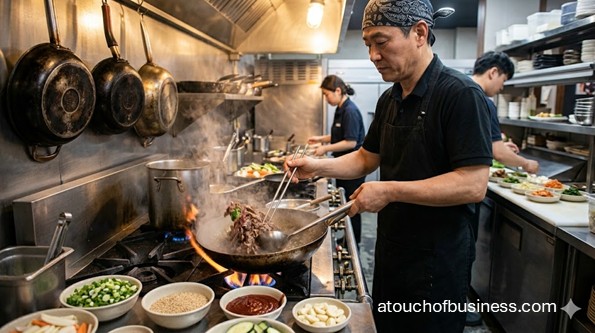
Start a Korean Barbecue Restaurant for Your Market
What A Korean Barbecue Restaurant Really Is
A Korean barbecue restaurant is a dine-in food business where the meal is also part of the show. Guests usually cook meat at the table, which means your dining room is not just seating space. It is part of the cooking system, the safety plan, and the customer experience.
That changes almost everything. Your grill choice, smoke control, table layout, prep flow, raw-meat handling, side-dish setup, and service speed all affect whether opening day feels smooth or chaotic.
Most customers come for more than food. They want good flavor, clean tables, steady service, fair value, and a fun group experience. Families, friend groups, date-night diners, and people looking for a social meal are often a strong fit for this concept.
There are clear upsides. A Korean barbecue restaurant stands out, gives people a reason to gather, and can support different offers such as à la carte plates, set combos, and all-you-can-eat service. The downside is just as real. Build-out costs can rise fast, ventilation is a major decision, labor can be higher than expected, and local approvals matter early.
If you like the idea of running a busy, customer-facing food business with many moving parts, this can be a strong concept. If you want a simple launch, this is usually not it. A Korean barbecue restaurant rewards careful setup. This helps opening day go more smoothly.
Is A Korean Barbecue Restaurant Right For You?
First, ask whether business ownership fits you at all. You will make decisions under pressure, handle payroll and vendor problems, fix issues that show up without warning, and carry the weight of the opening timeline. That is true in any business, and it is especially true in food service.
Then ask whether this business fits you. A Korean barbecue restaurant is not just about liking Korean food. You need to be comfortable with raw-meat controls, grill safety, customer flow, equipment problems, staffing pressure, and long hours on your feet. You also need to care about consistency, cleanliness, and pace.
Ask, Are you moving toward something or running away from something?
Do not start this business just to escape a job you hate. Do not launch it because you feel financial pressure and hope a restaurant will fix that quickly. And do not chase the owner title for status. Restaurant cash flow can be unpredictable at the start, and the daily work is usually less glamorous than people expect.
You also need real passion for the work. That does not mean excitement for one grand-opening week. It means you still care when you are reviewing food costs, checking a hood issue, or dealing with a no-show on a Friday night.
Before you move ahead, talk only to Korean barbecue or full-service restaurant owners you will not compete with. Look in another city, region, or market area. Use those conversations to ask the questions you already have about startup costs, staffing, supplier issues, menu design, and customer expectations. Their answers come from lived experience, which gives you the kind of detail you will not get from general advice. That kind of firsthand owner insight can save you from expensive mistakes.
You should also be honest about the tough parts. The long hours, the constant decisions, and the pressure of launch are part of the deal. Spend a little time thinking about the harder side of ownership before you sign anything. This gives you a more realistic start.
Step 1: Choose Your Korean Barbecue Format
Your Korean barbecue restaurant needs a clear identity before you look at locations or equipment. Decide whether you want an all-you-can-eat model, à la carte service, combo platters, premium cuts, or a mix. This choice affects your pricing, your labor needs, your table times, and how much refrigeration and prep space you need.
You also need to decide how guests will cook. Gas, electric, and charcoal systems create different build-out, ventilation, utility, and approval requirements. An overhead hood system and a downdraft system also lead to very different design choices.
Keep your first offer list focused. Too many meats, marinades, side dishes, soups, and add-ons can slow prep, raise waste, and make training harder. A shorter, well-tested opening menu is usually stronger than a long list that looks exciting but breaks down in service.
Make these decisions early, because they affect almost every step that follows. This helps opening day go more smoothly.
Step 2: Test Demand In Your Area
Do people in your area already look for Korean barbecue, or will you need to educate the market? That question matters. A Korean barbecue restaurant can do very well in the right trade area, but the concept depends on enough group diners, enough spending power, and enough interest in the experience.
Start with your location. Look at population mix, income levels, evening traffic, parking, nearby nightlife, and how far customers are willing to drive for a social dinner. Then study direct competitors and indirect competitors. Another Korean barbecue restaurant is a direct competitor. A hot pot restaurant, a high-volume grill restaurant, or a popular group-dining concept may be indirect competition.
Pay attention to what competitors do well and where they disappoint people. Are wait times too long? Is smoke a common complaint? Are prices too high for the market? Are side dishes weak? These details matter more than a simple count of competitors.
Take time to study local supply and demand before you move forward. A strong concept in the wrong area is still the wrong business. This is one of the biggest choices you make before opening.
Step 3: Build Your Plan Before You Build The Space
A Korean barbecue restaurant can become expensive very quickly, so you need a real plan before you commit to build-out. Your plan should cover your concept, target customers, menu style, startup costs, funding sources, seating count, table-turn assumptions, staffing plan, and expected break-even point.
Set a few simple targets. How many tables do you need? What average check do you need by lunch and dinner? How long can you carry the business before it reaches steady sales? What happens if build-out takes longer than expected?
This is also the right time to decide your longer path. Are you building one neighborhood restaurant, a concept that could grow to more locations, or a business you may want to sell later? You do not need a full exit strategy on day one, but your lease terms, systems, and branding choices should not block future options.
If you need help shaping the structure, spend time putting your business plan together before you start spending on construction. That planning work is not busywork. It keeps your launch grounded.
Step 4: Choose The Legal Structure And Register The Business
Pick your legal structure early because it affects taxes, paperwork, ownership records, and how you set up banking and contracts. Many first-time owners compare an LLC, corporation, partnership, or sole proprietorship before moving ahead. The right choice depends on ownership, liability concerns, tax treatment, and how formal you want the setup to be.
Once you choose the structure, register the business with the state if required. If your Korean barbecue restaurant will operate under a name that is different from the legal entity name, you may also need a DBA or assumed-name filing.
You will also need an EIN for tax, banking, and payroll setup. Keep your formation records, registration documents, EIN notice, and ownership records organized from the start. They will come up again when you open accounts, apply for permits, and sign leases.
If you are still deciding how to organize the business, read about choosing your legal structure and registering the business before you move on. Clean setup now prevents confusion later.
Step 5: Secure The Location And Confirm The Space Works
This step can make or break a Korean barbecue restaurant. You are not just looking for a good address. You are looking for a space that can legally and physically support table grilling, smoke control, kitchen prep, storage, customer flow, and the approvals needed to open.
Before you commit, confirm zoning and ask whether the space already has legal restaurant use. If it does not, you may need a new or updated certificate of occupancy. Do not assume a former retail space can be converted easily. In some cases, the cost of making it restaurant-ready is far higher than the lease first appears.
Look closely at the basics:
- utility capacity for your grill system
- room for ducts, hoods, or downdraft equipment
- kitchen and prep space
- cold storage space
- grease control needs
- parking, visibility, and access
- restroom layout and public access
If you take over a former restaurant, ask what can really be reused. Existing hoods, grease systems, and utility lines may help, but only if they fit your concept and pass the needed reviews. This is where a cheap-looking space can become expensive fast. This helps you avoid costly rework before opening.
Step 6: Finalize The Menu, Prep Flow, And Service Style
Your Korean barbecue restaurant needs a menu that fits the space and the staff you can realistically run. Finalize your meats, marinades, banchan, sauces, rice, soups, drinks, and any non-grill dishes before plan review and equipment ordering move too far ahead.
Food flow matters here. Think through the full path from receiving and storage to prep, table service, cleanup, payment, and reordering. Raw meat must move through the business in a controlled way. Side dishes need fast restocking. Grill resets need speed. Dirty plates and spent grill parts need a clean path away from food prep.
Service style also matters. Will staff cook for some tables? Will guests cook everything themselves? Will you offer lunch sets, premium add-ons, or timed all-you-can-eat rounds? Your answers affect labor, pacing, and training.
Keep the opening menu practical. A Korean barbecue restaurant with sharp execution usually beats one with too many choices and weak control. This is one more step that makes launch week easier.
Step 7: Handle Permits, Inspections, And Compliance Early
This is a regulated business, so treat approvals as part of the setup process, not a last-minute formality. Health, building, fire, mechanical, plumbing, electrical, and sometimes alcohol-related approvals can all become part of the opening path depending on your location and service model.
Commonly required items often include business registration, tax setup, food establishment permitting, plan review for a new restaurant or major remodel, and pre-opening inspection. If your Korean barbecue restaurant uses table grills that create grease-laden vapors, mechanical and fire review may be a major part of the project.
Commonly recommended items include meeting with the health department before build-out, reviewing your concept with the fire authority early, and getting a contractor or designer who has done restaurant work before. Those steps are not always mandatory, but they often prevent delays.
Requirements vary by city, county, and state, so verify them based on your exact address, service model, and facility condition. Ask direct questions. Does this address already allow restaurant use? Will your grill system require special hood or suppression review? What needs to be approved before installation starts?
If you build first and ask questions later, you can end up removing work and paying twice. That is a painful way to start a Korean barbecue restaurant. This section deserves your full attention.
Step 8: Set Up Your Budget, Pricing, Funding, Banking, And Records
A Korean barbecue restaurant needs careful financial planning because several cost drivers are easy to underestimate. Build-out, ventilation, suppression, utility upgrades, grill tables, refrigeration, grease control, furniture, permits, opening inventory, and training time can push the startup budget far past the first number you had in mind.
Instead of chasing one broad national cost range, build your budget from the ground up. Price the real project in front of you. Use quotes, not guesses, for the space, the grill system, the hood or downdraft setup, the kitchen, the furniture, and the permits tied to your location.
Your pricing decisions should match your format. An all-you-can-eat model needs strong portion control, time limits, and waste control. An à la carte model depends more on mix, premium item sales, and average check growth. Either way, your prices need to cover protein costs, banchan refills, labor, rent, processing fees, and waste. Spend time on setting your prices before the menu is printed.
Then line up the money side of the launch. Decide how much will come from owner funds, partners, or lending. If you need outside funding, prepare to show your plan, budget, projections, and timeline. Once the business is formed, move ahead with opening a business bank account and choose how you will handle card processing, payroll, bookkeeping, sales tax, and daily cash controls.
Good records matter from the start. Keep permit fees, deposits, equipment invoices, payroll records, and tax registrations organized. This helps opening day go more smoothly, and it helps the months after opening too.
Step 9: Buy The Right Equipment And Build The Space Around It
Your Korean barbecue restaurant should be designed around the equipment, not the other way around. The grill tables, smoke-control system, kitchen layout, sinks, refrigeration, and service stations need to work together as one system.
Key startup equipment often includes built-in grill tables, replacement grill tops, tongs, kitchen shears, small dishes for sauces and banchan, reach-in refrigerators and freezers, prep tables, rice cookers, meat slicers, thermometers, handwashing stations, dishwashing setup, and sanitation tools.
Ventilation deserves special attention. If the grill setup is wrong for the room, customers will notice right away. They will feel heat, see smoke, and leave with the wrong memory of the meal. Fire review and hood or suppression requirements can also affect your timeline, so keep those decisions tied closely to the approved design.
Think about movement in the room. Servers need safe paths. Guests need enough space around the table. Dirty dish flow should not cross clean food flow. The host stand, wait area, and payment process should not block the entrance. A Korean barbecue restaurant works best when the room feels active but controlled. That makes the first service feel far more manageable.
Step 10: Lock In Suppliers, Inventory Controls, And Waste Rules
This business depends on supplier consistency. If the cut, quality, portion size, or delivery timing changes too often, your menu cost and customer experience will both suffer. Start by identifying dependable protein suppliers, produce vendors, Korean pantry suppliers, and any local specialty sources you need for sauces, seasonings, rice, beverages, or side-dish items.
Then build the inventory system around how food actually moves through your Korean barbecue restaurant. Receiving should be documented. Cold storage should be organized by product type and use date. Raw meat should stay clearly separated from ready-to-eat items. Banchan prep needs portion rules. Refill policies should be clear so staff know what to do without guessing.
Waste control is a major startup issue. Too much menu variety, poor storage, weak prep discipline, or bad all-you-can-eat rules can eat your margin quickly. Set clear standards for trimming, marinating, portioning, holding, and discarding product.
Use simple tools at first:
- par levels for proteins and side dishes
- daily receiving checks
- temperature logs
- prep labels with dates
- waste logs
- reorder points for fast-moving items
These basic controls reduce spoilage and make service more consistent. This helps opening day go more smoothly.
Step 11: Hire, Train, And Write Down The Systems
A Korean barbecue restaurant usually needs more training than new owners expect. Staff need to understand grill safety, guest guidance, raw and cooked utensil separation, table resets, refill rules, payment flow, sanitation steps, and how to handle busy rushes without cutting corners.
Decide early what roles you need for opening. You may need a manager, host, servers, bussers, kitchen prep staff, line cooks for non-table dishes, dish staff, and cleaners depending on your size and service style. Do not overhire just because opening day feels exciting, but do not understaff the first weeks either.
Set up hiring and compliance before the first shift. That includes payroll, time tracking, Form I-9 completion, wage and tip handling, and the workplace postings that apply to your team. Then build the internal documents that keep the restaurant steady:
- opening and closing checklists
- cleaning schedules
- employee illness reporting rules
- temperature and sanitation logs
- cash-handling steps
- guest complaint procedures
- grill-lighting and shutdown procedures
Do not rely on verbal training alone. When the dining room gets busy, written systems protect consistency. A Korean barbecue restaurant with clear routines opens stronger.
Step 12: Build The Brand, Digital Presence, And Launch Plan
Your Korean barbecue restaurant needs more than a name on the lease. Choose a name that is easy to remember, easy to spell, and available for web and social use. Secure the domain early, claim your social profiles, and make sure your business name is used the same way everywhere.
Then work on the visible parts of the launch. That includes your logo, menus, business signage, printed materials, reservation setup, online listings, and photos. A group-dining restaurant benefits from strong visuals because people often decide where to eat together based on what they can picture.
Your early marketing plan should focus on the right customers, not everyone. Think local families, friend groups, date-night diners, office gatherings, and people already interested in Korean food or interactive dining. Use clear photos, opening announcements, local listings, social content, and a soft-opening strategy that lets you test service under real conditions.
Customer service is part of marketing in this business. If your wait times are clear, the room is clean, the staff explains the process well, and the grills run properly, people talk about it. If tables are smoky, side dishes lag, and checks take too long, they talk about that too.
Plan for a soft opening, invite-only preview, or controlled first week instead of one huge leap. That gives your Korean barbecue restaurant time to tighten service before the crowds build. This makes launch feel more controlled.
Insurance And Risk Planning
You should review insurance before opening, not after you hang the sign. Exact coverage needs depend on your lease, your state, whether you serve alcohol, and how many people you employ, but this business usually has more risk points than a simple counter-service concept.
Commonly required coverage may include workers’ compensation, and the landlord will often require commercial general liability and property-related coverage under the lease. Commonly recommended coverage often includes business interruption, equipment breakdown, employment-related coverage, and liquor liability if alcohol is part of the concept.
Go over the details with a licensed insurance broker who understands restaurants. Bring the lease, the menu style, the grill system details, the seating count, and whether customers will cook at the table. A Korean barbecue restaurant has risks that should be described clearly from the start.
What Daily Work Looks Like
Before you open, picture the daily work honestly. A Korean barbecue restaurant owner is not just watching sales. You may be checking deliveries, reviewing prep levels, handling staffing gaps, fixing a reservation issue, monitoring food safety, watching table turns, talking with suppliers, and solving guest problems on the floor.
You also need to pay attention to the physical flow. Are the grills cleaning up fast enough? Are side dishes getting to tables on time? Is the dish area falling behind? Are guests waiting too long to order more meat? These details shape whether customers feel the meal is fun or frustrating.
If you hate constant motion, frequent decision-making, and direct customer contact, this business may feel draining. If you enjoy active operations and fast problem-solving, it may fit you well.
A Short Day In The Life
You arrive before lunch and check the walk-in, review protein counts, and confirm deliveries. Then you walk the dining room and test a few grill stations. You review prep, check that sauces and banchan are ready, and make sure the opening checklist is complete.
Lunch runs, and you watch pacing. A table asks how to cook a premium cut. Another wants a refill. One grill is not heating correctly. You solve problems, support staff, and keep the room moving.
Between lunch and dinner, you review sales, restock, reset the floor, and prepare for the evening rush. Dinner brings larger groups, longer waits, faster meat movement, and more pressure on dishwashing and table resets. At the end of the night, you check food storage, cash procedures, cleaning, and next-day ordering. That is a normal day in a Korean barbecue restaurant.
Red Flags Before You Open
Watch for warning signs early. They usually show up before opening day, not after.
- You chose a space before confirming whether the grill concept can be approved there.
- Your menu is too large for your staff and storage.
- You do not know your expected food cost by item or by service model.
- You are relying on one supplier for key meats without a backup plan.
- You still do not know how long tables will stay occupied at lunch and dinner.
- Your staff has not practiced grill safety and raw-meat handling together.
- You have not tested smoke control under live conditions.
- You are pushing to open before all approvals are finished.
Even one of these can slow your launch. Several at once can turn opening week into damage control.
Pre-Launch Readiness
Your Korean barbecue restaurant is close when the big decisions are already settled and the daily systems are starting to feel routine. That means the concept is fixed, the menu is locked, the suppliers are set, the equipment is installed, the permits are moving or complete, and the staff can work the room without constant rescue.
Do not judge readiness by how much money you have already spent. Judge it by whether the business can operate safely, legally, and consistently. That is what matters when the doors open.
This is the moment to slow down just enough to verify the details. That pause often saves you from a messy first week. This helps opening day go more smoothly.
Pre-Opening Checklist
Use a simple checklist before you set the grand-opening date.
- The business is registered and the tax setup is in place.
- The lease is signed and the space has been cleared for restaurant use.
- The certificate of occupancy issue has been resolved if it applies.
- The menu is final and matches the approved setup.
- The grill system, ventilation, and any suppression work are installed and approved as required.
- Cold storage, prep tables, sinks, sanitation tools, and dishwashing setup are ready.
- Suppliers are active and first orders are scheduled.
- Prices are set and loaded into the POS system.
- Payroll, time tracking, and payment processing are working.
- Hiring paperwork and workplace postings are in place.
- Cleaning schedules, logs, and opening and closing checklists are ready.
- Staff has practiced service, safety, and rush handling.
- The dining room has been tested under live or near-live conditions.
- Signs, menus, listings, and reservation tools are ready for customers.
- A soft-opening plan is complete.
When you can check these off with confidence, your Korean barbecue restaurant is much closer to a solid launch.
What To Track Right After Launch
The first few weeks tell you where the business is really strong and where it still needs work. Track a short list of numbers and observations instead of drowning in reports.
- average check
- table turn time
- food cost by major protein category
- waste levels
- labor cost by shift
- wait times
- guest complaints and repeat themes
- top-selling and slow-selling items
- refunds, voids, and comps
These are the early key performance indicators that matter most. If one meat item is selling well but destroying margin, you need to know quickly. If table turns are too slow for your pricing model, you need to know that too.
Adjust carefully. Do not rewrite the whole concept after one busy weekend. Make small, clear changes and measure the result.
Backup Plans Before Opening Day
A Korean barbecue restaurant should have backup plans before the first guest walks in. That includes a second source for key meats, a plan for equipment service, extra smallwares for fast replacements, a way to handle a short-staffed shift, and a clear response if part of the grill system goes down.
You should also know what happens if build-out runs late, if one approval is delayed, or if your opening inventory arrives short. Backup planning is not pessimistic. It is part of opening responsibly.
The goal is simple. When something goes wrong, and something usually does, you want the answer to be ready before the problem appears. That is how you protect opening week.
FAQs
Question: Do I need to form the business before I apply for restaurant permits?
Answer: In most cases, yes, because the permit forms, tax setup, lease, and bank account usually need the legal business name and owner details.
You should choose the structure first, then register it, then move into tax and permit filings.
Question: Should I get an EIN before I open a business bank account?
Answer: Usually yes, because banks commonly ask for your EIN along with formation documents and ownership records.
Getting the EIN early also makes payroll and tax setup easier.
Question: What permits usually matter most for a Korean barbecue restaurant startup?
Answer: New owners often deal with business registration, tax accounts, food-service permitting, and building, fire, and mechanical approvals tied to the site and cooking setup.
The exact list changes by city and county, so confirm it before build-out starts.
Question: How can I tell if a space will work for table grills?
Answer: Ask early about ventilation, fire suppression, utility capacity, grease handling, and whether the address can legally be used as a restaurant.
A cheap lease can turn expensive fast if the room cannot support the grill system you want.
Question: Do I need plan review before I start construction?
Answer: Many local health and building departments want plans before major work begins, especially when food equipment and exhaust systems are involved.
If you build first and submit later, you may end up redoing part of the job.
Question: Is all-you-can-eat easier to launch than à la carte?
Answer: Not always, because all-you-can-eat can raise waste, refill pressure, and portion-control problems during the first months.
A tighter offer with fewer moving parts is often easier for a first opening.
Question: What insurance should I price before I sign the lease?
Answer: Ask about general liability, property coverage, workers’ compensation, and any lease-required policies.
If you plan to sell alcohol, talk about liquor-related coverage too.
Question: How should I estimate startup costs for this concept?
Answer: Build the budget from quotes for the real site, not from one broad restaurant number you found online.
The big items often include construction, grill tables, exhaust work, utility upgrades, refrigeration, permit fees, furniture, opening inventory, and cash reserve.
Question: What equipment errors hurt new Korean barbecue owners the most?
Answer: A poor grill and exhaust match is a common problem, because it affects comfort, safety, and approvals at the same time.
Another mistake is buying tables or serviceware before the final layout and utility plan are locked.
Question: Do I need a certified food safety manager before opening?
Answer: Many places expect at least one trained manager, and some require certification before or during opening.
Even where it is not mandatory, having one in place is a smart move for a raw-meat concept.
Question: What should the first weeks of daily workflow look like?
Answer: Keep it simple and repeatable: receiving, cold storage checks, prep, line setup, service, cleanup, count what moved, and place the next order.
If staff have to guess too often, the system is still too loose.
Question: Who should I hire first for opening?
Answer: Start with the key people who protect service and safety, such as a lead manager, back-of-house prep and cooking help, and enough floor staff to guide guests through the grill process.
It is better to open with a trained core team than a larger group that still looks unsure.
Question: What basic tech should be ready before soft opening?
Answer: Your POS, card processing, payroll, time tracking, reservation or waitlist tool, and printer or kitchen display should all be tested in real service conditions.
Do not let opening week be the first time those systems talk to each other.
Question: What employee health policy should I have on day one?
Answer: You need a clear rule for when sick workers must report symptoms, stay away from food work, or be sent home.
Write it down, review it in training, and make sure managers know how to act on it.
Question: How much cash should I keep for the first month after opening?
Answer: Keep enough to cover payroll, rent, food orders, utilities, and surprise fixes even if sales start slower than planned.
The first month often exposes timing gaps between money going out and money coming in.
Question: What is a smart early marketing plan for a new Korean barbecue restaurant?
Answer: Focus on local awareness, strong photos, accurate listings, social posts, and a controlled preview or soft opening instead of trying every ad channel at once.
Early buzz helps, but bad first impressions spread just as fast.
Question: Which written policies should I have before the doors open?
Answer: Put your basic rules in writing for attendance, cleaning, cash handling, food temperatures, illness reporting, opening duties, closing duties, and guest complaints.
Short, clear policies are easier to train and easier to enforce.
Learn From Owners Who Have Built It
One of the best ways to get ready to open a Korean barbecue restaurant is to study owners and founders who have already worked through concept design, startup risk, branding, service style, and early operating problems.
The list below stays Korean barbecue-focused where possible, then broadens to strong restaurant-founder interviews that still offer useful lessons for a first launch.
- Amy Bae of SsamJang Korean BBQ: 5 Things I Wish Someone Told Me Before I Became a Restaurateur
- Simon Kim of Cote on His Path — from Seoul to Vegas to NYC — to Two Michelin Stars
- Interview with Soon Grill Marais, the Best Overseas Korean Restaurant
- Interview: Chef Jenee Kim (Park’s Barbeque)
- 14 Restaurant Chain Founders Share Tips From Their Long Road to Success
- Interview with Linda Lee, CEO of Approach
Related Articles
- Start a Korean Restaurant
- How To Start a Barbecue Business
- How To Start Your Noodle Bar and Build a Successful Business
- How To Start a Korean Cosmetics Store
- Start a Steps to Start Your Restaurant Equipment Leasing Business
Sources:
- U.S. Small Business Administration: Pick Business Location, Choose Business Structure, Open Business Bank Account, 7(a) Loans, Apply Licenses Permits, Get Business Insurance
- IRS: Get Employer Identification Number, Tip Recordkeeping Reporting
- FDA: Food Code 2022, Employee Health Policy Tool
- USCIS: Completing Form I-9
- U.S. Department Of Labor: Fact Sheet 15 Tipped Employees
- City Of Philadelphia: Plan Review Stationary Food
- State Of Delaware: Kitchen Hood Suppression Plans
- New York City Buildings: Certificate Of Occupancy
- Seattle Public Utilities: Fats Oils Grease Commercial Kitchens
- CDC: Kitchen Manager Certification
- OSHA: Safety Health Workplace Poster
- Erie County Environmental Health: Open Food Service Establishment
- Chefcoca: Open Successful Korean BBQ