
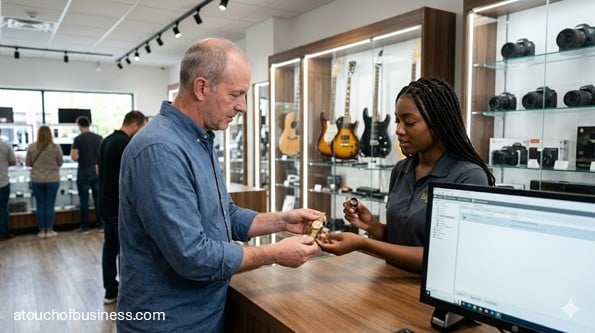
An Overview of a Pawn Shop Startup Process
A pawn shop is a storefront business that makes short-term loans secured by personal property.
You lend money against items such as jewelry, tools, electronics, musical instruments, watches, coins, and other goods the shop is willing and legally allowed to accept.
The customer leaves the item with you as collateral. If they repay the loan under the pawn agreement, they get the item back. If they do not redeem it, the shop may be allowed to sell the item after the required holding period.
Many pawn shops also buy used goods outright and resell merchandise from the same location. That makes this business part lending operation, part secondhand retail business, and part appraisal business.
That mix matters. A pawn shop depends on trust, records, licensing, security, and accurate valuation. You are not only opening a store. You are handling loans, customer identification, pledged goods, cash, and sensitive records.
Is a Pawn Shop the Right Fit for You?
Before you think about counters, signs, safes, or software, ask a harder question. Does this business fit your temperament?
A pawn shop can suit you if you are comfortable with face-to-face decisions, strict documentation, cash handling, and steady attention to detail. You need patience, judgment, and a calm approach.
You will deal with people who may need money quickly. You will also decide what an item is worth, what you can lend against it, and whether the risk makes sense.
Ask yourself:
- Do you like the idea of running a regulated storefront?
- Can you follow detailed rules every day without shortcuts?
- Are you comfortable saying no when an item, customer, or transaction does not feel right?
- Can you handle a business where security and recordkeeping are part of the daily work?
Also think about why you want this. Starting a business mainly to get away from a bad job, a difficult boss, or financial strain is a weak foundation. So is chasing status or the image of being an owner.
Better reasons are more grounded. You should have a real interest in the pawn business, the value it provides, and the work behind it. Staying interested in the business long term matters when the work becomes hard.
A pawn shop can be useful to a local market, but it can also be demanding. If you do not like the lending side, the used-goods side, and the compliance side, the business may wear on you.
Talk to Pawn Shop Owners Before You Commit
Speak with pawn shop owners before you sign a lease or commit significant capital.
Only talk to owners you will not compete with. Look for owners in another city, region, or market area.
Prepare real questions before the conversation. Ask about startup costs, licensing delays, software, security, staffing, customer records, and common mistakes. Their exact path may not match yours, but their experience can reveal issues no checklist can catch.
This is not casual networking. It is a reality check. Firsthand owner insight can help you see whether the business fits your skills, patience, and risk tolerance.
Check Local Demand Before Moving Forward
A pawn shop is local by nature. The storefront needs enough demand nearby to support both pawn loans and resale activity.
Look at the area before you choose a location. Count nearby pawn shops, secondhand dealers, gold buyers, jewelry buyers, used electronics stores, tool resellers, and firearm dealers if you plan to handle firearms.
You are looking for a market that has enough customers, but not so much competition that your shop has little room to compete.
Review these local signals:
- How many pawn shops already serve the area?
- Are they close to the same customer base you would serve?
- What types of goods do they appear to accept and sell?
- Is there steady resale demand for jewelry, tools, electronics, watches, coins, or musical instruments?
- Does the area allow pawn shop use at the kind of storefront you can afford?
Weak demand can mean the area is a poor fit. It may also mean the business idea needs a different location, smaller scope, or a slower start.
Use local supply and demand as an early go/no-go test. Do this before you spend money on buildout, signage, or equipment.
Choose Your Startup Path
You can start a pawn shop from scratch, buy an existing shop, or explore a franchise if a legitimate option exists in your state.
Starting from scratch gives you more control over the location, layout, product categories, systems, and shop identity. It also means you must handle the licensing process, security setup, software, cash reserves, and customer base from the ground up.
Buying an existing pawn shop may give you a licensed location, equipment, inventory, records, and local recognition. It may also come with old problems, weak systems, poor records, or compliance issues that need careful review.
Franchising is not always a realistic option for this business. If a franchise is available, compare the support, fees, rules, limits on control, territory, licensing help, and startup costs.
The best path depends on your budget, timeline, support needs, risk tolerance, desired control, and whether there are suitable businesses for sale. In some cases, an existing operation may be worth evaluating alongside a ground-up start.
Define Your Pawn Shop Model
Your model affects licensing, startup costs, security, staff training, records, and risk.
Do not treat all pawn shops as the same. The categories you accept can change the whole setup.
Decide whether you will offer:
- Pawn loans only
- Pawn loans plus retail resale
- Outright buying of used goods
- Jewelry, watches, coins, and precious metals
- Tools, electronics, musical instruments, or collectibles
- Firearms, only if properly licensed
Each added category creates new questions. Can you appraise it? Can you store it safely? Can you document it correctly? Can you legally accept it in your city and state?
A focused shop may be easier to launch than a broad one. A broad shop may need more equipment, staff training, storage, software settings, and compliance review.
Build a Practical Business Plan
Your business plan should help you decide whether the pawn shop can open safely, legally, and with enough cash.
Keep the plan practical. It should explain the storefront, loan model, accepted goods, startup costs, licenses, security, staffing, and cash needed for loans and purchases.
Include these sections:
- Storefront location and zoning status
- Product categories you will accept
- Loan and redemption workflow
- Retail resale plan for forfeited or purchased goods
- Startup cost estimates
- Cash reserves for pawn loans and purchases
- License and permit checklist
- Security and storage setup
- Software and recordkeeping system
- Staffing plan if you will hire
A plan is not just for lenders. It forces you to check whether your idea works on paper before it becomes an expensive lease.
For a first-time owner, putting your business plan together can also show where you need outside help.
Choose the Right Storefront
A pawn shop depends on the location more than many owners expect.
The space must work for customers, staff, inventory, security, inspections, and local approval.
Before signing a lease, verify that a pawn shop, secondhand dealer, collateral lender, or firearm pawnbroker is allowed at that exact address. Do not rely only on the landlord’s opinion.
Review these storefront factors:
- Zoning approval for pawn shop use
- Certificate of occupancy requirements
- Visibility from the street
- Parking and access
- Signage rules
- Space for display cases and secure counters
- Backroom storage for pledged goods
- Room for safes or a secure storage area
- Electrical and internet reliability
- Camera, alarm, and access-control setup
Ask yourself whether the layout supports the real workflow. Can customers enter, wait, present items, sign documents, pay, and leave without crowding the pawn counter?
A weak location can hurt the shop before it opens. A poor layout can slow transactions, weaken security, and make staff training harder.
Set Up the Pawn Workflow
A pawn shop needs a clear process from the first customer conversation to final record storage.
The process should feel simple to the customer and controlled behind the counter. That takes planning.
A basic pawn loan workflow includes:
- Customer brings in an item.
- Staff reviews the item and checks whether the shop can accept it.
- Customer identification is verified.
- The item is tested, described, photographed, or recorded as required.
- The shop sets a loan amount based on expected resale value and risk.
- The pawn ticket and disclosures are completed.
- The customer receives the funds and keeps the required paperwork.
- The pledged item is tagged and stored securely.
- The loan is tracked for redemption, renewal, or forfeiture.
This workflow must be ready before opening. If the process is vague, staff may miss required details, misstate loan terms, or lose track of pledged goods.
That is a serious problem in a business built on documentation.
Understand Customers and Their Expectations
Pawn shop customers may come in for different reasons.
Some need a short-term loan. Some want to sell an item. Others are shopping for used goods.
Common customer types include:
- People seeking short-term cash secured by personal property
- Customers without access to traditional credit
- Underbanked or unbanked consumers
- Sellers of used goods
- Retail buyers looking for secondhand merchandise
- Tradespeople looking for used tools
Customers expect accuracy, privacy, clear terms, and professional treatment. They also expect the item they pawned to be stored safely until the redemption period ends.
This is where fit matters again. Can you stay calm, fair, and careful when customers are stressed or disappointed by an offer?
Your setup should support clear boundaries. Staff need to know what the shop accepts, what it refuses, what documents are required, and when to stop a transaction.
Plan Startup Costs and Cash Reserves
A pawn shop needs capital for more than rent and display cases.
You also need cash to make pawn loans and buy goods before retail sales create steady cash flow.
Startup cost categories may include:
- Business registration and name filing
- Pawnbroker licensing
- Local business licenses
- Secondhand dealer or precious-metal licenses if required
- Background checks, fingerprints, bonds, or financial requirements
- Lease deposit and buildout
- Certificate of occupancy costs where required
- Safes, cameras, alarms, and access control
- Display cases, counters, shelves, and storage
- Pawn software and computer equipment
- Jewelry, electronics, and tool testing equipment
- Starting cash for loans and purchases
- Professional fees and insurance
Do not rely on a single generic startup cost estimate. Costs change by state, city, store size, security needs, product categories, staffing, and the amount of cash you need for loans.
The cash reserve is a major decision. If you spend too much on buildout, you may open with too little cash to lend or buy items.
Make Pricing and Loan Decisions Carefully
Pawn shop pricing starts with the value of the pledged item, but it does not end there.
You must account for resale value, condition, local demand, storage, testing, risk, and state rules on pawn charges.
For pawn loans, your loan amount is usually based on a conservative share of expected resale value. If the customer does not redeem the item, the resale price must still make sense after time, risk, and selling costs.
For outright purchases, your offer should reflect condition, legal hold periods, testing time, cleaning, and likely resale value.
For jewelry and precious metals, valuation may involve troy weight, purity, karat, spot price, gemstone quality, and whether the item has resale value beyond melt value.
Do not set pawn rates or fees until you verify state law. State rules may control interest, finance charges, storage fees, loan terms, renewal rules, and redemption periods.
You can use general guidance on setting your prices, but pawn loan charges must follow the rules that apply in your jurisdiction.
Set Up Banking, Payments, and Records
A pawn shop needs clean financial records from the start.
You should separate business transactions from personal ones before the first customer walks in.
Set up:
- A business checking account
- Cash drawer procedures
- Deposit procedures
- Sales tax tracking if you sell taxable goods
- Accounting software or bookkeeping support
- Payment processing approved for your business type
- Records for loans, purchases, redemptions, renewals, and retail sales
- Procedures for reporting large cash transactions when required
Some banks and payment processors may review pawn, secondhand retail, firearms, or precious-metal activity more closely. Confirm approval before opening.
Getting your business banking in place early helps you avoid commingling funds or scrambling for solutions once the shop is ready to open.
Handle Legal Setup Before You Open
A pawn shop usually has more legal setup than a basic retail store.
Do not open until you know which federal, state, city, and county rules apply.
At the federal level, review:
- Employer Identification Number setup
- Truth in Lending Act and Regulation Z disclosures
- Military Lending Act procedures where applicable
- IRS Form 8300 reporting for large cash payments
- Federal firearms licensing if handling firearms
- Jewelry and precious-metal representation rules if selling those items
- Workplace posters if hiring employees
At the state level, verify:
- Pawnbroker license requirements
- Pawn loan rates, fees, loan terms, and renewal rules
- Required pawn ticket language
- Employee licensing if applicable
- Sales tax permits
- Employer accounts if hiring
- Firearm dealer or transfer rules if applicable
- Secondhand dealer or precious-metal buyer rules
At the city or county level, check:
- General business license requirements
- Zoning approval for the exact address
- Certificate of occupancy
- Local pawnbroker licensing
- Police reporting and hold-period rules
- Sign permits
- Required public notices
Use local licenses and permits as a starting point, but confirm pawn-specific rules with the proper state and local offices.
Important questions to ask include:
- Can a pawn shop operate at this address?
- Which licenses must be approved before opening?
- Are background checks, fingerprints, bonds, or financial requirements needed?
- Are daily reports, item photos, serial numbers, or hold periods required?
- Do employees need approval before writing pawn loans?
This is one of the strongest fit tests for this business. If you dislike compliance work, a pawn shop may not suit you.
Decide Whether to Handle Firearms
Firearms can change the startup process in a major way.
If your pawn shop will accept, redeem, transfer, or sell firearms, you need the proper federal license before opening that part of the business.
A firearm pawnbroker generally needs the correct Federal Firearms License. The Bureau of Alcohol, Tobacco, Firearms and Explosives identifies Type 02 as the pawnbroker license category for firearms other than destructive devices.
You must also prepare for background checks, firearm transaction records, acquisition and disposition records, storage rules, and required procedures when a customer redeems a pawned firearm.
State and local firearm rules can add more steps. Check with the state police, attorney general, firearm licensing office, or local licensing authority before including firearms in your model.
If you are not ready for this level of control, leave firearms out of the launch plan.
Prepare Equipment and Store Setup
Your pawn shop setup must support lending, buying, selling, storage, records, and security.
Start with the customer-facing space. You need a clear counter, secure display cases, lighting, signage, and room for customers to move without crowding the pawn area.
Core storefront items may include:
- Secure pawn counter
- Display cases
- Locked jewelry cases
- Shelving and racks
- Customer waiting area
- Exterior sign if permitted
- Required license displays and notices
Security equipment may include:
- Alarm system
- Surveillance cameras
- Video storage
- Safes
- Secure storage room or vault if needed
- Access control
- Cash drawers
- Deposit safe
Transaction tools may include computers, receipt printers, pawn ticket printers, barcode labels, document scanners, identification scanners, cameras, cash counters, counterfeit bill detectors, and payment terminals.
This is not just an equipment purchase. It is opening readiness. The space should let staff verify items, complete documents, store collateral, and serve customers without confusion.
Choose Pawn Software and Document Systems
Pawn software is one of the most important setup decisions.
The system should match the records your state and local rules require.
Look for software that supports:
- Pawn tickets
- Renewals and redemptions
- Forfeiture tracking
- Customer identification records
- Item descriptions and serial numbers
- Item photos if required
- Inventory tags and labels
- Sales tax setup
- Law enforcement reporting where required
- Accounting exports
- User permissions and audit trails
Do not choose software only because it looks easy. Choose software that helps you stay compliant and keeps your records organized.
If your state reviews or approves pawn software, confirm that before purchase. If your local police department requires electronic reporting, confirm compatibility before opening.
Gather Testing Tools and Supplies
A pawn shop must be able to evaluate the items it accepts.
If you cannot test or price a category, do not accept it yet.
For jewelry and precious metals, common tools may include:
- Jeweler’s loupe
- Gram scale and troy-ounce scale
- Gold testing kit
- Silver testing method
- Diamond tester
- Moissanite tester
- Magnet
- Calipers
- Ring mandrel
- Precious-metal reference charts
For electronics and tools, you may need a test bench, chargers, cables, power strips, monitors, battery testing tools, basic hand tools, cleaning supplies, and a reliable way to record serial numbers.
For musical instruments, you may need a tuner, padded storage, cases, condition tags, and inspection tools.
These tools protect your cash. They also protect your credibility. A shop that accepts goods it cannot evaluate is taking unnecessary risk.
Plan Inventory and Storage Flow
Pawn shop inventory includes pledged items, forfeited goods, purchased goods, and retail items.
Those categories should not become confused.
Plan how items will move through the shop:
- Customer presents the item.
- Staff tests and records it.
- The item receives a tag or label.
- Pledged goods go into secure storage.
- Purchased goods follow any required hold period.
- Eligible retail goods move to display.
- Sold items are removed from inventory records.
Storage matters because customer property may sit in the shop until redemption, renewal, or forfeiture. High-value items need tighter control.
Do you have enough room to store pledged goods without losing track of them? If not, the storefront is not ready.
Handle Insurance and Risk Planning
Insurance planning should match the risks of a pawn shop.
Some coverage may be required by law, especially workers’ compensation when employees are hired. Other coverage is part of managing risk, not a universal legal requirement.
Common coverage to discuss with an insurance professional includes:
- General liability
- Business property
- Crime coverage
- Employee dishonesty
- Cyber coverage
- Coverage for customer property in your care
- Business interruption
- Employment practices coverage if hiring
- Firearms-related coverage if handling firearms
Tell the broker what your shop will actually do. A pawn shop that handles jewelry, firearms, high-value electronics, and large cash balances may need different coverage than a small shop with limited categories.
General business insurance basics can help you prepare questions, but your final coverage should match your local rules and risk profile.
Set Up Suppliers and Vendors
A pawn shop does not rely on product suppliers the same way a new retail store does.
Your merchandise often comes from pawn forfeitures and outright purchases, but you still need startup vendors.
Useful vendors may include:
- Pawn software provider
- Alarm and camera company
- Safe or vault supplier
- Display case supplier
- Jewelry testing equipment supplier
- Payment processor
- Accounting or bookkeeping support
- Insurance broker
- Payroll provider if hiring
- Firearm compliance support if handling firearms
If you buy precious metals, you may also need a refiner or wholesale buyer. Confirm that any process you use fits the rules in your state and city.
Create Your Business Identity and Required Notices
A pawn shop needs a clear public identity and the notices required by law.
Keep this practical. The goal is opening readiness and customer trust.
Prepare:
- Registered business name
- DBA or assumed name if the shop name differs from the legal name
- Domain name
- Basic website or contact page
- Business phone number
- Exterior sign if permitted
- Required license display
- Required rate, complaint, firearm, or pawn notices where applicable
- Inventory labels and pawn ticket forms
For a storefront pawn shop, storefront signage is also a practical matter. The sign must fit local rules and help people identify the business before they walk in.
Do not install signs before checking local sign permits. Some cities control size, lighting, placement, and window coverage.
Prepare Forms and Internal Documents
Your documents should be ready before the first transaction.
In a pawn shop, paperwork is not a side task. It is part of the product.
Prepare or review:
- Pawn tickets
- Consumer credit disclosures
- Customer identification records
- Item condition records
- Redemption receipts
- Renewal receipts
- Outright purchase receipts
- Retail sales receipts
- Police reporting records if required
- Large cash transaction procedures
- Employee training records
- Firearm forms if applicable
Have an attorney or compliance professional review documents that affect pawn loans, finance charges, disclosures, firearms, or regulated secondhand goods.
A small form error can become a large problem if it appears in every transaction.
Hire and Train Staff Carefully
You may be able to start small, but many storefront pawn shops need help at the counter.
Hiring is not only about customer service. Staff may handle cash, identification, valuation, records, and secured goods.
Train staff on:
- Customer identification
- Pawn ticket completion
- Item testing and descriptions
- Serial number recording
- Prohibited goods
- Loan value decisions
- Cash handling
- Security procedures
- Police reporting where required
- Firearm procedures if applicable
Some jurisdictions may require employee licensing, registration, or background checks. Verify this before employees write loans, buy goods, or supervise pawn activity.
Deciding when to hire should include hours, security, training time, and the risk of having one person handle too many duties.
Know the Daily Work Before You Open
A pawn shop can look simple from the outside.
Inside, the day often moves between customers, cash, records, appraisals, inventory, and security checks.
A typical day may include:
- Opening the shop and checking security systems
- Reconciling the cash drawer
- Reviewing redemptions and renewals
- Testing items brought in by customers
- Writing pawn tickets and disclosures
- Tagging and storing pledged goods
- Moving eligible items to retail display
- Sending required reports if local rules require them
- Closing drawers and securing safes
Does that day sound like work you can sustain day after day? That question matters.
The lifestyle may include long retail hours, stressful customer conversations, security concerns, and constant attention to paperwork. The fit is not only financial. It is personal.
Watch for Pawn Shop Red Flags
Some warning signs should make you pause before you move forward.
These red flags can affect your ability to launch, fund, operate, or keep the shop profitable.
- The address is not approved for pawn shop use.
- The lease does not allow pawn, secondhand goods, firearms, or secure storage.
- You cannot qualify for a pawnbroker license.
- You underestimate security, software, and cash reserve needs.
- You plan to handle firearms without understanding the licensing burden.
- You want to buy gold or jewelry without checking precious-metal rules.
- You cannot value the goods you plan to accept.
- Your pawn software cannot produce required records or reports.
- Local pawn fee limits make the loan model weak.
- Hold periods delay resale longer than your cash flow plan allows.
- Banking or payment processing is not approved before opening.
- Staff training is not ready for identification, records, and security.
- Competition is strong and local demand is weak.
A red flag does not always mean stop. It means slow down, verify, and decide whether the business still fits.
Use a Pre-Opening Pawn Shop Checklist
Before you open, test the full shop as if customers were already walking in.
Opening before the space, licenses, records, and systems are ready can create problems quickly.
Confirm these items:
- Entity formed and tax setup complete
- Business bank account open
- Sales tax permit active if needed
- Storefront approved for pawn shop use
- Certificate of occupancy approved where required
- Pawnbroker license approved
- Secondhand dealer or precious-metal license approved if required
- Firearms license approved if handling firearms
- Pawn ticket and disclosures ready
- Software configured and tested
- Police reporting ready if required
- Security systems active
- Safes and storage ready
- Testing tools ready
- Payment processing tested
- Staff trained
- Required notices posted
Then run sample transactions. Test a pawn loan, renewal, redemption, forfeiture, outright buy, retail sale, item label, cash drawer closeout, and required report.
If the test run feels messy, the shop is not ready yet.
Frequently Asked Questions About Starting a Pawn Shop
These questions focus on startup decisions, not customer-facing policies.
Use them to find issues you still need to verify before opening.
Do I need a special license to open a pawn shop?
Usually yes. Pawn shops commonly need a state pawnbroker license, and some cities or counties require separate local licenses.
Can I open in any retail space?
No. The address must be approved for pawn shop use. Verify zoning, certificate of occupancy, local licensing, and any special location rules before signing a lease.
Do I need a firearms license?
Only if the shop handles firearms. If you accept, redeem, transfer, or sell firearms, you need the proper federal license and must follow firearm transaction rules.
Does a pawn shop need a sales tax permit?
A pawn shop that sells taxable goods usually needs a state sales tax permit or seller’s permit. The rule depends on the state.
Can I set any pawn loan rate I want?
No. State pawn laws may control interest, finance charges, fees, loan terms, renewals, and redemption rules. Federal disclosure rules may also apply.
How much startup capital do I need?
It depends on your location, buildout, security, licenses, software, equipment, staffing, and loan cash reserve. Avoid using a generic estimate without local quotes.
What records should be ready on day one?
Prepare pawn tickets, customer identification records, item descriptions, inventory records, redemption records, renewal records, sales records, and any required police or firearm records.
Can employees write pawn loans?
They may be able to, but some jurisdictions require employee approval, licensing, registration, or supervision. Verify this before assigning staff to the counter.
Should I accept every type of item?
No. Start only with categories you can test, value, store, document, and legally accept. Broad categories can increase risk and complexity.
What should I test before opening?
Test the complete workflow: pawn loan, renewal, redemption, forfeiture, outright buy, retail sale, payment processing, item labels, reports, and cash drawer closeout.
Final Startup Thoughts
A pawn shop can be a practical storefront business, but it is not a simple retail startup.
You need licensing, clear records, secure storage, accurate valuation, cash reserves, and a location that fits the rules.
Keep returning to the fit question. Does this suit how you want to work each day?
If you like careful documentation, regulated transactions, used-goods appraisal, and direct customer contact, the business may be worth deeper planning. If you dislike rules, records, security concerns, or difficult valuation decisions, pause before moving forward.
The best early decision is not always to open. Sometimes it is to verify more, narrow the model, choose a different location, buy an existing shop, or walk away before the costs become harder to undo.
Pawn Shop Owner Interviews Worth Reviewing
One of the best ways to understand a pawn shop is to listen to people who have spent years behind the counter. Their interviews can help you see the real work more clearly, including loan decisions, customer trust, item valuation, security, recordkeeping, local reputation, and the pressure of running a regulated storefront.
Use these resources for added perspective, but remember that laws, fees, licenses, and pawn rules vary by location. Treat owner interviews as practical insight, not legal guidance.
- Jerseyville Pawn owner shares 25 years of stories, insights and community impact
- Alton’s Sam’s Pawn Shop continues family legacy under Stacy Dixon
- Rick Harrison on the pawn business, deals, valuation, and risk
- Rick Harrison: The Pawn Business, Hidden Histories, and Collectibles
- Bob Moulton, CEO of National Pawn
- Rules to Live By as a Pawnbroker with Jay Dunbar
- The Secrets Behind a $12m Pawn Shop Empire with James Constantinou
Related Articles
- How To Start an Antique Business
- How To Start a Jewelry Appraisal Business
- How To Start a Jewelry Business
- How To Start an Auction Business
- How To Start an Estate Sale Business
Sources:
- U.S. Small Business Administration: Register your business, Licenses and permits
- Internal Revenue Service: Starting a business, Large cash transactions, Form 8300 reporting
- Bureau of Alcohol, Tobacco, Firearms and Explosives: Federal firearms licenses, FFL best practices, Firearms questions
- Consumer Financial Protection Bureau: Disclosure requirements, Military Lending Act, Pawn loan costs
- National Pawnbrokers Association: About pawn, Opening a pawn shop
- Texas Office of Consumer Credit Commissioner: Pawnshop licensing, Pawn software vendors, ALECS FAQ
- NYC Consumer and Worker Protection: Pawnbroker checklist, Secondhand dealer checklist
- California Department of Tax and Fee Administration: Seller’s permit
- U.S. Department of Labor: Workplace posters
- Electronic Code of Federal Regulations: Jewelry guides