
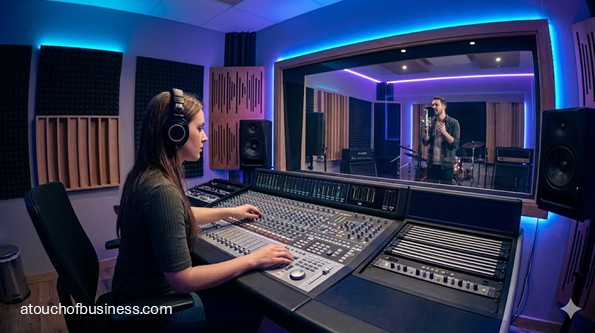
How to Shape a Recording Studio Plan That Fits You
A recording studio is a business that gives clients a place to record, edit, mix, or master audio. In many cases, it also provides the technical help needed to turn raw takes into finished files.
That can include music sessions, podcast recording, voiceover work, spoken-word projects, and some audio post-production. Your service offering shapes almost every startup decision that comes next.
Is This a Business You Can See Yourself Growing With?
A recording studio can look exciting from the outside, but the day-to-day operations are more demanding than many people expect. You are not just making audio. You are booking sessions, managing client expectations, solving technical problems, protecting files, tracking payments, and keeping projects moving on time.
Before you go further, ask yourself a few honest questions. Do you enjoy the day-to-day work? Can you stay calm when a session goes off track? Are you comfortable working nights, weekends, or around client schedules? A recording studio can be rewarding, but it also brings pressure, deadlines, and long stretches of detail-focused work.
Your reason for starting matters. You should be passionate about running the business, not just trying to escape a bad boss or financial stress. Prestige is not enough either. The image of owning a studio will not carry you through lease payments, equipment problems, missed deadlines, or difficult clients.
Better reasons are simple and stronger. You like the work. You care about sound, creative quality, and helping clients get a result they are proud to release. That kind of drive is what keeps you going when the startup gets hard.
You also need a practical reality check. A recording studio is a client-service business with real overhead. Even a small office or studio-based setup can require lease commitments, acoustic work, software, microphones, monitors, and enough working capital to get through a slow start.
Talk with studio owners before you commit. Speak only with owners outside your market, in another city or region, so you are not calling a future competitor. Go in prepared. Ask how they priced their launch, what surprised them, which services actually drove revenue, how they handled revisions, and what they wish they had fixed before opening. That kind of firsthand owner insight is hard to replace.
Check Demand
A recording studio only works if enough people in your area need the kind of audio work you plan to offer. Demand is not just about population. It is about the right customer mix.
Look at the local scene. Are there independent artists, podcasters, voiceover talent, churches, agencies, video producers, schools, or content creators who already pay for recording help? Are they underserved, or are established studios already meeting that demand well?
Do not guess here. Study local supply and demand before you sign anything. If the area is weak, the service mix is wrong, or the customers you want are too scattered, the smarter move may be to change your offer, change your location, or stop before you overspend. A close look at local demand for this kind of business can save you from building a studio nobody needs.
Start, Buy, or Wait
A recording studio can be started from scratch, bought from an existing owner, or built in a limited form first and expanded later. Each path changes your risk.
Starting from scratch gives you the most control over layout, acoustics, branding, workflow, and service mix. It also puts all the setup risk on you. Buying an existing studio may give you a treated space, existing gear, some client history, and a faster start, but only if the reputation, lease terms, and equipment condition are solid. Franchising isn’t a standard path for recording studios, so you’ll likely be building an independent brand from the ground up.
If you are unsure, compare your options carefully. In some cases, buying a business already in operation may be a better fit than building everything yourself.
Your Offer
A recording studio should not launch with a vague promise to do all audio work for everyone. Your offer needs boundaries from day one.
Pick a core service mix before you buy gear or choose a space. You might focus on vocal recording, artist sessions, podcast production, voiceover work, mixing, mastering, or a small number of related services. The clearer your offer is, the easier it becomes to choose equipment, shape your room, set your rates, and explain what clients are actually buying.
This is where the creative side of the business really matters. Clients care about style fit, reliability, communication, deadlines, revisions, and whether the final work matches the brief. A recording studio that sounds good but handles projects poorly will struggle.
Think through the workflow from first inquiry to payment. A simple version often looks like this:
- Initial contact
- Discovery call or project brief
- Quote or proposal
- Booking and deposit
- Session prep
- Recording or editing sessions
- Revisions
- Final delivery
- Final payment and file archiving
If your process is undefined, operational issues will surface quickly. You’ll deal with scope creep, excessive revisions, missed deadlines, and confused clients.
Who You Serve
A recording studio works best when you know exactly who you want to serve. The client mix affects your room setup, session flow, turnaround time, and pricing decisions.
Your primary target markets include independent artists, bands, podcasters, voiceover talent, producers, ad agencies, and film or video teams. Those groups do not want the same thing.
- Artists and bands may need tracking space, microphones, cue mixes, and longer sessions.
- Podcasters usually care about clarity, editing speed, consistency, and a smooth in-studio experience.
- Voiceover clients often want a quiet room, fast direction, reliable file delivery, and simple booking.
- Agencies and media teams tend to care about deadlines, presentation quality, revision control, and delivery standards.
The more clearly you define your customer, the easier it is to build a useful portfolio and position the studio well.
Plan the Business
A recording studio needs a real business plan, even if the first version is simple. This is where you turn the idea into specific decisions.
Your plan should cover your service offering, target market, local demand, location needs, startup costs, pricing, expected monthly overhead, marketing, and the pre-opening roadmap. It should also show how many sessions or projects you need each month just to cover expenses.
Keep it practical. You are trying to make decisions, not impress anyone. If you need help building one, start with a guide on putting your business plan together.
Choose the Structure
A recording studio needs a legal structure before you open accounts, sign contracts, or register the business. This choice affects taxes, liability, and paperwork.
Some owners start as sole proprietors. Others form a limited liability company or corporation. Partnerships can work too if more than one person is involved. The right choice depends on risk, ownership, and how formal you want the setup to be from the start.
Do not rush this step because it shapes other parts of the launch. If you need a plain-language comparison, start with guidance on picking the right business structure.
You also need to settle the business name. If the public name is different from your legal name or entity name, you may need a Doing Business As filing depending on where you operate.
Handle Legal Setup
A recording studio has fewer launch rules than some regulated industries, but the legal details still matter. Most of them depend on your state and local area.
At the federal level, many owners need an Employer Identification Number, especially if they form an entity, hire employees, or open business banking. At the state level, you may need entity registration, employer accounts, and tax registration. At the city or county level, you may need a local business license, zoning approval, permits for build-out work, and sometimes a certificate of occupancy before opening a physical studio.
For a studio, location-specific checks are especially important. Ask the local planning or zoning office whether sound recording studio use is allowed at the address. Ask the building department whether your layout, sound isolation work, electrical changes, or use of the space triggers permits or a certificate of occupancy. Do this before you commit to a lease.
If you want a broader checklist for business registration and local rules, these guides on registering the business and local licenses and permits can help you organize the process.
Pick the Space
A recording studio rises or falls on the space. The wrong room can waste a lot of money, even if the gear looks impressive.
Your office or studio-based setup needs more than square footage. You need a usable layout, client access, privacy, clean electrical service, workable HVAC noise levels, secure entry, and enough separation for the kind of sessions you plan to run. A control room, live room, vocal booth, waiting area, and storage setup all affect the client experience and the quality of the work.
Lease decisions matter here. Make sure the landlord allows the intended use and the changes you need to make. A pretty room with poor sound isolation, bad parking, or no approval for tenant improvements can become a costly mistake.
Do not pay for more space than the business needs at launch. Extra square footage feels nice, but underused studio space becomes monthly overhead fast.
Build the Room
A recording studio should solve acoustics early, not after the budget is mostly gone. Room treatment and layout usually matter more at launch than collecting premium gear.
You may need broadband panels, bass trapping, door seals, isolation hardware, monitor placement planning, and a way to control room noise from HVAC or outside sound. If the space needs serious isolation or structural work, that can become one of the biggest startup costs.
The room also needs a workflow that feels professional. Clients should know where to check in, where to wait, where the session happens, and how the space supports privacy and focus. A studio that sounds fine but feels chaotic still creates friction.
Buy the Essentials
A recording studio does not need every piece of gear on the market to open well. It needs the right signal chain for the services you actually plan to offer.
At a basic level, most studios need:
- A dedicated computer for audio production
- Digital audio workstation software
- An audio interface or converters
- Nearfield monitors
- Several reliable headphones
- A large-diaphragm condenser microphone
- At least one strong dynamic microphone
- Mic stands, pop filters, and cabling
- Storage drives and a backup system
- Furniture that supports a clean room layout
From there, your customer focus changes the list. A vocal and podcast studio may need fewer instruments and less live-room gear. A studio aimed at bands may need more microphones, cue mix distribution, extra stands, and more space for setup. A room built around mixing and mastering puts more pressure on accurate monitoring and acoustics.
Set the Workflow
A recording studio needs systems before it needs volume. Good systems protect quality, time, and client trust.
Create a repeatable process for inquiry, briefing, booking, deposits, session prep, file naming, backups, revisions, delivery, and final payment. Do not leave those details in your head. Write them down and use them every time.
Your documents should be simple and clear. That usually includes a booking form, quote template, session agreement, cancellation terms, overtime rules, revision limits, file-delivery terms, and a basic studio rules sheet. Creative businesses often struggle when the brief is vague or revision boundaries are weak. A recording studio is no different.
Price It Right
A recording studio should choose pricing that matches the offer and the client’s expectations. This is not just about picking a number. It is about defining what is included.
Common pricing methods include hourly studio time, half-day or full-day blocks, per-song mixing, per-song mastering, podcast packages, and session minimums for voiceover work. Whatever model you choose, define the limits around revisions, editing, file delivery, engineer time, and overtime.
Pricing also needs to reflect the service mix. A room rental without an engineer is different from a full-service production session. So is a one-hour voiceover session compared with a long music project that needs multiple rounds of work.
If you need help thinking through setting your prices, keep the focus on the value delivered and your actual operational costs.
Financial Planning
A recording studio can require more capital to launch than new owners expect. The biggest cost is often not the microphone list. It is the room.
Your startup costs may include lease deposits, build-out, acoustic treatment, electrical work, HVAC changes, furniture, computer and software, microphones, monitors, headphones, cabling, insurance, licensing fees, website setup, and enough working capital to cover the first stretch of operations.
There is no reliable national cost range you can treat as standard. The numbers change too much based on build-out, city, room count, gear level, and whether the space already works for studio use.
Funding options can include personal savings, equipment financing, bank lending, or a smaller first-stage launch with one room and a narrower offer. If borrowing is part of the plan, learn the basics of getting a business loan before you apply.
Banking and Records
A recording studio should keep business and personal transactions separate from the start. That makes taxes, recordkeeping, and client payments much easier.
Open a business bank account once the entity and tax documents are in place. You also need a way to take deposits, invoices, and card payments before opening. Some owners use full merchant services. Others start with simpler payment tools and move up later.
Keep your bookkeeping clean from day one. Track deposits, completed-session revenue, refunds, equipment purchases, software subscriptions, contractor payments, and any taxable sales. If you are comparing options, it helps to think through setting up your business account and how you want to handle card processing.
Insurance and Risk
A recording studio has real exposure even before it becomes busy. The room contains expensive equipment, client projects, and a steady stream of deadlines.
At a minimum, think through property coverage, general liability, and any coverage tied to the lease or your local rules. If you hire people, workers’ compensation rules may apply based on your state. If the studio has employees exposed to loud sound levels, occupational hearing protection rules can matter too.
Insurance does not remove risk, but it gives the business a chance to survive a problem that would otherwise be hard to absorb.
Vendors and Suppliers
A recording studio depends on a small group of reliable vendors. Build those relationships before launch, not during your first problem session.
You may need audio equipment suppliers, acoustic-treatment vendors, software providers, backup-storage services, furniture suppliers, and local technicians who can help with repairs or installation. If you plan to offer extra instruments or backline, you may also need rental partners.
Choose vendors based on reliability, support, and how quickly they can help when something fails. A cheap source that disappears when you need parts is not really cheap.
Name and Presence
A recording studio needs a clear name and a clean digital presence before opening. Clients want to know what you do, who you serve, and how to book.
Secure the business name, matching domain if possible, and consistent contact details across your website and business listings. Your site does not need to be elaborate, but it should show the service mix, the type of projects you handle, your booking method, and enough portfolio material to prove the studio is real and ready.
Presentation matters in creative work. Your logo, photos, room shots, and portfolio should fit the kind of client you want to attract. A business that looks unclear or unfinished can lose trust before the first call.
Portfolio and Positioning
A recording studio needs proof, not just claims. In a creative service business, your portfolio often does more selling than your description does.
Showcase projects that align with your target market. If you want artists, use music examples. If you want podcasters, show clean spoken-word samples. If you want voiceover clients, present polished work that signals consistency and quiet recording quality.
Your positioning should also be clear. Are you the place for vocal-focused sessions, podcast production, clean voiceover work, or artist development? A general answer can work later, but early on it often makes the business harder to understand.
Staffing Choices
A recording studio can start as a one-person business, but you still need to decide how help will work. That decision affects cost, scheduling, and legal risk.
You might stay solo at first, use freelancers for certain sessions, or hire staff once demand is stable. Be careful with worker classification. Calling someone a contractor does not make it true if the working relationship looks like employment.
If you plan to bring in engineers, assistants, editors, or admin help, define the role clearly before you start. That includes scheduling control, payment terms, training needs, and who owns the workflow.
Daily Reality
A recording studio can feel creative, but the owner’s day is often a mix of technical production and business management. You need to like both.
A normal pre-launch or early-launch day may include answering inquiries, checking the session calendar, testing microphones, loading templates in the digital audio workstation, setting up cue mixes, handling a client brief, running the session, exporting files, collecting payment, and backing up everything before you leave.
If that sounds draining rather than satisfying, pay attention. Being passionate about running the business matters because the studio will ask for your focus in many directions at once. If you want a broader look at staying interested in the business long term, this is one of those industries where it really shows.
Know the Red Flags
A recording studio has warning signs that are easy to ignore when the idea feels exciting. You are better off seeing them early.
- The space needs major sound isolation or HVAC changes before it can work.
- Zoning is unclear or the landlord resists studio-related improvements.
- Your startup budget is going mostly into gear instead of the room.
- You plan to serve every kind of audio client from day one.
- Your pricing does not define revisions, editing, overtime, or file delivery.
- The local market already has strong studios serving the same clients well.
- You expect contractors to work like employees without checking the rules.
- The room looks good but does not function well for session flow or privacy.
These are not small issues. Any one of them can make the startup much harder to fund, launch, or maintain profitability.
Prepare to Launch
A recording studio should open only when the room, paperwork, systems, and client experience are ready. Opening too early creates avoidable damage.
Before launch, make sure you have handled:
- Business registration and tax setup
- Zoning and local permit checks
- Lease approval for studio use and alterations
- Required permits and certificate of occupancy if the local rules call for it
- Acoustic treatment and room testing
- Installed and tested recording gear
- Session templates and backup systems
- Booking forms and client agreements
- Deposit and payment processing
- Website, contact method, and booking path
- Trial sessions and a soft opening
Run test sessions before you call the business open. Use them to catch routing problems, room noise, timing issues, weak paperwork, and anything that slows the client experience.
Final Thought
A recording studio can be a strong business when the offer is clear, the room works, the legal setup is handled, and the workflow is repeatable. It becomes much harder when the idea is broad, the space is wrong, or the owner opens before the systems are ready.
Take your time with the early decisions. The choices you make before opening shape the quality of your output, the type of clients you attract, and how much pressure the business puts on you from the start.
FAQs
Question: Do I need a separate legal entity before I open a recording studio?
Answer: Not always, but many owners set one up before signing a lease or opening accounts. It can affect taxes, liability, and how you handle contracts.
Question: What should I decide first when starting a recording studio?
Answer: Start with the specific services you want to offer. A studio for bands, podcasters, and voiceover clients will not need the same room, gear, or schedule.
Question: Can I lease any commercial unit and turn it into a recording studio?
Answer: No. You need to confirm local land-use rules, landlord approval, and whether the space can be changed for studio use.
Question: Will I need permits before opening my studio?
Answer: Maybe. It depends on your city, the work being done to the space, and whether the use of the unit is changing.
Ask the building department and zoning office before you spend money on construction. That is much safer than fixing a problem after the build-out is done.
Question: Is an Employer Identification Number required for a new recording studio?
Answer: Many owners get one early because banks, tax filings, and hiring often require it. It is especially common when you form a business entity or plan to add staff.
Question: How much gear do I really need to start?
Answer: You need enough equipment to provide the services you promise with confidence. A solid computer, recording software, interface, microphones, monitors, headphones, and storage are usually part of the base setup.
Question: Should I spend more on equipment or on the room itself?
Answer: Many new owners regret putting too much money into gear before fixing the space. A poor-sounding room can limit your results even when the equipment looks impressive.
Question: Do I need insurance before my first client walks in?
Answer: It is wise to sort that out before opening. The right coverage often depends on your lease, your equipment value, and whether other people will be on-site.
Question: How do I set prices for a new recording studio?
Answer: Build prices around the time, skill, and setup each service requires. You also need clear limits on edits, extra time, and file delivery so the job does not keep growing after the agreement.
Question: What are the biggest startup costs for a recording studio?
Answer: The room can cost more than people expect. Rent, deposits, construction, acoustic work, electrical changes, software, and core hardware can add up fast.
Question: Can I open with one main service instead of offering everything?
Answer: Yes, and that often makes the launch easier. A narrow offer helps you control spending, explain the business clearly, and build a better first portfolio.
Question: What paperwork should I have ready before I start taking studio bookings?
Answer: Have a booking form, project terms, deposit policy, cancellation rules, and a simple agreement on delivery and revisions. Those basics help prevent confusion early.
Question: What does the daily workflow look like in the first phase?
Answer: Early on, you may handle almost everything yourself. That often includes answering leads, preparing sessions, running the room, sending files, tracking payments, and backing up files.
Question: What systems should I set up before opening day?
Answer: Put simple systems in place for scheduling, file naming, backups, invoicing, and client communication. If those basics are loose, small problems pile up quickly.
Question: When should I hire help for the studio?
Answer: Usually not until the work is steady enough to support it. Before bringing anyone in, decide what they will do, how they will be paid, and whether they are truly staff or independent help.
Question: How can I attract my first clients without a big marketing budget?
Answer: Start with a clear offer, strong samples, and an easy way to contact or book you. Early trust often comes from showing relevant work and presenting the studio in a professional way.
Question: What should I watch closely in the first month of cash flow?
Answer: Pay attention to fixed bills, deposits collected, time spent on unpaid tasks, and how quickly projects turn into final payment. A studio can feel busy while still bringing in too little cash.
Question: What mistakes do new studio owners make most often?
Answer: Common problems include choosing the wrong space, buying too much equipment too soon, setting loose project boundaries, and opening before the room and process are ready. Those mistakes can slow the business down before it gets a fair start.
Question: Do I need special rules for working with freelance engineers or producers?
Answer: Yes. You need clear agreements on duties, payment, and who controls the work so you do not create worker-classification problems by accident.
Question: What should I test before I call the studio open?
Answer: Run trial sessions and check the full chain from booking to final file handoff. That is the best time to catch room noise, routing issues, backup gaps, and weak client paperwork.
Learn From Studio Owners and Engineers
You can save time and avoid costly mistakes by listening to people who have already built studios, worked with clients, and dealt with the real problems that show up early.
The resources below are interviews, videos, audio episodes, or articles that can give a new recording studio owner practical ideas about setup, studio design, workflow, positioning, and the business side of the industry.
- Advice for Starting a Recording Studio | Mixing Music Podcast
- Essex Recording Studios: Owner Keith Gannon on Building a Recording Studio Business
- Building A Lasting Recording Studio Business with Brad Phillips
- Chris Breest: Mastering Engineer Interview
- Mitch Easter: Producing R.E.M. and Building His Studio
- What It Takes to Operate a Physical Podcast Studio
- At REX Studio, Music Production Is Personal
Related Articles
- How To Start a Podcast Production Business
- How To Start a Jingle Business
- How To Start a Music Therapy Business
- How To Start a Musical Instrument Store
- How To Start a Video Production Business
- How To Start a DJ Business
- How To Start a Guitar Lesson Business
- How To Start a Musical Drum Shop
- How To Start a Guitar Shop
- How To Start a Grand Piano Business
- How To Start an Animation Studio
Sources:
- IRS: Business structures, Employer ID number, Contractor or employee
- SBA: Register your business, Pick your location, Licenses and permits, Business bank account, Tax ID numbers
- OSHA: Noise exposure standard
- U.S. Census Bureau: Sound recording studios
- Avid: Pro Tools software
- Berklee Online: Audio interfaces, Recording equipment basics
- AES: Recording basics
- Toronto AES: Studio design and acoustics
- Shure: Studio microphones
- U.S. Copyright Office: Registration portal