
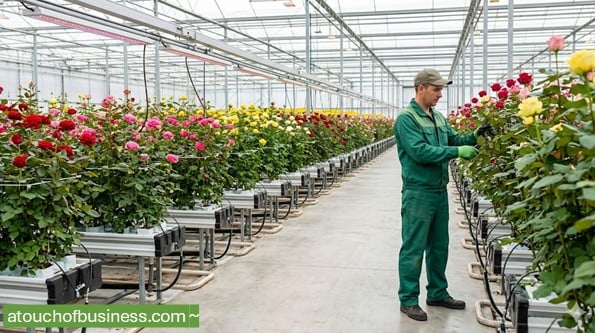
Overview of Starting a Rose Farm
A rose farm grows roses for sale, but your startup choices matter right away. For this guide, the practical focus is a wholesale rose farm that grows product for florists, floral designers, wholesalers, and other business buyers instead of relying on walk-in retail sales.
That sounds simple, but there are really two different businesses hiding under the same name. One sells cut roses for floral use. The other sells live rose plants, rooted cuttings, liners, or bare-root stock.
A rose farm can do both, but those paths change your setup, your paperwork, your storage needs, and your risk. This helps opening day go more smoothly.
Wholesale buyers care about more than price. They want steady quality, dependable timing, clear grades, usable stem lengths, and a grower who delivers what was promised. In agriculture, timing can matter just as much as the crop itself.
This is also a regulated business in practical ways. Rules can touch pesticide use, worker protections, plant movement, local land use, and sometimes nursery registration if you sell live plants instead of only cut stems. Opening before those pieces are clear can delay launch and force expensive rework.
The work is physical and seasonal. You will be planning production, checking water, watching pests and disease, managing harvest timing, packing perishable product, and keeping buyers updated. If that sounds interesting to you, a rose farm may be worth a serious look.
Is This Business The Right Fit For You?
Before you think about land, coolers, or buyers, ask a harder question: does owning a business fit you, and does a rose farm fit you in particular? This is not just about liking flowers. It is about liking the daily work of crop planning, field or greenhouse care, harvest pressure, packing, delivery problems, paperwork, and buyer communication.
You need to enjoy the work enough to stay steady during bad weather, uneven yields, labor gaps, and quality issues. Your passion for the work matters because this kind of business will test your patience and your stamina.
Look at your motivation honestly. Are you moving toward work you truly want, or are you mainly trying to get away from a job you hate? Do not start a rose farm only to escape a paycheck problem, fix immediate financial pressure, or chase the status of being a business owner. Those reasons usually break down once the real work starts.
You also need to think about lifestyle tradeoffs. A rose farm can pull you into early mornings, weather-driven schedule changes, harvest windows that do not wait, and busy periods right when buyers need product. If you want a predictable routine every week, this may feel harder than it looks.
Talk with owners before you commit. Get firsthand owner insight from growers who are not in your market. Speak with people in another city, region, or sales area so you are not asking a future competitor for help. Ask real questions about yield swings, buyer demands, harvest stress, payment terms, labor, and what they wish they had done before opening.
A simple reality check helps here. Spend a full day imagining the work: checking irrigation, looking for disease, cutting stems at the right stage, cooling product fast, fixing an order issue, updating an availability list, and getting invoices out before the day ends. If that still sounds good, you are getting closer to the right answer. That makes opening week easier.
Step 1: Choose The Exact Rose Farm Model
Your first startup decision is not the farm name. It is the exact product model. Decide whether you will sell cut roses, live rose plants, or a mix. Do this before you spend money on facilities, equipment, or licensing.
If you focus on cut roses, your business revolves around production timing, harvest stage, cooling, grading, bunching, packing, and delivery. If you focus on live plants, you move closer to nursery operations. That can bring more questions about propagation rights, nursery registration, inspection, and shipping plants across state lines.
There is also a scale decision. Will you launch as a small wholesale grower serving a handful of florist accounts, or will you aim for larger volume with frequent deliveries and tighter availability commitments? Bigger volume can look attractive, but many early failures come from starting too large before production and order flow are proven.
Keep your offer narrow at first. A wholesale rose farm does better when it can deliver a smaller range well instead of promising everything. This helps opening day go more smoothly.
Step 2: Study Demand And Buyers In Your Area
A rose farm lives or dies on buyer fit. Before you plant at scale, identify who might buy from you and why they would choose you over imported flowers or another local grower.
Your likely early buyers are wholesale florists, wedding and event florists, floral designers, local flower wholesalers, and possibly grocery or specialty retail floral buyers. These customers usually care about reliability, quality, stem length, color, and timing. Some also care about locally grown product, but that alone is not enough.
Look at local supply and demand in practical terms. Which rose colors or varieties do florists actually buy in your area? What are their busy seasons? Do they want mixed bunches, standard stems, spray roses, or standing weekly orders? How often do they want delivery? How far are they willing to buy from the farm?
This is a good time to study the competition honestly. Imported cut flowers are a real factor in this market. That means your advantage has to be freshness, response time, local relationships, special varieties, or dependable quality.
Do not assume demand because people like roses. A rose farm needs business buyers who place repeat orders, pay on time, and need the product in volumes you can actually support. That reduces last-minute scrambling.
Step 3: Build A Simple Plan Before You Spend
You do not need a polished corporate document, but you do need a working startup plan. A rose farm has too many moving parts to rely on guesswork.
Your plan should cover the basics: product model, buyer types, varieties, production method, site needs, equipment, labor, packaging, delivery, pricing, startup costs, and the approvals you may need before opening. This is also where you decide what success looks like in the first stage. That might mean landing five repeat florist accounts, filling weekly orders without quality complaints, or getting through your first full harvest cycle with stable packing and delivery routines.
If you need help shaping it, start with building a business plan around real production and order assumptions, not wishful numbers. For a rose farm, your early plan should feel like a launch document, not a growth dream.
Keep it grounded. How many stems do you expect to cut each week when production is active? What buyer commitments will you avoid until harvest quality is proven? What happens if disease pressure or weather cuts your output? If you cannot answer those questions yet, you are not ready to spend heavily. This helps opening day go more smoothly.
Step 4: Secure Land, Water, And A Site That Fits
A rose farm needs more than open land. You need a site that supports the entire production cycle, from growing and harvest to cooling, packing, and loading.
Water matters immediately. Roses need dependable irrigation, and your startup setup may include drip lines, fertigation, pumps, backflow protection, or other water-related equipment depending on the site. If you are planning greenhouses or high tunnels, water access and layout matter even more.
Think through movement on the property. Can workers harvest and move product quickly to shade or cooling? Is there room for a packing table, cooler, storage of sleeves and boxes, and vehicle access for deliveries? Can you add structures without creating zoning or permit problems?
Your site also needs to match your production method. Field-grown roses and protected-culture roses do not use space the same way. High tunnels or greenhouses can extend the season and protect quality, but they increase startup cost and usually bring more setup decisions around structures, utilities, and workflow.
Do not choose land based only on price. A cheap site with weak water access, difficult loading, or approval problems can cost you far more before opening. That keeps launch day from turning into a repair project.
Step 5: Pick Varieties And Propagation Sources Carefully
A wholesale rose farm is only as strong as its planting material. Your variety list affects buyer interest, disease pressure, harvest timing, stem quality, and how easily you can sell what you grow.
Start with a narrow, useful range. Think about color demand, stem length, shelf life, and whether your buyers want standard roses, spray roses, or both. A broad mix may sound safer, but too many varieties can make planning, grading, and order management harder during startup.
Source plants or propagation material from reputable suppliers. Keep records of what you bought, where it came from, and any restrictions attached to it. This matters for traceability, production planning, and future buyer questions.
Pay close attention to plant patents and licensing. Some rose varieties cannot be propagated freely. If you plan to produce your own plants from protected material, clear those rights before you begin. That is a much cheaper problem to solve on paper than after the crop is established.
If you plan to sell live plants instead of only cut stems, ask your state agriculture department about nursery registration and inspection rules before you scale up. That keeps your rose farm aligned with the right rule set from the start.
Step 6: Plan Production, Harvest Timing, And Capacity
This is where a rose farm becomes a real business instead of a nice idea. You need a production plan that matches your buyer promises.
Map your crop calendar. When will planting happen? When do you expect usable harvests? Which varieties bloom when? When will labor pressure increase? What weeks are likely to matter most for local florists and event work? In agriculture, missing timing can hurt more than missing volume.
Capacity planning matters just as much as growing skill. How many stems can your setup handle in a day once harvest starts? How many can you cool, bunch, sleeve, and deliver without quality slipping? A rose farm can lose value fast if product sits too long in the wrong conditions.
Be realistic about perishability. Roses are not a product you can treat like slow-moving stock. Postharvest handling matters immediately. Commercial roses are sensitive to problems such as bent neck, Botrytis, and exposure to ethylene. Proper storage near 0°C to 1°C, or about 32°F to 34°F, is part of serious launch planning, not something to figure out later.
Do not promise standing wholesale orders until your production rhythm is stable. This helps opening day go more smoothly.
Step 7: Form The Business And Set Up Tax Basics
Once your rose farm model looks workable, set up the business properly. Choose your legal structure, register the entity if needed, and get your federal Employer Identification Number after formation.
You also need to think through your tax basics early. Depending on your setup, that may include federal business taxes, state sales tax registration, payroll tax accounts, and unemployment accounts if you plan to hire. A wholesale farm can also run into resale and tax-document questions depending on what you sell and where you sell it.
This is a practical stage to review your likely local licenses and permits list, because the right legal setup and the right local filings usually need to move together.
If you are using a business name that is different from your legal name or entity name, handle that filing before you start ordering labels, boxes, or printed materials. That reduces rework later and makes opening feel more controlled.
Step 8: Clear Local Rules Before You Build
A rose farm can run into trouble long before the first sale if the property and structures are not approved for what you plan to do. Clear the local side early.
Start with zoning and land use. Explain the real operation, not a vague version of it. Tell the planning or zoning office whether you will have field production, greenhouses or high tunnels, a packing area, cool storage, loading activity, employee traffic, or any public access.
Then ask about buildings and utilities. A greenhouse, high tunnel, cooler room, packing shed, irrigation tie-in, electrical work, plumbing changes, or a converted building may need review or permits. Some sites may also raise questions about signage, backflow, septic, fire access, or wastewater.
If you plan to occupy a building for office, employee, packing, or public use, ask whether a certificate of occupancy is required. Rules vary, so keep the question specific to your site and your actual use.
The main goal here is simple: do not start building a rose farm around assumptions. A few direct calls to local offices can save months of delay. That makes opening week easier.
Step 9: Handle Agriculture-Specific Compliance Early
This is the section many new growers underestimate. A regulated rose farm may need several different compliance tracks, and they do not all come from the same office.
If you use restricted use pesticides, certification rules can apply. If workers or handlers enter treated areas where covered pesticides are used, the Worker Protection Standard may apply. If you expect enough field labor, OSHA field sanitation rules can also come into play. One trigger worth remembering is the federal standard for field sanitation when there are 11 or more hand laborers in the field on any given day.
If you sell live rose plants, rooted cuttings, or other plants for planting, ask the state agriculture department about nursery registration, inspection, and shipping requirements. If you import plant material, check federal plant import rules before ordering anything from outside the country. That includes permits and any special conditions that may apply to the material itself.
Keep this practical. You do not need to become a compliance expert overnight. You do need to know which office handles each issue and which approvals must be in place before you open. That helps opening day go more smoothly.
Step 10: Build The Physical Setup For Harvest And Packing
Your physical setup should support fast handling from plant to cooler. That is a core launch issue for a wholesale rose farm.
At minimum, think about harvest flow, shade, water access, bunching space, cooler placement, packaging storage, and loading. A farm that grows good roses can still fail buyers if the postharvest area is slow, cramped, or too warm.
You want a simple path: cut the stems, move them quickly for handling, grade them, bunch them, sleeve them, cool them, stage them by order, and load them without confusion. That is the kind of setup that protects quality and reduces waste.
If you are adding greenhouses or high tunnels, place them with labor movement and loading in mind. If the cooler is too far from harvest areas, or if your packing space creates traffic problems, you will feel that every busy day.
A wholesale rose farm does not need a fancy building to start. It does need a layout that keeps product moving in the right order. This helps opening day go more smoothly.
Step 11: Buy Equipment And Basic Tools
Buy for launch, not for your future dream version of the business. A new rose farm needs equipment that supports production, harvest, handling, and delivery right away.
Your growing setup may include irrigation components, fertigation tools, support materials, climate control equipment for protected culture, and benches or propagation tools if you are producing your own plants. Your harvest and packing setup may include shears, buckets, carts, grading tables, sleeves, bunch ties, shipping boxes, labels, thermometers, and a floral cooler.
Do not forget the less exciting items. You may also need sanitation supplies, personal protective equipment, locked pesticide storage, spill materials, field sanitation supplies, and recordkeeping tools. These are not side details. They support legal readiness and smoother daily work.
For office basics, keep it lean. You need dependable accounting software, invoice tools, buyer records, an order calendar, and a way to track availability by variety, grade, and harvest window. That is more useful than a polished office at this stage.
Step 12: Set Up Suppliers, Packaging, And Delivery
Wholesale and distribution work best when your supplier side is settled before your first real order week. On a rose farm, that includes more than plant suppliers.
Think through every outside relationship you need to open. That may include plant suppliers, sleeve and carton vendors, irrigation suppliers, refrigeration support, fertilizer and crop protection suppliers, and local delivery help if you are not handling every route yourself.
You also need clear packaging decisions. Will you sell by stem, bunch, sleeve, or case? What labels go on each order? What minimum order size makes sense for your route? How much lead time do buyers need?
Delivery is part of your product. A rose farm that packs well but delivers late or handles product roughly will create quality complaints fast. Decide whether you will use your own vehicle, a refrigerated vehicle, or an outside carrier based on route length, weather, and how long the product will be in transit.
This is a good time to write payment terms as well. Wholesale buyers often expect invoicing, but you may want deposits or different terms for new accounts. That reduces cash surprises early on.
Step 13: Decide How You Will Price Wholesale Roses
Pricing a rose farm is not just about what you want to earn. It is about whether your product quality, order size, and delivery model support the price in the real market.
Start with the basics: stem length, variety, color, grade, bunch size, season, local demand, delivery distance, and packaging. Standard roses and spray roses may also price differently, and standing weekly orders may need a different structure than one-off requests.
Buyers need clarity. Decide whether you will price per stem, per bunch, per sleeve, per carton, or by account-level volume. Keep the pricing structure simple enough that buyers can place orders quickly and your invoices stay clean.
If you need a framework, start with the practical ideas behind setting your prices, then adjust for the realities of perishability, delivery, and quality grades. A rose farm can look profitable on paper and still lose money if packing, spoilage, or route time is ignored.
Do not underprice just to win accounts. Low margins, damaged product, and slow payments can trap a wholesale farm fast. That makes opening week harder than it needs to be.
Step 14: Set Up Funding, Banking, And Bookkeeping
A rose farm usually needs more startup planning than people expect. Even a modest launch can involve land or lease costs, irrigation, structures, plant material, a cooler, packing supplies, delivery equipment, and labor.
Because there is no honest one-size-fits-all startup number, focus on cost drivers instead of chasing a universal total. Your range changes with land, water, greenhouse or tunnel use, cooler size, delivery setup, and whether you are producing cut stems only or also selling live plants.
Funding may come from savings, a lender, agricultural financing, or a farm program if you qualify. Some growers also look at USDA farm loan options for early operating support.
Set up bookkeeping before revenue starts moving. Separate business and personal spending, choose your chart of accounts, decide how you will track crop inputs and packaging, and create a clean invoice system for wholesale orders. A rose farm can get messy fast if records are an afterthought.
You want the financial side ready before launch, not after the first busy week. This helps opening day go more smoothly.
Step 15: Protect The Business With Insurance And Records
Insurance for a rose farm depends on what you are doing, where you are doing it, and who is involved. At a minimum, think about property, liability, vehicle exposure, product handling, workers, and any structure or equipment you rely on heavily.
If you use pesticides, hire employees, deliver product, or allow visitors on the property, your risk profile changes. The same is true if you sell live plants, import material, or use several structures for growing and packing.
Keep records as if you will need them. Save plant-source details, buyer terms, invoices, spray records, training records, maintenance notes, and payroll documents. Good records support insurance claims, compliance questions, and buyer conversations when something goes wrong.
A rose farm with weak records can lose time, money, and credibility very quickly. Strong records make problems easier to contain when they happen.
Step 16: Create The Workflow, Forms, And Internal Documents
This is where your startup begins to feel like a working business. A wholesale rose farm needs a repeatable order flow, not a collection of text messages and memory.
Write down the actual path from inquiry to payment. A buyer asks what is available. You send a line sheet or availability list. The buyer places the order. You confirm quantity, grade, delivery day, and terms. You harvest, bunch, sleeve, cool, stage, invoice, deliver, and record payment status.
Now turn that into forms and templates. Useful startup documents include an availability list, order confirmation, invoice, delivery receipt, buyer terms sheet, quality or claims note, and internal harvest and packing checklists. If you sell live plants, add plant-source records and shipping notes.
Do not make these documents fancy. Make them usable. A rose farm runs better when the next step is obvious to everyone involved. That reduces last-minute scrambling.
Step 17: Build Your Name, Line Sheet, And Digital Presence
You do not need a flashy brand to start a rose farm, but you do need a professional identity that makes it easy for wholesale buyers to trust you.
Handle the basics first. Make sure the business name is available for the way you plan to use it. Then secure the domain name, a simple website, and a professional email address. Your site does not need a lot of pages. It does need to show who you are, what you sell, where you deliver, how buyers contact you, and what kind of orders you handle.
Your most important sales tool may be the line sheet, not the website. A clear availability list with varieties, colors, stem lengths, bunch sizes, order minimums, and delivery days will do more for launch than a polished logo.
Basic identity materials still help. Clean labels, consistent packing slips, vehicle identification if appropriate, and simple printed cards can make your rose farm look reliable from the start.
This is not about image for its own sake. It is about helping buyers place orders with less hesitation. That makes opening week easier.
Step 18: Hire And Train Only When The Work Demands It
Some rose farms start with the owner doing most of the work. Others need help sooner because harvest timing and packing speed do not wait. The right answer depends on crop size, production method, and how much delivery work you plan to handle yourself.
If you hire, be clear about the actual jobs. A rose farm may need field help, harvest help, bunching and packing help, greenhouse support, or delivery support. Each role needs simple written expectations and a safe, repeatable way to do the work.
Training should cover more than speed. It should include product handling, sanitation, quality standards, order accuracy, and any pesticide-related safety rules that apply to your setup. If field sanitation standards or worker protection rules apply, training and supplies need to be ready before the team starts working.
Do not hire because you feel behind. Hire because the work truly requires it and you can support the payroll, the training, and the supervision. That keeps opening day from becoming a staffing scramble.
Step 19: Line Up Sales, Orders, And Early Customer Handling
Now your rose farm needs buyers, but the goal is not to chase everyone at once. The goal is to get the right early accounts.
Focus on businesses that value your product and fit your launch capacity. Local florists, wedding florists, and floral designers are often practical first targets because they may care about freshness, local sourcing, and communication. A large account can look exciting, but it can also overwhelm a new farm if volume and timing are not proven.
Approach buyers with clear information. Show the varieties you expect to have, your likely harvest windows, your order minimums, your delivery area, and the quality standard you are working toward. Be careful with promises. Early credibility matters more than sounding big.
Have a simple launch approach. Reach out, share the line sheet, answer questions fast, confirm terms clearly, and keep expectations realistic. A rose farm builds trust one accurate delivery at a time.
This helps opening day go more smoothly.
Step 20: Run A Test Harvest Before Opening
Before you treat the farm as open, run the full process on a smaller scale. A test harvest will show you where the weak points are.
Cut stems at the intended stage. Move them through your real harvest path. Bunch them, sleeve them, cool them, label them, stage them, load them, and deliver them as if the order were commercial. Then check quality after delivery. Did the roses hold up? Was the cooler cold enough? Did the route take longer than expected? Was the paperwork clear?
This is one of the most useful things you can do for a new rose farm. It tells you whether your opening-week plan works in the real world, not just in your head.
If something fails, that is good news before launch. Fix it now while the volume is still small. That makes opening week easier.
Step 21: Watch For Red Flags Before You Commit
Some startup problems are warning signs, not small annoyances. Pay attention to them.
If you still do not know whether you are a cut-rose farm or a live-plant nursery operation, stop and settle that first. If your site approval is vague, your water setup is shaky, your cooler is undersized, or you are counting on large orders before testing quality, those are red flags.
Other warning signs are quieter. No clear buyer list. No written availability sheet. No delivery plan. Unclear payment terms. No answer for pesticide certification, worker protection, or plant import questions. Weak recordkeeping. Those gaps create opening problems that are easy to avoid now and expensive to fix later.
A rose farm does not need perfect conditions to open. It does need the major pieces in place. Do not confuse motion with readiness.
Step 22: Opening Checklist For Your Rose Farm
At this point, you should be moving toward a real opening date. Use a simple checklist and do not skip the basics.
- Choose the exact product model: cut roses, live plants, or a mix.
- Confirm your first buyer types and your likely delivery area.
- Lock in your site, water access, and growing method.
- Clear local land use, permit, and building questions before building out.
- Finish business registration, tax setup, and any needed employer accounts.
- Confirm whether nursery registration applies if you will sell live plants.
- Clear pesticide, worker protection, and field sanitation questions that fit your setup.
- Source planting material and confirm any variety licensing limits.
- Install irrigation, growing structures, cooler space, and packing areas.
- Buy harvest, packing, labeling, and delivery equipment needed for launch.
- Set order minimums, pricing, payment terms, and delivery days.
- Create your availability list, order confirmation, invoice, and delivery receipt.
- Set up bookkeeping and separate business records from day one.
- Build a simple website and business email, then prepare your line sheet.
- Train anyone who will help with harvest, packing, safety, or delivery.
- Run a test harvest and fix the weak points before full launch.
- Open only when your rose farm can deliver what it promises.
A rose farm opens well when production, handling, paperwork, and buyer expectations all line up at the same time. That is the real goal. When you reach that point, opening day becomes the start of the work, not the start of the confusion.
FAQs
Question: Do I need to pick between cut roses and live rose plants before I open?
Answer: Yes. Those are two different startup paths, and the rules can change a lot between them.
If you plan to sell plants for planting, ask your state agriculture office about nursery registration before you buy stock.
Question: What is the smartest way to test demand before I plant a large crop?
Answer: Talk with florists, event designers, and flower buyers in your area before you scale up. Ask what colors, stem lengths, and order sizes they use most often.
Small trial sales can show you more than guesses. You want real interest, not polite comments.
Question: Do I need a formal business setup before I start selling roses?
Answer: In most cases, yes. You should decide on your legal structure, register the business if needed, and get an Employer Identification Number when it applies.
This part is easier to fix early than later. It also helps with taxes, banking, and hiring.
Question: Will a rose farm need local permits?
Answer: Often, yes. Local rules may touch land use, structures, water connections, signs, and any building you use for packing or cooling.
Call your city or county before you build anything. A short call can save you from doing work twice.
Question: When does pesticide certification matter for this business?
Answer: It matters if you use restricted use pesticides or supervise their use. Worker safety rules may also apply if employees handle treated areas.
This is not something to leave for later. Clear it before spray season starts.
Question: Can I propagate any rose variety I buy?
Answer: No. Some varieties are protected, and you may need permission before you reproduce them for sale.
Check the rights tied to the cultivar before you build your stock plan. That helps you avoid a legal problem after planting.
Question: What kind of site works best for a new rose farm?
Answer: Look for land with dependable water, room for handling product, and easy vehicle access. You also need enough space for cooling, packing, and loading.
Cheap land is not always a bargain. A weak site can slow every step of the work.
Question: What equipment should I buy before my first real harvest?
Answer: Start with the tools that protect product quality: clean cutters, buckets, a grading table, sleeves, boxes, labels, and a dependable cooler. You also need a simple way to move product from the field to cold storage fast.
Do not spend on extras before those basics are covered. Freshness is part of what you sell.
Question: How should I set wholesale prices for roses?
Answer: Build prices around stem length, grade, variety, bunch size, delivery distance, and packing costs. Keep the structure simple so buyers can order without confusion.
Do not chase every account with low prices. Thin margins and spoilage can hurt fast in this kind of business.
Question: How much money does it take to open a rose farm?
Answer: There is no honest single number. The total depends on land, water, structures, plant material, cold storage, labor, and delivery setup.
A small field setup and a protected growing setup can look like two different businesses on paper. Make your budget around your real model, not a generic guess.
Question: What insurance should I look at before I launch?
Answer: Start by asking about property, liability, vehicle, and worker-related coverage. Your exact mix depends on your site, your equipment, and whether you have staff.
If buyers visit the farm or you make deliveries, tell your agent. Those details change what needs to be covered.
Question: What should the daily work look like in the first phase?
Answer: Expect a mix of crop checks, watering, pest watching, cutting, cooling, order prep, delivery planning, and paperwork. On busy days, the work can shift fast from growing to handling and shipping.
A new owner should be ready to move between field work and desk work in the same day. That is normal early on.
Question: When should I hire my first worker?
Answer: Hire when harvest, packing, or delivery work is too much for one person to handle well. Do not hire just because you feel rushed for a few days.
Your first helper should solve a real bottleneck. Clear tasks and simple training matter more than adding headcount fast.
Question: What systems or software do I need right away?
Answer: You need basic bookkeeping, invoicing, customer records, and a clear way to track what is ready to sell. A simple order calendar and availability sheet can go a long way.
Keep it easy at the start. Complicated software can slow you down if your workflow is not settled yet.
Question: What early policies should I set before I take wholesale orders?
Answer: Set minimum order size, delivery days, payment terms, and how you handle quality claims. Put those rules in writing before your first regular buyers come on.
Clear rules save time and help you look more reliable. They also reduce awkward calls later.
Question: How do I protect cash flow in the first month?
Answer: Watch spending closely and avoid tying up too much money in extras that do not help you open. Know when each bill is due, and do not let invoices sit too long.
Wholesale sales can look good while cash stays tight. Early discipline matters a lot here.
Question: What is a common opening mistake with a new rose farm?
Answer: One big mistake is trying to serve too many buyers before production and handling are stable. Another is building the farm around hopes instead of confirmed demand.
Start with a smaller promise you can keep. That gives you room to fix problems without damaging trust.
Question: Should I do a practice run before I say the farm is open?
Answer: Yes. Run a small test from cutting to cooling to delivery so you can see what breaks under real conditions.
This is one of the best ways to catch weak spots early. It is much easier to fix them before full orders start.
Expert Tips From People Already In The Flower Business
Before you put money into land, plants, or equipment, it helps to hear from people already growing and selling flowers.
The resources below include a rose-focused interview and several cut-flower grower interviews that can give a new rose-farm owner practical ideas, caution points, and a better feel for how the business works day to day.
- Floret — The Farmer & the Florist Interview: Grace Rose Farm
- Thursd — An Interview With Frank Voorn: Growing the Future of Spray Roses
- Slow Flowers Podcast — Growing a Start-Up Floral Business With Melanie Harrington
- Team Flower — Antonio Valente Flowers
- The Flowering Farmhouse — Lori Bochner’s Journey From Home Gardener to Flower Farmer
- The Flower Podcast — Galena Berkompas, Micro Flower Farm
Related Articles
- Start an Orchid Nursery and Grow a Thriving Business
- Start a Plant Nursery
- How To Start a Flower Shop
- Start a Greenhouse
- Starting a Raspberry Farm
- Start a Fig Farm
- How To Start Your Horticulture Consulting Business
- Start a Houseplant Shop
- Start a Seed Business
- How To Start a Landscaping Business
- Start a Landscape Design Business
Sources:
- USU Extension: Cut Flower Markets Marketing
- UC Davis: Roses Spray Rose Sweetheart
- USDA ERS: 2022 Census Agriculture Flower
- IRS: Get Employer Identification Number, Business Taxes, Employment Taxes
- SBA: Apply Licenses Permits
- USPTO: General Information 35 U.S.C.
- EPA: Federal Certification Standards, Agricultural Worker Protection Standard
- U.S. Department Of Labor: OSHA Field Sanitation Agricultural
- USDA APHIS: Import Plants Plant Products
- USDA FSA: Farm Operating Loans
- USDA NRCS: High Tunnel Initiative
- New York State Department Of Agriculture And Markets: Licensing Plant Inspections