
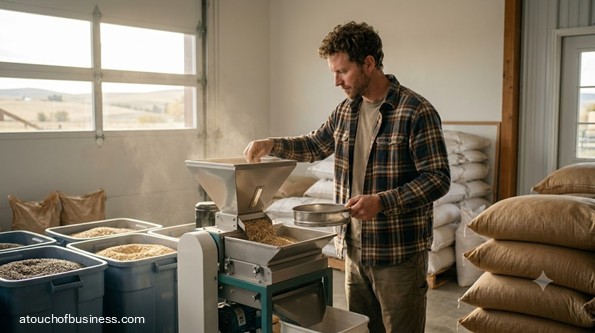
What to Expect From This Guide to Starting a Seed Business
This guide walks readers through the key decisions and practical steps involved in starting a seed business, from evaluating fit and demand to planning compliance, finances, fulfillment, and opening checks. The points below highlight selected areas, while the article provides much more detail.
Inside the guide, you will find:
- Startup steps: Follow an ordered path from choosing a niche and validating demand through registration, setup, pricing, sales systems, and pre-opening tests.
- Industry interviews: Compare first-hand experiences covering market choice, sourcing, testing, inventory, customer trust, growth challenges, and different seed business models.
- Startup FAQs: Review concise answers about licenses, federal rules, testing, home operation, sales tax, insurance, dealer roles, and storage.
- Business fit: Consider seasonality, household finances, personal discipline, customer groups, competition, and whether your niche offers a credible reason to buy.
- Financial planning: Examine costs, shipping choices, pricing, margins, break-even volume, unsold inventory risk, and off-season operating capital.
- Compliance requirements: Understand federal labeling and testing rules, state registrations, noxious weed restrictions, sales tax duties, organic certification, and local zoning.
- Operations setup: Plan suppliers, storage conditions, packaging, labeling, equipment, insurance, ecommerce tools, lot tracking, fulfillment, and final opening checks.
Begin by deciding whether the seasonal demands, recordkeeping, and financial pressure of selling seeds suit your circumstances.
How to Start a Seed Business: A Step-by-Step Guide
As a seed business owner, you sell seed intended for planting — vegetable, flower, herb, native, or specialty varieties — directly to gardeners, growers, and hobbyists.
You do this through your own online store or mail-order channel, shipping orders to customers across the country.
You source seed from wholesale suppliers, package and label it under your brand, and handle fulfillment from a home workspace or small facility.
Some owners start even simpler by reselling pre-packaged seed packets from an established labeler.
Either way, you handle order fulfillment, customer service, lot tracking, and labeling compliance.
The barrier to entry looks low — a few shelves of seed packets, a website, and a shipping station.
But seed selling carries real compliance obligations, seasonal cash-flow pressure, and margin challenges that catch unprepared owners off guard.
Before you follow the startup steps below, take an honest look at whether this business fits your life right now.
Is a Seed Business Right for You?
Seed selling rewards detail-oriented people who can manage accurate records, label every packet correctly, and track inventory by lot number without shortcuts.
If that sounds tedious rather than satisfying, this business will wear you down.
Demand for home-garden seeds is heavily seasonal. Most orders arrive between January and April, with months of little or no revenue in between.
Can your household handle that income gap while you build inventory, earn a reputation, and wait for the next peak season?
Do you have enough savings or access to capital to cover startup costs and personal living expenses?
Plan for a full seasonal cycle before the business is self-supporting.
Have you discussed the time demands, workspace needs, and financial risk with anyone in your household who will be affected?
Talk to seed business owners who won’t compete with you.
Seek out owners who sell different seed categories or serve different regions. Prepare specific questions before those conversations.
Ask about compliance burden, supplier reliability, seasonal cash-flow pressure, and shipping logistics.
Ask how long it took before the business covered its own costs.
Firsthand insight from experienced owners is valuable because they’ve already lived through the startup challenges — even though every owner’s path is different.
Think about your first customers.
Home gardeners searching for specific varieties online, organic growers who need certified seed, native-plant enthusiasts, or small farmers looking for cover crop blends.
Why would any of them order from a new, unknown seller instead of a company that has been filling seed orders for decades?
You need a clear answer — rare varieties, regional expertise, certified organic status, curated kits, better growing information, or stronger community ties.
Without a genuine edge, you’re competing on price against operations with far lower per-unit costs.
Consider your entry path. Most small direct-to-consumer seed sellers start from scratch with a focused catalog and an online store.
Buying an existing seed business may come with a customer list, supplier relationships, and labeling infrastructure.
Verify that licenses, lot records, and test documentation are current and transferable before committing.
Franchise models are uncommon for standalone seed-only businesses.
The best path depends on your budget, risk tolerance, timeline, and how much control you want over seed selection and branding.
Red Flags Before You Start
Seasonal revenue concentration is the defining financial challenge of this business.
Home-garden seed orders pile into a roughly three-month window. The rest of the year, revenue drops sharply unless your product line includes items with year-round demand.
You need enough operating capital to survive the off-season — not hope for it, but plan for it with real numbers.
Low average order values squeeze margins fast.
Seed packets are inexpensive items. A typical customer order may total only a few dollars before shipping.
Shipping and fulfillment costs can eat a disproportionate share of revenue on small orders, leaving little or no profit per transaction.
Established competitors have deep structural advantages.
Long-running mail-order seed companies have decades of brand loyalty, extensive catalogs, strong supplier pricing, and efficient fulfillment operations.
A new seller with a small catalog and no name recognition has to earn every order.
Multi-state compliance adds real administrative weight.
Selling seeds online across state lines triggers seed dealer registration, noxious weed compliance, and sales tax collection obligations in multiple states.
Each state has its own rules, fees, and weed lists. The burden scales with the number of states you serve.
Seed inventory is perishable in a business sense.
Germination rates decline over time. Unsold stock from one season may need retesting at additional cost or disposal at a total loss.
Overstocking ties up capital in a product that loses value every month it sits.
Labeling errors carry real legal risk.
Mislabeling seed — wrong variety, incorrect germination percentage, or missing noxious weed information — violates the Federal Seed Act.
Enforcement actions and customer claims can follow.
Margins shrink at small scale.
Bulk seed prices, testing fees, packaging costs, and carrier rates all favor higher volume. A small startup pays more per unit for nearly every input.
If your break-even analysis requires a volume of orders your chosen niche can’t realistically support, the model won’t work.
Step 1: Choose a Seed Niche and Business Model
Your first real decision is what to sell and how to handle the seed before it reaches the customer.
Start with the seed category:
- Vegetable seeds, flower seeds, herb seeds, or a combination
- Native seeds or wildflower mixes
- Cover crop or lawn and turf seed
- Heirloom, open-pollinated, or certified organic varieties
- Sprouting seeds
Then decide how you’ll handle the product:
- Buy bulk seed from wholesale suppliers and repackage it under your own brand
- Resell pre-packaged seed packets from an established seed company
- Grow and harvest your own seed
Reselling pre-packaged packets from a registered labeler is the simplest entry point. The labeling, testing, and lot-tracking burden stays with the original labeler.
Buying bulk seed and repackaging under your own label raises the compliance bar significantly.
You become the labeler of record and take full responsibility for testing accuracy, label content, and lot traceability.
Growing your own seed is the most labor-intensive model and adds agricultural production requirements before the selling side even begins.
Pick a narrow initial product line. A focused catalog makes labeling, lot separation, inventory control, storage, and compliance far easier at launch.
Step 2: Validate Demand and Study the Competition
Research which seed types are in demand for the customer segments you plan to serve.
Home gardeners, small-scale organic growers, native-plant landscapers, and food-growing hobbyists each have different priorities and buying habits.
Evaluate what established mail-order seed companies already offer. Many have operated for decades with deep catalogs, strong brands, and loyal customers.
Identify the gap you can fill — rare or hard-to-find varieties, regionally adapted selections, curated seed kits, certified organic options, or superior growing advice.
Consider whether your niche generates year-round orders or drops to near zero after spring planting season ends.
Step 3: Assess Profit Potential Before You Spend
Do this math before committing to bulk seed purchases, packaging equipment, or platform subscriptions.
Seed packets are low-ticket items. Your average order value may be small relative to the fixed costs of packaging, labeling, shipping, and fulfillment.
Shipping costs can consume a large share of revenue on small orders.
You’ll need to decide whether to absorb shipping, set minimum order thresholds, offer flat-rate shipping, or charge the actual cost. Each choice affects your margins and your customers’ buying behavior differently.
Gross margins on seeds can be favorable when you buy bulk and repackage.
But net margins shrink quickly once you add packaging materials, labels, testing fees, shipping supplies, platform fees, payment processing fees, and your own labor time.
Factor in unsold inventory risk. Seeds that don’t sell this season may need retesting, relabeling, or disposal next season.
Estimate how many orders per month you need to cover fixed costs.
Then ask whether your niche can realistically generate that volume — especially outside the January-through-April peak.
Use your own local costs, your actual supplier pricing, and your real shipping rates to build a break-even estimate you trust.
Step 4: Choose a Legal Structure and Register the Business
A sole proprietorship is the simplest structure.
A limited liability company (LLC) provides personal liability separation — worth considering when you sell a product with labeling and germination claims attached.
Register the business entity with your state’s filing office. File a DBA if you’ll operate under a trade name different from the legal entity name.
Obtain an Employer Identification Number (EIN) from the IRS. You need it for business banking, tax filing, and most wholesale supplier accounts.
Learn more about choosing a business structure before you file.
Step 5: Obtain Seed Dealer Licenses and Registrations
The Federal Seed Act (FSA) sets mandatory labeling standards for seeds shipped in interstate commerce.
It does not require a federal dealer registration, but it does require compliance with its labeling, testing, and recordkeeping rules. The FSA is enforced by the USDA’s Agricultural Marketing Service.
Most states require a seed dealer license, seed dealer registration, or seed labeler permit through the state’s Department of Agriculture.
Requirements, fees, and renewal periods vary by state.
Some states distinguish between retail seed dealers, wholesale seed dealers, and seed labelers.
The type of registration you need depends on whether you’re reselling pre-labeled packets, repackaging bulk seed under your own label, or both.
In some states, sellers who only sell seed labeled by another registered labeler may be exempt from the labeler permit.
You may still need a dealer registration. Verify with each state’s seed program.
Contact the Department of Agriculture in every state where you plan to sell or ship seeds.
For an online business selling across state lines, that may mean registering in multiple states.
Verify whether a general city or county business license is also required at your business address.
If you plan to sell seeds labeled as organic:
Your handling operation must be certified under the USDA National Organic Program (NOP) by a USDA-accredited certifying agent.
Certification involves an organic system plan, an annual inspection, and ongoing compliance with NOP handling, storage, and labeling rules.
Using the word “organic” on a seed label without proper certification is a federal violation.
Step 6: Understand Federal Seed Act Labeling Requirements
Any seed you ship across state lines must comply with FSA labeling standards. This is the compliance backbone of the seed business.
For vegetable seed, your label must include:
- Kind and variety name
- Your name and address (as the shipper or labeler)
- Germination percentage
- Date of the germination test or the sell-by year
For agricultural seed, the label must also include:
- Lot number
- Purity percentage
- Percentage of inert matter, other crop seed, and weed seed
- Noxious weed seed content by name and rate
- Origin of the seed
Every seed lot must be tested by a certified seed testing laboratory before you label it.
The two main accrediting bodies for seed labs are the Association of Official Seed Analysts (AOSA) and the Society of Commercial Seed Technologists (SCST).
Required tests typically include a purity test, a germination test, and a noxious weed examination.
Germination test results expire. After the validity period, the seed must be retested or pulled from sale.
You must maintain lot tracking records for every seed lot — showing origin, testing results, labeling details, and sales.
Step 7: Navigate State Seed Laws and Noxious Weed Compliance
State seed laws layer additional requirements on top of the FSA. Once seed enters a state, it must comply with that state’s law.
FSA compliance often satisfies state requirements, but exceptions exist. Check with each state’s Department of Agriculture seed program.
The biggest multi-state headache for online seed sellers is noxious weed compliance.
Each state maintains its own list of prohibited and restricted noxious weed seeds.
Prohibited seeds cannot be present — at any level — in seed sold in that state. Restricted seeds are allowed only below specific tolerances.
A seed lot that is legal to sell in one state may contain a weed species prohibited in another state.
USDA AMS publishes a compiled reference of state noxious weed seed requirements. Use it as a starting point, then verify with individual states.
Order the all-state noxious weed examination from your testing laboratory.
This screens a seed lot against noxious weed lists for all 50 states, which simplifies compliance when you’re shipping orders nationwide.
Step 8: Register for Sales Tax
Online sellers must collect and remit sales tax in states where they meet economic nexus thresholds — even without a physical presence in that state.
Sales tax treatment of seeds varies significantly by state.
Many states exempt seeds that produce food for human consumption, treating them as unprepared food. Ornamental flower seeds and grass seed are often taxed.
Some states exempt all agricultural seeds sold for farming purposes but tax seeds sold for home garden use.
Research the sales tax rules for seeds in every state where you have nexus.
Register for a sales tax permit in your home state and in other states as required.
Most ecommerce platforms offer built-in or integrated sales tax tools that handle calculations at checkout.
Step 9: Set Up Seed Sourcing and Supplier Relationships
If you’re buying bulk seed and repackaging, identify reputable wholesale seed suppliers.
Verify that each supplier provides seed lot numbers, testing documentation — purity, germination, and noxious weed exam results — and accurate labeling data for every lot.
When you repackage bulk seed under your own label, you become the labeler of record.
The testing data from your supplier must meet FSA and state law requirements.
If you’re reselling pre-packaged seed packets, look for wholesale seed packet programs from established companies.
Some offer display racks, no-contract reorder terms, and pre-labeled packets ready for resale.
If selling certified organic seed, source only from growers certified under the USDA National Organic Program.
The seed must have been produced on certified land under an approved organic system plan.
Check plant variety protection and patent status before selling any variety.
The Plant Variety Protection Act and U.S. patent law protect many commercially developed seed varieties.
You cannot legally reproduce or sell protected varieties without authorization from the rights holder.
Seed labels should indicate “protected variety” or include a patent number. Verify the intellectual property status of every variety before adding it to your catalog.
Step 10: Plan Storage, Workspace, and Seed Handling
Seeds must be stored under controlled conditions to maintain germination viability.
Ideal storage is cool — 35°F to 50°F — and dry, with relative humidity below 40%.
A general rule: add the temperature in degrees Fahrenheit to the relative humidity percentage.
If the total exceeds 100, conditions are too warm or too humid for reliable long-term storage.
High temperature and high humidity accelerate germination decline and encourage fungal growth.
A home-based seed business can often operate from a dedicated room, basement, or outbuilding — as long as the space stays cool, dry, and organized.
Your workspace needs room for:
- Seed inventory storage — bins, shelves, or a dedicated cooler
- A packing and labeling station with a clean, well-lit work surface
- Shipping supply storage
- A shipping preparation area
Verify that home-based business use is allowed under your local zoning rules and any homeowners’ association restrictions.
A home-occupation permit may be required. Varies by U.S. jurisdiction — check with the city or county planning or zoning department.
Common zoning considerations for this model include inventory storage volume, regular carrier pickups, and whether customers visit the site.
For a mail-order seed business, customer visits are typically not part of the model.
Monitor temperature and humidity in the storage area with a thermometer and hygrometer. Keep seed in airtight containers and use desiccant packs when needed.
Step 11: Set Up Packaging, Labeling, and Fulfillment
Seed packets are typically paper envelopes in various sizes depending on seed type and quantity.
You have several packaging options:
- Custom-printed seed packets with your brand and label information
- Generic seed envelopes with adhesive labels printed from your workstation
- Outsourced packet printing and filling from a seed packaging company
Custom-printed packets from a packaging company often require minimum orders in the range of 1,000 to 5,000 packets per variety.
Many owners start with generic envelopes and printed labels, then upgrade as volume justifies the investment.
Labels must include every piece of information required by the FSA and applicable state seed laws.
Label content must match the seed lot test results exactly. A mismatch is a violation.
You need a digital scale accurate to at least 0.1 gram for weighing seed into packets.
Shipping supplies include poly mailers or small corrugated boxes, packing slips, and shipping labels.
USPS First-Class Mail and Priority Mail are common carriers for small seed packet orders.
Use an ecommerce platform with integrated shipping label printing and order management.
Shopify, WooCommerce, Etsy, or a standalone tool such as Pirate Ship or ShipStation are common choices.
Step 12: Set Pricing Before Launch
Price each seed packet to cover:
- Cost of the seed itself (bulk purchase price per unit)
- Packaging materials and labels
- A share of testing fees, spread across the lot
- Shipping supplies and postage or carrier charges
- Ecommerce platform fees and payment processing fees
- Your labor time for packing and fulfillment
Your shipping strategy has a direct effect on margins and customer behavior.
Free shipping with a minimum order encourages larger orders. Flat-rate shipping simplifies checkout.
Charging actual cost protects your margin but may drive away small-order customers.
Review competitor pricing for similar seed types, packet sizes, and shipping terms.
Established companies with high volume have per-unit costs you can’t match on day one.
Consider offering seed collections, curated kits, or bundle packs to increase average order value.
A higher average order reduces the per-order impact of shipping, handling, and fulfillment costs — one of the most effective margin levers in this business.
For more on pricing your products, work through each cost input with your actual numbers.
Step 13: Set Up Business Banking and Payment Processing
Open a dedicated business bank account. Keep business transactions separate from personal finances from the start.
Set up a payment processing solution compatible with your ecommerce platform — Stripe, PayPal, Square, or the platform’s built-in processor.
If you sell on multiple channels — your own website, Etsy, eBay, or at farmers’ markets — plan how payments from each channel feed into one business account.
Step 14: Obtain Insurance Coverage
General liability insurance covers third-party injury and property damage claims. It’s your baseline coverage.
Product liability insurance matters more in the seed business than in most small ecommerce operations.
If customers claim your seeds failed to germinate, were the wrong variety, or were mislabeled, product liability protects you against those claims.
Seedsmen’s errors and omissions (E&O) insurance is a specialized policy designed specifically for seed dealers.
It covers germination failure, labeling errors, erroneous delivery, and seed mixture mistakes.
This coverage acts as a form of product guarantee insurance and complements your product liability policy.
Commercial property insurance covers your seed inventory, packaging supplies, and equipment against theft, fire, or damage.
If you work from home, check whether your homeowner’s policy covers business property. You may need a separate commercial policy or a rider.
Workers’ compensation insurance is required in most states if you hire employees. Verify the requirement with your state’s labor department.
Learn more about business insurance options before you open.
Step 15: Build the Online Store and Product Listings
Your product listings are the storefront. They need to be accurate, clear, and detailed enough to earn trust from a first-time buyer.
Each seed product listing should include:
- Seed type and variety name
- Packet size or weight
- Germination rate from the most recent test
- Planting instructions or growing notes
- Lot-specific label information as required by law
Photograph your seed packets or create professional product images. Buyers expect to see what they’re ordering.
Write accurate product descriptions. Don’t make germination guarantees beyond what the test data supports.
Set up inventory management to track lot numbers, quantities on hand, test expiration dates, and reorder triggers.
A seed packet that ships with an expired germination test is a compliance violation — not just a customer service problem.
The same applies to any label that doesn’t match the lot on file.
Step 16: Complete Pre-Opening Checks and Run a Test Order
Before your first real sale, confirm every item on this list:
- Seed dealer licenses and registrations are active in your home state and every state where you’ll ship
- Business entity is registered, EIN obtained, and local business license in place
- Every seed lot in inventory has current, valid test reports — purity, germination, and noxious weed exam
- Labels on every packet match the corresponding lot test results and include all required information
- Noxious weed compliance is confirmed for all target shipping states
- Lot tracking records are set up and populated
- Storage environment is stable, cool, and dry — monitoring is in place
- Insurance policies are active
- Sales tax collection is configured for applicable states
Place a few test orders through the full system — website, payment, packing, label printing, shipment, and delivery confirmation.
Verify that shipping rates, sales tax calculations, and order confirmation emails work correctly.
Fix anything that breaks before a paying customer finds it.
Business Plan
Your business plan should organize every decision above into one working document.
Start with the business model: what seed types you’ll sell, how you’ll source and handle the product, and who your target customers are.
Map out your supplier plan, your pricing approach, and your shipping strategy.
Include a realistic startup cost list.
Walk through every cost category — seed inventory, testing fees, packaging, licenses, insurance, equipment, website, and shipping supplies — and price each one based on your actual preferences and local costs.
Your most accurate budget comes from listing everything you need and getting real quotes, not from copying a number from an article.
Include a break-even analysis using your own numbers.
How many orders per month do you need to cover fixed costs?
What average order value do you need to make each shipment worth the packing, labeling, and postage?
Can your niche generate that volume — and can it generate it outside the January-through-April peak?
If the math only works during peak season, plan the operating capital you’ll need to carry the business through the off-season.
Running out of operating capital is one of the main reasons small businesses close.
Build enough reserve to get through at least one full seasonal cycle — from pre-season seed purchases through the post-season slowdown.
Starting too large is a common early failure in agriculture-adjacent businesses.
A focused product line with tight inventory control is easier to manage, easier to keep compliant, and easier to learn from than an overstocked catalog you can’t sell through.
Opening-Day Red Flags
Any seed lot in your inventory lacks a current, valid test report.
If you can’t show purity, germination, and noxious weed exam results for every lot, you aren’t ready to sell.
Shipping untested or expired-test seed violates the Federal Seed Act.
Labels don’t match lot test results.
A germination percentage on the packet that doesn’t match the laboratory report for that lot is a labeling violation.
Check every label against its test report before your first shipment.
You haven’t verified noxious weed compliance for all shipping states.
A seed lot clean enough for your home state may contain a species prohibited in a customer’s state.
The all-state noxious weed exam solves this — make sure it’s done.
Your storage area runs too hot or too humid.
If the temperature-plus-humidity total exceeds 100, germination is declining faster than your labels claim. Check conditions before orders go out.
Shipping workflow hasn’t been tested end to end.
If you haven’t placed test orders through the full process — payment, packing, label printing, carrier pickup, delivery — you don’t know whether the system works.
A broken checkout or incorrect shipping rate frustrates real customers.
Sales tax collection isn’t configured.
Failing to collect sales tax in states where you have nexus creates a liability that grows with every sale. Confirm the setup works before launch.
Insurance policies aren’t in force.
Your first mislabeling complaint or germination-failure claim shouldn’t arrive before your coverage does.
Frequently Asked Questions
Do I need a license to sell seeds?
Most states require a seed dealer license, seed dealer registration, or seed labeler permit through the state Department of Agriculture.
Requirements, fees, and categories vary by state.
At the federal level, the Federal Seed Act sets labeling and testing standards but does not require a federal dealer registration.
Contact the Department of Agriculture in every state where you plan to sell or ship seeds.
What is the Federal Seed Act, and how does it affect an online seed seller?
The FSA is a truth-in-labeling law enforced by the USDA Agricultural Marketing Service.
It requires labels on all agricultural and vegetable seed shipped in interstate commerce to include specific information — variety name, purity, germination, noxious weed content, and the shipper’s identity.
Seed lots must be tested before labeling, and records must be maintained. Shipping seeds across state lines is interstate commerce.
What seed tests are required before I can sell?
At minimum, seed lots need a purity test, a germination test, and a noxious weed examination.
These tests are performed by certified labs accredited by the Association of Official Seed Analysts (AOSA) or the Society of Commercial Seed Technologists (SCST).
For online sellers shipping to multiple states, the all-state noxious weed examination ensures compliance with every destination state’s weed list.
Can I run a seed business from home?
Many direct-to-consumer seed businesses operate from a home workspace.
You need a cool, dry storage area, a clean packing station, and space for shipping supplies.
Verify that local zoning allows a home-based business with regular carrier shipments and inventory storage. A home-occupation permit may be required.
Do I need to collect sales tax on seed sales?
Online sellers must collect and remit sales tax in states where they meet economic nexus thresholds.
Sales tax treatment of seeds varies — many states exempt food-producing seeds but tax ornamental or flower seeds.
Research the rules for each state where you have obligations.
What insurance does a seed business need?
General liability and product liability insurance are advisable for any seed seller.
Seedsmen’s errors and omissions (E&O) insurance is a specialized policy that covers germination failure, labeling errors, erroneous delivery, and seed mixture mistakes.
Workers’ compensation is required in most states if you hire employees.
What is the difference between being a seed dealer and a seed labeler?
A seed dealer sells seed. A seed labeler is the person or company whose name appears on the label as the responsible party.
If you resell pre-packaged seed with another company’s label, you’re a dealer.
If you buy bulk seed and repackage under your own brand, you’re a labeler — with full responsibility for testing, labeling accuracy, and lot traceability.
Many states have different registration categories for each.
How do I store seed to keep germination rates accurate?
Store seed at 35°F to 50°F with relative humidity below 40%. The sum of temperature (°F) and humidity (%) should stay below 100.
Use airtight containers, add desiccant when needed, and monitor conditions regularly. High heat and humidity accelerate germination decline and invite fungal growth.
What Seed Industry Professionals Want New Founders to Know
These interviews share practical lessons on choosing a market niche, sourcing and testing seeds, managing inventory, building customer trust, and developing a profitable business model.
Readers can use the advice to compare different seed business models, identify startup challenges, and plan their production, sales, staffing, and customer service systems.
An Interview with Fred Groom from Vital Seeds in Devon
Fred Groom explains why he established Vital Seeds and how the company focuses on locally produced organic and open-pollinated seeds.
This interview shows how identifying an underserved market and developing a clear production philosophy can help a seed business stand apart.
Organic USA – Interview High Mowing Organic Seeds
High Mowing Organic Seeds CEO Andrea Tursini discusses customer groups, e-commerce sales, seed sourcing, storage capacity, distribution, and variety trials.
The interview helps prospective owners understand how inventory systems, supplier relationships, sales channels, and customer service affect a growing seed company.
IAM621 – Business Owner Runs Agriculture Seed Company
Purple Ribbon Seeds owner Ben Green explains how he purchased a seed company and used his technology background to improve data management and customer service.
His experience is useful for readers considering buying an existing company or applying skills from another industry to a seed business.
EP35: Kate Cotterill, CEO and Co-Founder of She Grows Veg, Empowering More People to Grow Their Own
Kate Cotterill discusses market research, crowdfunding, packaging requirements, hiring, digital marketing, website problems, and the long lead times involved in seed production.
This interview provides a detailed example of validating demand, funding a seed company, responding to rapid sales growth, and preparing for inventory shortages.
SeedLinked co-founder Nicolas Enjalbert explains collaborative seed trials, customer participation, development costs, variety adoption, and the commercial potential of smaller seed companies.
The discussion can help founders evaluate testing methods, customer involvement, product differentiation, and the economics behind a specialized seed business.
The No-Till Market Garden Podcast with Dan Brisebois of Tourne-Sol Farm
Dan Brisebois discusses seed saving, commercial seed production, crop planning, and integrating seed sales with an established market-garden operation.
This interview helps readers compare wholesale and direct seed sales while considering how seed production could fit alongside another agricultural business.
Dan Barber Explains His Plan to Disrupt the Seed Business
Dan Barber discusses the creation of Row 7 Seed Company, its collaboration with plant breeders, and its focus on developing vegetables around flavor rather than only yield or shelf life.
The interview demonstrates how a strong product philosophy, specialized partnerships, and a distinct customer promise can shape a new seed brand.
Related Articles
- How To Start a Garden Supply Business
- How To Start a Garden Ornament Store
- How To Start a Greenhouse Business
- How To Start a Hydroponic Farm Business
- How To Start a Microgreens Farm
- How To Start a Fruit Orchard
Sources:
- USDA AMS: Federal Seed Act Overview, Varietal Labeling Guidance, Seed Testing Program, Plant Variety Protection, NOP 5029 Seed Guidance, State Noxious Weed List
- USDA APHIS: Seeds Special Requirements
- eCFR: 7 CFR Part 201 FSA Regs
- SDSU Extension: Selling Native Seeds Guide
- Colorado State Extension: Seed Laws and Regulations
- Oregon State Seed Lab: Seed Testing FAQs
- USU Extension: Seed Storage and Handling
- CSU Extension: Seed Storage Guide
- Johnny’s Selected Seeds: Seed Viability and Storage
- IRMI: Seedsmen’s E&O Definition
- Totten Insurance Group: Seedman’s E&O Coverage
- SECURA Insurance: Seed Dealer Insurance
- U of MN Extension: Variety Protection Regs
- Ag Proud: Saved Seed Legal Status
- Seed Savers Exchange: Sales Tax FAQ
- True Leaf Market: Sales Tax Info
- OnlineLabels.com: Seed Labeling Guide
- ASTA: ASTA Home
- JBM Packaging: Seed Packet Services