
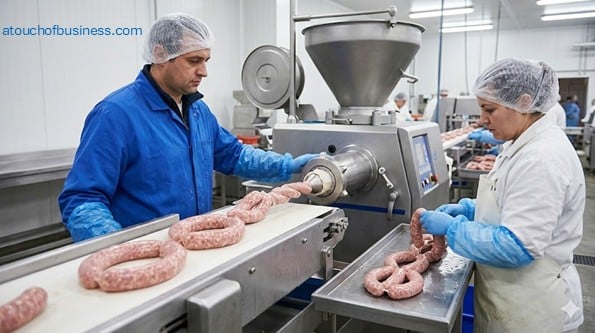
What To Expect When Starting A Sausage Production Business
A sausage manufacturing business turns meat, seasonings, and related ingredients into finished sausage products for sale. That can mean fresh raw sausage, cooked sausage, smoked sausage, or more specialized products like fermented or dried sausage.
For a first-time owner, this is not a simple food startup. You are building a production business with cold storage, sanitation demands, food-safety records, packaging needs, and a plant that has to be ready before opening day. This ensures a seamless launch.
Your customers may include grocery stores, specialty food shops, restaurants, distributors, and direct buyers. In some cases, a sausage manufacturing business also produces private-label products for another brand.
The core takeaway is: The startup path changes fast based on what you make. Fresh raw sausage is one path. Ready-to-eat sausage is another. Shelf-stable sausage adds even more complexity.
- What customers care about: taste, consistency, cleanliness, value, shelf life, and dependable delivery
- What drives the setup: product type, inspection path, layout, refrigeration, packaging, and workflow
- What can slow you down: weak plant layout, delayed equipment, label issues, wastewater problems, and supplier gaps
A sausage plant has to handle receiving, cold storage, grinding, mixing, stuffing, packaging, labeling, cleaning, and shipping in the right order. If the sequence is sloppy, cost rises and opening gets delayed.
That is why this business rewards planning more than improvising.
Is This Business The Right Fit For You?
Before you go deep into permits, equipment, and funding, ask a more basic question. Do you actually want the day-to-day life of this business?
A sausage manufacturing business is hands-on. You will deal with cold rooms, sanitation routines, production schedules, labels, supplier deliveries, records, employee training, and quality checks. This helps opening day go more smoothly.
You also need to think about pressure. Can you stay steady when a cooler alarm goes off, a shipment is late, or a label needs correction right before a launch batch?
If you struggle to manage high-stakes stress, this may not be the right fit.
Passion matters here. If you do not care about the products, the process, and the standards behind them, the hard parts will feel harder. That is why maintaining your drive is essential for long-term survival.
You also need a local demand reality check. Do buyers in your area want the kind of sausage products you plan to make? Are there enough stores, restaurants, distributors, or direct customers to support the plant?
If demand is weak, the location may be wrong, even if the idea sounds good on paper.
Talk to owners who are not in your market. Speak with sausage processors or meat product manufacturers in another city, region, or market area. Use those talks to ask real questions you already have, and prepare your list before the call.
The value is simple. Those owners have lived the startup process. Their exact path may differ, but another owner’s perspective can save you from blind spots.
You should also compare your entry path. Starting from scratch gives you control, but it also gives you the full burden of layout, inspection, equipment setup, and early staffing.
In some cases, buying a business already in operation may be a better fit if it already has a usable facility, installed equipment, and a working inspection setup.
Franchising is not usually the main route for a sausage manufacturing business, so your real comparison is often this:
- Start from scratch
- Buy an operating plant
- Buy equipment and take over a former food production site
Your budget, timeline, need for control, and risk tolerance should guide that choice. This is part of startup planning, not a side note.
Understand What You Will Actually Be Selling
Before you choose a building, define the product line. A sausage manufacturing business can look very different depending on what you plan to produce.
The product list changes your compliance path, equipment list, staffing, and launch timeline. This helps opening day go more smoothly.
- Fresh raw sausage: usually simpler than ready-to-eat products, but still requires strong cold-chain and sanitation control
- Cooked or smoked sausage: adds thermal processing, chilling, and more process documentation
- Ready-to-eat sausage: raises food-safety demands, including stronger control after cooking
- Fermented or dried sausage: adds climate control, validation, and more specialized process steps
Keep your first offer tight. Too many product styles can slow equipment setup, increase label complexity, and create startup confusion.
It is usually smarter to launch with a focused line that fits your plant and your buyers.
Choose Your Inspection Path Early
This is one of the first major decisions in a sausage manufacturing business. If you wait too long, you can waste time and money on the wrong setup.
Most meat or poultry sausage products fall under USDA Food Safety and Inspection Service oversight, not a general food startup path.
If you want to sell across state lines, federal inspection is usually the safer launch route. If you only plan to sell within one state, a state inspection program may fit, but sales limits can apply unless the operation qualifies for the Cooperative Interstate Shipment program.
Do not lease a site until you know which path fits your sales plan.
Your core question is simple. Will this plant stay local, or do you want broader distribution from the start?
Your answer shapes the entire setup process.
Pick A Site That Can Support Meat Processing
A sausage plant is not just a room with a grinder and a cooler. The building has to support production, sanitation, storage, drainage, refrigeration, and shipping without fighting you every day.
This is where many new owners get stuck.
Before signing anything, confirm that the location can be used for food manufacturing or meat processing. You also need to know whether the space can qualify for a certificate of occupancy after the build-out.
This helps opening day go more smoothly.
- Check zoning before lease signing
- Confirm power, hot water, floor drains, and wastewater capacity
- Look at truck access and receiving space
- Make sure the cooler and freezer load is realistic for the building
- Ask what permits will be needed for plumbing, refrigeration, fire review, and any major equipment installation
A cheap building can become an expensive mistake if the drains are wrong, the refrigeration load is too high, or wastewater approval becomes a problem.
This is one of those common startup mistakes that is easier to prevent than fix.
Design The Production Flow Before You Buy Equipment
The layout of a sausage manufacturing business affects labor, sanitation, product quality, and launch readiness. A poor layout creates bottlenecks from day one.
You want the plant to move in a clean, logical order.
In most cases, the flow should move from receiving to cold storage, then to grinding, mixing, stuffing, thermal processing if used, packaging, finished storage, and shipping.
Raw product and ready-to-eat product should not cross paths in a careless way.
- Receiving area
- Ingredient and meat storage
- Grinding and mixing station
- Stuffing and linking area
- Cooking or smoking area if used
- Chilling area
- Packaging and labeling area
- Finished-goods cooler or freezer
- Shipping area
- Cleaning supply and sanitation zone
Think about people flow too. Where will employees wash hands? Where will tools be stored? How will dirty equipment move back for cleaning without passing through finished product areas?
These details matter before the first batch, not after.
Write A Business Plan For This Plant, Not A Generic Idea
A sausage manufacturing business needs a plan built around the actual plant, actual products, and actual buyers. A vague plan does not help much here.
Your plan should show how the business gets from raw materials to paid orders.
That means product scope, inspection path, facility choice, equipment list, supplier plan, staffing, pricing, startup costs, and first-stage sales targets. If you need help organizing that, start with building a business plan around your real setup.
This helps opening day go more smoothly.
Keep it practical. A good startup plan for a sausage plant should answer:
- What exact products will you launch with?
- Who will buy them first?
- What volume can the plant handle at opening?
- What approvals must be in place before production starts?
- What will it take to break even?
If your plan cannot answer those questions, it is not ready yet.
Check Demand Before You Keep Spending
Demand is Key. It is a non-negotiable requirement.
You need to know whether enough buyers in your area want your sausage products before you commit to a plant build-out.
Start with the customer groups you may actually serve:
- small grocers
- specialty food stores
- butcher shops
- restaurants
- regional distributors
- direct local buyers
Then look at the local market. Are buyers already loyal to existing brands? Is there room for premium sausage, specialty flavor profiles, local sourcing, or private-label production?
If not, opening there may not make sense.
You are not just checking interest. You are checking whether there is enough volume, enough margin, and enough repeat business to support a cold-chain production business.
Spend time on local supply and demand before you move deeper into the setup.
Define Your First Customers And Sales Approach
A sausage manufacturing business does not need every customer type at launch. It needs the right first customers.
That choice affects packaging, label design, order size, delivery needs, and payment terms.
If you sell to retail stores, you may need retail-ready packs, cleaner front-label presentation, and strong shelf appeal. If you sell to restaurants, larger pack sizes and consistent delivery may matter more.
If you plan to co-pack, the paperwork and specification demands rise fast.
Pick a short list of target buyers first. Then shape your opening offer around them.
This helps opening day go more smoothly.
- Retail: stronger label presentation, consumer-facing packaging, shelf life planning
- Foodservice: larger packs, steady delivery, tighter margin control
- Distributor sales: stricter specs, dependable fill rates, more documentation
- Direct-to-consumer: payment systems, shipping or pickup setup, customer service handling
Learn The Skills You Need Before Launch
You do not need to know everything on day one. But you do need enough skill to judge what is happening in the plant.
That is a big difference.
For a sausage manufacturing business, early owner skills usually include formulation basics, sanitation oversight, label review, production scheduling, receiving, recordkeeping, staffing, and supplier coordination.
You also need enough business sense to handle pricing, cash planning, and customer terms.
If you are weak in the owner side of paperwork or financial planning, fix that before launch. Strong production knowledge alone is not enough.
That is why reviewing the skills you need to run the business is worth your time.
Handle The Legal Setup In The Right Order
The legal setup for a sausage manufacturing business starts with the same basics as many other businesses. Then it adds industry-specific approvals that matter a lot more.
Keep the order clean and simple.
Choose your legal structure first. You may operate as a sole proprietorship, partnership, corporation, or limited liability company. If you need help deciding, review how to choose the right business structure before filing anything.
Then register the business and get your tax ID.
- Choose and form the legal entity
- Register the business name if needed
- File a DBA if you will use a different public name
- Get an Employer Identification Number
- Set up state employer accounts if hiring
- Review sales tax rules for your product and sales channel
General business registration is only the start. A sausage plant also has to line up food manufacturing use approval, inspection, and building-related approvals that depend on the site and the scope of the build-out.
This helps opening day go more smoothly.
Understand The Compliance Areas That Matter Most
This business has more compliance depth than many first-time owners expect. That is one reason the startup timeline can stretch.
Do not assume food startup rules are the same for all products.
Most meat or poultry sausage manufacturing operations will need USDA inspection or a qualifying state inspection path. That usually means a hazard analysis, a HACCP plan, sanitation procedures, and records that match the actual process.
If you will also handle non-USDA foods, some FDA rules may come into play too.
At the local level, the most common launch checks usually involve zoning, building review, the certificate of occupancy, plumbing, refrigeration, wastewater, and sometimes fire approval.
The exact mix depends on the location and the plant build-out.
- Federal: inspection path, HACCP, sanitation procedures, labeling rules, tax ID
- State: entity formation, employer accounts, sales tax review, possible state inspection path
- City or county: zoning, certificate of occupancy, building permits, sign approval, sewer or pretreatment review
Use this section as a reminder, not a substitute for local confirmation. Permit and license requirements can vary, which is why it helps to review the broader topic of local licenses and permits while you sort out your plant-specific approvals.
Build The Food Safety System Early
For a sausage manufacturing business, food safety is part of the setup process. It is not something you bolt on later.
If you wait too long, your launch can stall even if the equipment is already in place.
The plant usually needs a hazard analysis, a HACCP plan, written sanitation procedures, temperature records, receiving logs, corrective-action forms, and traceability records.
The exact documents depend on the product and the inspection path.
Product type matters here. A fresh raw sausage line has different control points than a cooked sausage line. A shelf-stable line brings even more validation and monitoring needs.
This helps opening day go more smoothly.
You do not have to write every record from scratch. But you do need a set of documents that matches your plant, your products, and your real workflow.
Set Up Labels Before You Print Packaging In Bulk
Label issues can delay opening even when the plant itself looks ready. That catches many new food businesses off guard.
Do not leave this until the final week.
A sausage manufacturing business may need label review for product names, ingredient statements, safe-handling instructions, nutrition labeling, net weight, and other required details. Some labels may be generically approved if they meet the rules, while others need more review.
The safer move is to sort this out early.
If you plan to launch several products at once, label management gets harder fast. More stock keeping units means more files, more packaging, more proofing, and more chances for delay.
Keep the first launch line focused.
Buy Equipment That Matches The Actual Process
The right equipment list depends on your sausage style, your batch size, and your packaging plan. Do not buy equipment because it looks impressive or because someone offers a deal.
Buy for the process you will actually run.
Most sausage manufacturing businesses need core production equipment such as grinders, mixers, stuffers, scales, stainless tables, refrigeration, and packaging tools. Some products also need smokehouses, chill systems, or climate-controlled rooms.
This helps opening day go more smoothly.
- Core equipment: grinder, mixer or mixer-grinder, stuffer, scales, tubs, prep tables
- Stuffing tools: casing horns, casing tubs, clipper or tying tools, linker setup
- Cold storage: ingredient cooler, finished-goods cooler, freezer if needed, temperature monitoring
- Packaging: vacuum packer, tray overwrap if used, label printer, lot coder, shipping tools
- Cleaning: hose stations, chemical applicators, handwash stations, brushes, squeegees, storage for sanitation tools
If you are opening with fresh raw sausage only, you may not need thermal processing equipment at launch. If you are making cooked or smoked sausage, that changes the plant and the timeline.
Make that decision before ordering major equipment.
Plan Storage, Capacity, And Bottlenecks
A sausage manufacturing business can look ready and still fail on simple flow issues. One cooler can be too small. One packaging step can slow the entire day.
That is why capacity planning matters before opening.
Look at your process one stage at a time. Can receiving keep up with delivery schedules? Can the cooler hold raw materials safely? Can packaging keep pace with production so finished product does not pile up?
Those are startup questions, not later questions.
- raw material storage capacity
- finished-goods cold storage
- batch size versus mixer and stuffer limits
- packaging speed
- shipping and pickup timing
- sanitation turnaround between runs
A bottleneck can erase margin and wreck your launch rhythm. Find it on paper before you find it on opening week.
Line Up Suppliers And Service Vendors
Your first batches depend on more than meat and spices. A sausage manufacturing business also needs casings, packaging, labels, cleaning chemicals, maintenance support, and often lab or testing support.
If one part is missing, the whole launch can stall.
Build your supplier list early and confirm lead times. You need dependable sources for meat, spice blends, curing ingredients if used, casings, packaging films or trays, labels, sanitation supplies, and basic replacement parts.
This helps opening day go more smoothly.
You should also line up service vendors before opening. Refrigeration problems, packaging machine issues, and sanitation supply gaps are easier to solve when you already know who to call.
Plan Startup Costs The Practical Way
There is no simple universal startup cost for a sausage manufacturing business. The range changes too much based on the plant, the products, the inspection path, and the equipment level.
That means you need a practical estimate, not a guessed number.
Start by defining the setup. What product types will you make? What building are you using? What equipment is required? What utilities need to be upgraded? Then list everything and get quotes.
That is the right way to build a startup budget.
- facility build-out or renovation
- coolers and freezers
- drainage, plumbing, and electrical upgrades
- production equipment
- packaging and labeling equipment
- initial ingredients and packaging inventory
- professional setup costs
- training and staffing before opening
- working capital for payroll, utilities, and early deliveries
The biggest cost drivers often include ready-to-eat capability, wastewater needs, refrigeration size, packaging automation, and whether the building already fits food production.
This is where careful planning protects you.
Set Prices With Real Production Math
Pricing in a sausage manufacturing business is not guesswork. You need to know what each product costs to make, pack, store, and deliver.
If you skip that, you can get busy and still lose money.
Your pricing should reflect raw material cost, spice and casing cost, labor, packaging, yield loss, utility use, freight, and the margin needed for your sales channel. Retail, foodservice, and distributor pricing will not look the same.
This helps opening day go more smoothly.
If you need a framework, review the basics of setting your prices and then adapt it to batch production and cold-chain delivery.
Also estimate volume and margin before launch. Early revenue planning matters in a plant business with fixed costs.
Arrange Funding, Banking, And Records Before You Need Them
A sausage manufacturing business can burn cash fast during setup. Build-out, equipment, packaging, labor, and inventory all start before revenue becomes steady.
That is why the financial side needs structure early.
Your funding may come from savings, partners, equipment financing, a line of credit, or funding through a loan. The right mix depends on the project size and your risk tolerance.
Keep debt realistic. Opening with too much financial strain can hurt your decisions from the start.
Open a business bank account before you begin operating. Keep business transactions separate from personal ones from the start. If you need help sorting that out, start with getting your business banking in place.
This helps opening day go more smoothly.
You also need recordkeeping before launch, not after. Set up accounting, purchasing records, payroll records if hiring, lot tracking, invoice management, and a clean document system for labels and production files.
Protect The Business With Insurance And Risk Planning
This business has real exposure. Product issues, equipment damage, worker injury, refrigeration failure, and shipping losses can all hit early.
That is why risk planning matters before the first batch.
Your exact coverage needs depend on the facility, staffing, product type, and distribution path. In many cases, owners look at general liability, commercial property, workers’ compensation where required, product-related coverage, and vehicle coverage if delivery is part of the setup.
Review business insurance basics with an insurance professional who understands food production.
Insurance is only part of risk control. Good layout, training, maintenance, sanitation, and recordkeeping reduce avoidable problems before they become claims.
Create Your Name, Domain, And Basic Brand Assets
A sausage manufacturing business also needs a clear identity before opening. That includes the business name, domain, labels, and simple brand materials.
Keep this clean and useful.
Your brand does not need to look fancy at startup. It does need to look consistent and trustworthy. Labels, shipping paperwork, invoices, and your basic website should all match.
This helps opening day go more smoothly.
- business name
- domain name
- simple logo or brand mark
- label design files
- business email
- basic contact page or website
- signage if the site receives visitors or pickups
If your name will carry real long-term value, you may also want to think about trademark protection later. At startup, the main goal is to avoid conflicts and get consistent materials in place.
Set Up Systems, Forms, And Internal Documents
Opening day feels smoother when the paperwork is already built. A sausage manufacturing business creates a lot of routine documents, and you do not want to invent them under pressure.
Build the basics before launch.
- receiving logs
- temperature logs
- cleaning checklists
- pre-operation inspection forms
- lot tracking records
- hold and release forms
- label review sheets
- supplier records
- purchase orders
- customer invoices
Also decide how you will store digital files. Label versions, supplier specs, production records, and temperature records should not be scattered across random folders or text messages.
This helps opening day go more smoothly.
Decide When You Need Employees
Some owners try to do too much alone. In a sausage manufacturing business, that can create risk fast.
You may be able to stay lean at first, but you still need enough people to handle production, cleaning, packaging, receiving, and paperwork without cutting corners.
Your first hires might support production, sanitation, packaging, or shipping. What matters is timing. Bringing in help too late can hurt consistency right when you need it most.
If you are unsure, review deciding when to hire before the launch schedule locks in.
Training matters as much as headcount. Knife safety, sanitation, temperature control, label handling, and traceability should all be taught before the first real production run.
Know Your Day-To-Day Responsibilities
Do you like the idea of being in the middle of production, paperwork, and problem-solving every day? That is the real question.
A sausage manufacturing business asks a lot from the owner in the early stage.
A typical pre-opening day might include checking build-out progress, talking with equipment installers, reviewing labels, confirming supplier deliveries, testing cooler temperatures, reviewing sanitation forms, and fixing layout problems you did not see two weeks earlier.
Some days will feel like five jobs at once.
Once the plant is close to launch, your day may also include staffing, receiving, packaging checks, shipping coordination, and phone calls with buyers. This is a production business. The details pile up quickly.
Plan The Launch And First Customer Handling
Opening a sausage manufacturing business is not just about flipping a sign and waiting for orders. You need a controlled launch.
That usually starts with test runs, label checks, and a clear plan for the first customers.
Run trial batches before the real opening. Check yields, stuffing performance, cook or chill timing if used, packaging seal quality, lot coding, and how the team handles cleanup between runs.
This helps opening day go more smoothly.
For early customer handling, keep communication simple. Know how orders will come in, who confirms them, how product will be packed, how delivery timing works, and how issues will be handled if something arrives short or damaged.
Small confusion at launch can create bigger trust problems later.
Watch For Red Flags Before You Open
Sometimes the right move is to slow down. Not every plant should open on the first target date.
If key parts are still shaky, pushing ahead can create more damage than delay.
- the building still lacks core approvals
- the food-safety documents do not match the real process
- labels are still unresolved
- cooler or freezer capacity is too tight
- the layout creates raw and finished product crossover risk
- supplier lead times are uncertain
- you do not yet know who your first buyers are
- startup costs keep rising without a clear funding answer
If several of those are true, you are not ready yet. That is not failure. It is a warning to tighten the setup before the first sale.
Launch Readiness Checklist For Opening Day
Now bring the whole sausage manufacturing business back to one question. What must be ready before you open?
Use this as a final launch-readiness check.
- Product line defined: first products chosen and kept focused
- Inspection path chosen: federal or state path confirmed
- Site cleared: zoning and certificate of occupancy path reviewed
- Build-out ready: utilities, drains, refrigeration, and production rooms ready
- Food-safety system built: hazard analysis, HACCP, sanitation procedures, and records prepared
- Labels ready: product labels reviewed and matched to packaging
- Equipment tested: grinder, mixer, stuffer, packaging tools, and cooling systems checked
- Cold storage ready: ingredient and finished product space confirmed
- Suppliers lined up: meat, spices, casings, packaging, labels, and sanitation supplies ordered
- Records system set: receiving, temperature, lot tracking, and invoice systems in place
- Banking active: business account open and payment handling ready
- Insurance active: key coverage in place before operations begin
- Staff trained: safety, sanitation, labeling, and process basics covered
- Test runs completed: batches, packaging, lot coding, and cleanup tested
- First customers identified: initial sales path and order handling clear
- Opening week scheduled: receiving, production, packaging, shipping, and staffing plan set
If you can walk through that list with confidence, you are much closer to a solid opening. If several items still feel uncertain, keep tightening the setup.
That extra discipline can save you from a rough first month.
FAQs
Question: Do I need USDA inspection to start a sausage manufacturing business?
Answer: Usually yes if you are making meat or poultry sausage for sale. The exact path depends on the product and whether you will use federal or state inspection.
Question: Can I make sausage in one state and sell it in other states?
Answer: That often depends on the inspection program tied to your plant. If you want wider distribution, confirm that point before you commit to the site.
Question: What kind of building works for a sausage plant?
Answer: You need a site that can handle food production, cold storage, washing, drainage, and shipping. A cheap space can become a bad deal if the utility and wastewater setup are wrong.
Question: What should I decide before I buy equipment?
Answer: Pick the exact products you will launch with first. Raw sausage, cooked items, and shelf-stable products do not need the same setup.
Question: How much equipment do I need to open?
Answer: That depends on your first product line and batch size. Most new plants need grinding, mixing, filling, cooling, packing, and labeling tools at a minimum.
Question: Do I need a HACCP plan before I open?
Answer: In most inspected meat processing setups, yes. The plan has to fit the actual process in your plant, not a generic sample from somewhere else.
Question: What legal basics should I handle before I focus on permits?
Answer: Start with the business entity, tax ID, and any state employer setup if you will hire. Then line those basics up with the inspection and site approval path.
Question: Do I need special label approval for sausage products?
Answer: Some labels can move forward under general rules, while others need more review. Sort this out early because packaging errors can hold up your launch.
Question: How do I estimate startup costs for a sausage manufacturing business?
Answer: Build the estimate from your actual setup instead of using a broad online number. The building, utilities, refrigeration, process type, and packaging plan drive the budget.
Question: What usually makes startup costs jump higher than expected?
Answer: Building changes, cold storage needs, floor drains, wastewater review, and extra equipment often raise the total. A more complex product line can also stretch the budget fast.
Question: How should I set my prices when I am new?
Answer: Start with your real production cost per item, then add the margin needed for the sales channel. Guessing can leave you operating at a loss despite high production volume.
Question: What insurance should I ask about before opening?
Answer: Ask an insurance professional about coverage tied to the plant, the products, the staff, and any delivery activity. Your needs can change a lot based on the facility and how you sell.
Question: What are common mistakes new sausage plant owners make?
Answer: Many rush into a lease, choose too many products, or delay label and paperwork planning. Others focus on equipment first and ignore flow, storage, and sanitation until too late.
Question: What does the first phase of daily operation usually look like?
Answer: Early days often revolve around receiving, cold storage, prep, batch production, packing, cleaning, and records. The owner usually moves between the floor, suppliers, and paperwork all day.
Question: When should I hire my first employees?
Answer: Hire before the workload forces shortcuts in food safety or cleanup. If one person cannot handle production, packing, sanitation, and records well, it is time to add help.
Question: What systems should I have in place before the first production week?
Answer: Put basic tools in place for lot tracking, temperature checks, receiving, purchasing, invoices, and label control. Simple systems are fine if they are clear and used every day.
Question: How should I handle suppliers before opening?
Answer: Do not rely on one source for everything. Line up vendors for meat, seasonings, casings, packaging, labels, and cleaning supplies before your first run.
Question: What should I watch closely in the first month for cash flow?
Answer: Watch payroll, ingredient orders, utilities, packaging spending, and when buyers actually pay. Sales can start before cash becomes steady, so timing matters.
Question: How do I know if my first product list is too big?
Answer: If it creates too many labels, too many ingredients, or too many process changes, it is probably too much. A smaller launch line is easier to control and easier to learn from.
Question: What early policies should I put in writing?
Answer: Start with sanitation rules, receiving checks, temperature handling, lot coding, product holds, and who can approve label changes. Written basics reduce confusion when the pace picks up.
Question: How should I get my first buyers?
Answer: Start with the customer type that best fits your plant and packaging. It is easier to open well with a narrow target than to chase every possible buyer at once.
Question: Should I buy an existing meat plant instead of building from scratch?
Answer: Sometimes that is the better option if the site, equipment, and approvals are still usable. But you still need to inspect the condition, layout, and compliance fit very carefully.
Expert Tips From People In The Business
If you want practical insight that goes beyond general startup advice, it helps to hear directly from sausage company owners and executives.
The resources below are interviews, podcasts, and articles featuring people who have built or led sausage businesses, and they touch on useful topics like product focus, brand positioning, retail and foodservice channels, certification choices, customer experience, and staying competitive in a crowded market.
Changing Legacies And Branching Out With Stacie Waters Of Bilinski’s — Podcast interview with the CEO/owner of Bilinski’s about product direction, leadership changes, and building a differentiated sausage brand.
Zweigle’s Carries Its Legacy Through Five Generations — MEAT+POULTRY podcast interview with Julie Camardo on leading a long-running sausage company and handling the pressure of a family business.
MEAT+POULTRY Podcast Episode With Mike Sloan Of Hermann Wurst Haus — Podcast episode focused on a sausage business owner discussing expansion, classes, and how he builds an in-store experience around meat products.
Podcast Conversation With Loree Mulay Weisman Of Mulay’s Sausage — Interview covering how the company started, why its ingredient standards matter, and how certifications shaped the brand.
ReGen Brands Interview With Eric Gutknecht Of Charcutnuvo — Podcast and video interview with a sausage CEO discussing product differentiation, sourcing choices, and what sets the company apart.
Tony Cantella On Retail, Foodservice, And Staying Competitive — Short article with a linked podcast interview where Papa Cantella’s president talks about channel mix and competing as a family sausage business.
Related Articles
- How To Start Your Butcher Shop
- Start a Beef Jerky Business
- Start a Hot Dog Cart Business in the USA Today
- How To Start a Hot Sauce Production Business
- Starting a Pickle Production Business
- Start a Seafood Business
Sources:
- USDA FSIS: Small Plant Guidance, Grant Of Inspection, Sanitation SOP Guide, Label Approval Guide, State Inspection Programs, Interstate Shipping Program, Fermented Product Guide, Listeria Control Guide
- FDA: Start A Food Business, Preventive Controls Rule
- IRS: Get An EIN
- EPA: Industrial Pretreatment
- OSHA: Meatpacking Hazards
- NMPAN: Meat Processing Equipment
- SARE: Small Red Meat Plant
- PROVISIONER: Sausage Tech 1