
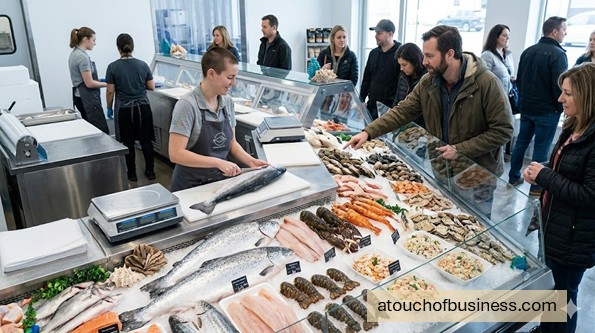
A Seafood Business Overview For First-Time Owners
A seafood business sells fish and shellfish through a retail storefront. In most cases, you are selling fresh, frozen, or lightly prepared products to local customers who care about quality, cleanliness, value, and confidence at the counter.
Why does that matter? Because this is not just a retail business. It is also a cold-chain business, a food-safety business, and a presentation business. You need the right location, the right equipment, and a setup that lets product move from receiving to storage to display to checkout without confusion.
Is A Seafood Business The Right Fit For You?
Before you go further, step back and look at the daily reality. A seafood business can be rewarding, but it asks a lot from you early on.
You need to be comfortable with perishables, cold storage, cleanup, supplier calls, inventory checks, and customer questions about freshness, storage, and preparation. If that sounds draining, this business may be harder than it looks from the outside.
Passion matters here because the early stage can be demanding. If you genuinely enjoy seafood, retail service, food presentation, and the hands-on side of running a store, you are more likely to handle the long days and extra pressure.
Take a hard look at your motivation too. It is smart to ask whether you are moving toward something meaningful or just trying to escape a job, money problems, or the idea of working for someone else. A seafood market is not a quick fix.
You also need to think about lifestyle tradeoffs. Opening hours, early deliveries, spoilage risk, and sanitation standards can shape your week. Ask yourself if you can handle that pace.
If you want another way to test your commitment for the long haul, look closely at what keeps you engaged during tough periods. That question matters before you sign a lease.
Talk To Seafood Store Owners Before You Commit
You should speak with owners who are not in your market. Why? Because they can tell you what the daily business really feels like without turning into a direct competitor.
Look for owners in another city, region, or market area. Prepare real questions ahead of time about startup costs, supplier problems, spoilage, staffing, permits, and what they wish they had done differently.
Those conversations are useful because they come from direct experience. Their path will not match yours exactly, but another owner’s perspective can save you from assumptions that look harmless on paper.
Check Local Demand Before You Do Anything Expensive
Demand is a gate, not a side note. If there is not enough local demand for a seafood store in your area, opening there may not make sense even if the idea sounds good.
Study who buys seafood where you plan to open. Look at neighborhood income, traffic patterns, nearby grocery stores, fish counters, ethnic food shopping habits, restaurant concentration, and whether customers already have strong seafood options.
You also need to know whether buyers want raw seafood only or whether there is demand for steamed items, custom cuts, holiday trays, shellfish, or ready-to-cook packs. That affects your layout, labor, permits, and startup costs.
Before moving forward, spend time on local supply and demand. A weak area can mean the idea is wrong for that location, even if the business itself is sound.
Decide Whether To Start From Scratch Or Buy An Existing Seafood Business
This choice matters because it changes your speed, cost, and risk. Starting from scratch gives you more control, but it also means more setup, more approvals, and more chances to get the layout wrong.
Buying a seafood store already in operation may give you equipment, a customer base, and a space that already works for food retail. On the other hand, you may inherit outdated equipment, a weak reputation, or a bad lease.
A seafood business is not usually a franchise-first category, so the main comparison is often between building your own store and buying one that already exists. It is worth asking whether a business already in operation may be a better fit for your budget, timeline, and tolerance for risk.
Understand What Customers Expect From A Seafood Store
Your customers do not just buy fish. They buy trust.
They want freshness, clean displays, cold product, clear labeling, fair prices, and staff who can answer simple questions fast. In a storefront seafood business, the in-person experience matters as much as the product itself.
Typical customers may include household shoppers, event buyers, customers looking for shellfish, health-focused shoppers, and people cooking specific cultural dishes. The more clearly you understand your opening customer mix, the easier it is to build the right offer list.
Choose Your Seafood Store Model And Product Range
This is one of the biggest startup decisions because it affects your equipment, permits, staffing, and daily flow. A store that only sells raw fresh and frozen seafood is different from one that also cooks, steams, portions, or packages ready-to-eat products.
Keep your first offer list simple. Too many product types, too many service options, or too much on-site prep can make the store harder to launch and harder to control.
- Raw fresh and frozen seafood only
- Retail plus filleting, cutting, and simple repacking
- Retail plus steamed seafood or take-home meal packs
- Retail plus shellfish focus, which adds sourcing and recordkeeping discipline
A narrower opening offer gives you a better chance to control food flow, waste, labor, and training. You can always add complexity later, but opening with too much can hurt you fast.
Write A Business Plan For Your Seafood Business
A plan matters because this business has many moving parts. Rent, refrigeration, supplier terms, spoilage, labor, build-out, and permits all connect to each other.
Your plan should explain the store model, target customers, product range, expected sales mix, startup costs, location logic, supplier strategy, staffing, opening timeline, and how you will handle food safety and inventory rotation. It should also show what level of sales you need to cover rent, payroll, utilities, waste, and debt.
If you need help building a business plan, focus first on the factors that determine a smooth launch: concept, site, cold storage, supplier access, and realistic sales expectations.
Choose The Right Location For A Storefront Seafood Business
Location matters because seafood depends on both visibility and practical store use. A great-looking space can still be a bad seafood location if the plumbing, drainage, refrigeration setup, or receiving access do not work.
Look for foot traffic, vehicle access, clean surroundings, room for signs, and enough back-room space for cold storage and prep. Then go deeper.
- Can the site legally be used for retail food?
- Can it support your sinks, drainage, refrigeration, and storage needs?
- Does the layout allow receiving, prep, display, checkout, and cleanup without crowding?
- Is the space likely to qualify for a certificate of occupancy if your city requires one?
Do not let excitement push you into a lease too early. In a seafood store, a weak layout can lead to sanitation problems, slow service, and wasted labor from day one.
Set Up The Right Layout And Product Flow
Layout matters because seafood moves quickly from delivery to storage to display. If the path is awkward, staff waste time and product can lose quality.
Your setup should make receiving easy, move product into cold storage fast, support case stocking without blocking customers, and keep the checkout area clear. You also need a sensible cleanup path at the end of the day.
Think in order: delivery, receiving check, cooler or freezer, prep table, display case, bagging, payment, and closing sanitation. That sequence should feel simple when you walk the space.
Handle Legal Setup Early
Legal setup matters because banks, landlords, tax agencies, and many local offices will expect your business structure and tax identity to be in place early. Waiting can slow down everything else.
Start by choosing the structure that fits your ownership and liability needs. Then register the business, get your Employer Identification Number, and handle any name filing your state or local area requires.
If you need help with choosing your legal structure, do that before opening accounts or signing paperwork tied to the business name. That keeps the setup process cleaner.
Get Permits And Approvals For Your Seafood Store
This step matters because a seafood store is a food business, and local approval often depends on your exact concept, layout, and handling methods. You do not want to order equipment or build out the space before you know what the local agencies expect.
Most seafood storefronts need local or state retail food approval. You may also need a business license, zoning clearance, health review, plan review, sign permits, and a certificate of occupancy depending on the location and the space.
If you plan to cook seafood, smoke your own seafood, package items under your own label, or add a raw bar, the approval path may become more detailed. That is why your exact offer list should be final before you submit plans.
As you sort through local licenses and permits, focus on the requirements specific to your local area. Rules vary too much by city and county to assume one answer fits every storefront.
Understand The Food Safety Rules That Can Change Your Setup
This matters because seafood is highly perishable, and not every seafood operation is treated the same. A store that only retails raw and frozen product is different from one that processes or packages seafood in more complex ways.
At the store level, local retail food rules often guide the space, sinks, storage, and sanitation setup. If you sell molluscan shellfish, such as oysters, clams, or mussels, traceability and supplier discipline become especially important.
If you go beyond normal retail handling and act more like a processor, federal seafood Hazard Analysis and Critical Control Point rules may come into play. That is a big reason to define your concept early and ask local authorities how they classify your operation.
Do not guess here. A small change in how you handle seafood can change the level of compliance you need before opening.
Choose Suppliers And Build Receiving Procedures
Supplier setup matters because seafood quality starts before the product reaches your door. If your suppliers are inconsistent, your display case will show it.
Open supplier accounts before launch and confirm what they can actually deliver, how often they deliver, what minimums apply, and how they handle shortages. If you plan to sell shellfish, confirm the source documentation you will need and how you will keep those records organized.
Your receiving process should be just as clear as your buying process. Staff should know how to check temperatures, inspect condition, reject weak product, label items, and move deliveries into the right cooler or freezer right away.
- Who checks deliveries?
- Where are temperatures recorded?
- What gets rejected immediately?
- How are shellfish tags or source records filed?
- How do you mark dates for rotation?
Buy Equipment That Supports Cold Storage And Fast Service
Equipment matters because a seafood store can look attractive and still fail if cold storage and prep are weak. This is not the place to underbuild the refrigeration side of the business.
Your main equipment usually includes refrigerated display cases, freezer space, cooler space, prep tables, thermometers, legal-for-trade scales, ice support, sanitation supplies, storage containers, packaging tools, and a point-of-sale system. If the site already has some of this in place, test it before you rely on it.
Think beyond the display case. You also need receiving tools, prep tools, bagging supplies, shelf labels, cleaning tools, protective gear, and a simple office setup for records, scheduling, and supplier management.
Plan Your Startup Costs The Practical Way
Startup costs matter because this business can become expensive very quickly. Refrigeration, build-out, inventory, labor, and working capital all add up fast.
There is no useful universal number for opening a seafood store. Your real cost depends on the space, the condition of existing equipment, local rents, plumbing work, the amount of refrigeration you need, your opening inventory, and whether you add shellfish, prepared items, or cooking.
The practical way to estimate startup costs is simple. Define your store model, list what you need, get quotes, and build the budget from those real numbers. Then add room for permit delays, extra smallwares, opening inventory gaps, and working capital.
That process is also where you begin estimating profitability and revenue. If the numbers only work under perfect conditions, the plan needs more work.
Set Prices With Waste And Labor In Mind
Pricing matters because seafood margins can disappear if you ignore yield loss, spoilage, and extra handling. A price that looks fine on paper may not cover what the product really costs you to sell.
Build prices around landed cost, trimming loss, prep time, packaging, waste allowance, local competition, and the value of services such as filleting, cleaning, seasoning, or steaming. Premium service should earn a premium price.
Keep your opening pricing structure easy to explain. Customers should understand whether they are paying by the pound, by the piece, or by the tray. If you need a deeper look at setting your prices, focus on clarity first, then margin.
Put Funding, Banking, Bookkeeping, And Payments In Place
This part matters because seafood stores need clean records from the start. Inventory, spoilage, labor, card fees, and supplier payments can get messy fast if the financial side is weak.
Open your business bank account after your structure and tax identity are in place. Then choose card processing, set up bookkeeping, separate business transactions from personal ones from the start, and decide how daily cash handling will work.
You may fund the store with savings, outside investment, equipment financing, a line of credit, or a loan. If borrowing is part of your plan, look closely at what you can truly carry during the first months of operation.
It also helps to think through picking the right business bank and your options for card payment processing before opening day. Those decisions affect daily operations more than many new owners expect.
Protect The Business With The Right Insurance And Risk Controls
Insurance matters because seafood brings product liability, spoilage, equipment failure, slip hazards, and employee injury risk into one business. One bad event can be expensive.
Review general liability, property coverage, product liability, spoilage or equipment breakdown coverage, and workers’ compensation if your state requires it once you hire staff. The exact package depends on your store model and local rules.
Insurance is only one part of risk control. Good temperature checks, supplier records, cleanup routines, drainage control, proper storage, and staff training reduce the chances that you ever need to lean on the policy.
Build Your Name, Signage, And Digital Presence Before Opening
This matters because customers need to find you and recognize you quickly. A storefront seafood business depends on clear local visibility.
Choose a name that fits the kind of seafood store you want to run. Make sure the business name, domain, social handles, sign design, and store identity work together before you pay for printing and install signs.
Your identity basics may include a simple logo, storefront sign, product labels, printed cards, packaging details, and a clean online profile showing hours, location, and core products. In this kind of business, plain and trustworthy usually works better than flashy.
Set Up Systems, Forms, And Everyday Store Documents
Systems matter because seafood moves quickly and leaves little room for confusion. Good documents make training easier and help the store stay consistent when you are busy.
Set up receiving logs, cleaning checklists, opening and closing checklists, cooler temperature logs, shellfish record files if needed, supplier contact sheets, employee task lists, refund rules, pricing sheets, and reorder guides. These are simple tools, but they hold the store together.
You do not need a mountain of paperwork. You need the few records that help you receive product correctly, store it safely, clean the space properly, and know what has to happen every day.
Hire Carefully And Train Around The Real Job
Staffing matters because customers notice weak service fast, and seafood handling errors can become bigger problems than a slow checkout line. The first people you hire shape the customer experience more than most new owners realize.
Train around the real job, not just the register. Staff should know how to receive deliveries, keep product cold, stock the case, answer basic customer questions, handle shellfish records if needed, clean correctly, and work through the opening and closing routine without guesswork.
If you are wondering about hiring your first employee, wait until you can clearly define the role. In a seafood store, vague roles often lead to missed sanitation steps and inconsistent service.
Know What The Daily Responsibility Really Looks Like
This section matters because many people like the idea of ownership more than the actual routine. A seafood store has a physical, repetitive side that you need to accept before opening.
A normal day may start with deliveries, temperature checks, shellfish record handling if applicable, cooler organization, trimming, case setup, and ice management. Then come customer service, restocking, pricing adjustments, cleaning, supplier calls, and end-of-day sanitation.
If you dislike detail, cleanup, or food handling, this will wear on you. A seafood business needs attention every day, not just on busy days.
Plan Your Sales Approach And Opening Strategy
Opening strategy matters because a seafood store often depends on local habits and repeat buyers. People need a reason to notice you, trust you, and come back.
Your first-stage sales approach should focus on clear product presentation, simple offers, consistent quality, visible cleanliness, helpful service, and easy ordering. A soft opening can help you test flow before you push hard on promotion.
- Make hours easy to find
- Show your core products clearly
- Train staff to answer basic storage and preparation questions
- Keep opening offers simple enough to handle well
- Use signs that help customers decide fast
You do not need a complicated launch campaign. You need a store that feels ready, clean, and easy to buy from.
Watch For Red Flags Before You Open
Red flags matter because they can tell you the store is not ready yet. Opening too soon is one of the fastest ways to create problems you could have avoided.
- The location still has unresolved zoning or health questions
- The cooler or display case is unreliable
- You have not finalized your supplier setup
- The offer list is too broad for the space and staff
- The layout makes receiving or cleanup awkward
- The store depends on unrealistic sales to survive
- Staff training is incomplete
- Shellfish handling or source records are still unclear
If any of those issues are still hanging over the business, pause. A few more weeks of setup can be far cheaper than a bad opening.
Use A Launch Readiness Checklist Before Opening Day
A checklist matters because there are many small pieces that must be in place at the same time. Missing one item can slow down opening or create a compliance problem.
Before opening your seafood business, make sure the basics are truly ready. Do not assume they are ready just because the store looks finished.
- Business structure and tax identity completed
- Business name and local filings handled if needed
- Lease, zoning, and store use confirmed
- Food establishment approvals in place
- Certificate of occupancy handled if required
- Equipment installed and tested
- Coolers, freezers, and display cases holding temperature
- Suppliers confirmed and opening inventory ordered
- Labels, bags, signs, and pricing tools ready
- Receiving logs and cleaning checklists in use
- Shellfish records ready if you carry shellfish
- Point-of-sale system live
- Card payments working
- Staff trained on receiving, storage, service, and cleanup
- Soft opening or practice day completed
That final test run matters. It shows you where the store still feels slow, crowded, confusing, or unfinished before real customers are standing at the counter.
FAQs
Question: How do I know if a seafood business should be retail only or include prepared items?
Answer: Start with the simplest version you can run well. Adding cooked items, meal packs, or ready-to-eat products usually increases staffing, space needs, and approval requirements.
Question: What legal setup should I handle before I rent a seafood store?
Answer: Pick your business structure first and get your tax ID early. That makes banking, lease paperwork, and permit applications much easier.
Question: Do I need special permits to open a seafood shop?
Answer: In most areas, yes. A seafood store usually needs food-related approval, and you may also need local licensing, zoning clearance, sign approval, or occupancy review depending on the site.
Question: Does selling shellfish change how I open the business?
Answer: Yes, it can. Shellfish often brings stricter source records and handling expectations, so confirm those rules before you build your opening product list.
Question: What equipment matters most when opening a seafood market?
Answer: Focus on refrigeration, freezer space, display cases, scales, prep surfaces, and temperature tools first. If cold storage is weak, the rest of the store will struggle.
Question: How should I estimate startup costs for a seafood business?
Answer: Build the budget from your actual setup instead of guessing from generic numbers. The biggest variables are usually the site, refrigeration, build-out, opening inventory, and working cash.
Question: How do I price seafood without losing money?
Answer: Your prices need to cover purchase cost, trim loss, waste, labor, packaging, and card fees. If you clean, cut, or cook the product, that extra handling should be reflected in the selling price.
Question: What insurance should I look at before opening?
Answer: Review general liability, property coverage, product-related protection, and workers’ compensation if you will have employees. You may also want spoilage or equipment breakdown coverage because a cooler problem can become expensive fast.
Question: Should I buy an existing seafood store instead of starting from zero?
Answer: Sometimes that is the better move. An existing store may already have equipment and customer traffic, but you still need to check the lease, condition of the equipment, and the reason it is being sold.
Question: What is the biggest mistake new seafood store owners make?
Answer: Many start with too much complexity. A large product range, weak layout, and unclear handling rules can create waste, slow service, and staff confusion right away.
Question: How do I know if my area has enough demand for a seafood store?
Answer: Look at nearby competition, neighborhood buying habits, traffic, and whether local shoppers already have strong seafood options. If demand looks thin, the location may be the problem even if the idea is sound.
Question: When should I contact the health department?
Answer: Do it early, before build-out decisions are final. That gives you time to learn what the agency expects for the space, your product mix, and any prep you plan to do on site.
Question: What should my first suppliers be able to do?
Answer: They should deliver consistent product, clear invoices, and dependable communication. You also want to know their delivery schedule, order minimums, and how they handle shortages.
Question: What does the daily routine look like in the first phase?
Answer: Expect receiving, temperature checks, display setup, restocking, cleaning, customer service, and end-of-day sanitation. In the beginning, the owner often touches every one of those tasks.
Question: Do I need employees before opening day?
Answer: That depends on your store size and service level. If customers will expect cutting, counter help, frequent restocking, or long opening hours, solo operation may be hard to sustain.
Question: What should I train early staff to do first?
Answer: Train them on product handling, temperature checks, sanitation, stocking, and basic customer interaction. Fancy training can wait, but safe and steady daily habits cannot.
Question: What systems should I have in place before the first week of business?
Answer: Set up your payment system, receiving records, cleaning checklists, price labels, and basic reorder tracking. Those simple tools help keep the store calm when things get busy.
Question: How important is layout in the first month?
Answer: It matters a lot because poor flow wastes labor every day. If staff have to cross the store for storage, packaging, or cleanup, small delays add up quickly.
Question: What should I watch closely in the first month of cash flow?
Answer: Pay attention to inventory buying, waste, payroll, rent, and card processing costs. Early sales can look encouraging while cash still disappears through spoilage and overhead.
Question: How should I market a new seafood business at the start?
Answer: Keep it simple and local. Clear signage, accurate online listings, a clean store, and a strong opening product mix usually matter more than a complicated ad plan.
Question: What policies should I decide before opening?
Answer: Set rules for refunds, special orders, handling returns on perishable goods, employee hygiene, closing cleanup, and who can accept deliveries. Clear policies reduce confusion when the store gets busy.
Question: Should I run a soft opening for a seafood shop?
Answer: Yes, that is usually smart. It gives you a chance to test service speed, case setup, payment flow, and cleanup before a full opening rush.
Learn From Seafood Business Owners
One of the fastest ways to get grounded is to hear directly from people who already run a seafood market, fish shop, or seafood brand.
The interviews below can help you spot real startup issues earlier, especially around product focus, sourcing, daily workflow, customer trust, and what the business actually feels like before you commit.
- Off The Hook Fish Market – Ryan Shephard, owner (interview)
- Interview with Dominic Alcaro, Owner of Barbera Fish Market
- Willy Phillips: Seafood Market Owner
- Pelican co-owner Jim Foster is hooked on the seafood business
- De la Mer: All Men Are Equal Before Fish
- Punch’s Seafood Market interview
- How This Entrepreneur Behind a Multimillion-Dollar Company Is Disrupting the Seafood Industry
- The FultonFishMarket.com Success Story
Related Articles
- Start a Seafood Restaurant
- Starting a Fish Farming Business
- How To Start Your Charter Fishing Business
- How To Start a Bait Shop
- How To Start Your Butcher Shop
- How To Start Your Catering Business
- How To Start Your Boat Rental Business
- Start a Marine Supply Business
Sources: