
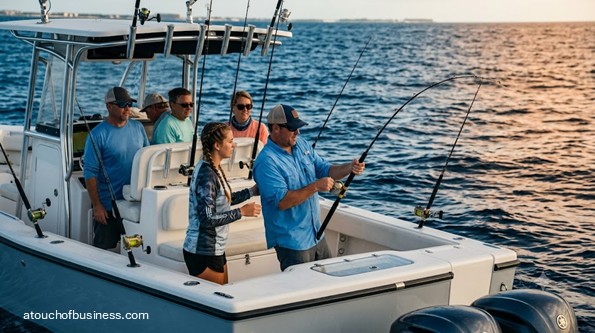
What to Expect From This Guide to Starting a Charter Fishing Business
This guide walks you through the key decisions and practical steps involved in starting a charter fishing business, from evaluating the opportunity to preparing your vessel and operations for paying customers.
Inside the guide, you will find:
- Startup steps: Follow an ordered progression covering business fit, market validation, vessel setup, compliance, bookings, and pre-opening checks.
- Industry interviews: Explore firsthand experiences and observations from charter captains discussing customers, competition, safety, profitability, and daily operations.
- Startup FAQs: Review practical answers about licenses, permits, insurance, operating capital, vessel use, crew, and business entry options.
- Business fit: Consider the physical demands, seasonal income, customer responsibilities, maintenance pressure, and lifestyle realities of running fishing trips.
- Financial planning: Examine startup costs, funding, pricing, fixed expenses, trip costs, maintenance reserves, seasonality, and break-even calculations.
- Local requirements: Understand how operating waters, target species, passenger capacity, and location affect licenses, permits, insurance, and reporting duties.
- Opening preparation: Check vessel equipment, safety documents, booking systems, payment policies, test trips, supplies, and operating procedures before opening.
Begin by considering what the captain’s role requires and whether the demands of this business suit your experience, finances, and lifestyle.
What a Charter Fishing Captain Does
As a charter fishing captain, you take paying customers out on your vessel to fish — supplying the boat, gear, bait, and local knowledge so they can focus on catching.
You’re the licensed operator, the guide, the safety officer, and the customer experience all at once.
Most six-pack charter captains carry up to six passengers per trip on a private basis — one group books the whole boat, and the trip is built around them.
The asset at the center of this business is the vessel itself. Its condition, its suitability for the water you’re fishing, and your ability to keep it running determine whether you can deliver trips consistently and profitably.
This isn’t a passive-income model. You’re on the water early, physically guiding every trip, cleaning fish at the dock, and spending off-hours on maintenance and bookings.
Before you follow the startup steps below, take an honest look at whether this business fits your life right now.
Is This Business Right for You?
Charter fishing rewards people who are passionate about fishing, genuinely enjoy teaching and hosting others on the water, and have the patience to guide a trip professionally whether the fish cooperate or not.
Do you have the physical stamina to be on the water before sunrise, guide a full group through a long offshore run, and still clean fish and wash down the boat at the end of the day?
Can your household manage income that concentrates into a few peak months and slows sharply in the off-season?
This is a capital-intensive business. The vessel is a depreciating asset that requires ongoing maintenance investment regardless of how many trips you run.
You’ll need access to serious startup capital — and enough operating reserves to cover fixed costs through a slow start and any unexpected mechanical repairs in year one.
The federal licensing process alone takes months. You can’t rush it, and the business can’t legally open without it.
Talk to charter captains who operate in different markets — not your future competitors — and prepare your questions before those conversations.
Ask them about the first season, off-season cash flow, the real cost of owning and maintaining a charter vessel, and what they wish they had known before starting. Firsthand operator insight is irreplaceable, even though every captain’s path is different.
Also spend time at local marinas talking to marina managers and bait shop owners about local demand, competition, and what kinds of trips are selling in your target market.
Think honestly about your entry path. Starting from scratch gives you control over vessel selection, market positioning, and branding — but you build a booking calendar from zero.
Buying an existing operation can come with an established customer base, a marina slip already in place, and in some regulated fisheries, transferable federal fishing permits that new entrants can’t otherwise obtain.
Whether to start from scratch or buy a business depends on your capital position, your risk tolerance, and what the local permit landscape looks like.
There’s no established franchise model for small six-pack charter operations. That path isn’t applicable here.
Red Flags Before You Start
Charter fishing carries a regulatory layer that most small businesses don’t face. Understand these conditions before you commit to anything.
Limited-access federal permits may block your target species. In major saltwater fisheries — particularly Gulf reef fish like grouper and red snapper, and some coastal migratory species — federal charter permits are in a moratorium. No new permits are being issued. If you plan to target those species with paying passengers in federal waters, you must purchase a transferable permit from an existing holder. Verify permit availability and cost before choosing a location, a boat, or a business model.
Capital intensity creates structural pressure for new entrants. You’re not just buying a boat. Slip fees, commercial marine insurance, licensing fees, maintenance reserves, and loan payments run continuously — whether you have trips booked or not. An undercapitalized operator who hits a slow first season and an engine repair at the same time faces a cash position that can end the business before it gains traction.
Seasonality concentrates revenue into a narrow window. In most U.S. coastal markets, peak booking season runs four to eight months. Fixed costs continue year-round. If your market’s peak season isn’t long enough to cover your full-year cost structure plus a reserve, reconsider the financial plan before you proceed.
Vessel maintenance is an ongoing structural cost, not a one-time expense. Marine engines and hulls under commercial use wear faster than under recreational use. Deferred maintenance leads to failures during peak season — when you can least afford to lose trip days. Budget a per-trip or per-hour engine reserve before you buy the boat, not after.
Your local market may already be saturated. Coastal markets with strong sport fishing demand often have established captains with multi-year reputations and loyal repeat customers. Count your competition, review their booking availability, and assess honestly whether the market has room for a new operator.
Maritime regulation is unusually complex for a small business. The captain’s license alone requires months of coursework, documentation, testing, a physical examination, and processing time. Federal fishing permits have their own application and reporting requirements. Drug testing compliance is a continuous federal obligation. Build the full licensing timeline into your startup plan before setting an opening date.
Weather cancellations reduce your actual productive days. You can’t run an unsafe trip — and in offshore markets especially, that limits how many peak-season days you can actually book and deliver. Don’t project revenue at 100% utilization. Build a realistic weather cancellation rate into your break-even math.
Operating without proper insurance is a catastrophic risk. Personal boat policies exclude commercial use. Maritime law creates liability exposure — passenger injuries, Jones Act crew claims, pollution liability — that can be severe if you’re improperly covered. Resolve this fully before the first paying customer boards.
Step 1: Assess Your Fit and Motivation
Charter fishing demands more than fishing ability. You’re also managing customer safety, federal compliance, boat maintenance, bookings, and trip logistics — often without a crew.
Ask yourself: Do you have deep local fishing knowledge, practical boat-handling experience in the conditions you’ll operate in, and the customer service temperament to guide a first-timer with the same energy you’d bring for an experienced angler?
Running enjoyable, safe trips consistently is a professional skill distinct from being a skilled recreational angler.
You also need mechanical aptitude or a reliable marine mechanic relationship. A breakdown offshore without either is a serious problem.
Step 2: Talk to Experienced Operators
Before spending anything, seek out charter captains in different markets — not your future competitors — and have real conversations about the business.
Come with prepared questions. Ask about their first season, how they managed the off-season, what the real cost of ownership looks like over time, and what they’d change if they were starting today.
Also talk to marina operators and bait shop owners in your target area. They have a clear view of local demand, which types of trips sell, and how competitive the market is.
These conversations shape your go/no-go decision before any major commitment is made.
Step 3: Choose Your Entry Path
Decide whether you’re starting from scratch, buying an existing charter operation, or pursuing some combination of both.
Starting from scratch gives you control over boat selection, pricing, and positioning — but you build reputation and bookings from zero.
Buying an existing operation may give you a booking base, a marina slip already in place, an operational vessel with known history, and — critically in closed fisheries — transferable federal fishing permits that new entrants can’t obtain any other way.
In some markets, access to a moratorium permit is the most important factor in determining whether a charter fishing operation targeting certain species is viable at all.
The right path depends on what’s available for sale in your target market, your capital position, and how important permit access is to your planned business model.
Step 4: Validate Your Market
Spend time at marinas, boat ramps, and docks in your target area during peak season. Count active operators. Review their trip offerings, pricing, and booking availability online.
Identify gaps. Are the local captains fully booked on peak weekends? Are certain species or trip types underserved?
Your likely first customers are recreational anglers who don’t own a boat suited to your target fishery, tourists seeking a guided outdoor experience, families looking for an on-water activity, and experienced anglers targeting species that require a vessel they don’t own.
Customers choose a charter captain based on local knowledge, fish-catching reputation, vessel condition, gear quality, and reviews — not primarily on price.
Understand early how you’ll differentiate on those dimensions at launch. That’s what will fill your calendar in year one.
Step 5: Choose Your Business Model
The trip type you focus on determines your boat, your permits, your operating costs, and your customer pool. Settle this decision before you buy anything.
The main model choices are:
- Inshore: Bays, estuaries, flats, and backwater. Shallower-draft boats, lower fuel costs, family-friendly trips, smaller vessel investment.
- Offshore / deep-sea: Open ocean and federal waters targeting grouper, snapper, tuna, mahi-mahi, and marlin. Larger vessel required, higher fuel burn, and potentially moratorium permits.
- Private vs. shared: Private charters — one group books the whole boat — are the dominant model at the six-pack level. Shared or split charters fill seats across multiple parties and are more common on larger inspected vessels.
- Trip length: Half-day inshore trips have different economics than full-day offshore runs. Each combination produces different revenue, fuel costs, and customer profiles.
The six-pack model — up to six paying passengers on an uninspected vessel with an OUPV-licensed captain — is the standard entry point for new charter captains.
Moving to seven or more paying passengers requires an inspected vessel, a USCG Certificate of Inspection, and a higher-tier captain’s license. That’s a meaningfully different operation with a much heavier compliance burden.
Step 6: Get Your Captain’s License
You can’t legally take a single paying passenger without a U.S. Coast Guard Merchant Mariner Credential. Start this process early — it can’t be rushed.
The OUPV (Operator of Uninspected Passenger Vessels) license, commonly called the six-pack license, allows you to carry up to six paying passengers on uninspected vessels under 100 gross tons.
To qualify for the OUPV, you must:
- Be a U.S. citizen or resident alien, at least 18 years old
- Document at least 360 days of sea service, with at least 90 days within the three years before your application
- Pass a written exam covering navigation, rules of the road, seamanship, weather, and safety
- Pass a physical examination using USCG form CG-719K
- Pass a DOT 5-panel drug test at a SAMHSA-certified laboratory
- Pass a background check (a Transportation Worker Identification Credential may be required — verify with USCG)
For a Near Coastal endorsement — needed for trips up to 100 nautical miles offshore — at least 90 of your sea-service days must be on near coastal or ocean waters.
If you plan to carry more than six paying passengers, you’ll need a Master license (25/50/100 ton), which requires 720 days of documented sea time.
Verify all current requirements with the USCG National Maritime Center at dco.uscg.mil/nmc or by calling 1-888-427-5662.
Plan for several months from enrollment to credential in hand. The business can’t open without it.
Step 7: Enroll in Drug Testing
Once you operate commercially, you and any safety-sensitive crew are required by federal law to participate in a USCG drug testing program under 46 CFR Part 16.
This applies even if you operate alone.
The program requires pre-employment testing, random testing at a federally set annual rate, post-accident testing, and periodic testing when you renew your credential.
You must also maintain a written company drug and alcohol policy on file and submit an annual Management Information System (MIS) report to the USCG.
Most solo operators use a third-party consortium administrator to handle compliance, recordkeeping, and reporting. It’s the simplest way to stay current.
Step 8: Research Federal Fishing Permits
Your captain’s credential authorizes you to carry paying passengers. It doesn’t by itself authorize you to fish for all species in all waters.
Depending on where you operate and what you target, you’ll likely need one or more NOAA Fisheries federal charter/headboat permits before taking customers out.
Common federal permits for charter fishing captains include:
- Atlantic Highly Migratory Species (HMS) Charter/Headboat Permit: Required to target tuna, billfish, swordfish, or sharks in Atlantic or Gulf waters. Open access. A shark endorsement requires completing an online video and quiz. Hard copy must be on board.
- Gulf Reef Fish Charter Permit: Required for grouper, snapper, and amberjack in Gulf federal waters. This permit is in a moratorium — no new permits are being issued. You must purchase a transferable permit from an existing holder.
- Gulf Coastal Migratory Pelagics Permit: For king mackerel, Spanish mackerel, and cobia in Gulf federal waters. Also in moratorium. Same transfer process applies.
- Northeast Multispecies Permit: Required for groundfish like cod and haddock in New England federal waters. Also requires a Federal Operator’s Permit.
Most federal permits require participation in an electronic catch reporting program. Understand your reporting obligations before you start operating.
Verify current permit status and availability with NOAA Fisheries before choosing a target species or operating area. Contact the Southeast Regional Office, the Greater Atlantic Regional Fisheries Office, or the HMS Division depending on your region.
Step 9: Lock in Your Operating Area and Target Species
Your operating area — state waters, nearshore, or federal waters beyond the state boundary — determines which permits apply and what boat you need.
Your target species determines which federal permits are required and whether those permits are open access or in moratorium.
Lock in both decisions before selecting a vessel, signing a marina lease, or finalizing your business plan. Everything downstream depends on them.
Step 10: Select and Acquire the Vessel
The vessel is your primary business asset and your largest startup investment. Choose it after finalizing your model, target waters, and target species.
Inshore operations typically use bay boats or inshore center consoles — shallower draft, lower fuel consumption, lower acquisition cost.
Offshore operations require a deeper-V offshore center console or express sportfisher with greater fuel capacity, seakeeping ability, and onboard fishability for longer runs.
Passenger comfort matters beyond size. Look for rod holders, live wells, fish boxes, non-skid decking, adequate seating, shade, and a head for full-day or offshore trips.
A used vessel can reduce upfront cost, but have any used boat inspected by a qualified marine surveyor before purchase. Evaluate engine hours, hull condition, and electronics carefully.
For commercial operation, a vessel of at least five net tons engaged in domestic trade must carry a USCG Certificate of Documentation (COD), renewed annually. The vessel’s name must be clearly marked on both bows and the stern.
Vessels under five net tons must be registered in the applicable state. Verify requirements with the USCG National Vessel Documentation Center.
Carry more rod and reel combos than your maximum passenger count. Equipment failures happen mid-trip, and a customer sitting out because of a broken reel reflects directly on your reputation.
Step 11: Secure Your Marina Slip
Your marina slip is the base of your operation — not just a place to store the boat.
Before signing a lease, confirm these points:
- The marina explicitly permits commercial charter operations, including loading passengers, offloading catch, and fueling — some marinas allow recreational use only
- There’s easy access to a fuel dock, ice machine, and fish cleaning station
- Client parking is adequate for your trip capacity
- Clean restroom access is available for customers
- The marina’s location relative to the inlet and your primary fishing grounds is practical — a long run to the inlet burns fuel and cuts fishing time
The marina may also require proof of commercial marine insurance as a condition of the lease. Confirm that before you get insurance quotes.
The marina’s foot traffic and reputation can help attract early bookings, especially from walk-up or first-time customers at launch.
Step 12: Form the Legal Entity and Register the Business
Most charter fishing owners form a limited liability company (LLC) to separate personal assets from the significant liability exposure that comes with carrying passengers on the water.
File with your state’s Secretary of State office or equivalent business registration agency. If you operate under a name other than your legal name, file a DBA (doing business as) with the appropriate state or county office.
Obtain your Employer Identification Number (EIN) from the IRS at no cost. You’ll need it for taxes and for opening a business bank account.
You’ll also need a general business license from your city or county. Some municipalities require additional permits if you operate from a public boat ramp or port authority facility.
Check with your local city or county clerk’s office to confirm what’s required in your area.
Step 13: Get the State Fishing License
Most coastal and inland states require a separate charter or fishing guide license in addition to your USCG credential. Requirements, fees, and vessel licensing rules vary significantly by state.
Check with your state’s fish and wildlife agency or department of natural resources for the correct license type and application process. In many states, you must present your USCG credential to obtain the state charter license.
Some states require the vessel to be licensed separately from the captain. If you operate on both saltwater and freshwater, verify whether separate licenses are required for each.
Step 14: Plan Costs and Funding
Before purchasing a vessel or committing to a marina slip, build a realistic picture of your total startup costs and the break-even math for your operation.
Major startup cost categories to price out include:
- Vessel acquisition — new vs. used, inshore vs. offshore, hull and engine condition
- Marine electronics — GPS/fishfinder, VHF radio, radar, AIS, autopilot
- USCG safety equipment — PFDs, EPIRB, fire extinguishers, flares, navigation lights
- Fishing gear package — rod and reel combos, terminal tackle, gaffs, coolers, fillet station
- USCG licensing costs — prep course, exam fees, physical, drug test, NMC application
- Federal fishing permits — open-access application fees or moratorium permit acquisition cost
- State charter or guide license
- Local business license and LLC formation
- Marina slip lease
- Commercial marine insurance
Your most accurate startup cost estimate comes from listing everything you need and pricing it based on your specific choices and local market rates.
Funding options include personal savings, SBA small business loans, marine vessel financing, and equipment financing. Some lenders require proof of commercial marine insurance as a loan condition.
Plan for at least six months of fixed cost coverage before the first trip generates revenue — and an additional reserve for a major mechanical failure in year one.
Business Plan
A charter fishing business plan is fundamentally a break-even calculation built around your vessel, your market, and your operating season.
Start with your fixed costs — slip fees, insurance, loan payments, licensing fees, and a per-trip engine reserve. These run whether you’re booked or not.
Then calculate your per-trip variable costs: fuel, bait, ice, and tackle replacement. On offshore runs with long fuel burns, these can significantly reduce the margin on each trip.
From there, calculate how many trips per month at your planned rate are needed to cover all fixed and variable costs before any owner income is possible.
Then ask: Is that number of trips realistically achievable in your market during your operating season?
Weather cancellations reduce your actual bookable days below the theoretical maximum. Build a realistic cancellation rate into your projections.
Seasonal revenue concentration is a structural feature of this business. Most markets produce their revenue in a defined peak window. Fixed costs continue through the off-season.
Your plan should also address how you’ll price trips. The rate must cover all per-trip operating costs, contribute to fixed costs, and include a maintenance reserve — before you reach profit.
Undercutting local market rates to fill early bookings undermines long-term margin and reputation.
Most successful charters include all tackle, bait, ice, fish cleaning, and licenses in the trip rate. Charging separately for those items generates friction and poor reviews. Factor them into your pricing instead.
For more on structuring the financial planning side of a new business, see estimating profitability and revenue for a startup.
Step 15: Open Your Business Bank Account and Set Up Payments
Open a dedicated business checking account before any revenue comes in. Keep business transactions separate from personal finances from the start — this is especially important for LLC liability protection.
Set up a merchant account or mobile payment system to accept credit cards, debit cards, and digital wallets at the dock. Many charter customers expect to pay by card.
Establish a deposit policy before accepting your first reservation. Many charter captains require a deposit to hold a date, with the balance due on the day of the trip.
Document your weather cancellation and refund policy in writing before the first booking. A clear policy prevents disputes.
Step 16: Get Commercial Marine Insurance
Personal boat insurance excludes commercial use. The moment you accept payment from a passenger, you need a commercial marine policy.
Key coverage types to discuss with a marine insurance specialist:
- Hull and machinery: Physical damage to the vessel from accidents and weather
- Protection and Indemnity (P&I): Liability coverage for passenger injuries, damage to other vessels, and wreck removal
- Jones Act crew coverage: Required if you employ a deckhand or mate — maritime law allows crew members to sue for negligence, and this coverage protects you
- Pollution liability: Environmental cleanup costs if the vessel leaks fuel or oil
- Fishing equipment coverage: Commercial gear is excluded from most homeowner’s policies
Work with a marine insurance broker who specializes in charter operations, not a general business insurance agent. Get multiple quotes — terms and exclusions vary significantly between marine insurers.
The marina slip lease may require proof of this coverage before you can execute the agreement. Confirm that early.
For a broader overview of business insurance concepts, that resource can help frame your coverage decisions.
Step 17: Equip the Vessel
Outfit the boat at a professional commercial level. The quality of your gear directly shapes your customers’ experience and your reviews.
Required USCG safety equipment includes:
- Type I or Type II PFDs for every person on board, including crew
- Throwable flotation device (ring buoy or horseshoe buoy with line)
- Fire extinguisher(s) — type and quantity based on vessel size
- Visual distress signals — day and night devices
- Sound-producing device
- Navigation lights per Coast Guard collision regulations
- 406 MHz EPIRB for vessels operating beyond three miles offshore (must be registered with NOAA at no cost)
- Emergency checklist posted in a visible, accessible location on the vessel
VHF marine radio is required on vessels 20 meters or longer, and strongly recommended for all others. Carry a handheld backup.
For electronics, a quality GPS/chartplotter combined with a fishfinder is your primary navigation and fish-finding tool. Add radar for offshore operations.
Fishing gear should include:
- Rod and reel combos scaled beyond your maximum passenger count — commercial-grade saltwater-resistant reels hold up to daily charter use
- Terminal tackle matched to your target species: hooks, leaders, weights, jigs, lures, and rigs
- Gaff, landing net, fish grips, cutting board, fillet knives, and adequate cooler capacity for the full catch
- Bait supply for each trip — live or cut, depending on your target species
Stock the boat for passenger comfort too: shade, seating, a head for full-day trips, seasickness remedies, fresh water, and fish bags for customers to take home their catch.
Step 18: Establish Required Documents and Records
Before the first commercial trip, these documents must be on board and in order.
Required on the vessel:
- USCG Merchant Mariner Credential (your captain’s license)
- All applicable federal fishing permits — hard copies, accessible for USCG or NOAA inspection
- Certificate of Documentation or state registration
- Emergency checklist, posted visibly
- USCG accident reporting forms (CG-2692)
You’re also required to maintain a daily passenger count log — a correct count of all passengers received and delivered each day is a federal requirement for uninspected passenger vessel operators.
Keep a maintenance log from day one. Record every engine service, oil change, impeller replacement, and repair. This protects your asset value and is useful for insurance, inspections, and eventual resale.
Client-facing documents should include a charter booking agreement covering payment terms, cancellation policy, conduct on board, catch ownership, and releases. Have a maritime attorney review your liability waiver language.
Step 19: Hire a Mate (If Applicable)
A deckhand or mate isn’t required for most inshore six-pack operations, but is strongly recommended for offshore trips and full passenger loads.
On a full offshore trip with six passengers, active fishing, and fish-fighting activity, a mate makes the difference between a smooth trip and a chaotic one.
If you hire a deckhand, they must be enrolled in the USCG drug testing program. You’ll also need to register as an employer with your state for payroll tax withholding, unemployment insurance, and workers’ compensation where required.
Jones Act liability applies to crew. Confirm with your marine insurance broker that your P&I coverage includes Jones Act crew coverage before anyone works aboard for pay.
For more on the timing and mechanics of hiring your first employee, that resource covers the basics.
Step 20: Build Your Launch Presence and Booking System
Before your first paying trip, your booking infrastructure needs to be functional and your business needs to be findable.
At minimum before launch:
- Business name registered and trade name protected
- Professional photographs of the vessel and catch — take these on pre-launch test trips
- Website with trip descriptions, pricing, cancellation policy, and booking or inquiry capability
- Listing on at least one third-party booking platform for initial visibility
- Relationships with local tackle shops, bait shops, marina staff, and waterfront hospitality businesses for referrals
Customers who decide to book a fishing charter typically research before or during a trip to your area. Being listed and visible — with professional photos and clear trip information — is what converts a searcher into a booking.
Step 21: Pre-Opening Test Trips and Final Checks
Before the first paying customer steps aboard, complete one or more practice trips with friends or family.
Run the full workflow: fueling, bait pickup, safety briefing, trip execution, fish handling, fish cleaning, boat washdown, and restocking for the next day.
Identify any equipment gaps or workflow problems before they affect a paying customer’s experience.
Schedule a voluntary USCG dockside safety examination. It’s not required, but it results in a compliance decal and demonstrates that your vessel and equipment meet federal standards. Passing it also tends to reduce unannounced underway boardings.
Confirm your fuel source, bait supplier, and ice access are all in place and reliable before your first booking date.
Opening-Day Red Flags
Before your first paying trip, run through these checks. A problem that could have been caught in preparation reflects on your reputation from day one.
Documents and permits: Your USCG captain’s license, all federal fishing permits in hard copy, and your state charter license must be on board and current. A USCG or NOAA enforcement officer who boards during a trip will check for all of them.
Safety equipment completeness: Every PFD, fire extinguisher, flare, and visual distress signal must be on board, serviceable, and within its inspection or expiration date. Count the PFDs against your maximum passenger load.
EPIRB registration: If you’re operating beyond three miles offshore, your 406 MHz EPIRB must be registered with NOAA and its battery must be current. Registration is free at beaconregistration.noaa.gov.
Emergency checklist posted: Federal regulations require it to be mounted in a visible, accessible location on the vessel. Verify it’s in place before departure.
Gear for the full passenger load: Rod and reel combos, bait, and tackle must be ready to outfit every passenger before they board. Running out of a critical hook size or a workable setup mid-trip is unacceptable.
Insurance active: Confirm your commercial marine policy is bound and in force. Your marina slip may also require a certificate of insurance on file before you operate.
Drug testing enrollment confirmed: You must be enrolled in a USCG drug testing consortium before the first commercial trip. Have your consortium documentation available.
Payment system tested: Your deposit and balance collection process should be functional before the first booking. Test your card reader or payment app end to end.
Booking agreement and liability waiver signed: Have a completed, attorney-reviewed waiver in place before the first customer steps aboard.
Daily passenger count log started: Log every passenger received and delivered. This is a federal requirement that begins with your first commercial trip.
Frequently Asked Questions
Does a USCG captain’s license cover everything I need to fish with paying customers?
No. The Merchant Mariner Credential authorizes you to carry paying passengers on a commercial vessel. It doesn’t authorize you to fish for all species in all waters.
Depending on your location and target species, you’ll likely also need a state charter or fishing guide license and one or more NOAA Fisheries federal permits. Research all three layers before assuming you’re cleared to operate.
What’s the difference between a six-pack charter and a party boat?
A six-pack charter carries up to six paying passengers on an uninspected vessel operated by an OUPV-licensed captain. A party boat — or headboat — carries seven or more paying passengers on a USCG-inspected vessel operated by a Master-licensed captain, and requires a Coast Guard Certificate of Inspection.
Most startup charter captains begin at the six-pack level. Moving to seven or more passengers requires a larger inspected vessel, a different captain’s license, and a much heavier compliance burden.
Can I use my personal recreational boat for charter trips?
Not without switching to a commercial marine insurance policy. The moment you accept payment from a passenger, the vessel becomes a commercial asset. Most personal recreational boat policies explicitly exclude commercial use and paying passengers.
Operating on a recreational policy while taking paying customers puts you at risk of denied coverage when a claim occurs — which is exactly when you need it most.
What happens if a federal fishing permit is in moratorium and I can’t get one?
If a permit is in moratorium — like Gulf reef fish permits for grouper and red snapper — no new permits are being issued. You must purchase a transferable permit from an existing holder to legally target those species with paying passengers in federal waters.
If acquiring a moratorium permit isn’t feasible, you may need to adjust your target species to those requiring open-access permits, limit operations to state waters where different rules apply, or reconsider the business model entirely.
How do I stay compliant with USCG drug testing rules as a solo operator?
Enroll in a USCG-compliant drug testing consortium before you take your first paying passenger. The consortium manages pre-employment testing, random testing at the federally required annual rate, post-accident testing, and periodic testing at license renewal.
You must also maintain a written company drug and alcohol policy on file and submit an annual MIS report to the USCG. Most solo operators use a third-party consortium administrator to handle compliance and recordkeeping year-round.
Should I start from scratch or buy an existing charter operation?
Starting from scratch gives you control over vessel selection, positioning, and branding — but you build bookings from zero, and in moratorium fisheries, you won’t have inherited federal permits that new entrants can’t otherwise obtain.
Buying an existing operation may provide an established booking base, a marina slip in place, a vessel with known history, and transferable permits in closed fisheries. The right path depends on local permit availability, your capital position, what’s for sale in your market, and your risk tolerance.
How much operating capital should I plan to have before opening?
No single figure applies — it depends on your model, your vessel, and your market. As a planning framework, cover at minimum six months of all fixed costs before any trip revenue arrives.
Add a reserve for a major mechanical failure in year one. An undercapitalized operator who hits a slow first season and an engine repair at the same time faces a cash position that can end the business before it has had time to establish a reputation.
Do I need to hire a mate, or can I run trips solo?
Most inshore half-day operations can be run solo, though a mate meaningfully improves the customer experience. For offshore full-day trips with a full load of six passengers, running solo creates real safety and service risk.
If you hire a deckhand, they must be enrolled in the USCG drug testing program. Their employment also creates Jones Act liability exposure, which requires specific insurance coverage. Confirm your P&I policy includes Jones Act crew coverage before anyone works aboard for compensation.
Advice From Experienced Charter Fishing Captains
These interviews share firsthand lessons from charter captains and business owners. They discuss profitability, customer service, boat operations, family partnerships, competition, safety, and the realities of building a reputation.
Readers can use this advice to evaluate the demands of the business, improve their planning, and identify questions to ask local captains before investing in a boat or accepting bookings.
Charter Fishing Business Success Tips: Captains Share Their Secrets to Profitability
Several experienced charter captains explain how they entered the industry, found customers, priced trips, managed expenses, delivered strong service, and built repeat business.
This interview-based article helps prospective owners understand profitability targets, long operating days, reputation building, weather decisions, customer expectations, and the importance of accurate trip costing.
Wes, Weston & Perry Bedell | 3 Generations of Keys Charter Fishing | Tom Rowland Podcast Ep. 642
Three generations of Florida Keys charter captains discuss operating one family fishing business, dividing responsibilities, communicating across generations, preparing for trips, and serving clients in a competitive market.
Their experience is useful for anyone considering a family-run charter company or partnership. It shows why defined roles, preparation, communication, and respect for each captain’s experience matter.
Captain Jason Mikel discusses customer expectations, group management, safety equipment, permits, inspections, competition, weather, boat functionality, and changes in the Destin charter fishing market.
This interview gives prospective owners a practical look at compliance, passenger safety, crew requirements, service quality, boat design decisions, and the operational demands of carrying larger groups.
Marty Lewis of Main Attraction explains how recreational fishing led to a professional charter career, how he took over the company, and how the operation responded to Hurricane Irma.
The conversation helps aspiring captains consider business succession, industry experience, disaster recovery, and the difference between enjoying fishing and operating a charter company.
Capt. Scott Walker and Steve Rodger: Into the Blue
Veteran Florida Keys captains Scott Walker and Steve Rodger discuss their paths from entry-level boat duties to charter careers, along with offshore fishing knowledge and changes in the guiding industry.
Their interview shows how practical experience, persistence, local knowledge, hospitality, and respectful customer service can help a captain build a lasting charter business.
Related Articles
- How To Start a Yacht Charter Business
- How To Start a Boat Rental Business
- How To Start a Canoe and Kayak Rental Business
- How To Start a Jet Ski Rental Business
Sources:
- USCG National Maritime Center: National Maritime Center
- NOAA Fisheries: Gulf Reef Fish Permit, Atlantic HMS Permits, Southeast Permits Information, HMS Charter Headboat Permit
- MM-SEAS: Passenger Vessel Requirements, Inspected vs Uninspected Vessel
- Maritime Institute: OUPV Captain License Requirements
- Mariners Learning System: Captain License Requirements, Charter Boat Safety Equipment, Captain License Drug Testing
- US Drug Test Centers: USCG DOT Drug Testing
- Maritime Consortium: USCG Drug Testing Regulations
- GovInfo: EPIRB Requirements
- LegalClarity: Passenger Vessel Rules
- Freedom Insurance NC: Charter Boat Insurance
- W3 Marine Insurance: Charter Boat Insurance Guide
- Conroy Simberg: Commercial Charter Boat Insurance
- Gondola Travel: Start Fishing Charter Business
- JIM: Start Fishing Charter Business
- Guidesly: Fishing Charter Profitability
- Thrive Creative Labs: Fishing Charter Seasonality
- DealStream: Charter Business Rules
- Florida Sea Grant: Fishing Guide Requirements
- SBA: Buy Business or Franchise
- Boatsetter: Starting Fishing Charter Business
- Saltwater Pulse: Fishing Charter Business Models