
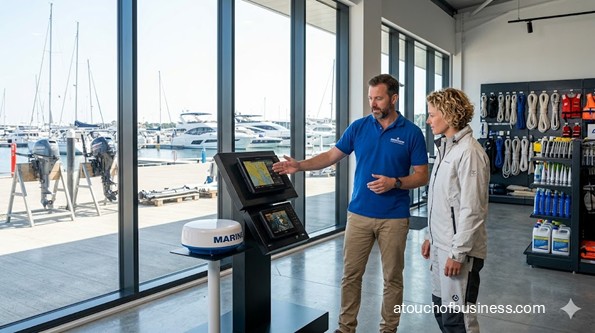
How Early Decisions Shape a Marine Supply Business
A marine supply business sells the parts, gear, and accessories boat owners need before they head out and after they come back. In a storefront model, your business depends on product mix, stock control, clear displays, and a checkout process that works without friction.
Before you can open the doors, you need to know what kind of marine store you are building. A small shop focused on safety gear, cleaning supplies, trailer parts, and dock lines has a very different startup path from a larger store carrying batteries, pumps, electronics accessories, and seasonal maintenance products.
Are You Drawn to the Day-to-Day Life of a Business Owner?
A marine supply business can look simple from the outside. You stock shelves, help customers, ring up sales, and reorder products. But that is only the front end.
Behind the counter, you are receiving freight, tagging items, checking margins, handling returns, watching slow-moving stock, and making sure customers can find what they need when boating season hits. Do you actually like that kind of work?
You also need to think about pressure. Retail brings long hours, weekend traffic, seasonal swings, supplier delays, and cash tied up in inventory. If that sounds draining rather than interesting, this may not be the best fit.
Your reason for starting matters too. It is better to build a business because you are passionate about running the business and the value it gives people, not because you want to run from a job, a boss, or financial stress.
Status is a weak reason to become an owner. Real interest in boating products, customer service, and the daily rhythm of retail will carry you much farther.
Spend time on the decision making. Think through the details you should settle before opening, and be honest about the tough side of ownership.
You should also talk with owners who already run similar businesses, but only in markets where you will not compete. Find people in another city, another region, or at least outside your selling area.
Prepare real questions ahead of time. Ask about their opening inventory, slow sellers, seasonal dips, staffing, location mistakes, and supplier problems. Those conversations matter because they come from direct experience, even if their store is not exactly like the one you want to build.
Does a Marine Supply Business Make Sense in Your Area?
Before you can commit to a lease, you need to know whether local demand is there. A marine supply store depends on nearby boating activity, marina traffic, trailer-boat ownership, fishing activity, and seasonal movement.
If your area has weak demand, low boating density, or only a short selling window, the business may not fit the market. That does not always mean the idea is bad. It may mean the location is wrong, the product mix is too broad, or the store needs a tighter focus.
Look at local boat launches, marinas, repair shops, storage yards, trailer traffic, and nearby competitors. Compare product gaps, price levels, and how often local customers would need supplies. This is the practical part of checking local supply and demand.
Start From Scratch, Buy an Existing Store, or Consider Another Path?
Many people jump straight to opening from scratch. That is not always the smartest move.
A marine supply business may be easier to launch by buying an existing store with shelves, fixtures, supplier accounts, and a known customer base already in place. That route may lower setup time, but it can also come with stale inventory, a weak location, or a bad reputation. You need to compare both sides carefully.
Franchising is not usually the first path people think of in this niche, so do not force it. Still, you should compare your options based on budget, support needs, timeline, and risk tolerance. In some cases, buying a business already in operation may fit better than building everything from the ground up.
Products to Sell
Before you can plan the space, you need to define the assortment. Product mix drives shelf layout, stockroom needs, supplier setup, startup costs, and how customers move through the store.
Common opening categories for a marine supply business include safety gear, personal flotation devices, fire extinguishers, visual distress signal products, dock lines, anchors, fenders, bilge pumps, batteries, chargers, trailer parts, cleaning supplies, and first-aid items.
- Safety and required gear
- Docking and anchoring products
- Maintenance and cleaning supplies
- Electrical and battery items
- Trailer-related parts
- Boat comfort and convenience accessories
That list looks broad because it is broad. The real decision is where to focus. A tighter assortment is often easier to launch than a store that tries to stock everything for everyone.
How the Storefront Workflow Should Work
This business works best when you think in steps, not in isolated tasks. Before you can sell well, you need a workflow that moves products cleanly from supplier to shelf to customer to reorder.
For a marine supply storefront, the basic flow looks like this:
- Choose suppliers and place opening orders.
- Receive inventory and inspect shipments.
- Tag items, assign stock locations, and enter SKUs.
- Merchandise products by category and customer need.
- Ring up sales with the correct tax setup.
- Handle returns, special orders, and warranty issues.
- Track what sells, then replenish fast movers.
That flow matters because one weak handoff creates another problem later. If receiving is sloppy, shelf counts go wrong. If counts go wrong, you get stockouts. If stockouts keep happening, customers stop trusting the store.
Who Your Customers Are and What They Care About
A marine supply business usually serves recreational boat owners, anglers, sailors, and sometimes marinas or repair shops. They care about selection, price, convenience, and—most importantly—whether the item is in stock today.
That last point matters more than many new owners expect. Customers often need a part, a line, a battery item, or safety gear right away. They may be on the way to the marina, in the middle of a repair, or preparing for a trip that weekend.
Your store has to feel useful the moment someone walks in. That means the right categories are easy to find, staff can point customers to the correct product, and checkout does not slow everything down.
Pros, Cons, and Early Operating Risks
A marine supply store has some clear strengths. Customers often want to compare products in person, especially life jackets, lines, anchors, and other items where fit, feel, or size matters.
But there are real drawbacks too. This is still retail. Cash can disappear into inventory fast. Margins can get squeezed. Slow-moving stock can sit for months. In many markets, seasonality changes everything.
- Pros: repeat local demand, useful in-person shopping, product variety, and strong add-on sales opportunities
- Cons: inventory cost, location dependence, seasonal pressure, theft risk, and slow sellers tying up cash
- Operational risks: overbuying, weak merchandising, poor reorder discipline, and opening before the space is ready
Red Flags Before You Move Forward
Some warning signs should make you slow down. Others should make you stop.
- Local boating activity is too small to support a storefront.
- The lease cost is high enough that you need unrealistic sales volume.
- You do not have enough cash for both opening inventory and working capital.
- Your planned assortment is too broad for the space, budget, or local demand.
- You are relying on one or two suppliers without backup options.
- You have not checked zoning, signage, or certificate of occupancy requirements.
- You plan to open before the checkout, receiving, and inventory systems are tested.
Another red flag is weak knowledge of the products you plan to sell. A customer asking about safety gear, batteries, or trailer parts expects useful answers. If you cannot guide them, the store loses credibility fast.
Write a Plan Before You Spend
Before you can sign a lease or place opening orders, you need a written plan. It does not need to be flashy. It does need to be specific.
Your marine supply business plan should define the store format, target customers, assortment, location logic, opening inventory strategy, staffing, startup costs, pricing approach, supplier setup, and break-even pressure. This is where you test the idea on paper before real money leaves your account.
If you have never built one before, start with a practical way to put your business plan together. Keep the focus on launch decisions, not long-range growth talk.
Choose the Legal Structure and Register the Business
Before you can open accounts or apply for many registrations, you need to choose the legal structure. That decision affects taxes, paperwork, liability, and how you run the business from day one.
Some owners start as a sole proprietorship. Others form a limited liability company or another structure. The right choice depends on your risk tolerance, tax situation, and whether you have partners or employees.
Once the structure is chosen, you can move into registration, any assumed name filing, and your tax ID. If you are still sorting that out, it helps to review how to choose the right structure and then compare the practical differences in an LLC versus sole proprietorship decision.
Handle Tax Setup, Bookkeeping, and Recordkeeping Early
A marine supply business selling physical goods will usually need state sales tax registration before the first sale. If you hire staff, you also need the right employer accounts before payroll starts.
Before you can keep records clean, you need separate business banking. That means opening the account after your registration steps are complete and keeping business transactions separate from personal ones from the start.
You also need a bookkeeping process that matches the workflow of the store. Inventory purchases, freight, sales tax, card fees, refunds, and supplier credits all need to land in the right place. This is not the section to treat casually.
Marine Supply Business Legal and Compliance Basics
The legal side of a marine supply storefront is mostly retail-focused, but local rules still matter. You should expect to verify business registration, sales tax setup, local licensing, zoning, signs, and any location-specific approvals tied to the space.
If the store will stock hazardous chemicals, flammable liquids, aerosols, or batteries, workplace safety and local fire-code questions may also come into play. The exact rules can vary, so keep your wording practical and verify details with the right office.
- Federal: Employer Identification Number, and workplace safety rules if employees handle covered hazardous products
- State: entity registration, assumed name filing if needed, sales tax registration, and employer setup if hiring
- City or county: local business license, zoning clearance, signage rules, build-out permits, and certificate of occupancy when required
Ask direct questions. Is marine retail allowed at the address? Will your build-out trigger permits? Does your product mix create any local fire or storage review? Those answers should come before the grand opening plan.
Insurance and Risk Planning
Insurance is part of launch readiness, not an afterthought. Before you can open with confidence, you need to know which policies are required and which ones are simply smart protection.
If you hire employees, workers’ compensation rules may apply depending on state law. Beyond that, you may need general liability, property coverage for fixtures and stock, and added protection based on the lease and your product mix.
A marine supply store can also face losses from theft, damaged inventory, and claims tied to employee handling or store conditions. That is why it helps to understand the basics of insurance coverage for the business before opening day.
Pick the Right Location for a Marine Supply Store
Location is one of the biggest launch decisions in this business. A marine supply storefront depends on visibility, access, parking, signage, and how close the store feels to local boating traffic.
Before you can judge a location, you need to think through customer movement. Are buyers coming from marinas, boat launches, repair yards, or nearby residential areas with trailer boats? Can they get in and out easily? Is there space for receiving shipments without disrupting shoppers?
A weak location can hurt even a well-stocked store. Poor access, low visibility, limited parking, or a bad layout can keep customers from turning the business into a routine stop.
Plan the Physical Layout Before Inventory Arrives
Once the location is chosen, the next question is flow. In a marine supply business, the layout has to support sourcing, receiving, tagging, merchandising, selling, payment, returns, and replenishment.
That means planning the front and back of the store as one system.
- Put common and urgent items where customers can find them fast.
- Use the stockroom for clean receiving and backstock control.
- Keep small, theft-prone items in more secure display areas.
- Make checkout easy to reach without creating bottlenecks.
- Leave room for seasonal displays and supplier deliveries.
Before inventory shows up, decide where each major category will live. It is much easier to launch well when products move into a planned layout instead of a last-minute scramble.
Equipment, Fixtures, and Store Systems
Your equipment list for a marine supply storefront is mostly retail equipment, but it still needs to match your workflow. Before you can sell, you need the tools that let you receive, store, track, and ring up products correctly.
- Shelving, pegboard, slatwall, bins, and feature displays
- Checkout counter, cash drawer, receipt printer, and card terminal
- Barcode scanners and label printers
- Point-of-sale and inventory software
- Stockroom shelving and receiving tools
- Safety data sheet access for covered products
- Basic office setup, forms, and store documents
The software matters just as much as the fixtures. If your point-of-sale system and inventory system do not work well together, you will feel it every day through wrong counts, slow checkouts, and poor reordering.
Suppliers, Ordering, and Opening Inventory
Before you can fill shelves, you need supplier accounts and a buying plan. This is where many new retail owners get into trouble.
Marine supply stores are easy to overbuy for. The categories look useful, the vendor catalogs look promising, and the shelf space starts to feel like it should be full. But full shelves do not always mean smart buying.
Build opening inventory around fast-moving products and real local demand. Ask suppliers about minimum opening orders, freight terms, lead times, warranty handling, and returns. Then compare that to your shelf space, budget, and season.
The handoff matters here. Before you reorder, you need clean receiving. Before you can trust receiving, you need a SKU structure and stock locations. Before you can trust stock locations, you need consistent tagging and shelf discipline.
Pricing Decisions and Margin Control
Pricing in a marine supply business is not just about marking up products. It starts with landed cost, freight, card fees, local competition, and how quickly each category turns.
Some items may support a stronger margin. Others may need sharper pricing because customers compare them easily. Your job is to know the difference before you tag products.
Set category rules early. That helps you avoid random pricing decisions and gives staff a clearer process for special orders, markdowns, and returns. When you work through your pricing decisions, it helps to think in terms of setting prices with a clear method rather than guessing from shelf to shelf.
Startup Costs and Funding Options
Startup costs for a marine supply storefront can vary a lot. The main drivers are lease terms, build-out, fixtures, opening inventory, staffing, signage, insurance, and working capital.
Reliable universal cost ranges are hard to pin down because one store may launch in a basic second-generation retail space while another may need more improvements and a deeper inventory buy. That is why you should build your own cost plan category by category.
- Lease deposit and rent
- Tenant improvements and signage
- Fixtures and checkout equipment
- Point-of-sale and software
- Opening inventory and freight
- Insurance, permits, and registrations
- Payroll and working capital
Funding may come from owner cash, loans, or a mix of both. If outside funding is part of the plan, settle that before you commit to fixed costs. Late funding creates pressure at the worst point in the setup process.
Banking, Card Payments, and Daily Money Control
Before you can ring up the first sale, you need your banking and payment process in place. That includes the business bank account, card processing, deposit handling, refund controls, and who can do what at the register.
This is where a lot of small retail problems begin. Weak controls lead to reconciliation issues, unclear refunds, and missing information when something goes wrong.
Choose the account, set permissions, and make sure the checkout process is tested before opening. If you need help thinking through business banking, start with getting your business banking in place.
Name, Domain, and Brand Basics
A marine supply business does not need a clever name. It needs a usable one. Customers should be able to remember it, say it, and connect it to boating or marine retail without confusion.
Before you order signs, confirm the name is available where you need it. That includes state registration if applicable, your domain name, social handles, and local branding use. Then build basic identity pieces such as signage, receipts, business cards, and a clean online presence.
For this kind of storefront, the brand should support trust and clarity. Customers should know what the store sells before they walk in.
Staffing, Hiring, and Training
You may start alone, or you may need help at opening. That choice depends on store hours, budget, and whether receiving, stocking, and checkout can all be handled by one person without hurting customer service.
A marine supply store does not just need warm bodies at the register. Staff should know how to guide people to the right category, explain basic differences between products, and handle routine store procedures without guesswork.
- Train on product categories and common customer questions
- Train on checkout, returns, and special orders
- Train on receiving, tagging, and restocking
- Train on any hazardous product handling that applies
Before you hire, decide what the first employee will actually do. Retail gets expensive fast when job roles are vague.
Systems, Forms, and Internal Documents
Strong small stores often look simple because the systems are doing their job in the background. Before you can stay organized, you need documents and rules that make daily work repeatable.
- Receiving checklist
- SKU and shelf-label process
- Return and exchange policy
- Special-order form
- Warranty claim log
- Daily register close process
- Cycle count schedule
- Backstock and reorder procedure
These are not glamorous, but they matter. In a marine supply business, many early problems come from weak handoffs, not from lack of effort.
What Day-to-Day Work Looks Like
If you want to know whether this business fits you, picture a normal day before you picture a good month. The day-to-day operation is practical.
You may start the morning receiving freight, checking counts, tagging merchandise, and filling empty pegs. Then customers come in looking for a dock line, a battery charger, a bilge pump, or the right safety item before a trip. After that, you may be handling returns, answering supplier questions, restocking fast movers, and checking what needs to be reordered.
That is the rhythm. It is not glamorous, but for the right person, it is satisfying because it is useful and clear.
Early Customer Reach and Launch Marketing
Before you can attract repeat traffic, people need to know the store exists and what it does well. For a marine supply storefront, early marketing should stay practical.
Start with local visibility. Make sure the sign is readable, the exterior looks active, and the store clearly signals what it sells. Then build awareness with nearby marinas, repair shops, boating groups, and local customers who already buy marine products in the area.
Your launch message should be simple. What can someone get from you today that makes their time on the water easier, safer, or less frustrating?
Launch Readiness for a Marine Supply Business
Before you can announce opening day, the store needs to work as a system. Launch readiness means more than full shelves.
- Business registration and tax setup completed
- Local licensing and location approvals verified
- Certificate of occupancy handled if required
- Supplier accounts opened and first inventory received
- Products tagged, shelved, and tax coded
- Point-of-sale and card processing tested
- Returns and special-order forms ready
- Staff trained on basic store procedures
- Safety handling steps in place for covered products
- Signage, receipts, and customer-facing materials ready
Run test transactions before you open. Test sales, refunds, receiving, and restocking. You want problems to show up while the doors are still closed.
Final Reality Check Before You Commit
A marine supply business can be a solid startup, but only when the local market, location, inventory plan, and workflow all fit together.
Ask yourself a few final questions. Is there enough demand? Do you enjoy the daily retail work? Do you have the cash and patience to carry inventory? Can you build a store that feels useful from the first visit? If the answer stays yes after honest review, you have something real to work with.
FAQs
Question: Do I need a special license to start a marine supply business?
Answer: Usually, you start with standard business registration, tax setup, and local approval for the location. The exact local license rules depend on the city or county.
Question: Will I need a sales tax permit before I open a marine supply store?
Answer: In most cases, yes, because you will be selling physical goods. You should register with your state tax agency before the first sale.
Question: Do I need an Employer Identification Number for this business?
Answer: Many owners do. It is often needed for taxes, payroll, business banking, and some registration steps.
Question: Can I open a marine supply business in any retail space?
Answer: No. You need to confirm the address allows your type of retail use and whether the space needs permits, inspections, or a certificate of occupancy.
Question: What should I sell first in a new marine supply business?
Answer: Start with items people need often and need quickly. That usually means safety gear, lines, anchors, cleaners, trailer parts, pumps, batteries, and other common boating basics.
Question: How much money does it take to start a marine supply business?
Answer: There is no single number that fits every store. Your biggest cost drivers are usually rent, fixtures, opening inventory, signs, software, insurance, and cash to cover the first stretch of operations.
Question: What equipment do I need before opening day?
Answer: Most new stores need shelving, a checkout counter, a point-of-sale system, barcode tools, label printing, stockroom storage, and receiving equipment. You may also need product-handling materials for batteries, chemicals, or other regulated items.
Question: Do I need insurance before I open the store?
Answer: In most cases, yes. The exact coverage depends on the lease, whether you hire staff, and what products you carry.
Question: How do I choose between starting small or opening with a full product line?
Answer: New owners usually do better when they open with a focused mix instead of trying to stock every category. A smaller, better-planned assortment is easier to fund, track, and refill.
Question: What are the biggest mistakes people make when starting a marine supply business?
Answer: Common problems include buying too much stock too soon, choosing a weak location, and opening before the store systems are ready. Another mistake is carrying products the owner or staff do not understand well enough to support.
Question: What should my daily workflow look like in the first few months?
Answer: Most days will revolve around receiving freight, putting products out, helping customers, processing sales, handling returns, and checking what needs to be reordered. The early goal is to keep shelves accurate and cash moving.
Question: Do I need employees right away?
Answer: Not always. Some owners begin alone, but longer store hours, freight handling, and customer traffic can make early help necessary.
Question: What basic systems should be in place before I open?
Answer: You need a way to track inventory, process card payments, collect tax correctly, and record returns or supplier issues. You also need simple store documents so staff know how to handle routine tasks.
Question: How do I price products in a new marine supply store?
Answer: Start with true cost, including freight and handling, then set prices by category instead of guessing item by item. You also need to watch local competition and leave room for returns, markdowns, and card fees.
Question: What should I do if cash feels tight in the first month?
Answer: Look at slow inventory, reorder timing, and unnecessary spending before making bigger moves. A new retail store can run short on cash when too much money is sitting on the shelf instead of in the bank.
Question: How should I market a marine supply business when it first opens?
Answer: Start with local visibility and direct awareness in the boating community. Marinas, boat ramps, repair shops, clubs, and nearby boat owners are usually more useful than broad advertising at the beginning.
Question: Do I need special policies for returns, special orders, or warranty issues?
Answer: Yes. Clear written policies help you stay consistent and prevent confusion when problems come up at the counter.
Question: How do I know if my store is ready to open?
Answer: The store should be legally cleared, stocked, labeled, and able to process sales without confusion. You should also test basic tasks like sales, refunds, receiving, and restocking before the first public day.
Learn From People Already in Marine Retail
If you are starting a marine supply business, it helps to hear how people already in the industry think about retail, product mix, customer demand, and opening decisions. The resources below are interviews, podcasts, videos, and feature articles that can give you practical perspective before you commit money, sign a lease, or build out your inventory plan.
- An interview with CEO of West Marine — Article interview with Chuck Rubin about retail direction, competition, and rebuilding a major marine retail brand.
- The IBEX Interviews: West Marine CEO Chuck Rubin — Video interview focused on marine retail, competition, and changes in the marketplace.
- Get All Your Yacht Supplies at This Chandlery in Florida — Feature article on Boat Owners Warehouse, a large chandlery and marine supply operation, with useful context on assortment and positioning.
- Interview with Sailing Chandlery’s Founder Andrew Dowley — Founder interview covering the company’s path and services in the chandlery business.
- Interview with the Owners of Aqua Supply Company — Podcast episode with the owners of Aqua Supply Co., a marine products and apparel business.
- Pirate Cove Marina’s Winning Strategies — Podcast interview with a marina business owner sharing practical lessons that overlap with marine retail, customer demand, and early business execution.
Related Articles
- Starting an Outboard Motor Repair Business Successfully
- How To Start Your Boat Rental Business
- Start a Boat Cleaning Business from Scratch
- How To Start a Bait Shop
- How To Start Your Yacht Charter Business
- How To Start Your Jet Ski Rental Business the Right Way
- How To Start Your Charter Fishing Business
- How To Start Your Houseboat Rental Business
- Starting a Tugboat Business
- How To Start Your Scuba Diving Shop
- Starting a Canoe and Kayak Rental Business
Sources:
- IRS: Employer identification
- SBA: Choose business structure, Register your business, Tax ID numbers, Licenses and permits, Pick business location, Business bank account, Business insurance
- OSHA: Hazard communication, Flammable liquids
- USCG Boating: Federal boat requirements
- NMMA: 2024 spending update
- MRRA: Inventory guidance, Retail basics, Offseason pressure
- West Marine: Boat safety gear, PFD requirements
- Discover Boating: Boat essentials
- SCORE: Retail return policy, Small business handbook