
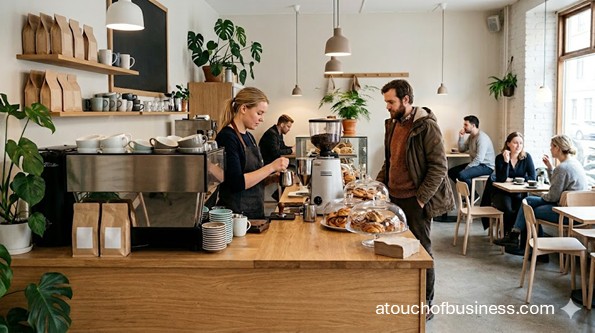
Scandinavian Café Overview And Early Setup Thinking
A Scandinavian café is usually a small restaurant built around coffee, tea, pastries, and a short menu that feels clean, simple, and intentional.
In many cases, the opening offer includes espresso drinks, brewed coffee, cardamom buns, pastries, rye bread, waffles, and light lunch items such as open-faced sandwiches.
That sounds simple on paper. In real life, this is still a regulated food business. You need a workable kitchen or prep area, safe cold storage, approved sinks, solid cleaning routines, and a service setup that can handle the morning rush without turning into a mess.
The appeal is clear. A Scandinavian café can stand out in a crowded coffee market because the concept has a point of view. The risk is also clear. If you pick the wrong location, build a menu that is too broad, or open before your systems are ready, the business can struggle fast.
Your physical flow matters from day one. A food service business lives or dies on receiving, storage, prep, service speed, cleanup, payment, and reordering. If those steps feel clumsy in your space, your labor costs climb, your wait times grow, and your waste gets worse.
Is This Business The Right Fit For You?
Before you think about espresso machines or pastry cases, ask a harder question. Do you actually want to run this kind of restaurant? A Scandinavian café looks calm from the customer side. Behind the counter, it is early mornings, supplier problems, cleaning, staffing gaps, prep work, paperwork, and constant decisions.
You also need to like the day-to-day work. That means tasting drinks, checking milk and pastry deliveries, setting up stations, solving rush-hour bottlenecks, watching waste, and keeping the place clean even when you are tired. If you do not enjoy food service, the concept alone will not carry you very far.
Ask yourself whether you are moving toward something or trying to run away from something. Starting a Scandinavian café only to escape a job, fix immediate financial pressure, or chase the image of being a business owner is a weak foundation. Passion for the work matters because hard weeks will come.
You also need a practical reality check. This business can be rewarding, but it can also be physically tiring, detail-driven, and expensive to open. You will deal with food safety, equipment downtime, labor scheduling, spoiled product, landlord issues, and inspections. Can you handle that pressure without taking every setback personally?
Talk to owners who run cafés, bakeries, or small restaurants in another city or market area so they are not direct competitors. Ask about build-out delays, food waste, staffing, supplier issues, and the hardest part of the first year. That kind of firsthand owner insight is more useful than general advice because it comes from people who have already lived the work.
If you are still interested after hearing the hard parts, that is a good sign. You can also review a broader set of things to think through before opening so you do not rush into the idea just because the concept feels attractive.
Step 1 Choose The Exact Restaurant Concept
Your Scandinavian café should not try to be everything at once. The first big decision is whether you are opening as a coffee-and-pastry café, a lunch café with open-faced sandwiches and soups, or a broader small restaurant with breakfast, plated items, and more prep work.
This choice changes almost everything:
- the size of your prep area
- the amount of refrigeration you need
- the number and placement of sinks
- the speed of service you can promise
- the number of staff you need at opening
- the permits and plan review details tied to the menu
Keep the first menu tight. A short list is easier to cost, easier to train, easier to prep, and easier to keep consistent. For a Scandinavian café, that often means drinks, pastries, one or two signature baked items, and a few savory plates that fit your space and staffing.
Be careful with specialty foods. If you want to make cured fish items, vacuum-pack food, or use another specialized process in-house, your compliance path may get more complex. That can mean more review, more records, and more expense before you open.
Step 2 Study Demand In Your Area
A Scandinavian café needs more than a pretty idea. It needs enough local demand to support daily traffic. Start by looking at nearby coffee shops, bakeries, brunch spots, lunch cafés, and small restaurants that attract the same customers you want.
Pay attention to simple details:
- morning foot traffic
- office density nearby
- weekend brunch patterns
- parking and walkability
- how many places sell coffee only versus coffee and food
- average line length at busy hours
- whether pastry-driven shops already dominate the area
You are not just studying style. You are studying volume, speed, and buying habits. Will people in your area buy a cardamom bun and coffee on the way to work? Will they stay for lunch? Will they understand open-faced sandwiches, or will you need a simpler description and a more familiar lunch offer?
This is where local supply and demand matters. A Scandinavian café can work in many places, but the offer may need to lean more pastry-forward, more coffee-forward, or more lunch-driven depending on the neighborhood.
Step 3 Decide How The Food Service Model Will Work
Treat this business like a restaurant, because that is how your space, labor, and compliance will behave. Even if the dining room is small, you still need to think in terms of receiving, cold holding, dry storage, prep, service, dishwashing, and customer flow.
Choose the service style early:
- counter order and counter pickup
- counter order with food runners
- full-service tables for a small dining room
- mostly takeout with limited seating
- coffee-first in the morning and lunch service later
The more table service you add, the more labor and coordination you need. The more food you make to order, the more pressure you put on prep, cold storage, and rush handling. For most first-time owners, a tight counter-service model is easier to open well than a full-service hybrid.
Your Scandinavian café should feel calm to the customer. It should not feel chaotic to the staff. That only happens when the service model matches the size of your kitchen, prep area, and team.
Step 4 Put The Plan On Paper
You do not need a fancy document. You do need a clear plan. A restaurant opening can burn cash fast when the owner is making major decisions from memory or mood.
Your plan should cover:
- concept and opening menu
- customer types
- location assumptions
- hours of operation
- staffing at opening
- equipment list
- supplier list
- startup costs
- monthly fixed costs
- sales targets by daypart
- break-even thinking
- risk points that could delay opening
Keep it grounded. If your café only has room for one espresso machine, six inside tables, one pastry case, and a small sandwich station, your plan should reflect that. A small restaurant cannot hit big numbers through wishful thinking.
If you need help building the document, this guide on putting your business plan together can help you shape the first version.
Step 5 Choose The Legal Structure And Register The Business
This step comes before you open accounts, sign major contracts, or commit to branding. Your structure affects taxes, liability, ownership, and paperwork.
Common choices include:
- sole proprietorship for a simple one-owner setup
- limited liability company for many small restaurant owners
- partnership if more than one owner is involved
- corporation when ownership, tax planning, or investors make it useful
For a Scandinavian café, many owners look closely at an entity that gives liability separation because food service has more physical risk than many other small businesses. You still need to decide what fits your situation, your ownership structure, and your state rules. A good starting point is choosing your legal structure with care instead of defaulting to the easiest option.
Once you choose the structure, handle the registrations that apply. That may include the state filing, an assumed name if the café name is different from the legal name, and a federal Employer Identification Number.
Step 6 Find A Restaurant-Ready Location
This is one of the biggest make-or-break decisions in the whole startup process. A beautiful space can still be a bad restaurant space. Your Scandinavian café needs the right legal use, the right layout, enough utility capacity, and a customer pattern that matches the concept.
Look for a site that already operated as a food business if possible. That does not solve everything, but it often makes life easier. A former café, bakery, or small restaurant may already have some of the plumbing, ventilation, electrical service, hand sinks, and customer flow you need.
Watch these details closely:
- zoning for café or restaurant use
- whether a new certificate of occupancy will be required
- existing restrooms and accessibility issues
- grease, plumbing, and floor drain needs
- electrical capacity for espresso, refrigeration, dishwashing, and lighting
- storage room and receiving access
- space for dry goods, dairy, paper goods, and cleaning supplies
- front-of-house line control during busy periods
If you lease a non-restaurant space, the build-out can become expensive fast. A small café can turn into a major project once the city asks for permit drawings, plumbing upgrades, accessibility changes, and a new certificate of occupancy. Do not sign a lease until you understand the approval path.
Step 7 Handle Permits And Compliance Early
A Scandinavian café is a regulated food service business. That means compliance is part of the opening process, not an afterthought. If you wait too long, you can end up with expensive rework, delayed inspections, or equipment that does not match the approved plan.
Items that commonly need attention include:
- business registration and tax setup
- state and local sales tax registration where required
- local business license if your city or county requires one
- zoning review
- health department plan review
- food establishment permit or local equivalent
- building, plumbing, electrical, mechanical, and fire approvals when build-out is involved
- certificate of occupancy where the site or local rules call for it
- sign permit for exterior signage where required
- employer accounts if you will hire staff
Some rules depend on what you serve. A coffee-and-pastry café may have a simpler review path than a Scandinavian restaurant with soups, hot plates, smoked fish items, or more prep work. The more complicated the food prep, the more carefully you need to confirm the local requirements.
If you plan to use a specialized process such as vacuum packing, cook-chill, smoking for preservation, curing, or another unusual preparation method, raise that before you open. Do not assume you can add it later without new approval.
Step 8 Design The Layout Around Food Flow
Now think like a restaurant operator. Your Scandinavian café should have a clear path from receiving to storage to prep to service to cleanup. If staff cross each other all day, your service slows down and your labor cost rises.
A practical layout often includes:
- receiving area near the back door
- dry storage shelving for coffee, tea, flour, sugar, cups, lids, and paper goods
- cold storage for milk, butter, cream, sandwich ingredients, and pastries that require refrigeration
- espresso bar with space for grinders, milk fridges, knock box, pitchers, cups, lids, and rinse tools
- pastry case placed where it helps sales but does not block the line
- sandwich or light prep station if you serve lunch
- hand sinks where staff actually need them
- three-compartment sink or approved warewashing setup
- mop sink and cleaning supply storage
- pickup area that keeps waiting customers away from active prep zones
Here is a simple question to ask. Can one person work the espresso station during a rush without walking across the room for milk, lids, cups, syrups, or pastries? If not, fix that on paper before you build it in real life.
Step 9 Buy Equipment That Matches The Opening Menu
Do not buy equipment because it looks professional. Buy it because the opening menu, service pace, and approved layout require it. For a Scandinavian café, the core list often starts with beverage production and safe holding, then expands based on your food offer.
Main equipment often includes:
- espresso machine
- espresso grinder
- coffee grinder for batch brew
- drip or batch brewer
- hot water dispenser for tea and other hot drinks
- under-counter milk refrigeration at the bar
- reach-in refrigerator in back-of-house
- dry pastry display case
- refrigerated display case if needed
- worktables and prep surfaces
- dish machine if volume justifies it
- approved warewashing sink setup
- ice machine if the drink list requires it
- small ovens or light finishing equipment if the menu requires it
Then come the small but essential items:
- tampers
- milk pitchers
- scales
- thermometers
- tea tools
- sheet pans
- cutting boards
- food storage containers
- shelving
- sanitizer tools
- cleaning supplies
- serviceware and packaging
The big trap is buying too much equipment for a menu you have not proven. A tighter opening menu usually leads to a cleaner layout, lower startup costs, and faster training.
Step 10 Build Supplier And Inventory Systems
A Scandinavian café depends on consistency. You cannot build a loyal customer base if the coffee changes without warning, the pastry case looks half empty, or the lunch ingredients arrive late three times a week.
Your opening supplier list may include:
- coffee roaster or wholesale coffee supplier
- dairy supplier
- tea supplier
- bread or pastry supplier if you are not making everything in-house
- flour and baking ingredient supplier if you bake on site
- seafood or smoked fish supplier for approved products if your menu uses them
- paper goods and packaging supplier
- janitorial supplier
- linen service if needed
Set up simple inventory controls from the start:
- par levels for milk, coffee beans, pastry items, bread, sandwich fillings, and cups
- receiving checks for delivery quantity and quality
- date labeling
- rotation rules
- waste log for spoiled or unsold product
- reorder sheet by supplier and order day
Waste control matters more than many first-time owners expect. A Scandinavian café can lose money quietly through overbaking, slow-moving lunch items, expired dairy, and a pastry case filled for looks instead of demand.
Step 11 Set Pricing, Payments, And Recordkeeping
You need prices that fit your costs, your neighborhood, and your concept. This is not just about what nearby coffee shops charge. It is about what your café needs to cover labor, rent, ingredients, waste, packaging, card fees, and slower days.
Price each category on purpose:
- espresso and coffee drinks
- tea service
- pastries and baked goods
- sandwiches and lunch plates
- bundles such as coffee-and-pastry combinations
Use recipe sheets and build sheets. A drink that looks simple can still carry hidden costs through milk waste, syrup use, cup size, and remake frequency. The same goes for sandwiches and pastries. This is where setting your prices carefully gives you a better start.
You also need your payment setup ready before opening:
- business bank account
- point-of-sale system
- card reader and receipt printer
- cash drawer if you accept cash
- merchant processing or another card-payment setup
- basic bookkeeping system
- sales tax tracking where required
Keep your records clean from day one. Separate business spending from personal spending, track daily sales by category, record cash overages and shortages, and keep vendor invoices organized. If you are still comparing options, it helps to think through both opening a business bank account and the basics of card payment processing before you buy hardware.
Step 12 Protect The Business With Insurance And Risk Controls
A food business has more ways to go wrong than many office-based startups. Customers can slip, equipment can fail, food can spoil, a freezer can break overnight, and an employee can get hurt during prep or cleaning.
Insurance needs vary by location, lease, staff count, and operation, but a Scandinavian café often reviews coverage such as:
- general liability
- property coverage
- workers’ compensation where required
- business interruption options
- equipment-related coverage if available and useful
- commercial auto if the business uses a vehicle
Just as important are the day-to-day controls:
- temperature checks
- cleaning schedules
- opening and closing checklists
- incident report form
- manager review of food holding and dating
- safe storage of chemicals away from food and service items
Insurance is one layer. Good routines are another. You can review broader business insurance basics, but the real protection comes from pairing coverage with strong daily controls.
Step 13 Hire And Train The Opening Team
You may start lean, but most Scandinavian cafés still need help at opening. Even a small restaurant usually needs coverage for bar drinks, register, food prep, dining room reset, and cleanup.
Opening roles may include:
- owner-manager
- lead barista
- counter or register person
- prep cook or kitchen support
- dish and cleanup support depending on volume
Training should stay practical. Do not drown people in theory. Train them on the exact work they will do:
- drink recipes and cup builds
- milk handling
- pastry handling and display refill
- sandwich or lunch assembly
- allergen awareness for the items you sell
- handwashing and sanitation
- opening tasks
- rush-hour station behavior
- closing tasks
For a Scandinavian café, consistency matters. A cardamom bun, open-faced sandwich, or signature coffee drink should look the same no matter who is working that shift. That only happens when recipes, portions, and station tasks are written down instead of explained differently every day.
Step 14 Build The Name, Brand, And Customer-Facing Basics
Your brand should match the concept without becoming confusing or overly niche. A Scandinavian café usually works best with a name, logo, and sign style that feel warm, simple, and easy to remember. The customer should understand what kind of place it is before walking in.
Handle the basics before opening:
- business name availability
- domain name
- logo and simple visual identity
- storefront sign plan
- printed menus or menu boards
- hours posted clearly
- simple website or landing page
- business profiles on major map and review platforms
- photos that show the actual space, drinks, pastries, and food
Keep the message clear. If you sell coffee, pastries, and light Nordic lunch items, say that in normal language. Do not make people guess whether you are a coffee shop, bakery, or brunch restaurant.
Step 15 Set Up The Internal Documents And Daily Systems
This is the boring part that saves you later. A Scandinavian café needs simple systems before the first day of service. When those systems are missing, the owner becomes the only person who knows how anything works.
Useful opening documents include:
- recipe cards for every drink and food item
- daily prep list
- par sheet for coffee, milk, pastries, bread, and packaging
- opening checklist
- closing checklist
- cleaning schedule
- temperature log
- receiving log
- waste log
- equipment cleaning log
- cash count sheet
- staff contact list
- incident report form
Keep them simple enough that people will actually use them. If a form takes too long, staff will skip it. If a checklist is too vague, people will interpret it differently. Good systems in a food business are short, clear, and repeatable.
Step 16 Test The Operation Before The Public Opening
Do not let opening day be the first full test. Run a soft opening. Invite a limited group, work the real menu, and see what breaks under pressure.
Use that test to watch the details that matter:
- ticket times
- line backups at the register
- milk restocking speed
- pastry display refill timing
- sandwich assembly bottlenecks
- dishwashing pileups
- tables that do not turn over cleanly
- temperature control during the rush
- staff confusion about station boundaries
You should also confirm every approval that needs to be in place before you open. That can include health sign-off, final building approvals tied to the work you completed, and any local operating permits linked to the location and menu.
A Scandinavian café feels polished when service is smooth, food looks consistent, and nothing important depends on the owner running in circles. That level of calm comes from testing, not hoping.
Step 17 Launch With A Tight Opening Routine
Your first public days should be controlled, not dramatic. Keep the menu tight. Keep inventory realistic. Keep staffing focused on the hours that actually matter.
For the launch week, pay close attention to:
- which drinks sell most often
- which pastries sell first and which linger
- whether lunch demand is real or just occasional
- how much milk, bread, and pastry stock you actually use
- refunds and remakes
- average wait time at peak periods
- how often staff fall behind on cleanup and restocking
Be ready to cut weak items fast. A Scandinavian café does not need a big list to feel special. It needs a sharp list that the team can execute well every day.
Step 18 Watch For Red Flags Before You Commit More Money
Some warning signs show up before opening. Others show up during the soft launch. Either way, pay attention. It is cheaper to fix a weak plan than to keep feeding it.
- The location looks good but does not have the right legal use. That can trigger expensive build-out work and approval delays.
- The menu is too broad for the kitchen and staff. More items mean more prep, more storage, more waste, and slower service.
- Your prep flow is awkward on paper. If the staff path looks bad before opening, it will feel worse during a rush.
- You are counting on high sales without proven demand. Hope is not a sales forecast.
- Your labor plan is too thin. One sick employee should not break the whole day.
- Your suppliers feel unstable. If coffee, dairy, bread, or pastry deliveries are shaky before opening, that problem rarely gets better on its own.
- You are opening before systems are tested. That is how simple problems turn into public problems.
If several of these show up at once, slow down. A delayed opening is frustrating. Opening a Scandinavian café before it is ready is usually worse.
Step 19 Complete The Opening Checklist
Before the first full day of service, your Scandinavian café should be ready in practical terms, not just visual terms. A pretty room does not mean the business is ready to operate.
- Business name, structure, tax registrations, and Employer Identification Number are in place.
- Lease terms match the actual restaurant use and approved work.
- Health review, plan approval, inspections, and operating permits are complete where required.
- Certificate of occupancy and sign approvals are handled if the location calls for them.
- Espresso bar, refrigeration, storage, prep area, and warewashing setup are installed and working.
- Menu is final and matches the approved setup.
- Recipes, portions, and prices are written down.
- Suppliers are active and first deliveries are scheduled.
- Point-of-sale, card processing, and bookkeeping are ready.
- Opening, closing, cleaning, and temperature logs are ready.
- Staff are hired, trained, and scheduled.
- Soft opening is complete and the weak spots have been fixed.
- Website, map listings, hours, menu board, and customer-facing information are live and accurate.
Once all of that is true, you are not guessing anymore. You are opening with a real business, not just a good concept.
Step 20 Know What Your Days Will Look Like
If you own a Scandinavian café, your early days will not be spent sitting in the dining room admiring the design. You will be involved in almost everything.
A normal pre-opening or early opening day can include:
- checking deliveries
- reviewing dairy, pastry, and bread stock
- tasting coffee and checking grind settings
- setting the pastry case
- reviewing prep for sandwiches or lunch items
- watching line speed during the rush
- handling a staff call-out
- answering landlord or contractor questions
- reviewing invoices
- checking waste and sales after service
- closing the register and checking the next order
That is the real fit test. Does that kind of day still interest you? If yes, a Scandinavian café may suit you well. If not, it is better to know now than after you sign a lease.
FAQs
Question: Can I open a Scandinavian café with coffee and pastries first, then add more food later?
Answer: Yes, that can make the opening easier because the kitchen, storage, and review process may be simpler. It also gives you time to see what customers actually buy before you expand the food list.
Question: Is it better to lease a former restaurant than a regular retail unit?
Answer: In many cases, yes. An old food space may already have the plumbing, electrical setup, restrooms, and approved use that a café needs.
Question: What should I confirm before I sign a lease for a Scandinavian café?
Answer: Make sure the address can legally be used for food service and ask whether a new certificate of occupancy or use approval is needed. You should also confirm that the site can support your equipment, sinks, refrigeration, and customer seating.
Question: Do I need health approval before I start construction?
Answer: Often, yes. Many areas want plans, equipment details, and layout information reviewed before the build-out goes too far.
Question: What permits and registrations usually come up when starting this kind of business?
Answer: Owners often deal with business registration, an Employer Identification Number, tax accounts, local operating approvals, and food establishment permits. The exact list changes by state, city, menu, and facility type.
Question: Do I need special approval if I want to make cured fish, vacuum-packed foods, or other unusual items?
Answer: Sometimes. Those methods can trigger extra review, and the health authority may ask for a Hazard Analysis and Critical Control Point plan or another approval step.
Question: Should I bake everything myself when I start?
Answer: Not always. Buying some items from approved suppliers can lower labor pressure, cut waste, and reduce equipment needs during the opening stage.
Question: What equipment should I lock down before I can open?
Answer: Focus on the gear that supports your actual offer, such as espresso equipment, brewing tools, cold storage, prep tables, display cases, sinks, and payment hardware. Do not buy extra machines just because they look impressive.
Question: How do I set prices if I have no history yet?
Answer: Start with recipe cost, portion size, labor, packaging, rent, and card fees. Then compare that number with what your local market will accept and adjust the offer if the margin is too thin.
Question: What are the main startup cost drivers for a Scandinavian café?
Answer: The biggest swings usually come from the lease, construction work, utilities, refrigeration, bar equipment, seating, permits, and the size of the food program. A simple coffee-and-pastry launch usually costs less than a broader restaurant-style opening.
Question: What insurance should I look into before opening?
Answer: Ask about general liability, property coverage, and workers’ compensation if you will hire staff. Your lease, lender, and state rules may shape what you need right away.
Question: How many people do I need for the first phase?
Answer: That depends on your hours and food scope, but most owners need coverage for drinks, register, prep, and cleanup. If one person doing all of that would slow service badly, your opening team is probably too small.
Question: What should my point-of-sale system track from day one?
Answer: It should show sales by item, payment type, tax, refunds, and hourly traffic. That data helps you spot weak products, rush periods, and cash leaks in the first month.
Question: What simple systems should I put in place before the first week?
Answer: Set up prep sheets, count sheets, cleaning tasks, temperature logs, waste tracking, and reorder notes. Simple paper or digital tools work fine if the team uses them every day.
Question: How should I handle early marketing before and right after opening?
Answer: Make sure your name, photos, hours, address, and menu basics are easy to find online. A soft opening, local visibility, and clear social posts usually matter more than complex ad campaigns in the first stage.
Question: What usually hurts cash flow in the first month?
Answer: Slow traffic, over-ordering, waste, remake errors, payroll timing, and surprise repair or permit costs are common problems. Keep cash aside for shortfalls because opening sales are often uneven at first.
Question: What early mistakes cause the most trouble for new café owners?
Answer: Common problems include taking the wrong location, making the offer too broad, underestimating labor, and opening before the layout and routines are tested. A small concept can still fail if the back-of-house work is poorly planned.
Real-World Guidance From Café And Nordic Food Founders
Getting advice from founders, café operators, and specialty-coffee leaders can save you from learning every lesson the hard way.
These interviews and conversations can help you think more clearly about concept focus, hospitality, product quality, team building, and the early choices that shape a Scandinavian café before it opens.
- ScandiKitchen – From Startup to Successful Business — A strong Scandinavian café example. Brontë Aurell talks about the planning phase, keeping a narrow focus, using social media well, and building around fresh food and drink made on site.
- Podcast: Scandinavian Baking with Nichole Accettola of Kantine — Good for anyone thinking about a Nordic bakery-café angle. Nichole Accettola discusses her time in Denmark and her return to the U.S. to open Kantine, a Scandinavian bakery and café in San Francisco.
- Klaus Thomsen: The FLTR Interview — One of the best pieces here for direct owner advice. Thomsen explains why a coffee shop needs a real purpose, why good colleagues matter, and how Coffee Collective added a bakery to improve consistency across its cafés.
- A Peek Into Denmark’s Specialty Coffee Evolution — This gives you founder perspective from Denmark’s café scene, including how Coffee Collective and ROAST moved from early ideas into real shops, and what they learned while building the business.
- An Interview With Tim Wendelboe — Useful if you want a Scandinavian coffee voice that talks about service, consistency, sourcing, and why some owners choose focus over rapid expansion.
- 10 Minutes With James Yoder of Not Just Coffee — Not Scandinavian, but very helpful for the café side of the business. Yoder talks about the kind of customer experience and service style that shaped his shops.
- Barista Stories: Håkan Sävlind of Cafe Pascal & Nordic Brew Lab — Helpful for hospitality and guest experience. Håkan explains how he wants guests to feel seen, heard, and comfortable asking questions, which is a smart model for a Scandinavian café with a specialty coffee focus.
Related Articles
- How To Start a Café
- Starting an Acai Bowl Cafe
- How to Start a Board Game Cafe
- How To Start a Bakery
- How To Start Your Breakfast Restaurant
- Starting a Coffee Roasting Business
- Starting a Profitable Coffee Cart Business
- Starting a Bagel Shop
- Starting a Donut Shop
Sources:
- FDA: Plan Review Guide, Start A Food Business
- SBA: Choose Business Structure, Pick Business Location, Open Business Bank Account, Federal And State Tax IDs
- IRS: Get Employer ID Number, Hiring Employees Guide
- CDC: Certified Managers Guidance
- ADA: Accessible Design Standards
- NSF: Food Equipment Certification
- Rhode Island Department Of Health: Specialized Processes Guide
- NYC Buildings: Certificate Of Occupancy, Sign Permit Basics
- American Swedish Institute: Fika Café Example