
Upholstery Business Startup Choices Before Opening
An upholstery business provides repair, recovering, restoration, and custom soft-furnishing services for furniture and related items.
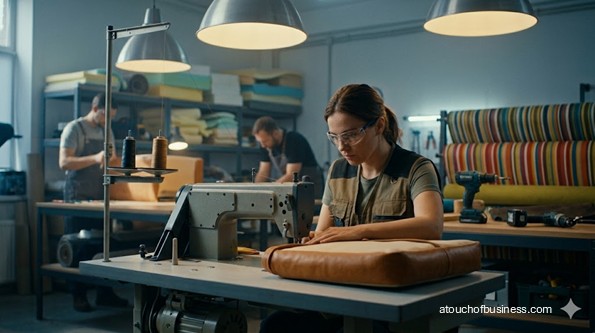
In a workshop-based setup, the owner or upholsterer completes most projects inside a shop. That shop needs space for furniture, fabric, foam, tools, sewing, teardown, storage, cleanup, and customer handoff.
Common upholstery services may include:
- Furniture reupholstery
- Cushion and foam replacement
- Dining chair seat recovering
- Sofa, loveseat, ottoman, bench, and headboard upholstery
- Antique and heirloom furniture restoration
- Commercial booth, banquette, and waiting-room seating
- Leather or vinyl repairs, if the shop has the right skill and tools
- Custom pillows, cushions, and slipcovers, if included in the startup model
The customer may be a homeowner, interior designer, restaurant owner, office manager, hotel operator, antique dealer, boat owner, or furniture retailer. Each type of customer changes the job size, expectations, timing, and risk.
A shop-based upholstery business can be a good fit if you like hands-on craft, detail, tools, fabric, and problem solving. It is not a good fit if you only like the design side and dislike the physical tasks behind it.
Is Business Ownership Right for You?
Before you follow any startup steps, ask whether this business fits your skills, budget, and lifestyle.
Upholstery is not just picking nice fabric. The owner or upholsterer may remove old material, pull staples, inspect frames, replace webbing, rebuild cushions, sew covers, stretch fabric, staple edges, trim details, and clean the shop.
You need patience. You also need stamina. A sofa, commercial bench, or antique chair can take more time than expected once the old covering comes off.
Ask yourself:
- Do you enjoy detailed hand tasks?
- Can you handle bulky furniture without damaging it?
- Can you explain why a project costs more than a cheap replacement item?
- Can you stay calm when hidden frame, spring, or padding problems appear?
- Can you manage customer expectations before a project begins?
Do not start an upholstery business only because you want to leave a job, escape financial stress, or for the status of business ownership.
You also need financial room. Startup costs may include rent, tools, a sewing machine, compressor, staplers, shop tables, supplies, deposits, insurance, permits, and materials. If you skip this, you may open with a shop that cannot handle real customer projects.
Think about household support too. A workshop-based business may bring uneven income at first. It may also take extra hours while you quote jobs, order fabric, finish repairs, and solve setup problems.
Talk to Upholstery Owners You Will Not Compete Against
Before you rent space or buy major equipment, talk to owners outside your market area. Choose owners you will not compete against.
Prepare questions before each conversation. Firsthand insight matters because those owners have lived through the setup decisions, even though every owner’s path is different.
Ask about:
- Jobs they avoid
- Common quoting mistakes
- How much shop space furniture really takes
- Supplier delays and discontinued fabric patterns
- Customer-owned material problems
- Deposits, change orders, and abandoned furniture
- Which tools they use every day
- Which equipment they bought too early
You can learn more from real business owners than from guessing. If you skip this, you may repeat avoidable setup errors that a working shop owner would have warned you about.
Check Local Demand Before You Commit
An upholstery business depends on local demand. Some areas have customers who value repair, restoration, and custom seating. Other areas may expect low prices because replacement furniture is easy to buy.
Look at the market before you sign a lease. Compare local shops, furniture repair providers, leather repair services, drapery workrooms, auto or marine trim shops, and furniture stores that refer repair jobs.
Pay attention to:
- How many upholstery shops already serve the area
- Whether customers own furniture worth repairing
- Local income levels and design activity
- Commercial seating demand from restaurants, offices, clinics, and hotels
- Typical wait times at existing shops
- Whether local prices can support skilled labor and material costs
This is not a marketing campaign. It is a go-or-no-go check. Local supply and demand should shape your service list, shop size, and startup budget.
If you skip this, you may build a shop for customers who are not willing to pay for the level of craftsmanship you plan to offer.
Choose Your Upholstery Services Carefully
A new upholstery business should not accept every kind of project on day one. Each service changes the tools, materials, risks, and skill needed.
Start by choosing what you will handle in the shop. Be honest about your skills and equipment.
- Household furniture: chairs, sofas, ottomans, benches, cushions, and headboards.
- Antique pieces: older frames, springs, padding, and customer expectations may add risk.
- Commercial seating: booths, banquettes, and waiting-room furniture may require clear timing and stronger materials.
- Leather and vinyl: these materials need the right tools, skill, and supplier support.
- Marine, auto, or recreational vehicle interiors: these specialties may require different materials and methods.
- Custom cushions and pillows: these may fit a shop model if you have sewing capacity and clear pricing.
Also decide what you will not accept. You may decline unsafe frames, pest-contaminated furniture, moldy items, mattresses, bedding, children’s products, or work outside your training.
Service boundaries protect the business. If you skip them, you may take jobs that drain time, create disputes, or require compliance knowledge you do not have.
Decide Whether to Start, Buy, or Explore a Franchise
You can start an upholstery business from scratch if you have the skill, equipment plan, supplier access, and shop setup. That path gives you control, but it also means you build everything yourself.
Buying an existing upholstery shop may give you equipment, a lease, supplier relationships, job records, and local name recognition. It can also bring open work orders, customer deposits, old equipment, lease limits, and hidden liabilities.
Franchising is less common for traditional custom upholstery shops. It is more common in mobile leather, vinyl, fabric repair, and restoration niches.
Your best path depends on:
- Your budget
- Your timeline
- Your need for support
- How much control you want
- Available businesses for sale
- Your risk tolerance
If you consider buying, review the lease, equipment condition, open jobs, deposits, supplier accounts, customer records, insurance claims, tax issues, and reputation. A guide on whether to start from scratch or buy a business can help you think through the decision more clearly.
Business Plan
Your business plan should turn your startup choices into a practical setup plan for the upholstery business.
Keep it focused on what must be ready before opening. Do not turn it into a long theory document.
Include these points:
- Service scope: list the jobs you will accept and the jobs you will decline.
- Customer types: define whether you will serve homeowners, designers, commercial buyers, furniture stores, or specialty customers.
- Shop setup: plan space for teardown, sewing, cutting, foam, fabric, storage, finished jobs, and customer handoff.
- Equipment: list the sewing machine, compressor, staplers, tables, hand tools, safety items, and storage needed before launch.
- Suppliers: identify fabric, foam, leather, vinyl, thread, webbing, spring, fastener, adhesive, and tool suppliers.
- Pricing method: decide how you will estimate labor, materials, foam, trim, repairs, pickup, delivery, and taxes.
- Compliance checks: list zoning, certificate of occupancy, sales tax, labeling, safety, waste, and local license items you must verify.
- Funding needs: show how much cash you need for lease costs, tools, supplies, setup, deposits, and early expenses.
- Opening readiness: define what must be tested before customer projects begin.
A strong business plan helps you avoid vague decisions. If you skip this, you may rent space, buy tools, and accept jobs before you know what the shop can handle.
Set Up the Legal and Tax Basics
Legal setup for an upholstery business starts with ordinary business formation. Then you verify the rules that apply to your location and your exact services.
Do not assume another shop’s rules apply to you. Many items vary by U.S. jurisdiction.
- Business structure: choose whether to operate as a sole proprietorship, limited liability company, corporation, or partnership.
- Business registration: register with the state if your structure or location requires it.
- Doing Business As name: register a trade name if you use a name other than the legal owner or entity name, where required.
- Employer Identification Number: get one from the Internal Revenue Service when needed for your structure, tax accounts, or employees.
- Employer accounts: if you hire employees, verify payroll tax, unemployment, workers’ compensation, and labor notice rules in your state.
You should also verify how your state treats sales tax. Materials, repair labor, fabrication labor, delivery, and deposits may not be treated the same everywhere.
If you skip the sales tax check, your invoices may be wrong from the first job. That can create tax problems later.
For the broader setup process, review how to register a business before you open bank accounts, sign contracts, or issue customer paperwork.
Check Upholstery Compliance Before You Start
Some upholstery rules depend on what you do with the finished item.
Customer-owned furniture returned to the same customer for personal use is different from furniture you reupholster and sell.
- CPSC flammability rules: federal upholstered furniture flammability rules apply when reupholstered furniture is intended for sale.
- Customer-owned personal-use jobs: these are treated differently under CPSC guidance.
- Textile labeling: textile label rules may apply when you make, market, distribute, or sell textile products.
- State law labels: state bedding, upholstered furniture, repair-renovator, filling, disinfection, or registration rules vary.
If your shop only reupholsters a customer’s own chair and returns it to that customer, one set of issues may apply. If your shop buys old furniture, reupholsters it, and sells it, more rules may apply.
Verify before selling finished pieces. Check your state regulator for law-label and repair-renovator rules. If you skip this, you may sell items without required labels or records.
Verify the Workshop Location
A shop-based upholstery business needs the right space. The location must support how the owner or upholsterer will receive, store, repair, and finish furniture.
Before signing a lease, check whether the location allows upholstery, furniture repair, customer drop-off, deliveries, storage, equipment noise, and any small retail display if you plan to sell finished pieces.
Verify these items locally:
- Zoning: ask whether upholstery or furniture repair is allowed at the address.
- Certificate of occupancy: confirm whether the space needs a new or updated approval for your use.
- Business license: check city or county rules before opening.
- Fire inspection: ask if fabric, foam, adhesives, solvents, and shop storage trigger a review.
- Building permits: verify before adding walls, ventilation, electrical changes, plumbing, or other tenant improvements.
- Sign permit: check before installing exterior, window, awning, or illuminated signs.
Also read the lease carefully. It should allow upholstery tasks, furniture storage, customer visits if planned, deliveries, compressor use, tools, supplies, and any approved chemical storage.
If you skip this, you may sign a lease for a space you cannot legally or safely use as an upholstery workshop.
Design the Shop Around the Real Workflow
The shop layout affects speed, quality, safety, and how many projects you can handle at once.
A good upholstery workshop has clear zones. Furniture should move through the process without getting damaged, buried, or confused with another job.
- Customer drop-off and inspection area
- Furniture waiting area
- Teardown and staple-removal area
- Frame, webbing, spring, and padding repair area
- Foam and cushion area
- Fabric measuring and cutting area
- Sewing station
- Stapling and stretching bench
- Finished furniture storage
- Fabric roll and sample storage
- Adhesive and chemical storage, if used
- Waste and scrap handling area
Loading access matters too. A shop that works for dining chair seats may not work for sofas, banquettes, or commercial seating.
If customers enter the shop, separate the customer area from sharp tools, chemicals, clutter, and unfinished projects. If the shop is mostly behind the scenes, you still need a safe receiving and handoff process.
Buy the Equipment Your Upholstery Shop Needs to Open
Do not buy tools at random. Build the equipment list around the services you plan to offer at launch.
A shop that handles household furniture needs a different setup than one that handles marine seating, auto interiors, commercial booths, or leather work.
Common workshop equipment may include:
- Industrial walking-foot sewing machine
- Sewing table and thread stand
- Heavy-duty needles, bobbins, and upholstery thread
- Large cutting table
- Workbenches
- Fabric shears, rotary cutter, straightedges, squares, and measuring tapes
- Pneumatic upholstery stapler
- Air compressor, hoses, and fittings
- Staple pullers and tack removers
- Upholstery regulator, tack hammer, awls, pliers, and hand tools
- Webbing stretcher and spring tools
- Foam cutter or foam saw
- Shop vacuum and cleanup tools
- Shelving, bins, fabric racks, and foam storage
- Dollies, moving blankets, straps, and sliders
You may also need safety glasses, gloves, hearing protection, first-aid supplies, fire extinguishers where required, Safety Data Sheets, and proper chemical labels.
If you skip equipment testing, the first customer job becomes the test. That is risky.
Set Up Materials and Supplier Accounts
An upholstery business depends on reliable materials. You need suppliers before you promise jobs to customers.
Set up sources for fabric, vinyl, leather if offered, foam, batting, webbing, burlap, springs, edge roll, tack strip, thread, zippers, buttons, nailheads, adhesives, staples, and sample books.
Ask suppliers about:
- Lead times
- Minimum orders
- Trade pricing
- Freight costs
- Returns
- Discontinued fabrics
- Fabric flaws
- Foam density and firmness choices
- Flammability documentation when needed
Do not overbuy fabric just to make the shelves look full. A startup shop may need sample books and dependable ordering more than deep inventory.
Foam quality matters. A cushion for light home use may not need the same foam as a commercial bench that gets constant use.
Build Estimates That Protect the Shop
Bad estimates can hurt an upholstery business early. A job may look simple until the owner or upholsterer removes the old covering.
Your estimate process should account for labor, fabric, foam, batting, webbing, springs, fasteners, trim, frame repair, pickup, delivery, and taxes.
Before quoting, inspect the item and document its condition. Take photos. Note weak frames, loose joints, sagging springs, odors, stains, pest signs, missing parts, and customer-supplied materials.
Common pricing inputs include:
- Furniture type and size
- Teardown time
- Fabric yardage
- Fabric width and pattern repeat
- Foam replacement
- Spring, webbing, or frame repair
- Tufting, buttons, welt cord, skirts, channels, or nailheads
- Leather or vinyl handling
- Pickup and delivery
- Sales tax treatment in your state
Use yardage guides as estimates, not guarantees. Pattern matching, fabric direction, and repeat can change material needs.
For broader help with pricing decisions, review how to think through pricing products and services. Then apply that thinking to your own labor, materials, and local market.
Create the Right Forms Before the First Job
Your paperwork should make the job clear before furniture enters the shop.
Good forms protect both the customer and the business. They also help you keep each project organized.
- Estimate or quote form
- Work order
- Customer approval form
- Deposit receipt
- Fabric selection record
- Customer-owned material disclaimer
- Change-order form
- Pickup and delivery condition form
- Before-and-after photo record
- Warranty or workmanship policy
- Abandoned furniture policy
- Label and flammability records when selling upholstered furniture
Customer-owned material needs special care. The fabric may be short, flawed, unsuitable, or hard to replace. State who carries that risk before cutting begins.
If you skip written approvals, small misunderstandings can turn into unpaid invoices, refund demands, or damaged trust.
Plan Startup Costs, Funding, and Payments
There is no universal startup cost for an upholstery business. A small owner-operated workshop has different costs than a larger shop with staff, delivery, commercial seating, or sales inventory.
Build your numbers from real quotes. Use your location, shop size, equipment choices, insurance quotes, supplier needs, and permits.
Startup cost categories may include:
- Business registration and setup
- Lease deposit and rent
- Shop build-out or tenant improvements
- Certificate of occupancy, license, or inspection fees if required
- Electrical, lighting, ventilation, or layout changes
- Sewing machine, compressor, staplers, tables, and tools
- Fabric, foam, batting, webbing, springs, thread, staples, adhesives, and findings
- Sample books and swatches
- Safety equipment and fire-safety setup
- Waste handling supplies
- Accounting, invoice, and payment systems
- Insurance and risk planning
- Vehicle or delivery equipment if offered
- Initial payroll if hiring
- Basic identity items such as a business name, domain, contact page, signs, forms, and required labels
Funding may come from savings, a bank or credit union loan, equipment financing, a line of credit, an SBA-backed loan through an approved lender, seller financing if buying a shop, or franchise financing if buying a franchise.
Open a business bank account before customer payments begin. Set up card payments, deposits, invoices, receipts, and sales tax tracking before opening.
If you skip this setup, customer deposits, material orders, taxes, and personal spending can become hard to separate.
Prepare for Safety, Waste, and Insurance
An upholstery shop has practical risks. Furniture is bulky. Tools are sharp. Staples and tacks scatter. Foam and fabric create waste. Adhesives and solvents may create safety duties.
If you have employees and use hazardous chemicals, you need a Hazard Communication process. That means labels, Safety Data Sheets, and worker training for the chemicals they may use.
If you use flammable adhesives, solvents, aerosols, or finishes, review storage, ventilation, containers, and waste handling. Do not guess.
Also plan for:
- Fabric and foam scrap handling
- Old padding and staple disposal
- Solvent-contaminated wipes, if used
- Adhesive containers
- Shop cleanup routines
- Fire-safety review where required
- Safe storage for customer furniture
Insurance should match your risk. Common coverage to discuss may include general liability, commercial property, tools and equipment, customer goods in your care, workers’ compensation if employees are hired and required, commercial auto if pickup or delivery is offered, and product or completed operations coverage if you sell finished furniture.
Do not assume every coverage is legally required. Some may be required by law, a landlord, a lender, a vehicle rule, or a contract. Others are risk-planning choices.
Decide Whether to Hire Before Opening
Many upholstery shops start with owner labor. Hiring before launch adds payroll, training, supervision, scheduling, and safety duties.
Only hire early if the startup model truly needs help. A shop that accepts large commercial seating or multiple furniture jobs may need more hands than a small chair-and-cushion shop.
Think through:
- Who will inspect furniture and write estimates
- Who will remove old fabric and staples
- Who will sew covers and cushions
- Who will handle pickup and delivery if offered
- Who will track work orders, deposits, suppliers, and invoices
If you hire employees, verify employer accounts, workers’ compensation, payroll tax, labor notices, and safety training rules in your state.
If you skip this, you may create legal and financial duties before the shop has enough steady projects to support them.
Set Up the Customer Job Workflow
A workshop-based upholstery business needs a clear path from first contact to final payment.
This does not need to be complicated. It does need to be clear.
- The customer contacts the shop.
- The owner or staff member asks about the item, condition, size, material needs, and deadline.
- The customer provides photos or brings the furniture to the shop.
- The owner or upholsterer reviews the item and writes an estimate.
- The customer approves the job, fabric, deposit, and scope.
- The shop schedules the project and orders materials.
- The owner or upholsterer completes teardown, repair, padding, cutting, sewing, stapling, and finishing.
- The customer reviews the finished item.
- The balance is paid before pickup or delivery.
Add a change-order step for hidden problems found after teardown. A weak frame, broken spring, odor issue, or short fabric piece should not become unpaid labor.
If you offer pickup and delivery, take condition photos before moving the item. That protects the customer and the shop.
Test the Shop Before Opening
Before you accept paid customer projects, run at least one full test project through the shop.
Use the test to find problems while the stakes are low. A sample chair, cushion, or ottoman can reveal weak spots in your setup.
Test these items:
- Furniture receiving and storage
- Estimate accuracy
- Fabric measuring
- Foam and supply ordering
- Sewing machine setup
- Stapler pressure
- Cutting table space
- Workflow between stations
- Cleanup and waste handling
- Invoice and tax setup
- Finished furniture storage
If the test job feels chaotic, fix the setup before opening. A real customer project will add time pressure, customer expectations, and payment risk.
A Day in the Life Before You Commit
A normal day in an upholstery business can shift fast. That is why fit matters.
The owner may open the shop, check work orders, inspect a chair, remove old staples, find weak webbing, measure fabric, call a supplier about foam, sew a cushion cover, staple fabric to a frame, update job notes, and revise an estimate after hidden damage appears.
Then the owner may clean up staples, sweep foam scraps, store customer furniture, answer messages, and prepare the next project.
This snapshot is not a full operating system. It is a reality check. If this sounds interesting, the business may fit you. If it sounds draining, think carefully before investing.
Red Flags to Think Through Before Launch
Some warning signs should slow you down. They do not always mean you should stop, but they do mean you need answers before spending more money.
For an upholstery business, watch for these red flags:
- You do not have upholstery skill and have no trained worker ready.
- You are signing a lease before checking zoning, certificate of occupancy, fire review, and local business license rules.
- Your local market expects low replacement-furniture prices.
- Too many shops already serve the same niche.
- You cannot estimate labor, fabric, foam, repairs, and pattern matching with confidence.
- The shop cannot store sofas, commercial seating, unfinished jobs, and finished pieces safely.
- You plan to accept customer-owned material without a written policy.
- You plan to sell reupholstered furniture without checking flammability, textile, and state law-label rules.
- Your sales tax setup is unclear.
- You use adhesives, solvents, or flammable products without safety and waste planning.
- You have no process for hidden frame, spring, odor, pest, or mold problems.
- You offer pickup and delivery without vehicle, insurance, and condition-photo procedures.
- You price too low to compete with cheap replacement furniture.
- Your supplier lead times do not match the project dates you promise.
- Your insurance does not address customer furniture while it is in the shop.
Do not ignore these signs. Each one can affect launch cost, customer trust, legal setup, or the shop’s ability to finish projects on time.
Pre-Opening Checklist for an Upholstery Business
Use this checklist before you open the shop or accept paid customer projects.
It is focused on startup readiness, not long-term management.
- You have confirmed that the business fits your skills, budget, and lifestyle.
- You have spoken with non-competing upholstery owners.
- Your service list and excluded jobs are written.
- You have decided whether to start from scratch, buy a shop, or explore a franchise.
- You have checked local demand and competition.
- Your business plan covers services, shop setup, tools, suppliers, pricing, funding, compliance, and opening readiness.
- Your business registration is complete where required.
- Your Doing Business As registration is complete where required.
- Your Employer Identification Number is obtained if needed.
- Your sales tax account is set up if required.
- You have verified tax treatment for materials, labor, delivery, and deposits.
- Your location is approved for the intended use.
- Your certificate of occupancy or change-of-use approval is complete if required.
- Your local business license, fire inspection, and sign permit are complete if required.
- Your lease allows upholstery tasks, storage, equipment, chemicals if used, customer visits if planned, and deliveries.
- Your shop zones are set up and safe.
- Your electrical, lighting, ventilation, and loading setup are ready.
- Your sewing machine, compressor, staplers, cutting table, and work surfaces are installed and tested.
- Your fabric, foam, batting, webbing, springs, thread, staples, and findings are ready for your launch services.
- Your supplier accounts are active.
- Your Safety Data Sheets and chemical labels are ready where needed.
- Your flammable storage and waste process are ready where needed.
- Your CPSC and law-label process is ready if you will sell upholstered or reupholstered items.
- Your quote, work order, approval, deposit, change-order, and pickup/delivery forms are ready.
- Your pricing system has been tested.
- Your business bank account and payment system are ready.
- Your insurance coverage starts before customer furniture enters the shop.
- You have completed a test project and fixed setup problems.
- Your basic identity items are ready, including business name, phone, email, contact presence, invoices, signs, and required notices.
If too many items are not ready, delay opening. A slower launch is better than accepting customer furniture before the shop can handle it.
Frequently Asked Questions
These questions focus on startup decisions for a future upholstery business owner.
Is an upholstery business a good fit for a first-time owner?
It can be, but only if you have upholstery skill or trained help. The business requires measuring, cutting, sewing, padding, stapling, estimating, and customer communication. Practice projects should come before paid customer jobs.
What should I verify before signing a shop lease?
Check zoning, certificate of occupancy rules, business license needs, fire review, chemical or flammable storage limits, loading access, parking, customer drop-off, and whether the lease allows upholstery activity.
Does an upholstery shop need a special federal license?
Not typically for ordinary customer-owned furniture reupholstery. Federal issues may still apply if you hire employees, use hazardous chemicals, generate hazardous waste, sell textile products, or sell upholstered furniture.
Do federal flammability rules apply to every reupholstery job?
No. Customer-owned furniture returned to the same customer for personal use is different from reupholstered furniture intended for sale. If you sell finished upholstered pieces, verify the CPSC rules before opening that part of the business.
Are law labels required for upholstery projects?
They may be required depending on the state and the activity. Rules can differ for new, used, renovated, upholstered, or bedding-related items. Verify with the state regulator before selling renovated or newly upholstered pieces.
What equipment matters most before opening?
A workshop-based startup usually needs an industrial sewing machine, cutting table, workbenches, compressor, pneumatic stapler, staple pullers, measuring tools, hand tools, foam tools, storage, safety supplies, and job forms.
Should I carry a lot of fabric before opening?
Not usually. Supplier accounts, sample books, and a clear ordering process may matter more than deep inventory. Too much fabric can tie up cash and become outdated.
How should I set prices?
Build prices from labor time, fabric, foam, batting, webbing, springs, fasteners, trim, repairs, pickup, delivery, and tax treatment. Use written quotes and change orders when hidden problems appear.
Should I accept customer-owned material?
Only with a written policy. Customer-owned material may be short, flawed, unsuitable, or hard to replace. The customer should understand those limits before the fabric is cut.
Is buying an existing upholstery business realistic?
Yes, but review the equipment, lease, open jobs, deposits, supplier accounts, customer records, reputation, tax issues, and insurance history before buying.
Is franchising realistic for this business?
It can be realistic in upholstery-related repair and restoration niches. It is less central to traditional custom furniture upholstery. Review fees, training, territory, required products, and operating rules before investing.
What records should be ready before opening?
Prepare estimates, work orders, approvals, deposits, change orders, material records, photos, tax records, supplier records, Safety Data Sheets, waste records if needed, and label records if you sell upholstered furniture.
Learn From People in the Upholstery Business
Before starting an upholstery business, it helps to hear from people who have already spent time in the trade. Their stories can help you understand the learning curve, the value of hands-on practice, the pressure of customer jobs, the need for clear pricing, and the reality of turning craft skill into a business.
Use the resources below to get added perspective from upholsterers, upholstery business owners, and people who work closely with the furniture and soft-furnishings trade.
- Interview with Hayley, Owner of Fox and Furb Upholstery
- Wes and Jes Breitenbach of Crown Upholstery
- Richardson and Paige Upholstery Podcast Interviews
- Interview with Indya Hanlon from Indya Creates
- Interview with Sue Garth from Suzie’s Attic
- Kerri Hollingsworth on Building an Upholstery Business
- Starting an Upholstery Business
- Starting a Creative Upholstery Business
Related Articles
- How To Start Your Furniture Restoration Business
- How To Start a Retail Furniture Store
- Starting a Drapery Business
- How To Start Your Fabric Shop
- How To Start Your Home Decor Business
Sources:
- U.S. Small Business Administration: Market research guide, Write your business plan, Calculate startup costs, Register your business, Licenses and permits, Pick business location, Open business bank account, Buy or franchise
- Internal Revenue Service: Get an EIN
- U.S. Consumer Product Safety Commission: Upholstered furniture FAQ, Business guidance FAQ
- Federal Trade Commission: Textile labeling guide, Buying a franchise
- Occupational Safety and Health Administration: Hazard communication, Flammable liquids
- Environmental Protection Agency: Hazardous waste guide, Solvent wipes FAQ
- O*NET OnLine: Upholsterers profile
- California Department of Tax and Fee Administration: Reupholsterers tax rule
- Texas Comptroller: Taxable services
- Pennsylvania Department of Labor and Industry: Bedding and upholstery
- Rhode Island Department of Business Regulation: Bedding and furniture
- New York City Department of Buildings: Certificate of occupancy
- Trivantage: Upholstery tools guide
- Sailrite: Shop tools
- FoamOrder: Upholstery foam guide
- Buy Fabrics: Upholstery yardage chart
- Vanguard Furniture: COM yardage guide