
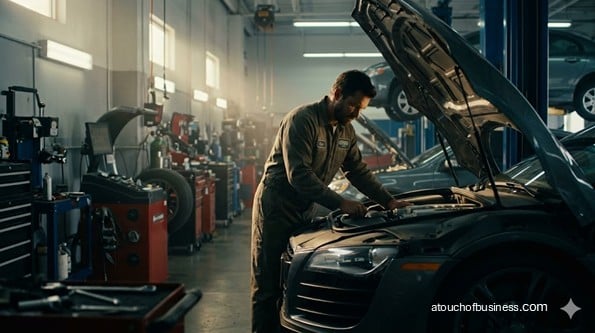
Starting an Auto Repair Shop
An auto repair shop provides vehicle inspection, maintenance, diagnostics, and repairs from a fixed shop location. The owner or technicians may handle oil changes, brakes, batteries, belts, hoses, suspension, cooling systems, electrical diagnosis, heating and air conditioning, and other repair jobs.
This is a practical business, but it is not a simple one. You need a good location, the right equipment, clear job scope, reliable parts flow, safe repair procedures, and enough startup capital to open without rushing.
A shop-based auto repair business is built around service bays, vehicle lifts, tools, diagnostic equipment, customer approvals, parts ordering, repair quality, payment, and vehicle handoff. If one part of that chain is weak, jobs can slow down fast.
Are You Passionate About Business Ownership?
Before you follow broader startup steps, ask whether this specific business fits your life, skills, and risk tolerance.
Do you enjoy cars, problem-solving, and customer conversations? Are you ready to manage expensive equipment, delayed parts, customer complaints, and safety risks?
Owning an auto repair shop is different from being good at repairing vehicles. As the owner, you may spend as much time making decisions as turning wrenches.
- Can you explain repairs in plain language?
- Can you handle customers who are stressed about cost?
- Can you say no to repair jobs your shop is not ready to support?
- Can you manage technicians, vendors, forms, payments, and safety rules?
- Can your household handle startup costs, uncertain income, and long days during opening?
Do not start an auto repair shop only to escape a job, financial stress, or status pressure.
You need a real interest in the business. Passion does not replace planning, but being passionate about the business can help you stay focused when repairs, customers, and costs all compete for your attention.
Talk With Owners Before You Spend
Speak with auto repair shop owners you will not compete against. Look outside your city, region, or market area.
Prepare your questions before each conversation. Firsthand owner insight is valuable because these owners have lived through the decisions you are about to make, even though every shop follows a different path.
- Which tools did they need on day one?
- Which equipment did they buy too soon?
- Which services caused the most early problems?
- What did they learn about parts suppliers?
- What compliance issue surprised them?
- What would they change about their first shop layout?
These talks can help you avoid opening with the wrong service mix, weak pricing, poor bay flow, or missing supplier support. They also give you a more honest view than a simple checklist can provide.
Check Local Demand and Competition
An auto repair shop depends on local vehicle owners, vehicle types, competitors, and repair habits. A strong setup in one area may not fit another.
Before you sign a lease or buy lifts, study the market around the location you are considering.
- How many independent repair shops are nearby?
- Are there dealerships, tire stores, quick-lube shops, or specialty garages close by?
- Do local customers drive older vehicles, newer vehicles, imports, domestic cars, trucks, or fleet vehicles?
- Is there enough parking and traffic access for drop-offs and disabled vehicles?
- Are nearby shops general repair shops or narrow specialists?
Use this step to decide whether your planned services make sense. A shop focused on general repair has different needs than one built around tires, alignments, air conditioning, or fleet accounts.
Good demand does not remove risk. It only tells you there may be room for a well-planned shop.
Choose How You Will Enter the Business
You can start an auto repair shop from scratch, buy an existing shop, or explore a franchise. Each path changes cost, control, speed, and risk.
Starting from scratch gives you more control over the location, service mix, equipment, layout, and brand. It also means you must build everything before opening.
Buying an existing shop may give you bays, lifts, customer records, staff, and a location with repair history. It may also come with worn equipment, lease problems, old pricing, customer complaints, or environmental issues.
A franchise may provide systems, training, branding, and vendor relationships. It can also limit your choices and add fees. Compare your options with your budget, timeline, support needs, desired control, and risk tolerance. The decision is part of deciding whether to start from scratch or buy.
Define Your Auto Repair Shop Model
Your service mix shapes almost every startup decision. It affects the building, bay count, tools, technicians, insurance, software, suppliers, and compliance checks.
A new auto repair shop can start as a general mechanical repair shop. That may include diagnostics, oil changes, brake service, batteries, belts, hoses, steering, suspension, cooling systems, electrical diagnosis, and scheduled maintenance.
Some services add more cost or compliance. Decide early whether to offer them at opening or wait.
- Air conditioning service: This requires proper refrigerant equipment and EPA Section 609-certified technicians.
- Tire service: This adds tire machines, balancing equipment, storage, tire disposal, and supplier needs.
- Alignments: This can require an alignment rack, space, calibration, and trained staff.
- Body or paint service: This can trigger air, fire, ventilation, training, and waste rules.
- State inspections or emissions testing: These programs vary by state and may need separate approval.
- Advanced driver assistance system calibration: This may require OEM procedures, scan tools, targets, space, and training.
Do not build your opening around services your shop cannot support. Taking on the wrong repair jobs can cause delays, comebacks, damage claims, and customer distrust.
Business Plan
Your business plan should turn your startup decisions into a clear opening plan. Keep it focused on what must be ready before you accept customer vehicles.
This is not a generic document. It should explain how your auto repair shop will open, what it will offer, what it will avoid, and what must be paid for before launch.
- Service mix: List the repair jobs you will offer at opening and the ones you will not take yet.
- Shop layout: Plan bay count, lift placement, parking, parts storage, waste storage, office space, and customer flow.
- Equipment: Match lifts, tools, scan tools, compressors, and specialty equipment to your first services.
- Staffing: Decide whether you will repair vehicles yourself, hire technicians, hire a service advisor, or start small.
- Suppliers: Set up parts, fluids, tires if needed, waste hauling, used oil pickup, and equipment service vendors.
- Compliance: Track zoning, certificate of occupancy, repair shop registration, tax setup, safety, and environmental checks.
- Pricing: Set diagnostic charges, labor rate, parts markup, shop supplies policy, sublet handling, and warranty terms.
- Startup costs: Include lease, build-out, tools, lifts, software, insurance, permits, supplies, payroll reserve, and working capital.
- Opening readiness: List what must be tested before the first full day.
Use your plan as a decision tool. A practical business plan should help you see what you can afford, what you must delay, and what must be verified before you commit.
Register the Business and Set up Tax Accounts
Set up the legal and tax basics before you sign major contracts, hire employees, open accounts, or accept customer payments.
Choose a business structure, register the business name, and apply for an Employer Identification Number. If you use a name that is not the legal name of the owner or entity, check whether a DBA or assumed name filing applies.
You also need to check sales and use tax rules for your state. Parts, labor, shop supplies, disposal fees, and sublet repairs are not treated the same way everywhere.
This is a good time to keep business and personal transactions separate. Open the right accounts early so deposits, repair payments, supplier bills, and taxes do not get mixed into personal finances.
Handle Compliance Without the Fog
Compliance for an auto repair shop is practical. You are checking whether you can legally open at the address, provide the planned services, store the materials, hire workers, and handle waste safely.
Some items apply everywhere. Others vary by U.S. jurisdiction. Do not assume a rule from one state or city applies to yours.
- Business registration: Form the entity or register the business through the state process that applies to your structure.
- Employer Identification Number: Get this from the Internal Revenue Service when needed for taxes, hiring, banking, and license applications.
- Repair shop registration: Some states require repair shops or automotive repair dealers to register before opening.
- Sales and use tax: Confirm how your state treats parts, labor, supplies, and disposal charges.
- Zoning: Confirm auto repair is allowed at the exact address.
- Certificate of occupancy: Ask whether the building needs approval for auto repair use before opening.
- Fire and building review: Check requirements tied to flammable liquids, exits, vehicle storage, compressed gases, and shop layout.
- Environmental rules: Plan used oil, coolant, batteries, tires, solvents, aerosols, hazardous waste, and wastewater handling.
- Air conditioning service: Only offer this if the shop has proper equipment and EPA Section 609-certified technicians.
- Body or paint service: Review air, fire, ventilation, training, and waste rules before offering it.
- Workers’ compensation: If you hire employees, check the state rule before opening.
If you need a broader primer, review licenses and permits, then narrow the question to auto repair in your own location.
What To Ask Before Opening
Use one focused question list when you speak with agencies, your insurance broker, your landlord, your accountant, or an attorney.
- Is auto repair allowed at this exact address?
- Does this building need a certificate of occupancy for the planned use?
- Does the state require repair shop registration or automotive repair dealer registration?
- Are written estimates, repair approvals, invoice wording, posted notices, or repair shop signs required?
- How are parts, labor, shop supplies, and disposal fees taxed?
- Are there local rules for overnight vehicle storage?
- Do floor drains, washing, or wastewater systems need approval?
- How must used oil, coolant, tires, batteries, solvents, and aerosols be stored or removed?
- What fire inspection items apply to flammable liquids, batteries, tires, and compressed gases?
- What coverage should be in place before customer vehicles enter the shop?
Ask these questions before you sign the lease. A good-looking building can still be a bad auto repair location if the use, layout, waste handling, or fire review does not fit.
Choose the Right Shop Location
A shop-based auto repair business needs more than visibility. The building must support bays, lifts, vehicles, people, tools, waste handling, and customer drop-off.
Walk the property as if a customer vehicle has just arrived and will move through the full repair process.
- Where does the customer park?
- Where are keys handled?
- Where does the technician inspect the vehicle?
- Where are parts staged?
- Where does used oil go?
- Where does a disabled vehicle wait?
- Where does the customer pay and pick up the vehicle?
Check ceiling height, floor condition, electrical service, lighting, ventilation, compressor placement, parking, restroom access, office space, and customer areas.
Poor layout can slow every repair job. It can also increase damage risk, safety problems, and turnaround delays.
Plan the Shop Layout and Bay Flow
Your layout should help technicians move from diagnosis to repair, quality check, invoice, and handoff without wasting time or blocking vehicles.
Think about the path of a repair job from start to finish. A customer approves the estimate. Parts arrive. The technician repairs the vehicle. Someone checks the repair. The customer pays. The vehicle leaves.
That sounds simple, but the shop must support it.
- Keep parts storage close enough to the bays.
- Keep waste containers away from customer areas.
- Leave room around lifts for safe movement.
- Set a clear area for vehicles waiting on parts.
- Keep tools, fluids, and shop supplies organized.
- Plan cleanup so bays do not become storage areas.
A shop that opens before the layout works will struggle with bottlenecks from day one.
Buy Equipment That Matches Your Service Mix
Auto repair equipment can consume a large part of your startup budget. Buy for your opening services, not for every repair you might offer someday.
Most shop-based setups need core equipment before launch.
- Vehicle lifts matched to the vehicles you plan to service.
- Floor jacks, jack stands, wheel chocks, and lift safety items.
- Hand tools, torque wrenches, pullers, brake tools, and suspension tools.
- Professional scan tools and diagnostic equipment.
- Battery and charging system testers.
- Air compressor, air lines, and shop electrical setup.
- Oil drain equipment and labeled used-fluid containers.
- Workbenches, tool storage, parts shelving, and tire racks if needed.
- Computers, phones, printer, internet, and shop management software.
- Payment terminal, invoice system, key tags, and customer forms.
Specialty equipment should be tied to a clear startup decision. Tire machines, wheel balancers, alignment racks, air conditioning machines, ADAS calibration targets, brake lathes, and EV or hybrid tools should match real demand, staff skill, space, and compliance needs.
Set up Safety and Environmental Controls
An auto repair shop handles vehicles, lifts, chemicals, fluids, batteries, tires, and sometimes refrigerants. Safety and waste handling must be planned before opening.
Set up chemical labels, safety data sheets, personal protective equipment, fire extinguishers, spill kits, first-aid supplies, and safe storage for flammable liquids where needed.
Plan waste handling for used oil, used oil filters, coolant, brake fluid, transmission fluid, solvents, aerosols, batteries, tires, scrap metal, and contaminated absorbents.
If you hire employees, train them before the shop opens. Training should cover chemicals, labels, safety data sheets, protective equipment, lift use, spill response, fire prevention, and repair procedures tied to their tasks.
Do not leave waste handling for later. Used fluids and hazardous materials need a storage and pickup plan before the first repair job starts.
Set up Parts and Vendor Flow
Parts flow affects speed, quality, and customer trust. A repair job can stop fast if the right part is missing, late, wrong, or hard to return.
Before opening, set up supplier accounts and know how each vendor handles delivery, returns, warranties, core charges, and cutoff times.
- Parts suppliers.
- Oil, fluids, filters, and chemical suppliers.
- Tire supplier if tires are offered.
- Battery supplier.
- Tool and equipment suppliers.
- Used oil recycler.
- Waste hauler if needed.
- Scrap metal recycler.
- Lift inspection provider.
- Compressor service provider.
- Software provider.
- Payment processor.
Do not rely on one parts source without a backup. Parts delays can hurt turnaround time and customer confidence before the shop has built trust.
Create Estimate, Approval, and Invoice Systems
Customers care about trust, price clarity, and confidence that the vehicle will be repaired properly. Your paperwork and software should support that from the first day.
Set up estimates, repair orders, customer approvals, invoices, technician notes, parts records, vehicle photos if used, warranty notes, and service history records.
Your system should make the repair path clear:
- The customer explains the concern.
- The vehicle is checked or diagnosed.
- The customer receives an estimate.
- The customer approves the repair.
- Parts are ordered or pulled.
- The technician completes the repair.
- The vehicle receives a quality check.
- The customer pays and receives the vehicle.
Written estimate and authorization rules vary by location. Keep your forms clear, and check whether your state requires specific wording, approvals, invoice details, or posted notices.
Set Pricing Before the First Repair Job
Weak pricing is one of the fastest ways to damage a new auto repair shop. You need pricing decisions before you open, not after customers are waiting.
Set your labor rate, diagnostic charge, parts markup, minimum labor charge, shop supplies policy, sublet repair handling, warranty terms, and disposal fees if allowed.
Many shops use labor guides and estimating software to build repair estimates from labor times, parts, and the shop’s labor rate. This helps keep estimates more consistent.
Also check how your state taxes repair labor, parts, shop supplies, and disposal fees. Your invoices should be ready before the first payment is processed.
For a deeper look at pricing basics, use guidance on pricing products and services, then apply it to diagnostics, labor time, parts, and shop policies.
Plan Startup Costs and Funding
Do not use one universal startup cost number for an auto repair shop. Costs change with location, bay count, equipment, build-out, staffing, service mix, insurance, permits, and working capital.
Build your startup budget from real quotes and local checks.
- Lease deposit or property cost.
- Build-out and inspections.
- Lifts, tools, diagnostic equipment, and compressor setup.
- Shop software, computers, phones, and payment hardware.
- Office and customer area setup.
- Initial fluids, filters, parts, chemicals, and shop supplies.
- Waste storage, pickup, recycling, and environmental setup.
- Licenses, permits, registrations, and professional fees.
- Insurance.
- Payroll reserve if hiring.
- Working capital for rent, utilities, parts purchases, and slower early months.
Funding options may include owner savings, a bank loan, an SBA-backed loan, equipment financing, a line of credit, seller financing for an existing shop, or franchise financing if you choose that path.
Set up a business bank account before launch. Banks may ask for formation documents, ownership records, business licenses, and tax ID information, so handle those items early.
Put Insurance and Risk Planning in Place
An auto repair shop handles customer vehicles, test drives, lifts, tools, chemicals, and repair decisions. Insurance is part of opening safely.
Check legally required coverage in your state, especially workers’ compensation if you hire employees. Do not assume the rule is the same in every state.
Common coverage to discuss with an insurance professional includes garage liability, garagekeepers coverage for customer vehicles, commercial property, equipment breakdown, business interruption, commercial auto, pollution liability, cyber coverage, and employment practices coverage.
Insurance is not only about the premium. It can affect whether your lease, lender, franchise agreement, or supplier account is approved.
Decide Who Will Handle the Repairs
Your staffing plan should match your opening service mix. A small owner-led shop has different needs than a shop opening with multiple technicians and a service advisor.
Decide whether you will perform repairs yourself, hire technicians, hire a front counter person, or start with a lean team.
ASE certification may help show technical knowledge, but do not assume it replaces local licensing, safety training, or task-specific training. If your shop offers air conditioning, inspections, emissions, ADAS calibration, or other specialty services, confirm the training and approvals tied to those services.
Hiring should be practical. You need people who can support the repair jobs you plan to accept, follow procedures, use equipment safely, and communicate repair notes clearly.
Prepare the Business Identity
Your auto repair shop needs basic identity items before opening so customers, vendors, agencies, banks, and payment processors can recognize the business.
Keep this simple and tied to launch readiness.
- Business name.
- Registered DBA or assumed name if needed.
- Business phone number.
- Domain and basic contact page.
- Exterior sign if allowed and approved.
- Required posted certificate, registration, or shop notice if applicable.
- Estimate, repair order, invoice, warranty, and key drop forms.
- Business cards if useful for basic customer identification.
Do not treat identity items as a substitute for readiness. A good sign will not fix missing approvals, weak pricing, poor parts flow, or unsafe equipment setup.
Test the Full Repair Flow Before Opening
Before you accept full public traffic, test the full path a vehicle will take through the shop.
Use a small repair job or internal test vehicle. Walk through every step slowly.
- Create the customer record.
- Write the estimate.
- Record approval.
- Order or stage parts.
- Complete the repair.
- Perform the quality check.
- Create the invoice.
- Process payment.
- Handle keys and vehicle handoff.
- Store or remove waste correctly.
This test should expose missing tools, weak forms, software problems, parts delays, payment issues, and unsafe shop flow before customers are depending on you.
Know the Owner’s Day Before You Open
A short day-in-the-life view can help you decide whether this business fits you.
In the morning, the owner may review scheduled vehicles, parts status, technician availability, incomplete jobs, and customer updates.
During the day, the owner or service advisor may explain estimates, order parts, approve diagnostics, solve bay-flow issues, and handle customers whose vehicles are not ready yet.
Near closing, the owner may check invoices, collect payments, store keys, review unfinished vehicles, check waste areas, clean bays, and plan the next day.
This is not just a repair business. It is a coordination business.
Pre-Opening Readiness Checklist
Use this checklist before launch. Do not open just because the sign is installed and the lifts are in place.
- Business registered and tax accounts set up.
- Employer Identification Number received.
- Sales and use tax treatment checked.
- Repair shop registration confirmed or completed if required.
- Zoning approval confirmed for the exact address.
- Certificate of occupancy completed if required.
- Building, fire, and life safety checks completed if required.
- Lease reviewed for auto repair use, vehicle storage, signs, and waste storage.
- Used oil and waste handling arranged.
- Hazardous waste category reviewed if applicable.
- Air conditioning certification and equipment ready if offered.
- Paint or body compliance reviewed if offered.
- Lifts installed and inspection records available.
- Compressor, tools, diagnostic equipment, and software tested.
- Parts supplier accounts active.
- Safety data sheets, labels, protective equipment, and spill kits ready.
- Employee safety training completed if employees are hired.
- Insurance reviewed and active.
- Business bank account and payment processor tested.
- Estimate, approval, repair order, and invoice forms ready.
- Required signs, certificates, or notices posted if applicable.
- Customer key control process ready.
- Soft-opening repair flow tested.
Opening too early can be expensive. A missed permit, failed payment setup, unsafe lift process, or weak parts system can stop the shop before it gains traction.
Main Red Flags
These warning signs should make you slow down before starting an auto repair shop.
- You like fixing cars but have not tested whether you can run the business.
- The location is not clearly approved for auto repair.
- The lease does not address vehicle storage, waste storage, signage, or the planned services.
- The building has poor bay flow, weak power, low ceilings, bad floors, or limited parking.
- Your budget covers tools but not working capital.
- You have not checked repair shop registration rules.
- You plan to service air conditioning without proper certification and equipment.
- You plan to offer body or paint service without checking air, fire, training, and waste rules.
- You have not planned used oil, batteries, tires, solvents, aerosols, and wastewater handling.
- You bought specialty equipment before confirming demand and technician skill.
- You do not have access to repair data, scan tools, or procedures for the vehicles you plan to service.
- Your pricing is not set for diagnostics, labor, parts, sublet jobs, shop supplies, and warranties.
- You assume technician hiring will be easy.
- You have not received insurance quotes before signing a lease.
- Your estimate, approval, and invoice process is not ready.
- You rely on one parts supplier with no backup.
- You are buying an existing shop without checking environmental history, equipment condition, lease terms, records, and complaints.
Red flags do not always mean you should quit. They mean you need answers before you commit more money.
Frequently Asked Questions
These questions focus on startup decisions for a future auto repair shop owner.
Is an auto repair shop a good first business?
It can be, but only if you understand both the repair side and the owner responsibilities. You must manage customers, pricing, parts, staff, safety, compliance, and cash flow.
What should I verify before paying for a location?
Check zoning, certificate of occupancy, fire review, business license rules, repair shop registration, signs, vehicle storage, floor drains, wastewater, and waste handling.
Does every auto repair shop need a special license?
No single national repair shop license applies to every U.S. shop. Some states require repair shop or automotive repair dealer registration, so check your state and local rules.
Do I need an Employer Identification Number?
Most shops should get one because it is commonly used for taxes, hiring, bank accounts, and license applications.
Can I offer air conditioning service when I open?
Yes, but only if you have the proper refrigerant equipment and EPA Section 609-certified technicians for paid motor vehicle air conditioning service.
Should I offer body work and painting right away?
Not unless your location, equipment, training, ventilation, fire review, air rules, and waste handling support it. Body and paint service can add major compliance and setup needs.
What should be in my business plan?
Include service mix, shop layout, equipment, staffing, costs, pricing, suppliers, compliance checks, insurance, software, waste handling, and opening-readiness steps.
How should I set prices before opening?
Set your labor rate, diagnostic fee, parts markup, minimum charge, shop supplies policy, sublet policy, warranty terms, and tax handling before taking customer vehicles.
What equipment should I avoid buying too early?
Delay specialty equipment unless it matches real demand, staff skill, space, and compliance. This may include alignment machines, tire changers, air conditioning machines, ADAS tools, and EV or hybrid equipment.
Do I need workers’ compensation insurance?
If you hire employees, check your state’s workers’ compensation rules before opening. Requirements vary by state.
What environmental issues matter most before launch?
Plan for used oil, used filters, coolant, brake fluid, transmission fluid, solvents, aerosols, tires, batteries, spills, waste pickup, and wastewater rules.
Is buying an existing auto repair shop easier?
It can be faster if the location, equipment, staff, records, and lease are strong. It can also hide problems with worn equipment, old pricing, complaints, or environmental history.
Is an auto repair franchise worth considering?
It may be worth considering if you want systems, training, branding, and vendor support. Review fees, control limits, required systems, and disclosure documents before deciding.
What records should be ready before opening?
Have registration documents, tax accounts, licenses, insurance, supplier accounts, repair forms, waste records, lift inspection records, safety data sheets, and specialty certifications if they apply.
Learn From People in the Auto Repair Business
Before you open an auto repair shop, it helps to hear from people who have already dealt with bays, technicians, pricing, parts, customers, and the shift from repairing vehicles to running a business.
The interviews, podcasts, webinars, and owner profiles can give you practical perspective before you commit money to a location, tools, equipment, or staffing.
- Starting an Auto Repair Shop: The Good, Bad, and Unexpected — Chris Enright shares lessons from opening his own shop, including pricing, software, hiring, scheduling, and the shift from technician to owner.
- The Journey of an Auto Shop Owner, Part 1 — Julio Sanchez of Total Automotive Services discusses launching a shop, dealing with early doubt, building customer trust, and thinking through the owner role.
- Kate Jonasee From K-Tech Automotive — Kate Jonasee talks about starting with a low-overhead bay, growing into ownership, building technical skill, and learning to lead a shop team.
- The Blueprint for Building a Thriving Auto Repair Shop — Dean Sharpe and industry experts discuss moving from technician to owner, hiring technicians, compensation, shop culture, and building a place where people want to work.
- Joe Rush: A Return on Community Focus — Joe Rush of Rush Automotive shares owner lessons on hiring, culture, community presence, staff retention, and building a shop people trust.
- Bogi Lateiner on Taking Control of Auto Repair — Bogi Lateiner discusses becoming a technician, starting her own shop, educating customers, and creating a more welcoming repair experience.
- Mike Allen Says Ethics Need to Improve in Auto Repair — Shop owner Mike Allen talks about ethics, employee treatment, training, inspection processes, and building better repair shop standards.
Related Articles
- How To Start an Auto Body Repair Shop
- How To Start an Auto Detailing Business
- How To Start Your Oil Change Business
- How To Start a Tire Shop
- Starting a Windshield Repair Business
Sources:
- U.S. Small Business Administration: Launch Your Business, Register Your Business, Federal and State Tax IDs, Open Business Bank Account, Pick Business Location, Buy Business or Franchise
- Internal Revenue Service: Get an EIN, Starting a Business
- U.S. Environmental Protection Agency: MVAC Servicing, Section 609 Certification, Managing Used Oil, Hazardous Waste Generators, Auto Body Rule, Collision Repair Campaign
- Occupational Safety and Health Administration: Hazard Communication, Chemical Hazards, Personal Protective Equipment, Flammable Liquids
- U.S. Bureau of Labor Statistics: Automotive Technicians
- U.S. Department of Labor: Workers’ Compensation, State Workers’ Comp Officials
- Federal Trade Commission: Franchise Rule, Auto Repair Basics
- Auto Care Association: Vehicle Data Access Survey
- Automotive Service Excellence: ASE Certification, ASE Certification Tests
- Automotive Lift Institute: Automotive Lift Safety, Lift Safety Standard
- I-CAR: OEM Calibration Search, ADAS Training Resources
- New York Department of Motor Vehicles: Open Repair Shop, Repair Shop Zoning
- Florida Department of Agriculture and Consumer Services: Automotive Repair Startup, Motor Vehicle Repair
- California Bureau of Automotive Repair: Write It Right, Repair Dealer Registration
- Mitchell 1: Estimating Guide
- Hunter Engineering: Automotive Equipment