
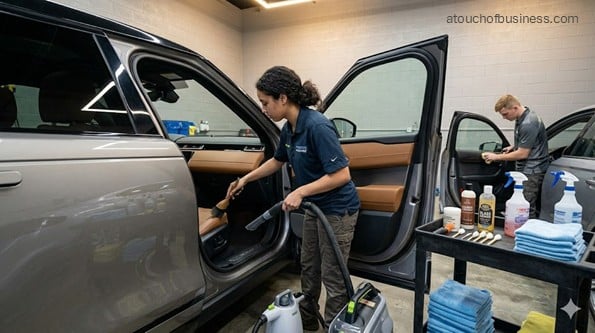
How to Start an Auto Detailing Business
An auto detailing business provides deeper vehicle cleaning, restoration, and surface protection than a basic car wash. In a shop-based setup, customers bring vehicles to your location, and the owner or technician completes the detail in a fixed bay or studio.
This guide focuses on a workshop or shop-based auto detailing business. That means your startup decisions revolve around location, water, drainage, equipment, chemicals, safety, service scope, pricing, and opening readiness.
Is This a Business You Can Grow With?
Before you price machines or look at shop space, ask whether this business fits your life. Auto detailing can look simple from the outside, but the daily tasks require patience, care, and physical stamina.
You may spend hours standing, bending, vacuuming, washing, drying, polishing, and inspecting small details. You also need to handle customer expectations when a vehicle has scratches, stains, odors, or paint damage that cannot be fixed with a normal detail.
Think about these questions before you go further:
- Do you enjoy vehicle care enough to repeat detailed cleaning tasks every day?
- Can you work around water, chemicals, wet floors, machines, and customer vehicles safely?
- Are you willing to document vehicle condition before each job?
- Can you explain service limits without overpromising?
- Do you have enough financial room to handle startup costs and slow early weeks?
Do not start only because you are tired of your job, under financial stress, or drawn to the idea of being your own boss.
You need an interest in the business itself. If you want a deeper look at personal fit, risk, and readiness, review these pre-startup considerations before you commit.
Talk With Non-Competing Owners First
Speak with auto detailing shop owners before you spend serious money. Choose owners outside your market area so you are not asking direct competitors to share sensitive details.
Prepare your questions before those conversations. Firsthand insight matters because experienced owners have already dealt with shop layout, customer complaints, water rules, pricing, equipment choices, and service mistakes. Their experience may not mirror yours, but it can save you from poor assumptions.
Ask about:
- Which services caused the most rework.
- Which equipment mattered most before opening.
- What they wish they knew before signing a lease.
- How they checked wastewater and floor drain rules.
- How many towels, pads, bottles, and brushes they needed at launch.
- How they handled vehicle inspection photos and damage claims.
These conversations are not a shortcut around planning. They help you ask better questions before you risk money. The right advice from real business owners can make the rest of your startup process more grounded.
Choose Your Auto Detailing Business Model
A shop-based auto detailing business runs from a fixed location. Customers drop off vehicles, and the owner or technician completes the service in a bay, garage, or detailing studio.
That setup is different from mobile detailing. A mobile model may need a service vehicle, water tanks, generators, portable storage, and mobile water recovery. A shop-based model puts more pressure on location, drains, utilities, layout, equipment storage, and local approval.
Decide what you will offer at opening. Keep the service list matched to your skill, setup, and risk tolerance.
- Basic exterior service: hand wash, wheels, tires, drying, and glass.
- Interior detail: vacuuming, carpet extraction, upholstery cleaning, trim cleaning, and glass.
- Full detail: combined interior and exterior service.
- Paint decontamination: clay treatment, iron removal, and surface preparation.
- Paint correction: machine polishing to reduce visible paint defects.
- Ceramic coating: surface prep, coating application, leveling, and curing conditions.
Do not offer advanced services just because they look profitable. Paint correction and ceramic coatings require training, lighting, machines, pads, surface prep, and careful customer approval.
Compare Starting, Buying, and Franchising
You can start an auto detailing business from scratch, buy an existing shop, or explore a franchise. Each path changes your cost, control, timeline, and risk.
Starting from scratch gives you the most control. You choose the location, service list, shop layout, equipment, suppliers, forms, and pricing. The tradeoff is that you must build everything before opening.
Buying an existing shop may give you equipment, leasehold improvements, customer history, and a space already used for vehicle services. But you need careful due diligence.
Review:
- Lease terms and landlord approval.
- Zoning and certificate of occupancy status.
- Wastewater, floor drain, and sewer approvals.
- Equipment condition.
- Customer complaints and past damage claims.
- Financial records and supplier obligations.
Franchising may also be realistic in this industry. It can provide systems and training, but it may limit your control over services, suppliers, pricing structure, territory, and operating standards.
The best path depends on your budget, timeline, support needs, desired control, available shops for sale, and risk tolerance. Compare the options before you decide whether to start from scratch or buy a business.
Check Local Demand Before You Spend
An auto detailing shop depends on local vehicle habits. Before you sign a lease, look closely at the market around the location you are considering.
Demand may come from daily drivers, commuters, apartment and condo residents, used car sellers, dealerships, fleet operators, rideshare drivers, luxury vehicle owners, and vehicle enthusiasts.
Look at local conditions that affect the go-or-stop decision:
- How many direct auto detail shops are nearby.
- Whether automatic car washes and hand wash shops already serve the area.
- How many mobile detailers compete on price and convenience.
- Whether nearby customers value higher-skill services such as paint correction.
- Whether weather, road salt, pollen, dust, or mud creates steady cleaning demand.
- Whether the area supports drop-off service and customer parking.
This is not advertising planning. It is a basic demand check. You want to know whether the market can support another shop before you commit to rent, equipment, and build-out.
A good local review should cover demand, competition, price reality, and location fit. For a broader way to think about this, use local supply and demand as part of your early decision process.
Business Plan
Your business plan should turn your startup decisions into a practical opening plan. Keep it focused on what must be ready before your first paying customer arrives.
For a shop-based auto detailing business, your plan should not be a generic document. It should show how the shop will be set up, what services you will offer, what costs you need to cover, and what approvals you must verify.
Include:
- Service scope: basic wash, interior detail, full detail, paint correction, ceramic coating, or a smaller launch list.
- Customer types: individual vehicle owners, dealers, fleets, rideshare drivers, or other local buyers.
- Shop setup: bay count, workflow, water access, drainage, lighting, storage, ventilation, and customer handoff.
- Startup costs: lease, equipment, supplies, safety items, insurance, licenses, utility setup, and opening cash reserve.
- Compliance checks: zoning, business licensing, certificate of occupancy, wastewater, sewer, stormwater, and tax setup.
- Pricing decisions: service packages, vehicle size, condition, labor time, chemicals, overhead, and add-on charges.
- Funding options: owner savings, loans, equipment financing, seller financing, or other suitable funding sources.
- Opening readiness: forms, payment system, inspection process, supplier setup, test details, and staff training if needed.
The plan should help you avoid guessing. It should also show whether the shop can open safely, legally, and with enough cash to handle early pressure. For more planning structure, use this guide on how to write a business plan.
Register the Business and Set Up Taxes
Once the model and plan make sense, choose a business structure and register the business. This step affects taxes, banking, ownership, liability, and paperwork.
Common options include sole proprietorship, limited liability company, partnership, or corporation. The right choice depends on ownership, risk, tax treatment, and professional advice.
You may also need:
- A registered legal business name.
- An assumed name or Doing Business As registration if your public shop name differs from the legal name.
- An Employer Identification Number if needed for taxes, payroll, banking, or entity setup.
- State sales tax setup if your state taxes detailing services, product sales, coatings, or bundled packages.
- Employer tax accounts if you hire staff before opening.
Do not guess on taxes. Auto detailing may involve services, retail products, coatings, and bundled charges. Tax treatment varies by state.
Verify Shop Compliance Before Signing
Compliance requirements can feel unclear, but your job is straightforward: confirm what applies before you lease, build, wash vehicles, hire workers, or open the doors.
Varies by U.S. jurisdiction is the key reminder for many local items. Do not assume another city’s rule applies to your shop.
For an auto detailing business, focus on these checks:
- Zoning: Confirm the address allows auto detailing, vehicle cleaning, car wash, automotive service, or the local equivalent.
- Certificate of occupancy: Ask whether the space needs approval before you open or after a change of use.
- Business license: Check whether the city or county requires a general or automotive-related business license.
- Building and fire approvals: Review any work involving plumbing, drains, electrical upgrades, ventilation, exits, fire extinguishers, or chemical storage.
- Wastewater and stormwater: Confirm where wash water goes and whether floor drains, separators, pretreatment, or discharge approval are needed.
- Sales tax: Check whether detailing labor, coatings, product sales, or bundled services are taxable.
- Employer rules: If you hire staff, confirm payroll, workplace posters, workers’ compensation, safety training, and employee records.
Wash water deserves special attention. Vehicle washing can carry detergents, oils, grease, metals, hydrocarbons, and solids. You need to know whether water goes to a sanitary sewer, storm drain, holding system, or approved treatment setup.
If employees handle chemicals, you also need workplace safety controls. Keep Safety Data Sheets available, label chemical containers, provide personal protective equipment when needed, and train workers on safe handling.
What to Ask Before You Open
Use one clear question list when you speak with local agencies, the landlord, your insurance broker, and any contractor helping with the shop.
- Is auto detailing allowed at this exact address?
- Does this use require a certificate of occupancy or change-of-use approval?
- Do vehicle washing or detailing services need a local business license?
- Where will wash water go, and is that discharge allowed?
- Are floor drains connected to a sanitary sewer, storm drain, or another system?
- Is an oil-water separator, sand/oil interceptor, pretreatment device, or maintenance record required?
- Do planned plumbing, electrical, lighting, ventilation, or bay changes need permits?
- What fire safety items are required before opening?
- Are exterior signs allowed, and does the sign need a permit?
- If employees are hired, what state labor, payroll, safety, and workers’ compensation rules apply?
Keep answers in writing when possible. If a rule is unclear, ask the agency which office has final authority before you spend money.
Pick a Shop Location That Can Support Detailing
Your location must support the services you plan to offer. A cheap space can become expensive if it lacks water, drainage, power, ventilation, lighting, parking, or approval for vehicle cleaning.
A shop-based auto detailing business needs more than an empty garage. You need a space that can handle dirty vehicles, wet floors, chemical storage, customer drop-off, and finished-vehicle handoff.
Check for:
- Vehicle access and door clearance.
- Enough bay space for washing, drying, interior tasks, and polishing.
- Safe customer drop-off and vehicle staging.
- Water supply and hot water access if planned.
- Electrical capacity for vacuums, extractors, polishers, lighting, and other equipment.
- Ventilation for chemicals, moisture, and drying.
- Bright lighting for paint inspection.
- Storage for towels, pads, machines, bottles, and chemicals.
- Cleanup space and safe walking paths.
Ask the landlord direct questions before signing. The lease should allow auto detailing, vehicle washing, customer vehicle storage, chemical use, signage, and any planned improvements.
Design the Shop Workflow
Layout affects quality, turnaround time, safety, and customer handoff. A poor layout can slow every job, even when the owner or technician is skilled.
Plan the path of a vehicle from arrival to payment. Think through each stage before you buy shelving, machines, or chemical storage.
- Customer drops off the vehicle.
- Owner or technician inspects the vehicle and photographs existing damage.
- Customer approves the service and price.
- Vehicle moves to wash, interior, polishing, or coating stage.
- Supplies and tools are staged for the job.
- Owner or technician completes the service.
- Final quality check is completed.
- Payment is collected.
- Vehicle is handed back to the customer.
Separate dirty and clean stages. Wheel brushes, dirty towels, coating towels, paint towels, and interior towels should not be mixed. This protects quality and lowers the chance of damage.
Paint correction and ceramic coating need special attention. These services require clean space, strong lighting, careful prep, and enough time for inspection and curing.
Choose Equipment for Your Launch Services
Do not buy every detailing tool at once. Buy what supports the services you can safely offer at opening.
Your launch equipment should match your bay setup, power, water, drainage, staffing, and service list.
Common shop setup items include:
- Wash or detail bay.
- Approved floor drainage or water control setup, when required.
- Water supply and hoses.
- Electrical outlets and proper circuits.
- Lighting for paint inspection.
- Ventilation.
- Storage shelves or cabinets.
- Wet-floor signs and safety items.
Common exterior detailing tools include:
- Pressure washer or controlled hose system.
- Foam cannon or foam sprayer.
- Buckets with grit guards.
- Wash mitts.
- Wheel and tire brushes.
- Detail brushes.
- Clay bar or synthetic clay media.
- Drying towels and air blower.
Interior detailing may require:
- Commercial wet and dry vacuum.
- Crevice tools.
- Carpet and upholstery extractor.
- Steam cleaner if included in your service list.
- Interior brushes.
- Leather, vinyl, plastic, carpet, and upholstery cleaners.
- Glass towels and interior microfiber towels.
Paint correction and ceramic coating require more care. You may need dual-action polishers, polishing pads, compounds, polishes, inspection lights, panel prep, applicators, leveling towels, and a clean curing area.
Set Up Chemicals, Towels, and Safety Controls
Auto detailing uses many liquids, sprays, pads, and towels. If these are disorganized, jobs slow down and damage risk goes up.
Set up a clean system before you open. Keep chemicals labeled, store them safely, and keep Safety Data Sheets available if employees use hazardous products.
You may need:
- Labeled spray bottles.
- Dilution bottles.
- Gloves and eye protection.
- Spill kit.
- Chemical storage shelves or cabinets.
- Separate microfiber towels for paint, glass, interiors, wheels, coatings, and dirty tasks.
- Laundry bins.
- Pad storage and drying racks.
This is a quality issue as much as a safety issue. A towel used on wheels should not touch paint. A coating towel should not be mixed with dirty interior towels.
Build Supplier and Vendor Relationships
A shop-based auto detailing business needs steady access to chemicals, towels, pads, brushes, bottles, machines, and replacement parts. Running out of basic supplies can delay customer jobs.
Before opening, choose suppliers for:
- Detailing chemicals.
- Microfiber towels.
- Polishing pads.
- Brushes and applicators.
- Compounds, polishes, waxes, and sealants.
- Ceramic coating products if offered.
- Vacuum, extractor, pressure washer, and polisher parts.
- Waste hauler or separator maintenance service if required locally.
Do not wait until you open to learn supplier lead times. Product delays become job delays.
Estimate Startup Costs Carefully
There is no single startup cost that fits every auto detailing shop. Your cost depends on the location, space condition, bay count, equipment level, build-out, compliance needs, staffing, and service list.
Use real quotes. Do not base your decision on a rough number from another shop in another city.
Plan for these cost categories:
- Lease deposit and rent.
- Utility deposits.
- Build-out or tenant improvements.
- Plumbing, drainage, or wastewater controls.
- Electrical upgrades and lighting.
- Ventilation.
- Fire and safety items.
- Detailing equipment.
- Initial chemicals and supplies.
- Towels, pads, applicators, bottles, and brushes.
- Storage and shelving.
- Software, computer, tablet, or card reader.
- Registration, local licenses, inspections, or certificate of occupancy costs if required.
- Insurance premiums.
- Opening cash reserve.
The largest surprises often come from the space itself. Drains, sewer rules, lighting, power, and tenant improvements can change the budget fast.
Set Prices Before Opening
Your pricing must reflect time, vehicle size, condition, chemicals, labor, overhead, and risk. Weak pricing can hurt the business before it has a chance to stabilize.
Define each service clearly. A customer should understand the difference between a wash, interior detail, full detail, paint decontamination, paint correction, and ceramic coating.
Pricing may depend on:
- Vehicle size.
- Vehicle condition.
- Pet hair, stains, salt, odor, or heavy soil.
- Paint contamination.
- Correction level.
- Coating prep time.
- Chemical and supply use.
- Shop overhead.
- Expected service time.
Common methods include package pricing by vehicle size, separate interior and exterior services, add-on pricing, quoted paint correction, and deposits for long or high-value jobs.
Keep prices clear before launch. For a broader pricing framework, review how to approach pricing products and services.
Arrange Funding, Banking, and Payments
Once startup costs are estimated, decide how you will fund the shop. Match the funding source to the actual startup need.
Funding options may include owner savings, a bank loan, equipment financing, an SBA-backed loan, a microloan, or seller financing if you buy an existing shop.
Before opening, set up the financial basics:
- Business checking account.
- Business savings account for taxes and reserves.
- Card processing.
- Invoice and receipt system.
- Sales tax tracking if applicable.
- Deposit policy for large services.
- Refund and cancellation terms.
Separate business transactions from personal ones from the start. It makes taxes, records, payments, and financial review easier.
Plan Insurance and Risk Controls
Auto detailing involves customer vehicles, wet floors, chemicals, machines, and possible damage claims. Insurance is part of startup risk planning.
Do not assume every policy is legally required. Some coverage may be required by state law, your landlord, a lender, or your lease. Other coverage may simply be wise risk management.
Common coverage to discuss with an insurance broker includes:
- General liability.
- Commercial property.
- Business personal property.
- Garagekeepers coverage for customer vehicles.
- Workers’ compensation if employees are hired and state law requires it.
- Commercial auto if the business uses vehicles.
- Business interruption coverage.
Ask the broker direct questions about customer vehicle damage, employee injuries, chemical incidents, theft, fire, and exclusions. A policy that does not cover your real risks may not help when you need it.
Prepare Forms and Records
Good paperwork protects both the customer and the shop. It also helps reduce disputes when a vehicle already has scratches, stains, dents, odors, or paint defects.
Prepare these items before opening:
- Vehicle check-in form.
- Damage walkaround form.
- Photo process for pre-existing damage.
- Service authorization.
- Estimate template.
- Invoice and receipt template.
- Chemical Safety Data Sheet file.
- Employee training records if hiring.
- Wastewater or separator maintenance records if required locally.
- Sales tax records if applicable.
A clear inspection process is especially important in detailing. Customers may notice old damage after the vehicle is clean. Photos and written approval help keep the handoff fair.
Hire and Train Only When the Shop Is Ready
You may open as a solo owner or with staff. The right choice depends on your service list, bay count, funding, and expected job volume.
If you hire before opening, training must cover more than cleaning technique. Staff need to know the shop process and the risks that come with handling customer vehicles.
Training should include:
- Chemical labels and Safety Data Sheets.
- Personal protective equipment.
- Wet-floor safety.
- Vehicle movement and key handling.
- Paint-safe towel and wash procedures.
- Interior material care.
- Machine polishing only if the employee is trained.
- Customer property handling.
- Final quality checks.
Do not staff advanced services before the shop can support them. A poor paint correction job or coating mistake can be expensive to fix.
Run a Pre-Opening Test
Before you accept paid public jobs, test the full shop process. Use real vehicles and time each service honestly.
This test helps you find slow points, missing tools, poor storage, weak lighting, water problems, towel shortages, payment issues, and unclear service descriptions.
Test:
- Vehicle drop-off and inspection.
- Photo documentation.
- Service approval.
- Wash bay flow.
- Interior detail process.
- Paint inspection lighting.
- Drying and towel volume.
- Chemical storage and bottle labeling.
- Payment and receipt process.
- Final handoff.
Compare your planned prices with real service time and supply use. If a full detail takes much longer than expected, fix the price or the process before opening.
Prepare for Opening Day
Your auto detailing business should open only when the location, equipment, approvals, forms, payments, supplies, and safety items are ready.
Use this final readiness check before accepting customers:
- Business registration is complete.
- Employer Identification Number is obtained if needed.
- State tax and employer accounts are verified if applicable.
- Zoning approval is confirmed.
- Business license is complete if required.
- Certificate of occupancy is complete if required.
- Wastewater, sewer, and stormwater rules are verified.
- Lease allows auto detailing and vehicle washing.
- Insurance is active.
- Equipment is installed and tested.
- Water, power, lighting, ventilation, and drainage are working.
- Chemicals are labeled.
- Safety Data Sheets are available.
- Personal protective equipment is stocked.
- Spill kit and wet-floor signs are ready.
- Inspection forms and service authorizations are ready.
- Payment system is active.
- Initial supplies are stocked.
- Test details are complete.
Do not rush this step. Opening before the shop is functional and compliant can lead to delays, rework, claims, and extra costs.
A Day in the Life Before You Commit
Picture a normal day before you decide this business fits you.
The owner opens the shop, checks supplies, sets up towels and tools, inspects the first vehicle, photographs damage, confirms the service order, and prepares the bay.
Then the owner or technician washes, dries, vacuums, extracts, polishes, or applies protection based on the service. After that comes final inspection, payment, customer handoff, cleanup, supply checks, and setup for the next vehicle.
This snapshot is not a full operations manual. It is a reality check. If that type of day does not interest you, think carefully before starting an auto detailing business.
Main Red Flags
Some warning signs should slow you down before you spend more money. These issues can make the business harder to launch, fund, insure, or operate profitably.
- The lease location has not been cleared for auto detailing or vehicle washing.
- Floor drains lead to a storm drain or another unverified discharge point.
- The local sewer authority has not approved the way wash water will be handled.
- The shop needs costly plumbing, drainage, lighting, electrical, or ventilation upgrades.
- The landlord will not allow vehicle washing, chemical use, customer vehicle storage, or signs.
- The owner plans to offer paint correction without enough training.
- The owner plans to offer ceramic coatings without proper prep, lighting, and cure conditions.
- No process exists to document pre-existing vehicle damage.
- Pricing does not reflect labor time, supplies, overhead, and vehicle condition.
- Insurance is unavailable, too expensive, or excludes customer vehicle damage.
- The startup budget leaves out build-out, wastewater controls, deposits, or opening cash reserve.
- Suppliers for towels, pads, chemicals, and machine parts are not set up.
- Employees are hired without safety, chemical, and quality training.
A red flag does not always mean you must stop. It means you need a clear answer before moving forward.
Frequently Asked Questions
These questions focus on startup decisions for a shop-based auto detailing business.
Is an auto detailing business a good fit for a first-time owner?
It can be, if you enjoy hands-on car care, can manage physical tasks, and are willing to document vehicle condition carefully. Advanced services like paint correction and ceramic coating require more training.
What should I verify before signing a shop lease?
Verify zoning, certificate of occupancy, vehicle washing approval, business license needs, wastewater handling, floor drains, plumbing, electrical capacity, ventilation, parking, signage, and landlord permission.
Do I need a special auto detailing license?
Varies by U.S. jurisdiction. Many places focus on business licensing, zoning, tax registration, and wastewater rules instead of a specific auto detailing license.
Does a detail shop need a certificate of occupancy?
Varies by U.S. jurisdiction. A certificate of occupancy may be needed for a new tenant, change of use, build-out, or public-facing commercial space.
Can wash water go into a storm drain?
Do not assume it can. Vehicle wash water may carry detergents, oils, grease, metals, and solids. Ask the local sewer, stormwater, or environmental office before washing vehicles.
Will I need an oil-water separator?
Varies by U.S. jurisdiction. Some local sewer or pretreatment programs require separators or interceptors for vehicle washing. Ask before you lease or build.
What should go into my business plan?
Include your service list, shop layout, startup costs, compliance checks, equipment, suppliers, pricing method, insurance needs, funding source, staffing plan, forms, and pre-opening test process.
Should I offer every detailing service at launch?
No. Start with services you can perform safely and consistently. Add paint correction, ceramic coatings, engine bay cleaning, tinting, or other adjacent services only after the right setup and training.
How should I estimate startup costs?
Use real quotes for lease, build-out, equipment, wastewater controls, insurance, registration, supplies, software, and opening cash reserve. Do not rely on one broad startup number.
Is buying an existing detail shop realistic?
Yes, but review the lease, zoning, wastewater approvals, equipment, customer complaints, supplier obligations, financial records, and past claims before buying.
Is franchising realistic for auto detailing?
Yes, in some markets. Review fees, territory, supplier rules, required equipment, service standards, training, renewal terms, and control limits.
What records should be ready before opening?
Prepare registration records, tax accounts, licenses, insurance documents, Safety Data Sheets, chemical inventory, training records if hiring, vehicle inspection forms, service authorizations, estimates, and invoices.
What should I test before taking paying customers?
Test service timing, wash bay flow, drainage, towel volume, machine performance, lighting, payment processing, inspection photos, forms, chemical dilution, and final quality checks.
Advice From Auto Detailing Business Owners
Learning from people already in the auto detailing business can help you spot issues that are easy to miss before opening.
The interviews and articles below offer a clearer view of shop setup, mobile versus fixed-location choices, pricing, customer trust, equipment, training, and the daily reality of working with customer vehicles.
- Starting Your Own Detailing Business
- How to Start a Car Detailing Business
- Conversations With Eric Eanes
- Detailing for Newbies
Related Articles
- How To Start Your Car Wash Business
- How To Start an Auto Body Repair Shop
- How To Start Your Car Wrapping Business
- How To Start a Window Tinting Business
- How To Start a Custom Car Shop
Sources:
- U.S. Census Bureau: NAICS car wash category, County Business Patterns
- U.S. Small Business Administration: Choose business structure, Register your business, Licenses and permits, Pick business location, Calculate startup costs, Write business plan, Open business bank account, Get business insurance, Buy business or franchise, SBA microloans
- Internal Revenue Service: Get an EIN
- Occupational Safety and Health Administration: Hazard Communication, HazCom overview, PPE overview, PPE general requirements
- U.S. Environmental Protection Agency: Vehicle washing BMP, Equipment washing BMP
- Federal Facilities Environmental Stewardship & Compliance Assistance Center: Vehicle washing compliance
- International Detailing Association: Professional detailing association, IDA certification program, Certified Detailer skills
- St. George City: Car wash pretreatment
- Texas Comptroller: Motor vehicle tax guide, Sales and use tax
- Bureau of Labor Statistics: Vehicle cleaners occupation