
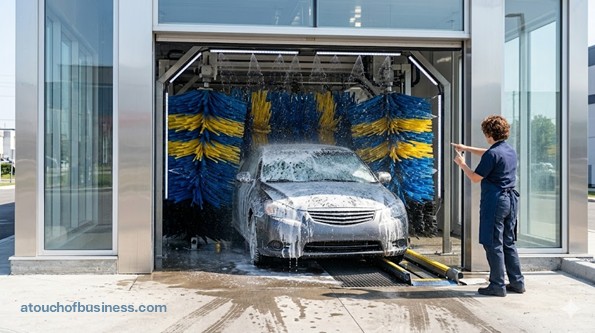
What to Expect From This Guide to Starting a Car Wash Business
This guide walks through the key decisions and practical steps involved in starting a fixed-site car wash business. It follows the process from model and site evaluation through water handling, equipment, pricing, staffing, testing, and opening preparation, while the bullets highlight selected areas of the full discussion.
Inside the guide, you will find:
- Startup roadmap: Trace an ordered progression from owner fit and wash model selection to site approval, systems testing, and opening decisions.
- Industry interviews: Gain perspective on site selection, layout, equipment, maintenance, staffing, payments, customer experience, and operating discipline.
- Startup FAQs: Review answers about wash models, site checks, environmental approvals, equipment choices, taxes, break-even planning, and opening priorities.
- Site and demand: Evaluate traffic, access, vehicle queues, competition, utility capacity, zoning, permitted use, and local sales potential before committing.
- Water requirements: Examine wastewater, stormwater, sewer, pretreatment, reclaim, drainage, and local approval questions central to the site plan.
- Equipment and flow: Plan the vehicle path, wash stages, payment points, chemical storage, service support, safety systems, and staff training.
- Financial readiness: Connect startup funding, fixed costs, pricing, payment records, realistic wash volume, repair risk, and pre-opening tests.
The main article starts by testing whether the capital demands, equipment pressure, and location risk match your expectations as an owner.
A car wash business can look simple from the street. A customer drives in, pays, gets the vehicle washed, and leaves.
Behind that simple path is a fixed-site operation built around water, equipment, chemicals, wastewater, payment systems, safety checks, and vehicle flow. If one part fails, the whole customer experience can suffer.
That is why this guide treats a car wash like a production-style service business. You are not manufacturing a product. You are building a repeatable wash process that must be safe, legal, consistent, and ready before opening day.
If you are still comparing this idea with other options, a broader startup checklist can help. But this guide focuses only on the decisions that matter when starting a car wash business.
Is a Car Wash Business Right for You?
Before you price equipment or look at locations, ask whether this business fits your life.
A car wash can involve large startup costs, location risk, utility demands, equipment problems, weather swings, customer vehicle complaints, and slow sales periods. You need patience, capital, and a clear reason for wanting this business.
Think through the owner fit first:
- Can you handle income uncertainty during launch?
- Can you cover personal living expenses while the business gets started?
- Do you have household or family support for the time and financial pressure?
- Are you comfortable managing equipment, contractors, utilities, and permits?
- Can you stay calm when a pay station, pump, dryer, door, or vacuum goes down?
You should also be honest about your motivation. Are you passionate about owning the business, or are you mainly attracted to the idea of a simple operation?
A car wash is not hands-off at startup. You may need to inspect bays, check chemical levels, review payment records, call equipment technicians, deal with customer issues, and follow up on inspections.
It also helps to speak with experienced owners before you commit. Talk only with owners you will not compete against, and prepare your questions before those conversations.
Ask about permit delays, wastewater approvals, equipment service, slow months, staffing, customer complaints, and repairs. Their experience will not match yours exactly, but it can show you risks that are easy to miss from the outside.
You can also read more about learning from real business owners before making a major commitment.
Check Local Demand Before You Fall in Love With the Idea
A key factor for success in a car wash is enough local demand. The right model in the wrong location can drain cash before the business has a fair chance.
Look at nearby traffic, vehicle ownership, commuter routes, apartments, road salt, dust, pollen, and local weather. Then compare nearby washes by type, not just by name.
A self-serve bay does not compete in the same way as an express tunnel. A full-service wash does not have the same labor needs as an in-bay automatic wash.
Before you make a major commitment, check these points:
- How many car washes already serve the area?
- What types of washes do they offer?
- Can drivers enter and exit the site safely?
- Is there enough room for vehicles to wait?
- Can local prices support your planned costs?
- Can the site support enough vehicles to cover fixed costs?
Local demand is a start-or-stop issue. A weak site, poor access, or crowded market can make the business hard to justify before you spend on equipment.
For more help thinking through market fit, review local supply and demand.
Red Flags Before You Start
Some warning signs should make you pause before you register, sign, borrow, build, or buy.
These are not opening-day tasks. They are decision-stage risks that can change whether you should start at all.
This car wash idea may need a rethink if:
- The site is not zoned for the exact type of car wash you want to open.
- The local sewer authority will not accept wash water as planned.
- Wash water could enter storm drains or nearby waterways.
- The site lacks enough water, sewer, electric, gas, drainage, or internet capacity.
- The location cannot safely handle lines of waiting vehicles.
- The numbers only make sense with unrealistic daily vehicle counts.
- Local prices are too low to cover chemicals, water, sewer, labor, payment fees, and debt.
- Equipment service support is weak in your area.
- You are buying an existing wash without reviewing permits, equipment records, wastewater systems, and repairs.
- You will have little cash left after opening.
- You dislike mechanical systems, safety checks, wastewater rules, or customer vehicle complaints.
Red flag: If the business only works on paper because you assume constant traffic and no equipment downtime, pause. A car wash needs room for slow days, repairs, and weather changes.
Step 1: Decide Whether a Car Wash Fits Your Goals
Start with fit, not equipment. A car wash requires more than startup funds.
You need to be comfortable with a fixed location, mechanical systems, chemicals, water use, wastewater rules, payment systems, and customer expectations. You must also be ready for risk.
At startup, the car wash may not support you right away. You may need savings, household support, or another income source while the site is being approved, built, repaired, or introduced to customers.
Ask yourself these questions:
- Why do I want to own a car wash?
- Can I handle a business with high fixed costs?
- Can I respond quickly when equipment breaks?
- Am I willing to learn water, sewer, chemical, and safety basics?
- Can I stay patient through permits, construction, inspections, and delays?
If those questions make you uneasy, that does not mean you must walk away. It may mean you need a simpler model, a franchise with support, an existing location, or more preparation.
Step 2: Talk With Non-Competing Car Wash Owners
Before you commit, talk with people who have already opened and operated a car wash.
Choose owners outside your planned market. Be respectful of their time, and prepare questions before you call or visit.
Good questions include:
- Which permits took longer than expected?
- What should a new owner know about wastewater approval?
- Which equipment causes the most downtime?
- Which vendors respond quickly in this region?
- What would you inspect before buying an existing wash?
- How much cash cushion would you want before opening?
- What surprised you during the first few months?
These conversations help you see the business from the owner’s seat. They can also help you decide whether to start from scratch, buy a car wash, or explore a franchise.
Step 3: Choose the Car Wash Model
The car wash model affects almost every decision that follows.
It changes the site, equipment, labor, water use, wastewater system, payment setup, pricing, and break-even point. Do not shop for equipment until this choice is clear.
Common fixed-site options include:
- Self-serve wash bays.
- In-bay automatic washes.
- Conveyor or tunnel washes.
- Express exterior washes.
- Full-service washes with hand drying or interior cleaning.
- Detailing as an added service area, if included at launch.
Each model has a different production flow. A self-serve bay depends on bay access, payment equipment, hoses, wands, brushes, and vacuums. An in-bay automatic wash depends on the equipment moving around a parked vehicle.
A tunnel wash depends on vehicle guidance, conveyor movement, chemical arches, rinse stages, dryers, and safety systems. A full-service wash adds more staff, more customer contact, and more labor planning.
Red flag: If you cannot explain how a vehicle moves from entry to payment to wash to exit, the model is not defined well enough yet.
Step 4: Compare Starting, Buying, and Franchising
A car wash can be started from scratch, bought as an existing business, or opened through a franchise.
The best path depends on your budget, timeline, support needs, risk tolerance, available locations, and desire for control.
Starting from scratch may fit if:
- You want control over site design and equipment choices.
- You can handle zoning, permits, construction, and utility planning.
- You have enough funding for delays and pre-opening costs.
Buying an existing car wash may fit if:
- You want a location that may already have bays, equipment, and customer traffic.
- You can review equipment age, service records, wastewater approvals, leases, and repair needs.
- You are willing to inspect the business beyond the asking price.
A franchise may fit if:
- You want brand standards, training, vendor relationships, and a defined system.
- You can accept franchise fees, rules, equipment standards, and vendor limits.
- You review the disclosure documents before signing.
If you are comparing these entry paths, this guide on whether to start from scratch or buy a business may help you think through the tradeoffs.
Step 5: Validate the Site and Local Market
A car wash location must do more than look visible.
The site has to support safe vehicle access, lines of waiting cars, utilities, drainage, signs, lighting, and the type of wash you plan to open.
Visit possible sites at different times. Watch traffic. Notice how drivers would turn in and out. Look for nearby apartments, commuter routes, shopping areas, and other vehicle traffic sources.
Check the local market by model:
- How many self-serve washes are nearby?
- How many express exterior washes serve the same drivers?
- Are there full-service or detail-focused competitors?
- Are prices high enough to support your planned cost structure?
- Is the site convenient enough for repeat use without building a marketing plan around hope?
This is also the time to think through customer attraction and retention: can enough drivers see, enter, use, trust, and return to this location?
If the answer is unclear, keep researching before you spend.
Step 6: Run the Break-Even Reality Check
A car wash often depends on many small sales.
That means fixed costs can create pressure fast. Rent, mortgage payments, equipment financing, insurance, software, utilities, loan payments, and basic staffing may continue even during slow weather or equipment downtime.
Your goal is not to guess profit. Your goal is to understand what the business must produce to survive.
Estimate these items with your own local numbers:
- Fixed costs you must pay even during slow months.
- Variable costs tied to each wash.
- Chemical use per vehicle.
- Water and sewer cost per wash.
- Power, gas, and heating needs.
- Labor time for full-service or detailing tasks.
- Payment processing fees.
- Wastewater, grit, or sludge handling.
- Equipment repair reserves.
Then calculate how many washes you need to cover those costs, owner income, debt, taxes, repairs, and slow periods.
Red flag: If the site cannot physically handle the number of vehicles needed to break even, the plan needs to change.
Step 7: Confirm Funding Before You Commit
Funding should come before major purchases, leases, construction agreements, or equipment orders.
A car wash can require site costs, design fees, permits, utility upgrades, construction, water and sewer systems, payment systems, wash equipment, chemicals, signs, insurance, and working cash.
Funding options may include:
- Owner savings.
- Bank financing.
- Equipment financing.
- SBA-backed loans.
- Seller financing when buying an existing wash.
- Franchise financing support, if available.
- Investor funds, if that structure fits your goals.
Do not plan only for opening day. Plan for permit delays, equipment delays, repairs, slow weather, and the first months of operation.
If a lender or investor asks for clear numbers, you need your model, site assumptions, equipment list, startup cost items, and break-even logic ready.
Step 8: Set Up the Legal Foundation
After the model and funding path are clearer, set up the legal foundation for the car wash business.
This may include choosing a structure, registering the business, filing a Doing Business As name if needed, applying for an Employer Identification Number, and preparing tax accounts.
Keep these items in order where possible:
- Choose the business structure.
- Register the business if required.
- Register the public-facing name if needed.
- Apply for a federal tax identification number if needed.
- Set up state tax and employer accounts if they apply.
Rules vary by state and local area. Use official state, city, county, revenue, and labor department sources when checking requirements.
For a broader overview, see this guide on how to register a business.
Step 9: Verify the Site Before Signing
Do not sign for a car wash site just because traffic looks good.
The site must be legally and physically suitable for the exact wash model. A self-serve bay, in-bay automatic wash, tunnel wash, and full-service wash can raise different site questions.
Before signing, verify:
- Zoning for the exact use.
- Whether a conditional use or special use approval is needed.
- Site-plan review requirements.
- Traffic and line-of-vehicles concerns.
- Noise and lighting limits.
- Water service.
- Sewer capacity.
- Electrical capacity.
- Gas or heating needs.
- Drainage and stormwater controls.
- Driveway access.
- Sign permits.
- Certificate of occupancy requirements.
Ask the local planning, zoning, building, public works, and wastewater offices before you commit.
Red flag: If a seller, landlord, or broker says, “That should be fine,” treat it as a starting point, not proof. Get the answer from the proper local office.
Step 10: Confirm Wastewater and Stormwater Rules
Water handling is a critical startup issue for any car wash.
Do not assume wash water can run into a storm drain, ditch, parking lot, or nearby waterway. Commercial wash water may contain detergent, dirt, oil, metals, and other pollutants.
Your local rules may require sanitary sewer discharge, pretreatment, water reclaim, holding tanks, hauling, sampling access, or specific equipment.
Ask the wastewater or public works office about:
- Whether wash water may enter sanitary sewer.
- Whether a wastewater discharge permit is needed.
- Whether industrial pretreatment rules apply.
- Whether an oil-water separator is required.
- Whether a grit trap or settling system is required.
- Whether a sampling port is required.
- How sludge, grit, or waste must be handled.
Stormwater rules also matter. Construction, outdoor areas, and poor drainage can create problems before opening.
Red flag: If the site plan does not clearly show where wash water goes, stop and verify before design or equipment purchases continue.
Step 11: Design the Car Wash Around the Vehicle Flow
The facility design should match the customer path and the wash process.
Think of the process in stages: entry, payment, vehicle guidance, wash steps, rinse, drying, vacuuming if offered, exit, and receipt or payment record.
Each stage needs enough space, safe movement, equipment access, and clear instructions. A bottleneck at one point can affect customer wait time, vehicle safety, and revenue.
Plan the layout around these areas:
- Customer entry and driveway access.
- Line-of-vehicles space.
- Pay station or kiosk.
- Wash bay or tunnel.
- Equipment room.
- Chemical storage.
- Drainage and water reclaim systems.
- Vacuum stations.
- Customer signs and instructions.
- Employee access and safety zones.
For a tunnel wash, the layout must support safe vehicle guidance, conveyor movement, arches, dryers, emergency stops, and exit flow.
For a self-serve wash, the layout must support hoses, wands, booms, brushes, payment equipment, vacuums, and customer movement inside each bay.
Step 12: Choose Equipment, Suppliers, and Service Support
Car wash equipment is not just a purchase. It is part of your opening risk.
Before ordering, compare the equipment, warranty, installation needs, local service support, replacement parts, chemical compatibility, and training.
Equipment may include:
- High-pressure pumps.
- Conveyor or gantry systems.
- Spray arches.
- Brushes, mitters, or curtains where used.
- Dryers.
- Vacuum systems.
- Pay stations.
- Water reclaim equipment.
- Reverse osmosis or spot-free rinse systems.
- Tanks, filters, hoses, wands, nozzles, and booms.
Suppliers and service vendors may include:
- Wash equipment vendor.
- Installer.
- Chemical supplier.
- Payment processor.
- Wastewater or grit-trap service provider.
- Electrician.
- Plumber.
- Mechanical contractor.
- Sign company.
- Insurance broker.
Red flag: If the only available equipment service technician is far away or slow to respond, factor that into your startup decision.
Step 13: Plan Raw Materials, Supplies, and Storage
For a car wash, raw materials are items such as water, chemicals, towels, filters, cleaning supplies, and small consumables.
You need enough supply to open, but not so much that storage becomes unsafe or wasteful.
Plan for these supply categories:
- Presoak chemicals.
- Detergents.
- Wheel and tire cleaners.
- Wax, sealant, or protectant.
- Drying agent.
- Glass cleaner if interior cleaning is offered.
- Microfiber towels if hand drying or detailing is included.
- Filters and replacement parts.
- Safety labels and Safety Data Sheets.
Storage matters because chemicals must be handled safely. Employees need to know where supplies are kept, how products are labeled, and what to do if there is a spill.
Quality also starts here. Poor chemical control can lead to weak wash results, customer complaints, waste, and higher costs.
Step 14: Set Prices and Payment Systems
Pricing decisions should be made before opening, not during the first rush of customers.
Set the wash package list, self-serve time options, vacuum charges if any, detail add-ons if offered, and accepted payment methods.
Your price must reflect local competition, customer expectations, sales tax treatment, variable cost per wash, labor time, and fixed costs.
Before opening, confirm:
- Which services are taxable in your state.
- Whether self-serve and automatic washes are treated differently.
- Whether detailing services are taxed differently.
- Whether the payment system can track tax correctly.
- Whether receipts and reports match your bookkeeping needs.
Payment readiness is part of opening readiness. You cannot afford confusion at the pay station on the first day.
For more help with pricing logic, review this guide on pricing products and services.
Step 15: Open Banking, Bookkeeping, and Payment Accounts
A car wash takes payments through kiosks, card readers, pay stations, cash systems, or point-of-sale tools.
Set these up before opening so customer payments, taxes, refunds, reports, and deposits are handled clearly.
Prepare these financial systems:
- Business checking account.
- Merchant account or payment processor.
- Pay station integration.
- Card readers.
- Cash handling process if accepting cash.
- Accounting software.
- Daily closeout reports.
- Sales tax tracking.
Separate business transactions from personal ones from the start. It makes taxes, financing, reporting, and owner decision-making cleaner.
Also create categories for utilities, chemicals, equipment repairs, rent or mortgage, payroll, taxes, insurance, waste handling, and loan payments.
Step 16: Arrange Insurance and Risk Protection
Insurance should match the risk of the car wash model.
If you hire employees, verify legally required employer coverage in your state. Workers’ compensation and other employer-related insurance rules vary by location.
Other coverage may not be legally required, but it can be important for risk planning.
Discuss these coverage areas with an insurance professional:
- General liability.
- Property insurance.
- Equipment breakdown.
- Customer vehicle coverage.
- Commercial auto if a business vehicle is used.
- Pollution or environmental coverage where relevant.
- Employment-related coverage if hiring.
Your operation involves customer vehicles, chemicals, wet surfaces, moving equipment, payment systems, and wastewater. Insurance cannot remove those risks, but it can help you plan for them.
Step 17: Hire and Train Staff if Needed
Some self-serve or in-bay car washes may start with limited staffing. A tunnel, express exterior, full-service, or detail-focused wash may need employees before opening.
Do not hire people without training them on the actual wash process.
Training should cover:
- Safe vehicle guidance.
- Customer instructions.
- Chemical handling.
- Safety Data Sheets.
- Slip hazards.
- Emergency stops.
- Lockout and equipment safety where applicable.
- Payment equipment basics.
- Damage claim procedures.
- Daily inspection logs.
Staff training is a quality-control issue. Customers expect a consistent wash, safe guidance, clear instructions, and a clean site.
If you are unsure when to add employees, this guide on how and when to hire can help you think through staffing timing.
Step 18: Test the Car Wash Before Opening
Do not open a car wash just because the equipment is installed.
Run test vehicles through the full customer path. Test entry, payment, wash stages, rinse, drying, vacuuming if offered, exit, receipts, and customer instructions.
Before opening, confirm:
- Permits and approvals are complete.
- Certificate of occupancy is issued if required.
- Wastewater approval is complete.
- Water reclaim equipment works.
- Payment systems process correctly.
- Receipts and reports are accurate.
- Sales tax settings are correct.
- Chemical dilution is tested.
- Dryers, pumps, doors, vacuums, and sensors work.
- Emergency stops are tested.
- Signs and instructions are installed.
- Safety gear is available.
- Staff can explain the process.
- Vendor contact numbers are ready.
Opening before the process is ready can create vehicle damage claims, payment confusion, safety hazards, poor wash quality, and lost trust.
Business Plan
Your business plan should turn the startup decisions into a practical launch guide.
It should not be a generic document filled with broad goals. It should help you decide whether the car wash can open legally, operate safely, and cover its costs.
Include these car wash-specific decisions:
- The chosen wash model.
- The site requirements.
- The zoning and permit path.
- The water, sewer, wastewater, and stormwater plan.
- The equipment list.
- The supplier and service vendor plan.
- The staffing plan if employees are needed.
- The pricing structure.
- The sales tax verification plan.
- The funding plan.
- The opening checklist.
- The break-even calculation.
Pay close attention to fixed costs and sales volume. A car wash may need many small transactions to cover rent, equipment financing, utilities, insurance, repairs, payroll, taxes, and owner income.
Do not use general industry claims as your answer. Use your own local costs, planned prices, expected vehicle count, equipment costs, and slow-season assumptions.
Your plan should answer one hard question:
Can this specific car wash model, at this specific location, with these costs, realistically support the business and the owner?
If the answer is unclear, keep planning before you spend.
Red Flags Before You Spend
Use this short check before each major commitment.
Pause before spending if:
- You have not verified zoning.
- You do not know where wash water will legally go.
- You have not confirmed utility capacity.
- Your break-even number depends on unrealistic vehicle counts.
- You have not priced equipment installation, not just equipment purchase.
- You have no service plan for broken equipment.
- You would have too little cash left after opening.
Spending money is easier than reversing a bad site, bad layout, or bad equipment decision.
Opening-Day Red Flags
Some issues do not mean the business idea is bad. They mean the car wash is not ready to open yet.
Delay opening if the customer path, safety checks, payment systems, water handling, or equipment tests are not ready.
Do not open yet if:
- Final permits or approvals are missing.
- Wastewater setup has not been approved or tested.
- Payment stations fail during testing.
- Sales tax settings are unclear.
- Emergency stops are not tested.
- Chemical dilution has not been checked.
- Dryers, vacuums, pumps, doors, or sensors are unreliable.
- Customer signs and height-clearance signs are missing.
- Staff do not know the safety or damage claim process.
- Vendor emergency contacts are not ready.
Red flag: If a test vehicle cannot move smoothly from entry to payment to wash to exit, the opening date should wait.
Frequently Asked Questions
Is a car wash business a good fit for a first-time owner?
It can be, but it’s not a simple hands-off business at startup. You need to understand equipment, permits, water handling, customer risk, fixed costs, and slow-period planning.
What should I verify before committing to a site?
Verify zoning, permitted use, sewer access, wastewater rules, water pressure, electrical capacity, queue space, traffic access, signs, and certificate of occupancy requirements.
Is a car wash a manufacturing business?
Not in the normal sense. It’s better described as a vehicle-cleaning service with a repeatable production-style wash process.
Which car wash model should I choose?
Choose based on budget, site, staffing comfort, local demand, water and sewer rules, equipment support, and break-even math. Self-serve, in-bay automatic, tunnel, and full-service models all carry different risks.
Should I start from scratch or buy an existing car wash?
Starting from scratch gives more control over design and equipment. Buying may shorten the startup path, but only if permits, equipment, wastewater systems, leases, records, and repairs are reviewed carefully.
Is franchising realistic for a car wash?
Yes. Review the franchise disclosure documents, fees, required equipment, vendor rules, support, territory terms, and owner obligations before signing.
What should go into the business plan?
Include the wash model, site requirements, approvals, equipment, water and sewer plan, staffing, startup cost items, pricing, funding, payment setup, insurance, and break-even logic.
Do car washes need special environmental approval?
It depends on the site and discharge route. You must verify wastewater, stormwater, sewer, pretreatment, and local approval rules before opening.
Can wash water go into a storm drain?
Don’t assume it can. Check with the local stormwater, public works, wastewater, or environmental office before designing the site.
Do I need an oil-water separator or grit trap?
That varies by U.S. jurisdiction. Ask the local wastewater or pretreatment office what equipment and records are required for your specific site.
Are car wash services taxable?
Tax treatment varies by state and sometimes by service type. Check the state revenue department before setting up prices and payment systems.
What are the biggest equipment decisions?
The biggest decisions include wash model, pumps, dryers, payment stations, vacuums, reclaim system, spot-free rinse system, chemical system, and local service support.
How should I think about profit potential?
Estimate fixed costs first. Then calculate how many washes are needed to cover those costs, variable costs, debt, taxes, repairs, and owner income.
What matters most before opening day?
Final approvals, wastewater setup, equipment tests, payment tests, chemical dilution, safety systems, signs, staff training, insurance, and test vehicles should all be ready before launch.
Expert Advice From Inside the Car Wash Industry
Learning from people already in the car wash business can help new owners see what startup guides often miss.
The following interviews cover practical issues such as site selection, layout, equipment choices, maintenance, staffing, customer experience, payment systems, and the daily pressure of running a wash. Use them as extra perspective before committing money to a location, equipment package, or business model.
- How to Start a $6M/Year Car Wash Business — UpFlip interview and case study featuring Rising Tide Car Wash, with practical lessons on testing the idea, planning, systems, location, and startup decisions.
- Chuck Howard’s Tips to Starting a Carwash — Professional Carwashing & Detailing video interview with Chuck Howard of Howco Inc. and Autobell Car Wash, focused on planning and site selection.
- Podcast: Opening a Carwash — Professional Carwashing & Detailing summary of a MarketScale podcast interview with James Bridges of Iron Fox, covering site selection, equipment selection, and maintenance training.
- What Operators Get Wrong When Building a Car Wash — Modern Car Wash Podcast interview with Aaron Green, owner-operator of Wild Blue Car Wash and president of Focused Car Wash Solutions, on layout, staffing, cost control, and early planning mistakes.
- Car Wash Advisory Podcast: Interview With Tom Hoffman Jr. — Interview transcript featuring Tom Hoffman Jr. of Hoffman Car Wash and InnovateIT Car Wash Equipment, with lessons on building a durable car wash business, consistency, reinvestment, and preventative maintenance.
- Kevin Matthews of Summit Wash Holdings: 5 Things You Need to Know to Create a Successful Service-Based Business — Authority Magazine interview with Kevin Matthews, covering his path from mobile detailing to professional car wash leadership, team building, customer service, and operating discipline.
- Bertrand Patriarca, Co-Founder and CEO of WashOS — IdeaMensch interview with the founder of an on-demand car wash and detailing platform, useful for readers comparing fixed-site and mobile customer convenience models.
Related Articles
- How To Start a Mobile Car Wash
- How To Start an Auto Detailing Business
- How To Start a Pressure Washing Business
- How To Start a Boat Cleaning Business
Sources:
- U.S. Small Business Administration: Choose Business Structure, Register Your Business, Licenses and Permits, Write Business Plan, Calculate Startup Costs, Fund Your Business, Open Business Account, Get Business Insurance, Buy or Franchise
- Internal Revenue Service: Get an EIN, Business Taxes
- U.S. Environmental Protection Agency: NPDES Permit Basics, Vehicle Washing BMP
- Occupational Safety and Health Administration: Carwashes SIC 7542, ICA OSHA Alliance, Hazard Communication, Lockout Tagout, Machine Guarding
- U.S. Department of Labor: Workplace Posters, Poster Requirements
- ADA.gov: Small Business ADA Primer, Accessible Parking
- Federal Trade Commission: Franchise Rule
- Electronic Code of Federal Regulations: Franchise Disclosure Rule
- International Carwash Association: Industry Information, Water Use Study
- Dultmeier Sales: Car Wash Equipment, Self-Serve Equipment
- New York Department of Taxation and Finance: Car Wash Tax Rules
- Washington Department of Revenue: Taxable Services