
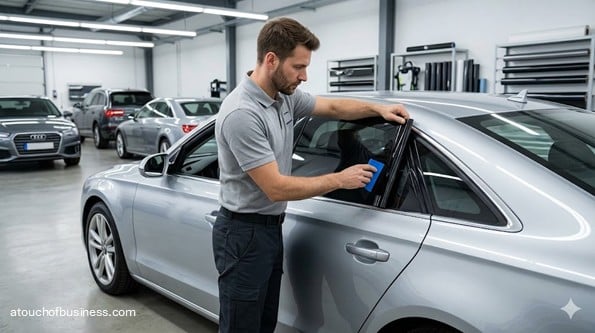
What You Can Expect From This Guide
This guide provides an ordered path through the decisions and hands-on preparations involved in opening a shop-based window tinting business, from owner fit and local demand to training, legal tint checks, equipment, pricing, and opening tests. The points below show selected areas.
Inside the guide, you will find:
- Startup roadmap: Work through 26 ordered steps covering the business model, market, approvals, shop, suppliers, skills, finances, safety, and opening preparation.
- Industry interviews: Learn from installers, shop owners, trainers, and automotive film professionals sharing first-hand experiences and practical business observations.
- Common questions: Review answers about tint licenses, visible light transmission, plotters, suppliers, insurance, customer forms, old-film removal, and opening delays.
- Shop decisions: Plan service limits, location, bay layout, dust control, film storage, customer areas, supplier support, and product tiers.
- Laws and records: Verify tint limits, local approvals, automotive-service rules, tax treatment, legal acknowledgments, work orders, warranties, and invoices.
- Skills and equipment: Prepare installer training, practice vehicles, film, heat guns, cutting tools, protection supplies, safety gear, software, and payment tools.
- Opening checks: Test the complete customer and installation process, then confirm approvals, inventory, forms, safety controls, payments, and final inspections.
The discussion starts by examining whether detailed installation work, customer vehicles, legal limits, and shop ownership fit your interests and abilities.
Thinking About Starting a Window Tinting Business?
A window tinting business offers film installation for vehicle glass. Most owners start with automotive tinting, where customers bring cars, trucks, SUVs, or fleet vehicles to a shop bay for installation.
This guide focuses on a shop-based window tinting business. That means your startup decisions revolve around a clean bay, tools, film inventory, legal shade rules, customer paperwork, supplier support, and installation skill.
Before you buy film or sign a lease, step back. Does this business fit you?
You need patience, steady hands, and comfort working around customer vehicles. You also need the confidence to explain legal tint limits and say no when a customer asks for tint you should not install.
Think about your motivation too. Are you building something you want, or are you only trying to escape a job? A business can bring freedom, but it also brings risk, startup costs, income uncertainty, and pressure.
Talk with your household before you commit. Confirm how long you can cover living expenses while the business gets off the ground. Decide how much financial stress you can handle. Be honest about the chance that the business may not work.
Also, speak with window tint shop owners you will not compete against. Choose owners in another city, region, or market area. Prepare your questions first.
Ask about film waste, hard vehicle models, supplier support, training, customer complaints, legal shade issues, slow seasons, and shop layout. Their path may not match yours, but their firsthand experience can help you avoid problems you would not see from the outside.
You can also review broader startup steps, but do not let a generic checklist replace the specific path for a window tinting business.
Red Flags Before You Start
Some warning signs should make you pause. A delay now can save you from a bad lease, poor fit, or weak business model.
- Weak local demand: Pause if nearby shops already have strong reviews, open appointment times, and low prices you cannot match safely.
- Too much direct competition: Look closer if tint shops, detail shops, wrap shops, dealership installers, and mobile installers already serve the same customers.
- No legal tint process: Delay opening until you understand visible light transmission rules and can refuse illegal jobs.
- Wrong location: Stop before signing if zoning, parking, landlord rules, or certificate of occupancy issues do not support automotive tinting.
- Skill gap: Keep training if you cannot handle roll-down windows, curved rear glass, and removal jobs without repeated defects.
- Unrealistic startup costs: Reduce the plan or seek funding before committing to a lease, build-out, film inventory, plotter, or payroll.
- Weak supplier access: Pause if you cannot get reliable film, product specs, warranty support, and training help.
- Poor pricing logic: Rework your numbers if you ignore film waste, redo time, old adhesive, warranty risk, or rear-window removal risk.
- No comfort saying no: Reconsider the business if you would install unsafe or illegal tint just to keep a sale.
Step 1: Confirm Owner Fit
Start with the owner, not the tools. A window tinting business rewards careful, patient people who can repeat a detailed process many times.
You will clean glass, trim film, use heat, protect vehicle interiors, and inspect small flaws. Dust, creases, lint, scratches, and loose edges can all turn into complaints.
Ask yourself direct questions:
- Do you enjoy hands-on automotive services?
- Can you stay calm during detailed installation jobs?
- Will you redo an installation when quality is not right?
- Can you explain legal shade limits without arguing with customers?
- Are you willing to train before you charge customers?
If the answer is no, do not force it. A poor fit will show up fast in this business.
Step 2: Check Your Motivation
Write down why you want to start a window tinting business. Be specific.
You may like cars, customization, comfort upgrades, or owning a shop. Those are better reasons than “this looks easy” or “I need quick money.”
A tint shop can look simple from the outside. Inside the bay, it requires clean prep, tool control, legal awareness, customer service, and steady quality.
Ask yourself: Are you following what excites you, or what you’re trying to leave behind?
If you are running from a job, debt, stress, or status pressure, slow down. The business may add more pressure before it gives you relief.
Step 3: Learn From Non-Competing Owners
Before you buy tools, talk with people who already run tint shops. Choose owners outside your market so you are not asking competitors to train you.
Prepare questions before each conversation. That shows respect and helps you get useful answers.
Ask about:
- Film waste during training
- Hard vehicle models for beginners
- Old tint removal problems
- Rear defroster risks
- Supplier and warranty support
- Customer requests for illegal tint
- Slow seasons and cash-flow pressure
- Tools they wish they bought earlier
These conversations can also help you understand the real owner experience before you commit.
Step 4: Choose Your Shop-Based Model
Decide what your window tinting business will offer at launch. Keep the first version clear.
A shop-based automotive tint business usually serves customers who bring vehicles to your bay. That setup gives you more control over dust, lighting, tools, film storage, and vehicle staging than a mobile-only model.
Confirm your opening service mix:
- Automotive side-window tint
- Rear-window tint
- Windshield strip where legal
- Clear or light ceramic film where allowed
- Old tint removal
- Adhesive removal
Be careful with add-ons. Paint protection film, vinyl wrap, ceramic coating, detailing, and flat-glass film can all change your tools, training, insurance, inventory, and shop layout.
Start with what your setup can support. Taking on jobs too early can create delays, comebacks, and damage claims.
Step 5: Decide Whether to Start, Buy, or Franchise
You do not have to start from scratch. Compare your entry options before you commit.
Starting from scratch gives you control over your name, film brands, suppliers, pricing, layout, and service choices. It also means you must build everything yourself.
Buying an existing tint shop may give you equipment, a lease, trained staff, supplier accounts, and local awareness. Still, inspect the business carefully.
Review:
- Lease terms
- Equipment condition
- Customer reviews
- Warranty promises
- Supplier accounts
- Staff skill
- Compliance history
- Old debts or unpaid obligations
Franchising can also fit this industry. A franchise may offer training, supplier systems, brand standards, and setup support. In return, you give up some control and may accept required fees, rules, and suppliers.
The right choice depends on your budget, timeline, support needs, risk tolerance, and need for control. Compare whether it makes more sense to start from scratch or buy a business before choosing a path.
Step 6: Validate Local Demand
Confirm that your area can support another window tinting business. Do this before signing a lease or buying major equipment.
Look at nearby tint shops, detail shops, wrap shops, dealerships, and auto accessory shops. Study what they offer and how they present their quality.
Compare:
- Film types
- Warranty language
- Appointment availability
- Legal tint explanations
- Customer reviews
- Vehicle types they serve
- Shop cleanliness and location convenience
Also think about the local vehicle market. Commuter cars, trucks, SUVs, rideshare vehicles, fleet vehicles, and high-end vehicles may all affect demand.
Do not rely on hope. Use local supply and demand to decide whether the market makes sense.
Step 7: Organize Your Startup Decisions
Turn your early research into a clear plan. Do not keep the business only in your head.
Write down the main choices that shape your tint shop:
- Target customer types
- Opening services
- Film suppliers
- Legal tint process
- Shop size and layout
- Training needs
- Startup cost items
- Pricing method
- Insurance needs
- Opening-readiness tasks
When you write these choices down, weak spots become easier to see. That is the point.
Business Plan
Your business plan should turn the startup path into practical decisions. Keep it focused on opening the window tinting business, not on long-term expansion.
Use the plan to connect your service choices, shop setup, legal checks, startup costs, pricing, funding, supplier accounts, and opening checklist.
Include these items:
- Service scope: Decide whether you will offer automotive tint only or add removal, windshield strips, ceramic film, or related services.
- Customer types: Identify whether you are serving individual drivers, truck owners, rideshare drivers, dealerships, fleets, or higher-end vehicle owners.
- Legal process: Write how you will check state tint limits, document customer choices, and refuse illegal jobs.
- Shop setup: Plan the bay, cutting area, film storage, tool station, customer desk, and safety setup.
- Supplier plan: Choose film brands, warranty support, minimum orders, product tiers, and training support.
- Startup costs: List what you must price out before spending money.
- Pricing decisions: Decide how vehicle type, film tier, window count, old tint removal, and installation time affect pricing.
- Funding: Confirm how you will pay for lease commitments, tools, inventory, training, insurance, and working capital.
- Opening readiness: Define what must be complete before the first paid customer arrives.
A practical plan also helps you talk with lenders, landlords, suppliers, and advisors. It can keep you from making expensive decisions in the wrong order.
For a deeper planning guide, use a resource on how to write a business plan, then adapt it to this specific tint shop.
Step 8: Verify Automotive Tint Laws
Confirm the legal side before choosing film shades.
Automotive tint laws involve visible light transmission, often called VLT. State rules may also cover windshield areas, mirror rules, tint colors, medical exemptions, stickers, certificates, or inspection standards.
Federal rules also matter for commercial installers. Commercial installers should not apply tint that causes covered vehicle glass to fail federal visibility requirements.
Set up a simple legal tint process before opening:
- Check the state law for each vehicle type.
- Keep a current tint-law reference in the shop.
- Record the film shade and product used.
- Use a customer acknowledgment form.
- Refuse any job that falls outside legal limits.
Do not guess. Check your state motor vehicle agency, state police, highway patrol, inspection manual, or DMV source for current rules.
Step 9: Check Local Licensing, Zoning, and Occupancy
Before you sign a lease, confirm that the address can legally support a tint shop. A good-looking bay is not enough.
Local rules may affect business licensing, zoning, parking, signage, vehicle storage, customer drop-off, automotive service activity, and certificate of occupancy approval.
Ask the city or county these questions:
- Is automotive window tinting allowed at this address?
- Does the space need a certificate of occupancy or certificate of use?
- Are customer vehicles allowed to be parked or stored there?
- Are signs allowed, and do they need permits?
- Does the business need a local license or business tax receipt?
Verify before you commit. If the space cannot pass local review, your launch can stall before the first installation.
Step 10: Register the Business
Choose your legal structure and register the business before you open bank accounts, sign key agreements, or present yourself as ready to operate.
Common structures include sole proprietorship, limited liability company, partnership, and corporation. Each choice affects taxes, ownership, paperwork, and liability exposure.
If you use a trade name, check whether you need a DBA or assumed name filing. Also confirm state and local registration steps.
This is also the point to review business structure options so you understand what you are choosing.
Keep the decision practical. A structure does not replace insurance, clean records, safe service, or good customer paperwork.
Step 11: Set Up Tax IDs and State Accounts
Apply for an Employer Identification Number if your business needs one. Many banks, lenders, payroll providers, and tax accounts may ask for it.
Then verify state tax registration. Window tinting may involve taxable products, taxable services, or both, depending on the state.
Check with your state revenue department before opening. Ask how sales tax applies to film, installation labor, removal jobs, and any retail items you sell.
If you plan to hire employees, set up the required employer accounts before payroll begins. Do not wait until after the first paycheck.
Step 12: Check Auto Repair or Tint-Specific Rules
Some jurisdictions may treat tinting as automotive repair, vehicle glass work, accessory installation, or a separate tint-station activity. This varies by location.
Do not assume normal business registration is enough. Contact the state DMV, consumer protection office, motor vehicle repair board, state police inspection unit, or local licensing office.
Ask whether your window tinting business needs:
- Motor vehicle repair registration
- A tint-station license
- A local automotive service license
- Posted certificates or public notices
- Specific invoice or customer record rules
If the agency says no special registration applies, document the answer. If it does apply, complete it before opening.
Step 13: Choose the Right Shop Location
Your shop location affects quality, safety, turnaround time, and customer trust. Do not choose only by rent.
Look for a clean, enclosed bay with enough room to open vehicle doors fully. You also need space for film storage, cutting, tools, customer check-in, and safe vehicle movement.
Confirm the basics:
- Good lighting
- Dust control
- Power for heat guns and equipment
- Water access
- Ventilation
- Parking and drop-off space
- Secure key storage
- Landlord approval for automotive tinting
Ask about after-hours vehicle storage too. That small detail can matter when a job runs long.
Step 14: Plan the Shop Layout
A window tinting business needs a layout that supports clean, repeatable installation. Poor layout slows jobs and raises the chance of defects.
Set up clear areas for each part of the process:
- Vehicle bay
- Film storage
- Cutting table or plotter station
- Tool station
- Glass prep supplies
- Chemical storage
- Customer desk
- Waste and blade disposal
Keep dust control at the center of the layout. Window film shows dirt, lint, and poor prep quickly.
Decide whether customers can enter the shop area. If not, mark the customer area clearly and keep the bay for installers only.
Step 15: Choose Film Suppliers and Product Tiers
Your film supplier affects quality, training, warranty support, product range, and inventory planning.
Compare suppliers before you open an account. Do not choose only by price.
Review:
- Film types
- Available VLT options
- Warranty support
- Dealer requirements
- Minimum orders
- Training support
- Product specifications
- Shipping time
- Plotter pattern support if needed
Common film categories include ceramic, dyed, metallized, and clear film options. Carrying too many choices at launch can tie up cash and confuse customers.
Choose a simple lineup you can explain clearly.
Step 16: Get Installer Training
Do not open a window tinting business before your installation skill is ready. Training protects your customers, your reputation, and your startup budget.
Training should cover glass cleaning, film handling, hand cutting, plotter cutting if used, heat shrinking, rear-window work, safe blade use, and interior protection.
Practice on different glass types before charging customers:
- Roll-down side windows
- Quarter glass
- Curved rear glass
- Windows with dot matrix areas
- Vehicles with old tint
- Rear glass with defroster lines
Also learn how film cures. Customers may see temporary haze or small moisture effects after installation, so your aftercare instructions must be clear.
Step 17: Buy Tools, Equipment, and Supplies
Buy what your opening services require. Avoid filling the shop with tools for services you are not ready to offer.
Core launch items may include:
- Automotive film rolls
- Heat guns
- Squeegees
- Hard cards
- Spray bottles
- Slip solution
- Glass cleaning tools
- Razor scrapers and blades
- Cutting mats
- Microfiber towels
- Vehicle protection covers
- Lighting or inspection lamps
- Blade disposal container
- Safety glasses and gloves
If you use a plotter, plan for the plotter, software, computer, pattern access, and setup testing. If you hand cut, invest more time in cutting skill.
Also prepare office and payment tools. You need estimates, work orders, invoices, warranty forms, aftercare sheets, a business phone, email, appointment calendar, and payment processing.
Step 18: Prepare Legal Tint Records
Set up paperwork before the first paid job. Good records protect the shop and help customers understand what they approved.
Create forms for:
- Customer estimate
- Work order
- Vehicle inspection
- Legal tint acknowledgment
- Film shade and product record
- Warranty information
- Aftercare instructions
- Invoice and payment record
Old tint removal deserves special attention. Document existing damage, rear defroster risk, adhesive problems, and removal approval before you begin.
Use the same process every time. Skipped paperwork can become a problem when a customer questions the shade, warranty, or condition of the vehicle.
Step 19: Set Your Pricing
Set pricing before customers ask. Guessing at the counter can lead to underpriced jobs and weak margins.
Build prices around the real installation factors:
- Vehicle type
- Number of windows
- Film tier
- Legal shade choice
- Glass size and curve
- Old tint removal
- Adhesive removal
- Rear defroster risk
- Installation time
- Film waste
- Warranty and redo allowance
Common pricing approaches include vehicle packages, per-window pricing, film-tier pricing, and separate removal charges.
Do not copy competitors blindly. Their costs, lease, film supplier, skill level, and warranty risk may be different from yours.
Use a pricing resource if needed, but adapt pricing products and services to the specific numbers in your tint shop.
Step 20: Confirm Funding Before Major Spending
Secure funding before you sign major agreements. A tint shop can require spending on the lease, bay setup, equipment, film inventory, training, insurance, and working capital.
Price out each item first. Get quotes where possible.
Funding options may include:
- Owner funds
- Bank loan
- SBA-backed loan
- Equipment financing
- Business line of credit
- Seller financing if buying a shop
- Franchise financing if using a franchise model
Do not commit to a build-out, plotter package, film order, or franchise agreement until you know the funding is realistic.
Step 21: Open Business Banking and Payment Systems
Open a business bank account after your registration and tax setup are ready. Banks may ask for formation documents, licenses, and tax ID information.
Keep business transactions separate from personal ones from the start. This helps with records, taxes, and decision-making.
Set up payment tools before opening:
- Business checking account
- Card reader
- Invoice software
- Bookkeeping software
- Deposit policy
- Refund process
- Sales tax tracking where applicable
Test the payment system before a customer arrives. A failed card reader on opening day creates stress you can prevent.
Step 22: Set Up Insurance and Risk Planning
Insurance planning matters because you will handle customer vehicles, tools, chemicals, property, and possible employee risks.
First, verify legally required insurance. Requirements may come from state law, local licensing, employee rules, a lease, a lender, or an automotive registration rule.
Then discuss common risk-planning coverage with an insurance professional:
- General liability
- Commercial property
- Garagekeepers coverage
- Business owner’s policy
- Commercial auto if the business moves vehicles
- Tool and equipment coverage
- Workers’ compensation if employees are hired
Do not present coverage as optional or required without verification. Ask what applies to your state, lease, staff setup, and service model.
Step 23: Prepare Staffing and Training
You may start owner-only, but plan staffing before you need help. A rushed hire can damage quality fast.
If you hire employees, confirm payroll accounts, workers’ compensation rules, employee safety training, chemical handling, key-control rules, and customer vehicle procedures.
Train staff on the full shop process:
- Vehicle inspection
- Customer authorization
- Legal shade confirmation
- Interior protection
- Glass prep
- Film cutting and installation
- Final inspection
- Aftercare handoff
If you plan to use contractors, verify classification rules with state labor and tax agencies. Do not assume a worker is a contractor because that is easier.
Step 24: Set Up Safety, Chemical, and Waste Controls
A tint shop may use cleaners, slip solution, adhesive removers, solvents, blades, heat guns, and electrical tools. Set up safety before opening.
Prepare:
- Safety Data Sheets
- Chemical labels
- Safe storage area
- Ventilation plan
- First aid kit
- Fire extinguisher
- Blade disposal container
- Spill cleanup supplies
- Employee training if hiring
Also check waste rules. Some discarded solvents, contaminated rags, or adhesive-removal waste may need special handling depending on what you use and where you operate.
When in doubt, ask the state environmental agency or local waste authority before you create the problem.
Step 25: Test the Full Installation Process
Run the full window tinting process before you open. Do not test only the film application.
Practice the whole customer path:
- Appointment review
- Estimate
- Legal shade confirmation
- Vehicle check-in
- Pre-existing damage photos
- Interior protection
- Glass cleaning
- Cutting or plotting
- Heat shrinking
- Installation
- Final inspection
- Payment
- Warranty and aftercare handoff
This test run will reveal missing tools, weak forms, unclear pricing, poor layout, and skill gaps. Fix them before your first paying customer arrives.
Step 26: Prepare the Shop for Opening
Open only when the shop is ready to serve customers legally, safely, and consistently. A soft start is better than a messy launch.
Confirm these items before opening:
- Business registration is complete.
- Tax accounts are ready.
- Local licenses are approved where required.
- Zoning and certificate of occupancy issues are cleared.
- Insurance is active.
- Payment processing works.
- Supplier accounts are active.
- Film inventory is available.
- Tools are staged.
- Shop lighting and power are working.
- Forms and customer records are ready.
- Legal tint reference is current.
- Safety Data Sheets are available.
- Waste and blade disposal are set up.
- Warranty and aftercare sheets are ready.
Also decide how a typical day will run. You may open the bay, check appointments, confirm legal shade choices, inspect vehicles, protect interiors, install film, take payment, explain aftercare, and record film details.
That snapshot matters. It helps you decide whether you want the daily responsibility, not just the idea of owning the shop.
Opening-Day Red Flags
These issues do not always mean you should abandon the business. They mean the shop may not be ready to open yet.
- Missing approvals: Do not open if licensing, zoning, certificate of occupancy, or tint-specific registration is still unresolved.
- Untested payment setup: Delay if you cannot take deposits, card payments, invoices, refunds, or sales tax properly.
- Incomplete forms: Pause if estimates, work orders, legal tint acknowledgments, invoices, warranty forms, and aftercare sheets are not ready.
- Weak tool setup: Do not start paid jobs if heat guns, blades, squeegees, film, spray bottles, lighting, and protection supplies are not staged.
- No supplier backup: Delay if film inventory is short and reorder timing is unclear.
- Unsafe chemical storage: Fix labels, Safety Data Sheets, ventilation, and waste handling before staff or customers enter the process.
- Poor bay conditions: Dust, weak lighting, cramped vehicle access, and messy tool flow can hurt quality from day one.
- No final inspection process: Set a standard for edges, contamination, scratches, haze, bubbles, and customer handoff before opening.
Frequently Asked Questions
These questions focus on startup decisions for a window tinting business. Use them to check your plan before you move forward.
Is a window tinting business a good fit for a first-time owner?
It can be, but only if you train before taking paid jobs. You also need patience, legal awareness, customer communication skills, and a clean installation process.
What should I verify before spending money?
Verify demand, competition, tint laws, zoning, certificate of occupancy, local licensing, insurance, suppliers, training, and whether tinting is treated as automotive repair or tint-station activity in your area.
Do I need a special tint license?
That depends on your state, county, or city. Check with the state DMV, motor vehicle repair board, consumer protection office, state police inspection unit, or local licensing office.
What is the most important legal issue?
Visible light transmission is central. You need to understand VLT rules and refuse any job that falls outside those limits.
What does VLT mean?
VLT means visible light transmission. It describes how much visible light passes through the glass and film.
Should I start mobile or shop-based?
This guide focuses on a shop-based setup. A shop gives you better control over dust, lighting, tools, film storage, and vehicle staging. A mobile setup changes the startup requirements.
Should I buy a plotter right away?
Not always. A plotter can support consistent patterns, but it adds equipment, software, and setup costs. Hand cutting may work if your training supports it.
What belongs in the business plan?
Include service scope, film suppliers, legal tint process, shop layout, equipment, training, startup cost items, pricing method, insurance, payment setup, and opening-readiness tasks.
Is franchising realistic for this business?
Yes, automotive tint and styling franchises exist. Review supplier rules, fees, training, territory, build-out requirements, and the Franchise Disclosure Document before signing or paying.
Can I buy an existing tint shop?
Yes, but review the lease, equipment, reviews, staff skill, warranty obligations, supplier accounts, licenses, tax records, and compliance history.
What equipment matters most at launch?
Core items include film, heat guns, squeegees, hard cards, spray bottles, slip solution, blades, cleaning tools, lighting, vehicle protection supplies, safety gear, forms, and payment tools.
What insurance should I consider?
First verify any legally required coverage. Then ask about general liability, commercial property, garagekeepers coverage, tool coverage, commercial auto if vehicles are moved, and workers’ compensation if hiring.
What customer forms should be ready?
Prepare estimates, work orders, vehicle inspection forms, customer authorization, legal tint acknowledgment, warranty records, invoices, and aftercare instructions.
Why is old tint removal risky?
Old tint removal can involve brittle film, adhesive, damaged glass, and rear defroster risk. Price it separately and document the vehicle condition before starting.
What should make me delay opening?
Delay if skill is not ready, the location is not approved, insurance is unresolved, tint laws are unclear, supplier setup is weak, funding is thin, or you cannot refuse illegal tint requests.
Learn From People in the Window Tinting Business
One of the best ways to prepare for a window tinting business is to learn from people who have already worked in the industry, opened shops, trained installers, or built automotive film businesses. Their stories can help you understand the real startup path, including training, shop setup, customer expectations, pricing pressure, supplier choices, and the patience needed to build skill before taking on paid jobs.
Below are interviews, podcasts, videos, and articles that share practical insight from people with firsthand experience in window tinting, window film, automotive styling, or related shop-based businesses.
- Starting a Window Tint Business in the Winter With Jordan “Shady Jay” Jernigan
- Behind The Tint: Tom Kovach
- Meet Christian Martinez of CR Auto Tint
- Interview With Charles Bonfiglio, CEO of Tint World
- Celebrating 30 Years of Window Film Depot
- How to Grow Your Tint Business With Austin Cook
- How He Built a $3M Window Tint Business in Under 4 Years
Related Articles
- How To Start Your Car Wrapping Business
- How To Start an Auto Detailing Business
- Starting a Windshield Repair Business
- How To Start a Custom Car Shop
- How To Start Your Car Audio Business
- How To Start an Auto Body Repair Shop
Sources:
- NHTSA: Aftermarket Tinting Rules, Tint Render-Inoperative Rule
- International Window Film Association: Automotive Window Film, Interactive Tint Laws, Accreditation Tests, Inspection Guidelines, After You Buy
- U.S. Small Business Administration: Write Business Plan, Market Research, Startup Costs, Buy or Franchise, Business Structure, Register Business, Business Bank Account, Business Insurance
- Internal Revenue Service: Get an EIN
- OSHA: Hazard Communication
- EPA: Managing Hazardous Waste
- FTC: Buying a Franchise
- Frederick County MD: Occupancy Permits
- Miami-Dade County: Motor Vehicle Repair License
- Maine State Police: Window Tint Station License
- SunTek: Installation Training, Automotive Window Tint
- LLumar: Automotive Tint Options
- 3M: Window Film Solutions