
What to Expect From This Guide to Starting a Vending Machine Business
This guide walks through the key decisions and practical steps involved in starting a vending machine business, from testing route fit and locations to activating documented machines. The points below offer a glimpse of its detailed coverage of route planning, compliance, inventory, payments, and opening checks.
Inside the guide, you will find:
- Startup roadmap: Move through 23 ordered steps covering owner fit, route options, locations, territory, costs, legal setup, machines, agreements, and opening checks.
- Real operator insights: Explore interviews, videos, podcasts, and owner stories about locations, machines, stocking, routes, pricing, and weak placements.
- Startup FAQs: Find answers about machine purchases, route acquisitions, health permits, taxes, calorie labeling, agreements, storage, records, and first placements.
- Location strategy: Validate host sites, user demand, access, security, competition, commissions, power, and route density before buying machines.
- Compliance planning: Check sales tax, health rules, calorie labeling, storage zoning, local permits, insurance, and product-specific requirements where applicable.
- Route economics: Account for products, taxes, card fees, commissions, spoilage, repairs, fuel, software, storage, and location-level pricing.
- Opening preparation: Test machines and payments, document each placement, organize inventory and vehicle systems, and complete a detailed pre-opening checklist.
Start by judging whether the route schedule, lifting, restocking, troubleshooting, and host communication match your expectations.
An Overview of Starting a Vending Machine Business
A vending machine business sells products through self-service machines placed at host locations. In this setup, you or your team stock the machines, drive a regular route, handle payment systems, clean the equipment, fix small problems, and keep host contacts satisfied.
This is a retail business, but it doesn’t feel like running a store. Your shelves are inside machines. Your checkout system is built into the machine. Your “storefronts” may be break rooms, apartment buildings, warehouses, gyms, laundromats, hotels, or offices.
That changes the startup process. Before you buy machines, you need to think about route density, product mix, storage, restocking, sales tax, machine placement agreements, card readers, inventory control, and whether you can handle the daily tasks.
This guide walks through the startup path for a vending machine business. You can also use a broader startup checklist as a general reference, but vending has its own startup details that deserve careful attention.
Is a Vending Machine Business Right for You?
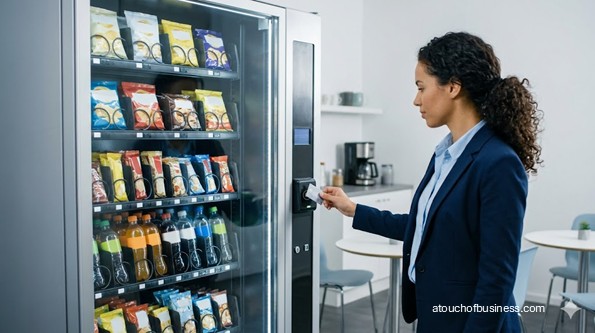
The vending machine concept is simple. A machine sits in a hallway. A customer taps a card. A snack drops.
As the owner, you see more than that. You need to buy or lease machines, place them in the right locations, stock products, rotate dated items, test payment systems, track inventory, collect cash if used, and respond when a machine jams.
Don’t start only because you want to escape a job, fix financial pressure fast, or chase the idea of passive income.
Vending isn’t passive at launch. It’s a route-based retail business. You may lift drink cases, drive between stops, clean machines, talk with property managers, and troubleshoot card readers.
Ask yourself practical questions before you commit.
- Can you handle route driving and repeat service visits?
- Can you lift and move inventory safely?
- Can you stay organized with products, dates, receipts, permits, and host agreements?
- Can you cover personal living expenses while the business proves itself?
- Can your household support the time, storage, and schedule demands?
- Can you accept that some machines or locations may not perform well?
Also think about your comfort with people. You don’t need a busy retail counter, but you do need to approach host locations, explain your offer, negotiate terms, and keep the site contact happy.
If you enjoy practical tasks, local routes, inventory control, simple retail math, and small equipment problems, this business may fit you. If you want a business that runs itself, pause before moving forward.
Learn From Owners Outside Your Market
Before starting a vending machine business, speak with owners you won’t compete against. Look for operators in another city, region, or market area.
Prepare your questions before those conversations. Their answers can help you avoid buying the wrong machines, accepting weak locations, or overlooking hidden route problems.
Ask about topics such as:
- Which machine types break down most often
- Which locations sound good but sell poorly
- How they handle host commissions
- Which products expire too quickly
- How often they restock each machine
- What permits or sales tax issues surprised them
- How they deal with card readers, coin jams, and refunds
Every owner’s journey will be different. Still, firsthand insight is valuable—these operators have already worked through machines, routes, hosts, inventory, payment systems, and local rules.
That kind of conversation can be more useful than theory. It helps you see the owner side of the business before you commit your savings. Use it alongside other advice from real business owners as part of your early decision process.
Check Local Demand Before You Commit
A vending machine business depends on location quality. A machine needs steady users, easy access, power, security, and a host who wants the service.
Busy-looking places aren’t always good vending locations. A site may have people walking through but not enough repeat users who need snacks, drinks, or convenience items.
Look for places with clear daily use:
- Office buildings
- Warehouses
- Factories
- Apartment buildings
- Gyms
- Laundromats
- Medical offices
- Hotels
- Schools
- Transportation sites
- Employee break rooms
Then check the details. Is there power nearby? Can you reach the machine with a hand truck? Is the area secure? Does the host already have a vending contract? Are there nearby food options that make the machine less useful?
This is where local supply and demand matters. You’re not just asking whether people buy snacks. You’re asking whether this exact location can support this exact machine with this exact product mix.
Red Flags Before You Start
Some warning signs should make you delay, change the model, buy an existing route instead of building from scratch, or walk away. These are start-or-stop issues, not small launch tasks.
No realistic host locations: Pause if you haven’t found sites with steady users, secure placement, power, and host approval. Machines without good locations are just expensive equipment.
Machines before locations: Don’t buy first and hope to place them later. Machine type should match the location, product mix, power access, and local rules.
Weak route density: A route with scattered stops wastes time, fuel, and energy. Tight geography matters because you may need to restock machines often.
Host commissions that break the numbers: A commission may sound normal, but it still has to fit with product cost, sales tax, card fees, spoilage, repairs, and route time.
Perishable products before approval: Refrigerated, fresh, heated, water, or prepared-food vending can trigger health rules. Verify those rules before choosing that model.
No repair plan: A broken machine can damage trust with the host location, trap inventory, and stop sales.
Unclear sales tax rules: Sales tax treatment can vary by state and product. Check before selling from the machine.
No written location agreement: Verbal permission is weak protection. You need clear terms for placement, commissions, access, service, liability, and removal.
Passive-income expectations: Startup vending involves driving, stocking, recordkeeping, cleaning, repairs, and host communication. If you want a hands-off business from day one, this model may disappoint you.
Step 1: Check Your Fit Before Committing
Start with yourself before you start with machines. Starting a vending machine business takes patience, organization, physical effort, route discipline, and steady follow-through.
You may spend time loading cases, checking expiration dates, cleaning glass, adjusting product coils, testing card readers, and recording machine-level sales. Those tasks are part of the launch stage.
Think through the lifestyle fit. Routes may need service before or after normal business hours. Some locations may require specific access times. A machine may need attention when you had planned to do something else.
Also check your risk tolerance. New locations may sell slowly. Used machines may need repairs. A host may change managers or cancel the placement. Product costs and card fees can affect margins.
Before moving forward, be clear about:
- Why you want to own this business
- How much time you can give the route
- How you’ll cover living expenses during launch
- Whether your vehicle and storage situation can support the business
- Whether your household can handle inventory, route time, and uncertainty
Do this before you buy a machine. It’s easier to stop early than to unwind equipment, inventory, and agreements later.
Step 2: Speak With Non-Competing Vending Owners
Your next step is to learn from people who already own vending routes. Speak only with owners outside your planned service area.
Go into each conversation with prepared questions. Ask about machines, locations, products, payment systems, service schedules, permits, theft, spoilage, commissions, and route time.
You want details that affect startup decisions. A machine that looks cheap may have poor parts support. A high-traffic location may already have an exclusive vending contract. A fresh-food machine may create extra health, storage, and waste concerns.
Ask owners what they would check before buying their first machine again. Also ask what they wish they had known about route density, card readers, refunds, and host expectations.
These conversations don’t replace your own planning. They sharpen it.
Step 3: Choose Whether to Start, Buy, or Franchise
A vending machine business can be started from scratch, bought as an existing route, or entered through a franchise. Each path changes your cost planning, control, risk, and startup pace.
Starting from scratch gives you the most control. You choose the machines, locations, suppliers, software, products, and route area. The hard part is finding host locations and building systems from nothing.
Buying an existing route can give you machines and locations on day one. But you must review the records before you buy. Don’t rely on verbal claims.
Review these items when evaluating a route purchase:
- Sales records by machine and location
- Written location agreements
- Whether agreements can transfer to you
- Machine age and condition
- Payment reader compatibility
- Service and repair history
- Inventory included in the sale
- Host commission terms
- Permits, decals, and tax accounts
Franchising may fit if you want a more structured system, but it can also limit your choices. Review fees, territory, required suppliers, equipment rules, training, support, and restrictions before you commit.
The best path depends on budget, timeline, support needs, available routes, desired control, and risk tolerance. Compare each option carefully before signing anything. This is a good place to think through whether you want to start from scratch or buy a business.
Step 4: Choose Your Vending Model
Don’t buy machines until you know your model. A vending machine business can sell many types of products, but each choice changes equipment, sourcing, storage, rules, and route timing.
The basic route model is straightforward. You place machines at host locations, stock them, collect or reconcile payments, clean them, repair small issues, and return on a repeat schedule.
Common machine choices include:
- Snack machines
- Beverage machines
- Combo snack and drink machines
- Refrigerated fresh-food machines
- Coffee or hot beverage machines
- Water vending machines
- Specialty product machines
- Non-food machines
A small break room may fit a combo machine. A large warehouse may support separate snack and drink machines. A gym may need a different product mix than an apartment lobby.
Fresh-food, refrigerated, coffee, and water vending can add complexity. You may need tighter temperature checks, shelf-life controls, health approvals, water testing, or more frequent service visits.
Related models include micro markets, kiosks, office coffee service, pantry service, and other unattended retail. These aren’t the same as a simple vending route. They may change theft controls, checkout setup, equipment, food safety requirements, and host agreements.
Step 5: Validate Locations and Competition
A vending machine business rises or falls on location fit. Before major spending, test whether your area can support your planned route.
Look for sites with repeat users and limited convenient alternatives. A machine works better when people are already on-site and need a quick snack, drink, coffee, or small convenience item.
Check each possible location for:
- Daily user count
- Hours of access
- Nearby food and drink options
- Power access
- Security
- Loading access
- Elevator or hallway limits
- Host decision-maker
- Existing vending contracts
- Space for the machine door to open
Then look at competition. Are there other machines already on site? Is there a cafeteria, coffee shop, convenience store, or delivery option nearby? Do employees bring food from home?
Don’t stop at “people are there.” Ask whether those people will use the machine often enough to justify the equipment, route time, inventory, and host terms.
Step 6: Define Your Service Territory and Route
A vending route needs density. If your stops are too far apart, you lose time between machines—and that affects fuel costs, service windows, and how many machines you can realistically handle.
Start by mapping your likely locations. Keep the route tight enough that you can restock, clean, test, and record each machine without burning the day on driving.
Think through the service pattern before opening:
- Which machines need frequent restocking?
- Which products are bulky, heavy, or fragile?
- Which locations have limited access hours?
- Which stops need a hand truck or elevator?
- Which machines need refrigerated checks?
- Which sites require check-in with security or a front desk?
Route software or a vending management system can help with inventory, pick lists, cash and card reconciliation, and machine-level sales reports. You don’t need to overbuild systems, but you do need a way to avoid guessing.
Also plan for vehicle downtime. If your route vehicle is unavailable, you still need a way to protect inventory, serve host locations, and address machines that need attention.
Step 7: Create a Business Plan
Your business plan should turn the vending startup steps into a practical document you can use before launch. Keep it focused on decisions, setup, and opening readiness.
Don’t write a generic plan that could fit any business. Build it around your vending route, machine choices, target locations, suppliers, legal checks, payment setup, and first machines.
Include these startup details:
- Route territory: The area you can service without wasting time between stops.
- Host-location profile: The types of sites you want, such as offices, warehouses, gyms, or apartment buildings.
- Machine choices: Snack, beverage, combo, coffee, refrigerated, water, specialty, or non-food machines.
- Product mix: The starting products you plan to stock by location type.
- Supplier plan: Wholesale sources, beverage suppliers, coffee suppliers, fresh-food suppliers if used, and parts vendors.
- Storage plan: Home storage, commercial storage, warehouse space, dry storage, or refrigerated storage.
- Vehicle plan: How you’ll move inventory, machines, tools, and supplies.
- Legal checks: Business registration, tax setup, local licenses, health rules, and vending-specific permits.
- Pricing method: How you’ll account for product cost, taxes, card fees, commissions, spoilage, and route time.
- Opening checklist: What must be ready before the first machine goes live.
Your plan should also explain how you’ll fund startup costs. Price out equipment, inventory, insurance, permits, software, storage, vehicle needs, payment systems, and repair support before you commit.
If you need a loan, prepare your records before applying. A lender or seller may want to see how your machines, locations, route, costs, pricing, and payment systems fit together. Use a practical business plan to organize those details.
Step 8: Price Out Startup Costs Before Buying
Startup costs can vary widely in a vending machine business. Don’t look for one number that fits every route—build your own budget from your model.
Start by pricing the major items you may need:
- New or refurbished machines
- Cashless card readers
- Telemetry devices
- Initial inventory
- Storage shelves, bins, and totes
- Vehicle setup
- Hand truck or dolly
- Cleaning supplies
- Spare parts
- Vending management software
- Business registration
- Permits and inspections
- Insurance
- Professional review of agreements
- Machine delivery and installation
Machine choice is one of the biggest planning decisions. A combo machine, drink machine, coffee machine, water machine, and refrigerated food machine each bring different equipment needs and costs.
Inventory also affects the budget. Shelf-stable snacks are different from refrigerated products. Fresh food can add waste risk, temperature monitoring, and more frequent restocking.
Compare new, refurbished, leased, financed, and route-purchase options. Also check warranty, parts access, service support, card-reader compatibility, and machine condition before spending.
Step 9: Set Up the Legal Structure and Registration
Before you open a vending machine business, choose a legal structure and register the business where required. This step affects taxes, banking, contracts, and ownership records.
Common options include sole proprietorship, limited liability company, corporation, or partnership. The right choice depends on your situation, risk tolerance, ownership setup, and tax needs.
Don’t treat this as paperwork only. Your business name, structure, contracts, bank account, and tax setup should all match.
At this stage, think through:
- Legal business name
- Doing Business As name if used
- State registration
- Ownership documents
- Local business license requirements
- Contracts with host locations
If you’re unsure which structure fits, review your options before filing. The decision can affect liability, tax filing, banking, and future ownership changes. A clear look at business structure can help you prepare better questions for a professional.
Step 10: Get Your Tax Setup in Order
Tax setup matters because vending involves many small sales across machines and locations. You need clean records from the beginning.
If you form an entity, complete the state formation first. Then apply for an Employer Identification Number if needed. Banks, tax agencies, suppliers, and license offices may ask for it.
Sales and use tax is especially important. Vending tax rules vary by state and sometimes by product. Snack sales, beverage sales, food sales, and machine receipts may not all be treated the same way everywhere.
Before the first sale, check your state revenue department for vending-machine sales tax rules. Ask how to handle:
- Taxable and exempt products
- Gross receipts from machines
- Cash and card sales
- Tax-inclusive pricing
- Sales by machine or location
- Filing frequency
Set up records by machine early. It’s easier to track each machine from day one than to rebuild records later.
Step 11: Verify Vending-Specific Tax Rules
A vending machine business needs more than a general tax setup. You also need to know how your state treats vending-machine sales.
Rules can vary by U.S. jurisdiction. Some states provide vending guidance by food type, beverage type, package size, machine type, or gross receipts.
Don’t assume another state’s rule applies to you. Check your own state revenue department and use search terms such as “vending machine sales tax” with your state name.
Ask these questions before opening:
- Do I need a sales tax permit?
- Are snacks, bottled drinks, candy, coffee, or fresh food taxed differently?
- Do I report by gross receipts removed from machines?
- How do I handle card sales and cash sales?
- Should prices include tax or add tax at payment?
- Do machine locations affect filing or local tax rates?
This is also the time to design your recordkeeping. Track sales, tax, cash collections, card settlements, refunds, commissions, and product purchases in a way you can explain.
Step 12: Check Health Rules Before Choosing Products
Health rules depend on what your vending machines sell. Shelf-stable packaged snacks are usually simpler than refrigerated, heated, fresh, dairy, prepared, coffee, or water products.
That doesn’t mean you can ignore health rules. It means you should verify them before choosing your product mix.
Check with your state or local health department before selling products that may involve:
- Refrigeration
- Fresh food
- Sandwiches or salads
- Dairy products
- Prepared food
- Heated food
- Coffee or hot beverages
- Water vending
Ask whether your machines, storage area, commissary, warehouse, or product source needs a permit, plan review, inspection, decal, or temperature log.
Also ask how to handle expired products, cleaning records, and temperature-control documentation if you use refrigerated machines.
Step 13: Check Calorie Labeling Before You Scale
Federal vending-machine calorie labeling can apply when an operator owns or operates 20 or more vending machines. It can also apply if an operator with fewer machines voluntarily registers.
If you plan to stay small, still understand the threshold before you grow. If you plan to buy a large route, this rule may matter from the start.
Covered operators must disclose calorie information for covered vending-machine foods, with exemptions that should be verified before relying on them.
Before you reach the threshold, decide how you would handle:
- Calorie information from suppliers
- Machine labels
- Signage or display methods
- Product changes
- Records for covered items
This isn’t a reason to avoid growth. It’s a reason to plan before your machine count changes your compliance duties.
Step 14: Verify Zoning, Storage, and Location Rules
Your vending route still needs a base. You may store products at home, in a garage, in commercial storage, or in a small warehouse.
Check the rules before you fill that space with inventory. Home storage can raise questions about deliveries, traffic, vehicles, employees, signs, outside storage, and homeowner association limits.
If you lease commercial space, verify zoning and whether a certificate of occupancy is needed. Do this before signing a lease or moving products into the space.
Also check local rules for the machines themselves. Some cities or counties may require a business license, vending-machine permit, machine decal, health permit, or inspection.
Use local offices for verification:
- City or county business licensing office
- Planning or zoning department
- Building department
- County environmental health department
- State revenue department
You don’t need to become a legal expert. You need to know what approvals apply before you install machines and begin sales.
Step 15: Set Up Suppliers and Inventory Control
A vending machine business needs reliable product sources before opening. Product mix, availability, shelf life, and case size all affect startup planning.
Set up sources for the products you’ll actually stock. Don’t buy large quantities before you know the locations, users, and machine capacity.
Possible supplier categories include:
- Wholesale snack suppliers
- Beverage distributors
- Warehouse clubs
- Coffee suppliers
- Fresh-food suppliers if used
- Water-related vendors if used
- Machine parts suppliers
- Repair contacts
- Cleaning supply vendors
Inventory discipline matters from the start. Overstock can tie up cash and create expired products. Stockouts can frustrate users and hosts.
Set up a simple process for receiving, storing, rotating, loading, selling, and replenishing products. Track expiration dates, machine-level stock, slow sellers, and products that sell out too quickly.
Also think about presentation inside the machine. A clean machine with clear labels, filled selections, and working lights builds more trust than a half-empty machine with missing products.
Step 16: Choose Machines and Payment Systems
Machine choice should follow the location. A vending machine business serving a small office may need a different setup than one serving a large factory or apartment building.
Match the machine to the product mix, user count, available space, and service schedule. Also check power, dimensions, door clearance, loading access, and security.
Before buying or leasing a machine, verify:
- Snack, drink, combo, coffee, refrigerated, water, or specialty use
- Machine dimensions
- Power requirements
- Elevator and hallway clearance
- Card-reader compatibility
- Cash and coin hardware
- Remote monitoring options
- Parts availability
- Lock condition
- Cooling system if refrigerated
- Warranty or service support
Payment setup is just as important as the machine itself. Many users expect card or mobile wallet acceptance. Cashless readers can also help with sales reports and remote monitoring.
Test every payment method before opening. Test coin, bill, card, mobile wallet, refunds, settlement, product vend, and remote reporting.
Step 17: Prepare Written Location Agreements
A host location agreement protects both sides. Don’t place a machine based only on a handshake.
The agreement should spell out where the machine goes, who owns it, who stocks it, who services it, and how either side can end the arrangement.
Key terms may include:
- Machine placement area
- Agreement term
- Renewal terms
- Commission or no-commission terms
- Electricity use
- Service schedule
- Product approval
- Pricing authority
- Machine ownership
- Maintenance responsibility
- Insurance and liability
- Access rules
- Termination process
- Equipment removal rights
If a host wants a commission, make sure the pricing still works. A high commission can weaken margins once you factor in product cost, taxes, card fees, route time, spoilage, and repairs.
Keep a signed copy for every location. Also record the host contact, machine serial number, installation date, and service expectations.
Step 18: Set Up Banking and Payments
Your vending machine business should separate business transactions from personal ones from the start. Open a business bank account once you have the required documents.
A bank may ask for your Employer Identification Number, formation documents, ownership agreement, business license, or other records. Requirements vary by bank and business structure.
You also need payment systems ready before the first machine goes live. This may include a merchant services account, card-reader provider, cashless device setup, and a settlement bank account.
Prepare these payment details:
- Business checking account
- Tax reserve process
- Cash deposit process
- Merchant services account
- Card-reader settlement account
- Refund process
- Cash and card reconciliation
- Machine-level sales records
If you accept card payments, ask your processor what security requirements apply. Payment Card Industry rules may apply when cardholder data is stored, processed, or transmitted.
This is also the time to compare merchant account options and settlement timing. Small fees can matter when every sale is a small transaction.
Step 19: Set Product Pricing Before You Stock
Pricing in vending is more than adding a markup. You need to account for the real cost of selling each product through each machine.
Before stocking machines, calculate the factors that affect price:
- Wholesale product cost
- Sales tax treatment
- Card-processing fees
- Host commission or rent
- Spoilage
- Theft or shrinkage
- Machine repairs
- Fuel and route time
- Software
- Storage
- Local competitor prices
Use product-level pricing by location when needed. A warehouse, gym, office, and apartment building may not support the same product mix or price points.
Also decide whether prices include tax or add tax through the payment system. Base that decision on your state rules and your machine setup.
Set pricing before launch. Once customers are used to a price, changing it gets harder.
Step 20: Plan Insurance and Risk Controls
A vending machine business carries risks tied to machines, products, vehicles, payment systems, host property, and employees if you hire.
Some insurance may be required by law in certain situations. Workers’ compensation is state-based and may apply when you hire employees. Commercial auto rules depend on vehicle use and state law.
Other coverage is risk planning. It may not be legally required, but hosts, lenders, landlords, or your own risk tolerance may make it important.
Coverage to discuss with an insurance professional may include:
- General liability
- Product liability
- Property coverage for machines
- Inland marine coverage for machines at host locations
- Commercial auto or business-use auto
- Spoilage coverage for refrigerated products
- Cyber or payment-related coverage
- Crime or theft coverage
- Workers’ compensation if employees are hired
Ask host locations what proof of insurance they require before installation. Many hosts will want a certificate of insurance before allowing a machine on site.
Step 21: Prepare Your Vehicle and Storage System
Your route vehicle and storage area are part of the vending setup. If they’re disorganized, your restocking runs will be slower and more stressful.
Set up storage so you can receive, count, rotate, and load products without guessing. Keep products protected, clean, dry, and organized by type.
You may need:
- Storage shelves
- Product bins
- Inventory totes
- Date labels
- Dry storage space
- Refrigerated storage if needed
- Cleaning supplies
- Spare parts area
- Secure cash storage
Your vehicle should support the route. A car may work for a small route, but bulky drinks, totes, tools, and cleaning supplies take space.
Stock the vehicle with practical route items:
- Hand truck or dolly
- Loading straps
- Collapsible cart
- Flashlight
- Basic tool kit
- Cleaning kit
- Cash bags or lockboxes
- Route sheets or tablet
- First-aid kit
If you use a heavier vehicle, trailer, or interstate route, verify whether commercial vehicle rules apply before opening.
Step 22: Install, Test, and Document Each Machine
Installation is more than putting a machine against a wall. Each machine needs the right space, power, access, security, pricing, payment setup, and records.
Before a machine goes live, confirm the placement with the host. Make sure the floor is level, the machine is accessible, and the door can open for service.
Then test the machine carefully:
- Power connection
- Lighting
- Product coils or slots
- Selection buttons
- Cash payment
- Coin return
- Card reader
- Mobile wallet payment
- Refund process
- Remote monitoring
- Inventory reporting
- Temperature control if refrigerated
Document each machine. Record the serial number, location, host contact, installation date, permit or decal status, payment device, product layout, price settings, and service notes.
Add your operator contact information to the machine. If a customer has a problem, you want it reported quickly and clearly.
Step 23: Complete Opening-Readiness Checks
Before your first machine opens for use, walk through the full startup setup. Don’t rely on memory.
At this point, your vending machine business should have the legal, tax, equipment, inventory, payment, host, route, and recordkeeping pieces ready.
Confirm these items before launch:
- Business registration completed where required
- Employer Identification Number obtained if needed
- Sales tax account set up where required
- Local business license verified
- Health approval checked for the product mix
- Vending permit or decal checked where required
- Insurance in place
- Signed host agreements on file
- Machine serial numbers recorded
- Machines cleaned and tested
- Initial inventory loaded
- Pricing programmed
- Cash and card payments tested
- Remote monitoring tested if used
- Operator contact labels installed
- Route vehicle ready
- Supplier accounts active
- Service logs and inventory records ready
- Commission process ready if used
- First restock route planned
Run a short test period with each host location before adding more machines. A small, controlled launch helps you find payment, product, access, and restocking problems before they spread across the route.
Opening-Day Red Flags
These warning signs don’t always mean you should abandon the business. They mean the vending route may not be ready to open yet.
Permits or approvals are unclear: Delay opening until business licensing, sales tax, health, machine decal, and local rules are confirmed for your location and product mix.
The payment system hasn’t been tested: Don’t assume cashless readers work because they power on. Test card, mobile wallet, cash, coin, refunds, settlement, and reporting.
The machine isn’t documented: Record the serial number, location, host contact, payment device, product layout, pricing, and service notes before opening.
Inventory isn’t organized: Launching without a product rotation process can lead to stockouts, expired items, and weak machine presentation.
The host agreement is missing: Don’t install or open the machine without written terms for placement, commission, access, liability, service, and removal.
The route vehicle isn’t ready: If you can’t load, transport, restock, clean, and handle basic repairs, the first service run may fail.
Refrigerated machines haven’t been checked: Don’t open a refrigerated or fresh-food machine until temperature controls, logs, approvals, and product shelf-life systems are in place.
No repair contact exists: A machine can fail early. Know where to get parts or service before the host has a problem.
Frequently Asked Questions
These questions focus on startup decisions for a vending machine business. They are for the future owner, not the machine customer.
Is a vending machine business good for a first-time owner?
It can be, but only if you’re prepared for route driving, lifting products, restocking, recordkeeping, payment setup, machine cleaning, and host communication. It’s not hands-off at startup.
What should I verify before buying vending machines?
Verify host locations, machine type, product mix, power access, delivery access, local permits, health rules, payment setup, repair support, and route distance.
Should I start from scratch or buy an existing route?
Starting from scratch gives more control. Buying a route may give you machines and locations, but you need to review sales records, machine condition, host agreements, commissions, and transfer rights.
Is franchising realistic in vending?
Yes, for some vending models. Review the Franchise Disclosure Document, fees, required equipment, supplier rules, territory limits, training, and support before investing.
Does every vending business need a health permit?
No. Rules vary by location and product type. Shelf-stable packaged snacks may be treated differently from refrigerated, fresh, water, coffee, or prepared foods.
Do vending machine operators need to collect sales tax?
Often, but rules vary by state and product. Check your state revenue department before opening.
When do federal calorie labeling rules apply?
They can apply when an operator owns or operates 20 or more vending machines, or when a smaller operator voluntarily registers. Check the rule before scaling.
What should be in a vending location agreement?
Include placement, term, commission, electricity, product approval, pricing authority, service schedule, insurance, liability, maintenance, termination, and removal rights.
What type of machine should I start with?
Let the location decide. A small break room may fit a combo machine. A larger site may need separate snack and beverage machines. Refrigerated and coffee machines add more complexity.
Can I store vending inventory at home?
Possibly. Check zoning, home-occupation rules, delivery limits, vehicle parking, storage rules, signs, employees, and homeowner association limits.
What payment setup should be ready before opening?
Have cash, coin, card reader, mobile wallet, payment processor, settlement account, refund process, pricing, sales reports, and reconciliation records ready.
What records should I keep from day one?
Track machine locations, serial numbers, inventory, product dates, sales, tax, cash collections, card settlements, commissions, service visits, repairs, permits, and temperature logs if needed.
Are micro markets the same as vending machines?
No. Micro markets typically use open shelves or coolers with self-checkout. Vending machines dispense products from enclosed units. The setup, theft controls, and food safety requirements can differ.
What is the biggest startup mistake?
Buying machines before validating locations, product fit, route distance, compliance, payment setup, and pricing.
What should be ready before the first machine goes live?
Have the signed location agreement, permits confirmed, machine tested, payment tested, inventory stocked, labels installed, insurance ready, host contact confirmed, route plan ready, and service records prepared.
Vending Business Tips From Real Operators
Learning from people who already run vending routes can help you see what the business is really like before you buy machines or sign location agreements.
Look for interviews, videos, podcasts, or owner-written articles that cover practical issues such as finding locations, choosing machines, stocking products, handling routes, setting prices, and avoiding weak placements.
- From Zero to $50k in Monthly Vending Revenue
- How to Start a $58K/Month Vending Machine Business
- How I Make Up To $7,000 Monthly With Vending Machines
- Matt’s Vending Machine Business Story
- Vending Side Hustle Owner Story
Related Articles
- How To Start an ATM Business
- How To Start a Mall Kiosk Business
- How To Start a Concession Stand
- How To Start a Convenience Store
Sources:
- U.S. Small Business Administration: Register Your Business, Write Your Business Plan, Fund Your Business, Open Business Bank Account, Buy Business or Franchise
- Internal Revenue Service: Get an EIN
- Federal Trade Commission: Franchise Rule
- U.S. Food and Drug Administration: FDA Food Code, Food Code 2022, Vending Labeling Rules, Menu and Vending Labeling
- Electronic Code of Federal Regulations: 21 CFR 101.8
- California Department of Tax and Fee Administration: Vending Food Sales
- Florida Department of Revenue: Vending Sales Tax
- New York State Department of Taxation and Finance: Vended Food Tax
- California Department of Public Health: Retail Food Program, Water Vending License
- Los Angeles County Public Health: Vending Machines
- City of Chula Vista: Business License
- City of Harrisonburg: Home Business Permit
- District of Columbia Department of Buildings: Home Occupation Permit
- NAMA: Convenience Services, NAMA Show
- Vending Market Watch: Industry Information
- Nayax: Vending Telemetry, Vending Card Readers
- VendSoft: Vending Management Software, Vending Contract Guide
- Vendon: Vending Operator Tools
- NSF: Food Equipment Standards
- UL Solutions: UL 541 Vending Machines
- PCI Security Standards Council: Merchant Resources
- Federal Motor Carrier Safety Administration: Commercial Motor Vehicle
- Occupational Safety and Health Administration: Employer Responsibilities
- U.S. Department of Labor: Workers Compensation