
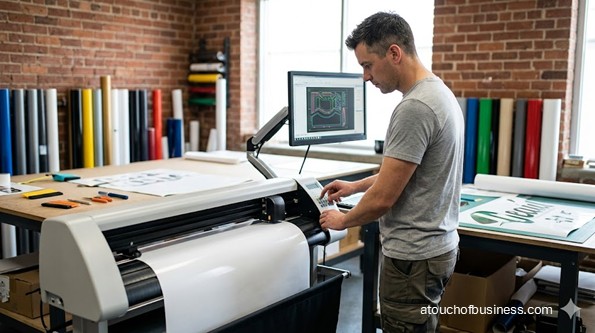
What to Expect From This Guide to Starting a Vinyl Decal Business
This guide walks through the key decisions and practical steps involved in starting a vinyl decal business, from choosing a production model to preparing a tested shop. The selected points below introduce the guide’s broader coverage of planning, compliance, workflow, pricing, and opening decisions.
Inside the guide, you will find:
- Startup roadmap: Work through 24 ordered steps from owner fit and demand checks to shop setup, production testing, and opening preparation.
- Industry interviews: Hear owners and operators discuss equipment learning curves, pricing, artwork problems, workflow, deadlines, niche choices, and shop pressure.
- Startup FAQs: Find practical answers about equipment, sales tax, occupancy, sign permits, home-based options, pricing mistakes, and opening delays.
- Production choices: Compare cut-vinyl, print-and-cut, and installation models before selecting equipment, materials, software, space, and suppliers.
- Customer controls: Prepare order forms, artwork permissions, written proofs, care instructions, and remake terms before accepting custom jobs.
- Local requirements: Check business registration, taxes, zoning, occupancy, sign rules, chemical handling, waste, and insurance based on your setup.
- Opening preparation: Test materials, machines, software, payments, packaging, and shop flow while using red flags to identify unresolved gaps.
Start with the shop model, because that choice shapes nearly every equipment, space, material, and compliance decision that follows.
Plan a Vinyl Decal Shop With Clear Setup Choices
A vinyl decal business can be a good fit if you like design, detail, and hands-on production. You may create window lettering, wall decals, vehicle lettering, labels, small signs, and custom adhesive graphics from a workshop or small shop.
Before you buy a cutter or lease a space, slow down. This business isn’t only about making attractive decals. You also need to handle customer requests, artwork files, proofs, revisions, material choices, deadlines, pricing, and finished-order quality.
If you want a broader overview of the startup process, this startup checklist can help you think through the basics. This guide focuses on the specific path for starting a vinyl decal business.
You also need to be honest about your life outside the shop. Can you cover personal living expenses while orders build? Do you have support at home? Can you handle slow weeks, equipment problems, customer changes, and the chance that the business may not work?
Speak with owners you won’t compete against. Look for vinyl decal, sign, or graphics shop owners in another city or market area. Prepare questions before you talk to them.
Ask about equipment choices, material waste, proof approvals, difficult customer artwork, local sign rules, and jobs they’d avoid if starting again. Their path may not match yours, but their firsthand experience can reveal issues that are hard to see from the outside. You can also use advice from real business owners to guide those conversations.
Red Flags Before You Start
Some warning signs should make you pause. These aren’t minor opening tasks—they affect whether the business makes sense for you at all.
- Weak local demand: Pause if nearby buyers already have fast, affordable, reliable decal options and you can’t see a clear gap.
- No clear offer: Delay if you can’t decide whether you’ll sell cut vinyl, printed decals, vehicle lettering, signs, apparel vinyl, or installation.
- Equipment before strategy: Don’t buy machines before you know the products you’ll make and the customers you want to serve.
- Unrealistic startup costs: Rework the model if equipment, rent, materials, insurance, software, and working capital exceed what you can safely fund.
- Lease uncertainty: Stop before signing if zoning, certificate of occupancy, production use, retail pickup, or signage rules are unclear.
- Sales-tax confusion: Don’t sell decals until you know how your state treats decals, signs, installation, design charges, and shipping.
- Copyright risk: Avoid launching with protected logos, characters, sports marks, or brand names unless permissions are clear.
- Poor owner fit: Reconsider if you dislike detail, software, measuring, customer revisions, repetitive production, or technical troubleshooting.
Avoid the trap: Don’t confuse a creative hobby with a ready business. A vinyl decal shop needs repeatable pricing, clear approvals, and consistent delivery standards.
Step 1: Check Whether This Business Fits You
Running a vinyl decal business requires patience. You may spend long stretches cleaning up artwork, setting cut lines, weeding tiny letters, applying transfer tape, and checking finished decals.
You need to enjoy both the creative side and the production side. Style matters, but so do measurements, clean edges, material choices, and deadlines.
Think about your strengths:
- Can you work carefully with small details?
- Can you explain limits to customers without sounding defensive?
- Can you handle proofs, changes, and approvals?
- Can you solve machine, blade, file, or material problems?
- Can you stay calm when a job must be remade?
This business may not fit you if you rush through details or dislike customer communication. A simple spelling error can ruin an order.
Step 2: Clarify Your Motivation and Risk Tolerance
Decide why you want this business. Do you want a hands-on creative shop? A small production business? A sign-and-graphics service? A part-time path that may grow later?
Your reason matters because it affects your choices. A small cut-vinyl shop carries a different risk level than a print-and-cut shop with installation services.
You also need to think about income uncertainty. Early orders may not arrive on a steady schedule, and startup costs may come before reliable cash flow.
Avoid the trap: Don’t start because the equipment looks simple online. The harder part is building a clear offer, pricing the real effort, and producing finished decals customers approve.
Step 3: Learn From Non-Competing Owners
Talk to owners outside your local market—people who won’t see you as a competitor.
Prepare your questions before you reach out. Respect their time and ask practical questions about startup decisions.
- Which cutter size would they choose again?
- Which vinyl materials caused early problems?
- How often do customers send unusable artwork?
- How do they handle proof approval?
- Which jobs waste the most time?
- Which local sign rules surprised them?
These conversations can also help you decide whether to start from scratch, buy an existing decal or sign shop, or explore a broader sign franchise.
Step 4: Choose Your Vinyl Decal Business Model
Your business model should come before your shopping list. A cut-vinyl shop, a print-and-cut shop, and an installation-focused graphics shop each need different equipment, materials, space, insurance, and pricing.
A basic cut-vinyl setup may focus on solid-color decals, window lettering, wall decals, and simple graphics. A print-and-cut setup can produce full-color decals but adds printers, inks, laminating, color setup, and more safety checks.
Decide what you’ll offer at opening:
- Cut vinyl decals
- Printed decals
- Window lettering
- Wall graphics
- Vehicle lettering
- Small signs
- Product labels
- Installation services
- Heat-transfer vinyl apparel, if it truly fits your plan
Be careful with add-ons. Apparel work needs different tools and materials. Installation adds risk, scheduling pressure, surface checks, and possible sign-permit questions.
Avoid the trap: Don’t offer every decal-related service on day one. A narrow, clear offer is easier to price, test, and deliver.
Step 5: Compare Starting, Buying, or Franchising
Starting from scratch is realistic for a vinyl decal business. Equipment, software, vinyl, transfer tape, and supplies are widely available.
Buying an existing sign or graphics shop may also make sense, but you’ll need to inspect the equipment, lease, customer records, supplier accounts, open obligations, and local approvals.
A franchise is more likely if you want a broader sign-and-graphics business, not a narrow vinyl decal shop. You may get support and systems, but you may also give up control and take on fees.
The best path depends on your budget, timeline, support needs, risk tolerance, and how much control you want. If you’re unsure, compare whether it makes more sense to start from scratch or buy a business.
Step 6: Validate Local Demand and Competition
You need enough local demand to support the vinyl decal shop you plan to open. Do this before you sign a lease or buy major equipment.
Look at nearby sign shops, print shops, vehicle wrap shops, online sticker sellers, craft sellers, and apparel decorators. You’re not only checking how many exist—you’re checking what they already do well.
Study likely buyers in your area:
- Small businesses
- Contractors and trades
- Storefront owners
- Real estate agents
- Schools and clubs
- Event organizers
- Vehicle owners
- Product makers
Ask whether local buyers need fast turnaround, custom sizes, installation help, short runs, or business-ready graphics. If the area is already well served, you may need a smaller model or a clearer position.
You can use local supply and demand thinking to decide whether the market can support another decal shop.
Business Plan
Your business plan should turn your startup choices into a practical roadmap for opening. Keep it focused on the vinyl decal business you’re actually starting.
Don’t write a generic plan just to say you have one. Use it to organize decisions before you commit.
Include the following:
- The decal products you’ll offer at opening
- Whether you’ll cut only or print and cut
- Whether you’ll install decals or sell ready-to-apply graphics
- Your main customer types
- Your shop layout and space needs
- Your equipment and software list
- Your material and supplier plan
- Your proof and revision process
- Your legal, tax, zoning, and local permit checks
- Your pricing method
- Your insurance and risk planning
- Your opening-readiness checklist
A strong plan helps you see what must happen first. For example, your business model affects your equipment. Your equipment affects your space. Your space affects zoning, power, storage, ventilation, and certificate of occupancy questions.
If you need a planning framework, this guide to a business plan can help you organize your thoughts.
Step 7: Plan Startup Costs Before You Commit
Don’t treat startup costs as one fixed number. They can vary widely based on equipment, shop size, materials, and whether you offer printing or installation.
Price out each part before you commit to a lease, loan, or major machine purchase.
Your startup budget may include:
- Business registration and local licenses
- Shop lease, deposits, utilities, and build-out
- Certificate of occupancy or inspection-related costs when applicable
- Vinyl cutter or printer/cutter
- Computer, monitor, software, and file storage
- Vinyl rolls, transfer tape, blades, and tools
- Worktables, racks, shelving, and customer pickup storage
- Packaging, labels, order forms, and proof records
- Payment system and bookkeeping tools
- Insurance and safety supplies
- Test materials and waste allowance
Equipment choices can raise or lower startup costs significantly. A cut-only shop has different needs than a print-and-cut shop with lamination.
Avoid the trap: Don’t price only the cutter. The real startup budget includes software, materials, tools, storage, test runs, waste, forms, insurance, payments, and workspace readiness.
Step 8: Confirm Funding Before Major Spending
Once you know what you need, decide how you’ll fund it—before you order machines or sign a lease.
Your options may include personal funds, equipment financing, a small business loan, supplier credit, or a smaller launch model. A cut-only start may reduce your initial spending if print-and-cut equipment is out of reach.
Think about personal cash flow too. Can you cover household expenses while the shop gets started? Can your startup funds absorb slow early sales without forcing rushed decisions?
If you need outside funding, prepare your plan, startup cost list, and basic financial assumptions before you apply. You can also review what lenders look for when you apply for a business loan.
Step 9: Choose and Register the Business
Choose a legal structure before you set up banking and formal accounts. Common options include sole proprietorship, limited liability company, corporation, or partnership.
The right structure depends on liability concerns, taxes, ownership, cost, and how you plan to run the business. If you’re unsure, speak with a qualified professional before filing.
If your public business name differs from your legal name, check Doing Business As rules. These may be handled by the state, county, or city.
Complete required registrations before opening. State and local rules vary, so verify them before you accept paid orders.
Step 10: Set Up Federal and Tax Accounts
Your vinyl decal business may need an Employer Identification Number—especially for entities, payroll, certain tax filings, banking, or vendor setup.
Apply directly through the Internal Revenue Service if you need one. The IRS issues this number at no charge.
Next, check sales and use tax rules in your state. Decals, stickers, labels, and signs are often treated as tangible goods, but rules vary by state.
You may need to know how your state treats:
- Custom decals
- Printed stickers
- Signs and labels
- Installation labor
- Design or file cleanup charges
- Shipping or delivery charges
Get this sorted before you start selling. Sales-tax confusion can create problems fast.
Step 11: Verify Local Licenses Before Opening
Many startup requirements depend on where the shop is located. A vinyl decal business may need a general business license, local registration, or other local approval before opening.
Check with the city, county, or local business licensing office. Ask how they classify a vinyl decal shop—it could be viewed as retail, light production, printing, sign making, or a related commercial use.
Keep the question simple: what approvals are needed before a small decal and graphics shop opens at this address?
Don’t assume a nearby business has the same requirements. Local rules can vary by city, building, zoning district, and business activity.
Step 12: Check Zoning, Space Use, and Certificate of Occupancy
A shop-based vinyl decal model needs a space that supports production. Check this before signing a lease.
The space may need to accommodate worktables, vinyl roll storage, cutting equipment, printers if used, customer pickup, deliveries, electrical load, lighting, and safe storage of supplies.
Ask the local planning or building department whether the address allows:
- Vinyl cutting
- Printing, if offered
- Sign or decal production
- Retail pickup or customer visits
- Material storage
- Business signage
Also ask whether a certificate of occupancy or change-of-use approval is required. This can vary by U.S. jurisdiction.
Avoid the trap: Don’t sign a lease just because the space looks right. Confirm the legal use, occupancy status, power needs, storage limits, and sign rules first.
Step 13: Check Sign Rules Before Offering Installation
Sign rules matter if you install exterior signage, storefront lettering, window graphics, illuminated signs, wall signs, or other customer-facing graphics.
Rules vary by city or county. Selling a ready-to-apply decal may be treated differently than installing a regulated sign on a building.
Check with the local sign permit office or building department before you offer installation. Also check rules for your own shop sign.
This is especially important if you plan to serve storefront customers. A well-designed sign can still create problems if the customer needed local approval first.
Step 14: Match Equipment to Your Workflow
Buy equipment around your actual decal workflow. Don’t build your workflow around a machine you bought too early.
A basic cut-vinyl process may look like this:
- Prepare or clean up the design file.
- Create the cut path.
- Cut the vinyl.
- Weed the unwanted vinyl.
- Apply transfer tape.
- Package the decal or prepare it for installation.
A print-and-cut process adds more steps. You may need print files, color profiles, registration marks, lamination, curing or drying space, contour cutting, and more careful waste handling.
Choose equipment only after you know which process you’ll use at opening.
Step 15: Choose Materials and Suppliers
The wrong vinyl can ruin a decal job. Your material choices should match the surface, use, and customer expectation.
You may need suppliers for adhesive vinyl, removable vinyl, permanent vinyl, cast films, calendered films, printable vinyl, overlaminate, transfer tape, blades, tools, packaging, and cleaning supplies.
Learn the difference between common material types:
- Removable vinyl: Often used when the graphic is temporary or the surface needs easier removal.
- Permanent vinyl: Used when stronger adhesion is needed.
- Calendered vinyl: Common for flat or general sign applications.
- Cast vinyl: Often the safer choice for curved or vehicle applications.
- Printable vinyl: Used for printed graphics and often paired with lamination.
Use supplier data sheets. Don’t guess when choosing vinyl for walls, vehicles, windows, outdoor signs, or curved surfaces.
Step 16: Prepare Production Documents
You need clear documents before orders start. These protect both the customer and the shop.
At minimum, prepare documents for:
- Customer order details
- Artwork and file requirements
- Proof approval
- Spelling, size, color, and placement confirmation
- Customer artwork permissions
- Material-use notes
- Care and application instructions
- Invoices and receipts
- Refund, remake, or correction terms
Your proof process matters. Customers should approve spelling, size, color, surface, and placement before production begins.
Avoid the trap: Don’t rely on casual messages for approval. Custom decals need clear proof records, especially when names, numbers, logos, or measurements are involved.
Step 17: Set Pricing Before Accepting Orders
Pricing a vinyl decal business isn’t just about vinyl size. Small, detailed decals can take more time than larger simple graphics.
Build pricing around the real job. Include material, waste, transfer tape, design time, file cleanup, cutting, weeding, layering, printing, lamination, packaging, and installation if offered.
You may need separate pricing for:
- Design-only projects
- Customer artwork cleanup
- Cut vinyl decals
- Printed decals
- Laminated graphics
- Layered vinyl
- Installation
- Rush timing
Set minimum order rules before launch. Otherwise, you may spend too much time on small jobs that don’t cover setup, file handling, and customer communication.
For broader pricing help, use guidance on pricing products and services to think through labor, materials, and value.
Step 18: Set Up Banking and Payments
Open a business bank account after your legal and tax setup are ready. Keep business transactions separate from personal ones from the start.
Set up payment tools before opening. You may need card payments, invoices, deposits for custom orders, receipts, refund handling, and sales-tax tracking.
Test your payment process before the first customer pays. Confirm that your system can handle in-person sales, invoice payments, deposits, and custom order balances if those apply.
You also need a basic bookkeeping process. Track sales, tax collected, material purchases, software, equipment, rent, insurance, and other startup expenses.
Step 19: Plan Safety, Storage, and Waste Handling
A cut-only vinyl shop has simpler safety concerns than a print-and-cut shop, but you still need a safe layout. Blades, cutting tools, rolls, cords, ladders, and worktables can all create hazards.
If you use inks, solvents, cleaners, liquid laminates, or other chemicals, collect Safety Data Sheets and follow label instructions. If employees handle hazardous chemicals, workplace safety rules may apply.
Printing can also raise waste questions. Ink, solvent, contaminated wipes, or similar materials may require special handling depending on what you use and where you operate.
Check with your state environmental agency or local waste authority if you plan to print, laminate, or use chemical products.
Step 20: Arrange Insurance and Risk Planning
Insurance is part of startup planning. Don’t assume one policy covers every decal job.
Common coverage to price out may include general liability, property coverage, business personal property, equipment coverage, design-error exposure, commercial auto if a vehicle is used, and installation-related risk.
Workers’ compensation rules vary by state if you hire employees. Don’t treat any coverage as legally required unless a state law, lease, lender, contract, or regulator confirms it.
Installation changes your risk profile. A decal sold for pickup is not the same as a job where you apply graphics to a customer’s storefront, vehicle, or window.
Step 21: Prepare the Shop
Your shop layout affects quality and turnaround time. You need a clean path from order review to finished job.
Set up areas for:
- Design and proofing
- Cutting or printing
- Weeding
- Transfer tape application
- Inspection
- Packaging
- Finished-order storage
- Customer pickup, if customers enter the shop
Store vinyl rolls so they stay clean, organized, and easy to identify. Keep tools close to the steps where they’re used.
Also check power, lighting, internet, ventilation if needed, floor space, delivery access, cleanup, and safe blade disposal.
Avoid the trap: Don’t open in a crowded shop where every order has to move around clutter. Poor layout slows production and increases errors.
Step 22: Test Production Before Launch
Test your products before taking paid orders. This is where you find problems while the stakes are still low.
Run test decals with small lettering, larger graphics, layered vinyl, printed graphics if offered, and different surfaces. Try glass, painted metal, plastic, and wall samples when those products fit your offer.
Test blade depth, cut pressure, transfer tape tack, weeding difficulty, color accuracy, laminate behavior, packaging, and installation steps.
Keep notes. Your test runs can help you set better pricing, choose better materials, and avoid customer remakes.
Step 23: Confirm Opening Readiness
Open only when you’re ready to take orders, produce them, collect payment, and handle common problems.
Before opening, confirm that these items are ready:
- Legal registration and tax setup
- Local license, zoning, and certificate of occupancy checks
- Equipment installed and tested
- Software working
- Supplier accounts set up
- Vinyl, transfer tape, blades, and tools stocked
- Pricing sheet prepared
- Order form and proof approval ready
- Payment system tested
- Insurance arranged as needed
- Safety Data Sheets collected when relevant
- Packaging tested
- Finished-order storage ready
- Business email, phone, invoices, and pickup instructions ready
Don’t open with untested materials, unresolved sales-tax questions, or no approval process. Those gaps can create problems on the first order.
Step 24: Understand a Typical Opening-Stage Day
On a typical day, you may review order requests, check artwork, prepare proofs, cut vinyl, weed decals, apply transfer tape, package finished orders, answer material questions, and update invoices.
The day may also include ordering supplies, testing a tricky design, cleaning tools, checking blades, and preparing customer pickup orders.
This snapshot is useful for assessing owner fit. If these daily tasks sound draining, the business may not match your strengths.
Opening-Day Red Flags
These issues don’t necessarily mean you should avoid the business—they mean the shop may not be ready to open yet.
- Untested equipment: Delay opening if the cutter, software, printer, or payment system hasn’t been tested with real sample jobs.
- No proof approval: Don’t accept custom orders until customers can approve spelling, size, color, and placement in writing.
- Unclear tax setup: Wait if sales-tax collection and reporting aren’t set up for the products and services you plan to sell.
- Missing local approval: Pause if zoning, business license, certificate of occupancy, or sign-permit questions remain unresolved.
- Weak material setup: Delay if you can’t match vinyl type to surface, use, and expected durability.
- Unsafe shop layout: Fix blade storage, cords, roll storage, chemical records, cleanup, and worktable layout before customers or employees enter.
- No remake policy: Prepare terms for customer mistakes, shop errors, artwork problems, and installation failures before the first order.
Frequently Asked Questions
These questions focus on startup decisions for a vinyl decal business owner.
Is a vinyl decal business a good fit for a first-time owner?
It can be if you start with a clear model, learn the equipment, test products, and control spending. It’s a poor fit if you dislike detail, software, customer proofs, or production errors.
What should I verify before buying equipment?
Verify your business model, local demand, competition, workspace rules, funding, product list, material needs, and whether you’ll offer cut-only or print-and-cut decals.
Does a vinyl decal business need a special federal license?
Not typically for basic decal cutting. Federal requirements are more likely to involve tax setup, employment rules if you hire, intellectual property, workplace chemical rules, or waste concerns if printing creates regulated waste.
Do I need a sales-tax permit?
It depends on your state. Because decals, stickers, signs, and labels are often tangible goods, check with your state Department of Revenue before selling.
Does the shop need a certificate of occupancy?
It depends on the local jurisdiction and the space. Ask the building department before you sign a lease, change the use of a space, renovate, or open to customers.
Are sign permits relevant?
Sometimes. Selling a ready-to-apply decal may be treated differently than installing storefront signage, window lettering, wall signs, or exterior graphics. Local sign codes decide what requires approval.
Should I start with cut vinyl or printed decals?
Cut vinyl is simpler. Printed decals can expand your offer, but they add printers, ink, color setup, lamination, drying or curing space, chemical handling, and possible waste questions.
What equipment is usually needed for a basic cut-vinyl launch?
You’ll typically need a cutter or plotter, design and cutting software, a computer, adhesive vinyl, transfer tape, weeding tools, squeegees, cutting tools, measuring tools, worktables, storage, and packaging.
Can I start from home instead of a shop?
This guide focuses on a shop-based model. A home-based start may be possible in some places, but zoning, deliveries, customer visits, storage, equipment noise, and home-occupation rules must be checked locally.
Is buying an existing decal or sign business realistic?
Yes, but only after due diligence. Check equipment condition, customer records, lease transfer, supplier accounts, local approvals, and any unfinished obligations.
Is franchising realistic?
It’s more realistic for a broader sign-and-graphics business than a narrow vinyl decal shop. Review the franchise documents, fees, territory, training, and operating rules before paying or signing.
What are the biggest pricing mistakes before opening?
Common mistakes include pricing only by material size, ignoring design time, ignoring weeding complexity, not charging for file cleanup, and failing to set a minimum order.
What documents should be ready before launch?
Prepare quote forms, order forms, proof approvals, customer artwork permission language, invoices, receipts, material-use notes, application instructions, and refund or remake terms.
When should I delay opening?
Delay if zoning is unclear, tax setup is unresolved, equipment is untested, pricing is incomplete, proof approvals are missing, or you can’t match materials to the products you plan to sell.
Real-World Advice From Vinyl Decal Business Owners
Learning from people already in the sticker, decal, sign, and graphics business can help you see the real startup details.
Their experience can give you a better feel for equipment choices, pricing, customer artwork problems, production workflow, deadlines, and the everyday pressure of running a shop.
- David Rubie-Todd of Sticker It – A podcast interview about building a sticker printing business, including why stickers, differentiation, tools, team setup, customer experience, and mistakes made.
- Andrea Lake of StickerJunkie – A business interview with the founder of StickerJunkie, useful for understanding sticker demand, business focus, and the realities behind a high-volume sticker company.
- Joe Arenella on Starting a Sign Company – An article from a sign industry operator who discusses why people start, the risk of trying to do everything, choosing a niche, and building systems before the shop becomes overwhelming.
- Todd Downing on 2 Regular Guys Podcast – A podcast episode featuring a business owner who started with a simple vinyl decal business and later expanded into other print and transfer services. Useful for thinking about equipment learning curves and expansion choices.
Related Articles
Sources:
-
- U.S. SBA: Market Research, Business Plan, Startup Costs, Funding Options, SBA Loans, Register Business, Choose Business Name, Licenses and Permits, Buy or Franchise
- IRS: Get an EIN, Small Business Tax Center
- U.S. Department of Labor: FirstStep Advisor
- OSHA: Hazard Communication, Printing Safety
- EPA: RCRA Printing Guide
- FTC: Buying a Franchise
- USPTO: Trademark Basics, What Is a Trademark
- U.S. Copyright Office: Copyright Basics, Works Made for Hire
- U.S. Census Bureau: NAICS Overview, Commercial Printing NAICS
- New York Tax Department: Sales Tax Vendor
- Washington Department of Revenue: Retail Sales Tax
- International Sign Association: Codes and Regulations, Permitting Resources
- City of Chicago: Sign Permits
- NYC Department of Buildings: Sign Permit
- City of Philadelphia: Certificate of Occupancy
- City of Pittsburg, Texas: Occupancy Requirements
- Roland DGA: Print/Cut Workflow
- USCutter: Make a Sticker, Weeding Tools, Application Tape
- ORAFOL: ORACAL 651, Film Support
- Avery Dennison: Graphics Products, Premium Vinyl Films
- Siser: EasyPSV Instructions, Application Tape