
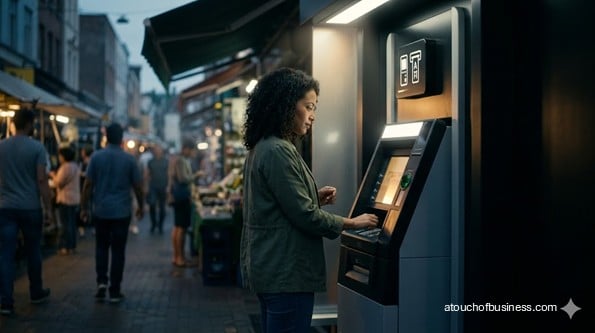
What to Know Before Buying or Placing ATM Machines
An ATM Business is built around owning and operating automated teller machines that let cardholders withdraw cash, check balances, and complete supported transactions.
The business usually earns from customer surcharges and sometimes other transaction-related revenue, depending on the processor agreement. Your main asset is the machine, but the structure depends on the location, processor, cash plan, host agreement, and compliance checks.
This business fits the Rental / Asset-Based model because each machine is an income-producing asset. A machine in a weak location can hurt cash flow, while one in a strong cash-use area may justify the startup cost, vault cash, and service and maintenance demands.
You are not just placing equipment. You are also handling trust, documentation, cash, transaction records, fee disclosures, location agreements, and service boundaries.
Decide Whether an ATM Business Fits You
Before you follow the startup path, ask whether owning a business fits you at all. Then ask whether this specific business fits your habits, patience, and risk tolerance.
An ATM Business can look simple from the outside. In practice, the owner has to deal with cash funding, processor forms, host agreements, equipment issues, settlement records, and security decisions.
Do you have a real interest in the business, or are you only drawn to the idea of owning machines? Passion for the business matters because the boring details are where most problems arise.
Ask yourself: Are you moving toward something or running away from something?
Do not start only to escape a job, a bad boss, financial pressure, or the image of being a business owner. This business has pressure of its own. Cash has to be tracked. Machines can go down. A weak location can sit nearly idle.
Talk with owners you will not compete against, such as ATM operators in another city, region, or market area. Prepare real questions before you call them.
Ask about:
- What they wish they had checked before buying their first machine.
- How they read processor statements.
- Which host agreement terms matter most.
- How they handle cash loading and security.
- Which locations looked good but failed.
Every owner’s path is different, but firsthand insight is hard to replace. Experienced owners can help you see the practical side before you spend money.
If you want a broader view of the early startup process, use a general startup checklist only as a background guide. Your actual path still needs to follow the ATM-specific decisions in this article.
Compare Starting From Scratch, Buying a Route, or Exploring a Franchise
An ATM Business can start in more than one way. The right path depends on your budget, timeline, support needs, available opportunities, and risk tolerance.
Starting from scratch gives you more control. You choose the machine, processor, host locations, surcharge setup, and cash plan. The tradeoff is that you must build the route one location at a time.
Buying an existing ATM route may help you start faster, but only if the records support the asking price. You need to review transaction history, settlement records, service logs, host agreements, processor terms, and proof that the seller owns the machines.
Franchise or reseller programs may offer equipment, processing help, training, or location support. Read the terms carefully. A support package is only useful if the fees, equipment pricing, processor terms, and responsibilities are spelled out.
A practical comparison should look at:
- Control: Who chooses the processor, machine, location, and surcharge?
- Proof: Can the seller or program show real transaction and settlement records?
- Support: Who helps with installation, programming, service, and troubleshooting?
- Risk: What happens if a host cancels, a machine fails, or a location underperforms?
- Cash needs: How much vault cash will be tied up before you earn anything?
If you are deciding whether to build or buy, compare the real terms, not the promise. Starting from scratch or buying a business can lead to very different startup risks.
Validate Locations and Cash Demand
An ATM Business depends on location quality. A busy-looking site is not enough if the people there do not need cash or already have better ATM options nearby.
Before you buy equipment, study where the machine may go. Look at foot traffic, nearby ATMs, surcharge competition, host stability, safety, access, and whether customers in that area still use cash.
Useful location checks include:
- Nearby ATMs and their fees.
- Customer traffic at different times of day.
- Whether the host business has cash-using customers.
- Whether the machine can be placed where customers can see and use it safely.
- Power and internet or cellular access.
- Host willingness to sign a written agreement.
Cash is still used, but digital payments have changed customer habits. Do not assume every convenience store, bar, laundromat, venue, or tourist spot will support a machine.
Scenario snapshot: A location may look busy during one visit, but traffic can change by day, hour, or season. If you skip observation, you may buy a machine before knowing whether people there actually need cash.
Treat local demand as a firm yes-or-no decision. A location with weak cash use can leave your machine idle while you still pay for equipment, cash, service, and processor costs.
When you compare possible locations, think in terms of local supply and demand. The machine needs enough likely users, not just an available corner.
Set Up the Legal Business Identity
An ATM Business needs a registered business identity before processor onboarding, banking, host agreements, and vendor setup.
Choose a structure before you register. Common choices include a sole proprietorship, limited liability company, corporation, or partnership. The right choice affects taxes, paperwork, funding, and personal liability.
You may also need an Employer Identification Number, especially if you form a legal entity, hire employees, open business accounts, or complete processor paperwork.
Basic setup items may include:
- Business structure decision.
- State entity filing, if forming an entity.
- Employer Identification Number.
- Doing Business As registration, if using a trade name.
- Business address and contact information.
- Operating agreement or ownership documents, when applicable.
- Recordkeeping system for contracts, cash logs, and settlement reports.
Rules vary by U.S. jurisdiction. Check your state registration office, local business licensing office, state revenue department, and state employer agencies if you plan to hire.
Also verify whether your state has any ATM operator registration requirement or special financial-regulator filing. Do not assume the rules are the same everywhere.
If you are unsure where to begin, read about how to register a business, then apply the steps to the ATM model.
Prepare Banking, Vault Cash, and Cash Handling
Cash is central to an ATM Business. You need a business bank account, a settlement account, and a practical way to fund the cash inside each machine.
Vault cash is the money loaded into the ATM for withdrawals. It is not profit. It is working capital that must be funded, secured, replenished, and reconciled.
You need to decide whether you will:
- Use your own cash to load machines.
- Use a vault cash provider.
- Load machines yourself.
- Use an armored carrier.
- Store cash securely before it goes into the machine.
Banks may ask about the source of funds, machine locations, processor relationship, expected cash flow, and business documents. Be ready for that conversation before you start buying equipment.
Scenario snapshot: A machine can record steady transaction volume, but that does not help if the owner cannot keep enough cash loaded. Weak cash planning can turn a good location into a customer service problem.
If you self-load cash, think through safety and documentation before the first fill. Cash bags, cash logs, secure storage, and reconciliation records should be in place from day one.
If you use a vault cash provider or armored carrier, review the service terms, timing, reporting, and fees. The service may reduce personal risk, but it also changes your cost structure.
Set up your business bank account before you need settlement deposits to flow. Waiting until the machine is ready can delay launch.
Choose the Processor and Settlement Setup
The processor connects your ATM to the transaction network. This affects surcharge display, transaction routing, settlement deposits, reports, and fees.
Do not compare processors only by the headline surcharge split. Look at the full cost and support picture.
Review:
- Monthly processing fees.
- Per-transaction fees.
- Network fees.
- Statement or reporting fees.
- Compliance or security fees.
- Support and reprogramming charges.
- Settlement schedule.
- Chargeback or failed transaction handling.
The processor should also confirm which machines can be approved and activated. Buying an unsupported machine can create a costly problem before you even open.
You also need access to a processor portal or reporting system. Those records help you compare cash loaded, withdrawals, surcharge revenue, fees, and settlement deposits.
Keep the processor agreement with your other startup documents. This business depends on accurate records and well-defined service boundaries.
Select ATM Equipment and Security Features
Your ATM is the main asset, but the lowest purchase price is not always the wisest decision.
Equipment choice affects uptime, customer trust, cash capacity, accessibility, processor compatibility, and future repair costs.
Common machine and feature considerations include:
- EMV card reader.
- Encrypting PIN pad.
- Cash cassette capacity.
- Receipt printer or approved receipt setup.
- Display screen.
- Audio jack or speaker for accessibility.
- Privacy features.
- Safe or cabinet type.
- Electronic lock.
- Anti-skimming option.
- Internet or cellular communication.
- Remote monitoring capability.
New machines may offer current features and warranty support. Refurbished machines may cost less, but you must confirm processor approval, upgrade needs, parts availability, and compliance status.
For this asset-based model, idle or unreliable equipment can hurt profitability before the business has a chance to prove itself. Maintenance and replacement planning belong in the startup budget, not as an afterthought.
Do not buy equipment until you know where it may go, how it will connect, who will process transactions, and whether the machine meets the requirements for that location and processor.
Check Fee Disclosure, Accessibility, and Payment Security
An ATM Business handles consumer transactions, PIN entry, fee notices, and public access. Compliance and trust are part of the foundation.
If you charge a fee, the ATM must disclose the fee and amount before the cardholder completes the transaction. The customer must have a chance to continue or cancel after seeing the fee.
Accessibility also matters. Public-facing ATM placement should be reviewed for access, reach, privacy, and machine features that support use by people with disabilities.
Payment security is tied to processor, network, and device requirements. Your processor should explain current hardware, software, encryption, and security expectations before the machine goes live.
Before opening, verify:
- The surcharge screen works correctly.
- The cancellation option appears before the customer is committed.
- The machine placement supports accessible use.
- The processor accepts the hardware and software.
- You understand the security updates and device requirements.
- Service logs and compliance records are stored.
When writing your business plan, focus on this checklist rather than trying to become a payment-law expert. The goal is to verify the right items before the machine accepts live transactions.
Secure the Host Agreement and Install the Machine
The host location is where the ATM sits. The host agreement protects your right to place, service, load, and remove the machine.
A handshake is risky. Location quality drives the business, so the agreement should be in writing before installation.
The host agreement should address:
- Who owns the machine.
- Where the machine will be placed.
- Who has access to the machine.
- Who supplies power and connectivity.
- Who handles cash loading.
- Who handles maintenance.
- How surcharge revenue or host payments are handled.
- The agreement term and termination rules.
- Damage, theft, liability, and removal rights.
- Any exclusivity rights.
If the machine needs exterior signs, electrical changes, anchoring, or through-wall installation, check local requirements first. A sign permit, electrical permit, building permit, zoning review, or certificate of occupancy issue may apply depending on the location and installation.
Local approval varies by U.S. jurisdiction, so confirm requirements before spending money on installation changes. Ask the city, county, building department, zoning office, or sign office before you commit.
Scenario snapshot: A host may agree verbally but later object to access hours, signage, cash loading, or revenue sharing. A written agreement prevents confusion before the machine is bolted down.
Test Transactions and Opening Readiness
An ATM Business should not go live until the machine, processor, bank account, cash plan, host agreement, and records all work together.
Opening readiness means verifying the full configuration, not just powering on the machine.
Before launch, confirm:
- The machine powers on and connects properly.
- The processor has boarded the terminal.
- The surcharge screen displays correctly.
- The customer can cancel before accepting the fee.
- The card transaction flow works.
- The machine dispenses the correct cash amount.
- Receipt printing works if the machine uses printed receipts.
- Remote monitoring alerts are active.
- The first settlement report can be accessed.
- Cash logs and reconciliation sheets are ready.
- The host has your service contact information.
During the first live period, compare cash loaded, withdrawals, fees, and settlement deposits. This helps you catch errors before they turn into larger accounting or service problems.
Have a technician or support contact ready before launch. A machine that is out of cash, offline, jammed, or missing receipt paper cannot earn as expected.
Business Plan
Your business plan should turn the ATM startup path into a working decision guide. It should help you decide what to do before you buy, sign, install, or open.
Do not make the plan generic. Build it around machines, locations, cash, processor terms, host agreements, compliance checks, and opening readiness.
Include:
- Owner fit: Why this business fits your skills, risk tolerance, and schedule.
- Startup path: Whether you will start from scratch, buy a route, or explore a franchise or reseller program.
- Location criteria: What makes a site worth pursuing.
- Cash demand: How you will judge local need for an ATM.
- Machine plan: New or refurbished equipment, features, compatibility, and service access.
- Processor plan: Fees, settlement timing, reporting, and support.
- Vault cash plan: How much cash each machine may need and how you will fund it.
- Host agreement plan: Terms you need before placement.
- Compliance checks: Fee disclosure, accessibility, local permits, and state or local verification.
- Startup costs: Equipment, installation, cash, processing, service, banking, and identity costs.
- Pricing decisions: Surcharge amount, host split, processor fees, and break-even transaction assumptions.
- Opening checklist: What must be ready before the first live transaction.
Use the plan to test whether the numbers and terms make sense. A solid plan should reveal weak locations, vague processor terms, poor cash planning, or unsupported equipment before those problems cost you money.
If you need help shaping the document, use a business plan guide as a reference, but keep the details specific to the ATM Business.
Startup Costs, Pricing, and Funding
Startup costs for an ATM Business vary too much to assign a single number. The main drivers are equipment, vault cash, installation, processing terms, location terms, cash logistics, and service needs.
Your cost planning should separate the machine from the cash inside the machine. The ATM is an asset. Vault cash is working capital that may sit inside the machine until customers withdraw it.
Main startup cost categories include:
- Business formation and registration.
- DBA filing if used.
- Local business license if required.
- ATM equipment.
- Shipping and installation.
- Anchoring, power, internet, or cellular setup.
- Vault cash.
- Processor setup and transaction-related fees.
- Host location payments or surcharge split.
- Receipt paper and basic supplies.
- Service calls, parts, and maintenance reserve.
- Insurance for risk planning, if appropriate.
Pricing decisions usually start with the surcharge. But the surcharge alone does not tell you whether a location makes sense.
You also need to account for host split, processor fees, network fees, communication costs, cash-loading cost, maintenance, and transaction volume. A high surcharge in a weak location may still fail to cover costs.
Funding options may include owner cash, equipment financing, equipment lease, bank loan, seller financing for a route, or vault cash support from a cash provider. Compare repayment terms and service obligations before you commit.
Insurance to consider for risk planning may include general liability, property coverage for machines, crime or theft coverage, cash-in-transit coverage, commercial auto, and workers’ compensation if employees are hired and state law requires it. Do not treat optional coverage as a verified legal requirement unless your state, lender, host, or contract requires it.
Equipment, Records, and Setup Essentials
An ATM Business needs more than the machine. The operation must support secure cash handling, accurate records, processor reporting, and service readiness.
At minimum, plan for equipment and documents in these groups:
- Machine hardware: ATM, EMV reader, encrypting PIN pad, cash cassette, receipt printer, display, lock, safe, and anti-skimming option.
- Connectivity: Ethernet or cellular service, processor configuration, terminal number, and monitoring access.
- Cash handling: Cash bags, cash log, reconciliation worksheet, secure storage, and cash-loading procedure.
- Installation: Delivery plan, anchor kit, placement approval, power test, connection test, and installation photos.
- Processor records: Processing agreement, ACH authorization, settlement bank details, fee setup, and reporting login.
- Compliance records: Fee-disclosure test, accessibility check, service logs, and processor compliance notes.
- Service supplies: Receipt paper, cleaning cards, support contacts, parts supplier, and warranty records.
Retail shelving, customer seating, and a public office are not usually relevant to this model. The essentials are the machine, cash, contracts, records, and support system.
Main Red Flags Before You Start
An ATM Business can fail at the startup stage if the owner skips verification. The biggest warning signs usually appear before the machine goes live.
Watch for these red flags:
- You want passive income but are not prepared for cash, downtime, service calls, and records.
- A route seller cannot show processor statements, settlement records, service logs, and host agreements.
- The location has weak foot traffic, weak cash demand, or strong nearby ATM competition.
- The host will not sign a written agreement.
- You cannot get reliable banking or explain the source of vault cash.
- You plan to self-load cash without a safety and documentation process.
- The processor quote hides fees or makes support terms unclear.
- The machine is old, unsupported, not EMV-capable, not accessibility-ready, or not approved by the processor.
- The fee disclosure has not been tested before launch.
- The ATM placement may not support accessible use.
- The installation may need local approval, but no one has checked.
- There is no technician, monitoring system, cash log, or settlement review process in place.
These red flags do not always mean you must stop. They mean you should slow down, confirm the issue, and avoid spending money until the risk is understood.
Pre-Opening Readiness Checklist
Use this checklist before the first live transaction. It keeps the launch focused on what must be ready, not what sounds exciting.
- Confirm that the ATM Business fits your skills, risk tolerance, and schedule.
- Speak with non-competing ATM owners and prepare real questions first.
- Choose your startup path: new placement, route purchase, franchise, reseller program, or lease model.
- Study local cash demand and nearby ATM competition.
- Choose target location types and verify host interest.
- Form the business and obtain an Employer Identification Number if needed.
- Check state, city, and county business requirements.
- Open the business bank account.
- Prepare the bank due diligence file.
- Choose a vault cash method.
- Select a processor and review all fees.
- Confirm machine compatibility before buying equipment.
- Check fee disclosure, accessibility, and processor security requirements.
- Prepare and sign the host agreement.
- Check whether local sign, building, electrical, zoning, or certificate of occupancy requirements apply when installation changes may be needed.
- Install and secure the machine.
- Load cash using your chosen process.
- Run test transactions.
- Confirm remote monitoring and settlement reporting.
- Give the host your service contact information.
- Review the first settlement deposit against cash and transaction records.
Frequently Asked Questions
These questions focus on startup decisions for a future ATM owner or operator.
Is an ATM Business good for a first-time owner?
It can be, but only if you are comfortable with cash handling, contracts, processor records, machine issues, and local verification. Starting small can reduce early risk.
What should I check before buying an ATM?
Check processor compatibility, EMV support, accessibility features, security requirements, cash capacity, lock type, warranty, parts availability, and service support.
What should I check before buying an existing ATM route?
Review transaction history, settlement records, service logs, host agreements, processor terms, equipment ownership, and whether host contracts transfer to you.
Does an ATM owner need a federal ATM license?
A basic independent ATM owner usually does not need a general federal ATM owner license, but fee disclosure, accessibility, processor rules, banking due diligence, and state or local checks still matter.
Do ATM owners need a money transmitter license?
Usually not for a basic ATM withdrawal and balance-inquiry model, but state rules can differ. Check with your state financial regulator before launching.
How does an ATM Business make money?
Common revenue comes from customer surcharges and sometimes retained interchange, depending on processor terms. Net results depend on transaction volume, fees, host split, cash costs, and uptime.
What is vault cash?
Vault cash is the money loaded into the ATM for withdrawals. It is working capital, not profit.
Should I load cash myself or use an armored carrier?
Self-loading may reduce service costs, but it increases safety and recordkeeping concerns. Armored carrier service adds cost but may reduce personal cash-transport risk.
What belongs in the host agreement?
Include ownership, placement, access, power, connectivity, cash loading, maintenance, surcharge split, term, termination, damage, theft, liability, and removal rights.
What makes a location attractive?
A good location has likely cash users, safe access, visibility, host stability, power, connectivity, and limited nearby competition.
What are the biggest startup cost drivers?
The main drivers are the machine, vault cash, installation, processor fees, host split, cash loading, service, communication, local approvals, and security features.
Does the ATM need to show the surcharge before the transaction?
Yes. If you charge a fee, the machine must disclose the fee and amount before the customer completes the transaction.
Can I manage this business from home?
Often, the administrative side can be home-based. Cash storage, licensing, zoning, insurance, lease restrictions, and safety still need to be reviewed.
Can I open before all testing is done?
No. Test the machine, fee screen, processor connection, cash dispense, settlement reporting, monitoring alerts, and reconciliation process before live use.
Learning From People in the ATM Business
Learning from people already in the ATM business can help you understand the parts that are easy to underestimate, such as banking relationships, vault cash, location quality, processor terms, maintenance, and host agreements.
These resources include interviews, podcast episodes, and industry articles with operators or ATM industry professionals who share practical lessons from the field.
- 3 Tips for Independent ATM Deployers
- 4 Strategies for Independent ATM Deployers
- ATM Talks With Todd McEwan
- Interview With Eric Luevano
- UpFlip Interview-Based ATM Guide
- Flite Founder Q&A