
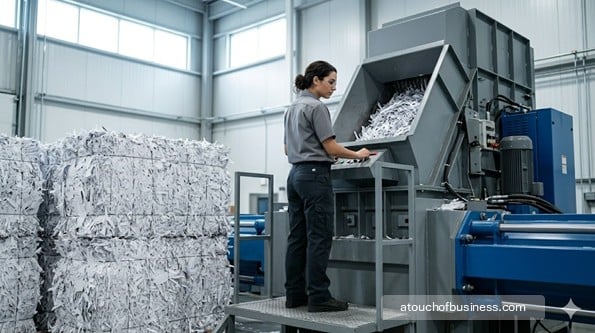
What to Expect From This Guide to Starting a Paper Shredding Business
This guide walks readers through the key decisions and practical steps involved in starting a mobile paper shredding business, from testing local demand and choosing a territory to preparing the truck, security procedures, finances, and first route.
Inside the guide, you will find:
- Startup roadmap: Follow sixteen ordered steps covering entry options, territory, registration, compliance, equipment, pricing, staffing, funding, and pre-opening checks.
- Operator interviews: Learn from shredding and records-management operators discussing trust, recurring accounts, equipment, recycling, positioning, financing, and local service challenges.
- Startup FAQs: Find answers about licenses, driver rules, certification, destruction records, home operation, insurance, recycling income, and common mistakes.
- Business fit: Weigh physical loading, commercial driving, weather exposure, income uncertainty, household support, competition, and the capital needed for equipment.
- Routes and equipment: Plan territory density, travel buffers, loading routines, truck weight, shredder capacity, power needs, maintenance, and breakdown backups.
- Security requirements: Review document-destruction duties, local permits, client compliance expectations, chain-of-custody policies, certification, and certificates of destruction.
- Financial planning: Examine equipment funding, recurring and one-time pricing, fixed costs, payment delays, operating reserves, recycling buyers, and break-even volume.
The guide continues by connecting secure destruction, dependable routing, and realistic cost planning into one workable startup approach.
Starting a Mobile Paper Shredding Business
As a mobile shredding business owner, you destroy confidential paper records right at the customer’s location.
You drive a truck fitted with an industrial shredder to the client’s site. Customers watch their documents get destroyed on the spot.
Clients include law firms, medical offices, financial advisors, and local government offices. These businesses handle records that must be destroyed securely, not just tossed out.
This guide walks you through the full startup process, from checking your fit to opening your doors.
Is This Business a Fit for You?
Before you buy a truck, think honestly about the daily work.
You’ll load bins, lift bags, and drive a commercial vehicle every day. You’ll work outdoors in all kinds of weather.
You’re also the face of a security-focused service. Clients need to trust you with sensitive material.
Ask yourself these questions:
- Can I handle physical loading and driving as a daily routine?
- Do I have enough savings to cover living costs while the client base grows?
- Can my household support slower income during the startup period?
- Am I comfortable with the risk that some months will be slow?
Talk with people you trust about these tradeoffs before you commit any money.
Red Flags Before You Start
Some warning signs mean you should pause, dig deeper, or rethink your plan.
Watch for these before spending on a truck or shredder:
- Several established shredding companies already dominate your area’s contracts.
- Your planned service area is too spread out to build a tight route.
- You lack funding options for the truck and shredder purchase.
- You’re relying on one or two large clients for most of your revenue.
None of these mean you must walk away. They mean you should verify demand and costs more carefully first.
The industry itself is capital-intensive. You need working equipment before your first paid job.
Larger regional shredding companies also compete hard for corporate contracts. This can make early sales slower than expected.
Many clients expect certified, documented destruction practices. Plan for this expectation from day one.
Step 1: Talk to Other Shredding Business Owners
Reach out to shredding business owners in non-competing areas — cities you won’t be serving.
Prepare a short list of questions first. Ask about route density, contract mix, and common early mistakes.
Every owner’s path looks different. Still, firsthand experience beats guesswork.
Step 2: Decide How to Enter the Business
You have three main paths into this business.
- Start from scratch and build your client base yourself.
- Buy an existing shredding route or business, if one is for sale locally.
- Explore a franchise, if brand support and training matter to you.
Your best choice depends on your budget, timeline, and how much support you want. Compare starting from scratch versus buying a business before you decide.
Step 3: Pick Your Service Model and Territory
Decide who you’ll serve and how you’ll get to them.
Choose whether you’ll run one truck yourself or hire a driver later. Also decide your mix of recurring contracts versus one-time jobs.
Your service radius matters here. A tighter territory means shorter drives between stops and more billable time per day.
Think through your route before you commit to a location. A scattered client base burns fuel and time without adding revenue.
Step 4: Check Local Demand and Competition
Contact likely clients directly. Ask attorneys, medical office managers, and accountants if they already use a shredding service.
Find out how satisfied they are with their current vendor. Ask how often they need service.
Count how many mobile shredding competitors already work your target area. This tells you how hard you’ll need to work to win accounts.
Step 5: Register Your Business
Choose a business structure — sole proprietorship, LLC, partnership, or corporation.
Compare business structures to see which fits your risk tolerance and tax situation.
File your formation paperwork with your state.
Get an EIN (Employer Identification Number) from the IRS. Register a DBA if you’ll operate under a different name.
Step 6: Check Zoning and Get Local Licenses
Confirm whether you can park and store your truck at home.
Some cities restrict commercial vehicle parking or noise in residential zones. Check with your local planning department first.
You’ll also need a general business license in most places.
Some cities classify document destruction as a security service and require an added permit. Verify this with your city or county business office.
Step 7: Plan Your Compliance and Certification
Clients trust you with sensitive records. That trust comes with real responsibilities.
Review the federal FACTA Disposal Rule. It requires businesses to dispose of consumer report information using reasonable measures, like shredding.
If you’ll serve healthcare or financial clients, understand how they expect vendors to support HIPAA and GLBA compliance.
Consider NAID AAA Certification. Many corporate, healthcare, and government clients require it or prefer certified vendors.
The certification involves scheduled and unannounced third-party audits of your security practices.
A written security and chain-of-custody policy also helps you prove your process to clients who ask.
Step 8: Choose Your Truck and Shredder
Your vehicle and shredder are your biggest early purchases.
Decide between a new or used step van or medium-duty truck. Match your shredder’s capacity to your expected volume.
Plan for a power source, too — usually an onboard generator or a power-take-off system tied to the engine.
Build in a loading routine you can repeat at every stop. A consistent routine keeps jobs moving and reduces mistakes.
Think about backup equipment as well. A breakdown on a scheduled route day can cost you a client relationship.
Step 9: Confirm Your Driver License and Vehicle Rules
Check your truck’s gross vehicle weight rating (GVWR) before you buy.
A commercial driver’s license (CDL) is required for a single vehicle with a GVWR of 26,001 pounds or more. Many entry-level shred trucks stay under this weight on purpose.
Confirm whether a USDOT number applies to your vehicle and operation as well. This depends on weight and whether you cross state lines.
Step 10: Set Up Insurance
Commercial auto insurance is required for your truck. Confirm your state’s minimum coverage levels.
Review business insurance options for general liability coverage, since you’re handling confidential material daily.
Ask your agent about errors-and-omissions or cyber liability coverage too. If you hire anyone, confirm your state’s workers’ compensation requirement.
Step 11: Set Up Banking, Payments, and Funding
Open a business bank account separate from your personal finances.
Set up a payment system that handles on-site card payments and recurring invoices for contract clients.
If you need funding, compare equipment financing through truck or shredder dealers against a traditional bank loan.
Step 12: Line Up Suppliers and a Recycling Buyer
Find a paper recycling buyer or mill for your shredded output.
Selling recycled paper adds a secondary revenue stream on top of your service fees.
Also order lockable collection consoles, shredding bags, and any bins you’ll place at client sites.
Step 13: Set Your Prices
Choose a pricing method that fits your service mix.
- Per-box or per-pound pricing for occasional jobs
- Flat monthly pricing for recurring contract clients
- Upfront payment for one-time residential purges
Learn more about pricing your services before you quote your first client.
Put your terms in writing. A clear service agreement protects you from scope creep and payment disputes later.
Step 14: Plan Your Operating Capital
Set aside enough cash to cover fixed costs through slow stretches.
Fuel, insurance, and loan payments don’t pause when bookings slow down.
Running out of operating money is one of the top reasons new businesses close. Plan for this before you open.
Step 15: Hire and Train Help If You Need It
If you’ll hire a driver or operator, plan for background checks and drug screening.
Train any new hire on shredder safety before their first solo route.
Good people skills matter too. Your driver will be the one talking with clients face to face.
Step 16: Complete Your Pre-Opening Checklist
Before your first paid job, confirm the essentials are ready.
- Truck and shredder tested and running smoothly
- Insurance active and licenses in hand
- Containers, bags, and payment tools in stock
- Certificate of destruction template ready to use
Run a test job with a friend or family member first. It’s a low-risk way to catch problems before a real client sees them.
Business Plan
Your business plan ties every earlier step together into one working picture.
Start with your service model and territory. Then map how many recurring accounts versus one-time jobs you’ll need to cover your fixed costs.
Your fixed costs include your loan or lease payment, insurance, and fuel. These costs don’t change much month to month.
Figure out how much shredding volume you need to cover them, using your own local pricing and expenses.
Watch for margin pressure from route density. A spread-out client base means more driving and less paid shredding time per day.
Also think through slow periods. Some months will bring fewer bookings than others.
Recurring commercial clients often pay on 30-day terms. This creates a gap between doing the work and getting paid.
Build your operating capital plan around that gap, not just around your startup purchases.
Learn how to write a full business plan once you’ve worked through these numbers.
Opening-Day Red Flags
Check these before you accept your first booking.
- Shredder tested under real load, not just powered on
- Backup plan ready in case the truck breaks down on a route day
- Route buffer time built in for traffic and weather delays
- Certificate of destruction process tested on a sample job
A missed appointment due to poor route planning can cost you a new client fast. Build in travel buffers between stops.
Frequently Asked Questions
Do I need a special license to start this business?
Most places require a general business license. Some cities also require a security-service permit for document destruction. Check with your local licensing office.
Do I need a commercial driver’s license (CDL)?
Only if your truck’s GVWR is 26,001 pounds or more. Many entry-level shred trucks are built under this weight so a CDL isn’t required.
Is NAID AAA Certification required by law?
No law requires it. Many corporate and healthcare clients expect it anyway, since it involves audited security standards.
What is a certificate of destruction?
It’s a document confirming when, where, and how you destroyed a client’s materials. It helps clients prove their own compliance with disposal rules.
Can I run this business from home?
Many owners start this way. Check your local zoning rules first, since some restrict commercial vehicles or equipment noise at a residence.
How do I earn money from the shredded paper?
Sell it to a paper recycling buyer or mill. Prices for recycled paper shift over time, so treat this as a bonus stream, not guaranteed income.
What insurance do I need before I start?
Commercial auto insurance is required for your truck. General liability coverage is standard given the confidential nature of the work.
What’s the biggest early mistake new owners make?
Underestimating route density and payment timing. A spread-out client base adds drive time, and contract clients often pay on 30-day terms.
Paper Shredding Business Advice From Real Operators
These interviews share practical lessons from paper shredding and secure document destruction operators, including customer trust, recurring service, compliance, recycling, equipment choices, and the challenge of building a reliable local service business.
Before starting a paper shredding business, readers can use these examples to compare service models, understand customer expectations, and think through routing, security, pricing, equipment, and early customer development.
This written interview covers on-site and off-site shredding, document destruction, document storage, customer types, scheduled service, and NAID AAA certification.
It is useful because it explains how trust, security, and recurring accounts shape the daily business model.
Scotiabank asks a small business – How do you shred paper to help make a greener planet?
This small business profile features Pulp Shred co-founder Ankur Mahajan discussing secure shredding, recycling, underserved customers, video verification, and greener service choices.
It is useful because it shows how a new shredding company can stand out through positioning, customer experience, and environmental focus.
Meet Paul Kaufmann of Shred Spot in Northbrook
This interview covers Shred Spot’s move from a self-service kiosk idea into a full-service document destruction company serving monthly, one-time, and large purge customers.
It is useful because it highlights responsiveness, narrow appointment windows, vendor challenges, capital needs, and recycling as part of the operating model.
Meet Kenneth Williams of The Shred Authority
This written interview explains how Kenneth Williams helped turn around a shredding and storage company by improving sales, staff morale, brand recognition, and operations.
It is useful because it shows the importance of management, reputation, certification, and service consistency in a local shredding business.
IMS: Bootstrapped In A Bad Economy, A Survival Guide
This startup interview with Vince Fuemmeler covers building a records management company that started with shredding, then added storage, scanning, and digital services.
It is useful because it discusses market research, trade organizations, recurring shredding accounts, startup financing, equipment, trucks, and finding early customers.
YT Choo: From a Four-Second Heartstop to a Life Without Fear of Judgement
This interview features YT Choo, a founder running a secure document shredding business in Kuala Lumpur, with early lessons from residential and commercial customers.
It is useful because it shows how small jobs, customer discovery, and learning from the market can shape an early shredding business.
Supporting Disability Employment
This podcast interview features Simone discussing how Brandon’s Shredding Boxes grew as a paper shredding micro-enterprise and community work opportunity.
It is useful because it shows how a shredding business can begin with a focused service model, community support, and a clear local purpose.
Related Articles
- How To Start a Document Storage Business
- How To Start a Recycling Business
- How To Start an E-Waste Recycling Business
- How To Start a Medical Waste Disposal Business
- How To Start a Garbage Pickup Service
- How To Start an Environmental Cleanup Business
Sources:
- FMCSA: CDL Combination Vehicle Guidance
- U.S. DOT: Commercial Motor Vehicle Driver
- i-SIGMA: NAID AAA Certification
- Corodata: NAID Certification Matters
- FTC: FACTA Disposal Rule, Disposing Consumer Report Information, Disposal Consumer Records
- Entrepreneur: Mobile Paper Shredding
- Shred-Tech: Start Shredding Business
- LiveAbout: Small Paper Shredding Business