
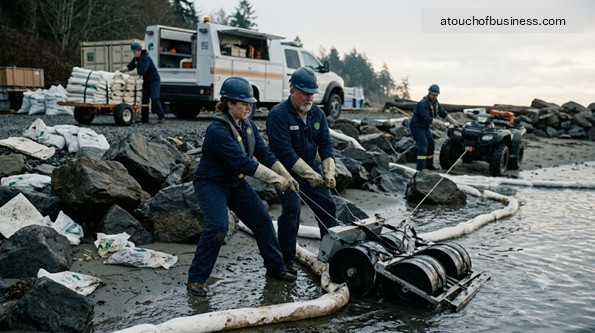
What to Expect From This Guide to Starting an Environmental Cleanup Business
This guide walks readers through the key decisions and practical steps involved in starting an environmental cleanup business, from defining a service scope to completing pre-project checks. The selected points below introduce an article with extensive compliance, field-operation, and financial detail.
Inside the guide, you will find:
- Startup roadmap: Follow 13 ordered steps covering scope, demand, training, registrations, funding, insurance, equipment, pricing, clients, and field preparation.
- Professional interviews: Learn from cleanup founders, contractors, and executives discussing remediation services, emergency response, training, systems, equipment, and customer trust.
- Startup FAQs: Review answers about service-specific certifications, home-based operations, generator IDs, pollution insurance, timelines, pricing, and bonding.
- Fit and demand: Assess technical experience, physical and documentation demands, geographic project volume, competition, and realistic early client access.
- Compliance path: Map required training, certifications, contractor licenses, federal and state registrations, waste rules, transport duties, and local zoning.
- Financial and bidding: Plan startup capital, operating reserves, payment delays, insurance costs, project bids, disposal fees, contracts, and documentation.
- Field preparation: Verify tested equipment, respirator fit, insurance certificates, disposal accounts, manifests, written plans, notifications, and closeout systems.
The guide opens by clarifying the hazardous field conditions and compliance discipline this business requires before the first project.
As an environmental cleanup contractor, you travel to contaminated properties — residential, commercial, and industrial — to assess hazards, set up containment, remove regulated materials, and handle disposal through licensed channels.
The work spans a wide range: asbestos abatement, lead paint removal, mold remediation, biohazard cleanup, contaminated soil excavation, hazardous chemical response, and brownfield site work.
Every service category carries its own regulatory framework, its own certification requirements, and its own documentation trail. This is not a business you can ease into gradually. Compliance must be in place before the first job begins.
Most projects are bid on a contract basis. You visit the site, scope the contamination, price the job, set up containment, perform the removal, manage waste transport and disposal, document the work, and obtain clearance before closeout.
A day on the job might mean arriving early to stage equipment, suiting up your crew in full protective gear, sealing off a work zone in a pre-1978 home, and spending hours removing asbestos-containing ceiling tiles — then bagging, labeling, and manifesting the waste before it ever leaves the site.
Before committing, think carefully about whether this business fits your life right now.
Environmental cleanup is physically demanding. You’ll work in hazardous conditions — confined spaces, chemical exposure, heat inside protective suits, and prolonged use of respirators.
The job also requires strong compliance discipline, not just general competence.
It requires patience with paperwork too. Every project generates regulatory notifications, waste manifests, air monitoring records, and closeout documentation. A single documentation gap can trigger enforcement action.
Ask yourself honestly: Do you have the technical background to identify hazards correctly? Can you manage project bidding, crew coordination, and regulatory requirements at the same time?
Are you prepared for the possibility that income will be uneven, especially in the early months?
Talk to environmental remediation contractors who operate in markets where you won’t compete with them. Ask about cash flow between projects, insurance costs, compliance challenges, and what they’d do differently at startup. That firsthand insight is worth more than any overview.
Think through whether your household can manage the financial pressure of a startup period. Project-based revenue is not predictable. You may go weeks between significant contracts while fixed costs keep running.
Make sure your family or household is prepared for that reality before you commit.
You should also weigh different ways to enter the business. Starting from scratch gives you full control, but it’s capital-intensive and takes time to build credentials. Buying an existing certified firm — one with active licenses, a client base, and compliant equipment — is a legitimate alternative worth exploring before you commit to a ground-up startup.
Red Flags Before You Start
Some of these warnings mean pause and verify. Others mean stop and reconsider entirely.
You don’t have enough startup capital.
The full cost of getting qualified and compliant before your first project is substantial. Training fees, state licensing, federal registrations, insurance premiums, a commercial vehicle, specialized equipment, and operating reserves all come before your first paycheck.
Undercapitalized environmental cleanup startups fail at a high rate. If you can’t fund certifications, equipment, insurance, and at least three to six months of operating reserves without exhausting your savings, this is a serious warning sign.
You haven’t verified local demand.
Environmental cleanup isn’t driven by consistent consumer demand. Project volume depends on demolition activity, property transactions, insurance events, government programs, and industrial facility needs — all of which vary by geography.
Before spending money on training, verify that a realistic volume of projects exists in your market and that you can realistically access them as a new, uncredentialed firm.
The residential market in your area is oversaturated.
Residential asbestos and lead work is the most price-competitive, lowest-margin segment in most markets. Large multi-state firms and established locals often dominate this space.
If your area is already saturated, verify whether commercial, industrial, or government project opportunities offer a better entry point.
You’re counting on government contracts from day one.
Brownfield cleanup projects, school abatement, and municipal remediation work are often won by large firms with bonding capacity and documented project histories. A startup without those credentials typically can’t compete for those contracts early on.
Plan for 12 to 24 months of smaller residential and commercial work to build the credentials you’ll need later.
You’re not fully prepared for the compliance burden.
EPA civil penalties for asbestos violations can reach tens of thousands of dollars per day, per violation. OSHA and RCRA violations carry similarly severe consequences. A single enforcement action can close a startup firm.
If meticulous documentation, regulatory notifications, and annual training refreshers don’t feel manageable to you, this business isn’t the right fit.
Large-firm dominance on major contracts is a structural reality.
National environmental firms compete aggressively for brownfield, Superfund, and large industrial cleanup projects. Small independent operators typically find their viable market in smaller residential, light commercial, and local government work.
This is a structural industry condition, not a temporary gap. Build your startup strategy around projects that match your actual credentials and capacity.
Insurance may be harder to place than you expect.
Environmental cleanup contractors fall into specialty underwriting categories. A new firm with no track record may find some carriers unwilling to quote coverage for certain service types.
Consult an independent commercial insurance broker who specializes in environmental contractors before finalizing your service scope.
Step 1: Assess Your Fit and Skills
This step comes before anything else — before you research certifications, before you price equipment, before you tell anyone you’re starting a business.
Environmental cleanup requires technical knowledge of hazard identification and remediation methods for each contaminant type you plan to handle.
It also requires strong project estimating skills, the ability to supervise field crews safely, and written communication skills for contracts, regulatory reports, and closeout documentation.
Prior experience in construction, facilities maintenance, industrial trades, or environmental services is a significant advantage. If you’re starting with no background in these areas, expect a longer learning curve and higher compliance risk in the early months.
Talk to environmental remediation contractors outside your market before you go further. Prepare specific questions. Their experience — even if their path differs from yours — is the most useful reality check available at this stage.
Step 2: Choose Your Service Scope
This is the most consequential startup decision you’ll make. Every other choice — training, equipment, licensing, insurance, and pricing — flows from it.
In plain terms: your service scope defines which hazardous materials you’re legally qualified and equipped to handle. Each category has its own regulatory framework, and they don’t overlap.
Common service scope options for a new firm include:
- Asbestos abatement — federally regulated, state-licensed, governed by EPA NESHAP and AHERA
- Lead abatement and lead-safe renovation — EPA RRP firm certification required for pre-1978 structures
- Mold remediation — state-licensed in some jurisdictions; IICRC certification widely recognized
- Biohazard and trauma scene cleanup — OSHA Bloodborne Pathogens Standard applies; no state license required in most jurisdictions
- Contaminated soil remediation — RCRA-governed; HAZWOPER training required; EPA Generator ID may be needed
- Hazardous chemical spill response — HAZWOPER required; DOT registration required for transport
Most new firms start with one or two related service categories rather than trying to cover all of them. Starting narrow keeps your initial compliance load manageable and lets you build competence before expanding.
How the waste type changes everything: asbestos abatement requires AHERA-accredited supervisors on every job and NESHAP pre-notification before regulated work begins. Lead work requires EPA firm certification and a certified renovator on staff. Mold work may require a separate state license. Biohazard cleanup requires a written Exposure Control Plan and hepatitis B vaccination protocols.
The material determines the rules — you can’t swap certifications across categories.
Step 3: Research Local Demand and Competition
Verify that a realistic project pipeline exists in your market before committing to training and equipment costs.
First, assess demand by service type. How much pre-1978 building stock exists in your area? Is there active demolition and renovation activity? Are any government brownfield programs operating locally? How much industrial or commercial density might generate ongoing hazmat needs?
Next, look at the competitive landscape. How many licensed abatement or remediation contractors already operate in your market? Are large multi-state firms active locally? Is there a realistic path for a new, uncredentialed firm to access projects?
Then, talk to the people who hire environmental contractors. Property managers, general contractors, real estate attorneys, and environmental consultants can tell you how projects are sourced, what credentials clients require from vendors, and whether the market is accessible to a startup.
Environmental cleanup demand is driven by specific events — demolition permits, property transactions, insurance claims, and regulatory enforcement actions — not by consistent consumer-driven volume.
Verify project availability in your specific market before making major financial commitments.
Step 4: Complete Required Training and Certifications
Certifications must be obtained before your business can legally operate. Training cannot be deferred until after launch.
HAZWOPER (Hazardous Waste Operations and Emergency Response)
In plain terms: HAZWOPER is OSHA’s mandatory training standard for anyone who works at hazardous waste cleanup sites or handles regulated hazardous substances.
Under OSHA standard 29 CFR 1910.120, workers directly involved in hazardous waste site cleanup require 40 hours of initial training plus three days of supervised field experience. Workers with more limited exposure may qualify for 24-hour training. An 8-hour annual refresher is required for all covered workers.
Verify with OSHA which level applies based on the specific services you plan to offer before enrolling in a course.
Asbestos accreditation (AHERA/NESHAP)
In plain terms: AHERA is the federal law governing asbestos training and accreditation for workers who disturb asbestos-containing materials in buildings.
The EPA requires at least one AHERA-accredited supervisor on-site whenever regulated asbestos-containing material is disturbed. AHERA defines five discipline tracks: Worker, Contractor/Supervisor, Building Inspector, Management Planner, and Project Designer.
Most states also require a state-level asbestos contractor license separate from AHERA accreditation. Processing timelines vary — begin applications well before your planned launch date.
Before regulated asbestos work begins, EPA’s NESHAP rule requires written pre-notification to the appropriate state or local agency at least 10 working days in advance. Waste generated must be double-bagged, properly labeled, manifested, and disposed of at a permitted facility.
Lead renovation certification (EPA RRP Rule)
If you plan to perform any compensated renovation work that disturbs painted surfaces in pre-1978 housing or child-occupied facilities, EPA’s Renovation, Repair and Painting (RRP) Rule requires both firm certification and at least one certified renovator on staff.
Firm certification is applied for through EPA directly or through an authorized state program. An 8-hour EPA-accredited training course is required per individual renovator. Certification is valid for five years.
Some states administer their own RRP programs. Verify whether the EPA or state program applies in each jurisdiction where you’ll work.
Mold remediation credentials
Some states require a separate mold remediation license for contractors. The IICRC’s Applied Microbial Remediation Technician (AMRT) credential is widely recognized by insurance carriers and project owners even in states without a licensing mandate. Verify state requirements before accepting mold projects.
RCRA and DOT training
If your cleanup operations generate hazardous waste above defined thresholds, employees must complete RCRA hazardous waste management training under EPA regulations, including an initial course and an annual review. Workers who prepare hazardous materials for transport must receive DOT hazmat employee training covering general awareness, function-specific safety, and security components.
The full certification sequence — from HAZWOPER through state licensing and federal registrations — can take two to four months. Don’t commit to project start dates before all required credentials are confirmed active.
Step 5: Choose a Legal Structure and Register the Business
After your service scope is defined and your qualifications are assessed, choose a legal entity structure.
Given the liability exposure inherent in environmental cleanup work, an LLC or corporation is strongly advisable. A sole proprietorship leaves your personal assets unprotected from claims arising from field work.
Register with your state’s secretary of state office, obtain an Employer Identification Number (EIN) from the IRS, and file a DBA if you’re operating under a trade name.
Also verify whether your state requires a general or specialty contractor license before you can legally bid or perform environmental work. Check with both the state contractor licensing board and the state environmental agency — these are separate requirements in many jurisdictions.
Step 6: Obtain Required Regulatory Registrations
Several federal and state registrations must be in place before you generate or transport regulated waste. These are distinct from business registration and licensing.
EPA Generator ID number (RCRA Site ID)
In plain terms: an EPA Generator ID is a unique identifier that tracks hazardous waste from the site where it’s generated to its final disposal point — “cradle to grave.”
If your cleanup operations generate more than approximately 220 lbs. of non-acute hazardous waste per month, you must obtain an EPA Generator ID before shipping any waste off-site. Apply through EPA’s myRCRAid online system using Form 8700-12.
Very small quantity generators may not require federal registration, but some states impose lower thresholds. Verify with your state environmental agency before generating any regulated waste.
DOT/PHMSA hazmat registration
If you transport hazardous materials or hazardous waste in quantities that trigger placarding requirements under 49 CFR, annual registration with the Pipeline and Hazardous Materials Safety Administration (PHMSA) is required. Registration certificates must be kept at your principal place of business and carried on all transport vehicles.
State environmental contractor registration
Some states require environmental cleanup contractors to register with the state environmental agency, separate from any federal registration. Verify with your state department of environmental quality or equivalent agency before starting operations.
Check with your local city or county for a general business license as well. Most jurisdictions require one before any business operates locally.
Step 7: Check Zoning and Verify Your Base of Operations
An environmental cleanup operation runs from the field, but you still need a base for equipment storage, vehicle parking, PPE maintenance, waste staging, and recordkeeping.
Before committing to a home address or commercial space, verify local zoning rules. Storage of hazardous materials, contaminated equipment, or commercial work vehicles may not be permitted in residential zones.
If you’re operating from home, check home-occupation permit requirements and any HOA restrictions. Local zoning authorities and fire marshals may have specific rules about the quantity and type of hazardous materials that can be stored on a residential property.
If you use a commercial or industrial facility for equipment staging, decontamination, or waste holding, confirm whether a certificate of occupancy or environmental permit is required for that space.
Business Plan
Your business plan for an environmental cleanup operation must confront one reality head-on: this is a project-based business with uneven cash flow, significant upfront compliance costs, and a slow revenue build at startup.
Start with your service scope, then work outward. What certifications are required? What equipment do you need before your first job? What will insurance cost? What are your monthly fixed costs — vehicle expenses, insurance premiums, licensing fees, training refreshers, and waste disposal accounts — and how many months of those costs can you cover without project revenue?
The break-even question in environmental cleanup isn’t just about covering your costs. It’s about surviving the gap between when costs start and when projects close.
Government and large commercial clients often pay on 30- to 90-day cycles. Your crew, your disposal fees, and your insurance bills don’t wait that long. Plan specifically for how you’ll bridge that gap — whether through operating reserves, a working capital line of credit, or milestone billing on larger projects.
Profit margin pressure is real in this industry. Accurate project bidding is essential.
Each bid must account for site setup time, containment materials, labor hours, consumable PPE, waste disposal fees — including manifest costs, transport, and TSDF disposal charges — regulatory notification costs, and post-remediation clearance testing. If any of those items are underestimated, the project loses money.
Your plan should also address the revenue build honestly. A new firm without a track record will struggle to win government-bonded contracts, large commercial bids, or insurance carrier referrals in the early months.
Budget for a 12- to 24-month period of smaller projects while you build the credentials, references, and bonding capacity needed for larger work.
Use your plan to test whether the business can realistically work before you spend. Map out the full startup cost list, price it locally, and compare it against realistic first-year project volume. If the numbers don’t work at the start, adjust the scope or build more capital before launching. For more on writing a business plan, see the full guide.
Step 8: Secure Funding and Open Business Banking
Environmental cleanup requires significant upfront capital before you generate any revenue.
Startup cost categories to plan for include:
- Training and certification fees — HAZWOPER, AHERA, EPA RRP, RCRA, and DOT hazmat training
- State licensing and registration application fees
- Federal registration fees and compliance setup costs
- Insurance premiums — Contractor’s Pollution Liability, general liability, commercial auto, and workers’ compensation
- Equipment — HEPA negative air machines, HEPA vacuums, PPE stockpile, containment materials, and field testing tools
- A commercially registered and insured work vehicle
- Consumable PPE and supplies for the first several projects
- Waste disposal account setup with a licensed TSDF
- Business legal and administrative setup
- Operating capital to cover three to six months of fixed costs without project revenue
Operating reserves are the most underestimated item on this list. Fund them before you spend on equipment.
Funding options to explore include:
- Personal savings or family investment
- SBA 7(a) business loans — environmental remediation firms are eligible; lenders typically require active certifications and a state license
- Equipment financing — HEPA machines and vehicles can often be financed separately
- Working capital lines of credit for bridging gaps between project completion and payment
- Small Business Development Centers (SBDCs) for planning support and lender introductions
Open a dedicated business bank account and set up a payment processing account before accepting any project. Keep business and personal finances completely separate from the start.
If you plan to pursue bonded government contracts, begin building a surety relationship early. Bonding capacity depends on your financial history — it takes time to establish and isn’t available on demand when you need it.
Step 9: Get the Right Insurance Before Any Field Work
Environmental cleanup is among the most insurance-intensive small business categories. Standard general liability policies contain absolute pollution exclusions — they won’t cover the core work of this business.
In plain terms: “pollution exclusions” mean your standard general liability policy specifically excludes coverage for the types of incidents most likely to occur in environmental cleanup — chemical releases, hazardous material exposure, contamination events.
Coverage to obtain before your first job:
- Contractor’s Pollution Liability (CPL) insurance — covers bodily injury, property damage, and cleanup costs from pollution incidents caused by your operations; most government and commercial contracts require it with minimum coverage limits specified in the contract
- General liability insurance — required by most clients and contract managers
- Commercial auto insurance — personal auto policies don’t cover business vehicle use
- Workers’ compensation — required by most states once you hire employees; verify your state’s threshold
- Professional liability / errors and omissions — increasingly required by project owners for environmental contractors
Some states legally require minimum insurance levels for licensed asbestos or mold contractors. Verify those requirements during your licensing research.
Consult an independent commercial insurance broker who specializes in environmental contractors. Not all brokers can place CPL coverage, and rates vary significantly based on the services you offer, your location, and your claims history. See more on business insurance for general guidance.
Step 10: Acquire Equipment and Establish Waste Disposal Accounts
Your equipment list depends entirely on your chosen service scope. Purchase equipment only after funding is secured and insurance is bound.
Core equipment for most environmental cleanup operations includes:
- HEPA negative air machines — sized by CFM rating to achieve required air changes per hour inside containment zones; most abatement work requires multiple units
- Industrial HEPA vacuums — rated for lead and asbestos; not interchangeable with standard shop vacuums
- Poly sheeting, tape systems, and containment barrier materials
- Manometer (differential pressure gauge) to document negative pressure in containment zones during regulated work
- Personal protective equipment stockpile — full-face respirators, chemical-resistant suits, gloves, safety boots, and disposable coveralls for all planned field workers; each respirator must be fit-tested
- Field sampling equipment — air cassettes, moisture meters, wipe sample kits, and photoionization detectors as applicable to your service types
- Labeled disposal bags, fiber drums, and OSHA-required hazard warning signs for work zones
- A commercially registered work vehicle with DOT compliance materials
Before your first project, establish an account with at least one licensed Treatment, Storage, and Disposal Facility (TSDF).
In plain terms: a TSDF is a federally regulated facility that accepts, treats, and disposes of hazardous waste — your cleanup waste can only go to a permitted TSDF, not a standard landfill.
Some TSDFs require accounts to be set up and waste profiles approved before they’ll accept any material. Don’t wait until you have a job in progress to start this process.
Set up your EPA e-Manifest account as well. The Uniform Hazardous Waste Manifest is the required tracking document for every regulated waste shipment — from your job site to the TSDF. No manifest, no legal transport.
Step 11: Set Up Project Pricing, Contracts, and Documentation Systems
Environmental cleanup pricing is project-based. You visit the site, assess the contamination type and extent, and build a written bid that covers your full costs plus a profit margin.
Each project bid should account for:
- Site setup and containment time
- Labor hours for removal and cleanup
- Consumable PPE and materials
- HEPA equipment operating time
- Waste disposal — manifest costs, transport, and TSDF disposal fees
- Regulatory notification costs, including NESHAP pre-notification for asbestos work
- Post-remediation clearance testing, typically performed by an independent party
- Project documentation and closeout reporting
For projects where the full scope can’t be determined in advance — emergency spill response or soil remediation with unknown contamination extent — time-and-materials billing is the appropriate model.
Use a written contract for every project. The contract should clearly define the scope, what’s included and excluded, waste disposal responsibilities, payment terms, and liability limitations. Verbal agreements have no place in regulated environmental work.
Set up your documentation system before the first project. Project photos, air monitoring records, waste manifests, worker sign-in and certification logs, and post-remediation clearance test results must all be maintained per federal and state requirements.
Some records have extended retention requirements — asbestos waste shipment records must be kept for at least two years under NESHAP, for example. Verify retention requirements for each record type in your service scope.
Step 12: Identify Your First Clients
At launch, the most accessible first clients are those who hire environmental contractors for compliance-driven, non-discretionary work.
Realistic first-client categories include:
- Property owners and managers dealing with insurance-related contamination events
- General contractors and demolition firms who need licensed abatement subcontractors
- Real estate investors and attorneys handling contaminated property acquisitions
- Industrial or commercial facilities with routine hazmat compliance needs
- Local housing authorities with lead and asbestos compliance obligations
Clients choose environmental cleanup contractors based on verified credentials, documentation quality, and the ability to deliver a compliant project closeout — not just on price. Getting these things right on early projects is the fastest credibility builder available to you.
The most productive referral channels at launch are general contractors, demolition companies, property management firms, insurance adjusters handling property damage claims, and real estate professionals who regularly encounter contaminated properties.
For a broader look at the startup process, the full guide covers the decisions most new business owners face at each stage.
Step 13: Complete Pre-Opening Checks Before Your First Project
Before you accept any job, confirm that every required element is in place.
Certifications and registrations:
- All required HAZWOPER training certificates on file for you and any field workers
- AHERA accreditation active for all planned asbestos discipline roles
- EPA RRP firm certification active, if offering lead-safe renovation work
- At least one certified renovator on staff
- State asbestos contractor license in hand
- State mold remediation license obtained, if required in your state
- RCRA and DOT hazmat employee training complete
- EPA Generator ID obtained, if applicable
- PHMSA hazmat registration complete, if applicable
- Local business license and any required zoning permit in place
Insurance, banking, and field readiness:
- Contractor’s Pollution Liability insurance bound; certificates of insurance ready to deliver to project owners
- General liability, commercial auto, and workers’ comp in force
- Surety bonding relationship started if bidding on bonded contracts
- Business bank account open; bookkeeping system operational
- HEPA machines tested and functional
- All respirators fit-tested for each planned field worker
- Waste disposal bags, labels, and containment supplies stocked
- TSDF account active; disposal profiles approved
- EPA e-Manifest account set up
- Written project contract template ready
- Written Safety and Health Plan and Exposure Control Plan drafted
- Project documentation system in place
Before your first project, work through the full project workflow on paper: site assessment, scope documentation, containment setup, work execution, waste manifest completion, clearance testing coordination, and project closeout documentation.
Don’t discover a gap in the process when you’re already on a job site.
Opening-Day Red Flags
These are the warning signs that you’re not ready to take a project, even if everything else looks set.
- Insurance certificates aren’t ready to deliver. Most project owners and contract managers require proof of CPL coverage before work starts. If you can’t hand over a certificate on request, you can’t begin the job.
- Your TSDF account isn’t active. Waste cannot leave a job site without a manifest and a confirmed receiving facility. Confirming this account after waste is already generated creates a serious regulatory problem.
- Any crew member’s respirator hasn’t been fit-tested. OSHA requires fit testing before a respirator is used in a regulated environment. A failed fit test on the first day of a project shuts down your crew.
- You’re missing NESHAP pre-notification for an asbestos project. Notification to the appropriate state or local agency must be filed at least 10 working days before regulated work begins. Starting without it exposes you to significant civil penalties.
- Your bid didn’t account for clearance testing. Post-remediation clearance testing is typically required before a project can close out. If it’s not in the contract and not priced into the bid, you’ll either absorb the cost or have a difficult client conversation.
- Documentation isn’t ready to start on day one. Air monitoring records, worker sign-in sheets, and waste manifests begin the moment your crew arrives. If your documentation system isn’t set up and understood before you mobilize, your closeout records will be incomplete.
- You don’t have a written scope of work. Scope creep is common in environmental cleanup when additional contamination is discovered mid-project. A written scope with clear inclusions and exclusions protects you when that happens.
Frequently Asked Questions
Do I need a separate certification for each type of hazardous material I want to clean up?
Yes, in most cases. Asbestos abatement, lead-safe renovation, mold remediation, and hazardous waste cleanup each carry their own certification or training requirements under different federal and state programs.
HAZWOPER training is foundational for hazardous waste site work generally, but it doesn’t substitute for AHERA accreditation or EPA RRP certification. Before offering multiple service types, map out the specific requirements for each one and plan to obtain them in sequence.
Can I operate out of my home when starting this business?
You may be able to use a home address for administrative purposes, but check local zoning and home-occupation permit rules before storing hazardous materials, equipment, contaminated PPE, or work vehicles at a residential address.
Many municipalities restrict commercial vehicle storage and chemical storage in residential zones. A leased commercial or industrial space for equipment staging may be required depending on local rules.
What is an EPA Generator ID number, and will I need one?
An EPA Generator ID is a unique identifier that tracks hazardous waste from the point of generation to final disposal. It’s required when your cleanup operations generate more than approximately 220 lbs. of non-acute hazardous waste per month.
Very small quantity generators may not need to register at the federal level, but some states impose lower thresholds. Before generating and shipping any regulated hazardous waste off-site, verify your generator classification with your state environmental agency.
Does my general liability insurance cover environmental cleanup work?
No. Standard commercial general liability policies contain absolute pollution exclusions that eliminate coverage for the types of incidents most likely to occur in environmental cleanup work.
You need Contractor’s Pollution Liability (CPL) insurance specifically for this work. CPL coverage is distinct from general liability and must be purchased separately or as part of a combined environmental contractor policy. Most project owners and government agencies require CPL before awarding contracts.
How long does the licensing and certification process take?
Timelines vary significantly. HAZWOPER 40-hour training typically takes one to two weeks. AHERA asbestos accreditation courses run three to five days per discipline. EPA RRP firm certification processing takes one to two weeks after submission. State licensing can take weeks to months in some jurisdictions.
The full sequence from training through all state and federal registrations can easily take two to four months. Begin well before your planned launch date.
What is the difference between asbestos abatement and the EPA RRP Rule?
These are two separate regulatory frameworks. Asbestos abatement governs the removal or encapsulation of asbestos-containing materials and is regulated under EPA NESHAP, OSHA, and state asbestos licensing programs.
The EPA RRP Rule governs renovation, repair, and painting work that disturbs lead-based paint in pre-1978 housing and child-occupied facilities. A project can trigger both if it involves asbestos and lead paint in the same pre-1978 building. Each set of rules applies independently to the hazard it governs.
How is environmental cleanup work priced and billed?
Most work is priced on a lump-sum project basis. You visit the site, assess the contamination type and extent, and build a written bid that covers labor, materials, PPE, equipment, waste disposal fees, regulatory notifications, clearance testing, and documentation.
For projects where the scope can’t be fully determined in advance — emergency spill response or soil remediation with unknown contamination extent — time-and-materials billing is more appropriate. Milestone billing is common on larger projects: a portion at project start, a portion mid-project, and a final payment on clearance and closeout.
Do I need to be bonded to operate as an environmental cleanup contractor?
Bonding requirements vary by contract and jurisdiction. Most small residential and light commercial cleanup projects don’t require surety bonds.
Government contracts — including brownfield projects, public school abatement, and municipal remediation work — commonly require performance and payment bonds as conditions of the contract award. A new startup typically has limited bonding capacity. Begin building a surety relationship early, even before you have an immediate need for it.
Advice From Environmental Cleanup Professionals
These interviews share practical lessons from environmental cleanup founders, contractors, and executives. They discuss hazardous waste removal, emergency response, remediation services, employee training, business systems, and customer trust.
Use their experiences to compare service models, identify required expertise, and understand the operational demands before starting an environmental cleanup business.
How Alan McKim Built Clean Harbors
Clean Harbors founder Alan McKim explains how he developed a four-person startup into a major environmental and industrial services company.
The interview offers useful lessons about gaining industry experience, handling emergency response jobs, building operational capacity, and using technology.
Drew Boyles on Household Hazardous Waste Removal
HazAwayToday founder Drew Boyles discusses residential hazardous waste removal, common household hazards, and the need for professional disposal services.
His interview helps prospective owners understand how a specialized environmental service can solve a clear customer problem while supporting responsible waste management.
Restoration and Remediation With Jennifer Todd
Jennifer Todd explains her path from an administrative role to leading a company specializing in asbestos abatement, environmental services, demolition, and hazardous material removal.
The discussion provides guidance on developing technical knowledge, protecting the business, selecting equipment, managing projects, and building a capable team.
This interview with an ES&H location manager covers oil spill cleanup, chemical spill response, contaminated-site restoration, industrial cleaning, and waste management.
It shows how identifying an underserved market, responding quickly, and offering dependable service can help an environmental cleanup company establish itself.
The 2023 Cleaning Industry Leaders Review
This article includes interviews with experienced cleaning and restoration professionals, including the founder of a specialized biohazard decontamination company.
Their advice highlights customer empathy, employee selection, documented procedures, continuing education, and the personal demands of operating a cleanup business.
Building Clean Earth as a Hazardous Waste Company
Clean Earth president David Stanton discusses building a national hazardous waste operation, combining service divisions, and responding to changes across customer markets.
The interview helps prospective owners consider service diversification, customer concentration, waste streams, market disruptions, and opportunities in emerging contaminants.
Related Articles
- How To Start an Environmental Consulting Firm
- How To Start an Environmental Testing Laboratory
- How To Start a Construction Cleanup Business
- How To Start a Medical Waste Disposal Business
- How To Start an E-Waste Recycling Business
- How To Start a Recycling Business
Sources:
- OSHA: HAZWOPER Standards Overview, HAZWOPER Background and Scope
- U.S. EPA: Asbestos NESHAP Overview, Asbestos Laws and Regulations, Lead RRP Program, RRP Firm Certification, RRP Contractors Overview, Generator ID Number Instructions, Brownfields Program
- PHMSA / DOT: Hazmat Registration Information
- FMCSA: Hazmat Regulations Compliance Guide
- Cleanup Services Authority: Cleanup Services Licensing and Certification
- The Planet Group: Key Certifications in Environmental Remediation
- eTraining: HAZWOPER Training by Worker Type
- Insureon: Environmental Insurance Overview
- The Coyle Group: Pollution Liability Insurance Guide
- Crestmont Capital: Environmental Remediation Business Loans
- IBISWorld: Remediation Industry Overview
- NAICS.com: NAICS 562910 Remediation Services
- IDR Environmental: Top Challenges for Remediation Companies
- Hazardous Waste Disposal: EPA ID Numbers Complete Guide
- Spycor Environmental: Best Negative Air Machines for Contractors
- Hazard Authority: Asbestos Abatement Process and Standards