
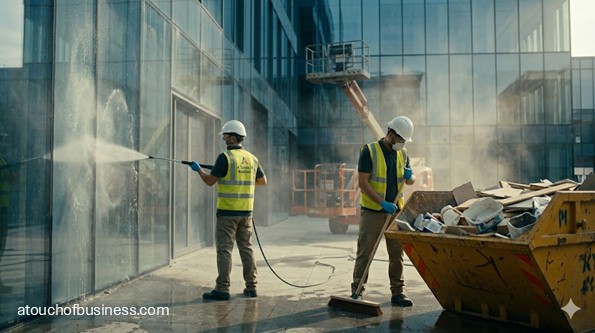
What to Know Before You Start Cleaning Jobsites
A construction cleanup business provides cleaning for job sites after building, remodeling, renovation, or tenant improvement projects.
The process is not the same as regular janitorial cleaning. It is tied to project phases, site conditions, construction dust, debris, punch lists, and final turnover.
Most startup owners begin with field-based projects. You travel to the site with tools, supplies, personal protective equipment, and a clear scope.
Common services may include:
- Rough cleaning after major construction is complete
- Final cleaning before turnover or occupancy
- Construction dust removal
- Interior glass cleaning
- Cabinet, fixture, and appliance cleanup
- Floor sweeping, mopping, scrubbing, or polishing when included in the scope
- Packaging removal and light debris cleanup when local rules allow it
Your customers may include general contractors, remodelers, builders, property managers, developers, real estate investors, and facility managers.
Before you open, you need to know what you will clean, what you will not clean, what equipment you need, and what rules apply in your area. This gives you a cleaner start when real jobs begin.
Decide Whether This Business Fits You
A construction cleanup business can look simple from the outside. In practice, it requires timing, physical labor, jobsite awareness, and strong estimates.
You need to decide whether owning a business fits you and whether this specific business fits your daily life.
Ask yourself:
- Do you want to work around construction sites, dust, tools, crews, and changing schedules?
- Can you handle physical labor, early starts, delays, and last-minute site changes?
- Are you comfortable quoting jobs before you know every hidden condition?
- Can you stay calm when a final clean gets delayed by another trade?
- Do you actually want the responsibility of owning the business?
It also matters whether you are passionate about owning the business. A real interest can help you stay focused when jobs are dirty, schedules shift, and startup costs feel tight.
Do not start mainly because you want to escape a job, a boss, or financial pressure. You should be moving toward a clear goal, not just running away from something unpleasant.
Status is also a weak reason to start. The image of being an owner will not carry you through hard estimates, damaged surfaces, missed access windows, crew issues, or slow early months.
If you want more perspective on what ownership really feels like, spend time thinking through the issues worth weighing before you open.
Talk With Owners Before You Move Forward
Before you invest in equipment, speak with people who already own construction cleanup or related cleaning service businesses.
Only contact owners you will not compete against.
Look in another city, region, or market area. Prepare real questions before you speak with them.
Useful questions include:
- Which types of jobs were hardest to price at first?
- What equipment did you wish you had bought earlier?
- Which jobsite problems caused the most delays?
- What did contractors expect before awarding the job?
- Which services did you avoid because of risk or regulation?
Their path will not match yours exactly. Still, firsthand owner insight can show you problems that are easy to miss from the outside.
That preparation can help you avoid surprises when you start taking real jobs.
Check Local Demand Before You Commit
A construction cleanup business depends on local construction, remodeling, renovation, and property turnover activity.
Weak local demand may mean your area is not a good fit.
Look for signs such as:
- New home construction
- Active building permits
- Apartment or multifamily projects
- Commercial tenant improvement
- Remodeling activity
- Property managers preparing units or buildings for turnover
- General contractors who subcontract final cleaning
You also need to review local competition. Some janitorial companies, junk removal companies, restoration businesses, and general contractors may already offer post-construction cleaning.
The point is not to avoid competition completely. The point is to know whether there is enough demand, whether pricing is realistic, and whether the market is already crowded.
It helps to compare local demand with local supply before you make large purchases. A basic review of local supply and demand can keep you from opening in the wrong place.
Compare Starting From Scratch, Buying, or Franchising
You can start a construction cleanup business from scratch, buy an existing cleaning business, or look at a franchise if a suitable option exists.
Each path changes your cost, control, timing, and risk.
Starting from scratch gives you control over services, equipment, pricing, and service area. It may cost less at first, but you must build systems, documents, supplier accounts, and customer trust yourself.
Buying an existing business may give you equipment, records, trained workers, and customer relationships. It may also come with problems, old contracts, poor pricing, or weak records.
A franchise may offer systems and support, but it can also include fees, territory limits, required procedures, and less control. Do not assume a franchise is better. Compare it with your budget, timeline, support needs, and risk tolerance.
If you find a local business for sale, study whether buying a business already in operation fits better than building everything from the ground up.
Choose Your Construction Cleanup Services
Your service list affects equipment, labor, pricing, insurance, and compliance.
Start with what you can perform safely and price clearly.
Common service choices include:
- Rough clean: removing larger debris, trash, packaging, loose material, and heavy dust after major construction
- Specialty clean: cleaning kitchens, bathrooms, fixtures, cabinets, appliances, glass, and detailed surfaces
- Final clean: preparing the space for turnover, inspection, leasing, sale, or occupancy
- Punch-list clean: handling small cleanup items found during final walkthrough
- Debris handling: moving nonhazardous debris to an approved dumpster or disposal process
Be careful with services that can trigger special rules. Do not offer asbestos cleanup, lead paint disturbance, mold remediation, hazardous waste cleanup, biohazard work, demolition, or regulated disposal unless you are properly trained, insured, and legally allowed to do it.
Clear service boundaries protect your startup before the first job begins.
Plan the Jobsite Workflow
A field-based construction cleanup business needs a clear job flow before opening.
The operation starts before your crew arrives at the site.
A practical startup workflow looks like this:
- Receive the inquiry and basic project details.
- Review the job type, site address, timeline, and cleanup phase.
- Visit the site when needed before quoting.
- Identify access, parking, elevators, stairs, power, water, lighting, and active trades.
- Prepare a written estimate and scope.
- Get approval before scheduling.
- Load equipment, supplies, and personal protective equipment.
- Complete each job by phase, using the checklist.
- Walk the site with the client or project contact.
- Record punch-list items, changes, disposal notes, and payment details.
This kind of workflow reduces confusion. It also helps you avoid unpaid extra work.
A clear process also makes your first jobs easier to manage.
Write a Simple Business Plan
Your business plan does not need to be fancy. It needs to help you make clear startup decisions.
Use it to test whether the business can work before you spend too much.
Include these points:
- Services you will offer at launch
- Services you will exclude
- Service area and travel limits
- Customer types you will serve
- Equipment you need before opening
- Vehicle and storage needs
- Startup costs and funding sources
- Pricing method
- Local license and permit checks
- Insurance and safety requirements
- Opening-readiness checklist
Good planning makes estimating easier. It also helps you spot risky jobs before you accept them.
If you need structure, work through putting your business plan together before you buy vehicles, vacuums, and floor equipment.
Prepare Your Estimates and Scope Documents
Bad estimates can hurt a construction cleanup business fast.
Many jobs look simple until you walk the site and see the dust, debris, access limits, or unfinished work.
Your estimate should consider:
- Square footage
- Cleanup phase
- Number of rooms and floors
- Amount of debris
- Dust level
- Windows, fixtures, cabinets, and appliances
- Floor type and floor condition
- Parking, stairs, elevator access, and loading distance
- Disposal fees
- Travel time
- Crew size and labor hours
- Whether other trades will still be working
Use written scopes on every job. A scope should state what is included, what is excluded, what phase you are cleaning, and how changes will be handled.
Common exclusions may include asbestos, lead paint disturbance, hazardous waste, mold remediation, biohazards, demolition, structural work, and unknown regulated materials.
Do not rely on verbal agreements. A clear scope helps prevent change order disputes, damage claims, and unpaid extras.
Set Your Prices Before Opening
Construction cleanup pricing can be hourly, square-foot based, flat-rate, or separated by phase.
There is no single universal rate that fits every market or job.
Common pricing methods include:
- Hourly pricing per worker
- Square-foot pricing
- Flat project pricing after a walkthrough
- Separate pricing for rough, specialty, and final clean phases
- Add-on pricing for windows, floors, fixtures, carpet extraction, or debris hauling
Build your prices from real inputs. Labor, equipment, supplies, disposal, travel, overhead, insurance, and profit all matter.
Final cleaning often takes longer than new owners expect. Dust settles into cabinets, vents, trim, appliances, fixtures, and glass.
Use setting your prices as a serious startup task, not something you guess after a contractor calls.
Estimate Startup Costs and Funding Needs
Your startup costs depend on how much work you plan to handle at launch.
A solo owner with basic tools has a different budget than a crew-based business with a truck, trailer, floor machines, and debris hauling.
Common startup cost categories include:
- Business registration and license fees
- Vehicle or trailer
- Vehicle shelving and secure storage
- HEPA vacuum and wet/dry vacuum
- Floor care tools and machines
- Contractor bags, bins, and debris supplies
- Cleaning chemicals and microfiber supplies
- Personal protective equipment
- Software, phone, invoicing, and payment tools
- Insurance
- Storage space if needed
- Waste disposal deposits or account setup
- Initial payroll or subcontractor costs if using crews
Do not use a narrow startup cost range from another market as if it applies to yours. Get local prices for vehicles, insurance, disposal, supplies, and storage.
Funding options may include savings, equipment financing, vehicle financing, a business credit card, vendor terms, or a small business loan.
If outside funding is needed, prepare before applying for a business loan. Lenders may want to see costs, revenue assumptions, registrations, and a clear use for the funds.
Handle Banking, Payments, and Records
Set up your financial tools before your first job.
This keeps business transactions separate from personal ones from the start.
Before opening, prepare:
- Business checking account
- Tax savings account if useful
- Payment processor
- ACH payment option for contractor or property clients
- Invoicing software
- Expense tracking
- Mileage records
- Job labor logs
- Disposal receipts
- Equipment purchase records
Some banks may ask for formation documents, an Employer Identification Number, ownership records, or a business license.
Getting your business banking in place before opening makes payment and recordkeeping easier.
Register the Business and Check Local Rules
A construction cleanup business usually needs normal startup registration.
Some activities can trigger added rules, especially debris hauling, hiring, storage, and regulated cleanup work.
Start by choosing a legal structure. Common options include sole proprietorship, limited liability company, partnership, or corporation.
Your structure affects taxes, paperwork, liability, and registration. Many owners compare an LLC with a sole proprietorship before deciding.
Then verify:
- Business name availability
- State business registration
- Doing Business As filing if using a trade name
- Employer Identification Number needs
- State tax registration
- Sales tax rules for cleaning services
- Local business license requirements
- Contractor registration rules if your services go beyond cleaning
You can use choosing your legal structure as an early decision point. Do it before you order business cards, forms, vehicle lettering, or insurance documents.
Verify Jobsite Safety and Compliance Triggers
Construction cleanup may put you around dust, sharp debris, chemicals, ladders, unfinished surfaces, temporary power, and active trades.
Safety planning belongs in your startup process.
Before opening, verify these areas:
- Personal protective equipment: hard hats, safety glasses, gloves, high-visibility vests, safety-toe footwear, and hearing protection when needed
- Chemical safety: labeled containers, Safety Data Sheets, and worker training when employees use hazardous chemicals
- Silica dust: wet methods, HEPA-filtered vacuuming, and exposure controls when respirable crystalline silica may be present
- Lead paint: rules for pre-1978 housing and child-occupied facilities if work disturbs painted surfaces
- Asbestos: exclusion or qualified handling when suspected asbestos-containing material may be present
- Hazardous waste: exclusion unless the business is trained and legally allowed to handle it
- Vehicle rules: USDOT and state transportation checks if using larger vehicles, trailers, interstate travel, or regulated materials
If you hire workers, Occupational Safety and Health Administration duties may apply. Workers’ compensation rules also vary by state.
Do not guess on safety-sensitive work. Ask the proper agency, licensing board, insurance broker, or qualified professional before accepting jobs that may involve regulated hazards.
Plan Insurance and Liability Protection
Insurance matters in construction cleanup because you work on unfinished or newly finished property.
A scratched floor, broken fixture, damaged appliance, or injury claim can become expensive.
Common coverage to discuss with an insurance professional includes:
- General liability
- Commercial auto
- Tools and equipment coverage
- Workers’ compensation if required
- Umbrella liability
- Property coverage for storage space
- Contractors pollution liability if your work creates pollution-related exposure
Some insurance is required by law in certain situations. Some is required by customers before they let you on a jobsite.
For example, a general contractor may ask for a certificate of insurance before approving you as a subcontractor.
Use business insurance basics as a starting point, then confirm coverage with an agent who understands construction and cleaning risks.
Buy the Right Equipment for Launch
Your first equipment list should match the jobs you plan to accept.
Do not buy specialty tools for services you are not ready to perform.
Core equipment may include:
- Cargo van, pickup, box truck, or enclosed trailer
- Lockable tool storage
- HEPA-filter vacuum
- Wet/dry vacuum
- Dust extractor when needed
- Push brooms, dustpans, scrapers, and shovels
- Heavy-duty contractor bags
- Rolling trash bins or debris tubs
- Microfiber cloths and dusting tools
- Squeegees and glass tools
- Floor scrubber, buffer, or carpet extractor if those services are included
- Cleaning chemicals suited to the surfaces you will clean
- Personal protective equipment
- First-aid kit and spill kit
For field work, transport matters as much as the tools. You need a way to load, secure, move, and unload supplies without wasting time at every site.
Good transport setup helps your first jobs run more smoothly.
Set Up Suppliers, Disposal, and Storage
A construction cleanup business needs reliable supply and disposal arrangements before launch.
Running out of bags, filters, gloves, or disposal options can stop a job.
Set up accounts or contacts for:
- Janitorial supplies
- Personal protective equipment
- Vacuum filters and replacement parts
- Floor equipment service or rental
- Dumpster providers
- Construction and demolition debris facilities
- Approved landfill or recycling centers
- Vehicle maintenance
- Uniform or workwear suppliers if used
Check whether your city, county, or state has rules for construction and demolition debris. Some areas may require approved facilities, hauler registration, diversion records, or disposal receipts.
If you work from home, verify zoning, home-occupation rules, vehicle parking, trailer parking, chemical storage, and equipment storage before you set up there.
Create Forms and Internal Documents
Forms help you control the job before problems happen.
They also make you look prepared when a contractor asks how you work.
Have these documents ready:
- Site walkthrough form
- Estimate worksheet
- Scope of work template
- Rough clean checklist
- Final clean checklist
- Change order form
- Punch-list signoff form
- Damage report form
- Incident report form
- Equipment inspection checklist
- Chemical inventory
- Safety Data Sheet file
- Debris disposal log
- Time sheet or labor log
- W-9 form
- Certificate of insurance file
Keep your exclusions clear. That is especially important for asbestos, lead paint disturbance, mold, hazardous waste, biohazards, demolition, and unknown regulated materials.
Having these documents ready makes your first jobs easier to control.
Prepare Your Basic Business Identity
You do not need a complex brand system to open.
You do need clear business identification and basic trust signals.
Before launch, prepare:
- Legal business name
- Doing Business As name if used
- Business phone number
- Business email address
- Domain name
- Basic website or contact page
- Business cards or jobsite contact cards
- Simple work shirts if useful for jobsite identification
- Vehicle lettering if required or useful for site access
- Required notices, chemical labels, and safety documents
Your basic contact information should make it easy for a contractor or property manager to confirm who you are, what you do, and how to reach you.
Do not turn this into an advertising project before your basics are ready.
Decide Whether to Start Solo or Hire
A small construction cleanup business can begin with one owner.
Larger jobs may require a crew, especially final cleans for homes, apartments, commercial spaces, or tight turnover deadlines.
Before hiring, think through:
- Payroll setup
- Worker classification
- Workers’ compensation rules
- PPE sizes and training
- Jobsite safety rules
- Chemical safety
- Transportation to and from sites
- Supervision and quality checks
- Time tracking
- Incident reporting
Do not treat crew setup as an afterthought. A crew that is not trained can create safety issues, damage claims, missed tasks, and rework.
If you are unsure, start with smaller jobs that match your capacity. Then decide whether hiring your first employee makes sense.
Know the Daily Reality Before Opening
Running a construction cleanup business means planning, loading, driving, cleaning, checking, documenting, and billing.
It is not only cleaning.
A typical day may include:
- Confirming the site schedule
- Loading vacuums, bags, chemicals, and PPE
- Checking site access and safety conditions
- Assigning tasks by room, floor, or phase
- Removing debris and dust
- Cleaning fixtures, glass, cabinets, floors, and surfaces
- Documenting completed work
- Reviewing punch-list items
- Collecting disposal records
- Sending the invoice or collecting payment
The lifestyle can include early mornings, physical strain, dirty sites, schedule changes, and pressure before turnover deadlines.
If that sounds frustrating, think carefully. If it sounds manageable and practical, the business may fit you better.
Watch for Common Startup Red Flags
Some warning signs should slow you down before you open.
They do not always mean you should quit the idea, but they do mean you need better planning.
- Weak local construction or remodeling activity
- A crowded market with many cleaners, junk removal companies, and contractors offering cleanup
- No clear service scope
- No written change order process
- Pricing jobs without a site visit when one is needed
- No plan for construction and demolition debris
- No HEPA vacuum or dust-control method
- Accepting asbestos, lead, mold, or hazardous waste cleanup without proper qualifications
- No workers’ compensation check before hiring
- Misclassifying workers
- Using consumer-grade tools for construction dust
- No vehicle capacity for equipment and debris
- No certificate of insurance when contractors require it
- Underestimating final-clean labor
- Opening before forms, checklists, and payment systems are ready
Several of these are common startup mistakes. Think through them before you accept your first job.
Use a Pre-Opening Readiness Checklist
As opening day gets closer, switch from planning mode to checklist mode.
You want fewer surprises once real jobs begin.
- Business structure chosen
- Business registered where required
- Business name and Doing Business As filing handled if needed
- Employer Identification Number obtained if needed
- Local business license checked
- Sales tax treatment checked
- Workers’ compensation rules checked
- Insurance coverage active
- Certificate of insurance ready
- Zoning and storage rules checked
- Vehicle or trailer ready
- Equipment tested
- Personal protective equipment stocked
- Cleaning chemicals labeled
- Safety Data Sheets available
- Disposal facilities confirmed
- Supplier accounts ready
- Estimate template ready
- Scope template ready
- Change order form ready
- Punch-list signoff ready
- Payment processor tested
- Invoicing system tested
- Business banking active
- Basic contact presence complete
- Test job or practice walkthrough completed
A checklist helps you move into launch with fewer loose ends.
Final Thoughts Before You Open
A construction cleanup business is built on clear scopes, safe work, reliable tools, realistic pricing, and jobsite discipline.
Do not rush the setup.
Before opening, know your services, limits, equipment needs, local rules, disposal process, pricing method, and documents.
Then test the process before you take on a job that is too large, too risky, or too unclear.
The goal is not to look ready. The goal is to be ready when a real site, real dust, real deadlines, and real payment expectations show up.
Advice From Construction Cleanup and Cleaning Business Owners
Learning from people already in the cleaning and construction cleanup business can help you avoid startup mistakes.
The interviews and audio resources below give you a closer look at real owner decisions, including pricing, field work, jobsite expectations, equipment, subcontractors, and the realities of taking on post-construction cleaning jobs.
- How to Break Into Post-Construction Cleaning — A podcast-style interview with Samantha of Clean Sites Solutions, covering post-construction cleaning, first jobs, pricing, phases of cleaning, tools, subcontractors, and when to pass on certain work.
- Getting Unstuck by Buying a Business — An interview with Christian Bateson, who bought a construction cleaning company. Useful for readers comparing starting from scratch with buying an existing business.
- Let’s Clean This Up With Kathleen Bands — An audio interview with Kathleen Bands, owner of a commercial janitorial and post-construction cleaning company, sharing ownership transition lessons and practical cleaning-business experience.
- Construction Cleaning: Build Your Profits — A podcast episode from experienced janitorial business owners discussing construction cleaning opportunities, contracts, and what it takes to perform well.
- Exploring Life & Business With Cavan Mitchell — An interview with a cleaning business owner who discusses how post-construction cleaning differs from other cleaning services, including chemicals, checklists, and physical demands.
- Building, Managing & Growing a Cleaning Business — An interview with Josh Melton of Athens Cleaning Company. While broader than construction cleanup, it includes useful owner lessons on niche selection, field experience, hiring, leadership, and systems.
- How to Start a $125K/Month Cleaning Business — A case-study article built around Cristobal Mondragon’s cleaning business experience, with startup lessons on services, certification, pricing, hiring, and worker classification.
- How a Single Teenage Mom Became a Successful Entrepreneur — An interview with Sirena Moore-Thomas that includes the early story of seeing an opportunity in construction cleaning, starting with limited resources, and building from practical jobsite knowledge.
Related Articles
- Starting a Construction Business
- How To Start a Commercial Cleaning Business
- Starting a Dumpster Rental Business
- How To Start Garbage Pickup Service
- Starting a Demolition Business
- Starting an Asbestos Removal Business from Scratch
- Start a Pressure Washing Business
- How To Start a Home Cleaning Service
- How To Start Your Office Cleaning Business
- How To Start a Carpet Cleaning Business
- How To Start a Window Cleaning Business
Sources:
- U.S. Small Business Administration: Register your business, Licenses and permits, Choose business structure, Open bank account, SBA loan programs
- Internal Revenue Service: Get an EIN, Business taxes, Worker classification
- U.S. Department of Labor: Workers’ compensation officials
- Federal Motor Carrier Safety Administration: USDOT number rules
- Occupational Safety and Health Administration: Construction PPE, Hazard communication, Construction silica, Silica standard, Asbestos standard, HAZWOPER cleanup
- U.S. Environmental Protection Agency: C&D materials, C&D debris data, RRP contractors, Asbestos NESHAP
- U.S. Census Bureau: Building permits, NAICS 561720
- Cleaning & Maintenance Management: Construction cleaning phases
- NCCER: Post-construction cleanup
- ISSA: Cleaning rate factors