
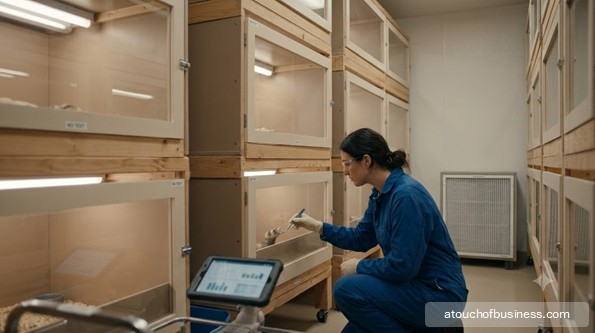
What to Expect From This Guide to Starting a Ferret Breeding Business
This guide walks you through the key decisions and practical steps involved in starting a ferret breeding business, from deciding whether the responsibility fits your life to preparing a compliant facility and placement process. The highlights below represent only part of the guidance included.
Inside the guide, you will find:
- Startup roadmap: Follow an ordered path from legal checks and demand research through facility setup, licensing, buyer placement, and opening preparation.
- Industry interviews: Review breeder and expert experiences covering genetics, housing, nutrition, regulations, costs, and responsible placement decisions.
- Startup FAQs: Find answers about licensing, legality, vaccinations, reproductive risks, litter limits, placement ages, records, and home-based facilities.
- Business fit: Consider daily animal care, emergency demands, seasonal income, household impact, prior experience, and access to a ferret-qualified veterinarian.
- Financial planning: Examine seasonal kit revenue, year-round facility costs, realistic litter output, emergency reserves, pricing, and break-even pressure.
- Facility and care: Plan climate control, secure housing, quarantine, sanitation, breeding stock, vaccination records, and a written veterinary care program.
- Risks and requirements: Check location-dependent laws, zoning, permits, insurance, inspections, recordkeeping, buyer screening, and warning signs that should delay opening.
Begin with the opening reality check to decide whether the demands, risks, and responsibilities of ferret breeding suit your circumstances.
What Does It Take to Run a Ferret Breeding Operation?
As a ferret breeder, you raise domestic ferrets — jills (females), hobs (males), and the kits they produce — at a dedicated physical facility, then screen and place those kits with buyers looking for a well-socialized companion animal.
The daily routine is hands-on from the start: cleaning enclosures, monitoring animal health, handling kits for socialization, coordinating veterinary care, and managing buyer inquiries all happen whether or not you have kits ready to place.
Before you can breed your first litter, you need a legally verified location, the right permits, an attending veterinarian, and a facility ready for inspection.
That pipeline takes time — and every piece has to be in place before breeding begins, not after.
Do you enjoy that level of daily animal care responsibility? Are you prepared to handle breeding emergencies at unusual hours? Can your household manage the odor, the noise, and the unpredictability of running a live-animal facility?
These aren’t abstract questions. Ferret breeding is technically demanding in ways that catch new operators off guard, and the animals depend on you from day one.
Think honestly about the financial picture too. Income from kit sales is seasonal. Your facility costs — rent, utilities, veterinary care, feed, supplies, insurance — run year-round.
The gap between those two realities needs to be funded before you open the doors.
One of the most practical steps you can take before committing is to talk to experienced ferret breeders who aren’t in your market. Ask about their daily routines, what surprised them in the first year, and what they’d do differently.
Their firsthand experience is more useful than any general business guide.
Red Flags Before You Start
Some of these warning signs mean pause and verify. Others mean stop entirely.
The first gate is legality, and it can end the plan immediately.
Ferrets are prohibited by state law in some states. Some cities ban them within jurisdictions where the surrounding state permits them. Some counties add their own restrictions on top of state rules.
Before you spend anything on animals, equipment, or lease negotiations, confirm that ferret possession and breeding is legal at the state, county, and city level of your specific facility address.
If that check fails at any level, no other planning matters. Enforcement can include seizure of animals and fines — not just a cease-and-desist notice.
Veterinary access is the second hard barrier.
You need an exotic animal or small mammal veterinarian with ferret experience within a reasonable distance before breeding begins.
Ferret obstetric emergencies — difficult births, kit rejection, jill milk failure — can happen at any hour and require professional response. If no qualified veterinarian is accessible in your area, don’t start a breeding program.
Experience gaps are a genuine risk, not a standard caveat.
Multiple credible veterinary and husbandry sources are explicit: ferret breeding should be undertaken only by people with prior hands-on ferret ownership experience.
The breeding and whelping process carries real mortality risk for jills and kits. Gaining experience before you start a commercial operation — not during it — is the safer path.
The market is a niche, and it’s competitive in a specific way.
Large commercial breeding operations supply the majority of ferrets sold in U.S. pet stores. As an independent breeder, you can’t compete on volume or price at that level.
Your buyers are people who specifically seek a small, accountable, health-focused breeder. That audience needs to exist in or near your market before you commit to a facility.
There are also structural challenges built into this industry.
The U.S. domestic ferret gene pool is relatively narrow, tracing substantially to large commercial breeding facilities. Sourcing genetically diverse, health-tested breeding stock is genuinely difficult for independent breeders.
Adrenal gland disease, insulinoma, and lymphoma are common serious conditions in domestic ferrets. They affect not just the animals you place but the breeding animals themselves, adding ongoing veterinary costs and care obligations throughout your operation.
None of these are reasons to automatically walk away. They’re conditions you need to understand and plan around before you start spending money.
Step 1: Confirm Legal Eligibility at Your Location
This step comes before market research, before equipment shopping, and before signing any lease. The legal check has to happen first because everything downstream depends on it.
You need to verify ferret possession and breeding legality at three levels: state, county, and city. All three must be clear before you move forward.
Start your verification at each level:
- State: Search your state’s fish and wildlife or department of agriculture website for “ferret,” “mustelid,” “restricted species,” and “breeding permit.”
- County and city: Search your local code for “ferret,” “prohibited animals,” and “restricted animals.” Contact animal control directly if the code is unclear.
- State veterinarian’s office: If your state requires import documentation or breeding permits for ferrets, this office is the right point of contact.
Some states permit ferret ownership generally but require a specific permit to breed them commercially. Some cities ban ferrets entirely even though the surrounding state allows them.
Don’t assume that state-level legality covers you at the local level.
If you plan to acquire breeding stock from out of state, confirm whether your state requires a certificate of veterinary inspection or proof of current rabies vaccination for ferrets transported across state lines. That verification goes through your state’s department of agriculture.
Step 2: Assess Fit, Motivation, and Realistic Expectations
Before you can build a sustainable breeding operation, you need an honest picture of what running one actually requires.
Daily animal care is non-negotiable. Enclosures must be cleaned every day. Every animal must be checked every day. Kits require socialization — regular handling and exposure to normal activity — starting in their early weeks.
Emergencies don’t schedule themselves. A jill in labor with complications, kits not gaining weight, an animal showing signs of illness — these demand immediate attention regardless of what else is happening in your day.
Ferret breeding also has a hard biological reality that new breeders sometimes underestimate.
Unspayed females who enter heat and are not bred or medically managed can develop aplastic anemia — a life-threatening condition caused by prolonged elevated estrogen. Once you keep intact breeding females, you have an annual obligation to manage their reproductive cycles, every breeding season, without exception.
Can you handle the emotional demands as well as the physical ones? Kit mortality is a documented reality of ferret breeding. Euthanasia decisions for animals born with serious problems — or breeding animals that develop serious illness — come with the territory.
Talk to experienced ferret breeders outside your market area before committing. Ask them what the first year actually looked like, what they’d handle differently, and whether the operation matched their expectations.
Their perspective — even though every breeder’s path is different — is far more useful than secondhand accounts.
You can read more about the demands of owning a business before deciding whether this model fits your life.
Step 3: Research the Market and Confirm Local Demand
Before you can make a realistic financial plan, you need to know whether there’s enough buyer demand in your region to support a breeding operation.
Ferret buyers are a specialty audience. The people most likely to seek out a small independent breeder are experienced ferret owners or informed first-time buyers who specifically want socialized kits from a health-focused, accountable source — not a pet store ferret from a commercial supplier.
That audience needs to exist near you before you commit to a facility.
Use these signals to assess local demand:
- Are there active ferret enthusiast communities, clubs, or shows in your region?
- Is there a local exotic animal veterinarian experienced with ferrets? That’s a strong positive indicator.
- What are buyers in your area currently paying for kits, and where are they sourcing them?
- Are there ferret rescues nearby? Their presence signals interest in the species, even though rescues serve a different audience.
You’re also assessing your competitive position. As an independent breeder, you won’t compete with large commercial operations on volume.
You compete on socialization quality, health documentation, lineage transparency, and buyer accountability. Your customers are choosing you specifically because you’re not a commercial supplier.
If you can’t identify a buyer base that values those qualities, the market may not support your model — and that’s a go/no-go signal to answer before you spend money on a facility.
Step 4: Choose a Business Model and Scale
Before you can plan a facility, set a budget, or project kit revenue, you need to decide what kind of operation you’re building.
Your scale decision affects every downstream choice — how many animals you keep, what your facility needs to accommodate, which licensing thresholds apply, how much daily care labor is required, and what your monthly fixed costs look like.
Three common models for independent ferret breeders:
- Micro-breeder / hobby scale: A small number of breeding pairs, in-person kit placements only, appointment-based facility visits. Lower startup costs, simpler compliance picture.
- Specialty breeder: Focus on specific coat patterns, colors, or traits — such as angora or blaze ferrets. Reputation-driven, typically commands higher per-kit pricing.
- Mid-scale facility breeder: More animals, dedicated facility, potentially supplying pet stores as well as individual buyers. Higher licensing and compliance burden.
The model you choose also determines whether federal licensing under the Animal Welfare Act (AWA) applies to your operation.
That threshold is based on how many breeding females you keep and how you sell — and it has to be part of your planning from the start, not discovered after you’ve already built out a facility.
Start with a model that matches your current space, capital, and daily care capacity. Scaling up later is far easier than pulling back after overcommitting.
Step 5: Assess Profit Potential and Break-Even Reality
Before you sign a lease or buy breeding stock, you need a clear-eyed picture of whether this operation can cover its costs.
Revenue from kit sales is seasonal. Domestic ferrets are seasonal breeders, with the breeding season in the Northern Hemisphere running roughly from March through September.
That means your kit availability — and most of your placement income — clusters in a seasonal window, while your facility costs run every month of the year.
Your break-even calculation starts with what your facility actually costs to operate.
Lease or mortgage payments, utilities, veterinary care for the breeding population, feed, bedding, cleaning supplies, insurance, and licensing fees all continue whether or not you have kits to place.
Against that, you need to estimate realistic kit production. A jill can typically produce one to two litters per year safely — producing more than two puts her health at risk.
Average litter sizes run around six to eight kits, though litters can range from one to more than 12. Not every kit will be placed at full asking price, and some may not survive.
You also need to plan for the veterinary costs of the breeding population itself.
Ferrets are prone to adrenal gland disease, insulinoma, and lymphoma — conditions that often appear in animals over three years old. Breeding animals that develop these conditions may need expensive treatment or retirement from the program, often at exactly the wrong financial moment.
Ask yourself: if you produce a realistic number of kits this season at the pricing your market supports, does that revenue cover your year-round facility costs — with enough left to handle a veterinary emergency?
If the math doesn’t work at your planned scale, either the model needs to change or the facility costs need to come down before you commit.
Read more about estimating profitability before making major financial commitments.
Step 6: Choose a Legal Structure and Register the Business
Before you can open a business bank account, sign a lease in the business’s name, or apply for most licenses, you need a legal entity on paper.
The most common choices for a small breeding operation are a sole proprietorship and a limited liability company (LLC). A sole proprietorship is the simplest to set up, but it offers no separation between your personal assets and business liabilities.
An LLC creates that separation — which matters when you’re running a live-animal operation with visitor access and potential injury claims.
Talk to an accountant or attorney about which structure fits your situation before choosing. The decision is harder to undo after you’ve started applying for licenses and permits.
You can review the options at LLC vs. sole proprietorship.
Once you’ve chosen a structure, register the business name. If you’re operating under a name other than your own, you’ll likely need to file a DBA (doing business as).
Get your Employer Identification Number (EIN) from the IRS — it’s required if you form an LLC or hire any employees, and it’s useful for business banking regardless.
Some states treat the sale of live animals as a taxable transaction and require breeders to register with the state revenue or taxation agency before making their first sale. Check with your state’s department of revenue before you advertise any kits.
Step 7: Verify Zoning and Confirm the Location Works
A physical ferret breeding facility is a commercial animal operation — and commercial animal operations are restricted by zoning in most jurisdictions, even when the facility sits on property that looks appropriate for the use.
Before you sign a lease or commit to a location, confirm with the local planning and zoning office that commercial animal breeding is a permitted use at that specific address.
Many residential zoning classifications prohibit commercial breeding activities entirely, even in a dedicated outbuilding. Commercial and agricultural zoning classifications are more likely to accommodate an animal breeding facility, but a special use or conditional use permit may still be required.
Questions to bring to the zoning office:
- Is commercial animal breeding a permitted use in this zoning classification?
- Do I need a special use or conditional use permit?
- Is a certificate of occupancy required before I can operate an animal facility here?
- Are there noise, odor, or animal-count restrictions that apply to this address?
If a certificate of occupancy is required and the space needs modifications to qualify — ventilation upgrades, flooring changes, utility work — those costs and timelines need to be part of your facility plan before you sign anything.
Also check whether a sign permit is required if you plan to post signage at the location. That’s a separate approval from the occupancy question in most jurisdictions.
Step 8: Plan and Set Up the Physical Facility
Your facility has to be fully built, equipped, and ready before any breeding animals enter the building. You can’t finish the facility while animals are already living in it.
The layout needs to support the full workflow: separate housing areas for breeding animals, a quarantine zone for newly acquired animals, a whelping and nursery area for pregnant jills and new litters, an exercise and socialization space for daily out-of-cage time, and a sanitation and supply area.
Climate control is not optional.
Ferrets are highly sensitive to heat. Temperatures above approximately 80°F can cause heat stress and, in some cases, death.
Your facility needs reliable air conditioning during warm months and consistent heating in winter — particularly in the nursery area, where kits and pregnant jills need stable warmth.
Position thermometers in every animal area so you can monitor conditions throughout the day.
Escape-proofing is a structural requirement, not a preference.
Ferrets can squeeze through any gap their head fits through. All enclosures must use wire spacing no wider than one inch. Doors and latches must be secure and lockable.
The exercise and socialization area must be fully ferret-proofed before kits are allowed in it.
Flooring in enclosures matters too. Solid or powder-coated flooring prevents foot pad injuries. Bare wire flooring causes pressure sores over time. Bare wood absorbs waste and can’t be adequately sanitized.
Sanitation systems need to be built into the layout, not added as an afterthought.
Ferret facilities require daily waste removal, regular full enclosure cleaning, and separate cleaning tools for each housing area to prevent disease transmission between animal groups.
Food and bedding storage must be sealed, off the floor, and away from walls — both for hygiene and to prevent vermin access.
If your facility requires a USDA AWA license, these storage and sanitation standards are inspectable requirements under 9 CFR Part 3, Subpart F.
Build the facility first. Confirm it passes inspection. Then bring in the animals.
Step 9: Acquire Breeding Stock From Reputable Sources
Once the facility is ready and your veterinary relationship is established — the next step — you can acquire your breeding animals.
The quality of your breeding stock shapes the health outcomes of every kit you place. Source your animals from established lines with documented health histories, and keep records of every acquisition: source, date, animal description, and any health documentation provided.
Plan to start small. A modest initial breeding group — a proven hob and one or more healthy jills — lets you learn the full whelping and placement workflow before scaling up.
All newly acquired animals must go through a quarantine period before entering your main facility population. Your attending veterinarian will set the quarantine protocol. Don’t skip or shorten it — introducing an animal with an undetected illness into an established population can affect your entire breeding program.
Also plan for the reproductive timeline. Hobs reach sexual maturity at around nine months. Jills reach maturity in the first spring following their birth.
A jill that enters her first heat without breeding or hormonal management faces a life-threatening risk. Your veterinary care plan must be in place before the first breeding season arrives — not after.
Step 10: Establish a Veterinary Relationship and Written Care Program
Before breeding begins, you need an attending veterinarian — specifically, an exotic animal or small mammal vet with documented ferret experience — and you need that relationship formalized in writing.
This step has to happen before your first breeding animals arrive, because the care program covers quarantine protocols, vaccination schedules, disease prevention, emergency contacts, and the procedures your vet authorizes you to perform on-site.
If your operation requires a USDA AWA license, a written Program of Veterinary Care is a regulatory requirement. The APHIS Form 7002 covers this, or your vet can prepare an equivalent document.
It must include scheduled veterinary visits to your facility and clear instructions for how you handle routine care and emergencies when the vet isn’t on-site.
Even if AWA licensing doesn’t apply to your operation, a written care program is best practice — and many state licensing programs require something similar.
Vaccination is a non-negotiable part of the care program.
Ferrets require vaccination against canine distemper virus (CDV) — which is 100% fatal in ferrets — and against rabies. Kit vaccination typically begins around eight weeks of age, with booster intervals your vet will specify.
Only vaccines appropriate for ferrets should be used. Some canine distemper vaccines are contraindicated in ferrets and can cause disease.
Vaccine reactions in ferrets occur at a higher rate than in dogs or cats. Animals should be monitored for at least 20–30 minutes after each vaccination. Distemper and rabies vaccines should not be given on the same day.
Rabies vaccination requirements vary by jurisdiction — some states mandate it by law for all ferrets. Verify local requirements with your state veterinarian’s office or local animal control.
Post the veterinary emergency contact — including after-hours access — visibly inside the facility before any animals enter.
Step 11: Determine Your Federal Licensing Status and Apply If Required
The federal Animal Welfare Act (AWA), enforced by USDA Animal and Plant Health Inspection Service (APHIS), regulates breeders and dealers of warm-blooded animals, including ferrets.
A Class A Dealer license is required if you sell animals through sight-unseen channels — online listings, phone, mail, through brokers, or to pet stores — or if you maintain more than four breeding females.
A general exemption applies to breeders who maintain four or fewer breeding females and sell only in face-to-face transactions where the buyer physically sees the animal before purchase.
If that describes your planned operation, you may not need federal licensing — but confirm that before you sell your first kit, not after.
Use the APHIS Licensing and Registration Assistant at aphis.usda.gov/awa/apply to determine your status. The tool takes around 5–15 minutes and points you directly to the correct application if one is needed.
If you do require a license, here’s what the compliance pipeline looks like:
- Apply for the license and pay the processing fee.
- Pass a pre-license inspection before the license is issued. Your facility must meet 9 CFR Part 3, Subpart F standards at the time of inspection.
- After licensing, APHIS may conduct unannounced inspections at any time. Inspectors check housing, ventilation, sanitation, veterinary care records, animal condition, and your record-keeping system.
- Maintain acquisition and disposition records for all regulated animals, kept for at least one year after each animal leaves your possession. Records must be available for inspectors during business hours.
- All inspection reports are public record.
Don’t list animals for sale or begin sight-unseen sales before your license is issued. The compliance sequence has to complete before the sales process starts.
Step 12: Obtain All State and Local Permits and Licenses
Once the federal picture is clear, work through the state and local compliance layers. These run in parallel with federal licensing — they’re not sequential — but you need all of them in place before you open.
At the state level, check for:
- A state-specific ferret breeder permit, animal dealer license, or small animal facility registration. Some states have dedicated licensing categories for ferret breeders with their own fee and inspection requirements.
- Sales tax registration if your state treats live animal sales as taxable. Verify with your state’s department of revenue before making any sales.
- Import documentation requirements for breeding animals acquired from out of state. Some states require a certificate of veterinary inspection and proof of current rabies vaccination for ferrets transported across state lines.
At the city and county level, check for:
- A general business license — required in most jurisdictions before operating.
- Any ferret-specific local ordinances separate from state law. Some cities impose their own permit requirements, animal count limits, or conditional use requirements even for facilities in commercial zones.
Check minimum sale age requirements in your state. Some states prohibit the sale or transport of ferrets below a minimum age — often eight weeks. Set your placement policy to meet or exceed any applicable legal minimum.
See business licenses and permits, for a broad overview.
Step 13: Set Up Business Banking, Accounting, and Payments
Before any money changes hands — deposits, kit placements, supply purchases — you need a dedicated business bank account separate from your personal finances.
Mixing personal and business transactions creates accounting problems, complicates tax filing, and undermines the liability protection an LLC provides. Separate the two from the start and keep them separate.
Set up a basic accounting system to track income by placement, veterinary costs by animal, facility expenses by category, and licensing and compliance costs.
You’ll need this for tax filing and for understanding whether your financial model is actually working.
Before you place your first kit, make sure you can accept payment by the methods your buyers expect — credit and debit card processing, electronic payment options, and a clear deposit and final payment workflow.
Step 14: Get the Right Insurance Coverage
Before any animals are on the premises and before any buyers visit the facility, your insurance coverage needs to be in place.
A physical ferret breeding facility has specific risk exposures: visitors can be bitten or injured, animals can escape or become ill, and your breeding animals represent the productive core of the operation.
A general business liability policy alone may not cover all of those scenarios.
Coverage to discuss with an insurance broker experienced in animal businesses:
- General liability — protects against injury claims if a buyer or visitor is harmed at your facility.
- Animal care, custody, and control coverage — protects against loss or injury to animals in your care.
- Specialized pet breeder liability — some providers offer policies covering breed-specific claims, medical costs for animals in care, and legal defense.
- Property insurance — covers the facility and equipment.
- Workers’ compensation — required in most states if you have employees.
Don’t assume your homeowner’s or renter’s policy extends to a commercial animal operation. Most don’t. Get confirmation in writing before you rely on any policy for this use.
Step 15: Build Buyer Screening and Placement Protocols
Before you place a single kit, your buyer process needs to be documented and ready to apply consistently.
Screening buyers protects the animals you’ve invested months of care in — and it protects your reputation. A kit placed in an unsuitable home reflects directly on your operation.
Before confirming any placement, verify:
- The buyer’s city and county permit ferret ownership. This is the buyer’s responsibility, but confirm it before accepting a deposit.
- The buyer understands the care requirements, including annual veterinary visits, vaccination schedules, and the social nature of ferrets.
- The buyer’s home setup is appropriate — escape-proofed space, no incompatible pets, appropriate temperature control.
Use a written placement contract for every kit. The contract should cover the health guarantee terms, your return policy, the vaccination status at placement, and the conditions of the sale.
Reputable breeders require animals to be returned to them rather than rehomed independently — that requirement protects the animal’s long-term welfare.
Set your minimum placement age and communicate it clearly. Kits should not leave before eight weeks of age; many breeders wait until 10 to 12 weeks. Placing kits too early is a welfare concern and may violate state law in some jurisdictions.
Prepare a care packet to send with every kit: a copy of vaccination records, feeding guidance, a veterinary care summary, and your contact information for post-placement questions.
Business Plan
A ferret breeding business plan is essentially a structured answer to one question: can this operation realistically cover its costs and sustain itself through the full breeding cycle?
Start with the workflow you’ve mapped through the steps above. Your plan needs to account for every stage: legal verification, facility setup, animal acquisition, veterinary program, licensing, insurance, buyer screening, kit placement, and the record-keeping that runs through all of it.
The financial section is where most new breeders underestimate the model. Kit income is seasonal. Fixed costs are not.
List every monthly facility cost: lease or mortgage, utilities, feed, bedding, cleaning supplies, veterinary care for the breeding population, insurance, and licensing fees. That’s your baseline monthly obligation regardless of kit production.
Then estimate realistic kit output based on your planned scale — number of jills, litters per jill per year, average litter size, expected kit survival rate, and how many kits you can realistically place at your target price point.
Before you commit to a facility, the math has to work.
If your projected seasonal kit revenue can’t cover your year-round facility costs — and leave room for veterinary emergencies — you’re starting with a structural deficit.
Plan your operating capital specifically. You need enough reserve to cover all facility and animal care costs for at least one full breeding cycle before kit placement revenue arrives in meaningful amounts.
Breeders who underestimate this gap frequently find themselves under financial pressure at exactly the moment they’re trying to establish a reputation.
Your plan should also address the longer-term veterinary reality. Breeding animals age. Ferrets develop adrenal disease, insulinoma, and lymphoma at documented rates.
Animals that develop these conditions may require expensive treatment or retirement from the breeding program. Budget for that possibility rather than assuming it won’t apply to your animals.
See a detailed guide to writing a business plan for more.
Step 16: Complete Pre-Opening Readiness
Before breeding begins and before you take any buyer inquiries or deposits, work through this checklist. Every item needs to be confirmed, not assumed.
Legal and compliance readiness:
- Ferret possession and breeding confirmed legal at the state, county, and city level of your facility address
- All required state and local permits and licenses obtained and posted as required
- USDA AWA license issued (if applicable) and pre-license inspection passed
- Certificate of occupancy obtained (if required)
- Zoning approval confirmed for the specific facility address
Facility readiness:
- Facility fully built, sanitation-ready, and escape-proofed before any animals enter
- All enclosures inspected for gaps, sharp edges, and latching failures
- Climate control operational; thermometers positioned in all animal areas
- Quarantine area established and isolated from main population space
- Emergency veterinary contact posted visibly inside the facility
Animal and veterinary readiness:
- Attending veterinarian relationship established; written program of veterinary care completed and signed
- All breeding animals acquired and quarantine period completed
- Health checks done and vaccinations current for all animals
- Vaccination records on file for every animal
Business and placement readiness:
- Record-keeping system in place: acquisition and disposition logs started for every animal
- Business bank account open and payment systems active
- Insurance policies in place before any animals are on premises
- Buyer screening protocol documented and ready to apply
- Placement contract template ready for use
- Kit care packet template prepared
- Operating capital confirmed to cover at least one full breeding season cycle
The most common early failures in animal care operations come from opening before the systems are actually ready. Don’t take buyer inquiries until every item on this list is checked.
Opening-Day Red Flags
These are the warning signs that something in your setup isn’t ready, even if everything looked fine on paper.
If your facility hasn’t passed inspection, don’t bring animals in.
A pre-license APHIS inspection failure means your facility doesn’t meet federal care standards yet. Operating before passing is a compliance violation, not a minor scheduling issue.
If your attending veterinarian hasn’t signed the written care program, don’t start breeding.
The care program isn’t a formality. It’s the documented protocol for how you handle vaccinations, disease prevention, emergencies, and euthanasia decisions.
Without it signed and in place, you’re operating without a framework — and without the veterinary authority you need to handle routine care correctly.
If the climate control system isn’t tested and reliable, don’t bring animals in.
An HVAC failure on a warm day can be fatal for ferrets within a few hours. Confirm the system works — including backup plans for power outages — before the facility is occupied.
If your quarantine area isn’t separate from your main population space, don’t accept new animals.
A new animal introduced directly into a breeding population without quarantine can spread Aleutian disease, distemper, or other illnesses before symptoms appear. That risk isn’t worth the shortcut.
If your buyer contracts and screening process aren’t ready, don’t advertise kits.
A kit placed without screening, without a contract, and without vaccination records is a liability and a welfare problem. Your placement workflow has to be ready before your first inquiry, not after your first sale.
If your operating capital doesn’t cover at least one full breeding cycle, pause before committing.
Running out of capital mid-season — before kit revenue arrives — puts animal welfare at risk. That’s not a recoverable situation.
Frequently Asked Questions
Do I need a federal license to breed and sell ferrets?
It depends on how you sell and how many breeding females you maintain. If you sell only through in-person transactions where buyers physically see the animal before purchase, and you keep four or fewer breeding females, you likely qualify for an exemption from USDA AWA licensing.
If you sell sight-unseen — through online listings, phone, mail, to pet stores, or through brokers — or if you maintain more than four breeding females, you likely need a federal Class A Dealer license.
Use the APHIS Licensing and Registration Assistant at aphis.usda.gov/awa/apply to determine your status before selling.
Are ferrets legal to breed everywhere in the United States?
No. Some states prohibit ferret ownership by law. Some cities ban them within jurisdictions where the surrounding state permits them. Some counties add restrictions on top of state law.
You must verify legality at the state, county, and city level of your specific facility address before any planning begins.
What vaccinations do ferrets need before placement?
Ferrets require vaccination against canine distemper virus (CDV) — which is 100% fatal in ferrets — and against rabies. Kit vaccination against distemper typically starts around eight weeks of age, with scheduled boosters.
Only vaccines appropriate for ferrets should be used. Some canine distemper vaccines are contraindicated in ferrets and can cause disease.
Vaccine reactions in ferrets occur at a higher rate than in dogs or cats. Animals should be monitored for at least 20–30 minutes post-vaccination, and distemper and rabies vaccines shouldn’t be given on the same day.
Most reputable breeders begin the vaccination series before placement and send vaccination records with every kit.
What is aplastic anemia and why does every ferret breeder need to understand it?
Aplastic anemia is a life-threatening condition that can develop in unspayed female ferrets who enter heat and are not bred or medically managed. Prolonged elevated estrogen suppresses bone marrow function, which can be fatal if untreated.
Once you keep intact jills, you have an annual obligation to manage their reproductive cycles — through breeding, hormonal management, or spay surgery — every season without exception.
An unmanaged jill in heat can die. That biological reality is why a solid veterinary relationship has to be in place before your first breeding season.
How many litters can a jill safely produce per year?
Most experienced ferret breeders and veterinary sources recommend no more than one to two litters per year per jill. Pregnancy and nursing take a significant physical toll — a jill feeding a large litter loses weight rapidly and needs much higher caloric intake throughout the nursing period.
Over a breeding career, a jill should generally produce no more than four to six total litters before retirement from the breeding program.
At what age can kits leave the facility?
Kits should not be placed before eight weeks of age. They need that time with their mother for proper development and weaning. Many reputable breeders wait until 10 to 12 weeks.
Some states have minimum age laws for ferret sales. Check local requirements and set your policy to meet or exceed the legal minimum.
What records am I required to keep?
If you’re USDA AWA-licensed, federal regulations require acquisition and disposition records for all regulated animals. Those records must document the source, acquisition date, animal description, and buyer information for every transaction — sale, transfer, or death.
Records must be retained for at least one year after the animal is no longer in your possession and available for APHIS inspectors during business hours.
Even if AWA licensing doesn’t apply, thorough record-keeping is essential for veterinary continuity, state licensing compliance, and the long-term health management of your breeding program.
Can I run this operation from my home if I have dedicated space for the animals?
Possibly — but verify this before assuming it’s allowed. Many residential zoning classifications prohibit commercial breeding activities, even in dedicated outbuildings.
Home occupation rules often restrict animal counts, customer traffic, and commercial operations on residential property. Contact your local planning and zoning office directly before building out any home-based facility. Zoning approval comes before construction, not after.
Ferret Breeding Business Insights From Breeders and Industry Experts
These interviews share practical lessons about breeding plans, pedigrees, genetics, housing, nutrition, regulations, operating costs, and finding suitable homes for ferrets.
Readers can use the advice to evaluate the financial and ethical demands, develop responsible breeding standards, and identify the facilities, records, veterinary support, and knowledge needed before starting.
Eighty Four Ferrets and Counting—Laura, Ferret Breeder and Enthusiast
Laura discusses starting her ferretry, studying pedigrees, planning pairings, socializing kits, managing housing, covering expenses, and selecting suitable homes.
Her experience shows the time, money, preparation, and personal responsibility required to breed ferrets without treating it as an easy source of profit.
A Q&A With Marshall Pet Products’ President
Peter H. Reid discusses commercial ferret breeding, industry regulations, supply challenges, airline transportation, customer feedback, and relationships with retailers and distributors.
The interview helps prospective breeders understand the wider business environment, including transportation difficulties, customer education, distribution partnerships, and changing market conditions.
Interview With Bob Church: Ferret Research, Diet, and Responsible Breeding
Bob Church discusses ferret diet, husbandry, health, DNA, enrichment, breeding practices, genetic problems, and the importance of removing unhealthy lineages from breeding programs.
His guidance can help breeders establish health-focused standards, avoid breeding for harmful physical extremes, and consider the long-term effects of housing and nutrition.
Related Articles
- How To Start a Dog Breeding Business
- How To Start a Dog Kennel Business
- How To Start a Pet Sitting Business
- How To Start a Dog Grooming Business
- How To Start a Dog Training Business
- How To Start a Petting Zoo
Sources:
- USDA APHIS: AWA License Application, AWA Licensing Rule Overview, Written Program of Veterinary Care, AWA Inspections and Reports
- USDA National Agricultural Library: Animal Welfare Act Overview
- eCFR (Code of Federal Regulations): 9 CFR Part 3 Subpart F — AWA Care Standards
- USDA APHIS (PDF): AWA Licensing and Registration Guide (Gray Book)
- Dog Breeder Licensing Center: USDA AWA Breeder Licensing Rules
- Animal Legal & Historical Center: Michigan Ferret Law, State Commercial Breeder Laws Table
- Merck Veterinary Manual: Ferret Routine Health Care, Ferret Management, Ferret Hormonal Disorders
- Frontiers in Genome Editing: Ferret Reproductive Biology Review
- NC3Rs: Ferret Housing and Husbandry
- PetMD: Ferret Care Sheet, Ferret Adrenal Disease
- VCA Animal Hospitals: Ferret Housing
- NC State University CVM: Ferret Vaccination and Care
- A-Z Animals: Ferret Kits Development
- Furry Critter Network: Ferret Breeding Guide
- The Ferret Zone: Ferret Breeding Business Guide
- Ferret World: Ferret Pregnancy and Gestation, Ferret Legality by State
- World Population Review: Ferret Legal States 2026
- American Ferret Association: American Ferret Association, AFA Breed Standard
- Heart of Ohio Ferret Association: Ferret Breeder Standards
- Illinois Department of Revenue: Animal Breeder Sales Tax Registration
- Animal Diversity Web (University of Michigan): Domestic Ferret Biology
- Dummies.com: Ferret Life Stages and Kit Development
- Pet Care Insurance: Pet Breeder Insurance Coverage