
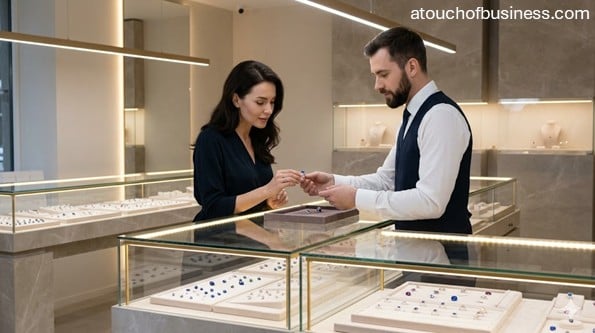
Overview of Owning and Operating a Gemstone Store
A gemstone store sells stones that people buy for collecting, gifting, custom jewelry, or personal interest. In a storefront setting, your job is not just to put stones in a case and wait. You need the right mix of inventory, clear product descriptions, good display lighting, secure storage, a smooth checkout process, and a store that feels trustworthy the moment someone walks in.
Most new owners start with one of two approaches. First, they focus on loose gemstones and keep the offer narrow. Next, some add related jewelry items or higher-ticket stones supported by lab reports. The right starting point depends on your budget, your product knowledge, and how much complexity you want on day one.
Customers usually care about six things right away: selection, price, honesty, presentation, stock availability, and service. That matters in a gemstone store because many shoppers do not know much about treatments, lab-grown stones, or what paperwork matters. If you want people to buy from you, they need to feel safe asking questions.
In plain terms, a laboratory-grown gemstone is created in a lab rather than mined from the earth.
In plain terms, an imitation stone only looks like another gem. It is not the same material.
Is A Gemstone Store Right For You?
Before you think about leases, display cases, or supplier accounts, ask whether owning a business fits you. A gemstone store can look calm from the outside, but the owner deals with risk, inventory decisions, paperwork, customer questions, security concerns, vendor relationships, and long hours before opening and after closing.
You also need to ask whether this specific business fits you. Do you enjoy working with small, high-value items? Are you comfortable learning how stones are identified, described, tagged, stored, and sold? Can you stay patient with customers who want education before they buy? A gemstone store rewards careful people more than rushed people.
Passion matters here. If you have no real interest in stones, display work, product details, or one-on-one selling, the hard periods will feel even harder. That is why your passion for the work matters more than the image of owning a nice-looking retail shop.
Ask yourself, Are you moving toward something or running away from something? Do not start a gemstone store only to escape a hated job, solve immediate financial pressure, or chase the status that can come with saying you own a business. Those reasons do not hold up well when rent is due, sales are slow, or inventory is not moving.
You also need a reality check. This business can tie up cash in stock. Theft risk is real. A weak location can hurt you fast. Buying too much too early can bury you. On the other hand, a focused store with the right assortment, clean displays, strong security, and disciplined buying can start in a much healthier way.
Talk to real owners before you commit. Speak only with owners you will not compete against, in another city, region, or market area. Use those conversations to ask real questions about buying, receiving, tagging, lab reports, returns, customer education, and slow-moving stock. That kind of firsthand owner insight is hard to replace because it comes from direct experience, even if their path will not match yours exactly.
A short day-in-the-life preview helps too. You may spend the morning reviewing supplier invoices, checking new stones, matching report numbers, and tagging inventory. Then you may clean cases, answer questions about treatments or lab-grown stones, process sales, reorder fast movers, and handle secure closing at night. Does that sound interesting to you, or draining?
Step 1 Decide What Your Gemstone Store Will Sell
Your first big decision is product scope. A gemstone store can open with loose stones only, or it can add related jewelry merchandise and report-backed higher-ticket pieces. Start smaller than you think you need. A narrow, well-chosen assortment is usually safer than a broad assortment built on guesswork.
Think through your opening mix by category. Will you focus on common colored stones, collector stones, birthstone demand, gift-ready items, or premium stones with lab paperwork? Will you carry natural stones only, or also laboratory-grown and imitation products? Each choice changes how you buy, describe, tag, and explain your merchandise.
Be careful here. The more categories you add, the more room you create for buying errors, stock confusion, and weak positioning. A new gemstone store usually does better when shoppers can quickly understand what it is known for.
Set rules before you order anything. Decide which stones need lab reports, which grades you will not carry, which treatments you are comfortable selling, and whether you will ever buy from casual sellers or only approved trade suppliers. These rules protect your cash and your reputation.
Step 2 Study Your Area And Check Demand
A gemstone store lives or dies on local fit. First, look at who already sells loose stones, jewelry with colored stones, collector items, or report-backed gems in your area. Next, look at what they do well and where they leave gaps. Then ask what your store can offer that feels clear to the customer.
Do not rely on hope. Check nearby retail areas, customer traffic patterns, gift-shopping zones, and stores that attract similar buyers. A great inventory plan in the wrong area is still a weak launch. Spend time studying local supply and demand before you sign anything.
Think about customer types too. Some shoppers want affordable gift options. Some want a stone for a custom ring. Some care about natural stones only. Some want help understanding the difference between treated, lab-grown, and imitation products. If you do not know which group you are serving first, your buying gets sloppy fast.
A simple test helps. Write down your top three customer types, your starting price bands, and the main reason each type would visit your gemstone store instead of another store or a website. If that answer feels vague, stop and refine it now.
Step 3 Talk To Owners And Suppliers Before You Spend
This is one of the easiest steps to skip, and one of the most useful. Talk to noncompeting store owners in other markets, but also talk to legitimate suppliers early. Those conversations tell you what documents are expected, what minimum orders look like, which categories turn faster, and what new owners often get wrong.
Use this step to ask better questions. Which stones sit too long? Which need extra explanation at the counter? Which products create return issues? What does receiving look like? How do owners connect invoices, tags, and lab paperwork? When do they require a report-backed stone instead of a vendor description alone?
You are not looking for one perfect answer. You are looking for patterns. If several experienced people warn you not to overbuy, ignore weak locations, or open without security procedures, pay attention.
Step 4 Build A Simple Plan Before You Open
A gemstone store does not need a fancy plan, but it does need a clear one. Write down what you will sell, who you will sell to, where the store will be, how much inventory you can afford, what equipment you need, how the customer will move through the store, and what has to be ready before opening day.
Your plan should also include first-stage success targets. That might mean reaching a certain monthly sales level, turning inventory at a healthy pace, keeping enough cash for reorders, or limiting slow-moving categories in the first few months. This is where putting your business plan together helps keep your launch grounded.
Keep the plan practical. Include store hours, owner duties, vendor setup, security needs, simple marketing actions, and how you will measure whether the opening assortment is working. The goal is not to impress anyone. The goal is to avoid opening with blind spots.
Step 5 Choose Your Structure, Name, And Basic Identity
Next, set up the business itself. Choose the legal structure first because it affects liability, taxes, banking, and registration. If you are unsure, compare your options before filing anything. A good place to start is thinking through choosing your legal structure in plain business terms.
Once that is settled, choose a name that fits the kind of gemstone store you want to build. Make sure the name works on a sign, on a receipt, online, and in conversation. A name that sounds elegant but is hard to spell or remember may work against you.
Then secure the domain name and basic identity pieces. That usually means your logo, store sign design, business cards, and simple branded packaging. For a storefront, your sign matters more than many new owners expect. People need to notice the store and understand what it sells without guessing.
Keep the brand simple. If your visual style looks too fancy for the merchandise you actually carry, customers may hesitate. If it looks cheap while you are selling higher-ticket stones, that can also hurt trust.
Step 6 Handle Tax Setup, Permits, And Store Legality
This part is not glamorous, but it matters. A gemstone store usually needs standard business registration, an Employer Identification Number if required, state tax setup, and local approvals tied to the physical location. A retailer also needs to confirm how sales tax applies in the state where it operates.
In plain terms, a seller’s permit or sales-tax registration lets you collect and remit sales tax when your state requires it.
Do not assume one city works like another. Some areas require a local business license. Some focus more on zoning and occupancy. Some may require permits for signs, tenant improvements, or other changes to the space. This is the stage where you sort out your local licenses and permits before opening, not after.
A storefront also raises one issue that home-based sellers do not face in the same way: whether the unit can legally be used for your business. That means zoning, building use, and occupancy status matter before you open the door to customers.
In plain terms, a certificate of occupancy is the local approval that says the space can legally be used for your kind of business.
If you plan to import directly instead of buying only from U.S. wholesalers, the work becomes more involved. Customs rules, country-of-origin marking, and import entry requirements can apply. If you want a simpler launch, starting with domestic suppliers usually reduces the legal and paperwork load.
Step 7 Pick The Right Storefront
Your location is part of your business model. A gemstone store depends on visibility, presentation, and customer comfort. First, confirm the address works legally. Next, look at foot traffic, parking, nearby businesses, safety, signage visibility, and whether the space already suits retail use. Then ask whether the store layout supports the type of selling you plan to do.
Do not rush this step because you found a cheap lease. A weak location can drain a new gemstone store long before the inventory has a fair chance to sell. Low visibility, awkward parking, poor lighting, or a confusing entrance can quietly hurt you every day.
Look at the space as a workflow problem, not just a real estate problem. Where will inventory be received? Where will back stock go? Where will the safe be? Can staff see the cases clearly? Does the checkout area feel controlled? Can you create a calm consultation spot for higher-value stones?
Storefront businesses open best when the space is truly ready. If the unit needs too much work, too many approvals, or major layout changes, your opening can be delayed and your costs can jump.
Step 8 Set Up Suppliers And Buying Rules
A gemstone store needs dependable vendors more than it needs a huge vendor list. First, decide whether you will buy from trade suppliers only, or whether you will also consider estate sources, shows, or special-order channels later. For launch, stick to clean, traceable buying where invoices and product details are easy to keep straight.
Many wholesale suppliers want proof that you are a real business before opening an account. That can include business registration and state tax credentials. Handle that early so you are not scrambling when you are ready to place opening orders.
Next, set buying rules. What is your maximum opening order by category? Which stones need lab paperwork? What information must appear on the vendor invoice? What will you refuse to buy? How will you handle reorders? These decisions shape your inventory discipline from day one.
A gemstone store often gets into trouble when the owner buys based on excitement instead of plan. Pretty stones are not the same as sellable stones. Buy for your customer, not for your own curiosity.
Step 9 Plan Inventory, Pricing, And Margins
This is where many new retail owners get hurt. Inventory in a gemstone store can absorb cash quickly, and some items may take a long time to move. Your goal is not to look full. Your goal is to look focused, attractive, and ready to sell.
Start with categories, price bands, and quantity limits. Decide how many stones you want in each group, what your opening ticket ranges look like, and what share of your budget goes into faster-moving items versus premium stones. Keep room for reorders instead of spending everything on opening stock.
Pricing needs more than a simple markup rule. You need to think about the stone type, whether it is natural or laboratory-grown, any detectable treatments, the documentation supporting it, your source cost, security burden, and how hard the item will be to replace. If a stone needs extra explanation at the counter, that affects the selling process too.
Do not guess at pricing because another store “seems expensive.” Build your own logic and review it carefully. If you want a broader look at setting your prices, do that before the tags are printed.
A strong rule for a new gemstone store is this: buy lean, tag clearly, review sales weekly, and replenish what proves itself. That is far healthier than overloading the cases and hoping the market sorts it out.
Step 10 Protect The Store With Security And Insurance
A gemstone store carries small items with high value. That means security is not a side issue. It is part of launch. Cases should lock properly. Back stock should be secured. The store needs an alarm system, cameras, strong key control, and a safe storage plan that matches the value of what you carry.
You also need written handling rules. Who opens cases? When are stones removed? Where do loose stones go during customer review? How are higher-value items put away at night? Without clear rules, even a nice store setup can become risky fast.
Insurance matters too. You need to understand what your policy covers, what it excludes, and whether your inventory values and security setup meet the insurer’s expectations. A gemstone store should not open until the owner understands the practical side of insurance coverage for the business.
If this part feels excessive, remember what you are opening. You are not selling bulky, low-risk merchandise. You are selling compact products that can disappear quickly if your controls are weak.
Step 11 Buy The Equipment And Systems You Need
Now build the operating setup around the merchandise. A gemstone store usually needs locking display cases, counters, lighting that helps stones show well, a safe, packaging, a point-of-sale system, payment hardware, receipt capability, label printing, and inventory tracking.
If you will examine stones in-house, you may also need basic gem tools such as a 10x loupe, tweezers, stone trays, and in some cases a refractometer, polariscope, dichroscope, spectroscope, or microscope. You do not need to buy every tool at once if your launch model does not require it, but you do need enough to handle receiving, inspection, and customer presentation properly.
Keep your setup tied to real work. You need a clean receiving area, back-room storage, a way to connect inventory to invoices and lab reports, and a checkout station that does not feel chaotic. Equipment should support the workflow from delivery to display to sale to secure closing.
On the payment side, compare providers carefully. You need working card processing, clear fee terms, refund handling, and a backup plan if the internet goes down. For many owners, this is also the point where getting your business banking in place and testing the payment flow removes a lot of opening-day stress.
Step 12 Prepare The Store Layout And Customer Experience
A gemstone store sells trust as much as product. The layout should feel calm, clean, secure, and easy to understand. Use display lighting that helps stones show their color without making the cases look harsh. Keep the layout open enough that customers can browse, but controlled enough that staff can see what is happening.
Think about how shoppers move through the space. Where do you want them to stop first? Which cases hold gift-priced items and which hold premium pieces? Is the checkout area easy to find? Can you step into a quieter conversation when someone needs more explanation before buying?
Presentation matters here because the merchandise is small. If the cases are crowded, dusty, poorly lit, or tagged in a confusing way, the whole store feels less trustworthy. A gemstone store does better when every case looks intentional.
This is also the time to finalize your sign, window presentation, packaging, printed materials, and any short educational notes you want at the counter. A little clarity goes a long way in a business where many customers are buying outside their expertise.
Step 13 Build Your Workflow, Forms, And Records
Before opening, write down how the store will actually run. A gemstone store needs a simple but dependable workflow from sourcing to receiving to tagging to display to sale to return or reorder. If you try to hold it all in your head, details get lost.
Start with receiving. What gets checked when a shipment comes in? Who confirms the stone description? Where is the invoice stored? How are report numbers recorded? How is the SKU created? When is the item approved for the case?
Then set up your core documents. That can include vendor files, receiving checklists, pricing sheets, return rules, product detail notes, employee handling instructions, and a closing checklist. You do not need bulky paperwork. You need clean paperwork that gets used.
A gemstone store also needs clear language at the point of sale. If a stone has a treatment that matters to value or care, that should be described properly. If a higher-ticket item has lab paperwork, make sure that report number can be matched quickly and confidently.
In plain terms, a GIA report is a lab document that describes what a stone is and lists details such as detectable treatments when applicable.
Step 14 Decide Whether To Hire Before Opening
Some gemstone stores open owner-only. Others need help from the start because of long hours, security needs, or the size of the space. There is no single right answer. The question is whether extra staff improves the opening enough to justify the added payroll and training work.
If you hire, do not hire just because the store feels too quiet to run alone. Hire because there is a real need. You will need time to train people on product descriptions, case handling, customer service, checkout, returns, and secure closing. In a gemstone store, weak training can create both customer problems and loss risk.
Staffing decisions also affect tax setup and employer registrations. Once employees are involved, the paperwork expands. If you are unsure, an owner-only opening may be the cleaner launch, especially if your store hours are limited and the assortment is focused.
This is a good time to think honestly about your own energy too. Can you handle buying, merchandising, customer service, records, and daily opening and closing on your own for a while? Or do you need help to keep the store sharp?
Step 15 Launch Carefully And Fix Problems Fast
Do not treat opening day as the finish line. For a gemstone store, it is a test. First, run through the store as if you were a customer. Next, test the lights, cases, payment system, receipts, tags, packaging, and return process. Then do a soft opening if you can.
Watch what happens. Which questions come up most often? Which cases attract interest? Which tags confuse people? Does the checkout flow feel smooth? Are customers asking for categories you did not stock? This is the moment to make adjustments before habits set in.
Your early marketing should stay simple. Make sure people can find the store online, understand what you sell, see basic contact details, and get a feel for the merchandise before they visit. For a storefront, launch promotion works best when it supports the in-person visit instead of trying to do everything at once.
A gemstone store does not need a dramatic opening. It needs a controlled opening. When the cases are right, the paperwork is right, the staff is ready, the security works, and the customer experience feels clear, you are in a much better position.
Red Flags Before You Open
Pause the launch if you see any of these warning signs. Your inventory budget is mostly tied up in slow-moving items. Your location still has unanswered zoning or occupancy questions. Your tagging and product descriptions are inconsistent. Your supplier paperwork is incomplete. Your security plan is weak. Your sign is not approved. Your payment setup is still untested.
Also pause if your offer is fuzzy. If you cannot explain in a few sentences what your gemstone store is known for, who it serves first, and why a customer should walk in, your assortment may still be too broad or too uncertain.
Another warning sign is emotional buying. If you keep adding product categories because they are interesting, beautiful, or hard to resist, you may be building a personal collection instead of a business.
Launch Checklist
Use this final check before you open the gemstone store to the public. Keep it practical. If something on this list is still uncertain, resolve it now instead of hoping it works itself out later.
- The business name, structure, and registrations are complete.
- The tax setup is in place for the state and local area where required.
- The storefront use is allowed at the address.
- The space has the needed occupancy approval and any required permits.
- Supplier accounts are active and opening inventory has been checked in.
- Every item has a clear SKU, tag, and matching invoice or vendor record.
- Lab paperwork is matched to the correct items where needed.
- Cases, lighting, safe, alarm, and cameras are installed and tested.
- The point-of-sale system, card processing, and receipts work properly.
- Packaging, bags, and printed store materials are ready.
- Return rules and customer-facing policies are written clearly.
- Opening and closing procedures are written and rehearsed.
- Any staff are trained on handling, descriptions, checkout, and security.
- The website or business listing shows correct hours, contact details, and store information.
- A soft opening or full walk-through has been completed.
FAQs
Question: Should I open my gemstone store with loose stones only or a wider mix?
Answer: A narrow opening line is usually easier to control. It reduces buying errors, makes training simpler, and keeps your cash from getting trapped in too many slow items.
Question: Do I need to pick my legal structure before I apply for an EIN?
Answer: Yes. The IRS says you should form the entity first if you are creating an LLC, corporation, or partnership.
Question: Can I start a gemstone shop without an EIN if I am the only owner?
Answer: Sometimes, but many owners still get one for banking and state tax use. If you hire staff or operate as a partnership or corporation, you generally need it, and many LLCs do as well.
Question: What should I verify before I sign a lease for a gemstone store?
Answer: Confirm zoning, local licensing rules, sign rules, and whether the unit has the right occupancy approval for retail use. It is much cheaper to learn that before you commit to rent.
Question: Do I need a sales tax account before I open?
Answer: In most states with sales tax, a retail store needs tax registration before it starts making taxable sales. The exact name and process vary by state.
Question: Is it smart to import gemstones myself at the start?
Answer: Not always. Buying from U.S. wholesalers can make the first launch simpler because direct imports can trigger customs entry and origin-marking rules.
Question: Do I need a lab report for every stone I put in the case?
Answer: No. Many owners set rules for which stones must have outside documentation, usually based on value, risk, and how hard the item is to explain at the counter.
Reports can help confirm the material, whether it is natural or man-made, and whether treatments are present. That is especially useful on higher-ticket goods.
Question: What kind of insurance should I look at before opening?
Answer: Start with a business insurance review that covers property, liability, and loss exposure tied to your stock. Ask the agent direct questions about theft, break-ins, and how inventory is valued under the policy.
Question: What equipment should I buy before I spend big on decor?
Answer: Invest first in locking cases, a safe, alarm coverage, cameras, lighting, a point-of-sale setup, and inventory control. Nice decor helps, but weak control systems can hurt you much faster.
Question: How much cash should I keep outside of inventory?
Answer: Keep enough working cash for rent, payroll if needed, utilities, insurance, marketing, and reorders while sales are still uneven. A new shop can look full and still run short on cash.
Question: What should receiving look like in the first month?
Answer: Check every shipment against the invoice before it reaches the sales floor. Then log the item, assign a stock code, record any report number, and tag it before it goes into a case.
Question: Should I hire before opening or begin alone?
Answer: Many owners start solo if the store is small and the hours are limited. Hire early only if the floor needs coverage, the opening hours are long, or security and customer handling would be weak with one person.
Question: What should I track every day in the first month?
Answer: Watch daily sales, average sale size, items sold by category, card fees, deposits, and what left the cases. Also watch what customers ask for but do not buy, because that helps you fix the opening mix.
Question: How should I set up card payments and deposits for a new gemstone store?
Answer: Link your payment system to a business checking account and test the full deposit flow before opening day. You want to know how refunds, batch closes, and payout timing work before real sales start.
Question: What written policies should exist before day one?
Answer: Write basic rules for receiving, tagging, case access, daily close, refunds, damaged goods, and who can handle high-value items. Short policies are fine, but they need to be clear enough that staff can follow them the same way every time.
Question: How should I market the store in the first month without wasting money?
Answer: Start with clear local visibility, accurate business listings, simple social proof, and a website or profile that shows what kind of stones you carry. Early marketing works better when it matches the real assortment instead of making broad promises.
Learn From People Already In The Gem And Jewelry Business
You can save time, avoid expensive early mistakes, and make better choices when you learn from owners, traders, and retailers who have already been through the setup stage.
The resources below are useful because they come from interviews with people inside the gem and jewelry trade, covering topics like colored-stone sourcing, inventory choices, selling in person, customer experience, and the first years of store ownership.
- Interview With Sophie Simon, Gemologist And Colored Gem Trader — Strong for colored-stone knowledge and the path from gem grading into the trade.
- Episode 27: Konrad Darling Of Darling Imports — Useful for loose colored stones, family-business lessons, and how a gemstone-focused inventory can be built.
- Supernatural Cheer: Denise Oros Of Linnea Jewelers — Good for owner mindset, team culture, and the everyday habits that shape a jewelry store.
- How To Sell Your Jewellery: Learn From Susannah Lovis — Helpful for in-person selling, customer questions, and turning expertise into sales conversations.
- New Retailers’ Biggest Successes And Mistakes — One of the best picks for a new owner because it gathers lessons from several jewelry retailers on what worked and what they would change.
- You’re Not Just Selling Jewelry: Interview With Brook Ellis And Mink Stavenga — Strong on planning, inventory control, cash flow, and the business side many new owners underestimate.
Related Articles
- Start a Jewelry Business
- How To Start a Crystal Shop
- Starting a Jewelry Appraisal Business
- Starting a Profitable Quartz Mining Business
- Starting a Profitable Rhinestone Business
- Start a Jewelry Box Manufacturing Business
- How To Start a Successful Luxury Watch Store
- How To Start Your Successful Pawn Shop
Sources:
- SBA: Choose Business Structure, Tax ID Setup, Pick Business Location, Open Business Bank Account, Calculate Startup Costs, Licenses And Permits
- IRS: Employer Identification Number, Employment Taxes
- FTC: Jewelry Guides, Gem Advertising Rules, Buying Gemstones Guide
- GIA: Colored Stone Reports, Report Check, Gem Tools Overview
- Jewelers’ Security Alliance: U.S. Jewelry Crime Statistics
- The Plumb Club: Jewelry Store Design Mistakes, Store Layouts Drive Sales
- Rio Grande: Qualify For Wholesale
- U.S. Customs And Border Protection: Import Requirements Gems, Origin Marking Rules