
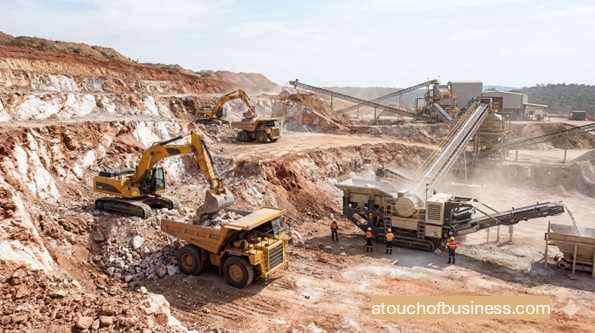
Choose the Right Site and Setup for Quartz Mining Work
A quartz mining business pulls quartz-bearing material from the ground and sells it as raw stone, crushed material, screened sizes, washed feed, or higher-purity material for specialty uses. In real life, this is usually a site-based extraction business, even if you manage it with project-style planning and field crews.
Your first big decision is simple: what kind of quartz will you produce? Bulk material for general industrial use is very different from high-purity quartz for demanding buyers. That one choice affects your land strategy, testing, equipment, permits, storage, and pricing.
Customers usually care about quality, consistency, lead time, and whether each load matches the agreed specification. A quartz mining business also depends on practical production flow. Raw material comes out of the ground, gets handled, tested, processed if needed, stored by grade, and shipped on time.
There are real advantages here. The product has established industrial uses, and you may be able to start by renting equipment or using contractors instead of buying everything at once.
There are real drawbacks too. You are dealing with land control, site access, mining approvals, dust control, safety rules, and possible reclamation bonding before you sell your first load. Open too early, and you can end up reworking the site, delaying production, or paying for equipment that sits still.
Is A Quartz Mining Business The Right Fit For You?
Start with yourself. Do you like outdoor site work, technical problem-solving, permit follow-up, and the pressure that comes with equipment, weather, contractors, and schedules? A quartz mining business can be a good fit if you like hands-on operations and can stay calm when several moving parts need attention at once.
Then check your interest in the actual work. You need enough interest in the work itself to deal with site issues, sampling, vendor calls, and compliance tasks before the business starts paying you back. If the daily work sounds draining now, it usually will not get easier once the bills arrive.
Ask yourself one hard question: “Are you moving toward something or running away from something?” Do not start a quartz mining business just to escape a job, fix financial pressure, or prove something. Those reasons fade fast when you are chasing permit approvals, handling a breakdown, or waiting on lab results.
You also need a realistic owner skill set. You do not have to know everything yourself, but you do need the core owner skills to make decisions, read numbers, manage vendors, organize records, and spot problems early.
Before you go too far, talk only to owners you will not compete against. Pick people in another city, another region, or a different market area. Use those conversations to ask what surprised them, which approvals slowed them down, what equipment they rented first, and what they wish they had checked sooner. Their answers come from real experience, and that kind of insight is hard to get any other way. You can start by looking for firsthand owner insight from people already doing the work.
A quick reality check helps here. Early owner responsibilities often include land talks, sampling, permit tracking, safety setup, vendor quotes, and buyer discussions in the same week. If that sounds like the kind of pressure you can handle, keep going.
Decide Which Quartz Product You Will Sell
Decide what you are mining before you decide anything else. That sounds obvious, but this step changes almost every startup decision that follows.
A quartz mining business might sell run-of-mine material, crushed quartz, screened sizes, washed feed, or higher-purity material for more specialized uses. Write down the exact product, the likely buyer, and the basic quality standard you expect to meet.
Then look at the consequences. A simple bulk product may let you start with less processing. A tighter industrial specification may force you to add more crushing, screening, washing, testing, and stockpile separation from day one.
If you skip this decision, your equipment list and startup costs can drift fast. That is how new operators end up buying the wrong plant or preparing a site that does not match the product they want to sell.
Confirm Land Control Before You Spend Real Money
Confirm exactly how you will control the mineral resource. In a quartz mining business, that usually means private mineral ownership, a lease from the mineral owner, or a federal-land route if the land is open to mineral entry.
Slow down here and get the land question right. If you move forward without clear rights, everything after that sits on weak ground.
Federal public land adds another layer. You need to confirm that the land is open to mineral entry and that your quartz deposit fits the rules that apply there. Do not assume every quartz deposit follows the same path.
This is also the time to confirm access. Can trucks reach the site? Will you need road work, culverts, crossings, or haul-route approvals? A deposit can look promising on paper and still fail the startup test if access is poor or public-road use becomes a problem.
Validate The Deposit And The Buyer At The Same Time
Sample the deposit early. Then compare those results against what a buyer actually wants.
A quartz mining business can look strong until the material is tested for purity, contaminants, moisture, particle size, and recovery. Confirm the overburden, expected yield, and whether the material needs extra processing before it can be sold.
Do not stop at geology. Confirm market fit too. Talk with likely buyers about the grade, size range, testing method, minimum order size, and delivery terms they expect. That step helps you judge local supply and demand in a way that matters for this business, not just in theory.
This is where many quartz mining startups get into trouble. They know they have stone in the ground, but they do not yet know whether that stone can be sold at a profit into a real market.
Choose The Quartz Mining Setup And Production Flow
Set up the operation around the way material will actually move. In a quartz mining business, the basic flow is usually extraction, hauling inside the site, crushing or screening if needed, storage by grade, loading, and shipment.
Keep the selected operating model in mind. Even though quartz mining is not a typical service business, you may still run it with project-style mobilization. That means staged site prep, field equipment transport, crew coordination, and work that happens in phases instead of a simple fixed-facility routine.
Write down the production flow before you place equipment. Where will raw material come out? Where will it be dumped, processed, tested, stored, and loaded? If material crosses the site too many times, you create delay, extra fuel use, and more dust.
Think about batch size and output planning as well. A small operation handling one grade at a time needs a different site plan than a quartz mining business that must keep several grades separate for different customers.
- Extraction method: ripping, hammering, or blasting
- Processing need: raw, crushed, screened, washed, or higher-purity handling
- Storage plan: separate stockpiles by grade and size
- Loadout method: truck scale, loader bucket counts, or another documented shipping method
- Quality checks: sample points, test logs, and lot tracking
Form The Business And Lock Down The Name
Set up the legal side early. Choose the business structure, form the entity, and get the employer identification number before contracts, payroll, and banking start piling up. If you need help thinking it through, review your options for choosing a legal structure in plain language.
Pick a name that sounds credible in an industrial setting and works on purchase orders, permits, invoices, and hauling documents. Then secure the domain, set up a business email address, and match the name across your website, quote forms, and vendor records.
If the operating name differs from the legal name, confirm whether your state or county requires a trade-name filing. Do that before you print signs, buy domain-based email accounts, or open the bank account.
Keep the digital side simple. A quartz mining business usually needs a clear website, a working domain email, a contact page, and a short description of products, sizes, and service area. Fancy branding matters less than clear communication, but you still need clean business identity materials that look organized and professional.
Build Your Permit And Compliance List Early
Now build the approval list before you move equipment to the site. For a quartz mining business, this is not optional. If you open before the right approvals are in place, you can delay launch, stop work, or pay to change the site after the fact.
Start with the universal items. You may need business registration, an employer identification number, state tax registration where applicable, employer accounts if you will hire, and any local business license your city or county requires. Then move into the mining-specific items.
State mining or reclamation approval is often one of the biggest launch issues. Depending on the site and setup, you may also need stormwater coverage, air review for crushing or engines, water-related approvals, zoning clearance, road-access approval, blasting approvals, and local building approval for permanent structures. This is the stage where reviewing permit and license requirements helps you organize the list, even though the exact rules will depend on where the site is located.
Keep the wording practical when you verify things. Ask the state mining or environmental agency which permit applies to this parcel, this extraction method, and this processing setup. Ask the local planning office whether mining is allowed on the parcel and whether haul-road, access, signage, or building approvals will be separate.
For a quartz mining business on federal land, confirm the land status first. Then find out whether you are on the Bureau of Land Management path or the Forest Service path. That affects the filings, reclamation planning, and financial assurance you may need before work starts.
- Confirm the parcel zoning for mining or extractive use
- Confirm whether the site needs a state mining or reclamation permit
- Check stormwater, wetlands, and water handling rules if the site will disturb land or manage runoff
- Check air-permit review if crushing, screening, or stationary engines will be used
- Check blasting rules if explosives are part of the extraction plan
- Confirm whether any shop, office, or process building needs a certificate of occupancy
Set Up Safety, Training, And Risk Planning Before The First Shift
Build safety into the startup process, not after the equipment arrives. A quartz mining business falls into a heavily regulated work environment, and your safety system has to be in place before people start working on site.
Request the mine identification number and complete the required mine identity reporting. Then determine which training path applies to your operation. If contractors will be on site, confirm their identification and training responsibilities too.
Silica dust deserves attention early. Quartz mining creates real exposure risk, so dust control, monitoring, housekeeping, and work practices cannot be treated like paperwork.
Separate what is commonly required from what is commonly recommended. Required items may include training, first-aid readiness, emergency communication, and other site safety measures tied to the mining rules that apply to your operation. Recommended items often include written task procedures, clearer traffic patterns, cleaner inspection records, and stronger contractor onboarding. Those steps may not always be listed as permit conditions, but they can prevent delays and reduce avoidable risk.
Insurance belongs in this section too. Commonly required coverage varies by state and by contract. Workers’ compensation may apply if you have employees, and lenders, landlords, equipment finance companies, or contract terms may add their own insurance requirements. Anything beyond that should be confirmed with a licensed insurance professional who understands mining, vehicle use, equipment, and site liability. This is a good time to review basic insurance coverage for the business so you know what to ask about.
Plan Equipment, Contractors, And Suppliers With Care
Choose equipment based on the product and site, not on what looks impressive. A quartz mining business might need excavators, loaders, dozers, haul units, a water truck, a drill rig, crushers, screens, conveyors, and stockpile tools. Not every startup needs all of that on day one.
Write down what you must own, what you can rent, and what you can contract out. Many operators reduce startup pressure by using outside drillers, blasting crews, crushing contractors, or lab services at first.
Now think about support. Equipment is only part of the launch. You also need fuel supply, maintenance support, spare parts, tire service, lab access, surveying help, scale service if you sell by weight, and reliable hauling if you deliver product.
In a quartz mining business, downtime hurts fast. A broken screen, a missing wear part, or a delayed fuel delivery can shut down production even when demand is there.
- Field equipment: excavator, loader, dozer, haul units, water truck
- Processing equipment: hopper, crusher, screens, conveyors, washers if needed
- Site support: generator or utility power, fuel storage, radios, office trailer, toilets
- Safety items: personal protective equipment, first-aid supplies, spill kits, fire extinguishers, signs
- Quality tools: sample bags, tags, logs, pull points, testing records
- Administrative tools: accounting software, payroll setup, quote forms, shipping paperwork
Build Startup Cost Planning Around Real Drivers
Do not try to force this business into a neat national price range. A quartz mining business can swing widely in startup cost based on land control, deposit quality, overburden, access, water needs, permit conditions, bond size, and how much processing you build into the site.
List the real cost categories first. Then add numbers that fit your situation.
- Land purchase, lease, or claim-related costs
- Sampling, lab work, and technical review
- Permits, environmental work, and legal fees
- Reclamation bonding or other financial assurance
- Access roads, grading, drainage, and site controls
- Extraction equipment, plant equipment, and mobile support
- Fuel, power, water handling, and maintenance setup
- Safety gear, training, and compliance records
- Office setup, scale setup, software, and communication tools
- Working capital for payroll, repairs, fuel, and slow customer payments
Then look at consequences. If the material needs washing, tighter sizing, or higher-purity handling, startup costs can jump. If the deposit can be sold with lighter processing, you may be able to open with less equipment and less site complexity.
It helps to put your numbers into a written plan early. That makes it easier to spot weak assumptions while you are still putting your business plan together.
Set Pricing, Funding, And Banking Before You Open
Set pricing around the product, not around guesswork. In a quartz mining business, price depends on purity, impurity limits, size range, moisture, processing level, freight, minimum order size, and whether the buyer accepts the material under a written test method.
Common pricing methods include price per ton at the mine, delivered price per ton, truckload pricing for local bulk sales, or negotiated lot pricing for more specialized material. If you want a deeper framework for setting your prices, use one that helps you connect your costs to the actual product specification.
Open the bank account before the first deposit, vendor payment, or payroll run. A quartz mining business usually needs business checking, wire capability, Automated Clearing House payment support, and clean controls for fuel, contractors, permit fees, and payroll. If you are still comparing institutions, start with the basics of getting your business banking in place.
Funding may come from owner cash, equipment financing, a commercial loan, a Small Business Administration-backed loan, vendor credit, or a lease structure that lowers your upfront land cost. Keep one thing in view: this business often needs more working capital than first-time owners expect. Fuel, parts, repairs, testing, and bond-related costs can hit before receivables come in.
Prepare The Site, Records, And Sales Materials
Set the site up to work safely and cleanly from the first day. That means access roads, drainage controls, stockpile areas, traffic routes, fuel handling, emergency postings, and a clear loading area.
Then prepare the records that keep a quartz mining business organized. You may need permit files, training records, inspection logs, sample logs, lab results, vendor files, quote forms, terms and conditions, and shipment paperwork tied to scale tickets or load documentation.
Do not ignore sales materials just because this is an industrial business. Buyers still need a simple way to understand what you sell. Create a short product sheet, a contact page, a list of available sizes or grades, and a clear process for requesting quotes or samples.
Your early marketing plan should stay practical. Focus on direct outreach to likely industrial buyers, distributors, and haul-linked customers in your service range. A quartz mining business usually wins trust by showing product details, test information, reliable communication, and a realistic delivery plan.
Decide On Staffing And Field Coordination
Decide early whether you will launch with employees, contractors, or a mix of both. That choice affects payroll setup, training, scheduling, safety records, and daily supervision.
A small quartz mining business may begin with the owner coordinating most of the work while using contractors for drilling, blasting, crushing, hauling, or maintenance. That can lower startup costs, but it also raises the need for clear scheduling and site coordination.
If you do hire, keep roles specific. Loader operators, haul drivers, mechanics, plant operators, and field supervisors all affect production quality and site safety in different ways. Do not hire before you can define the work, the training path, and the daily reporting line.
Weather, access conditions, subcontractors, and inspection timing can all shift the field schedule. Plan for that now. If you do not, the opening period can turn into a series of rushed decisions.
Know What Daily Work Looks Like In A Quartz Mining Business
Picture a normal startup week before you commit. One morning may start with a site walk, drainage check, stockpile review, and equipment call. By afternoon, you may be handling a permit question, sending samples to a lab, reviewing a contractor invoice, and answering a buyer who wants a tighter size range.
That is the real shape of a quartz mining business at launch. You are not just selling stone. You are managing land, safety, quality, schedules, equipment, paperwork, and customer expectations at the same time.
If that kind of work sounds rewarding, that matters. If it sounds exhausting before you have even opened, pay attention to that too. It is better to see the reality now than after the first major invoice goes out.
Watch For Red Flags Before Launch
Stop and reassess if any of these issues are still unresolved. In a quartz mining business, early warning signs usually do not fix themselves.
- You do not have clear mineral rights, lease terms, or land status
- You have not matched test results to a real buyer requirement
- You still do not know whether the site needs mining, stormwater, air, zoning, or road approvals
- You are counting on equipment you have not secured or contractors you have not scheduled
- You do not yet know how loads will be documented, weighed, tested, or invoiced
- You have no written plan for safety training, first-aid readiness, and emergency communication
- You are opening with too little working capital for fuel, repairs, and permit-related costs
Take those warnings seriously. A quartz mining business can survive a slow start more easily than it can survive a rushed start built on missing approvals and weak production planning.
Run A Pre-Opening Check Before The First Load Leaves
Do a full trial run before you call the business open. Test the site, the records, the people, and the equipment as one system.
Use a simple checklist and make sure every item is either complete or scheduled with a confirmed date. If a required approval is still pending, do not pretend it will sort itself out later.
- Land control documents are signed and easy to access
- Product specs and likely customer requirements are written down
- Business registration, tax identification, and banking are in place
- Mining, zoning, stormwater, air, water, access, and blasting approvals are confirmed where they apply
- Reclamation bonding or other financial assurance is ready if required
- Mine identification, training setup, and safety records are ready
- Dust control, first-aid supplies, spill kits, and emergency communication are on site
- Equipment is delivered, staged, tested, and backed by repair support
- Stockpile areas, traffic routes, and loading areas are clearly organized
- Sample handling, quality checks, and shipment paperwork are ready
- Quote forms, invoices, and payment terms are set before the first sale
- A trial extraction and loadout run has been completed
Finish that check, fix what is weak, and only then move into full launch. That extra pause can save you expensive rework once the quartz mining business is live.
FAQs
Question: Do I need mineral rights or a lease before I start a quartz mining business?
Answer: Yes. You need legal control of the mineral resource before you spend serious money on permits, equipment, or site work. That control may come through mineral ownership, a lease, or a valid federal mining claim route where the land is open to mineral entry
Question: Can I open a quartz mine on federal land?
Answer: Maybe. The land must be open to mineral entry, and you need to follow the federal claim and operations process that applies to that site.
Question: Do I need an employer identification number before I open?
Answer: In most cases, yes. You usually need it for banking, payroll, tax setup, and many business filings.
Question: What permits do I usually need before opening a quartz mining business?
Answer: It varies by location, but many sites need mining or reclamation approval, zoning clearance, and industrial stormwater coverage. Some also need air, water, access-road, or blasting approvals.
Question: Will I need stormwater or water-related approvals?
Answer: Often, yes. Disturbed mining and processing areas can trigger stormwater permit coverage, and water handling can add more review.
Question: Do I need an air permit if I plan to crush or screen quartz on site?
Answer: Maybe. Crushing, screening, and stationary engines often trigger air-permit review, so check this before you move plant equipment to the site.
Question: Do I need an MSHA mine ID before work starts?
Answer: Yes, if the site will operate as a mine under MSHA rules. Get the mine ID and finish the identity paperwork before operations begin.
Question: What training should be ready before my first crew starts?
Answer: You need to determine whether your site falls under Part 46 or Part 48 training. You should also have first-aid readiness, emergency communication, and silica controls ready before work begins.
Question: Do I need blasting approval if I will use explosives?
Answer: Yes. You may need a federal explosives permit from ATF, and your state or local area may add storage or blasting rules.
Question: What insurance should I line up before opening?
Answer: If you will have employees, some employee-related coverage can be required, and state rules vary. You should also review site, vehicle, equipment, and liability coverage before opening.
Question: What equipment should I have ready before the first load ships?
Answer: Start with the equipment that lets you extract, control dust, separate grades, and load clean shipments. Your list may include loaders, excavators, haul equipment, water control, and crushing or screening gear if your product needs it.
Question: How do I set prices for quartz material?
Answer: Price should be tied to grade, purity, size, moisture, processing level, freight, and order size. Many operators price by the ton, by delivered ton, or by truckload.
Question: What does the daily workflow look like in the first month?
Answer: Most days start with a site walk, safety check, and equipment review. After that, the work usually moves through extraction, sampling, stockpile control, loadout, and shipping paperwork.
Question: What systems should be in place before opening day?
Answer: Have a simple system for load tickets, sample logs, training records, inspection forms, vendor files, and customer paperwork. If those records are loose on opening day, problems pile up fast.
Question: What basic policies should I write before opening?
Answer: Write short rules for site access, safety reporting, sampling, load documentation, fuel handling, and contractor check-in. Keep them clear enough that a new worker can follow them on day one.
Question: How do I find my first buyers before I open?
Answer: Start early with likely industrial buyers or distributors. Use sample results, clear product notes, and realistic delivery terms when you introduce the material.
Question: How much cash should I keep for the first month?
Answer: Keep enough to cover fuel, labor or contractors, wear parts, lab work, hauling, and permit-related bills. New mines often feel cash pressure before customer payments settle into a routine.
Question: What are the most common early mistakes when starting a quartz mining business?
Answer: Starting too big, skipping quality checks, underestimating working capital, and opening before approvals are in place are common problems. Weak site flow can also create delay, dust, and rework.
51 Tips for Planning Your Quartz Mining Business
Starting a quartz mining business takes more than finding stone in the ground.
You need to confirm the deposit, secure the land, line up permits, plan the site, and get the business side ready before the first load leaves.
These tips follow the early planning path that matters most for a new owner.
Use them to think through fit, costs, approvals, equipment, paperwork, and final launch readiness.
Before You Commit
1. Decide whether business ownership fits you before you decide whether quartz mining fits you. This kind of startup brings long days, site issues, permit follow-up, and real financial pressure.
2. Be honest about your reason for starting. If you are mainly trying to escape a job or force fast income, that can lead to rushed decisions.
3. Picture your normal week before you commit. A quartz mining business can mean site walks, vendor calls, testing, paperwork, and safety review in the same day.
4. Talk only to owners you will not compete with. Pick people in another city, region, or market so they can speak freely about what slowed them down.
5. Write down the parts of the work you enjoy and the parts you do not. That quick list can tell you whether you are interested in the real work or only the idea of the business.
6. Check your skill gaps early. If you do not know mining permits, sampling, contractor management, or industrial sales, plan who will help you before you spend serious money.
Demand And Profit Validation
7. Decide what kind of quartz you want to sell before you design the business. Bulk material, crushed material, washed feed, and higher-purity quartz each lead to different costs and customer requirements.
8. Confirm that the deposit can produce a sellable product, not just a good-looking sample. Grade, impurities, moisture, and recovery all affect whether the material has real value.
9. Ask likely industrial customers what specifications they require. A product that looks fine to you may still fail their size, purity, or testing standards.
10. Match your product plan to a real end use. Quartz sold into general industrial channels does not face the same demands as quartz aimed at tighter specialty markets.
11. Check haul distance early. A deposit can look profitable until trucking turns each load into a weak deal.
12. Estimate revenue only after you know the product grade, likely sales price, and freight burden. Guessing too soon can make the whole project look stronger than it is.
Business Model And Scale Decisions
13. Treat this business as a site-based extraction operation first. Even if you manage it like a field project, the mine site and plant layout drive most startup decisions.
14. Choose your opening scale with care. Starting too large can lock you into equipment, debt, and site work before the market is proven.
15. Decide early whether you will sell raw material or process it on site. Crushing, screening, and washing can raise value, but they also raise capital needs and permit review.
16. Keep the first phase simple if you can. A smaller product line is easier to test, store, and ship without mixing grades.
17. Plan the production path before you place equipment. Material should move from extraction to handling to storage with as little backtracking as possible.
18. Separate stockpiles by grade and size from the start. If you blend material too soon, you can lose the quality control you need for early sales.
Legal And Compliance Setup
19. Confirm who owns the mineral rights before you do anything else. If you do not control the minerals, the rest of your startup plan can collapse.
20. If you plan to use federal land, confirm that the land is open to mineral entry. Do not assume every parcel can be claimed for mining.
21. Form your business entity before contracts, payroll, or permit filings start stacking up. That keeps your records cleaner and helps you separate personal and business activity.
22. Get your employer identification number early. You will usually need it for banking, taxes, payroll, and many vendor forms.
23. Check whether your operating name needs a trade-name filing. Do this before you order signs, open accounts, or print business paperwork.
24. Ask the state mining or reclamation office which permit applies to your parcel and extraction method. State rules vary, and this is one of the first answers you need.
25. Ask the local planning office whether mining is allowed on the site. Zoning problems can stop a quartz mining business before equipment ever arrives.
26. Confirm whether stormwater, air, water, or wetland review applies before site work starts. Disturbing land, crushing material, or changing drainage can trigger extra approvals.
27. If blasting is part of the plan, check federal, state, and local explosive rules before you design the site. Opening without that approval path can force expensive rework.
Safety, Insurance, And Risk Planning
28. Request the Mine Safety and Health Administration mine identification number before operations begin. That step belongs early in the setup process, not at the end.
29. Determine whether your site falls under Part 46 or Part 48 training rules. That choice affects what training must be ready before the first crew starts work.
30. Build dust control into the site plan from day one. Quartz creates silica exposure risk, so water use, traffic flow, and plant placement matter before opening.
31. Set up first-aid supplies, emergency communication, and emergency transport planning before the first shift. If something goes wrong early, you do not want to build the response plan on the fly.
32. Review insurance with someone who understands mining, mobile equipment, vehicles, and site liability. State rules vary, and lender or contract requirements may add more coverage needs.
33. Check whether fuel storage or other site conditions trigger added environmental planning. A small oversight here can create delays after the site is already built.
Budget, Funding, And Financial Setup
34. Build your startup budget around real cost drivers, not a broad online estimate. Land control, overburden, access, plant complexity, and bond requirements can change the total fast.
35. Include sampling, lab work, and technical review in the startup budget. Those costs come early and can change your whole plan.
36. Treat reclamation bonding or financial assurance as a real startup cost. If a state or federal path requires it, you may need that in place before work starts.
37. Set aside working capital for fuel, repairs, payroll, vendor deposits, and slow customer payments. Many first-time owners underfund this part.
38. Compare buying, renting, and contracting before you finance equipment. A contractor can reduce early capital needs while you prove the deposit and demand.
39. Open a business bank account before you begin paying major bills. That makes it easier to track permits, equipment, payroll, and startup spending clearly.
40. Decide how you will price the product before launch. In a quartz mining business, price usually depends on grade, size, moisture, processing level, and freight terms.
Location, Site Setup, And Equipment
41. Visit the site in person before finalizing your layout. Access, slope, drainage, and turning room for trucks can change the startup plan fast.
42. Check whether the road can handle your equipment and haul traffic. A weak entrance or a bad route can delay opening even when the mine itself is ready.
43. Plan where raw material, processed material, waste, fuel, and traffic will go before site work starts. A clean layout supports safer work and better quality control.
44. Buy or rent equipment that fits the product plan, not the biggest machines you can afford. The right loader, crusher, screen, or water truck matters more than a larger machine that does not match the job.
45. Keep spare wear parts and service support in mind when choosing equipment. An early breakdown is less damaging when parts, labor, and field service are already lined up.
46. If you will sell by weight, arrange truck scale service or another reliable load documentation method before opening. You need a clear system for invoices and load records.
47. Check whether any permanent shop, office, or process building needs building approval or a certificate of occupancy. That question is easy to miss if you focus only on the pit and plant.
Suppliers, Contracts, And Pre-Opening Setup
48. Line up fuel, lab testing, hauling, and repair support before the launch date. A quartz mining business can stall fast when one of those basics is missing.
49. Put your key agreements in writing early. This includes mineral leases, contractor scope, hauling terms, equipment rentals, and testing arrangements.
50. Prepare your core paperwork before opening day. Quote sheets, sample logs, load tickets, inspection forms, and training records should be ready before the first load leaves.
51. Run a full pre-opening trial with equipment, paperwork, traffic flow, and safety checks before you call the site open. That last test can reveal problems while they are still cheaper to fix.
Expert Advice From Quarry And Aggregates Operators
You can learn a lot from people already working in quarrying, aggregates, and contract crushing. Their interviews can help you think through startup reality, equipment choices, workforce planning, site flow, safety, growth decisions, and the kind of problems that do not show up in a basic checklist.
Below is a short list of interviews and operator-focused resources that can give a new quartz mining business owner added perspective before opening.
- Leading Aggregates Producer Wm. D. Scepaniak Share 6 Keys for Business Success
- Navigating the Entrepreneurial Abyss: Insights from 3rd Generation Business Owners with John Scepaniak
- Drilling Deeper Episode 40: John Scepaniak talks contract crushing, expanding the business and more
- Eight questions with Summit Materials founder Tom Hill
- The Rock Products Interview: Ted Baker II, Blue Water Industries
- Interview with Viv Russell
Related Articles
- How To Start a Lithium Mining Company
- Start a Mining Consulting Business
- Start a Geology Consulting Business
- How To Start Your Marble and Granite Shop
- How To Start a Crystal Shop
- How To Start a Heavy Equipment Rental Business
- Starting a Geothermal Drilling Business
- Starting an Environmental Testing Laboratory
- Starting an Environmental Consulting Firm
- Starting a Demolition Business
- Starting a Construction Business
- How To Start Your General Contracting
Sources:
- IRS: Employer Identification Number
- SBA: Apply Licenses Permits, Get Business Insurance, Open Business Bank Account, Fund Your Business
- BLM: Locating Mining Claim, Mining Claims Federal Lands
- MSHA: Mine ID Request, Part 46 Part 48, State Mining Agencies
- EPA: Sector J Mineral Mining, Clean Air Permitting, Clean Water Act 404
- ATF: Federal Explosives Licenses
- USGS: Silica Statistics Information, Quartz Markets Grades
- ECFR: Notice Operations Rules, Surface Mine Safety