
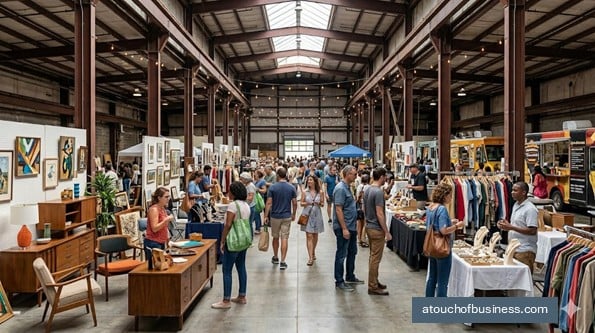
What You Can Expect From This Guide
This guide walks through the key decisions and practical steps involved in opening a flea market, from testing the idea and choosing a model to preparing the venue, vendor systems, finances, and public opening. The bullets highlight selected planning areas.
Inside the guide, you will find:
- Startup roadmap: Follow an ordered path from owner fit and demand checks through site approval, vendor setup, pricing, and opening tests.
- Industry interviews: Explore a collection of stories and observations from flea market founders, operators, and people behind public market spaces.
- Startup FAQs: Review practical answers about locations, sales tax duties, food vendors, agreements, costs, signs, and reasons to delay opening.
- Business model: Compare indoor, outdoor, seasonal, permanent, space-rental, and centralized-checkout options and how each changes the setup.
- Vendor systems: Plan applications, written agreements, prohibited goods, payment rules, tax records, booth assignments, and market-day responsibilities.
- Local requirements: Check zoning, occupancy approval, food permits, fire rules, insurance, parking, accessibility, and other location-dependent matters.
- Opening preparation: Test vendor check-in, payments, layout, restrooms, trash flow, staffing, documents, and emergency access before admitting the public.
Begin by deciding whether managing vendors, shoppers, property concerns, and public-facing responsibilities suits the business you want to own.
Flea Market Business Planning for a Practical Start
A flea market is not just a place where people sell used goods, antiques, crafts, collectibles, tools, clothing, and other finds. If you own the market, you’re running a public retail venue.
That means your real job is to create a safe, legal, and organized place where independent vendors can sell to shoppers. You may rent booths, tables, indoor spaces, outdoor spaces, or locked cases. You may also handle vendor check-in, rules, payments, trash, restrooms, parking, and safety.
This changes the startup process. You’re not only thinking about shopper traffic and vendor mix. You’re also thinking about zoning, vendor rules, sales tax records, booth layout, insurance, staffing, and whether the facility is ready for real public use.
If you want a broader view of the general process, review the basic startup steps. Then use this guide to focus on the specific decisions that apply to starting a flea market.
Is Starting a Flea Market Right for You?
Before you look for a property or buy tables, ask whether this business fits you. A flea market owner deals with vendors, shoppers, rules, rent payments, building issues, safety concerns, and public complaints.
You also need to be honest about your motivation. Are you moving toward something or running away from something? Starting a flea market because you enjoy resale culture, local commerce, and venue ownership is different from starting one because you feel trapped in a job.
This model can bring real pressure. Vendor spaces may sit empty. Weather can affect outdoor markets. Repairs may cost more than expected. A weak location can hurt both vendor demand and shopper traffic.
Think about your household too. Can you cover personal living expenses during the startup period? Do you have support from family or others who depend on your time and income? Can you handle income uncertainty if the opening takes longer than planned?
A flea market also calls for patience and firmness. You need to like the work enough to handle early mornings, vendor questions, parking issues, trash, restrooms, and rule enforcement.
If you dislike conflict, this may be difficult. You may have to reject vendors, remove unsafe displays, stop prohibited sales, or deal with late payments.
Learn From Non-Competing Owners
Talk to flea market owners before you commit money. Speak only with owners you won’t compete against—operators in another city, county, or market area.
Prepare your questions before those conversations. Ask about vendor rules, booth pricing, food vendors, inspections, sales tax documents, security, parking, restrooms, trash, and what surprised them before opening.
These owners have firsthand experience. Their path won’t match yours exactly, but their insight can help you spot problems a beginner might miss. A deeper inside look from real business owners can also help you think through the owner side of the decision.
This changes your risk. You may still choose the same path, but you’ll make the choice with fewer blind spots.
Check Local Demand Before You Commit
A flea market needs two groups to work: vendors and shoppers. If either side is weak, the business may struggle before it has a fair chance.
Look at the local area before you sign a lease. Check nearby flea markets, swap meets, antique malls, vendor malls, craft fairs, farmers markets, thrift stores, estate sales, liquidation stores, and online resale activity.
Also look at traffic, parking, weekend habits, tourism, nearby population, and whether the area already supports bargain hunting, vintage buying, and secondhand retail.
Location affects both cost and timeline. A better location may cost more, but a poor one can make the whole model harder to support.
Use local supply and demand as a starting point. You’re not only asking, “Will people shop here?” You’re also asking, “Will enough vendors pay to be here?”
Red Flags Before You Start
Some problems should make you pause before you spend serious money. These aren’t small launch tasks. They can change whether the flea market should open at all.
- Zoning does not allow the use: Don’t sign a lease until the city or county confirms that a flea market, swap meet, vendor mall, open-air market, or similar use is allowed at the address.
- A certificate of occupancy may not be available: This can block an indoor or permanent market from opening.
- Parking is weak: A flea market needs room for vendors, shoppers, loading, and safe traffic flow.
- Vendor demand is thin: Empty booths can make the market feel weak and leave facility costs uncovered.
- Competition is already strong: Too many similar resale venues nearby can limit both vendors and shoppers.
- Food vendors are part of the plan, but approvals are unclear: Food can add health department, fire, water, waste, and permit issues.
- Insurance is not available or doesn’t fit your budget: Public foot traffic, vendors, property, and vendor products all create risk.
- You dislike enforcing rules: A flea market owner must handle conflict, not avoid it.
If any of these issues surface, slow down. You may need a different location, a smaller model, a different layout, more capital, or a different business.
Step 1: Confirm Your Fit Before Spending Money
Start with a personal reality check. A flea market is a retail venue, but it also combines parts of a public event, a landlord relationship, a vendor office, and a facility operation.
Your day may include assigning spaces, answering vendor questions, checking restrooms, handling trash, watching aisles, collecting booth rent, and dealing with complaints.
This affects your lifestyle. Weekend hours, early setup times, weather issues, and public-facing pressure are part of the model.
Ask yourself:
- Do I enjoy resale, collectibles, local retail, or public markets?
- Can I enforce rules without becoming hostile?
- Can I handle uncertain income during startup?
- Can I manage safety, facility, and vendor issues at the same time?
- Do I have the patience to build vendor trust before the market feels full?
Passion alone isn’t enough. But if you have no real interest in the work, the daily tasks can wear you down fast.
Step 2: Talk to Owners Outside Your Market Area
Before you choose a location, talk with flea market owners who don’t compete with you. Ask them what they wish they had known before opening.
Focus on practical questions. How did they set booth rules? Which vendor categories caused problems? Which permits surprised them? How much staff did they need on busy days?
You can also ask about food vendors, counterfeit goods, sales tax records, parking, security, trash, and restroom planning.
This changes your preparation. A short conversation with an experienced owner may save you from signing a lease on a site that looks good but fails in real use.
Step 3: Choose the Flea Market Model
Not every flea market is set up the same way. Your model affects permits, costs, staffing, checkout systems, vendor rules, and opening pressure.
You may choose an indoor market, outdoor market, mixed indoor-outdoor setup, seasonal market, weekend market, permanent vendor mall, or event-style market.
You also need to decide whether you’ll only rent spaces or also process sales for vendors.
That choice matters. A space-rental-only model is usually simpler. A centralized checkout model may require point-of-sale systems, vendor payout records, sales tracking, and additional tax review.
Think through these choices early:
- Will vendors sell directly to shoppers?
- Will you collect shopper payments for vendors?
- Will spaces be daily, weekly, monthly, or seasonal?
- Will you offer tables, locked cases, storage, or electricity?
- Will food vendors be allowed?
- Will the market operate indoors, outdoors, or both?
This changes cost and risk. The more services you provide, the more systems and approvals you may need before opening.
Step 4: Compare Starting From Scratch or Buying an Existing Market
Starting from scratch gives you control. You choose the location, rules, layout, vendor mix, and market format.
Buying an existing flea market may reduce some uncertainty, but only if the business is sound. Review lease rights, permits, vendor records, tax records, insurance history, parking, facility condition, and current vendor agreements.
The right path depends on budget, timeline, available businesses for sale, desired control, and risk tolerance. A comparison of whether to start from scratch or buy can help you think through that choice.
Buying may look easier, but inherited problems can cost more than a fresh start.
Step 5: Validate the Market Before Major Commitments
Local demand should come before major spending. A flea market needs a strong enough base of vendors and shoppers to support the facility.
Study the local retail pattern. Are there active resellers? Are shoppers already visiting other flea markets, antique malls, or resale events? Is the area easy to reach on market days?
Then check competition. A busy competitor may confirm demand, but too many similar venues may make it hard to fill booths.
Look at the customer experience too. Shoppers care about selection, price, convenience, presentation, safety, and service. Vendors care about traffic, space quality, rules, fees, parking, and whether the market feels organized.
If both vendors and shoppers are hard to find, a different location or a smaller test model may be the safer move.
Step 6: Organize the Startup Decisions
Before you build anything, organize the main decisions that shape the flea market. These choices affect the site, layout, startup costs, staffing, permits, and vendor rules.
At this stage, avoid vague planning. Tie each choice to the actual venue you want to open.
- Market type and schedule
- Indoor, outdoor, or mixed layout
- Booth count and booth sizes
- Vendor categories allowed
- Food vendor policy
- Sales tax documentation process
- Parking and loading plan
- Restroom and trash plan
- Staffing needs for opening days
- Pricing rules for booth rent and extras
This changes your startup budget. A permanent indoor vendor mall has different costs than a weekend outdoor market with temporary spaces.
Business Plan
Your business plan should turn the startup choices into a clear launch plan. Keep it focused on what must be ready before the flea market opens.
Use the plan to connect the site, vendors, costs, legal checks, pricing, staffing, and opening-readiness items. A practical business plan should help you see whether the model makes sense before you commit to large expenses.
For a flea market, include:
- The market format and schedule
- The target vendor types
- The expected shopper base
- The booth layout and capacity
- The property and zoning findings
- The vendor application process
- The vendor rules and prohibited goods list
- The food vendor policy, if food is allowed
- The sales tax documentation process
- The restroom, trash, parking, and security setup
- The startup cost categories to price out
- The booth pricing method
- The insurance and risk plan
- The pre-opening checklist
This changes your funding conversations. A lender, landlord, partner, or seller will expect more than an idea. They’ll want to see how the venue can open and operate safely from day one.
Step 7: Choose a Location After Zoning Checks
A flea market depends heavily on location. But a property that looks perfect may still not be legal for this use.
Before you lease, buy, or improve a site, confirm that local zoning allows a flea market, swap meet, open-air market, vendor mall, temporary retail market, or similar use at that address.
Also ask about parking, outdoor sales, signs, food vendors, temporary structures, public assembly, and special event rules where they apply.
A low-cost property is not a bargain if the city or county won’t approve the use.
For an indoor market, review building condition, entrances, exits, restrooms, lighting, accessibility, fire access, and customer flow. For an outdoor market, look closely at parking, surface conditions, weather exposure, vendor loading, and portable restroom access.
Step 8: Verify the Certificate of Occupancy and Facility Approvals
A permanent indoor flea market or vendor mall may need a certificate of occupancy before opening. This varies by U.S. jurisdiction.
Don’t assume an old retail building is already approved for your market. A change in use, new tenant, building alteration, or public-access setup may trigger a review.
Check with the local building department before you sign a lease or begin improvements. Ask whether the specific use is allowed and what must happen before the public can enter.
A certificate of occupancy issue can delay your opening even if the space looks ready.
Step 9: Register the Business and Name
Choose the legal structure before you register the flea market. The structure affects liability, taxes, paperwork, funding, and ownership control.
Common choices include sole proprietorship, limited liability company, corporation, or partnership. The right choice depends on your situation, so review it before filing.
You may also need to register the business name or a Doing Business As name, depending on how you operate and what your state or local rules require.
This affects banking and permits. Many accounts, licenses, leases, and tax registrations depend on the correct legal name and structure.
Step 10: Set Up Federal and State Tax Accounts
You may need an Employer Identification Number for banking, hiring, licensing, permits, federal tax filing, or certain legal structures.
You also need to check state tax registration. A flea market is tied to retail sales, even when vendors are the ones selling the goods.
Don’t guess about sales tax. Ask the state revenue department how flea market operators and vendors are handled in your state.
In some states, the operator must keep vendor registration lists, verify seller permits, or maintain tax-related vendor documents.
Step 11: Confirm Vendor Sales Tax Responsibilities
Sales tax is one of the most important setup issues for a flea market. Vendors may sell taxable goods, and state rules can place duties on the seller, the operator, or both.
If vendors sell directly to shoppers, each vendor may need their own tax registration or seller permit. If you process sales for vendors, different rules may apply.
Ask your state revenue department these questions before opening:
- Must vendors register before selling at the market?
- Must the operator verify seller permits?
- Must vendor permits be displayed?
- Must the operator keep a daily vendor list?
- Do marketplace facilitator rules apply if you handle checkout?
This changes your vendor application. You may need tax information before assigning booth space.
Step 12: Check Permits for Food and Other Activities
Food vendors can make a flea market more complex. Prepared food, sampled food, packaged food, mobile food units, cottage food, frozen items, meat, eggs, and drinks may each trigger different requirements.
If you want food vendors, contact the local health department before you approve anyone. Ask what permits, handwashing setups, water access, waste disposal, temperature controls, and posted documents are required.
Also check with the fire marshal if vendors use cooking equipment, propane, generators, tents, or other equipment that may create safety concerns.
Food may improve the visitor experience, but it can also add inspections, setup requirements, and delays before opening.
Step 13: Create Vendor Applications, Agreements, and Rules
Written vendor rules protect the market before problems happen. Don’t rely on verbal agreements.
Your vendor packet should explain who can sell, what they can sell, when they can set up, how they pay, where they park, how they handle trash, and what happens if they break the rules.
Include rules for:
- Allowed and prohibited goods
- Counterfeit or stolen goods
- Food sales and permit documents
- Sales tax documents
- Booth boundaries
- Setup and takedown times
- Electrical use
- Generators and propane, if allowed
- Refunds, cancellations, and no-shows
- Trash, cleanup, and parking
- Removal from the market
A clear agreement gives you a way to manage vendors before a disagreement becomes a public problem.
Step 14: Plan the Layout, Flow, and Safety
A flea market layout is more than a map of booths. It affects shopper comfort, vendor access, emergency response, restrooms, trash, parking, and the overall visitor experience.
Create a booth map with numbered spaces. Plan aisles, exits, fire lanes, loading areas, customer circulation, parking flow, restrooms, trash stations, and staff access.
For outdoor markets, verify tent, canopy, generator, propane, cooking, electrical, and fire extinguisher rules with the fire marshal.
More booths may seem better, but a crowded layout can create blocked aisles, poor flow, and emergency access problems.
Step 15: Set Up Insurance and Risk Controls
A flea market brings public foot traffic, independent vendors, displays, products, parking, weather exposure, and property risk. Insurance planning should happen before opening.
Check whether any coverage is legally required because you hire employees or because your landlord, city, county, venue, or permit requires it.
Also price out common coverage types, such as general liability, commercial property, event coverage, and policies related to products, theft, or hired and non-owned vehicles where relevant.
Ask whether vendors must provide their own insurance certificates. If you require them, put that rule in the vendor agreement.
Insurance doesn’t replace safe setup, but opening without proper coverage can expose you to losses you can’t absorb.
Step 16: Plan Startup Costs and Funding Before You Commit
Don’t rely on a single estimate for starting a flea market. Costs vary based on the site, model, facility condition, booth count, permits, staffing, and whether the market is indoor, outdoor, temporary, or permanent.
Price out the real items tied to your model:
- Lease, purchase, or venue rental
- Site preparation and layout
- Certificate of occupancy or local approval items
- Tables, booths, dividers, cases, canopies, or markers
- Lighting, electrical access, and internet
- Restrooms, trash, cleaning, and maintenance supplies
- Office equipment and software
- Payment systems
- Fire-safety and emergency items
- Insurance
- Staffing and payroll setup
- Signs and required notices
Then compare funding options before you sign major commitments. You may use personal savings, a loan, seller financing if buying a market, landlord support for improvements, or equipment financing for larger setup items.
Funding should be realistic before you commit to property, build-out, equipment, or vendor promises.
Step 17: Open Banking and Payment Systems
Open a business bank account before you accept or spend business money. Keep business transactions separate from personal ones from the start.
Decide how vendors will pay booth rent. You may accept cash, checks, card payments, online invoices, or recurring payments, depending on your setup.
If you accept card payments, review merchant services or payment processor options. A guide to opening a business bank account can help you think through the basic setup.
If you process shopper sales for vendors, you’ll need stronger systems. Centralized checkout can require point-of-sale software, barcode labels, payout records, and tax review.
Collecting booth rent is simpler than handling sales for every vendor.
Step 18: Set Booth Pricing and Vendor Payment Rules
Your pricing should reflect the space, demand, location, and services you provide. Don’t set booth rent by guessing what sounds fair.
Consider booth size, indoor or outdoor placement, electricity, table use, locked cases, storage, premium areas, food spaces, and whether rent is daily, weekly, monthly, seasonal, or event-based.
You also need rules for refunds, cancellations, no-shows, late payments, vendor transfers, and deposits if used.
A simple price list may be easier to manage, but a more detailed structure may better reflect the real value of different spaces.
Step 19: Prepare Staff and Opening Roles
A flea market may need help before and during opening days. The need depends on size, layout, hours, parking, food vendors, and how many vendors arrive at once.
You may need a market manager, gate or office attendant, parking help, cleaning help, maintenance support, security, or bookkeeping support.
If you hire employees, set up payroll, tax withholding, employer accounts, wage compliance, worker classification, and required records before they start.
Understaffing can turn small issues into visible problems once vendors and shoppers are already on site.
Step 20: Run a Pre-Opening Test
Before you open the flea market to the public, test the setup. A quiet walkthrough can reveal problems while there’s still time to fix them.
Walk through vendor check-in, booth assignment, payment collection, restroom supplies, signs, trash flow, emergency access, lighting, electrical access, internet, and end-of-day cleanup.
Confirm that permits, approvals, inspections, insurance, vendor documents, and food-related approvals are complete where they apply.
A test run helps you find weak spots before vendors and shoppers experience them.
Opening-Day Red Flags
These issues don’t always mean the business idea is bad. But they may mean the flea market isn’t ready to open yet.
- Permits or approvals are missing: Delay opening until required approvals are complete.
- Vendor files are incomplete: Don’t assign spaces if required tax documents, permits, or agreements are missing.
- Booth spaces are not clearly marked: Confusion can slow check-in and cause vendor disputes.
- Aisles or fire lanes are blocked: Fix the layout before shoppers enter.
- Restrooms, trash, or cleaning supplies are not ready: These affect the visitor experience immediately.
- Food vendors lack required approval: Don’t let them sell until the local requirements are satisfied.
- Payment systems are untested: Test booth-rent payments and any checkout system before opening.
- Staff roles are unclear: Everyone should know who handles check-in, parking, cleaning, safety, and disputes.
Opening before the facility is ready can damage trust fast. It’s better to delay than to open with safety, payment, or permit problems.
Frequently Asked Questions
These questions focus on startup decisions for someone planning to own and operate a flea market.
- Is a flea market a good first business?
- It can be, but only if you’re comfortable running a public venue, enforcing rules, dealing with vendors, and handling property and safety issues.
- Should I start as a vendor first?
- Selling as a vendor can help you understand booth setup, shopper behavior, and market-day pressure. It doesn’t replace the legal, property, insurance, and operator planning needed to run the market.
- What should I check before spending money on a location?
- Check zoning, certificate of occupancy, parking, restrooms, fire access, signs, trash, food vendor limits, lease restrictions, insurance needs, and local permits.
- Do I need to collect sales tax for vendors?
- It depends on your state and model. Vendors may be responsible when they sell directly. If you process sales for vendors, other tax rules may apply.
- Can I rent spaces without checking seller permits?
- Don’t assume so. Some states require operators to verify seller permits or keep vendor records. Check with your state revenue department.
- Does a flea market need a certificate of occupancy?
- It may, especially for an indoor permanent market, a new tenant use, or a changed commercial space. Ask the local building department before signing a lease.
- Are food vendors worth allowing at launch?
- They may improve the visitor experience, but they can add health department permits, fire checks, water, waste, handwashing, and posted permit requirements.
- What belongs in the vendor agreement?
- Include space assignment, payment terms, allowed goods, prohibited goods, tax documents, food rules, setup times, cleanup duties, electrical rules, refunds, no-shows, and removal rights.
- What startup costs should I price out first?
- Start with location, facility repairs, occupancy approval, booth setup, restrooms, parking, trash, safety items, insurance, permits, payment systems, signs, staff, and cleaning.
- Should I buy an existing flea market?
- It may make sense if the permits, lease rights, vendor base, tax records, facility condition, parking, and insurance history are strong.
- What is the difference between a flea market and a vendor mall?
- A flea market often rents spaces to vendors who sell directly. A vendor mall may use permanent booths and centralized checkout, which adds sales tracking and payout records.
- What signs should be ready before opening?
- Prepare signs for the entrance, hours, parking, vendor check-in, restrooms, booth numbers, exits, fire lanes, blocked aisles, prohibited goods, and required permits where applicable.
- Can I run a flea market from home?
- Not for the venue itself. You may handle office tasks from home, but the market needs an approved site for vendors and shoppers.
- What should make me delay opening?
- Delay if zoning, occupancy approval, sales tax procedures, insurance, vendor agreements, food permits, fire-safety checks, facility repairs, or payment systems aren’t ready.
Expert Advice From Flea Market Operators and Market Builders
Learning from people who have already run flea markets, vendor markets, or market-style retail spaces can help you see the business from the inside. These interviews and articles offer useful perspective on vendor mix, customer experience, market identity, community building, and the behind-the-scenes work that goes into keeping a public market active.
- Interview with New Jersey Punk Rock Flea Market Founder Joseph Kuzemka
- Tommy Wetjen – The Mobile Flea Market Podcast Interview
- Pre-Loved Podcast on the Brooklyn Flea with Co-Founder Eric Demby
- Meet Brittany Cobb of Flea Style
- Peddlers Mall – Not Just a Flea Market
- Elmvale Market a Labour of Love for Owner and Collectors
Related Articles
- Start an Antique Business
- How To Start an Estate Sale Business
- How To Start a New Auction Business
- Starting a Mall Kiosk Business
- How To Start a Craft Store
- How To Start a Gift Store
Sources:
- U.S. Small Business Administration: Market Research, Business Plan, Startup Costs, Fund Your Business, Buy or Franchise, Business Location, Business Structure, Register Business, Tax ID Numbers, Licenses and Permits, Business Bank Account, Business Insurance, Hire Employees
- Internal Revenue Service: Get an EIN
- U.S. Department of Labor: FLSA Wages
- ADA.gov: Public Accommodations
- North Carolina Department of Revenue: Specialty Market Tax
- California Department of Tax and Fee Administration: Swap Meet Operators
- NYC Business: Temporary Food Permit
- County of Santa Clara: Temporary Food Events
- City of San Antonio: Market Permits
- King George County, Virginia: Vendor Fire Rules
- Town of Hancock, Maryland: Flea Market Licenses
- Farmers Market Legal Toolkit: Market Rules
- National Flea Market Association: About NFMA