
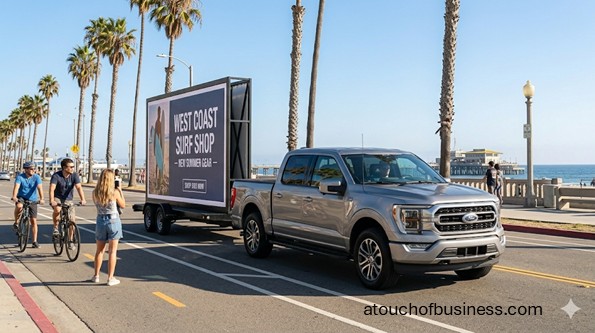
Mobile Billboard Business: How to Start With Clarity
Mobile Billboard Company Overview
A mobile billboard company sells attention on the road. You are not just putting an ad on a truck. You are selling route-based advertising service, campaign timing, local visibility, and proof that the client’s message actually got out in front of people.
Most people think this business is just “buy a truck, add a sign, and drive around,” but that is only a small part of the setup. The real work starts earlier. You need the right vehicle, the right display format, the right parking and storage plan, clear campaign terms, and local approval checks that fit where you plan to operate.
Most people think a mobile billboard company works the same everywhere, but local rules can change the launch plan fast. In one area, your main issue may be parking and storage. In another, it may be city rules about vehicle-based advertising displays, route use, or where a unit can stay when it is not moving.
This business can take a few forms. You might run static billboard trucks with printed vinyl panels. You might use digital LED trucks. You might focus on event routes, neighborhood saturation, or custom runs for product launches, real estate campaigns, retail promotions, or public awareness efforts. A lot depends on your model, your territory, and the kind of client you want to serve.
For a first-time owner, the cleanest version is usually a focused mobile service with a clear offer: a set campaign length, a defined service area, a simple approval process, and a reporting method that shows where the unit ran and when.
Is This Mobile Billboard Business The Right Fit For You?
Before you think about permits, trucks, and pricing, stop and look at yourself. Owning any business asks a lot from you. A mobile billboard company asks for even more in a few specific areas: planning, follow-through, travel coordination, sales confidence, and calm problem solving when traffic, weather, or vehicle issues throw off the day.
You also need to separate two questions. First, does business ownership fit you? Second, does this kind of mobile advertising business fit you? Those are not the same thing.
If you like structured service work, clear deliverables, client communication, and visible results, this may feel like a good fit. If you hate route planning, vehicle coordination, schedule changes, or client revisions close to launch, this business may wear you down faster than you expect.
Passion matters too. You do not need to be in love with trucks. But it helps if you enjoy advertising, local promotion, campaign planning, and helping clients get noticed in crowded markets. You can read more about that in how passion affects your business.
Motivation matters just as much. “Are you moving toward something or running away from something?” That question matters because this business should not be your escape plan from a bad job, financial pressure, or the urge to look successful. If your reason is shaky, the hard parts will feel even harder.
A mobile billboard company also changes your lifestyle. Your time is tied to routes, launch windows, client deadlines, and vehicle readiness. Some days look smooth on paper and then fall apart because of traffic, weather, late creative approval, or a parking issue. Can you handle that without losing focus?
Before you move forward, read points to consider before starting your business. Then talk to real owners, but only owners you will not compete against. Look in another city, another region, or a separate market area. Ask questions like:
- What takes more time than you expected before launch?
- What part of the setup caused the most delay?
- How did you decide between static and digital units?
- What do clients expect that new owners often miss?
- What would you fix first if you started again?
You can start that process with inside advice from real business owners.
Step 1: Choose Your Mobile Billboard Model
Your first big decision is the format of the business. A mobile billboard company can run static panel trucks, digital LED trucks, or a mix of both. That one choice affects startup cost, storage needs, maintenance, insurance conversations, route planning, and the kind of client you attract.
Static units are simpler in some ways. You deal with printed vinyl graphics, install timing, and physical display changes. Digital units can look more flexible because you can change creative files without swapping printed panels, but the hardware, playback systems, and support needs are usually more involved.
A lot depends on your model. If you want local retail clients and short campaigns, a static setup may be easier to explain and easier to launch. If you want event work, premium campaigns, or rotating creative, digital may fit better. Pick the version you can actually open well, not the version that sounds impressive.
Step 2: Define The Offer Before You Buy Equipment
A mobile billboard company needs a clear service package before you spend money on a truck or display system. What exactly are you selling? A daily route? A weekly campaign? Event coverage? Targeted neighborhood runs? Branded route support for launches or store openings?
Your offer should explain campaign length, service area, hours, route type, what counts as a standard run, what is custom work, how creative approval works, and what proof the client gets after delivery. Scope clarity protects both pricing and trust.
This is where many new service businesses get loose. They promise “visibility” but do not define the deliverables. In a mobile billboard company, vague promises lead to weak proposals, confusing invoices, and clients who think they bought more than they did.
Step 3: Pick A Niche And Customer Type
You do not need every kind of client. In fact, trying to serve everyone is one of the fastest ways to build a weak offer. A mobile billboard company can work with local retailers, event promoters, real estate groups, fitness brands, restaurants, public awareness campaigns, and more. But each group wants something different.
A lot depends on your model. Event clients may care about timing and crowd flow. Retail clients may care about neighborhood coverage. Real estate clients may want strong local presence near listings or new developments. Public awareness campaigns may care more about route discipline and reporting.
Your niche choice affects pricing, workload, sales language, creative timing, and market fit. It also shapes your proof assets. A client wants to see that you understand their kind of campaign, not just that you own a moving display.
Step 4: Validate Demand In Your Territory
Before you launch your mobile billboard company, make sure the local market can support the business. That means looking at who already sells this kind of advertising, what formats are common in your area, how crowded the space is, and whether advertisers in your territory actually use mobile campaigns.
Do not guess based on gut feel. Look at local event calendars, retail clusters, venue areas, business districts, and seasonal demand. Make a short list of likely client types and check whether your service area is practical for route work.
You are not only validating demand. You are also validating travel flow. A mobile business can look profitable until you factor in time lost between jobs, route inefficiency, fuel use, and dead time before or after a campaign window.
Step 5: Set Up The Business Legally
Your mobile billboard company needs a legal structure, a business name decision, and tax setup before you start signing agreements or taking payment. An Employer Identification Number is usually part of that setup, and your bank or payment provider may ask for your formation documents as well.
If you plan to operate under a name that is different from your legal personal name or entity name, a trade name filing may apply. The exact steps depend on your state and local area, so keep this part practical. Start with your Secretary of State, your state tax department, and your city or county licensing office.
Do not open before the basic registrations are in place. That can delay your launch and create expensive rework once contracts, invoices, or bank records need to be corrected.
Step 6: Check Mobile Billboard Rules In Every Launch Area
This step matters more in a mobile billboard company than in many other startups. Your business uses commercial vehicles for advertising, and some cities treat that differently from an ordinary branded business vehicle.
You need to verify local rules based on where the unit will operate, where it will park, and where it will be stored. Some places focus on business licensing. Others focus on zoning for your yard or office. Others pay close attention to vehicle-based advertising displays, especially if a unit is parked or staged in public view.
If you are home-based, look at home-occupation rules and vehicle parking limits. If you use a commercial office, yard, or dispatch site, check zoning and whether a certificate of occupancy is needed for that location. If you hire drivers, look at employer registrations and workers’ compensation rules in your state.
Keep this part simple and local. Check with your city or county licensing office, zoning or planning department, state tax agency, labor agency if you will hire, and motor vehicle or transportation office if your vehicle setup raises weight or registration questions.
Step 7: Review Vehicle And Driver Requirements
A mobile billboard company runs on equipment that moves, so vehicle compliance cannot be treated as a side detail. The type of truck, the weight class, and whether you operate only inside one state or across state lines can change what applies.
Some owners may need to look at federal transportation triggers, including whether a United States Department of Transportation number applies. Others may need to focus only on state registration and commercial auto requirements. A lot depends on your model and the exact unit you use.
Do not assume every driver can legally run every unit. If your business will use employees or contracted drivers, know what the vehicle requires before you build your schedule around it.
Step 8: Secure The Fleet And Display System
Now you can move into physical setup. A mobile billboard company needs the vehicle, the display system, and a practical plan for storage, cleaning, maintenance, and downtime. If you are using static units, think through how graphics will be installed, removed, and stored. If you are using digital units, think through playback controls, screen support, and what happens if hardware fails mid-campaign.
Essential equipment often includes the truck or trailer unit, display frame or LED system, installation hardware, secure parking or yard access, GPS tracking, photo capture tools, communication tools, and your office basics such as a computer, phone, scheduling system, and invoicing setup.
Keep the first launch lean. You do not need a fleet that looks huge. You need a setup that is ready, legal, and reliable.
Step 9: Build Your Client Workflow
A mobile billboard company is a service business, so trust is built through process. Your workflow should make the path from inquiry to payment feel clear and professional.
That usually means an inquiry form or call, a discovery conversation, a proposal or quote, a service agreement, creative specifications, route approval, campaign delivery, proof-of-performance reporting, invoicing, and follow-up. If any of those pieces are vague, the client will feel it.
Documents matter here. You will likely need a campaign brief, creative approval form, service agreement, route approval record, invoice terms, and a report format that shows where and when the campaign ran. Clear paperwork helps prevent scope drift and late-stage argument.
Step 10: Set Up Pricing That Matches Route Reality
Pricing in a mobile billboard company is usually based on time, route, vehicle type, and campaign complexity. Common methods include hourly, daily, weekly, monthly, per truck, or custom campaign pricing.
What changes the number? Static versus digital. Number of units. Route difficulty. Premium time windows. Event timing. Creative production. Fuel. Driver time. Reporting. Travel between jobs. Parking or yard costs. If you ignore those, you can look busy and still lose money.
This is where scope clarity helps again. Your price should match the actual deliverable. If the client wants a custom route, multiple stops, live event timing, or extra reporting, do not bury that inside a vague base rate.
Step 11: Plan Startup Costs And Funding
Your startup budget for a mobile billboard company will usually include legal setup, licenses, vehicle purchase or lease, panel or digital display installation, insurance, parking or yard space, branding, creative production tools, telematics, office systems, and working cash for fuel, maintenance, and early payroll if you hire.
Reliable public cost ranges are not consistent enough to treat as a rule across the whole country, so build your plan around cost drivers instead. The major swing factors are static or digital, buy or lease, number of units, new or used equipment, and how much customization the display system needs.
Funding often comes from owner cash, vehicle or equipment financing, or a small business loan. Keep your plan realistic. Lenders and banks will want clean records, and you will want breathing room for delays, adjustments, and the first few campaigns.
Step 12: Open Banking And Payment Systems
Before your mobile billboard company accepts money, set up a business bank account and a payment method that fits how clients pay. Some clients will pay by invoice. Some may expect card options. Some may want deposits before a campaign starts.
You will usually need your formation documents, tax identification details, ownership information, and sometimes local licensing information to complete the account setup. Do this early. A launch should not stall because you are still waiting for payment tools to be approved.
Keep your invoicing clean. Show the campaign term, unit count, route or area, approval deadlines, and payment schedule in plain language.
Step 13: Put Insurance And Risk Controls In Place
A mobile billboard company should separate what is commonly required from what is commonly recommended. Commercial auto coverage is usually a core requirement when you use vehicles for business. If you hire employees, state rules may require workers’ compensation.
Beyond that, many owners also look at general liability, higher liability limits, property coverage for display equipment, and protection for digital systems or client-facing service issues. The right mix depends on the vehicles, the territory, the contract terms, and whether employees or contractors are involved.
Risk planning also goes beyond insurance. Think about route approval records, creative sign-off, maintenance logs, parking procedure, driver communication, backup plans, and what you do if a unit cannot complete a run as promised.
Step 14: Set Up Vendors And Suppliers
Your mobile billboard company may rely on vehicle sellers or lessors, display fabricators, sign or print shops, LED system providers, telematics services, fuel vendors, maintenance shops, insurance brokers, and payment providers.
Vendor choice matters because lead times and support can affect your launch date. A display installer who is slow, unclear, or hard to reach can cause a chain reaction across your whole opening plan. Look for reliability, not just the lowest quote.
Ask practical questions. What is the install timeline? What files are needed for graphics? What support is available after the unit is delivered? What happens if a component fails? That matters more than a small price difference.
Step 15: Build A Name, Domain, And Proof Assets
A mobile billboard company needs a name that sounds professional, easy to remember, and clear enough to support trust. Once you narrow down options, check domain availability and social handles before you commit.
You also need proof assets. That may include a simple website, a short service deck, a clean logo set, route examples, creative specifications, and sample reporting. Since this is a business and professional services category, clients look for signals that you are organized, responsive, and ready to deliver.
If your proof assets are weak, your sales calls get harder. If your offer is vague, your website will sound vague too. Build the documents and digital basics around the service you actually plan to deliver.
Step 16: Prepare For Hiring Or Driver Support
Not every mobile billboard company hires right away. Some owners start small and handle the early work themselves. Others need drivers or admin help sooner because the service depends on timing, route flow, and client communication.
If you hire early, keep roles narrow. You may need a driver, a sales lead, or basic admin support. But do not build payroll before your workflow is stable. Each added person raises compliance, insurance, scheduling, and training needs.
In a mobile setup, training should cover route discipline, vehicle readiness, communication, photo capture, timing, and what to do when plans change on the road.
Step 17: Know The Day-To-Day Before You Launch
It helps to picture real work before you commit. In a mobile billboard company, your early days may include answering inquiries, quoting campaigns, confirming route details, checking creative files, coordinating installs, watching vehicle readiness, fixing schedule changes, sending invoices, and checking proof-of-performance reports.
A pre-launch day might start with a call to a city office about local rules, move into a discussion with a sign vendor, then shift into pricing a campaign for a retail client, and end with a test run to make sure the display, tracking, and reporting tools all work as planned.
If that sounds interesting to you, good. If it sounds draining, pay attention. The business is not only about selling ads. It is about making a moving service promise and then keeping it.
Step 18: Build A Simple Marketing Plan
Your first marketing plan for a mobile billboard company does not need to be complicated. It needs to match the type of client you want. If you want local businesses, build a prospect list by category and area. If you want event work, connect with promoters, venues, and agencies. If you want real estate or retail campaigns, speak to firms that already buy local exposure.
Keep your message practical. Show what you offer, where you operate, how campaigns are structured, what reporting clients receive, and how soon you can launch. That is more useful than broad claims about brand awareness.
Good positioning beats broad positioning. A focused mobile billboard company with a clear niche usually looks stronger than one trying to be everything for everyone.
Step 19: Watch For Red Flags Before Opening
Some warning signs should slow you down. Buying a truck before checking local rules is one. Assuming all cities treat mobile advertising vehicles the same is another. Starting without a secure parking or yard plan is another. So is pricing work before you know your route time, fuel use, reporting effort, and driver cost.
Weak contracts are another red flag. So are vague deliverables, unclear creative deadlines, and no system for route approval. In this kind of service business, unclear boundaries create client tension fast.
If you notice that your plan depends on constant custom work just to make the numbers work, stop and rethink the offer. That is often a sign that the business is not packaged clearly enough yet.
Step 20: Run A Pre-Opening Readiness Check
Before your mobile billboard company goes live, make sure the legal, physical, financial, and client-facing pieces are all ready. This is the point where a careful owner protects the launch instead of rushing it.
Use a checklist and be honest about what is done and what is still loose.
- Business name, legal setup, and tax identification are complete.
- State and local registration steps have been checked for your exact setup.
- Vehicle, storage, and parking plans fit local rules.
- Insurance is active before the first campaign starts.
- Truck, display system, and tracking tools have been tested.
- Creative file process and approval steps are ready.
- Pricing, proposal, agreement, invoicing, and payment systems are in place.
- Website, domain, phone, and email are active.
- Sample report and proof assets are ready to show clients.
- A dry run has been completed before public launch.
If any major approval, vehicle, or contract issue is still unresolved, it is smarter to delay than to open before the business is ready.
Pros And Cons Of Starting A Mobile Billboard Company
A mobile billboard company can give you flexibility, visible service delivery, and a business model that does not depend on a permanent billboard site. You can tailor campaigns by route, timing, and client type. That makes the service appealing in the right market.
But there are tradeoffs. Vehicle costs can be high. Local rules can complicate the launch. Scheduling can break down when traffic, weather, or vehicle readiness go wrong. Clients may want custom work that eats time unless your offer is tight.
That is why this business rewards owners who like structure, responsiveness, and clear boundaries. It is a service business with moving parts in the most literal sense.
Final Reality Check Before You Commit
If you want a business that feels active, visible, and hands-on, a mobile billboard company may be worth a serious look. If you want a business that runs with little planning, little paperwork, and little follow-through, this is probably not the right fit.
Take your time with the launch. Let your model guide your decisions. Keep the offer clear. Verify rules where you will actually operate. Build the workflow before you chase volume. That gives your mobile billboard company a much better chance to open on solid ground.
27 Tips for Your New Mobile Billboard Company
A mobile billboard company can look simple from the outside, but the opening plan has a lot of moving parts.
You need to choose the right model, confirm what rules apply in your area, and build a service that you can actually deliver well before you take on the first campaign.
Before You Commit
1. Decide whether business ownership fits you before you focus on trucks and displays. This business asks for planning, follow-through, client communication, and calm problem solving when timing, traffic, or equipment issues get in the way.
2. Be honest about whether this specific business fits you. A mobile billboard company works best for someone who can handle route planning, deadline pressure, visible service delivery, and custom client requests without getting scattered.
3. Talk to owners outside your market before you spend serious money. Ask what took longer than expected, what changed their startup budget, and what they would narrow down if they started again.
Demand And Profit Validation
4. Check demand by customer type, not just by broad interest in advertising. Retail stores, event promoters, real estate groups, and awareness campaigns often want very different campaign timing, reporting, and route coverage.
5. Study local competitors by offer, not just by price. Look at whether they sell static trucks, digital trucks, event campaigns, neighborhood coverage, or premium custom routes so you can see where your offer can stand out.
6. Validate the territory before you assume the service area works. A mobile billboard company can lose time and profit fast when the route area is too wide, traffic is too slow, or jobs are spread across locations that do not fit together.
Business Model And Scale Decisions
7. Pick your launch model early: static billboard trucks, digital LED trucks, or a mixed setup. That choice changes your startup cost, maintenance needs, creative workflow, storage plan, and the kind of clients you can serve well.
8. Start with a focused service package instead of trying to sell every kind of campaign. A simple opening offer with clear route rules, standard hours, and a defined service area is easier to price, sell, and deliver.
9. Write down what is included in a standard campaign before you start quoting. Spell out campaign length, route type, proof-of-performance, creative deadlines, and what counts as extra work so you do not underprice custom jobs.
Legal And Compliance Setup
10. Set up the business legally before you sign contracts or finance equipment. Choose the structure that fits your risk level, register the business name if needed, and get your tax identification details in place early.
11. Verify local business license and zoning rules for the place where the company will operate from. Even though the service is mobile, your office, yard, dispatch site, or parking location can still trigger local approval steps.
12. Check city and county rules about vehicle-based advertising before you launch routes. Some areas pay close attention to parked advertising vehicles, sign rules, and where a unit can sit when it is not actively moving.
13. Confirm vehicle and driver requirements before you buy the first unit. Depending on the truck, weight, and where you operate, you may need to look at commercial registration, state transportation rules, or federal motor carrier triggers.
Budget, Funding, And Financial Setup
14. Build the startup budget by category instead of guessing a single total. Break it into legal setup, vehicle purchase or lease, display build-out, insurance, parking or yard costs, tracking tools, branding, and working cash.
15. Budget around your actual model, not around a dream version of the company. A digital truck, a used static truck, and a multi-unit launch can each create very different cash needs before the first client pays you.
16. Open your business bank account before taking deposits or signing client agreements. Clean banking setup helps you keep campaign payments, vehicle expenses, and owner spending clearly separated from day one.
17. Match funding to the opening plan you can manage. It is better to finance a focused first unit and a clear service area than to stretch too far and open with more equipment than your early sales can support.
Location, Build-Out, And Equipment
18. Choose a home base that fits the physical side of the business. A mobile billboard company needs a realistic plan for parking, storage, cleaning, loading, and access, not just an address for paperwork.
19. Buy the vehicle only after you confirm how it will be used and where it will be kept. A truck that looks right on paper can become a problem if it does not fit your route plan, parking rules, or display build.
20. Build the equipment list around campaign delivery, not just the truck itself. You may need display hardware, installation tools, GPS tracking, photo capture tools, communication tools, and office basics for quoting, scheduling, and invoicing.
Suppliers, Contracts, And Pre-Opening Setup
21. Compare suppliers on support, install timing, and reliability, not just on price. A weak fabricator, sign vendor, or digital display provider can delay the whole launch even if the initial quote looks attractive.
22. Set up your client documents before the first sale. A mobile billboard company should have a campaign brief, proposal, service agreement, creative specifications, route approval process, and invoice terms ready before opening.
23. Build a proof-of-performance system before you promise campaign reporting. If clients expect route confirmation, timestamps, or photos, you need a repeatable way to capture and organize that information before launch.
Branding And Pre-Launch Marketing
24. Choose a business name and digital presence that match the service you are actually opening with. A name, website, and social profiles should make it easy for clients to understand whether you focus on local campaigns, event work, digital displays, or standard route coverage.
25. Create proof assets before you begin outreach. A simple website, a clean rate-sheet format, a short service overview, and sample reporting make a new mobile billboard company look far more credible in early sales conversations.
Final Pre-Opening Checks And Red Flags
26. Run a full test before launch week. Drive the planned route, test the display, confirm tracking works, check communication flow, and make sure the truck can move through the day without last-minute surprises.
27. Watch for red flags before you open, not after. The biggest ones are buying equipment before checking local rules, pricing without knowing route costs, starting with vague contracts, and launching without a secure parking or storage plan.
FAQs
Question: What kind of mobile billboard company should I start first?
Answer: Pick your launch model first: static billboard trucks, digital LED trucks, or a mixed setup. That choice changes your startup cost, your equipment list, your creative process, and the kind of clients you can serve well.
Question: Do I need to form the business before I buy a truck or sign a client?
Answer: Yes, that is the safer order. Your legal structure, business name registration, and tax setup should be in place before you sign contracts, finance equipment, or take deposits.
Question: Do I need an Employer Identification Number for a mobile billboard company?
Answer: Many owners do, especially if they open a business bank account, hire staff, or form a separate business entity. The Internal Revenue Service issues an Employer Identification Number for free.
Question: What licenses and permits should I check before opening?
Answer: Start with state registration, local business licensing, and zoning or use approval for your office, yard, or parking site. Local rules can also affect signage, commercial vehicle storage, and where mobile billboard units can be staged or parked.
Question: Can I run a mobile billboard company from home?
Answer: Sometimes, but it depends on local zoning and home-occupation rules. Home-based admin work may be allowed while regular truck parking, storage, or dispatch activity may not be.
Question: Do I need a United States Department of Transportation number?
Answer: Maybe. It depends on the vehicle, the weight, and whether you operate in interstate commerce, so check federal and state transportation rules before you buy the first unit.
Question: What insurance should I have before the first campaign?
Answer: Commercial auto coverage is a core starting point for a business that uses trucks in service. Many owners also look at general liability and other coverage based on the vehicles, staff, storage setup, and contract terms.
Question: Do I need to check sales tax rules for mobile billboard services?
Answer: Yes. Tax treatment for advertising services can vary by state, so check your state revenue department before you build invoices or quote taxes to clients.
Question: What equipment do I need before I can open?
Answer: You need more than the truck. Most startups also need display hardware, install tools, GPS tracking, photo capture tools, communication tools, and basic office systems for quoting, scheduling, and invoicing.
Question: How should I price my first mobile billboard campaigns?
Answer: Build pricing around the actual service package, not a guess. Your quote should reflect the truck type, campaign length, route complexity, creative handling, reporting, fuel, and driver time.
Question: How much cash should I keep aside before opening?
Answer: Keep enough to cover legal setup, insurance, vehicle costs, storage or parking, branding, tracking tools, and working cash for the early launch period. A mobile billboard company can open slowly if campaigns take time to close or launch dates shift.
Question: What paperwork should I have ready before I take the first client?
Answer: Have a campaign brief, proposal, service agreement, creative specifications, route approval process, invoice terms, and proof-of-performance format ready before you sell. Clear documents protect pricing, timing, and expectations.
Question: What does a normal early-stage workday look like before opening?
Answer: A pre-opening day may include local compliance checks, vendor calls, route planning, pricing work, creative review, and vehicle follow-up. You are building the service, not just buying equipment.
Question: Should I hire drivers before I open?
Answer: Only if the launch plan truly needs them. Many owners start lean and add drivers after the route model, paperwork, and delivery process are stable enough to train someone cleanly.
Question: What should I test before the first campaign goes live?
Answer: Test the full route, the display system, the tracking tools, the photo process, and the communication flow. It is better to find gaps during a dry run than during a paid campaign.
Question: How should I market a new mobile billboard company before opening?
Answer: Start with a clear offer, a defined service area, and proof assets that show what the client gets. A simple website, clean service sheet, and sample reporting can make early sales conversations much easier.
Question: What mistakes delay opening the most?
Answer: The biggest delays often come from buying equipment before checking local rules, using vague contracts, underpricing custom routes, and opening without a secure parking or storage plan. Those problems can slow the launch and raise costs fast.
Learn From People Already In The Business
You can save yourself a lot of time and expensive trial and error by learning from founders, owners, and out-of-home specialists who have already dealt with startup decisions like sales, permits, pricing, financing, creative, and route-based execution.
The mobile billboard niche is fairly small, some of the strongest interview-style resources come from a mix of direct mobile billboard founder interviews and broader out-of-home operator interviews that still apply well to this business.
- Inspired Insider — Casey Binkley of Movia on mobile billboard advertising tech, getting initial clients, and building the business
- YouTube — Rolling Adz CEO Jonathon WolfeBarron: Driving Impact with Vision
- YouTube — OOH Insider: Rolling Adz CEO Jonathon WolfeBarron
- Billboard Insider — OOH Founders Journey – Getting Started
- Billboard Insider — Matt Richman on Learning to Sell Out of Home
- Billboard Insider — Joe Mancino on Working With City Hall
- Billboard Insider — Grey Vick Says Don’t Over-Leverage and Get a Survey
- Billboard Insider — Tom Giesken on Static Billboards, Digital Billboards and Permits
- TeamSnap — So Much More Than The OOH Guy With Brian Rappaport
Related Articles
- How To Start Your Car Wrapping Business
- Starting a Vinyl Decal Business
- Start a New Aerial Advertising Business from Scratch
- How To Start Your Advertising Agency
Sources:
- SBA: Choose Business Structure, Register Your Business, Licenses And Permits, Open Business Account, Get Business Insurance, Fund Your Business, SBA Loans
- IRS: Get Employer Identification, Employment Taxes, Business Structures
- FMCSA: Need A USDOT Number, Need USDOT Number (Alt)
- OAAA: Mobile Billboards
- Mobile Billboard Global: LED Digital Billboard Trucks
- Billboard Express: Mobile Billboard Rates, Billboard Express FAQs
- Washington Department Of Revenue: Advertising Services
- California Legislative Information: Vehicle Code 395.5
- American Legal Publishing: Mobile Billboard Rules