
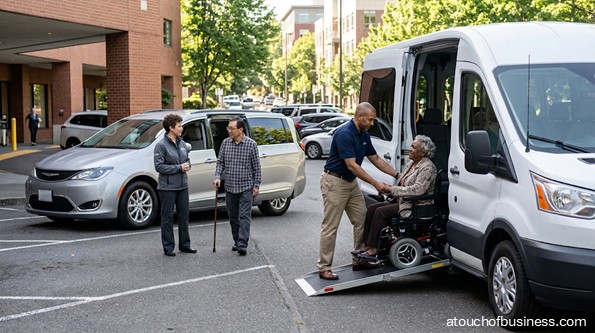
What to Expect From This Guide to Starting a Non-Emergency Medical Transportation Business
- Startup steps: Follow 17 ordered steps, from checking owner fit and demand through vehicles, drivers, insurance, enrollment, and pre-opening testing.
- Common questions: Find answers on topics such as Medicare coverage, trip assignments, starting with ambulatory riders, medical background, and rural areas.
- Daily reality: See what a typical day involves, including the parts owners often enjoy and the parts they find hard.
- Market demand: Weigh local demand and the payer pathway, including brokers, health plans, private-pay riders, and facility contracts.
- Financial planning: Work through profit potential, break-even logic, startup costs, operating capital, pricing inputs, funding questions, and a business plan.
- Vehicles and drivers: Review vehicle and securement choices, insurance, driver screening and training, and dispatch and trip documentation.
- Requirements and risks: Check licensing, enrollment, and vehicle rules that vary by location, plus red flags before you start and before opening day.
Begin with the fit questions below, since your motivation, finances, and tolerance for regulated, schedule-driven work shape every decision that follows.
As a non-emergency medical transportation (NEMT) owner, you arrange scheduled rides to and from medical appointments.
Riders do not need an ambulance, but many cannot use standard transportation because of age, disability, or limited access.
Your riders may include Medicaid beneficiaries, older adults, people with disabilities, and patients who attend recurring treatments such as dialysis.
Each ride follows one workflow: request, approval, assignment, pickup, drop-off, documentation, and payment.
Before your first rider, you need vehicles, drivers, and insurance in place. Brokered or plan-paid trips also require payer enrollment.
Starting an NEMT company follows the general startup steps, but vehicle, driver, insurance, and payer requirements add extra layers.
Is a Non-Emergency Medical Transportation Business a Good Fit for You?
An NEMT company fits you best if you want dependable, schedule-driven work serving riders who rely on you, and can tolerate regulation and paperwork.
Start with motivation. Ask why you want to run a ride service for people who may be ill, frail, or anxious.
An interest in helping people matters, but so does comfort with logistics. Scheduling, documentation, and payer rules fill much of the job.
Reliability is the constant pressure, since riders and facilities depend on on-time pickups.
Income can be uneven at the start. Running out of operating money is one of the main reasons startups close.
Carrying riders also brings liability risk. Weigh how you would handle that risk, and the chance that the company does not succeed.
Before going further, ask yourself:
- Can your household cover living expenses during the startup period?
- Do you have access to capital for vehicles, insurance, and operating costs?
- Can you keep a schedule built around other people’s appointments?
- Can you work in a regulated, documented setting where mistakes affect vulnerable riders?
- Who would choose your service over established providers, and why?
Talk only with owners you will not compete against, such as NEMT operators in other service areas.
Prepare your questions first, then treat what you hear as advice from real business owners rather than a template.
Every owner’s path differs, yet firsthand experience with enrollment, payment timing, and vehicles shows what to expect.
Red Flags Before You Start
Several warning signs should make you pause, change your model, or walk away from starting an NEMT company.
Pause and verify if any of these apply:
- The local broker network is closed to new providers, or enrollment is limited.
- Brokered rates fall below your cost per trip.
- Insurance quotes erase your margin.
- Funding cannot cover operating capital through enrollment and payment lag.
- Vehicle requirements exceed what you can finance.
- You cannot confirm licensing, enrollment, and vehicle rules before you buy.
- You cannot recruit and keep qualified drivers.
- Lease or HOA rules bar commercial vehicles where you would park them.
- You cannot meet the physical and emotional demands of assisting riders.
Local competition also matters. The number of providers already credentialed in your area shows how crowded the market is.
Understand these industry conditions before you commit:
- Insurance cost is a substantial barrier to provider participation.
- Low payment strains provider networks.
- Keeping enough providers available is a challenge for many programs.
- Programs track on-time performance, and late pickups and no-shows are the most common complaints.
- States change how they deliver Medicaid NEMT, which can change who you contract with.
- Credentialing, inspections, technology, and documentation add compliance work.
- Medicare Advantage transportation benefits vary by plan and may change.
- Rideshare-style drivers do not suit many riders with physical or developmental disabilities.
Treat these conditions as planning context, not automatic reasons to quit.
Watch for these profit warning signs:
- Break-even trip volume exceeds what one vehicle can complete in a day.
- Fixed costs continue with no assigned trips.
- Payment lag outlasts your operating capital.
- Long service-area distances create many empty miles.
A Day in the Life of Running a Non-Emergency Medical Transportation Business
Your day centers on scheduled trips. Each one needs a driver, a vehicle, and documentation before payment follows.
Trips are planned ahead, then run as pickups and drop-offs between homes and medical facilities.
Many Medicaid programs require advance booking, and notice rules differ by program.
You or a dispatcher match drivers and vehicles to trips from the broker’s system or your own bookings.
Drivers complete each trip. You then close it out and submit the required documentation.
Many frequent riders attend recurring treatments several times a week, such as dialysis or cancer treatment.
Beyond driving, you verify rider eligibility and track trips.
Trip logs, billing, and current driver and vehicle records also fill the day.
Vehicle upkeep, including ramps and lifts, needs regular attention.
Weather and traffic affect on-time performance. Long-distance trips add further seasonal and weather disruption.
What owners often enjoy:
- Helping people reach treatment and appointments they depend on
- Building relationships with regular riders and their families
What owners often find hard:
- The emotional toll of transporting ill and frail riders
- Finding and keeping reliable drivers
- Staying on schedule when weather or traffic disrupts a route
- Keeping documentation and credentials current
Does a day of tight schedules, paperwork, and emotional weight suit you?
Step 1: Run an Owner Reality Check
Before you buy a vehicle, confirm that you can meet the physical, emotional, and financial demands of running NEMT trips.
The numbered steps below follow the order most owners build in. Some steps shift depending on your state and broker.
Physical demand comes first. You or your drivers help riders board, operate ramps or lifts, and secure mobility devices.
Emotional demand follows. Owners describe a steady toll from working with ill and frail riders.
If you plan to drive, your own license and driving history must meet the same standards as your drivers’.
Plan living expenses for the period when enrollment and payment cycles run before revenue arrives.
Insurance, vehicle payments, and payroll continue whether or not trips are assigned.
Decide whether you will drive, dispatch, or do both. That choice changes your hiring needs and your daily routine.
Step 2: Talk With Non-Competing Owners and Ride Schedulers
Before you commit money, talk with NEMT owners you will not compete against and with the people who book medical rides.
Prepare questions such as these:
- How long did broker enrollment take?
- Which payers send the most trips?
- How long do payments take?
- Which vehicle and insurance requirements surprised you?
- How often do drivers leave, and what would you do differently?
Talk to scheduling staff at treatment centers, social workers, and discharge planners.
Those conversations show where recurring rides begin and what reliability facilities expect.
Step 3: Choose Your Service Model and Entry Path
Before you contact brokers, decide which riders you will serve with your NEMT company and who will pay.
Most NEMT owners choose among these rider types:
- Ambulatory riders, who walk without a wheelchair
- Wheelchair riders
- Stretcher or litter riders, where permitted
Stretcher and litter service is treated separately in some programs, with its own licensing, equipment, and staffing rules.
Payers usually include:
- State Medicaid NEMT, handled through a broker, a managed care plan, or the state itself
- Medicare Advantage plan transportation benefits, which vary by plan and network
- Private-pay riders
- Facility contracts
A broker is a company a state or health plan hires to verify eligibility, assign trips to its provider network, and pay providers.
Choose between a solo start and a fleet, and decide whether you will drive or hire drivers.
Compare starting from scratch with buying an existing company.
If you buy, ask the state and broker whether enrollment, credentialing, and contracts transfer with the sale.
Settle these choices before you price vehicles, because each one changes vehicle type, insurance, credentialing, and cost.
Step 4: Validate Local Demand and the Payer Pathway
Confirm that riders, facilities, and payers in your service area need another NEMT provider before you commit to vehicles.
Start with the payer pathway, because federal law requires state Medicaid programs to ensure necessary transportation to covered services.
Each state chooses how to deliver Medicaid NEMT, so find out which model your state uses and which broker or plan covers your service area.
Ask the broker or state agency whether the provider network is open to new providers. Some programs limit or pause new enrollment.
Next, compare local supply and demand by counting the NEMT providers already credentialed in your area.
Gaps in vehicle types, coverage, or reliability point to openings.
Your likely first customers include:
- Brokers and plans that need reliable capacity
- Treatment centers with recurring rides, such as dialysis, cancer treatment, therapy, and adult day programs
- Families who pay privately
Plan how you will reach these customers at opening. For brokered trips, the path is network enrollment.
For facilities and families, the path is direct introductions to schedulers and discharge planners.
Finally, map your service area. Distance, mileage rules, and empty return trips affect whether a trip pays.
Step 5: Check Profit Potential Before Major Spending
Before you spend on vehicles or leases, work out whether your NEMT routes and payer mix can cover costs and support you.
Start with revenue per trip for each payer and rider type.
Brokered rates come from the program fee schedule or broker contract, so ask the broker for its rate sheet.
Then list each trip’s costs: driver time, payroll taxes, fuel, vehicle wear, insurance, and dispatch and billing time.
Add unpaid wait time and empty miles, since both raise cost without raising revenue.
Estimate how many trips one vehicle can complete in a day. Then work out how many it must complete to cover fixed costs.
Plan for slow stretches, days with no assigned trips, weather disruption, and the gap between a trip and its payment.
Test your break-even trip volume against the lowest rate and highest insurance quote you might face.
Use your own local figures when you estimate profitability and revenue. Then decide whether to proceed, change the model, or stop.
Step 6: Choose a Business Structure and Register Your Business
Plan your legal structure before you sign broker contracts, financing, or vehicle purchases.
Rider injuries, vehicle accidents, and contract disputes can reach personal assets when your business structure does not protect them.
Take the final entity choice to an attorney and a tax professional, and do not assume any one entity type is required.
Once the structure is set, register your business name, get an EIN, and open state tax and employer accounts.
Ask the broker or state whether enrollment requires a National Provider Identifier. Verify that before you apply.
Step 7: Verify Licensing, Permits, and Enrollment Pathways
Before you buy a vehicle for NEMT service, confirm which licenses, permits, and enrollments apply.
Broker rules can dictate which vehicle you may use for NEMT service.
Contact these offices:
- Your state Medicaid agency’s NEMT program
- The local broker or managed care plan
- Your state’s passenger-carrier or transportation regulator
- Your city or county licensing office
Ask each office these questions:
- Which vehicles are accepted, including type, age, accessibility features, and inspection process?
- Which driver, insurance, and technology requirements apply?
- Does stretcher or litter service fall under separate rules?
Industry guides report that requirements range from simple registration in some states to a state license with inspections and driver standards in others.
Verify what applies with your state regulator.
Your city or county may require a general business license and zoning approval.
Some cities also have vehicle-for-hire permits, so ask whether medical transport falls under them.
If any trips may cross state lines, check federal motor carrier rules with the Federal Motor Carrier Safety Administration (FMCSA).
In interstate commerce, a USDOT number is required for vehicles built for nine to 15 passengers, including the driver, when operated for compensation.
A gross weight rating of 10,001 pounds or more also triggers a USDOT number.
For-hire interstate carriers also need FMCSA operating authority. Rules for trips within one state vary by state.
Vehicles built for 16 or more passengers, including the driver, bring added federal carrier and driver licensing rules.
Americans with Disabilities Act (ADA) rules can also apply to your vehicles.
Under the ADA, new non-automobile vehicles you buy or lease for demand-responsive service must be accessible.
An exception applies when your system as a whole provides equivalent service to riders with disabilities.
Verify whether these vehicle rules apply to your service with ADA resources or an attorney.
Check zoning, lease, and HOA limits on parking commercial vehicles or running dispatch from home.
Step 8: List and Price Startup Costs and Operating Capital
Your most accurate cost estimate for an NEMT startup comes from listing every item you need and pricing it locally.
Startup costs may include:
- Vehicles, whether purchased, leased, or already owned
- Accessibility conversions, ramps or lifts, and securement systems
- Insurance premiums
- Licensing, registration, and inspection fees
- Driver screening, training, and certification
- Dispatch software and devices
- Payroll and payroll taxes
- Fuel and maintenance
- Legal and accounting setup
Costs rise or fall with:
- Fleet size
- Accessible versus ambulatory vehicles
- New versus used equipment
- Service area size
- Broker technology requirements
Request insurance quotes before you buy vehicles, since premiums can decide whether the model works.
Operating capital must cover payroll, fuel, insurance, and vehicle payments while credentialing runs and until your first payment arrives.
Payment follows completed and verified trips, so revenue lags behind your costs.
Step 9: Set Your Pricing Inputs
NEMT pricing depends on who pays: brokered trips follow a fee schedule or contract, while private-pay and facility rates are yours to set.
Use your cost per trip from Step 5 to price your services.
Private-pay pricing can account for:
- A base charge
- Mileage
- Wait time
- Level of assistance
- Vehicle type
- Hours of service
For facility contracts, decide what terms you can offer and still cover your costs.
Rerun your break-even check once your pricing inputs are set.
Step 10: Explore Funding and Ask What Lenders Require
Before you apply, ask each lender or investor which documents they require, then pull those pieces together in the Business Plan section below.
Funding options to explore include:
- Personal savings
- Vehicle or equipment financing or leasing
- Business loans backed by the U.S. Small Business Administration through participating lenders, which can fund equipment and working capital
- Small Business Development Center counseling
- Other lenders or investors
Hold off on vehicle purchases and leases until your funding is secured.
Step 11: Open Business Banking and Set Up Payments
Open a separate business bank account before your first NEMT payment arrives.
Keep broker, facility, and rider payments apart from personal money.
Ask each broker or plan how and when payments arrive, and what documentation must come first.
Set up invoicing and a way to accept private-pay and facility payments.
Add bookkeeping that matches each payment to a verified trip.
Step 12: Choose and Equip Your Vehicles
Match your NEMT vehicles to your rider mix and to broker and state requirements before you buy or lease anything.
Wheelchair vehicles need a ramp or lift and a securement system. Look for systems tested to the WC18 or ISO 10542 standards.
These standards cover both wheelchair tiedowns and the belts that restrain the rider.
Ask your broker and state which securement standard they require.
Apply the ADA vehicle rules you confirmed in Step 7 when you choose each vehicle.
When comparing new, used, leased, and owned vehicles, weigh:
- Broker age limits
- Inspection results
- Lift condition
- Insurance cost
- Financing terms
Set a preventive maintenance schedule and arrange lift and ramp servicing, since a vehicle in the shop cannot carry riders.
Step 13: Bind Insurance Before Riders Board
Bind insurance before any NEMT vehicle carries a rider, and confirm which coverages state law requires and which your broker contract adds.
Work with an agent who writes passenger transportation policies, and ask which coverages fit your operation and your business insurance needs.
Common coverages include:
- Commercial auto
- General liability
- Workers’ compensation
- Hired and non-owned auto
Auto liability and workers’ compensation for employees are typically state requirements. Verify both with your state insurance department and workers’ compensation agency.
Other coverages are risk planning unless a statute or contract requires them.
Ask the insurer whether wheelchair lifts and specialized equipment are covered under the policy.
Keep certificates of insurance ready, since credentialing requires proof of coverage.
Step 14: Recruit, Screen, and Train Drivers
Screen every driver against federal minimums and any broker or state additions before NEMT riders board, then train them on securement and assistance.
Federal minimums apply when Medicaid pays for your trips.
Federal minimums for Medicaid-paid trips include:
- A valid driver’s license for each driver
- No exclusion from federal health care programs, checked against the HHS Office of Inspector General exclusion list
- A process to address violations of state drug law
- A process to disclose each driver’s driving history to the state Medicaid program
States may accept attestation to confirm these minimums.
Brokers and states often add background checks, drug screening, first aid and CPR, and driver training.
PASS, from the Community Transportation Association of America, is a recognized driver training program. Its full version adds hands-on wheelchair securement and lift operation.
Write a driver policy manual covering vehicle inspection, loading, incident reporting, and no-shows.
Decide whether drivers are employees or independent contractors, since IRS and state labor rules set classification.
Plan when and how you will hire drivers.
Step 15: Set Up Dispatch, Trip Documentation, and Privacy Practices
Before your first NEMT trip, build the workflow that moves each ride from approved request to documented drop-off.
Choose a scheduling and dispatch method. Check whether your broker requires an approved transportation management system.
Some programs require one compatible device for each driver or vehicle.
Plan trip records, GPS tracking, eligibility checks, and incident reports.
Each handoff, from dispatcher to driver to documentation to billing, needs one person responsible.
Plan how you will handle rider information. Broker contracts often include privacy and confidentiality terms.
Write cancellation, no-show, and emergency procedures.
Step 16: Complete Credentialing and Enrollment, Then Review Contracts
If you accept brokered or plan-paid trips, complete broker credentialing and any state Medicaid enrollment before you expect trips.
If you serve only private-pay riders and facilities, broker enrollment does not apply.
Credentialing typically requires:
- Company documents
- Driver rosters and credentials
- Vehicle details and inspections
- Proof of insurance
- Technology setup
- Training records
Some programs require credentialing to be complete before network enrollment. Ask the broker for the order.
Read every contract term before signing.
Read each contract for:
- Rates
- Payment cycle
- Documentation duties
- Insurance terms
- Performance standards
- Termination terms
Ask how trips are assigned and how you will be paid.
Enrollment timelines vary and can be long, so fund the waiting period.
Ask Medicare Advantage plans and facilities about their own provider requirements.
Step 17: Finish Pre-Opening Checks and Run a Test
Confirm that licenses, insurance, vehicles, drivers, enrollment, and payment setup are all in place, then run test trips.
Confirm that these items are complete:
- Business registered, EIN issued, and local licenses in hand
- State and local permits and registrations confirmed
- Insurance bound with certificates ready
- Vehicles inspected, registered, and equipped, with securement and lift or ramp tested
- Drivers screened, credentialed, and trained
- Broker or plan enrollment and contract status confirmed, if you accept brokered or plan-paid trips
- Technology and devices installed and tested
- Dispatch, trip logging, and billing tested
- Private-pay agreement, cancellation policy, and payment method ready
- Privacy and confidentiality procedures in place
- Business bank account open and operating capital confirmed
- Emergency and incident procedures reviewed with every driver
Run a test trip with each vehicle type. Rehearse lift or ramp use, securement, and documentation.
Do not take a rider until dispatch, documentation, and securement work in practice.
Confirm your first trip assignments or bookings, driver schedules, and a backup plan.
Business Plan
Draft your business plan as you complete the earlier steps.
Finish your business plan once costs, funding, pricing, and break-even inputs are in place.
Use the plan to connect each earlier step, including your legal checks, into one workflow.
Your plan should tie together:
- Service model and rider mix
- Payer pathway and enrollment status
- Vehicle, equipment, and insurance costs
- Driver screening, training, and payroll
- Pricing by payer and rider type
- Startup costs and operating capital
- Funding sources
Include your break-even logic. List fixed costs, cost per trip, expected trips per vehicle, and the payment lag.
Show how many trips each vehicle must complete to cover fixed costs, using your own local numbers.
Show how the plan holds up through slow stretches and days with no assigned trips.
Use local quotes and your own estimates rather than general averages.
Match the plan to the documents your lenders listed.
Opening-Day Red Flags
Hold your opening if any vehicle, driver, enrollment, or dispatch item is unfinished.
Delay opening if any of these apply:
- Your vehicle roster or driver credentials are incomplete, which can hold up broker enrollment.
- Insurance certificates are missing when credentialing requires proof of coverage.
- A required permit or registration is unconfirmed.
- Dispatch, trip logging, or billing has not been tested on a test trip.
- Securement equipment, lifts, or ramps have not been tested.
- Operating capital cannot cover payroll, fuel, and insurance until your first payment arrives.
Frequently Asked Questions
Does Original Medicare pay for routine NEMT rides?
Usually not. Original Medicare generally does not cover routine non-emergency rides to appointments.
Original Medicare may cover medically necessary non-emergency ambulance transport when a doctor provides a written order.
Medicare Advantage plans are private plans that may add transportation as their own benefit.
Does broker enrollment guarantee a steady flow of trips?
No. Trips are assigned based on program requirements, provider eligibility, and availability.
A rider’s request for a preferred provider does not guarantee future assignments.
Can I start with ambulatory riders only?
Sometimes. Ambulatory riders may travel in standard vehicles in some programs, while wheelchair trips require accessible vehicles with securement.
Whether you can use a personal vehicle depends on your broker, your state, and your insurer.
Ask the broker, the state, and your insurer before you commit.
Do I need a medical background to run an NEMT company?
Usually not. The job is driving and rider assistance, not medical treatment.
Federal minimums for Medicaid-paid trips list no medical credential, but confirm any added training with your broker and state.
Can I run an NEMT company in a rural area?
Possibly, but weigh the tradeoffs. Provider networks tend to have more severe gaps in rural areas.
Insurance cost and low payment still strain providers there, so a gap in coverage does not guarantee profit.
Run your cost-per-trip numbers using the actual distances your rural routes would cover.
Interviews with Non-Emergency Medical Transportation Professionals
These interviews share firsthand perspectives from NEMT owners and industry professionals. They cover subjects such as starting small, choosing customers, working with brokers, managing drivers, building facility relationships, controlling operating costs, and improving transportation service.
Someone preparing to start an NEMT business can use these discussions to compare different operating models and see how experienced professionals approach customers, staffing, growth, technology, and day-to-day service challenges.
When You Don’t Really Need an Ambulance with Ross Peterson
Ross Peterson discusses non-emergency medical transportation and his wheelchair-accessible transportation company, RIDEtoo. The conversation explains how NEMT fits into healthcare transportation, the role of Medicaid funding, different levels of transportation service, and the challenges involved in serving passengers with significant mobility needs.
This interview is useful for understanding the purpose of NEMT and the service expectations behind the business. It also gives prospective operators context on how medical transportation differs from emergency transportation and how funding can influence the services provided.
From 1 to 42 Vehicles with Jimmy of J&Tig Transportation
Jimmy, co-owner of J&Tig Transportation, explains how his NEMT operation grew from one vehicle into a larger fleet. The discussion covers broker relationships, pricing strategy, private-pay considerations, billing, dispatch technology, driver recruitment, compensation, and managing a growing transportation operation.
This interview is useful for seeing how operating decisions change as an NEMT company grows. Jimmy’s experience also illustrates why prospective owners need to think about their local market, broker relationships, administrative systems, and drivers rather than focusing only on acquiring vehicles.
How Patricia Curnan Grew Prime Medical Transport
Patricia Curnan, owner of Prime Medical Transport, discusses building an NEMT company that began with two vehicles. Her interview covers starting the business, attracting customers, private-pay services, managing employees, controlling labor costs, and evaluating the financial performance of the operation.
This interview gives prospective owners a practical look at the financial and staffing side of an established NEMT operation. It is particularly useful for understanding how labor, vehicle utilization, customer mix, and operating efficiency can affect the business as it expands.
Turning NEMT Drivers into a Sales Force with Marqus Johnson
Marqus Johnson, owner of Wheelchair & Stretcher Transportation Services, discusses hiring drivers, developing facility relationships, compensating employees, assigning responsibility, and approaching private-pay business. He also explains what he would focus on if he were starting an NEMT company again.
This interview is useful for prospective owners because it connects driver management with customer development.
It also provides a practical perspective on testing the local market, approaching rehabilitation and nursing facilities, and building demand before committing heavily to additional vehicles.
Is Transportation Healthcare? with Steven Feist
Steven Feist, vice president and chief operating officer of Coordinated Transportation Solutions, explains how NEMT programs work and how brokers coordinate transportation for people who need access to healthcare.
The conversation covers Medicaid transportation, brokers, transportation providers, public transit connections, technology, and the evolution of NEMT operations.
This interview helps prospective NEMT operators understand the larger system in which transportation providers operate. It provides useful background on how trips reach providers, why brokers are involved, and how NEMT connects healthcare programs with different transportation options.
Related Articles
- How To Start a Children’s Transportation Business
- How To Start an Airport Shuttle Service
- How To Start a Chauffeur Company
- How To Start a Taxi Business
- How To Start a Charter Bus Company
Sources:
- Medicaid.gov: Medical Transportation Bulletin
- Electronic Code of Federal Regulations: Private Entity Vehicle Rules
- U.S. Department of Transportation: ADA Part 37 Regulations
- FMCSA: Passenger Carrier USDOT Number, Interstate 9-15 Passenger Vans
- Medicare.gov: Ambulance Services Coverage
- MACPAC: NEMT Preliminary Findings, Mandated NEMT Report
- Health Management Associates: NEMT Stakeholder Perspectives
- Colorado Department of Health Care Policy and Financing: NEMT Provider Information, NEMT Eligibility Verification
- Washington State Health Care Authority: NEMT HIPAA Business Associates
- California Department of Health Care Services: Medi-Cal NEMT Policy Letter
- Cornell Legal Information Institute: NEMT Waiver Regulation
- Community Transportation Association of America: PASS Driver Training
- University of Michigan Transportation Research Institute: WC18 Tiedown Standard, Tiedown Standard FAQ
- Bureau of Labor Statistics: Taxi Shuttle Chauffeur Outlook
- Modivcare: Former Hospice Nurse Profile
- Bambi (NEMT Experts Podcast): Emotional Grit in NEMT, Long-Distance NEMT Owner, Richmond NEMT Owner Interview, Family-Run NEMT Interview