
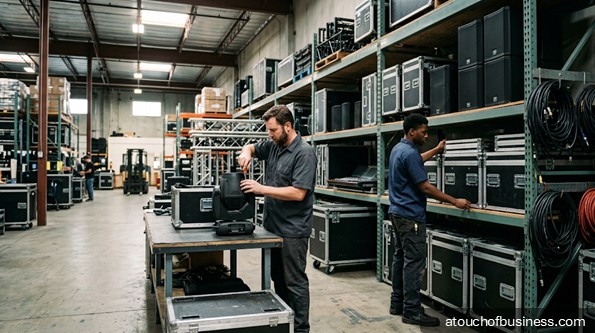
What to Expect From This Guide to Starting an Audio Visual Equipment Rental Business
This guide walks you through the key decisions and practical steps involved in starting an audio visual equipment rental company, from judging your fit to testing a full rental before opening. The bullets highlight selected areas, not everything inside.
Inside the guide, you will find:
- Startup steps: Follow 18 ordered steps, from checking your skills and testing local demand to funding, insurance, equipment, pricing, and a full test rental.
- Business fit: Weigh event-driven schedules, regular lifting, income uncertainty, and gear that loses rental value as technology shifts.
- Customer types: See who rents AV gear, from corporate planners and wedding hosts to schools, plus what venue managers expect from vendors.
- Daily reality: See what a typical day involves, including the parts owners often find hard, from irregular schedules to lifting and damage tracking.
- Financial planning: Learn how to test per-item break-even, plan operating capital, and shape a business plan before major spending.
- Local requirements: Check what to verify for rental sales tax, zoning, wireless microphone rules, vehicle registration, and venue insurance requirements, which vary by location.
- Common questions: Find answers to questions about insurance, part-time operation, home storage, certification, resale certificates, and buying versus sub-renting gear.
First, consider whether an audio visual rental business fits your schedule, finances, and comfort with event-day pressure.
As an audio visual equipment rental owner, you buy professional sound, projection, and display gear and rent it out for events.
Typical rentals include microphones, speakers, mixers, projectors, screens, monitors, and LED video walls, rented by the day or weekend.
Your gear is your inventory, so each item must earn back its cost through paid rental days.
This guide follows the startup steps in order, from checking your skills to running a test rental before your first booking.
Is an Audio Visual Equipment Rental Business a Good Fit for You?
An audio visual rental business fits best when you can handle event-driven schedules, regular lifting, and gear that loses rental value as technology shifts.
Start with honest motivation. Why do you want this business, and what do you want your workdays to look like?
Think through income uncertainty. Gear costs come first, while bookings take time to build.
Can your household handle uneven income while your inventory earns back its cost?
Plan how you will cover personal living expenses during the startup period.
Ask family or household members for their support.
Weigh your tolerance for risk, too. Failure is possible, especially if bookings build more slowly than your costs.
Demand comes before gear. Confirm that your area has event activity before you spend on inventory.
Learn from experienced owners you will not compete against, because firsthand experience shows what running a rental company involves.
You can start from scratch or buy an existing AV rental company, and either path takes planning.
Who Your Customers Will Be
Your customers are people running events who need working gear, and some also want someone to deliver and set it up.
Venue managers matter, too, because they often decide which vendors may work in their spaces.
Your first customers may include:
- Corporate meeting organizers and event planners, who may want delivery, setup, or a technician depending on the event
- Wedding and social event hosts and their planners, who rent audio and display gear for celebrations
- Schools and nonprofits, who rent gear for programs and events
- Live production and entertainment clients, who may need professional-grade audio, video, or LED displays
- Venue managers, who may keep approved vendor lists and ask for proof of insurance
Your mix may shift with your service level, from equipment-only pickup to delivery with a technician.
Do you want to serve these customers, including their last-minute changes and tight timelines?
Red Flags Before You Start
Pause, change your model, or walk away if demand is unproven, funding is thin, or required insurance and permits are out of reach.
Demand and competition:
- Weak event demand, or venue managers who limit work to approved vendors. Pause and verify vendor lists and event volume.
- Established wholesale rental houses and AV companies with deep inventory. Consider a niche or service level where you can compete.
- Local saturation varies, so study who already rents AV gear near you.
Money:
- Capital tied up in gear. Reconsider if realistic bookings cannot earn back your costs.
- Technology change, since display and projection shifts can make older gear less rentable. Buy multipurpose gear first.
- Thin operating capital. Pause until your reserve covers slow periods.
- Funding barriers for gear-heavy startups. Verify what lenders require before you commit.
Seasonality and operations:
- Event demand concentrates in distinct seasons with busy-day spikes, so plan for uneven revenue.
- Loss, damage, and maintenance are major recurring challenges. Reduce risk with scanning, inspections, deposits, and insurance.
- Heavy reliance on cross-rental can signal an undersized fleet, while too little leaves bookings unfilled.
Rules and liability:
- Wireless microphone spectrum rules. Verify your gear before you buy.
- Rental sales tax rules that vary by state. Verify them before you set prices.
- Zoning limits on storing gear at home. Verify before you commit to a location.
- Venue insurance requirements you cannot meet. Change your model or delay.
- Staging and overhead rigging liability. Avoid them unless you are trained and insured.
Structural conditions to understand:
- Fragile, high-value gear moving to varied venues creates built-in logistics demands.
- Capital intensity favors larger inventory holders.
- Rental, staging, and production companies overlap, so competitors come in several forms.
- Margins shrink when gear sits idle.
Weigh physical demands and skill gaps, too. Gain experience or partner with a technician if troubleshooting is not your strength.
A Day in the Life of Running an Audio Visual Equipment Rental Business
A typical day mixes prep, delivery and setup, and return check-in, with the schedule driven by event dates.
You, shop staff, delivery crew, or freelance technicians may handle prep, delivery, setup, and return tasks.
Before an event, you pull gear against packing lists, test it, update firmware, clean it, and pack cases.
At the venue, you or your crew set up in offices, hotels, arenas, schools, or homes, then take everything down.
When gear returns, you verify each item, inspect it for damage, and update availability.
Between events, you keep inventory records, schedule maintenance, and handle repairs.
When you run short, you source cross-rental gear from partners.
You send quotes, check availability, and handle pickup or return paperwork.
Booking volume concentrates in distinct seasons, with certain days far busier than others.
Evening, weekend, and holiday events are common.
Freelance crew often covers the busy periods.
What owners often find hard:
- Irregular, event-driven schedules and day-of demand spikes
- Regular lifting during setup and load-out
- Checking each item in and out so loss, damage, and maintenance issues get caught
- Learning new gear as technology changes
Does the daily rhythm of an AV rental business fit the life you want?
Step 1: Check Your Skills and Decide Your Role
You need setup and troubleshooting skill, strong customer communication, inventory discipline, and the ability to win new business.
Decide whether you will be on site at events or only rent gear out.
Hands-on experience helps before you buy. Training in this field often happens on the job, covering cables, testing, and safety procedures.
Your role shapes your gear, insurance, and staffing choices.
Step 2: Talk With Non-Competing Owners
Ask AV rental owners outside your service area and event rental owners who do not rent AV gear to share what they have learned.
Prepare your questions first. Each owner’s journey differs, but advice from real business owners shows you what to expect.
Good questions to bring:
- What are your busy and slow periods like?
- How do you handle damage?
- How far do you deliver?
- How often do you use cross-rental partners?
- What insurance do you carry?
Step 3: Choose Between Starting From Scratch and Buying
You can start from scratch or buy an existing AV rental company, and the best path depends on your budget, timeline, and risk tolerance.
Compare the two paths using this guide to starting from scratch or buying a business.
Listings for existing AV rental companies often mention preferred venue relationships, owner training, and transition periods.
Some listings suggest buyers with event technology experience, or access to skilled technicians, transition most smoothly.
Verify every claim in a listing yourself.
Step 4: Define Your Service Level and Niche
Pick your service level first, because it changes your gear, insurance, staffing, and sales tax.
Common service levels include:
- Pickup counter, where customers collect and return gear
- Delivery only
- Delivery with setup
- Delivery with an on-site technician
Next, choose your customer focus, such as corporate meetings, weddings and social events, schools, or live productions.
Start with gear that works across many event types. Save specialized gear for later.
Settle whether you will include an operator before you price costs or buy insurance.
Staging and overhead rigging bring structural and safety standards, and they are typically not part of a starter AV-only model.
Step 5: Validate Local Demand and Competition
Confirm that enough events happen near you, and that customers would pick you, before you buy any gear.
Identify your likely first customers. Then ask what problem you solve for them and why they would choose you.
Study who already serves your area:
- Local AV rental companies
- Party rental companies that offer speakers or projectors
- Wholesale rental houses
Next, talk to venue managers. Ask whether they keep preferred or approved vendor lists and what insurance proof they require.
Plan how you will reach customers at opening. Getting onto venue vendor lists and introducing yourself to event planners are practical places to start.
Check the seasonal pattern of events near you. Weak or uneven demand is a reason to pause, not push ahead.
A guide to local supply and demand helps you size up your market.
Step 6: Test Profit Potential and Break-Even
Calculate how many paid rentals each item needs to earn back its cost before you buy it.
Divide item cost by what each rental earns after variable costs, and you have the number of rentals needed to break even.
Include accessories, cases, cables, stands, and delivery labor in item cost.
Fewer paid rental days raise your break-even. Halve your paid days, and you double your break-even day rate.
No fixed percentage of purchase price per day works for every item. Price inside your local market.
Recurring costs that also cut into profit:
- Storage
- Vehicle
- Insurance
- Software
- Loan payments
- Maintenance
- Depreciation
Idle gear drains cash. Ask whether your bookings can cover costs through slow or no-booking periods.
Compare buying with sub-renting from a cross-rental partner for items that rent rarely.
Ask cross-rental partners for sub-rental quotes, which Step 13 covers.
Use your own local costs, rates, and expected bookings. Guidance on profit and revenue estimates helps you organize them.
Step 7: List Startup Costs and Plan Operating Capital
Your most accurate startup estimate comes from listing every item you need and pricing it locally.
Startup cost categories to price out:
- Core inventory and accessories
- Cases, cables, and cable management
- Workspace and storage
- Vehicle and loading gear
- Rental software and scanning gear
- Insurance
- Registration and licensing
- Professional fees
- Repair and spare parts
Costs move with your service level, your gear tier, and whether you buy new, used, or refurbished gear, or finance it.
Owned versus leased workspace, owner labor versus paid crew, and busy versus slow periods also change your startup total.
Plan enough operating capital to cover slow periods, repairs, and delayed customer payments. Running short of operating money is a main reason startups close.
No single budget fits every startup, so build yours from your own choices.
Step 8: Plan Your Funding
Line up funding before any major purchase, and ask each lender or investor which documents they require before you apply.
Funding options to explore:
- Personal savings
- Family or partner funds
- Bank or equipment financing, including a business loan
- Local revolving loan funds
Ask each lender whether your entity and EIN must be in place before you apply.
SBDC counseling can help with plans and projections.
The owners of one portable sound and staging company used SBDC counseling to secure financing through a local revolving loan fund.
Start drafting the Business Plan section below as you finish earlier steps. That section pulls your cost, funding, pricing, and break-even pieces together.
Step 9: Set Up Your Structure, Registrations, and Tax Accounts
Choose your legal structure before you sign venue or vendor agreements, and review it with an attorney and a tax professional.
Risk factors that affect your structure choice:
- High-value gear that moves between locations and is used by others
- Vehicles and delivery
- On-site setup that creates injury and property damage exposure
- Venue contracts with indemnity and insurance requirements
- Employees or contractors
- Lenders who may want business and personal assets kept separate
A simple sole proprietor path fits only a very small, low-value, local operation with limited delivery.
Guidance on choosing a business structure helps you prepare.
Register your business name or DBA.
Many owners get a business tax ID, called an EIN, when forming an entity, hiring staff, or opening a business account.
Many states treat rentals like sales, so tax setup matters before your first rental.
Learn how your state handles resale certificates and rental tax rates.
If you hire, verify employer accounts for withholding and unemployment insurance.
Many cities and counties also require a general business license. Varies by U.S. jurisdiction.
What to ask agencies and professionals:
- State revenue department: Does tax follow my location or the event location, does it change when a technician is included, and how do I use a resale certificate for gear I buy?
- Attorney and tax professional: Which structure fits my gear value, vehicles, and venue contracts?
- Local licensing or building office: Do any rules cover electrical or low-voltage work if I run power at venues?
- County assessor: Does the county tax or require reporting for business equipment?
Step 10: Set Up Banking and Payments
Open a business bank account after you register and set up tax accounts, so business and personal money stay separate.
Next, set up card processing and invoicing.
Add a way to collect deposits and hold funds against damage, such as a refundable deposit or card pre-authorization.
Step 11: Choose Your Workspace and Vehicle
Pick a workspace with secure storage, loading access, and room to prep and test gear between rentals.
You can use a warehouse or shop, or a home-based setup.
Before you commit to any location, call your planning or zoning department. Most municipalities require a zoning or home occupation permit for home-based businesses.
Residential zoning can restrict some home businesses outright.
If you lease commercial space or customers visit, a building department can confirm whether you need a certificate of occupancy.
Exterior signs may need a sign permit.
Plan shelving, locks, alarms, and cameras for storage. Reserve a check-in area where returned gear gets inspected and re-racked.
If you deliver, choose a delivery vehicle next. Compare its weight rating, or vehicle plus trailer, against the federal threshold for USDOT registration.
Some states add their own registration rules.
If your vehicle crosses state lines, confirm with FMCSA and your state transportation agency.
Put your USDOT number on the vehicle if registration applies.
Step 12: Arrange Insurance and Plan for Risk
Get insurance quotes while you price your costs, and bind coverage before gear arrives or any rental goes out.
A guide to business insurance explains the basics.
Coverage types to price:
- Inland marine or rental equipment floater for movable gear
- Commercial general liability
- Commercial property for your workspace
- Commercial auto
- Crime coverage for employee theft
- Transit coverage for gear in motion
None of these coverage types was verified as legally required everywhere. Workers’ compensation and commercial auto minimums vary by location.
A damage waiver is not insurance. It does not cover third-party liability, and it typically excludes loss, theft, and negligence.
Many venue managers ask vendors for liability proof that names the venue as additional insured.
Ask the manager at each target venue for the exact certificate wording and limits.
Step 13: Set Up Suppliers, Cross-Rental Partners, and Software
Open supplier accounts, line up cross-rental partners, and choose rental software before you buy gear.
Open accounts with manufacturers and distributors.
Cross-rental, also called sub-rental or sub-hire, lets you borrow gear from another rental company to fill gaps.
Confirm at least one cross-rental partner before opening.
Choose rental management software that tracks inventory, availability, quotes, and packing lists, and lets you scan gear out and in.
Step 14: Buy Core Equipment and Build Prep Systems
Buy multipurpose gear first and size your inventory to demand, so items stay rented without causing shortages.
Compare new, used, and refurbished options for each item.
Core categories to build around:
- Audio: powered speakers, subwoofers, mixers, wired and wireless microphones, and cables
- Video and display: projectors, screens, monitors, switchers, and cables
- Power and cable management: power cables, distribution, and cable covers
- Cases and transport: road cases, racks, hand trucks, and straps
- Prep and test tools: cable testers, spares, cleaning supplies, and a laptop for firmware updates
Check wireless microphone and in-ear monitor gear against FCC rules before you buy.
The FCC allows wireless microphones on a licensed or unlicensed basis, depending on frequency band, equipment, and user eligibility.
Licensed Part 74 operation has eligibility limits. Eligibility includes professional sound companies and venues with routine use of 50 or more wireless microphones.
Ask equipment manufacturers which bands each unit uses, and confirm eligibility with the FCC.
Add asset tags or barcodes to every item. Build labeled cable kits, cases, and packing lists for standard packages.
Write an inspection checklist for each category. Set a routine for cleaning, firmware updates, and electrical safety checks.
Review ESTA and ANSI event electrical safety standards, and ask your insurer about its requirements.
Stock spare cables, batteries, and adapters so one failed item does not stop an event.
Step 15: Write Rental Terms and Documents
Put your rental terms in writing before any gear leaves, covering payment, deposits, damage, cancellations, and late returns.
Documents to prepare:
- Rental agreement
- Security deposit terms
- Optional damage waiver
- Cancellation and late-return terms
- Pre-rental condition form
- Check-in damage form
- Delivery receipt
A deposit is refundable collateral. A damage waiver is an optional fee that shifts some accidental damage to you.
Verify customer identity and payment before gear leaves your hands.
Step 16: Set Your Pricing
Start from your break-even rate for each item, then compare local competitors and set a price inside your market.
Guidance on pricing products and services covers the basic methods.
Set separate rates for a day, a weekend, and a week. A multi-day rate is its own product, not a discount.
Price delivery, setup, and technician labor on the job each one creates.
Event size, rental length, busy periods, and gear condition all move your rates.
Add minimums and late fees. Add sales tax where your state requires it.
Step 17: Plan Staffing and Training
Decide who handles prep, delivery, setup, and returns, because each task needs someone trained.
Check worker classification before you engage anyone. The IRS looks at facts such as control over how and when tasks get done.
Misclassifying employees as contractors can create employment tax liability.
Guidance on how and when to hire helps you plan.
Train everyone who touches gear on prep, testing, electrical safety, and damage documentation.
Step 18: Test and Confirm Everything Before Opening
Run a full mock rental, from prep through invoicing, before you accept your first booking.
Prep, pack, load, set up, take down, check in, and invoice a practice order.
Confirm each item before opening:
- Entity, name, tax accounts, and licenses are in place
- Zoning approval and certificate of occupancy are settled where they apply
- Sales tax permit and resale certificate process are ready
- Insurance is bound and certificates can be issued
- Bank account and payment processing are live
- Vehicle registration and USDOT questions are answered
- Every item is tested, labeled, and entered in your software
- Packing lists, cases, and rental documents are final
- Pricing, minimums, and late fees are set
- A cross-rental partner is confirmed
- Crew is trained and classified correctly
- Operating capital reserve is confirmed
Business Plan
Draft your business plan as you complete the earlier steps, then finish it once costs, funding, pricing, and break-even inputs are in place.
A guide on how to write a business plan helps you structure it.
Your plan should pull together:
- Your service level and customer focus
- Local demand and competition findings
- Your startup cost list and operating capital reserve
- Your funding plan and the documents each lender or investor requires
- Pricing for each service level
- Per-item break-even and fixed costs
- Legal setup and insurance
- Pre-opening confirmations
Explain your revenue model: gear rented by the day, weekend, or week.
Add separate charges for delivery, setup, and technician labor.
Break-even is the point where rental income covers your costs. Calculate it with your own local numbers.
Show how your fixed costs get covered across busy and slow periods.
Utilization matters here. Items that sit idle raise your break-even and strain cash flow.
Opening-Day Red Flags
Delay opening if any gear is untested, coverage is unbound, or your tax and venue paperwork is incomplete.
Warning signs before your first booking:
- Untested or unlabeled gear. Test and tag every item before it enters inventory.
- Insurance not yet bound, or venue certificate wording you cannot match. Resolve coverage before any gear goes out.
- No sales tax account or resale certificate process where your state requires one. Finish registration first.
- Wireless gear on frequency bands you have not checked. Confirm with the manufacturer and FCC rules.
- No check-in routine for returns. Build your inspection process before the first return.
- No confirmed cross-rental partner for shortages.
- A thin operating reserve. Rebuild it before you accept bookings.
- Unclear crew roles or worker classification.
- Unresolved vehicle weight rating or USDOT questions.
Frequently Asked Questions
Does the Event Host’s Insurance Cover the Gear I Rent Out?
Usually not. A host’s special event policy generally covers guest injury and venue damage, not vendor-owned rental equipment.
Vendors are independent businesses. Many venue managers expect each vendor to carry general liability coverage and provide a certificate.
Keep your own coverage in place for every rental.
Can I Run This Business Part-Time While Keeping a Job?
Possibly, but event timing makes it harder. Events often fall on evenings, weekends, and holidays, and demand spikes on particular days.
Prep, delivery, and check-in also take time between jobs, so check whether your schedule leaves room or crew would cover it.
Can I Run an AV Rental Business From a Home Garage?
Only if your zoning and any HOA rules allow it. Zoning laws set standards for home-based businesses.
Neighbors’ concerns often include traffic, parking, noise, and signage. An HOA may add private limits.
Valuable gear stored at home also raises theft exposure, so ask your insurer about home storage coverage.
Do I Need AV Certification to Rent Out Gear?
No AV certification was found to be required to rent gear out, but verify with your state and city.
Certification is voluntary, and most employers of technicians do not require it.
Rental shop job postings ask for AV, event production, or rental experience.
Experience carries more weight than a certificate.
Does Using My Own Gear at Events I Run Change My Resale Certificate Rules?
Yes, it can, and rules vary by state. A resale certificate generally applies to gear you buy to rent out.
Using resale-purchased gear for non-rental purposes, or providing it with an operator, can change the tax result.
Ask your state revenue department before you rely on a resale certificate for gear you also use yourself.
Should I Buy New, Buy Used, or Sub-Rent Gear?
The choice depends on four factors: expected rental frequency, technology shifts, maintenance cost, and break-even timing.
Technology shifts can make older gear harder to rent.
Price each option against the break-even for that specific item.
Interviews with Audio Visual Equipment Rental Business Professionals
These interviews share experiences from professionals who have built and operated audio visual rental and event production businesses. They discuss getting started, choosing equipment, finding customers, managing bookings, adapting services, and growing an operation.
Readers can use these experiences to better understand the decisions behind an AV rental business and consider how equipment investment, customer demand, business systems, and service choices may affect their own plans.
Audiovisual Services: Kris Louis’s Entrepreneurial Journey
Crate Audiovisual founder Kris Louis discusses entering the AV industry, gaining experience before starting his company, finding his first rental customer, developing a workable business model, and learning from unsuccessful ideas and equipment purchases.
This interview is especially useful for someone considering an AV rental business because Louis explains why he now tests ideas on a small scale and avoids automatically buying expensive equipment. He also discusses using subrentals and allowing customer demand to guide equipment and service decisions.
Cory’s Celebrates 70 Years of Success
Cory’s CEO Brad Poarch discusses the company’s development from a film projector and sound rental operation into a broader audio visual services and event production business. He also explains how changing customer needs influenced the company’s expansion and service offerings.
This interview is useful for prospective AV rental business owners because it shows how a long-running company adapted its services as customers and technology changed. It also highlights the role employees, client relationships, and service diversification can play in building a durable business.
Everything Audio: Gaining a Competitive Edge with Online AV Rental Bookings
Nathan of Everything Audio discusses operating an AV rental company serving businesses and individual customers with speakers, microphones, and other equipment. The interview covers online bookings, inventory availability, scheduling, deliveries, returns, and problems caused by managing rentals manually.
This interview provides useful perspective on the operational side of an AV rental business. It shows why booking systems and accurate availability can become increasingly important as rental volume grows and why making it easier for customers to book can help a business stand apart in its market.
Sydney PA Hire: Bringing Decades of AV Hire Experience Online
Julius of Sydney PA Hire discusses his long career in audio visual hire and operating a business serving corporate events, schools, community groups, weddings, and other customers. He explains challenges involving availability inquiries, manual booking updates, inventory, payments, and deliveries.
This interview is useful for someone preparing to start an AV rental business because it illustrates how customer inquiries and equipment availability can create administrative demands. It also shows the importance of having systems that keep bookings and inventory coordinated as demand increases.
Video Display Hire & Sales: Growing an AV Rental Company
Stephen Alexander discusses how he and his business partner identified demand for indoor LED display rentals and began with a single product before expanding the company. The interview also covers generating leads, preparing quotes, coordinating inventory, and operating across multiple locations.
This interview is useful for prospective AV rental business owners because it demonstrates how identifying a specific market gap can provide a starting point. It also shows how quoting and order-management processes become more important as the business adds customers, staff, inventory, and locations.
Related Articles
- How To Start a Party Rental Business
- How To Start a DJ Business
- How To Start a Video Production Business
- How To Start a Recording Studio
Sources:
- Bureau of Labor Statistics: Sound and Video Technicians
- Federal Communications Commission: Wireless Microphone Rules, Part 74 License Eligibility
- FMCSA: Do I Need USDOT Number
- IRS: Worker Classification Basics
- Pennsylvania Department of Revenue: Equipment Rentals With Operators
- Massachusetts Department of Revenue: Resale Certificate for Rerental
- USITT and ANSI Webstore (ESTA): ESTA Event Safety Standards, ESTA Standards Catalog
- Rave Publications: Survival Warehouse Front, Pro AV Cross-Rental Service
- AVNetwork: Rental Staging Crunch Time
- Display Daily: Rental Staging Display Trends
- SVC Online: Learning From the Best
- 4Wall Entertainment: AV Department Technician Role
- SimplyHired: AV Rental Shop Manager
- BizQuest: AV Services Preferred Vendors, AV Rental Firm For Sale
- RW Elephant: Rental Owners on Seasonality
- The Hartford: Equipment Rental Insurance
- EventHelper: Rented Equipment Coverage, Vendor Insurance Gap
- Hapn: Rental Operator Insurance Guide
- Law Insider: Damage Waiver Sample Clauses
- EZRentOut: Rental Sales Tax Guide
- Rentopian: Start Audio Visual Rental
- Rentman: AV Rental Workflow Scenarios
- Zigaflow: Prep Room and Damage Recovery
- Flex Rental Solutions: AV Inventory Challenges
- Booqable: Price Rental Inventory
- TapGoods: Buy More Inventory Calculator
- For Construction Pros: Rental Equipment Cost Recovery
- HubTiger: Damage Deposits Rental Contract
- Nolo: Home Business Permits