
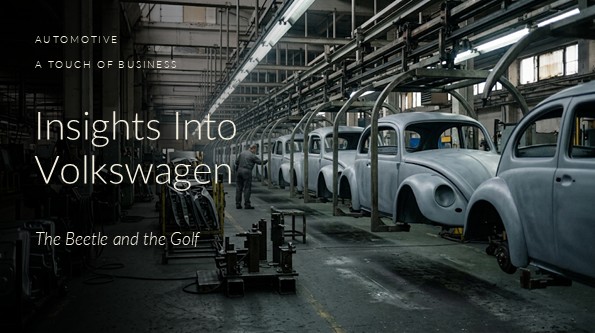
Volkswagen’s origins are inseparable from Nazi Germany, yet its emergence as a mass-market carmaker took place after the regime’s defeat. A state-directed people’s-car project became a wartime producer that exploited forced labor. The postwar factory then developed into an international automotive business.
British occupation authorities helped restart the factory, and the Beetle later brought international recognition. Its long success also exposed a vulnerability: sales and production had become heavily dependent on one aging design.
The Golf marked a technical break; new brands and overseas operations changed the scale of the business. The resulting group later faced criminal findings over diesel emissions and the cost of another industrial transition.
A Quick Look at the History of Volkswagen
Company History Summary
Volkswagen traces its corporate origins to a 1937 enterprise organized by the Nazi German Labour Front. Following wartime production and forced labor, British-administered manufacturing resumed in 1945. The Beetle and Transporter supported postwar expansion, while the Passat and Golf marked a major technical change in the 1970s.
Acquisitions and joint ventures subsequently brought Audi, SEAT, Škoda and operations in China into the wider story, followed by premium and commercial-vehicle businesses. Volkswagen AG’s 2017 U.S. criminal guilty plea over diesel emissions deception and the Group’s ongoing restructuring mark major challenges in its more recent history.
Company Snapshot
Corporate origin: 28 May 1937.
Founding organization: German Labour Front (DAF), a Nazi organization; Ferdinand Porsche was a commissioned designer and founding director, not the sole corporate founder.
Original company: Gesellschaft zur Vorbereitung des Deutschen Volkswagens mbH (Gezuvor); renamed Volkswagenwerk GmbH in 1938.
Headquarters: Wolfsburg, Germany.
Industry: Automotive manufacturing, with related commercial-vehicle, software and financing interests.
Parent company: Volkswagen AG; Volkswagen Passenger Cars is a brand within Volkswagen Group.
Selected brands: Volkswagen Passenger Cars, Audi, Škoda, SEAT/CUPRA, Porsche, Bentley, Lamborghini and Volkswagen Commercial Vehicles.
Chief executive: Oliver Blume (as of 8 November 2026).
Defining products: Beetle and Golf.
A People’s-Car Project in Nazi Germany
The origins of Volkswagen precede its 1937 incorporation. Ferdinand Porsche’s engineering team received a commission in 1934 to develop a people’s car. The German Labour Front subsequently took responsibility for the enterprise and established Gezuvor on 28 May 1937. On 16 September 1938, the organization renamed the company Volkswagenwerk GmbH. Construction of the factory near Fallersleben—later part of Wolfsburg—began in 1938.
These beginnings matter because the later worldwide carmaker did not originate as an independent civilian startup. Its organizational framework belonged to the Nazi system. The affordable-car project was overtaken by the Second World War before large-scale consumer deliveries could become the basis of the business.
During the war, Volkswagenwerk GmbH produced military-related vehicles and armaments and used workers compelled into service. The Volkswagen corporate archive reports that around 20,000 forced laborers worked for the enterprise over the wartime period, including roughly 5,000 concentration-camp prisoners. Those are rounded historical estimates, not a measure of ordinary voluntary employment. U.S. troops arrived on 11 April 1945 and liberated forced workers. The people’s-car project had become an armaments and military-vehicle producer reliant on coercion.
The British Restart and the Rise of Mass Production
The end of the war left the factory’s future uncertain. Production equipment and infrastructure faced serious constraints, and Germany’s wider economy suffered shortages of materials, housing and food. Yet British occupation authorities needed vehicles and saw a practical use for the plant.
British officer Major Ivan Hirst played a significant role in rebuilding production, securing needed supplies and improving vehicle quality. In August 1945, British authorities placed an order for 20,000 saloon cars. Under British administration, Volkswagenwerk GmbH began postwar series production on 27 December 1945, with 55 cars completed before year-end. That production restart gave the plant a new civilian direction.
Volkswagen gradually moved from fulfilling immediate transport needs to selling cars outside Germany. European exports rose despite supply constraints, and in October 1949 the British handed trusteeship to the German federal government, with Lower Saxony administering the enterprise. The business added the Transporter, or Type 2, in 1950, extending its offering beyond the saloon that became widely known as the Beetle.
Growing production and export operations changed Volkswagen’s scale and legal form. Volkswagenwerk AG was registered in August 1960, ahead of a public share offering in 1961. By then the business had a different ownership and legal structure, alongside an expanding international market.
When Beetle Success Became a Product Risk
The Beetle helped Volkswagen establish the manufacturing scale and market recognition of a major automotive producer. But prolonged success brought dependence on a design rooted in an earlier generation of vehicle technology. By the late 1960s, changing buyer expectations and competing products exposed the limitations of relying so heavily on the rear-engined model.
Volkswagenwerk AG also expanded its capabilities through a separate company. In 1965, it acquired a majority interest in Auto Union GmbH, bringing the Audi business and related engineering resources into the Group. In 1969, Auto Union merged with NSU Motorenwerke AG to form Audi NSU Auto Union AG, subsequently renamed Audi AG in 1985. This was an expansion of the corporate group, not a renaming of the Volkswagen Passenger Cars brand.
Engineering modernization became increasingly urgent. Competition, exchange-rate pressures and other market conditions complicated the transition. Management invested in replacement models built around front-wheel drive and water-cooled engines, a substantial break with the Beetle’s long-established configuration.
The Passat and Golf Change the Product Story
The Passat arrived in 1973. The Golf followed in 1974 and became the most recognizable expression of the new approach: a modern front-wheel-drive, water-cooled Volkswagen that could carry the core brand into a different market era.
The timing was difficult. The oil shock and economic recession added pressure to a business already confronting product renewal. Volkswagen’s own historical account describes the newer models as vital to the turnaround, although the recovery involved broader market conditions and operational changes as well as individual cars. The Golf’s significance lies not in a claim that one model single-handedly saved the company, but in showing how far Volkswagen’s main engineering and product direction had shifted.
The shift demonstrated a risk of product concentration: manufacturing scale could become a constraint when the market moved beyond the model that produced it.
From German Carmaker to International Brand Group
After the Golf-era transition, Volkswagen’s growth increasingly took place through several brands and regions rather than one principal car line. China became an important part of that change. Santana assembly began in Shanghai in 1983, and the Shanghai-Volkswagen joint venture was established in 1985. A second major China joint venture, FAW-Volkswagen, followed in 1991.
Acquisitions broadened the European portfolio. Volkswagen obtained control of Spain’s SEAT in 1986. In 1991, Škoda entered the Group, adding a Czech manufacturer with its own identity and history. The resulting structure allowed several brands to operate within a common industrial group while serving different markets and customers.
The company’s own name was also changing. Volkswagenwerk AG became Volkswagen AG in 1985—a corporate name change, not a new founding. Through the 1990s and into the 2010s, the Group’s structure grew more complex, with premium and luxury marques, commercial-vehicle businesses and related automotive operations. The expanding portfolio included Bentley, Lamborghini, Porsche sports-car operations and heavy-vehicle interests. These businesses did not all originate within the 1937 Volkswagen enterprise, and their corporate histories remained distinct.
Expansion increased the range of markets and manufacturing capabilities available to the Group, but it also added organizational complexity. The transition from a largely Beetle-dependent manufacturer to a global portfolio of brands was a transformation in both business reach and the challenge of coordinating products, investment and operations.
Diesel Emissions Fraud and Its Consequences
In 2015, U.S. regulators exposed the use of illegal defeat devices that allowed certain diesel vehicles to behave differently during emissions testing than in normal driving. The revelations brought criminal proceedings, civil settlements and a major challenge to Volkswagen Group’s reputation and governance.
The distinction between the companies involved is important. Volkswagen AG pleaded guilty to U.S. federal criminal charges on 10 March 2017 in connection with the emissions-test deception and was sentenced in April. Separate U.S. civil agreements involved specifically named Volkswagen, Audi and Porsche entities and covered approximately 590,000 affected U.S. vehicles, according to the Environmental Protection Agency. The criminal plea concerned Volkswagen AG; the civil agreements named multiple group entities.
Beyond penalties and legal obligations, the scandal unfolded as automotive manufacturers were confronting the challenge of reducing emissions and developing electric mobility. From 2016 onward, Volkswagen Group management placed increasing emphasis on electrification and software in its stated strategy. The announced direction represented a major investment and product transition, not evidence that the company had already completed it.
A Larger Group and a More Difficult Industrial Transition
Volkswagen’s current structure encompasses mass-market passenger vehicles, premium and luxury cars, commercial vehicles and additional financing and software activities. Porsche AG, the sports-car company whose shares were partly listed in 2022, is not the same entity as Porsche Automobil Holding SE, a major shareholder of Volkswagen AG.
As of 31 December 2025, Porsche SE controlled 53.3% of Volkswagen AG’s ordinary-share voting rights, while the German state of Lower Saxony held 20.0% and Qatar Holding 17.0%. These figures describe votes, not the percentage of all economic equity owned by each shareholder. Oliver Blume became Volkswagen AG chief executive in September 2022. His overlapping role as CEO of Porsche AG ended on 1 January 2026.
By the mid-2020s, competition in China, import tariffs, vehicle-development expense and the economics of electric vehicles were increasing the pressure on operating performance. Labor and capacity arrangements became a visible part of management’s response. A December 2024 agreement covering the Volkswagen brand’s German operations set out measures involving more than 35,000 job reductions by 2030, alongside protections and restrictions governing how changes would be implemented.
A separate Group-wide initiative followed in September 2026. Volkswagen Group’s supervisory board approved Future Plan 2030, a strategy outlining reduced model and vehicle complexity, regional investment priorities and adjustment of around 50,000 Group positions. The plan’s proposed reduction of model range by up to 50% and complexity by up to 75% consists of targets, not completed changes. The 2026 Group-wide workforce figure must not be confused with the earlier German-brand labor agreement.
The scale of the challenge appears in Volkswagen’s reported figures. In full-year 2025, the Group delivered approximately 8.984 million vehicles, including 983,120 fully electric vehicles, and reported €321.9 billion in revenue and an €8.9 billion operating result. For January through September 2026—not the full year—Volkswagen reported revenue of €233.4 billion and an operating result of €0.1 billion, compared with €8.8 billion before special items. The difference reflects the reported result versus the measure before special items.
Where Volkswagen’s History Stands Today
As of 8 November 2026, Volkswagen operated as an international multi-brand group rather than a single-model manufacturer. Its history encompasses a Nazi-sponsored foundation and forced labor, a British-administered manufacturing restart, decades of mass-market production, a fundamental model transition, acquisitions across several countries and a serious criminal emissions case.
The latest industrial changes remain underway. Volkswagen Group management has announced plans to simplify products and costs while investing in a changed automotive industry. The approved plans and reported nine-month results show the direction and urgency of that work, not its ultimate outcome.
Timeline
These milestones trace the principal changes in Volkswagen’s corporate identity, products, international reach and recent strategy.

28 May 1937
The Nazi German Labour Front establishes Gezuvor, the corporate predecessor of Volkswagen.
16 September 1938
Gezuvor is renamed Volkswagenwerk GmbH.
1940–1945
Volkswagenwerk GmbH participates in Nazi wartime production and uses forced labor.
27 December 1945
Postwar saloon series production begins under British administration.
8 October 1949
British trusteeship passes to German federal trusteeship with Lower Saxony administration.
1950
The Transporter expands the Volkswagen vehicle range.
1960
Volkswagenwerk AG is registered as a stock corporation.
1965–1969
Volkswagenwerk AG acquires Auto Union; Auto Union later merges with NSU to create Audi NSU Auto Union AG.
1973–1974
The Passat and Golf introduce Volkswagen’s front-wheel-drive, water-cooled generation.
1985–1986
The business adopts the name Volkswagen AG; the Shanghai-Volkswagen joint venture is formed and SEAT control is acquired.
1991
Škoda enters the Group and FAW-Volkswagen is established in China.
2015
U.S. emissions regulators uncover diesel defeat-device practices, beginning a major legal and corporate crisis.
10 March 2017
Volkswagen AG pleads guilty to U.S. federal criminal charges relating to emissions-test deception.
2022
Oliver Blume becomes Volkswagen AG chief executive; Porsche AG completes a partial stock-market listing.
20 December 2024
Volkswagen’s German management and organized labor agree on a workforce and capacity restructuring program.
3 September 2026
Volkswagen Group’s supervisory board approves Future Plan 2030, setting out prospective simplification and restructuring measures.
29 October 2026
The Group publishes its January–September 2026 financial results.
FAQs
Question: Who founded Volkswagen?
Answer: The Nazi German Labour Front established the corporate predecessor in 1937. Ferdinand Porsche contributed the commissioned vehicle design and served as a founding director, but he was not Volkswagen’s sole legal founder.
Question: Is Volkswagen the same as Volkswagen Group?
Answer: No. Volkswagen Passenger Cars is one brand within the wider Volkswagen Group. Volkswagen AG is the group’s listed parent company and oversees multiple automotive businesses and brands.
Question: Was the Beetle already being mass-produced for civilian customers during World War II?
Answer: No. The original civilian-car project was overtaken by wartime priorities. Substantial postwar saloon production began under British administration in December 1945.
Question: Who controls Volkswagen AG?
Answer: As of 31 December 2025, Porsche Automobil Holding SE held 53.3% of Volkswagen AG’s ordinary-share voting rights. Lower Saxony and Qatar Holding were also significant voting shareholders. Voting control is not identical to ownership of all the company’s equity.
Question: What replaced the Beetle as Volkswagen’s central modern car?
Answer: The Golf, launched in 1974, became the defining product of a new front-wheel-drive, water-cooled generation that also included the Passat.
Question: What was Volkswagen’s legal responsibility in the diesel emissions scandal?
Answer: Volkswagen AG pleaded guilty in U.S. federal court in March 2017 to criminal offenses linked to cheating emissions tests. Separate civil settlements involved specified Volkswagen Group entities.
Question: Had Volkswagen already eliminated 50,000 Group positions in 2026?
Answer: No. The approximately 50,000-position figure was part of the prospective Group-wide Future Plan 2030. It is separate from the earlier December 2024 agreement concerning German Volkswagen-brand jobs.
Interviews & Firsthand Resources
Volkswagen’s 2026 Annual General Meeting Materials
The Volkswagen Group’s June 2026 annual general meeting materials provide firsthand statements and speeches from senior company leaders, including Oliver Blume. They help readers understand how management presented the Group’s circumstances and priorities during its current transformation. Those statements represent leadership perspectives rather than independently established future outcomes.
Further Reading
- Place of Remembrance of Forced Labor in the Volkswagen Factory — historical booklet
- Volkswagen Group financial reports archive
Sources
- Volkswagen Group Corporate Archives: 1937–1945: Founding and War Economy, 1945–1949: The Work of the British, 1950–1960: Internationalisation and Mass Production, 1961–1972: Boom and Crisis, 1973–1981: Water-Cooled Models, 1982–1991: New Brands, New Markets, 1992–2015: Globalisation.
- U.S. Environmental Protection Agency: Volkswagen Clean Air Act Civil Settlement.
- U.S. Department of Justice: Volkswagen AG Pleads Guilty, Volkswagen AG Sentenced.
- Volkswagen Group: Brands and Brand Groups, Shareholder Structure, Future Plan 2030, Nine-Month 2026 Results, Oliver Blume CEO Appointment.
- Reuters: Volkswagen and Union Reach German Jobs Agreement, December 2024.
- Volkswagen Group Annual Report 2025: Deliveries, Results of Operations.