
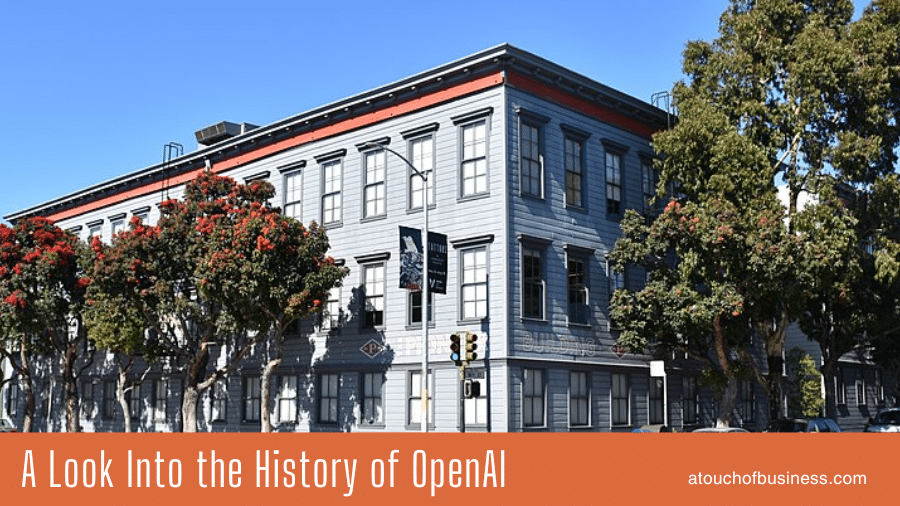
A company that showed up at the right moment
OpenAI entered the public stage in late 2015, when artificial intelligence was starting to move from labs into daily life.
It began with a simple, bold goal: push digital intelligence forward in a way meant to help people broadly, not just a small group.
From the start, the story was about speed, power, and a question that never goes away: who benefits when AI gets better?
The mission that framed everything
When OpenAI was announced, it described itself as a non-profit research company.
It said its work would focus on advancing digital intelligence in ways meant to benefit humanity as a whole.
That early framing matters because it shaped almost every debate the company faced later.
In the launch message, OpenAI stressed both promise and risk.
The tone was not “AI is cool, let’s build it fast.”
It was closer to “AI will be huge, so we should build it with care and share what we learn.”
The early cast and why it mattered
OpenAI’s public launch named well-known leaders and researchers, which gave it instant attention.
Sam Altman and Elon Musk were listed as co-chairs at the time.
Greg Brockman and Ilya Sutskever were named as early leaders, with roles tied to technology and research.
The launch post also listed a broader group of early contributors and advisors.
This mattered because it signaled a serious research effort, not a small side project.
It also hinted at how wide OpenAI wanted its network to be from day one.
The problem they wanted to solve
OpenAI’s early message focused on one big worry: advanced AI could concentrate power if it only lived inside a few private systems.
So the goal was not only to build strong AI, but also to steer it toward broad benefit.
That is a hard promise to keep once real-world pressure arrives.
Even in 2015, OpenAI talked about openness and sharing.
It described publishing as a key habit, not an optional extra.
It also described collaboration as part of how it wanted to operate.
How it all started in practical terms
OpenAI was announced publicly on December 11, 2015.
It later noted that it did not officially get started until early January 2016.
Those few weeks are small on a calendar, but they mark the start of a decade-long sprint.
In those early months, OpenAI behaved like a research lab with a public voice.
It published work, explained decisions, and tried to build credibility in public.
It also had to deal with a basic fact: frontier AI is expensive, even before it becomes popular.
The idea behind the name “OpenAI”
The word “open” did not mean “everything will always be released without limits.”
It meant the company wanted to push the field forward and share enough that others could learn and build too.
That tension became one of the company’s defining themes.
In the beginning, OpenAI talked about publishing papers and code.
It also talked about cooperating with other institutions rather than competing in secret.
As the stakes grew, “open” became a moving target that the public kept debating.
The early years: research first, spotlight second
In the first part of its life, OpenAI was best known inside technical circles.
It built a reputation as a place where strong researchers could work on ambitious problems.
But the average person did not “use” OpenAI yet.
This is the quiet phase many big tech stories have.
The foundation is poured before the public even notices the building is going up.
Then one product changes everything.
When sharing collided with real-world risk
In 2019, OpenAI published a post about GPT-2 and the risks of misuse.
It described a staged approach to releasing the model and related materials.
That moment put a spotlight on a new problem: openness can be risky when tools are powerful.
To some people, staged release sounded responsible.
To others, it sounded like a step away from the “open” idea.
Either way, OpenAI was now making choices that were not just technical.
A major structural shift in 2019
Also in 2019, OpenAI announced a new structure: OpenAI LP, described as a capped-profit entity under the non-profit.
The reason given was straightforward: to raise more capital so it could pursue the mission at the needed scale.
This was a turning point, because it changed how people looked at the company.
It was no longer only a research group talking about ideas.
It was building a structure designed to fund long, expensive work.
That change also set up years of questions about governance, control, and trust.
The OpenAI API: a quiet launch that became huge
In 2020, OpenAI announced an API.
This was not a flashy consumer product, but it was a big move.
It meant other companies and developers could build real tools on top of OpenAI models.
The API helped OpenAI become a platform, not just a lab.
It also created a clear business path that did not depend only on research prestige.
Once developers build on your tools, your influence spreads fast.
How OpenAI makes money (without getting lost in numbers)
OpenAI earns revenue in a few main ways that line up with its product shape.
One is paid access for people who want more features in ChatGPT.
Another is developer access through the API.
Subscriptions are simple to understand.
People use a free version, then pay when they want more power, speed, or capability.
This model is common in modern software, and it fits a product that can serve both casual and heavy users.
API revenue is also easy to explain.
Companies pay to use OpenAI models inside their own apps and workflows.
That puts OpenAI in the background of many products, even when users do not notice the brand.
OpenAI has also described major partnerships where it works closely with businesses.
In late 2025, for example, it described a partnership and ownership stake connected to Thrive Holdings, tied to deploying OpenAI tools inside service firms.
These kinds of deals point to a long-term goal: becoming core infrastructure for work.
ChatGPT: the product that made OpenAI a household name
On November 30, 2022, OpenAI introduced ChatGPT.
For many people, this was their first direct experience with a modern AI assistant.
It felt like a jump, because it turned research progress into something you could talk to.
ChatGPT spread fast because it was simple.
You did not need to read a paper or install a complex tool.
You just typed a question and got a response.
This changed OpenAI’s public identity almost overnight.
It was no longer mainly “an AI research lab.”
It became the company behind the chat tool people argued about at dinner.
What people liked, and what worried them
ChatGPT impressed people with speed and range.
It could explain topics, help draft writing, and support brainstorming.
It also made mistakes, which became part of the public learning curve.
As usage grew, so did the questions.
How accurate is it?
How should it be used in school and at work?
How do you protect privacy when people share sensitive details in a chat window?
OpenAI’s product success created a new kind of pressure.
The company had to improve capability while also building trust at scale.
That balance is hard for any fast-growing tech company, and even harder in AI.
GPT-4 and a new phase of expectations
In March 2023, OpenAI announced GPT-4.
For the public, this was part of a simple story: the model got better.
For OpenAI, it raised the bar on safety, oversight, and reliability demands.
With each major release, expectations rise.
Businesses want stronger performance and fewer surprises.
Users want more helpful behavior with less confusion.
And critics want clearer answers about how the technology is trained and governed.
In May 2024, OpenAI announced GPT-4o.
This reinforced the sense that the company was pushing into more natural, real-time interaction.
It also signaled that AI assistants were moving toward a more “everyday” feel.
Beyond text: Sora and the push into video
In February 2024, OpenAI published research about Sora, described as work on video generation models.
This mattered because it expanded the public idea of what OpenAI builds.
It was not just chat and text anymore.
Video raises fresh issues.
It can be more persuasive than text, and easier to spread widely.
It also increases concerns about fake content and misuse.
Even without deep technical detail, the direction is clear.
OpenAI has aimed to build systems that handle more types of media.
That expands both the opportunity and the risk.
Partnerships that changed distribution
OpenAI’s partnerships helped it reach more people faster.
They also shaped how OpenAI fits into the wider tech world.
The biggest partnerships tend to do two things at once: expand reach and raise stakes.
One key partnership has been with Microsoft, which has been closely tied to OpenAI’s cloud and enterprise path.
Even without diving into deal math, the meaning is simple.
When a major platform partner backs your work, your tools can reach business customers at scale.
In June 2024, OpenAI announced a partnership with Apple to integrate ChatGPT into Apple experiences.
The announcement stressed that users would be asked before requests are sent, and it highlighted privacy protections in how requests are handled.
This moment mattered because it placed OpenAI inside products used by a massive global audience.
Acquisitions that filled in missing pieces
OpenAI has also used acquisitions to speed up its product and platform plans.
These moves tend to be about talent and infrastructure, not flashy brand buying.
In plain terms, OpenAI bought teams and tools that helped it move faster.
In August 2023, OpenAI acquired Global Illumination.
OpenAI said the team would work on core products, including ChatGPT.
This looked like a bet on product craft, not only research.
In June 2024, OpenAI acquired Rockset.
OpenAI described it as a way to strengthen retrieval and data infrastructure.
This points to a practical goal: make AI tools better at working with real information in real workflows.
In October 2025, OpenAI announced it acquired Software Applications Incorporated (Sky).
It described the goal as making ChatGPT feel more native on the desktop, especially on macOS.
This reveals a product belief: AI is not only a website, it is an everyday interface.
Reuters also reported additional deal activity in 2025, including an agreement to acquire a company called Neptune.
OpenAI also announced the acquisition of an AI hardware startup associated with Jony Ive, described in reporting as io Products.
Even at a high level, these moves suggest OpenAI wants to shape both software and new device experiences.
The 2023 leadership crisis and why it mattered
In November 2023, OpenAI faced a public leadership shock when its board removed CEO Sam Altman.
Within days, reporting said he returned as CEO and the company announced a new initial board arrangement.
This became one of the most talked-about corporate dramas in modern tech.
It mattered for a simple reason.
OpenAI is working on powerful technology, and its governance is part of the product story.
People want to know who is in charge, how decisions are made, and what checks exist when pressure rises.
In March 2024, OpenAI published an update tied to a board review process.
It described continued leadership and steps related to governance.
For many observers, this was OpenAI trying to rebuild trust after a confusing, fast-moving week.
Public disputes and the “trust tax”
OpenAI’s public image has also been shaped by visible disputes with high-profile figures.
One of the most notable has involved Elon Musk, who was listed as a co-chair at the time of the 2015 launch.
OpenAI has published its own documentation about disagreements over direction and governance.
For the public, disputes like this create a “trust tax.”
Even people who love the product start to ask, “What is really going on behind the scenes?”
OpenAI has had to learn that in AI, perception can move almost as fast as technology.
Work, people, and culture
OpenAI’s culture has been described in its own early writing as research-driven and collaborative.
It emphasized publishing and sharing, along with working closely with others in the field.
Over time, that culture had to adapt to product reality.
When you move from papers to widely used products, the work changes.
You need safety processes, policy work, customer support, and reliability discipline.
You also need teams that can ship and maintain systems used by millions.
In its ten-year reflection published in December 2025, OpenAI emphasized iteration over time and the idea that safety is woven into its work.
That message fits the company’s larger narrative: it is building a new kind of tool, so the company itself has to keep evolving too.
The impact on industry and society
OpenAI’s biggest impact has been making advanced AI feel normal to everyday people.
Before ChatGPT, many people heard about AI but did not interact with it directly.
After ChatGPT, “talking to an AI” became a common experience.
This shift changed how companies plan products.
It changed how workers think about writing, research, and routine tasks.
It also changed how schools and governments talk about cheating, creativity, and basic skills.
OpenAI’s work has also influenced developer tools.
GitHub launched Copilot in 2021 for technical preview , and that tool helped popularize AI help in coding.
OpenAI research on code-focused models helped shape this broader category of AI-powered development.
How the company’s story changed over time
In 2015, OpenAI’s public story was simple: a non-profit research effort aiming for broad benefit.
In 2019, the story gained a second layer: a new structure meant to fund large-scale work.
By 2022, the story became personal for millions of people as ChatGPT arrived.
By 2024, partnerships like Apple’s showed that OpenAI was becoming part of mainstream platforms.
That kind of distribution does not happen unless a company is seen as credible and useful.
It also raises the cost of mistakes, because errors scale with reach.
In 2025, OpenAI published updates about evolving its structure.
It described a direction toward a public benefit corporation and clarified how governance would work under a foundation model.
This tells you something important: OpenAI is still experimenting with how to be “built for the long run.”
Where it stands today
By the end of 2025, OpenAI is both a research leader and a product company.
It operates at the center of public debate about what AI should do and who should control it.
It also keeps shipping tools that more people use each month.
Its product footprint includes consumer experiences like ChatGPT and developer access through the API.
Its partnerships show it wants to be present where people already work and create.
Its acquisitions suggest it is building not only models, but also the surrounding system that makes them useful.
OpenAI’s structure materials describe a governance model under a foundation, including board details and special voting rights.
Whether the public loves or doubts these ideas, the direction is clear.
OpenAI wants a durable structure that can handle both growth and scrutiny.
Interesting facts (verified highlights)
Some parts of OpenAI’s story are easy to miss because the public focuses on the latest model.
But these smaller details help explain how the company thinks.
They also show how often OpenAI has had to adjust its approach.
- OpenAI was publicly announced on December 11, 2015, but later noted it officially started in early January 2016.
- The 2015 launch post listed early leaders, including Ilya Sutskever as research director and Greg Brockman as CTO.
- The 2015 launch post said supporters had committed $1 billion in total funding (as stated at the time).
- OpenAI’s GPT-2 release approach in 2019 became an early public example of balancing capability with misuse concerns.
- ChatGPT’s launch date (November 30, 2022) became a major public turning point for everyday AI use.
- OpenAI’s Apple partnership announcement in 2024 highlighted privacy steps like user confirmation before sending requests.
- OpenAI acquired teams like Global Illumination (2023) and Rockset (2024) to strengthen product development and infrastructure.
Lessons you can take from OpenAI’s journey
OpenAI’s history is not just a tech story.
It is also a story about governance, speed, and the cost of building tools that shape how people think and work.
If you zoom out, a few practical lessons stand out.
First, mission statements are not enough.
As your tool becomes more powerful, your structure has to match the promise you made.
OpenAI’s shifts show how hard it is to keep values steady while the world pulls on you.
Second, products change your public identity.
Before ChatGPT, OpenAI could speak mainly to researchers and developers.
After ChatGPT, it had to speak to parents, teachers, workers, and lawmakers too.
Third, trust is built in slow steps and can drop fast.
The 2023 leadership crisis showed how quickly confidence can wobble when governance looks unclear.
In AI, the company story and the product story are tied together.
Future challenges and opportunities
OpenAI’s future is full of opportunity, but the challenges are real.
The company is working in a space where costs are high and expectations are higher.
It also faces constant questions about safety, privacy, and control.
One opportunity is deeper integration into daily tools.
The Apple partnership and desktop-focused acquisition in 2025 point in that direction.
If AI becomes a normal layer of every device, OpenAI wants to help shape that layer.
Another opportunity is moving beyond text.
Work like Sora signals a push into video, which could open new creative workflows.
But it also raises the need for stronger safeguards against harmful or deceptive content.
A major challenge is governance that scales.
OpenAI has tried different structures and has described a foundation-led model.
The test will be whether those systems hold up during the next wave of pressure.
Timeline
OpenAI’s story moves fast, but it has clear turning points.
This timeline focuses on verified milestones that show how the company started, grew, and changed.
It highlights product moments, structure changes, and a few major partnerships and acquisitions.

2015
OpenAI is publicly announced on December 11 as a non-profit AI research company.
2016
OpenAI later notes it officially got started in early January.
2019
OpenAI publishes the GPT-2 post that discusses risks and a staged release approach.
2019
OpenAI announces OpenAI LP, described as a capped-profit entity under the non-profit.
2020
OpenAI announces the OpenAI API, expanding access for developers and companies.
2022
OpenAI introduces ChatGPT on November 30, bringing AI chat to a mass audience.
2023
OpenAI announces GPT-4 on March 14.
2023
OpenAI acquires Global Illumination on August 16 and says the team will work on core products.
2023
Reporting says OpenAI’s board removed CEO Sam Altman on November 17.
2023
Reporting says Altman returned as CEO on November 22 with a new initial board arrangement.
2024
OpenAI publishes an update in March tied to a board review and governance steps.
2024
OpenAI announces GPT-4o on May 13.
2024
OpenAI and Apple announce a partnership on June 10 to integrate ChatGPT into Apple experiences.
2024
OpenAI acquires Rockset on June 21.
2024
OpenAI publishes research about Sora in February, describing work on video generation models.
2025
OpenAI publishes “Evolving our structure” on May 5, describing a direction toward a public benefit corporation.
2025
Reporting says OpenAI acquired an AI hardware startup associated with Jony Ive on May 21.
2025
OpenAI announces the acquisition of Software Applications Incorporated (Sky) on October 23.
2025
OpenAI publishes updated structure details on October 28.
2025
OpenAI announces an ownership stake and partnership with Thrive Holdings on December 1.
2025
Reporting says OpenAI agreed to acquire Neptune on December 4.
2025
OpenAI publishes “Ten years” on December 11, reflecting on its first decade.
A simple overview you can carry with you
OpenAI started as a research-first group with a public mission and a promise to aim for broad benefit.
It then faced the reality that frontier AI needs major resources, which helped drive structural change.
Finally, it found a public breakthrough with ChatGPT, which turned a lab story into a household story.
Since then, OpenAI has tried to do three things at once.
Build stronger AI systems, ship products that people trust, and create governance that can handle the pressure of success.
That is why its history is not just about models, but also about choices.
The next chapter will likely be shaped by how well the company balances power and restraint.
It will also be shaped by where AI shows up next: in phones, desktops, workplaces, and maybe new kinds of devices.
If OpenAI’s first ten years prove anything, it is that the story will keep changing.
Sources: OpenAI, Reuters, Microsoft, Apple, GitHub, arXiv, Wikipedia, HaeB, CC BY-SA 4.0, via Wikimedia Commons
_-1.jpg)