
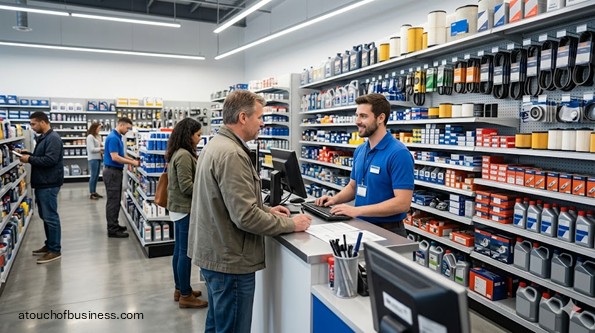
What to Plan Before Opening an Auto Parts Store
An auto parts store sells replacement parts, accessories, fluids, tools, batteries, and related products to customers who need to maintain or repair vehicles.
For a storefront model, success depends on more than stocked shelves. You need the right location, a clean layout, accurate fitment data, supplier access, a smooth checkout flow, safe storage, and staff who can help customers find the correct item.
Customers may include do-it-yourself vehicle owners, local mechanics, repair shops, small fleets, contractors, hobbyists, and people who need a common part quickly.
Typical inventory includes:
- Batteries, filters, belts, hoses, bulbs, and wiper blades
- Brake parts, rotors, spark plugs, fluids, oils, and coolants
- Tools, shop supplies, detailing products, accessories, and special-order parts
- Rebuilt or remanufactured parts with core charges and warranty rules
This business can be a good fit if you enjoy vehicles, precise product details, customer questions, inventory, and retail. It is not a good fit if you like cars but have no appetite for parts lookup, returns, supplier delays, and daily counter service.
Start With Fit, Motivation, and Local Reality
Before you follow any startup steps, decide whether owning a storefront auto parts store fits your life, budget, and patience level.
Expect long retail hours, stocked shelves, backroom receiving, customer questions, wrong-part returns, warranty claims, and staff training. Physical tasks are also part of the job — lifting boxes, moving batteries, and organizing fluids or cases of product.
Ask yourself a simple question: Are you moving toward something or running away from something?
Do not start an auto parts store to escape a job, financial pressure, or status anxiety. You need a genuine reason to enter a business that carries inventory risk, faces local competition, and demands accurate fitment every day.
Passion helps, but it is not enough. A store has to serve its local market, cover its costs, and open with the right systems in place.
Trap: Do not confuse liking vehicles with being ready to run a retail parts business. This kind of operation demands focus on inventory, customers, suppliers, and accuracy.
Talk With Owners Outside Your Market
Speak with auto parts store owners you will not compete against. Choose owners in another city, region, or market area.
Prepare your questions in advance. These owners have firsthand experience, and while every store is different, their insight can help you avoid weak startup decisions.
You can ask about:
- Which parts sell consistently and which items sit too long
- How supplier terms, returns, and warranty claims affect cash flow
- What they wish they had checked before signing a lease
- How many people were needed during the opening stage
- Which software, catalog, or parts lookup issues caused the most problems
Good owner conversations give you context that no checklist can provide. Use them as a reality check, not a shortcut — you still need to verify your own location, suppliers, permits, and costs independently.
A deeper inside look from business owners can help you think through the pressure before you invest.
Study Local Demand Before You Spend
A national market can be large while one local store still struggles. Your decision depends on the conditions around your planned storefront.
Look at the number of vehicles nearby, the age of those vehicles, repair-shop density, commuter traffic, parking access, and nearby competitors. Consider chain auto parts stores, dealership parts departments, online sellers, salvage yards, tire shops, and other local sources.
Also look at how customers buy in your area. Some do-it-yourself buyers want the lowest price. Some repair shops need speed. Some customers need guidance choosing the right part.
Your location should match the way people buy auto parts locally. Visibility, parking, easy access, and nearby vehicle traffic matter more for a storefront than for a warehouse or online-only model.
Trap: Do not sign a lease because a space looks cheap. A low-rent location with weak visibility, poor parking, or awkward receiving can cause problems before opening day.
Use local supply and demand as a go-or-no-go test before committing major spending.
Choose Your Startup Path
An auto parts store can be started from scratch, purchased as an existing business, or opened through a franchise or affiliated program. Each path changes your cost, control, risk, and available support.
Starting from scratch means choosing your own location, layout, suppliers, product mix, and identity. The tradeoff is building supplier accounts, local trust, inventory systems, and staff knowledge from the ground up.
Buying an existing store may give you customers, staff, supplier history, and inventory already in place. You still need to review the lease, sales records, outstanding debts, obsolete inventory, supplier accounts, and any hidden problems.
Exploring a franchise, buying group, or affiliated program means reviewing the fees, systems, supplier limits, territory rules, required technology, and inventory obligations. A franchise can offer structure, but it can also limit your choices.
The right path depends on your budget, timeline, support needs, available stores for sale, desired control, and risk tolerance.
Trap: Do not buy an existing store simply because the shelves are stocked. Old inventory, weak records, or supplier debt can turn a purchase into a costly cleanup.
Review the choice to start from scratch or buy a business before you commit.
Define the Storefront Model
Decide what kind of auto parts store you are opening before selecting inventory, suppliers, staff, and equipment.
A general storefront may serve do-it-yourself customers, local repair shops, fleet buyers, and hobbyists. A more focused product mix might center on batteries, truck accessories, performance parts, tools, fluids, or common replacement parts.
Decide whether the store will sell parts only or offer any installation. Parts-only is simpler. Installing batteries, wipers, bulbs, or accessories changes staffing, liability, insurance, workflow, and possible compliance requirements.
Also decide how to handle professional buyers. Repair shops may need quick answers, trade pricing, special orders, and clear account terms. Walk-in customers may need more explanation and fitment guidance.
Key model decisions include:
- Retail walk-in sales only, or retail plus commercial accounts
- General replacement parts, specialty parts, or accessories
- In-stock focus, special-order focus, or a mix of both
- No installation, limited installation, or referral-only
- Used oil or battery returns, if allowed and properly set up
Trap: Do not add installation services casually. Even minor services can require additional training, tools, insurance review, and clearly defined limits.
Business Plan
Your business plan should translate startup decisions into a practical opening plan for the auto parts store.
Keep it focused on what must be decided before launch. This is not a long-term growth document. It should help you organize the setup, costs, legal requirements, pricing, inventory, suppliers, and opening-readiness items.
Include:
- Your target customers, such as do-it-yourself buyers, repair shops, fleet buyers, or hobbyists
- Your product focus, including batteries, filters, fluids, brake parts, tools, accessories, or special orders
- Your location criteria, including visibility, parking, receiving, storage, and signage
- Your supplier strategy, including warehouse distributors, battery suppliers, lubricant suppliers, and special-order sources
- Your inventory plan, including core items, slow-moving stock risk, warranties, and return procedures
- Your pricing rules, including retail pricing, trade pricing, core charges, freight, and card fees
- Your compliance checklist, including sales tax, zoning, certificate of occupancy, safety, and product-specific requirements
- Your staffing plan, training needs, and opening schedule
- Your startup costs, funding options, bank account, and payment setup
- Your pre-opening checklist and test run
A solid plan keeps you from guessing. It also helps you explain the business clearly to lenders, landlords, suppliers, and insurance professionals.
If you need a broader planning reference, use a business plan guide as a starting point, but make your plan specific to this store.
Choose and Verify the Location
The storefront is one of the biggest startup decisions for an auto parts store. The space must accommodate customers, staff, inventory, deliveries, and safe storage.
Look for visibility, easy access, parking, clear signage options, a workable sales floor, backroom space, and a receiving area. Delivery trucks, supplier drop-offs, and pallet movement should not create daily obstacles.
Review the lease carefully before signing. Confirm the space can legally be used for a retail auto parts store, and determine whether the city or county requires zoning approval, a certificate of occupancy, sign permits, building permits, or inspections.
These rules vary by U.S. jurisdiction. Consult the local building department, planning office, business licensing office, and fire marshal as needed.
Trap: Do not assume a former retail space is automatically approved for your use. Batteries, fluids, chemicals, signs, storage, and alterations can each trigger additional requirements.
Set Up Legal, Tax, and Compliance Basics
Legal setup for an auto parts store starts with standard business formation and tax registration. Certain product categories may add further requirements.
Steps typically include choosing a business structure, registering the business, filing an assumed name or Doing Business As if needed, and applying for an Employer Identification Number where applicable.
Because the store sells tangible goods, state sales tax registration is usually a critical pre-opening step. Contact your state tax or revenue department before making any taxable sales.
Local requirements may include:
- A general business license
- Zoning approval for retail auto parts use
- A certificate of occupancy
- Building permits for tenant improvements
- A sign permit
- Fire-code review or inspection if products and storage trigger it
Product choices can also affect compliance. If motor vehicle refrigerant will be sold, federal sales restrictions must be reviewed. If used oil, used oil filters, or batteries will be accepted, federal, state, and local environmental rules apply.
If employees handle automotive chemicals, fluids, aerosols, or other hazardous products, review safety labels, Safety Data Sheets, and training obligations. Keep this practical and tied to the products you actually carry.
For a broader starting point, review business licenses and permits, then confirm the exact requirements with the relevant agencies.
Set Up Suppliers and Parts Data
An auto parts store depends on supplier access. You need inventory on the shelf and reliable sources for parts not kept in stock.
Set up accounts with warehouse distributors, battery suppliers, lubricant suppliers, accessory suppliers, tool suppliers, and special-order sources. Confirm minimum orders, payment terms, returns, warranty handling, delivery schedules, and core return procedures.
Parts data matters as much as the product itself. Staff must be able to look up parts by year, make, model, engine, trim, and sometimes Vehicle Identification Number.
Strong fitment data prevents wrong-part sales. Weak catalog data leads to returns, delays, unhappy customers, and wasted time at the counter.
Supplier setup should answer these questions:
- Which items will be stocked at opening?
- Which items will be special ordered?
- How fast can each supplier deliver?
- How will warranties and returns be handled?
- How will core charges be collected and core returns processed?
Plan Opening Inventory
Opening inventory is one of the largest startup cost drivers for a storefront auto parts store. Buy carefully.
Common categories include batteries, filters, wiper blades, bulbs, brake parts, fluids, oils, belts, hoses, spark plugs, tools, shop supplies, detailing products, sensors, electrical parts, and accessories.
Do not buy every possible item. Use local vehicle mix, supplier lead times, common maintenance needs, and nearby competition to decide what earns shelf space.
Procedures for special orders, returns, warranties, core charges, and damaged products should be ready before opening — not written on a busy day at the counter.
Trap: Do not tie too much cash to slow-moving parts before demand is established. A full shelf offers little value if it is stocked with products customers rarely need.
Prepare the Store Layout and Systems
The layout should help customers find common items and allow staff to move products safely from receiving to shelves to checkout.
The sales floor needs shelves, displays, price labels, product category signs, a service counter, and a checkout area. The backroom needs safe storage, receiving space, return bins, special-order bins, and room for heavier products.
Key systems and equipment include:
- Point-of-sale system
- Auto parts catalog or fitment system
- Inventory software
- Barcode scanners and label printer
- Payment terminals and receipt printer
- Computers, secure internet, and supplier portal access
- Battery storage area and related safety supplies
- Chemical storage, spill kit, gloves, eye protection, and Safety Data Sheets
Set up the store for real-world use. Staff should be able to receive shipments, check stock, look up parts, ring up a sale, process a return, and place a special order without confusion.
Handle Batteries, Fluids, Chemicals, and Refrigerants Carefully
Some auto parts products require extra care before opening. Batteries, used oil, fluids, aerosols, cleaners, and refrigerants are not ordinary shelf goods.
For batteries, plan the display, storage, core return area, handling procedures, and vendor pickup. Add personal protective equipment and a spill response plan where appropriate.
If used oil or used oil filters will be accepted, environmental rules must be verified first. Requirements may include dedicated containers, spill control, recycler pickup, storage records, and local approval.
If regulated refrigerant will be stocked, buyer rules and staff procedures must be confirmed before it goes on the shelf. Do not rely on assumptions at the counter.
For chemicals and aerosols, keep Safety Data Sheets accessible and train staff on the products they handle. Consult the local fire marshal when product type or quantity may raise storage questions.
Set Pricing Before Opening
Pricing decisions should be in place before the first customer walks in. You need clear rules by category, not guesses at the counter.
Build pricing around supplier cost, freight, delivery charges, card processing fees, warranty risk, core charges, local competition, and slow-moving inventory risk. Common items typically face more price pressure than specialty items.
Approaches include cost-plus pricing, category markups, manufacturer suggested retail prices where available, competitive benchmarking, or matrix pricing by item cost bracket.
If commercial accounts will be offered to repair shops or fleet buyers, trade pricing terms must be defined before the first account sale.
Also define how the store will handle:
- Core charges on returnable parts
- Special-order deposits or payment timing
- Warranty exchanges
- Refunds and returns
- Tax calculation
Use pricing decisions as a planning reference, but tie every rule to your actual parts, suppliers, and local market.
Plan Startup Costs, Funding, and Payments
There is no universal startup cost for an auto parts store. Your total depends on location, build-out, inventory, staffing, systems, supplier terms, permits, insurance, and working capital.
Build your estimate from actual quotes and local figures. Do not rely on a generic national range.
Common startup cost categories include:
- Lease deposit, rent, utilities, and tenant improvements
- Shelving, fixtures, counter area, and signage
- Point-of-sale system, parts lookup tools, and payment equipment
- Opening inventory, batteries, fluids, chemicals, tools, and supplies
- Business registration, local permits, and sales tax setup
- Insurance, pre-opening payroll, training, and professional fees
- Working capital for restocking, slow sales periods, and supplier payments
Funding may come from owner savings, bank loans, supplier credit, equipment financing, a business line of credit, seller financing for an acquisition, or franchise-related financing if that path applies.
Open a business bank account and set up payment processing before launch. Test card terminals, cash drawer, receipts, refunds, tax settings, and daily close procedures before opening day.
Plan Insurance and Risk Controls
Insurance for an auto parts store should match the store’s actual risks. Speak with an insurance professional before opening.
Common coverage to discuss includes general liability, commercial property, inventory coverage, business interruption, workers’ compensation if employees are hired, cyber or payment risk, commercial auto if delivery will be offered, and environmental coverage if used oil, chemicals, or batteries are handled.
Not every coverage is legally required. Some is mandated by state law or contract. Some is purely risk management. Consult your insurance professional and local authorities to determine what applies.
Risk controls also include safe storage practices, clear return policies, staff training, accurate parts lookup, spill supplies, and a secure payment process.
Hire and Train Opening Staff
Counter staff matter in an auto parts store. Customers often need the correct part for a specific vehicle, so accuracy is essential.
Train staff to use parts lookup systems, read part numbers, confirm fitment, handle special orders, process returns, explain core charges, and follow warranty procedures.
Training should also cover:
- Battery handling
- Chemical safety and Safety Data Sheets
- Receiving and stocking products
- Checkout, refunds, and cash handling
- Customer questions and product limitations
- Lifting and backroom safety
Staffing levels should match your hours, customer flow, and service mix. A store serving repair shops may need faster parts lookup and order handling than one focused primarily on walk-in retail.
Prepare Policies, Records, and Customer-Facing Details
Before opening, prepare the documents and procedures staff will use every day.
Written return, warranty, special-order, and core-charge procedures are essential. If commercial accounts will be offered, account terms must be ready before the first shop buyer asks.
Records to set up include supplier invoices, resale certificates, sales tax documents, employee training logs, Safety Data Sheets, and used battery or used oil handling records if applicable, along with daily cash closing records.
Prepare your basic public-facing identity as well. This may include the business name, phone number, domain, a basic contact page, storefront signage, posted permits if required, and policy notices or handouts.
Keep it straightforward. The goal is a store that is ready, legally compliant, and trustworthy at launch.
Run a Pre-Opening Test
A test run helps you find problems while the doors are still closed. Treat it as a full opening-day rehearsal.
Test the parts lookup system, checkout, barcode scanning, sales tax settings, payment terminals, refunds, special orders, receipts, inventory counts, supplier ordering, and daily cash close.
Walk through a few common customer situations:
- A customer needs a battery and has an old core
- A customer needs wiper blades matched to their vehicle
- A repair shop calls for brake parts
- A part is not in stock and must be special ordered
- A customer returns a wrong part with a receipt
If staff cannot handle these situations smoothly, fix the process before launch.
Opening Readiness Checklist
Do not open just because the shelves are stocked. Open when the people, systems, suppliers, and storage areas are ready to handle sales, receiving, inventory, transactions, and basic risk controls.
Before opening, confirm:
- Business registration and tax setup are complete
- Sales tax permit is active before taxable sales begin
- Local license, zoning, certificate of occupancy, and sign approvals are confirmed where required
- Fire or safety review is complete if triggered
- Environmental requirements are met for batteries, used oil, filters, chemicals, or refrigerants if applicable
- Supplier accounts are active
- Opening inventory is received, labeled, and entered into the system
- Point-of-sale, payment terminals, receipts, refunds, and tax settings are tested
- Parts lookup and special orders are tested
- Return, warranty, and core-charge procedures are in place
- Safety Data Sheets and spill supplies are on hand
- Staff are trained for opening duties
- Insurance is active
- Phone, email, basic contact page, and storefront sign are ready
Opening day should not be the first time you learn how the systems connect.
A Short Day in the Life
This snapshot is not a long-term operations guide. It is a fit check.
On a typical day, the owner might open the store, review supplier deliveries, check low-stock items, help customers at the counter, answer calls from repair shops, place special orders, handle returns, inspect battery or chemical storage, review invoices, and close the register.
The day can shift quickly. One hour may bring a simple wiper blade sale. The next may involve a hard-to-find part, a warranty exchange, a core return, or a delayed supplier order.
If that pace sounds draining, pause before you invest. If it sounds like a challenge you can manage, keep testing the idea with real numbers and local research.
Main Red Flags
Red flags do not always mean you should stop. They mean you should slow down and verify before spending more money.
Watch for these warning signs:
- The local market already has strong chain stores, dealer parts departments, and online options
- The location has weak visibility, poor parking, or poor delivery access
- The lease is moving forward before zoning and certificate of occupancy are confirmed
- Opening inventory is based on guesses rather than local demand
- Supplier terms are weak or minimum orders are too high
- Staff cannot use parts lookup tools accurately
- Refrigerant will be stocked before sales restrictions are confirmed
- Used oil, filters, or batteries will be accepted before handling requirements are verified
- Chemical storage is planned without safety records, spill supplies, or fire-code review
- Pricing does not account for freight, card fees, warranties, core charges, and slow-moving stock
- Returns, wrong-part issues, or inventory shrink are underestimated
- Working capital is insufficient for restocking after opening
Trap: Do not treat red flags as problems to solve later. Most are far cheaper to address before the lease, inventory order, or opening date is locked in.
Frequently Asked Questions
These questions focus on startup decisions for a prospective auto parts store owner.
Is an Auto Parts Store a Good Fit for a First-Time Owner?
It can be, but only if you are prepared for retail, inventory, customer service, and product accuracy. Customers often need the right part for a specific vehicle, so details matter.
What Should I Verify Before Spending Money?
Confirm local demand, zoning, certificate of occupancy, supplier access, opening inventory needs, sales tax registration, lease terms, insurance, and any rules tied to batteries, chemicals, used oil, or refrigerants.
Does an Auto Parts Store Need Special Licensing?
There is usually no single national auto parts store license. You still need to address sales tax registration, business licensing, zoning, certificate of occupancy, sign permits, fire review, and product-specific requirements.
Does the Store Need a Sales Tax Permit?
Usually yes, because auto parts are tangible goods. Contact your state tax or revenue department before making taxable sales.
Should I Start From Scratch or Buy an Existing Store?
Both are realistic options. Starting from scratch gives you full control. Buying may provide customers, staff, supplier history, and existing inventory, but records, debts, lease terms, and obsolete stock all require careful review.
Is Franchising Realistic for an Auto Parts Store?
Yes, franchise or affiliated program models can fit this business. Review fees, supplier rules, territory, required systems, inventory obligations, and exit terms before signing.
What Products Create Extra Compliance Concerns?
Refrigerants, used oil, used filters, batteries, aerosols, cleaners, lubricants, coolants, and other automotive chemicals can trigger additional safety, environmental, storage, or sales requirements.
Can the Store Accept Used Oil From Customers?
Only after verifying state and local rules. Used oil handling may require proper containers, storage, recycler pickup, records, and spill procedures.
Can the Store Sell Refrigerant?
Only when federal sales restrictions and any related procedures are followed. Confirm the requirements before stocking or selling regulated refrigerant.
What Equipment Matters Most Before Opening?
Key items include a point-of-sale system, parts lookup system, inventory software, shelving, barcode scanning, payment terminals, receiving space, safety supplies, and supplier ordering access.
How Should Opening Inventory Be Chosen?
Base it on local vehicle mix, common maintenance needs, supplier lead times, competitor gaps, and realistic demand. Avoid concentrating too much capital in slow-moving items too early.
What Are Common Early Problems?
Common early problems include signing a lease too soon, buying excess inventory, weak fitment data, undertrained staff, missing local approvals, and selling regulated products without confirming the applicable rules.
What Should Be Ready on Opening Day?
Approvals, stocked shelves, active supplier accounts, trained staff, payment processing, return and warranty procedures, Safety Data Sheets, spill supplies, parts lookup, and a tested checkout should all be in place before the doors open.
Expert Advice From Auto Parts Store Owners and Industry Veterans
Learning from people already in the auto parts business can help you see what the startup process looks like in real life.
These resources offer insight into ownership, parts-store culture, supplier relationships, customer service, inventory, pricing, and the daily pressure of helping customers get the right parts.
- NAPA Pros on the Road: Clarksville Auto Supply
- NAPA Store Owner: Ernie Kopyscinski
- NAPA Store Ownership Stories: Teddy Kassa
- Paul Barrett, Owner of Deutsche Auto Parts
- Tom Taylor on Building RockAuto
- Bo Fisher, Owner and CEO of Fisher Auto Parts
- Jim Franco on Auto Parts Entrepreneurship
Related Articles
- Start an Auto Salvage Business Before Opening Day
- Starting an Auto Repair Shop
- How To Start a Tire Shop
- Starting a Jeep Accessories Business Planning
- How To Start Your Car Audio Business
Sources:
- IRS: Get an EIN
- U.S. SBA: Apply for Licenses, Open Business Bank Account, Buy Existing Business
- FTC: Franchise Rule, Buying a Franchise
- NAICS: Auto Parts Retailers
- BLS: Retail Sales Workers
- O*NET: Parts Salespersons
- Auto Care Association: Auto Care Growth, ACES Standard, PIES Standard
- EPA: Used Oil Recycling, Used Oil FAQ, Universal Waste, Refrigerant Sales, MVAC Requirements
- OSHA: Hazard Communication, Hazard Communication Rule, Warehousing Safety, Materials Handling
- New York Tax: Sales Tax Vendor, Register Sales Tax
- Texas Comptroller: Sales Tax Permit FAQ
- PCI Security Standards Council: Merchant Resources
- U.S. Census Bureau: Retail E-Commerce Sales
- NRF: Retail Theft Study, Retail Returns Landscape