
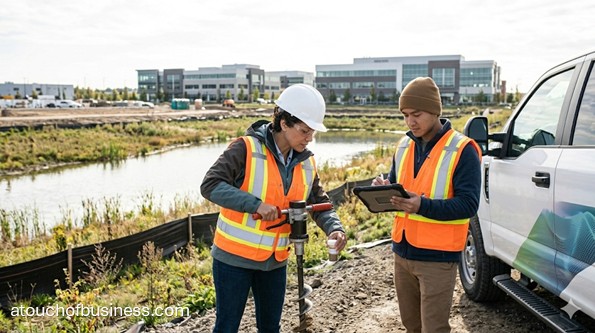
How to Prepare for an Environmental Consulting Firm
Overview Of An Environmental Consulting Firm
An environmental consulting firm helps clients understand environmental risk, meet rules, document site conditions, and make defensible decisions before work starts or property changes hands. In the mobile version of this business, you travel to client sites, gather facts in the field, coordinate sampling, manage documentation, and then finish analysis and reporting from your office or home base.
This kind of firm can serve property owners, contractors, developers, industrial facilities, municipalities, schools, utilities, lenders, and attorneys. Early services often include site assessments, compliance reviews, stormwater support, spill-plan support, hazardous waste documentation, and field sampling coordination. Work usually moves from first call, to scope and proposal, to site visit, to field forms and chain-of-custody paperwork, to lab coordination, to reporting, to invoice and payment.
Your clients care about legal handling, clear documentation, reliability, and fast communication. They are not paying you for vague advice. They want clean records, solid judgment, and a process they can defend later if questions come up.
The upside is that you can start leaner than a laboratory because you can outsource sample analysis. The hard part is that this business brings liability, field safety concerns, weather delays, travel time, and strict scope control. Environmental consulting sounds technical because it is technical. That is exactly why a sloppy launch causes expensive problems.
- Common services: site reviews, compliance support, sampling coordination, stormwater support, spill planning, hazardous waste documentation, remediation oversight, and reporting.
- Common customers: commercial property owners, industrial clients, developers, contractors, municipalities, schools, utilities, lenders, and legal teams.
- Main strengths: lower overhead than running a laboratory, repeat work potential, and room to specialize.
- Main drawbacks: field risk, documentation burden, travel inefficiency, contract exposure, and extra credentials for some specialties.
Is This Environmental Consulting Firm The Right Fit For You?
Start with two questions. Does owning a business fit you? And does an environmental consulting firm fit you? Those are not the same thing. You may love environmental work and still dislike quoting jobs, chasing payment, checking insurance terms, loading a vehicle at 6 a.m., or fixing a broken field process before a client sees it.
This business suits people who can stay calm under pressure, write clearly, follow procedures, and make careful decisions in the field. You need to be comfortable with paperwork, travel, weather, safety gear, and the fact that one missing form or a bad assumption can damage trust fast.
Passion matters, but passion is not enough by itself. Read why passion matters in business, then be honest with yourself. “Are you moving toward something or running away from something?” If your only reason is escaping a job, chasing status, or forcing income fast, that weak base will show up when the work gets technical and the pressure rises.
You also need a reality check before you commit. Review these points to consider before starting your business and look at your day-to-day tolerance. Can you handle route planning, field notes, chain-of-custody control, follow-up calls, proposal writing, and insurance renewals without getting sloppy?
- Good fit signs: you like field work, technical writing, process discipline, and responsibility.
- Bad fit signs: you dislike paperwork, hate travel delays, avoid detail, or want to offer every service before you can support it safely.
- Skills that matter early: environmental science knowledge, report writing, client communication, field safety judgment, scope control, and document control.
Talk To Owners Who Won’t Be Your Competitors
Before you launch an environmental consulting firm, talk to owners you will not compete against. That means another city, another region, or another market area. You want honest answers, not guarded ones. A good place to start is this guide to inside advice from real business owners.
Keep the questions practical. You are trying to see the business clearly, not collect praise.
- Which services looked easy at first but created the most liability?
- What field documents became essential once real projects started?
- How often did travel time ruin the original schedule or quote?
- Which insurance gaps surprised you?
- What would you refuse to offer at launch if you had to start again?
Step 1: Choose A Narrow Service List First
An environmental consulting firm can grow in many directions, so your first real decision is what you will offer on day one. Keep the list tight. A focused launch is easier to price, insure, document, and perform well.
Good early choices often include site reviews, compliance support, stormwater support, spill-plan support, basic field sampling coordination, hazardous waste documentation, and reporting. Be careful with anything that can trigger extra credentials, certified laboratories, or licensed professional sign-off, such as asbestos inspections, lead work, drinking water compliance sampling, or engineering opinions.
Do not provide regulated specialty services before you confirm the exact rules that apply to that service. The type of material, the kind of site, and the work you physically perform can change licensing, training, equipment, and liability fast.
Step 2: Pick Your Business Model, Territory, And Service Area
Your main model is mobile and on-site, but you still need to define how far you will travel, what type of sites you will accept, and how much same-day movement you can handle without breaking your schedule. An environmental consulting firm loses money quickly when travel flow is weak.
If you’re mobile, build a territory you can serve reliably with your current vehicle, field kit, and reporting capacity. Think about drive time, parking, weather, traffic, sample drop-off timing, and how many site visits you can complete before the paperwork stacks up.
If you’re storefront, your service area may grow around a physical office, but you still need to plan parking, storage, and field mobilization. A fixed location does not remove travel problems. It just changes how gear, records, and staff are staged.
Also decide whether your firm will be generalist or niche. A narrow specialty can lower confusion, but it can also shrink your customer base. A broader service list brings more demand, but it increases compliance and documentation burden.
Step 3: Validate The Market Before You Spend Too Much
Your best early customers are usually the ones already facing environmental pressure. Think property owners dealing with a transaction, contractors dealing with stormwater or dewatering issues, industrial sites needing compliance support, or developers who need site facts before they move forward.
Ask simple questions. What problems are people already paying to solve? Which of those problems can you solve well with your current skill level and setup? Which jobs require outside labs, outside specialists, or higher insurance limits?
This is also where you check local competition. Not every environmental consulting firm is chasing the same jobs. Some focus on due diligence. Others focus on compliance, waste, stormwater, air, remediation, or industrial hygiene. You need a clear lane before you build your brand.
Step 4: Form The Business And Set Up Banking
Once your service list is clear, form the business entity, file any assumed name if needed, and get your Employer Identification Number. Then open the business bank account and set up bookkeeping, invoicing, and document storage right away.
An environmental consulting firm needs orderly records from the start. You will handle proposals, field logs, lab forms, invoices, insurance certificates, and client onboarding paperwork. Mixing those records with personal accounts creates confusion when projects get more complex.
Before you take payment, have your W-9 ready, your invoice format ready, and your expense tracking ready. Many business clients prefer Automated Clearing House payments, and many will ask for tax forms and insurance details before they approve you as a vendor.
Step 5: Lock Down Your Name, Domain, And Digital Footprint
Your business name should sound credible, be easy to spell, and work well on a report header, a proposal, and a certificate of insurance. Check the state business registry, look for trademark conflicts, and secure the domain before you print anything.
Then claim the social handles you are likely to use, even if you stay quiet there at first. A new environmental consulting firm should also have a basic website with service pages, a contact form, service area details, and a page that explains credentials and scope.
Core brand assets should be ready before launch. That includes a clean logo, report template, proposal template, capability statement, email signature, business cards, and a file structure for project records.
Step 6: Handle Legal And Compliance Before You Promise Work
Because this is a regulated field, the legal side is not just entity filing and tax setup. You also need to check which rules attach to the work itself. General consulting is one thing. Hazardous waste work, asbestos, lead, drinking water work, dewatering, right-of-way activity, or licensed professional practice is another.
If you’re mobile, verify local business license rules, zoning for your base location, vehicle-related requirements, and whether any public right-of-way work needs permits. Also check whether your home base or small office can legally store field gear, coolers, preservatives, compressed gas, or company vehicles.
If you’re storefront, verify the location use, certificate of occupancy, local licensing, signage rules, parking, and whether the space is suitable for any storage tied to your service line. A lease is not proof that the use is approved.
At the federal level, pay attention to hazard communication, personal protective equipment rules, and Hazardous Waste Operations and Emergency Response requirements if your work falls into that area. If you generate hazardous waste or transport regulated material, other rules can come into play. Opening before approvals are in place can delay launch and force rework.
- Check with the Internal Revenue Service: Employer Identification Number and federal tax setup.
- Check with your state: business formation, assumed name filing, tax registration, and employer accounts.
- Check with your city or county: general business license, zoning, certificate of occupancy if needed, sign rules, and right-of-way approvals.
- Check specialty regulators when relevant: engineering board, environmental agency, health department, labor agency, or transportation regulators.
Step 7: Build Your Safety System, Field Documents, And Quality Controls
An environmental consulting firm is judged by its records as much as its technical work. Before you book real jobs, create the documents that keep projects clean and defensible. That means field logs, chain-of-custody forms, calibration logs, sample labels, site safety notes, proposal templates, report templates, and change-order forms.
You should also create written procedures for field work, sample handling, decontamination steps when needed, vehicle readiness, and what happens when site conditions do not match the original scope. If you will rely on project-specific quality plans, set up the template now instead of rushing later.
Safety planning comes next. Hazard communication files, personal protective equipment selection, first-aid supplies, spill response basics, and any respirator program needs should be sorted out before your first site visit. In this business, missing paperwork is not a small problem. It can weaken the entire project record.
Step 8: Buy The Equipment And Ready Your Vehicle
Do not buy tools just because they look professional. Buy what supports the services you actually plan to sell. Many new firms can start with strong documentation tools, proper sample handling supplies, basic field meters, and a reliable vehicle instead of chasing every advanced instrument at once.
If you’re mobile, your vehicle is part of the operating system. It needs storage bins, chargers, emergency supplies, traffic cones if needed, a first-aid kit, a spill kit, and a simple layout that keeps forms, labels, sample bottles, and personal protective equipment easy to reach.
If you’re storefront, you still need field-ready loading flow. That means a staging area for coolers, meters, labels, batteries, and project files so crews are not scrambling right before departure.
Common launch equipment includes a laptop, camera, rugged clipboard or tablet, field notebook, coolers, ice packs, sample bottles from the lab, custody seals, labels, a meter for pH, conductivity, and temperature, measuring tape, flashlight, hand tools, gloves, safety glasses, high-visibility gear, hard hat, boots, storage bins, and secure packaging materials. A water-level indicator, gas monitor, photoionization detector, air pump, or other specialty tools should come later unless your service line clearly requires them.
Step 9: Set Up Labs, Vendors, And Specialty Partners
Most environmental consulting firms rely on outside laboratories and specialty contractors. That means vendor setup is a launch task, not something you leave for later. Choose a primary lab and a backup lab. Review bottle kits, turnaround times, shipping rules, certification limits, and who to call when a sample needs rush handling.
You should also line up calibration support, personal protective equipment vendors, software vendors, and specialty partners such as drillers, survey crews, asbestos professionals, lead specialists, or waste transport firms if your services depend on them. Some jobs are won or lost because the vendor chain was weak, not because the consultant lacked technical skill.
Ask practical questions before you open vendor accounts. What does their account setup require? Do they have minimum orders? How long does calibration take? What happens if a meter fails in the middle of a busy week? Good vendor choices reduce delay, confusion, and risk.
Step 10: Build Pricing Rules And Contracts Before The First Quote
Pricing in an environmental consulting firm should reflect labor, travel, site complexity, safety level, number of visits, number of samples, lab turnaround, reporting depth, subcontractors, and contract risk. There is no safe shortcut here. If you guess low, you will feel it later in field time, report time, or client pressure.
If you’re mobile, travel time and territory discipline matter a lot. Long gaps between appointments, bad routing, parking delays, and extra courier runs can turn a good-looking quote into a weak job.
If you’re storefront, fixed location costs can push you to raise minimums or focus on larger jobs. A physical office can help image and storage, but it changes your break-even point.
Common pricing methods include hourly billing by labor level, fixed-fee work by deliverable, per-visit pricing, per-sampling-round pricing, monthly compliance support retainers, and pass-through billing for labs and specialty subcontractors when the contract allows it. Your contracts should clearly define scope, exclusions, assumptions, added-sample charges, rush charges, deliverables, and change-order triggers.
Step 11: Plan Startup Costs, Funding, And Payment Flow
Your startup costs will depend on scope more than almost anything else. A small environmental consulting firm that outsources lab work and starts with basic sampling gear will need far less cash than a firm that buys advanced instruments, hires staff fast, leases space, and takes on regulated specialties right away.
Major cost categories usually include entity setup, assumed name filing if needed, insurance deposits, website and branding, vehicle costs, field gear, software, training, laboratory setup, contract review, and working capital. Working capital matters because some clients pay slowly while labs and vendors expect faster payment.
Many owners start with savings, partner investment, a bank loan, a Small Business Administration-backed loan, a line of credit, or equipment financing.
Keep payment flow simple before launch. Open the bank account, set invoice terms, choose whether you will accept card payments, and make sure you can receive Automated Clearing House payments without confusion.
Step 12: Put Insurance And Risk Controls In Place
A basic policy bundle is often not enough for an environmental consulting firm. You should review general liability, professional liability, commercial auto, and workers’ compensation if you will have employees. Depending on your services and your contracts, you may also need protection that addresses pollution-related exposure or environmental professional risk more directly.
Separate what is commonly required from what is commonly recommended. Workers’ compensation is commonly required when state employee thresholds are met. Vehicle financial responsibility rules also apply. Professional liability may not be legally required in every case, but many clients and contracts treat it as essential.
Read client contract insurance language carefully before you sign anything. High limits, extra endorsements, or broad indemnity language can change the whole job. The cheapest policy is not the same as the right policy.
Step 13: Prepare Your Base Location, Staff Plan, And Training
Even a mobile environmental consulting firm needs a stable base. That may be a home office, a small leased office, or a light industrial space. The right choice depends on vehicle parking, storage, client image, local zoning, and whether your supplies or project flow create storage limits.
If you start alone, keep training focused on the services you will actually perform. If you bring in staff early, training should cover field documentation, sample handling, chain-of-custody control, personal protective equipment, client conduct, vehicle readiness, and what to do when the site does not match the scope.
Do not rush staffing. A new environmental consulting firm can be damaged by one person who treats forms casually or improvises in the field. Slow, careful training is better than a fast headcount increase.
Step 14: Build A Simple Marketing Plan For A Technical Service Business
Marketing for an environmental consulting firm usually starts with credibility, not flash. Your first plan should focus on direct outreach, referrals, repeat relationships, and a website that explains what you do clearly. Service pages, contact details, service area, credentials, and a strong capability statement matter more than broad social posting.
Make it easy for the right client to understand your lane. Spell out the problems you solve, the types of sites you work on, the documents you produce, and the limits of your services. A contractor, property owner, or facility manager should know in a minute whether to call you.
Not typically applicable: a grand opening event for the public, because this business usually grows through referrals, project bidding, and direct business relationships rather than walk-in traffic.
Step 15: Run A Dry Test Before You Open
Before you take a real project, run a full internal test. Create a mock proposal. Load the vehicle. Visit a practice site. Fill out field notes. Complete chain-of-custody paperwork. Label sample containers. Draft the report. Create the invoice. That sequence shows you where your weak points are.
This is also the best time to use a pre-opening checklist. In a technical field business, a dry test can save you from embarrassing errors that would otherwise show up in front of a client.
- Business setup ready: entity filed, Employer Identification Number issued, bank account open, bookkeeping active.
- Local approvals checked: business license if required, zoning confirmed, certificate of occupancy if required, parking and storage rules confirmed.
- Compliance scope clear: service list defined, specialty work either approved or excluded, permit triggers reviewed.
- Insurance active: certificates available, vehicle covered, workers’ compensation handled if needed.
- Documents ready: proposals, field logs, chain-of-custody forms, calibration logs, report templates, change-order forms, invoices, W-9.
- Equipment ready: vehicle stocked, meters checked, coolers ready, labels and custody seals ready, personal protective equipment loaded, spill kit and first-aid kit in place.
- Vendors ready: lab accounts open, bottle kit process confirmed, calibration support confirmed, specialty partners prequalified.
- Launch systems tested: contact form works, email works, file storage works, invoice process works, payment process works.
What Your Early Days Will Look Like
Before launch, the owner of an environmental consulting firm usually moves between admin work and field prep all day. You may spend the morning reviewing insurance forms, fixing a proposal template, and calling a lab. Then you load the vehicle, test a meter, check labels, organize bins, and review a site access plan. Later you update the website, answer client questions, and refine your service limits.
That rhythm tells you a lot about fit. This business is not just science. It is also organization, client communication, travel discipline, document control, and a steady habit of checking details before they become problems.
A Short Pre-Launch Snapshot
You start the day by checking emails from a lab and an insurance broker. After that, you review your field forms, print chain-of-custody sheets, and restock gloves and custody seals. By midday, you drive a test route to see how long a real appointment cycle would take. In the afternoon, you draft a sample report and review the wording in your proposal exclusions. Before the day ends, you confirm your website contact form and your invoice settings.
Red Flags Before You Launch
Watch for warning signs early. They tend to show up before the first client, not after.
- Trying to look full service before you can support the work safely and legally.
- Quoting jobs without clear assumptions, exclusions, and change-order language.
- Offering regulated specialty services without the right credentials, partner firms, or insurance.
- Ignoring route planning and underpricing travel.
- Storing supplies, sample materials, or vehicles at a base location without checking local rules.
- Launching without strong field forms, calibration control, or chain-of-custody discipline.
- Treating lab setup as an afterthought.
- Signing client contracts without reading insurance and indemnity language carefully.
FAQs
Question: Do I need a license to start an environmental consulting firm?
Answer: There is no single nationwide license for every environmental consulting firm. Your setup can trigger state, city, county, or specialty approvals based on your services, your location, and what you handle in the field.
Question: What business structure should I choose for an environmental consulting firm?
Answer: Many owners compare a sole proprietorship, limited liability company, and corporation before launch. Your choice affects taxes, liability, paperwork, and how clients and banks view the business.
Question: Do I need an Employer Identification Number before I open?
Answer: Many owners get one early because it is often needed for banking, tax setup, and payroll. You can get an Employer Identification Number directly from the Internal Revenue Service at no cost.
Question: What permits can affect a mobile environmental consulting firm?
Answer: A mobile setup can trigger local business licensing, zoning checks for your base, parking rules, and right-of-way approvals for some field work. Dewatering, discharge, or public-site work can add more approvals depending on the job.
Question: Can I offer asbestos, lead, or drinking water services right away?
Answer: Only if your service line, credentials, and lab setup support that work. Some specialties need certified labs, licensed professionals, or program-specific approvals before you offer them.
Question: Do I need special safety rules in place before the first job?
Answer: Yes, if your team handles hazardous chemicals, field hazards, or regulated site conditions. Hazard communication, personal protective equipment review, and job-specific safety procedures should be ready before site work starts.
Question: When does HAZWOPER apply to an environmental consulting firm?
Answer: It does not apply to every consulting job. It applies when your work falls into covered hazardous waste operations or certain emergency response situations.
Question: What insurance should I have before I take the first project?
Answer: Many firms start with general liability, professional liability, and commercial auto coverage. Workers’ compensation may also be required if you have employees, and some jobs call for pollution-related coverage.
Question: What equipment do I need to open a small environmental consulting firm?
Answer: Start with field forms, chain-of-custody supplies, coolers, labels, basic meters, personal protective equipment, a reliable vehicle, a laptop, and secure cloud storage. Add advanced instruments only when your service list clearly needs them.
Question: How should I set prices for environmental consulting work?
Answer: New firms often use hourly pricing, fixed-fee proposals, per-visit pricing, or monthly support agreements. Travel time, field risk, lab work, reporting time, and subcontractors should all be built into the quote.
Question: What startup costs matter most in this business?
Answer: The main cost drivers are insurance, vehicle setup, field gear, software, training, branding, and working cash for labs and subcontractors. Costs rise fast when you add specialty services, employees, or advanced instruments.
Question: What systems should be ready before opening day?
Answer: You should have invoicing, bookkeeping, cloud file storage, proposal templates, report templates, field logs, chain-of-custody forms, and calibration records ready. A weak paper trail can hurt the job even if the field work was done well.
Question: What does the first month usually look like for a new owner?
Answer: You will likely move between proposals, site visits, field notes, lab coordination, report writing, and invoicing. Early days are often split between technical work and admin work.
Question: Should I hire field help before I open?
Answer: Only if your early workload truly needs it or the work cannot be done safely alone. Anyone you hire should be trained on documentation, safety steps, equipment handling, and client conduct before they go to a site.
Question: How do I get my first clients for an environmental consulting firm?
Answer: Most firms start with direct outreach, referrals, a clear website, and a short capability statement. Property owners, contractors, facilities, municipalities, and project teams need to understand your scope quickly.
Question: How do I protect cash flow in the first phase of the business?
Answer: Keep enough cash on hand for insurance, fuel, software, lab bills, and slow-paying clients. Clear scope, clean invoices, and strong payment terms matter early because one delayed job can squeeze a small firm fast.
Question: What mistakes hurt new environmental consulting firms the fastest?
Answer: Common problems include offering regulated work without the right setup, underpricing travel, using weak field documents, and signing risky contracts too quickly. Another big one is trying to look full service before the business can support it.
51 Tips to Launch Your Environmental Consulting Firm
Launching an environmental consulting firm takes more than technical skill.
You need a clear service scope, a safe field process, strong documentation, and a setup that matches your location and the kind of work you plan to do.
These tips walk through the early startup stages so you can build the business in a practical way and avoid costly setup errors.
Before You Commit
1. Be honest about fit before you spend money. An environmental consulting firm is part field work, part paperwork, part risk control, and part client communication.
2. Check your reason for starting. If you are only trying to escape a job or force income fast, that pressure can push you into taking work your business is not ready to handle.
3. Match the business to your daily work style. This field suits people who can stay organized, write clearly, travel when needed, and follow procedures without cutting corners.
4. Talk to owners outside your market area. Ask what services created the most liability, what documents became essential, and what they would refuse to offer at launch.
5. Decide whether you want to be a general environmental consultant or start with a niche. A narrow launch is often easier to price, insure, document, and explain to clients.
6. Look at your pressure tolerance early. Weather delays, field hazards, document errors, and contract issues can all show up before the business even opens.
Demand And Profit Validation
7. Define the first customer groups you want to serve. Property owners, contractors, developers, industrial sites, municipalities, schools, and utilities often need different services and expect different deliverables.
8. Validate demand by problem, not by broad interest. It is more useful to know who needs stormwater help, due diligence support, or hazardous waste documentation than to know people care about the environment.
9. Study local work triggers that create demand. Property transfers, redevelopment, facility compliance needs, stormwater obligations, spill planning, and site investigations can all create pre-launch opportunity.
10. Check whether your area already has many firms chasing the same type of project. If the local market is crowded, a focused service line can make your launch clearer.
11. Separate attractive work from practical work. Some jobs sound valuable but require more equipment, credentials, insurance, or outside support than a new firm can carry safely.
12. Test your offer with real conversations before you brand it hard. If possible, speak with contractors, property managers, or facility contacts and find out what kind of environmental help they already pay for.
Business Model And Scale Decisions
13. Keep the mobile and on-site model simple at first. It gives you lower fixed overhead than a larger office setup, but it demands better vehicle readiness, scheduling, and route planning.
14. Set a tight service territory before launch. Travel time, traffic, parking, weather, and sample drop-off timing can turn a good schedule into a weak day fast.
15. Choose a small starter service list and write down what is excluded. That list can protect you from saying yes to regulated specialty work before you are ready.
16. Decide whether you will do only consulting and reporting or also coordinate sampling and outside labs. That choice changes your forms, vendor setup, and liability profile.
17. Build your launch around the services you can perform well with your current skills and tools. Add advanced service lines later only after the support system is in place.
18. Set capacity rules before the first client calls. Know how many site visits, reports, and proposal requests you can handle in a week without your documentation falling apart.
Legal And Compliance Setup
19. Form the business entity before you start signing proposals. Your structure affects taxes, liability, banking, and how clients see the company.
20. Get an Employer Identification Number early. You will likely need it for banking, tax setup, and payroll if you add employees.
21. Check whether you need an assumed name filing. If your public business name does not match your legal entity name, a Doing Business As filing may apply.
22. Confirm state tax registration before billing work. The tax treatment of consulting services is not the same in every state.
23. Check city and county licensing rules even if you do not have a storefront. Many service businesses still need a local business license.
24. Verify zoning for your base location before storing field gear, parking company vehicles, or receiving regular business shipments. A home office or small office does not automatically mean the use is approved.
25. Review whether your planned work triggers right-of-way, dewatering, discharge, or public-site approvals. Those issues matter more for a mobile firm than many first-time owners expect.
26. Do not offer asbestos, lead, drinking water compliance work, or stamped engineering opinions unless the exact credentials and support requirements are already in place. Those services can change the legal path quickly.
27. Review hazard communication requirements before employees handle chemicals, preservatives, or hazardous substances. Labels, safety data sheets, and training should not wait until after opening.
28. Decide whether Hazardous Waste Operations and Emergency Response rules apply to any work you plan to take. Not every environmental consulting job falls under that standard, but covered work needs more preparation.
29. Confirm whether your work could generate hazardous waste or involve regulated transport. The material type and what you do in the field can change handling, training, and recordkeeping duties.
30. Keep local rule wording practical when you build your startup checklist. State and city requirements vary, so verify them with the exact agency that controls the activity.
Budget, Funding, And Financial Setup
31. Build your startup budget by category instead of guessing one big number. Break it into formation, insurance, vehicle costs, field gear, software, branding, training, and working cash.
32. Treat working capital as a real startup need. Labs, fuel, software, and outside vendors may need payment before your client pays you.
33. Price your services after you understand the field process. Travel time, site complexity, number of visits, number of samples, safety level, reporting depth, and subcontractors all affect the quote.
34. Choose pricing methods that fit the work. Many new firms use hourly billing, fixed-fee proposals, per-visit pricing, per-sampling-round pricing, or monthly compliance support agreements.
35. Build clear assumptions and exclusions into every quote template. Weak scope language is one of the fastest ways to lose control of a project before launch.
36. Open your business bank account before taking deposits or final payments. It keeps records cleaner and makes invoicing and tax tracking easier from day one.
37. Decide how you will accept payment before the first invoice goes out. Automated Clearing House payments are common in business-to-business work, but some small clients may still want card options.
38. Compare funding options based on what you actually need to buy. Owner savings, partner funds, loans, lines of credit, or equipment financing each solve different startup problems.
Location, Build-Out, And Equipment
39. Choose a base location that fits the mobile model instead of copying another business type. You need a place that supports admin work, vehicle loading, storage control, and clean records.
40. Think through the physical flow of your field gear before you buy more tools. Labels, chain-of-custody forms, coolers, meters, gloves, and spare supplies should be easy to load and find.
41. Start with the essential field kit first. A laptop, camera, rugged clipboard or tablet, field notebook, coolers, sample bottles, labels, custody seals, basic meters, and personal protective equipment cover a lot of early work.
42. Do not buy advanced instruments just to look established. Specialty gear should follow a real service need, not a branding decision.
43. Treat the vehicle like part of the operating system. A poor layout, weak charging setup, missing safety supplies, or cluttered bins can waste time on every job.
44. Inspect every meter, cooler, charger, and storage bin before launch. Small equipment failures create field stress quickly when appointments are already booked.
Suppliers, Contracts, And Pre-Opening Setup
45. Set up your primary lab and a backup lab before you begin marketing hard. Bottle kits, turnaround time, shipping rules, and certification limits all affect how you provide the service.
46. Prequalify outside specialists before you need them. Drillers, survey crews, asbestos professionals, lead specialists, and waste transport firms are easier to use when their paperwork is already reviewed.
47. Build a clean document package before opening. Proposal templates, field logs, calibration logs, chain-of-custody forms, report templates, change-order forms, invoices, and a W-9 should be ready.
48. Put insurance in place before you promise a start date. General liability, professional liability, commercial auto, and workers’ compensation when required should be reviewed against your actual services.
49. Read every client contract for insurance terms, indemnity language, and scope wording. A small startup can get trapped by contract risk long before the work begins.
50. Run a full dry test before launch. Practice the job from proposal, to field prep, to site visit, to paperwork, to report draft, to invoice so you can catch weak links early.
Final Pre-Opening Checks And Red Flags
51. Watch for the biggest startup warning signs right before launch. Offering too many services, underpricing travel, skipping safety setup, using weak records, or opening before approvals are in place can create expensive rework fast.
- A strong launch for an environmental consulting firm comes from clear scope, clean records, safe field preparation, and careful verification before you promise work.
- If you keep the setup practical and controlled, you give the business a much better chance to open with fewer surprises.
Learn From Environmental Consulting Leaders
One of the fastest ways to get sharper before launch is to study founders and senior consultants who have already built firms, handled early risk, and learned what matters in the field.
The resources below can help you spot better service choices, stronger positioning, cleaner startup decisions, and common traps to avoid before you open.
- Leading an Environmental Consulting Firm, ft. Tania Treis and Susanne Heim, Panorama Environmental
- Podcast: Nancy Thomson | Thomson Environmental Consultants
- From Biology to Entrepreneurship: Elva Peppers’ Journey with Florida Environmental & Land Services
- How To Build A Sustainable Consulting Business With Kate Gaertner
- VG CEO Shares “How I Built This” Founder’s Story on Green Building Matters Podcast
- Patrice Brown of CQG Consulting on Starting and Growing an Environmental Consulting Firm
Related Articles
- How To Start Your Successful Energy Consulting Business
- Starting an Asbestos Removal Business from Scratch
- How To Start Your Consulting Business
- How To Start a Recycling Business
- Start a Composting Business
- Start a Biodiesel Business
- Starting a Battery Recycling Business
- Start an AI Consulting Business
Sources:
- SBA: Choose business structure, Choose business name, Federal state tax ID numbers, Pick business location, Open business bank account, Calculate startup costs, Fund your business
- IRS: Employer identification number
- BLS: Environmental scientists specialists
- O*NET: Environmental scientists including health
- OSHA: Hazard communication overview, 1910.132 general requirements, 1910.120 hazardous waste operations
- EPA: Quality assurance project planning, Resources assessing measurements, Hazardous waste generator summary, Brownfields appropriate inquiries, Asbestos professionals, Renovation repair painting certification, Laboratories analyze drinking water, Construction permit resources tools
- PHMSA: Hazardous materials training requirements, Registration overview
- NAIC: Small business insurance
- Travelers: Environmental contractors liability
- USPTO: Search trademark database
- ICANN: Registering domain names
- NCEES: Licensure