
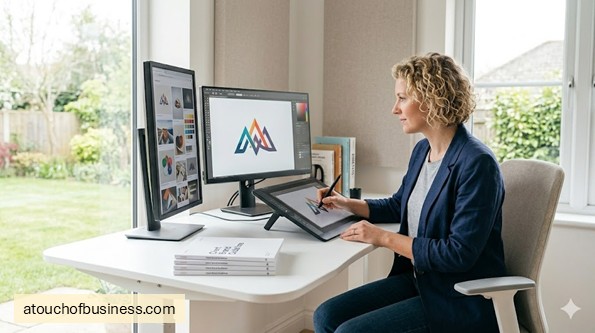
What to Plan Before Opening Your Logo Design Studio
A logo design business creates visual marks that help companies, products, groups, and professionals identify themselves clearly.
In an office or studio-based setup, you are not only selling design files. You are also selling a clear process, a professional setting, and confidence that the final logo will match the client’s brief.
Common services include logo design, logo refreshes, brand identity packages, wordmarks, icon marks, color palettes, typography choices, brand guidelines, social media brand assets, and basic stationery design.
Your clients may include startups, local service businesses, consultants, e-commerce brands, nonprofits, restaurants, trades, wellness businesses, and marketing agencies that need white-label design support.
This business can look simple from the outside. A computer, design software, and a portfolio may seem like enough.
Can You See Yourself Owning a Business?
A logo design business can fit you if you enjoy creative work, client communication, visual problem-solving, and detailed file preparation.
It may not fit you if you only like making art but dislike deadlines, feedback, pricing conversations, contracts, and project follow-up.
You also need to ask whether owning a business fits your life. Owning a studio means decisions do not end when the design work ends.
You may handle:
- Client calls
- Discovery questions
- Proposals
- Deposits and invoices
- Revision tracking
- Final file delivery
- Local license and tax checks
Creative work is only part of the job. The owner responsibilities matter just as much.
Start because you are moving toward something you care about, not because you want to run away from a job, a difficult boss, or financial pressure. Prestige and the image of owning a studio are weak reasons. They rarely carry you through slow sales, rejected concepts, late payments, or hard client conversations.
Better reasons include real passion for your business, respect for the service, and a genuine desire to help clients present themselves well.
Talk to Other Logo Design Business Owners
Before you commit capital to office space, speak with owners who already run design studios.
Only contact owners you will not compete against. Look in another city, region, or market area.
Prepare real questions before you reach out. Ask about pricing, client briefing, revisions, payment timing, local demand, software, contracts, and what they wish they had handled before opening.
These insights are invaluable; seasoned founders have already worked through the hard parts firsthand. Their path will not match yours exactly, but their lessons can help you avoid expensive mistakes.
Firsthand owner insight can show you the difference between how the business looks from the outside and how it works day to day.
Check Local Demand Before You Move Forward
A logo design business needs enough paying clients in the market you plan to serve.
Good design skills matter. Demand matters too.
Check whether your area has enough startups, small businesses, nonprofits, professional firms, agencies, and existing businesses that need logo refreshes.
Also look at local competition. Compare independent designers, design studios, agencies, low-cost marketplaces, template sellers, and AI-assisted logo tools.
The low-cost testing versus expensive commitment tradeoff applies here. Early demand testing may be as simple as conversations and a small portfolio page. The expensive version is signing a studio lease before you know whether local clients will pay your prices.
Study local supply and demand before you commit to rent, furniture, software, and launch spending.
If demand looks weak, the business idea may not fit that area. You may need a different niche, a remote-first model, a smaller office, or another business idea.
Choose Your Startup Path
Most logo design businesses start from scratch because the business depends on the owner’s portfolio, style, process, and client relationships.
Still, starting from scratch is not the only path.
Compare three options:
- Starting your own logo design business from the ground up
- Buying an existing design studio or small creative business
- Exploring a franchise only if a real design-related franchise option fits your goals
Buying an existing business may give you clients, equipment, a lease, local name recognition, and working systems. It may also bring old contracts, weak pricing, or a brand style that does not fit you.
Starting from scratch gives you more control. It also means you must build trust, find clients, and create every system before revenue becomes steady.
If you find a business already in operation, compare budget, timeline, support needs, available records, client quality, and risk tolerance before deciding.
Define Your Logo Design Business Model
Your business model decides what you sell, who you serve, how you price, and how much setup you need.
Keep it clear at the start. A broad offer can become hard to manage later.
A focused launch offer may include:
- Discovery call
- Creative brief
- Logo concepts
- Limited revision rounds
- Final logo files
- Basic brand usage notes
A larger identity package may include color palette, typography, business card design, social profile files, and a brand guide.
The service mix changes your setup. Logo-only work may need fewer templates and less presentation time. Full identity work needs stronger brand strategy, more file types, more client education, and a higher price.
Fast vs correct is a real tradeoff. Fast packages may be easier to sell. Correct packages need enough discovery, concept work, refinement, and file preparation to hold up in real use.
Position the Studio Before You Build the Portfolio
A logo design business cannot be the right fit for everyone.
Positioning helps clients decide whether your style and process fit them.
You can position by:
- Industry, such as local service businesses or wellness brands
- Style, such as clean, classic, bold, playful, or premium
- Project type, such as startup logos or logo refreshes
- Client type, such as founders, consultants, nonprofits, or agencies
Weak positioning makes your offer harder to understand. Clear positioning helps the right customer see why your studio fits their project.
Your positioning also affects your office setup. A client-facing studio needs a stronger meeting area and presentation flow. A behind-the-scenes studio may need fewer public-facing touches and more focus on workstations, privacy, and file systems.
Build a Portfolio That Shows Fit
Your portfolio is one of the most important launch assets for a logo design business.
Clients want to know whether your style, thinking, and delivery quality match their needs.
Use real work when you have permission. If you use concept projects, label them clearly.
A useful portfolio can show:
- The final logo
- Alternate logo versions
- Color palette
- Typography direction
- Mockups
- A short design reason
There’s a difference between looking good and working well. A logo can look good in a mockup and still fail in small sizes, embroidery, signage, or social profile use.
Show enough practical use cases so clients can picture the logo in real settings.
Map the Client Workflow
A repeatable workflow keeps the logo design business from becoming chaotic.
It also helps clients understand what happens next.
A simple startup workflow may look like this:
- Inquiry
- Discovery form
- Discovery call
- Creative brief
- Proposal
- Contract
- Deposit invoice
- Concept development
- Presentation
- Revisions
- Approval
- Final payment
- Final file delivery
This process protects both sides. The client knows what to expect, and you avoid guessing your way through each project.
Clarity upfront beats confusion later. A clear brief may slow the start by a day. A vague brief can cost you many unpaid revision hours.
Set Strong Revision and Scope Rules
Revision overload is one of the biggest early risks in a logo design business.
The fix starts before the project begins.
Your proposal and contract should define:
- Number of logo concepts
- Number of revision rounds
- What counts as a revision
- What counts as a new direction
- What files are included
- What services are not included
- How change requests are priced
Unlimited revisions may sound friendly. In practice, they can erase profit and damage the client relationship.
Setting those limits before the project starts is far easier than enforcing them once work is underway. Set your terms early, then deliver excellent service within them.
Write a Business Plan for the Studio
A business plan helps you turn a creative idea into a practical launch.
It does not need to be fancy. It needs to be useful.
For a logo design business, your plan should cover:
- Target customers
- Service packages
- Portfolio strategy
- Pricing method
- Startup costs
- Studio location
- Local demand
- Legal setup
- Marketing approach
- Monthly break-even target
Use the plan to make decisions before you commit capital to software, office space, furniture, and advertising.
Building a business plan also helps you explain the business to lenders, partners, landlords, or advisors.
Identify the Right Customers
A logo design business can serve many types of clients, but not all clients fit your launch offer.
Start with the people most likely to need what you are ready to deliver.
Good early customer groups may include:
- New local businesses
- Solo consultants
- Professional service firms
- Nonprofits
- Product startups
- Existing businesses with outdated logos
- Agencies that outsource identity work
Think about what each customer needs. A startup may need a basic logo package. An established business may need a careful logo refresh that does not confuse current customers.
Starting simple and expanding later can work well here. Your first launch offer can be focused, as long as it is clear and complete enough for that client type.
Choose Your Office or Studio Setup
An office-based logo design business needs space that supports client meetings, creative work, and file privacy.
You do not need a large studio to launch well.
Think through how the space will be used:
- Will clients visit by appointment?
- Will you present logo concepts in person?
- Will another designer or contractor work there?
- Will you need a private meeting area?
- Will the space need signage?
- Will the lease allow design studio use?
Paying for more space than you need can hurt the business early. A smaller, well-planned office may serve you better than a larger space that sits underused.
The layout should support quiet design time, client calls, presentation work, storage, and secure recordkeeping.
Prepare the Equipment and Software
A logo design business depends on reliable tools and clean file delivery.
Weak equipment can slow work, but buying too much too soon can drain startup funds.
Core setup needs may include:
- Professional desktop or laptop
- External monitor or dual monitors
- Drawing tablet or pen display
- Printer for internal proofs
- External backup drives
- Secure Wi-Fi
- Vector design software
- Raster editing software
- PDF tools
- Cloud storage
- Project management software
- Invoicing software
- Electronic signature software
Office needs may include desks, ergonomic chairs, client seating, lighting, a meeting table, lockable storage, and basic signage if local rules and the lease allow it.
Use office setup basics as a checklist, then adapt it to design work.
Plan Startup Costs and Funding
Your startup costs depend on whether you already own design equipment and whether you lease a dedicated studio.
Rent can be the largest difference between a lean launch and a costly one.
Cost categories may include:
- Business registration
- DBA filing if needed
- Local license or business tax registration
- Lease deposit and rent
- Furniture
- Computer hardware
- Monitor and tablet
- Software subscriptions
- Website and domain
- Email setup
- Contract review
- Insurance
- Fonts and licensed assets
- Launch marketing materials
- Working capital
There is no reliable universal startup cost range for this exact setup. Costs vary by location, lease terms, equipment level, software, legal help, insurance, staffing, and how much you prepare before opening.
Cutting corners now will cost you later when it comes to contracts, backups, and licensing. Cutting costs in those areas can create larger problems later.
Funding options may include owner savings, a small business loan, a line of credit, equipment financing, or deposits from signed client projects. Compare the cost of borrowing against your realistic early revenue.
Set Pricing and Profit Targets
A logo design business should not price only by the time spent drawing.
Research, briefing, concept work, revisions, presentation, final files, and rights language all take time.
Common pricing methods include:
- Fixed project fee
- Hourly fee
- Phased fee
- Package pricing
- Day rate for agency subcontract work
Your pricing should reflect:
- Number of concepts
- Number of revision rounds
- Project complexity
- Custom lettering or illustration
- Final file formats
- Brand guide inclusion
- Copyright transfer terms
- Deadline urgency
Underpricing now will eat into your profit later. A low logo fee can feel easier to sell, but it may not cover the full process.
Before launch, work through pricing your services so you know what each package must include and what it must exclude.
Set Up Banking, Bookkeeping and Payments
A logo design business should separate business transactions from personal ones from the start.
This keeps records cleaner and makes tax time easier.
Set up:
- Business checking account
- Payment processor
- Invoicing software
- Bookkeeping system
- Deposit invoice process
- Final invoice process
- Receipt storage
- Tax document folder
Many banks ask for formation documents, ownership records, a business license if applicable, and an Employer Identification Number or Social Security number depending on the business structure.
Get your business banking in place before you start collecting client deposits.
Payment terms should be clear. Many studios require a deposit before work begins and final payment before releasing final logo files.
Handle Legal Setup for a Logo Design Business
A logo design business does not usually need a special federal design license.
That does not mean you can ignore legal setup.
At the federal level, review:
- Employer Identification Number needs
- Federal tax setup
- Copyright ownership
- Work made for hire rules
- Trademark disclaimer language
- Truthful advertising claims
- Workplace posters if employees are hired
At the state level, check:
- Business entity formation
- DBA or assumed name rules
- Sales and use tax treatment
- Employer withholding if hiring
- Workers’ compensation rules if hiring
At the city or county level, check:
- General business license
- Business tax certificate
- Zoning approval
- Certificate of occupancy
- Sign permit if using visible signage
Sales tax varies by state. Some states treat services, digital files, printed goods, templates, or bundled design packages differently. Ask the state Department of Revenue how logo design services and digital deliverables are handled.
Zoning also varies locally. Ask the city planning office whether your address allows a graphic design studio, professional office, or commercial art studio.
Use local licenses and permits as a starting point, then verify the rules with the correct state, city, or county office.
Protect Rights, Files and Client Expectations
Rights language is a core part of a logo design business.
A client may think payment means full ownership. Your contract should not leave that unclear.
Your agreement should explain:
- Who owns rejected concepts
- When final rights transfer
- Whether final payment is required first
- Whether source files are included
- Whether fonts are transferred or licensed separately
- Whether stock assets are allowed
- Whether you may show the work in your portfolio
Trademark expectations also need care. A logo can serve as a trademark, but logo design is not the same as legal trademark clearance.
If you do not provide legal trademark review, say so clearly. Refer the client to an attorney when needed.
Getting it right upfront prevents disputes later. Clear rights language can prevent confusion after the logo is approved.
Plan Insurance and Risk Management
A logo design business may face risk from client disputes, office visitors, data loss, missed deadlines, and rights misunderstandings.
Insurance needs depend on location, lease terms, client contracts, and whether you hire employees.
Coverage to discuss with an insurance professional may include:
- General liability
- Professional liability or errors and omissions
- Business property coverage
- Cyber coverage
- Workers’ compensation if employees are hired
A landlord may require certain coverage before you occupy the studio. Some clients may also require proof of insurance.
Insurance does not replace good contracts, licensed assets, backups, or clear approvals. It supports them.
Choose Suppliers and Vendors
A logo design business has fewer suppliers than a retail or manufacturing business, but vendor choices still matter.
Your tools shape your workflow and delivery standards.
Possible vendors include:
- Design software providers
- Font vendors
- Stock asset libraries
- Mockup template providers
- Printing vendors
- Domain registrar
- Website host
- Email provider
- Payment processor
- Bookkeeper or accountant
- Attorney
- Insurance agent
- IT support provider
Keep records for font licenses and stock asset licenses. Some licenses restrict logo, trademark, or identity use.
Convenient asset choices can create ownership and usability problems later. A quick stock icon may look fine, but it may block the client from owning or protecting the logo.
Create the Business Name and Digital Footprint
Your own logo design business needs a name, domain, email, website, and basic public identity before launch.
Clients will judge your business by the same standards you ask them to trust.
Before using a name, check:
- State business-name records
- DBA availability if needed
- Domain availability
- Social handle availability
- Trademark database results
- Local business directories
Registering a business name is not the same as trademark protection. If the name matters long term, ask a qualified trademark professional about clearance and filing.
Your launch website should show your portfolio, services, process, contact method, and basic terms. Do not claim guaranteed business results, trademark protection, or legal clearance unless you can support those claims.
Build Your Own Brand Assets
A logo design business must look prepared before asking clients to trust its design judgment.
Your own brand does not need to be complicated, but it should be consistent.
Prepare:
- Studio logo
- Color palette
- Typography choices
- Proposal template
- Invoice template
- Email signature
- Business cards if useful
- Website visuals
- Social profile graphics
These assets show clients how you think about identity systems. They also help you present the business with confidence.
If you create broader identity materials, a set of business identity assets can keep your own studio materials consistent.
Prepare Forms and Internal Documents
Good documents help a logo design business run smoothly from the first inquiry.
They also protect your time.
Prepare these before opening:
- Discovery questionnaire
- Creative brief template
- Proposal template
- Scope of work
- Client agreement
- Revision policy
- Change order form
- Approval form
- Final file checklist
- Invoice template
- Payment terms
- Client handoff guide
Clear forms reduce guessing. They also make your studio look more professional during the first paid projects.
Vague now vs documented later is costly. Write the process before a client tests it under pressure.
Plan Hiring and Outside Help
Many logo design businesses start with one owner.
That can work if you have the design, client, pricing, and administrative skills to handle the early workload.
You may still need outside help for:
- Legal agreement review
- Bookkeeping
- Tax setup
- Website development
- IT support
- Photography or mockups
- Copywriting
- Overflow design work
If you hire employees, check employer tax accounts, workplace posters, workers’ compensation, payroll, and state labor rules before the first workday.
Worker classification is another serious issue. Misclassifying workers can create tax and labor problems. Ask a tax or legal professional if you are unsure.
Plan Capacity Before You Take Projects
A logo design business does not carry traditional inventory.
Your capacity is your time, focus, software, process, and ability to meet deadlines.
Plan how many projects you can handle at once. Consider:
- Discovery calls
- Research time
- Concept development
- Presentation preparation
- Revision rounds
- Final file export
- Client follow-up
- Administrative work
Taking too many projects early can damage quality and deadlines. Taking too few may leave the studio unable to cover fixed costs.
Capacity planning matters more in an office model because rent continues even when project flow is uneven.
Build a Launch Marketing Plan
A logo design business needs a clear way to reach the right clients before opening.
Do not rely only on hope or social media posts.
Early marketing can include:
- Portfolio website
- Local business listings
- Direct outreach to new businesses
- Relationships with web developers
- Connections with printers and sign shops
- Startup and small business groups
- Referral relationships with agencies
- Clear service pages
Your marketing should explain who you help, what you deliver, how the process works, and what the client receives at the end.
Customer acquisition starts with clarity. If people cannot understand your offer, they will not know whether to contact you.
Repeat sales may come from brand refreshes, additional identity materials, social graphics, business card updates, signage files, and brand guide work. Keep those services inside your real capacity.
Prepare Customer Service Standards
A logo design business depends on communication as much as creativity.
Clients often feel unsure during creative projects because they cannot see the final result yet.
Set standards for:
- Response times
- Meeting scheduling
- Revision deadlines
- Feedback format
- Approval steps
- File delivery timing
- Payment reminders
Setting a professional tone now beats apologizing later. Clear communication prevents many problems before they become disputes.
Do not promise instant results unless your process can support it. Reliability is part of the service.
Know the Day-to-Day Work
Once the logo design business opens, your days will mix creative work with owner responsibilities.
This snapshot helps you judge readiness before launch.
A typical day may include:
- Reviewing discovery forms
- Preparing proposals
- Checking deposits
- Researching a client’s market
- Sketching logo concepts
- Building vector artwork
- Presenting design options
- Tracking revisions
- Exporting final files
- Backing up client folders
If that mix sounds appealing, the business may fit you. If you only want the concept work, think carefully before opening a studio.
Set Launch Readiness Targets
A logo design business is ready to open when the offer, process, workspace, documents, and payment systems work together.
Do not open just because the logo and website are finished.
Before launch, confirm:
- The service scope is written
- The portfolio is strong enough
- The proposal template is ready
- The client agreement is ready
- The revision policy is clear
- The payment processor works
- The office is ready for client use if clients visit
- Local approvals have been checked
- Final file delivery has been tested
- Backups are working
Run a test project before taking your first real client. Move from discovery to final delivery as if it were paid work.
Fixing problems before launch is cheaper than fixing them while a client waits.
Watch for These Red Flags
A logo design business can be hard to launch if the foundation is weak.
These warning signs deserve attention before you move forward.
- No clear target customer
- Weak or unfinished portfolio
- No written contract
- No revision limits
- No deposit requirement
- Pricing that ignores research, revisions, and file delivery
- Promise of legal trademark clearance without proper legal support
- Use of unlicensed fonts, stock icons, or template marks
- No clear copyright transfer language
- Only low-resolution file delivery
- Studio lease signed before zoning review
- No certificate of occupancy check
- Too much office space for early demand
- No backup system for client files
- Overcommitting to branding, web design, signage, and marketing before those services are ready
Competition is also real. Designers compete with freelancers, agencies, marketplaces, templates, and AI-assisted tools.
The warning is not that you cannot compete. The warning is that unclear positioning, weak process, and poor pricing make competition harder than it needs to be.
Final Pre-Opening Checklist
Use this checklist before opening your logo design business to clients.
Missing pieces are easier to fix before a paid project begins.
- Business structure chosen
- Business name checked
- DBA filed if needed
- Employer Identification Number obtained if needed
- State tax treatment checked
- Local business license checked
- Zoning approval checked
- Certificate of occupancy checked
- Sign permit checked if signage is planned
- Studio lease reviewed
- Workstation tested
- Design software active
- Backup process tested
- Portfolio published
- Website live
- Business email working
- Discovery form ready
- Proposal template ready
- Client agreement ready
- Revision policy ready
- Payment processor connected
- Final logo file package defined
- Test project completed
Opening with fewer loose ends gives you a better chance to serve clients well from the first project.
FAQs
Question: How do I start a logo design business from the ground up?
Answer: Start by choosing your client type, service offer, legal structure, business name, and pricing method. Then prepare your portfolio, contract, payment system, design tools, and client workflow before taking paid work.
Question: Do I need a business license to open a logo design studio?
Answer: A special federal logo design license is not normally required. Your city or county may still require a general business license, business tax registration, zoning approval, or certificate of occupancy for the studio space.
Question: What legal structure should I choose for a logo design business?
Answer: Many owners compare a sole proprietorship, limited liability company, partnership, or corporation. The right choice depends on taxes, liability, paperwork, ownership, and whether you plan to hire or bring in partners.
Question: Do I need an Employer Identification Number for this business?
Answer: You may need an Employer Identification Number if you form certain entities, hire workers, open some bank accounts, or handle certain tax filings. The Internal Revenue Service provides the number directly.
Question: Does a logo design business need to collect sales tax?
Answer: It depends on the state and what you sell. Some states treat services, digital files, printed items, templates, or bundled packages differently.
Ask your state Department of Revenue how logo design and digital delivery are taxed before you send invoices.
Question: What insurance should I look at before opening?
Answer: Ask about general liability, professional liability, business property coverage, and cyber coverage. If you hire employees, workers’ compensation rules may apply in your state.
Question: What equipment do I need to launch a logo design business?
Answer: You need a reliable computer, monitor, design software, backup storage, secure internet, invoicing tools, and a way to present work to clients. A studio setup may also need desks, chairs, lighting, client seating, and locked storage.
Question: Can I start this business without renting an office?
Answer: Yes, a logo design business can often start from home or as a remote service. If you choose an office or studio model, confirm rent, zoning, client access, utilities, and any local occupancy rules first.
Question: How much does it cost to start a logo design business?
Answer: There is no single reliable amount because costs change by location, rent, software, equipment, insurance, legal help, and staffing. A studio lease usually raises the startup cost compared with a home-based setup.
Question: How should I price logo design services when I am new?
Answer: Base your price on the full job, not only the drawing time. Include discovery, research, concepts, revision rounds, file preparation, meetings, payment collection, and usage rights.
Question: What should my first logo design package include?
Answer: A basic package can include a discovery step, a set number of concepts, limited revisions, final files, and simple use notes. Add brand colors, typography, or a brand guide only if you can deliver them well.
Question: What should be in my client contract?
Answer: Your agreement should cover scope, payment timing, revision limits, final deliverables, cancellation terms, rights transfer, source files, and portfolio use. It should also explain what is not included.
Question: Who owns the logo after the client pays?
Answer: Ownership should be spelled out in writing. Your contract should say when rights move to the client and whether full payment is required first.
Question: Should I do trademark searches for clients?
Answer: Be careful with this. A designer can notice obvious conflicts, but legal trademark clearance should be handled by a qualified trademark professional.
Question: What are the biggest mistakes when starting a logo design business?
Answer: Common mistakes include weak portfolio work, unclear offers, low pricing, no written agreement, vague revision rules, and poor file delivery. Another risk is using fonts or stock graphics without checking license terms.
Question: What should my daily workflow look like at the beginning?
Answer: Early days may include reviewing inquiries, sending proposals, holding discovery calls, creating concepts, tracking feedback, exporting files, and collecting payments. A simple project board can help you keep each client moving.
Question: How do I market a new logo design studio in the first month?
Answer: Start with a clear portfolio, service page, local business profile, and direct outreach to likely clients. You can also build referral ties with printers, web developers, sign shops, and small business groups.
Question: Should I hire another designer right away?
Answer: Most new studios should avoid hiring until steady work supports the added cost. Use outside help for legal, bookkeeping, tax, or overflow design needs before creating payroll obligations.
Question: How should I manage first-month cash flow?
Answer: Require deposits before design work begins and know when each final payment is due. Keep rent, software, insurance, loan payments, and taxes separate from personal spending.
Question: What systems should I set up before the first client project?
Answer: Set up invoicing, electronic signatures, cloud storage, backups, project tracking, file naming, and payment processing. Test the full path from inquiry to final file delivery before launch.
Question: What policies should I write before opening?
Answer: Write simple rules for deposits, refunds, delays, revisions, approvals, communication, missed meetings, and final file release. Clear rules help prevent awkward conversations later.
Question: What files should I give clients when a logo project is complete?
Answer: Common final files include vector formats for scaling and raster formats for everyday use. Many designers also provide color, black, white, and transparent-background versions when those are part of the package.
Question: How do I know if the studio is ready to open?
Answer: You are closer to ready when your offer, pricing, contract, payment system, portfolio, office setup, and file delivery process are tested. Do a practice project from start to finish before accepting paid work.
Expert Interviews for New Logo Design Business Owners
Learning from working logo designers and brand identity professionals can help you see what the business is really like before you open.
The interviews and expert discussions can give you practical insight into pricing, client questions, positioning, creative process, presentations, and the business side of design work.
Use these resources to compare how experienced designers think about getting clients, building trust, setting fees, managing briefs, and delivering work clients can actually use.
- How To Start a Logo Design Business — Logo Geek interviews Kyle Courtright about leaving a job, starting a logo design business, finding clients, and building a design career.
- How To Get Logo Design Clients — Ian Paget interviews David Airey about attracting design clients, building trust, and presenting yourself as a capable brand identity designer.
- How To Charge More for Logo Design — Chris Do discusses pricing, value, and why some designers can charge much more for logo and identity work.
- How To Get Logo Design Clients With Tom Ross and Michael Janda — This interview covers getting first clients, building a niche, and creating a reputation in logo and brand identity work.
- How To Generate 1,000 Inquiries Per Year as a Logo Designer — James Martin shares how he stands out in a crowded logo design market and attracts a high volume of project inquiries.
- How To Make a Living as a Logo Designer — This interview with James Martin focuses on building a logo design career, execution, social proof, and the business habits behind the work.
- How To Effectively Collaborate With Clients — David Airey discusses client collaboration, brand identity work, and how to guide clients through the design process.
- Why Branding Comes First — Lindsay Mariko explains brand identity from a designer’s point of view, with useful guidance for creative entrepreneurs and new brand designers.
- Effective Logo Presentation Tips To Win Clients — This Designhill webinar recap features Ryan Hayward’s guidance on structuring logo presentations and explaining design work to clients.
- The Process of Designing a Brand Identity — Designer Tom Ralston explains how client conversations, business problems, and design process shape brand identity work.
Related Articles
- Starting a Graphic Design Business
- How To Start a Presentation Design Business
- Start a Website Design Business
- How To Start Your Illustration Business
- Starting a Digital Art Business
- How To Start an Advertising Agency
- Start an App Development Company
- Starting an Animation Studio
- How To Start a Copywriting Business
- Starting a Vinyl Decal Business
- Starting a Screen Printing Business
Sources:
- BLS: Graphic Designers Outlook
- SBA: Choose Business Structure, Register Your Business, Choose Business Name, Licenses and Permits, Business Bank Account, Pick Business Location, Calculate Startup Costs
- IRS: Get an EIN
- U.S. Copyright Office: What Is Copyright, Copyright Chapter 1, Copyright Chapter 2, Work Made for Hire
- USPTO: What Is a Trademark, Trademark Basics
- FTC: Advertising FAQs
- DOL: Workplace Posters
- Federation of Tax Administrators: Sales Taxation Services
- Graphic Artists Guild: Pricing Ethics Handbook, Cost of Logo Design