
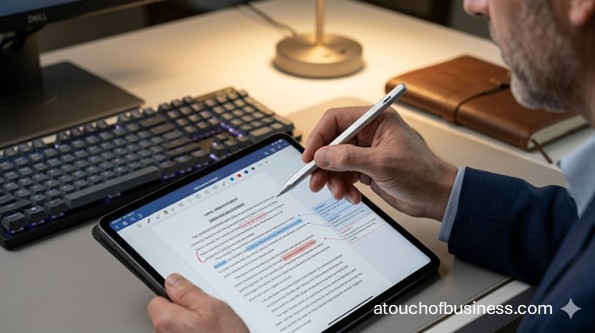
Starting a Proofreading Business Around Client Needs
A proofreading business checks near-final writing for spelling, punctuation, grammar, formatting, consistency, and missed changes. It is not the same as rewriting or deep editing. That difference matters from day one because clients often ask for one service and expect another.
For a home-based launch, this business fits a simple setup. You can work remotely, keep overhead low, and start without inventory. The tradeoff is that your offer has to be clear. A vague promise may sound flexible, but it usually leads to weak pricing, scope creep, and confused clients.
Common customers include authors, self-publishers, students, consultants, small businesses, marketing teams, agencies, nonprofits, and publishers. A proofreading business can handle Word files, PDF proofs, slide text, reports, proposals, and manuscripts. Your niche affects your rates, your pace, and the kind of problems you deal with every day.
That is the first reality check. A proofreading business can be lean to start, but it still depends on trust, deadlines, and accurate work. Fast is useful. Correct is what gets you paid.
Is This Business The Right Fit For You?
Owning any business asks more from you than doing the technical work. A home-based proofreading business may look simple from the outside, but you still have to quote jobs, set boundaries, manage files, invoice clients, track taxes, and keep work separate from home life.
You also need to ask whether proofreading itself fits you. Do you like slow, careful review? Can you stay focused on small errors for long stretches? Can you handle deadlines without rushing past details? Cheap now can turn expensive later if you underprice jobs, skip agreements, or accept work you are not trained to handle.
Passion still matters. If you enjoy language, consistency, and clean documents, that helps. If you only like the idea of working from home, that is not enough. Are you moving toward something or running away from something?
Do not start this business only to escape a bad job, financial pressure, or status anxiety. A proofreading business can give you independence, but it also gives you responsibility. It helps to think through how passion for the work holds up over time, and whether you are prepared for the tough side of ownership.
Before you commit, talk to owners who run proofreading or editorial businesses that will not compete with you. Keep those conversations outside your market. Speak with people in another city, region, or market area so they can be candid without risk.
- Which document types gave you the cleanest start when you were new?
- What part of client onboarding caused the most trouble before you fixed it?
- Which boundary in your service agreement saved you the most time?
- What kind of client was hardest to price correctly at first?
- What would you standardize sooner if you started your proofreading business again?
A proofreading business also works well as a one-person startup, but solo work has limits. Your time is finite, deadlines pile up, and every admin task lands on you. Think honestly about what staying solo really feels like and the tradeoffs that come with running the business from home.
Define The Work
In a proofreading business, the first launch step is deciding what you will and will not do. Proofreading usually means checking near-final text for errors and consistency. It does not usually mean restructuring content, rewriting sentences, or doing a full copyedit.
This step matters because clients often use the wrong word. If you accept a job called proofreading and later discover it needs much deeper editing, the project gets longer, the price changes, and the relationship can sour. Clear now is easier than awkward later.
Write a simple scope statement for your proofreading business. Include what you check, what file types you accept, what you return to the client, and what falls outside the service. That one document will shape your pricing, your contracts, and your daily routine.
Pick A Niche
A proofreading business can serve many kinds of writing, but not all writing should be your first offer. Start by choosing one to three document types that fit your skill level. Business reports, marketing copy, nonfiction manuscripts, academic papers, and technical documents all behave differently.
Niche choice affects pricing, workload, and market fit. Technical material may support stronger rates, but it also expects more subject familiarity. Business and marketing work can be steady, but deadlines may be tighter. Academic work brings different style questions and formatting checks.
At launch, narrow beats broad. A focused offer tells clients what you do well. A general promise to proofread “anything” often sounds convenient, but it can hide weak positioning. That is one reason it helps to review your offer before you launch.
Start with the work you can handle with confidence. A proofreading business built around clear niches is easier to explain, easier to price, and easier to market.
Check Demand In Your Market
A proofreading business does not need a storefront, but it still needs demand. Look at the kinds of clients in your area and online space. Are there self-published authors, consultants, agencies, local nonprofits, graduate students, or business service firms that regularly produce documents?
You are not trying to prove that everyone needs proofreading. You are trying to see whether enough people need your version of proofreading. A business proofreader for consultants and agencies will market differently than a proofreader for academic papers or book manuscripts.
Look for signs of demand before you launch. Search local business directories, LinkedIn profiles, author groups, agency sites, and university writing-related communities. If you want a broader framework for that early check, start with local supply and demand and think about who already buys editorial help.
The goal is not perfect data. The goal is enough evidence to avoid opening with a vague offer and hoping the right clients appear.
Choose Your Name And Structure
Your proofreading business needs a legal identity and a usable brand. Start with the business name. If you want to work under your own legal name, your filing needs may be simpler. If you want a brand name, you may need a DBA, depending on state or local rules.
Then choose the structure. Many home-based proofreaders compare a sole proprietorship with a limited liability company. The right choice depends on taxes, paperwork, risk tolerance, banking, and how you want to present the business. If you need help sorting that out, it helps to look at comparing an LLC and sole proprietorship before you file anything.
Do not leave this step half-done. In a proofreading business, your name appears on agreements, invoices, bank records, and payment platforms. A rough setup can work for a week. It usually becomes expensive later when you have to fix accounts, filings, and client paperwork.
Handle Tax Setup Early
A proofreading business is simple to launch compared with many regulated fields, but tax setup still matters. You may need an Employer Identification Number, even if you are the only owner, because banks, payment processors, and some clients may ask for it.
You also need to plan for federal income tax, self-employment tax, and estimated tax payments if you will owe enough during the year. If you hire employees, the picture changes again because payroll withholding, Form I-9, and state employer accounts come into play.
State tax treatment is not identical everywhere. Sales and use tax on services varies by jurisdiction, so do not assume proofreading is taxable or exempt in every state. Check your state department of revenue and confirm whether your service triggers registration.
Keep this step clean. A small service business can survive with a simple setup. It becomes harder when personal and business records blur together.
Confirm Home-Based Rules
Because this is a home-based proofreading business, your address matters. A low-impact service may still fall under zoning, home-occupation, or local business-license rules. Some places care about customer visits, signs, parking, deliveries, storage, or whether the property is residential-only for business activity.
If no clients will visit your home and all work stays digital, your setup may be easier. If you want in-person meetings, even occasionally, the answer may change. A quiet proofreading business and a home with regular client traffic are not treated the same everywhere.
Check your city or county planning office, zoning department, or business licensing office. Ask direct questions. Can you run a home-based proofreading business at your address? Is a local business license required? Does the locality restrict signs, visits, or dedicated work areas?
Certificate of occupancy is not typically applicable to a low-impact home-based proofreading startup, but local building or use rules can still vary. If your setup changes the use of the property in a material way, confirm it before you spend money.
Build A Clean Workspace
A proofreading business does not need a large office, but it does need a workspace you can trust. You will spend hours reading closely, comparing versions, and catching tiny mistakes. Poor lighting, a weak chair, and constant household interruption can drag down accuracy.
Start with the basics: a reliable computer, strong internet, a second monitor, good task lighting, a desk, and an ergonomic chair. Add backup storage, cloud storage, a password manager, and a stable way to handle video calls or phone calls. If you take sensitive files, think about privacy screens, locked storage, and how family members interact with the space.
Home-based work can blur lines fast. In a proofreading business, file security and focus are part of the service. That is why your office setup is not just about comfort. It is also about confidentiality, organization, and dependable delivery. If you want a broader office checklist, review the office setup basics and scale it to your actual needs.
Choose Your Tools And Workflow
Your proofreading business will run on software and process more than on physical equipment. You need word-processing software that supports tracked changes or comments, PDF markup tools, cloud storage, invoicing software, calendar scheduling, and a simple backup routine.
Also build a repeatable workflow. For example, you may receive an inquiry, review a sample or brief, send a quote, confirm the scope, receive the files, proof the job, deliver marked files, invoice the client, and archive the project. That path should feel ordinary before you open.
Cheap software can cost you later if comments break, formatting shifts, or files do not open cleanly. In a proofreading business, accuracy depends on tool reliability. Fast software that handles files badly is not really fast.
Set up a style sheet template, a client preference sheet, file naming rules, and a delivery checklist. Those small systems protect quality when deadlines get tight.
Create Your Service Packages And Pricing
A proofreading business needs pricing that matches the work. Common methods include per word, per page, per hour, and flat minimum project fees. Your best choice depends on the document type, file condition, turnaround time, and how predictable the scope is.
Industry rate surveys show that proofreading rates vary by niche and by how the work is quoted. Business and marketing proofreading, academic proofreading, nonfiction proofreading, and technical proofreading do not always price the same way. That is why a proofreading business should decide early which kinds of documents it wants most.
Do not copy another proofreader’s numbers without context. A short, messy file with urgent turnaround may deserve a higher rate than a longer but clean document. If you need help thinking through the structure, start with setting your prices in a way that matches your offer, not just your hopes.
Set a minimum fee before launch. Small jobs can eat more time than they appear to on paper. Also decide how you will handle rush work. A proofreading business with no rush policy often ends up underpaid and overcommitted.
Put Agreements And Client Onboarding In Place
This is where many proofreading businesses either look professional or look improvised. Your client paperwork should explain what is included, what is not included, the deadline, the file format, the revision terms, and how payment works.
Keep onboarding practical. You need a quote template, a service agreement, an instructions form, a file-delivery checklist, and an invoice template. You may also want a minimum-fee policy, a rush policy, and a note about how you handle confidential material.
A vague agreement feels friendly at first. It often becomes expensive later. In a proofreading business, most early friction comes from unclear scope, shifting deadlines, missing files, or assumptions about how much editing is included. Strong paperwork is not cold. It is clear.
Set Up Banking And Payments
Do not process business transactions through your personal account once revenue comes in. Open a business checking account when you are ready to accept payments and track expenses. That gives you cleaner records for taxes, easier bookkeeping, and a more professional payment process.
Then decide how you want clients to pay. Some proofreaders invoice and accept bank transfer. Others use card payments through a processor or platform. The right choice depends on your customer type, fees, speed, and how polished you want the payment experience to feel.
It helps to think through getting your business banking in place before you start invoicing. If you expect card payments, also think about taking card payments without a full merchant setup if that is enough for your first stage.
In a home-based proofreading business, clean banking is one of the easiest ways to separate work from personal life. That separation matters more than many new owners expect.
Build Your Digital Footprint
Before a client sends you a manuscript, report, or proposal, they want to know you are careful, responsive, and real. Your first digital footprint does not need to be large, but it does need to be clear.
Start with a business name, domain, branded email address, basic website or landing page, and a short explanation of what you proofread. Add simple proof assets such as a niche statement, a clean service page, turnaround details, and a small set of sample documents if you can share them ethically.
You can also prepare a few brand identity basics such as an email signature, invoice design, and proposal layout. In a proofreading business, those details reinforce the message that you pay attention. Sloppy branding does not ruin a launch, but it can quietly weaken trust.
Decide Whether To Stay Solo At Launch
Most home-based proofreading businesses start with one owner, and that is usually the simplest way to open. It keeps overhead low, avoids early payroll rules, and lets you refine your process before adding complexity.
If you think you may hire quickly, pause and ask why. Are you seeing real demand, or are you assuming growth? If you hire employees, the legal side changes. You may need payroll setup, employment tax accounts, workers’ compensation, unemployment insurance, and Form I-9 compliance.
For many new proofreading businesses, the better choice is to stay solo until the work pattern is stable. More people can solve a capacity problem. More people can also create a paperwork problem you did not need yet.
Test Everything Before You Open
A proofreading business should run a full test cycle before accepting public work. Send yourself an inquiry, review a sample document, create a quote, sign a mock agreement, proof a file in Word and PDF, send the finished work, issue an invoice, and record the payment.
This step shows where your weak points are. Maybe your file naming makes version control confusing. Maybe your PDF markup is not as clean as you thought. Maybe your invoice terms are missing. Fix that now, not on a client deadline.
Think of this as your soft opening. A quiet test is cheaper than a public stumble. You are trying to make the first paid job feel routine, not dramatic.
What Daily Work Looks Like
A home-based proofreading business is simple in structure but detailed in daily work. One day might start with a business report, move into a PDF proof for a nonprofit brochure, and end with invoice follow-up and file archiving. The work is not only about reading. It is also about communication, timing, file handling, and document control.
Early owner responsibilities usually include answering inquiries, reviewing sample pages, setting expectations, proofreading files, checking formatting, returning clean documents, invoicing, tracking expenses, and keeping backups. That mix helps you judge whether you actually like the business, not just the idea of it.
If you enjoy quiet, focused work and clear standards, a proofreading business can fit well. If you hate detailed review, file organization, and deadline pressure, the problem is not the market. The problem is fit.
Startup Cost Planning
A home-based proofreading business usually avoids the large startup costs tied to inventory, build-out, or vehicles. Your bigger cost drivers are equipment, software, legal setup, local filing fees, website basics, insurance, and whether you already own a capable computer and monitor.
There is no universal startup-cost number that fits every proofreading business. Costs change based on your structure, your tools, your niche, and your location. A lean launch can be low by comparison with many service businesses, but low cost does not mean no planning.
List your must-have spending first. That usually includes your computer setup, internet, software, domain, business email, banking, and any filing fees that apply. Then list optional spending such as a stronger website, extra reference tools, privacy equipment, or paid help from an accountant or attorney.
If you need outside funding, start small. Many proofreaders can bootstrap the launch. If you do look at outside funding, compare the cost of borrowing against the modest capital needs of the business. Debt can speed a launch. It can also add pressure that a home-based service business did not need.
Pricing And Revenue Planning
A proofreading business should set prices with real conditions in mind, not with a number that merely sounds professional. Rates change with file quality, document type, speed, and complexity. A clean manuscript and a rushed corporate report are not the same job.
Industry references show proofreading may be billed per word, per hour, or per page, and that some niches command stronger rates than others. That gives you a useful frame, but it does not replace your own judgment. Your pricing still needs to match the actual work you want to attract.
Build a simple revenue plan before you open. How many jobs per week would make the business workable? What is your average minimum invoice? How many hours can you really proof without accuracy slipping? If you need help framing that question, think in terms of estimating profit before launch instead of guessing from optimism.
In a proofreading business, underpricing often shows up before low demand does. The work may be there. The problem may be that you accepted it for too little.
Legal And Risk Planning
A proofreading business is not license-intensive at the industry level, but it still needs a clean legal start. That means choosing a structure, registering the business when required, getting an Employer Identification Number if needed, checking state tax rules, and confirming local business-license and home-occupation requirements.
Insurance is also worth thinking through, even when the law does not force much at launch. A solo proofreader without employees may not face many legally required insurance rules, but that does not remove risk. Client disputes, data loss, or home-business questions can still cost time and money. If you are unsure what coverage fits, start with the basics of business insurance and then speak with a licensed insurance professional in your state.
Keep jurisdiction questions short and direct. Ask your Secretary of State about structure and registration. Ask your state department of revenue about tax registration and whether services are taxable. Ask your city or county planning office whether your address can support a home-based proofreading business. Ask your local licensing office whether a business license is required.
That approach keeps your startup grounded in actual rules instead of assumptions.
Suppliers And Vendors
A proofreading business usually does not rely on product suppliers, but it does rely on service vendors. Your important launch relationships may include a domain registrar, email provider, cloud storage company, invoicing platform, payment processor, software providers, and an insurance agent.
You may also use style guides, dictionaries, and reference materials tied to your niche. If you work with sensitive files, choose vendors with dependable security practices and clear account controls. If you plan to use subcontractors later, that is a separate decision and should come after your core workflow is stable.
Keep the vendor list simple at launch. Too many tools can slow you down. Too few can leave gaps in security, billing, or delivery. In a proofreading business, the best early stack is usually the one you can operate consistently.
Name, Brand, And Trust Signals
Your proofreading business does not need flashy branding, but it does need clear trust signals. Clients want to know what you proofread, how you work, how you communicate, and whether you handle files responsibly.
Useful early trust signals include a professional email address, a clear website, a focused niche statement, sample work you can share ethically, strong response time, and documents that look polished. Even small details matter here. A clean quote, a readable agreement, and a consistent invoice all support the message that your work is careful.
If you want more structure around those basics, think about simple brand identity materials that make the business look organized without turning the launch into a design project.
Plan Your First Marketing Moves
A proofreading business does not need a complicated marketing plan to open, but it does need a practical one. Start with the channels that fit your niche. That might mean a website, LinkedIn profile, author communities, local business groups, university-adjacent networks, or direct outreach to agencies and consultants.
Your message should answer a few simple questions. What do you proofread? Who is it for? What file types do you handle? How do clients send work? What should they expect back? A clear offer beats a clever slogan.
Keep the first marketing plan small enough to manage. Pick a few actions you can repeat every week. Update your site, share useful examples, ask happy early clients for referrals, and stay visible where your target clients already spend time. In a proofreading business, steady relevance usually works better than broad noise.
Red Flags Before Launch
Some problems in a proofreading business show up early if you know where to look. Pay attention before they turn into expensive lessons.
- You cannot explain the difference between proofreading and copyediting in plain language.
- You have no minimum fee and no rush policy.
- You plan to serve every type of client from day one.
- You have not checked zoning or local business-license rules for your home address.
- You are using personal banking, personal email, and loose file storage for business work.
- You want to take specialized legal or medical material without subject familiarity.
- You have not tested your workflow from quote to payment.
Any one of these can slow a launch. Several together usually mean the business is not ready yet.
Pre-Opening Checklist
Before your proofreading business goes live, make sure the launch basics are actually in place. You want the first real client to feel like a normal job, not a rehearsal.
- Your service scope is written clearly.
- Your niche and target client types are defined.
- Your business name and legal structure are chosen.
- DBA or entity filings are complete if required.
- Your Employer Identification Number is set up if needed.
- State tax registration is complete if your state requires it.
- Local home-occupation, zoning, and business-license questions are answered.
- Your workspace, internet, software, and backup system are working.
- Your quote template, agreement, instructions form, and invoice template are ready.
- Your minimum fee, turnaround terms, and rush policy are set.
- Your business bank account and payment method are tested.
- Your website, email address, and basic trust signals are live.
- Your file naming, storage, and delivery process are standardized.
- You have completed a full test job from inquiry through payment.
- If you will hire employees, payroll and employment compliance are ready before day one.
When that list is done, your proofreading business is in a much better position to open with confidence.
FAQs
Question: Do I need a license to start a proofreading business from home?
Answer: Maybe. A proofreading business is usually not licensed as a profession, but your city or county may still require a local business license or home-occupation approval.
Question: Can I run a proofreading business from my house legally?
Answer: Often yes, but local zoning and home-occupation rules still apply. Check whether your address allows business use, client visits, signs, or extra deliveries.
Question: Should I start as a sole proprietor or form an LLC for a proofreading business?
Answer: Many owners compare a sole proprietorship with a limited liability company. The best choice depends on liability, taxes, paperwork, and how you want to set up banking and contracts.
Question: Do I need an Employer Identification Number for a proofreading business?
Answer: Not always, but it is often useful even for a one-person business. Banks, payment processors, and some clients may ask for it.
Question: Is proofreading the same as copyediting when I set up my services?
Answer: No. Proofreading is usually the final check for errors and formatting, while copyediting goes deeper into wording, clarity, and structure.
Question: What equipment do I need to open a proofreading business?
Answer: Start with a reliable computer, strong internet, a second monitor, word-processing software, PDF markup tools, cloud storage, and invoicing software. A quiet workspace and a backup system also matter.
Question: How much does it cost to start a proofreading business?
Answer: There is no single national number. Your main cost drivers are your computer setup, software, business filings, website, insurance, and whether you already own the basic equipment.
Question: How should I price proofreading services when I first open?
Answer: Common methods are per word, per page, per hour, and a flat minimum fee. Your price should reflect document type, file condition, turnaround time, and how much work is really needed.
Question: Do I need business insurance for a proofreading business?
Answer: A solo owner may not have much insurance that is legally required at launch, but coverage can still help with risk. If you hire employees, state rules may require workers’ compensation or other coverage.
Question: What are the biggest startup mistakes in a proofreading business?
Answer: Common problems are vague service scope, weak pricing, poor contracts, and trying to serve every type of client at once. Another big one is mixing personal and business records from day one.
Question: What should my daily workflow look like when I first open?
Answer: A simple flow is inquiry, sample review, quote, agreement, file receipt, proofreading, delivery, invoice, and archive. Keep each step clear so jobs do not drift or get lost.
Question: What systems should I have in place before my first proofreading client?
Answer: Have a quote template, service agreement, instructions form, invoice, file naming rules, and a delivery checklist ready. Those systems make the first month calmer and reduce avoidable errors.
Question: How do I handle cash flow in the first month of a proofreading business?
Answer: Keep startup costs lean and know your minimum project fee before launch. Slow pay can happen early, so separate business banking and a basic cash reserve help.
Question: What marketing should I do first for a new proofreading business?
Answer: Start with a clear website or landing page, a professional email address, and a focused offer. Then show up where your target clients already are, such as LinkedIn, author groups, agencies, or local business networks.
Question: Should I hire help right away in a proofreading business?
Answer: Usually not. Most proofreading businesses open as one-person operations because that keeps costs, payroll, and legal setup simpler.
Question: When should I use a contract with proofreading clients?
Answer: Use one before the job starts. It should define the scope, deadline, file format, payment terms, and what is outside the service.
Question: What should I test before I officially open my proofreading business?
Answer: Run a full practice job from inquiry through payment. Test Word files, PDF markup, delivery steps, invoicing, and backup so the first real project feels routine.
51 Tips to Strengthen Your Startup Plan for a Proofreading Business
Starting a proofreading business looks simple from the outside, but the best launches are built on clear choices.
These tips walk through the early decisions that shape your offer, your setup, your pricing, and your opening readiness.
Use them to tighten your startup plan before you take your first paying client.
Before You Commit
1. Decide whether you want to own a business or only do proofreading work. Running a proofreading business also means quoting jobs, setting boundaries, invoicing, tracking records, and handling tax paperwork.
2. Be honest about your patience for detail. A proofreading business rewards careful review, not fast guessing, and small errors can damage trust early.
3. Choose a document niche before you buy tools or build a website. Business reports, academic papers, nonfiction manuscripts, and technical files all need different knowledge and support different pricing.
4. Separate proofreading from copyediting in your own mind first. If you cannot explain the difference clearly, clients will expect more work than you planned to deliver.
5. Test your pressure tolerance before launch. Tight deadlines and version changes are common, so calm accuracy matters more than working at top speed.
6. Talk only to owners you will not compete against. Find proofreading or editorial business owners in another city, region, or market area and ask what they wish they had standardized before opening.
7. Write down why you want this business. A clear reason helps more than vague excitement when you start facing pricing decisions, local rules, and startup costs.
Demand And Profit Validation
8. Check who already pays for proofreading in your target market. Look for authors, consultants, agencies, nonprofits, graduate students, and small businesses that publish or submit polished documents.
9. Match your niche to real demand, not just personal preference. A niche you enjoy but cannot find buyers for will slow the launch.
10. Study the kinds of files your target clients use most. A proofreading business built around Word files may need a different setup than one built around PDF proofs or slide decks.
11. Look at the pace of each niche before you commit. A steady lane with moderate rates can be safer at launch than chasing rush work with unclear standards.
12. Estimate how many jobs you need each month to cover your basic costs. This helps you see whether your pricing and workload expectations fit real life.
13. Set a minimum project fee early. Small proofreading jobs can take more time than they appear to, especially when file review, email, billing, and delivery are included.
14. Compare fast work with correct work when you assess opportunity. Cheap now versus expensive later is a real tradeoff if you take rushed, underpriced jobs that create errors or disputes.
Business Model And Scale Decisions
15. Keep your first service list narrow. A simple offer is easier to explain, easier to price, and easier to protect with a clear agreement.
16. Decide whether your proofreading business will stay fully remote. If clients will never visit your home, your local compliance and privacy setup may be simpler.
17. Choose whether you will accept only near-final documents. This protects you from being pulled into rewriting work that belongs under a different service.
18. Decide which file types you will handle before launch. Saying yes to every format can create avoidable delays if your software or workflow is not ready.
19. Plan for a one-person launch unless there is a strong reason not to. Staying solo at first usually keeps payroll, training, and compliance easier to manage.
20. Build your offer around deliverables, not vague promises. Clients should know whether they will receive tracked changes, comments, marked PDFs, a clean copy, or all of the above.
Legal And Compliance Setup
21. Choose your legal structure before opening business accounts. Many first-time owners compare a sole proprietorship with a limited liability company because the choice affects taxes, paperwork, and risk separation.
22. Check whether your business name needs a DBA filing. If you use a brand name instead of your legal name or entity name, you may need an assumed-name filing depending on location.
23. Apply for an Employer Identification Number if it fits your setup. Even solo owners often find it useful for banking, vendor accounts, and client paperwork.
24. Confirm state tax registration rules before launch. Sales and use tax on services varies by jurisdiction, so do not assume proofreading is treated the same everywhere.
25. Ask your city or county whether a local business license is required for a home-based proofreading business. A low-impact service can still trigger local registration rules.
26. Verify home-occupation and zoning rules for your address. Ask about client visits, signs, parking, deliveries, and any limits on using your home for business.
27. Do not wait until after launch to ask local questions. It is easier to confirm the rules now than to reopen accounts, change your setup, or stop taking work later.
Budget, Funding, And Financial Setup
28. List your must-have startup costs first. For a proofreading business, that usually means computer equipment, internet, software, business filings, banking, and a basic web presence.
29. Treat tools you already own as part of the plan, not as free equipment. If your laptop is slow or your monitor is too small, you may still need upgrades before opening.
30. Build your budget around real cost drivers. Structure choice, software subscriptions, insurance, website setup, and local filings can change the total more than new owners expect.
31. Keep fixed costs lean at launch. A proofreading business usually does not need large debt or expensive office extras to open well.
32. Open a business checking account before the first payment arrives. Clean records are easier from the start than trying to sort out personal and business transactions later.
33. Choose your payment method before you announce the business. Bank transfer, invoice platforms, and card processing all affect fees, client convenience, and cash flow timing.
34. Use outside funding only if it solves a real startup need. Borrowing for a lean home-based proofreading business should be the exception, not the default.
Location, Equipment, And Workflow Setup
35. Set up a dedicated work area, even if it is small. A proofreading business depends on focus, and household traffic can reduce accuracy faster than you think.
36. Use a second monitor if your budget allows it. Side-by-side file review makes proofreading cleaner and helps when you compare versions or check formatting.
37. Choose software that supports the way clients send files. Word comments, tracked changes, and PDF markup are common, so test them before opening.
38. Create a file naming system before the first client project. Clear version labels reduce confusion when documents are updated or returned for review.
39. Set up cloud backup and a local backup method. Lost files can destroy trust fast, especially when a deadline is close.
40. Prepare a proofreading checklist for repeated problem areas. Headings, page numbers, punctuation, numerals, captions, and formatting consistency are easier to catch with a written process.
41. Protect privacy in your home setup. Locked storage, strong passwords, and careful screen use matter if you handle confidential drafts, reports, or manuscripts.
Suppliers, Contracts, And Pre-Opening Setup
42. Keep your vendor list simple. A domain provider, email service, cloud storage, invoicing tool, payment processor, and core editing software are usually enough to open.
43. Build a quote template before you start promoting the business. A proofreading business looks stronger when the estimate clearly states scope, file type, deadline, and deliverables.
44. Use a written service agreement for every job. Clear now versus awkward later is a useful tradeoff to remember when you feel tempted to skip paperwork.
45. Write a short instructions form for new clients. It should ask what kind of proofreading is needed, what style preferences matter, when the file is due, and what final format they want back.
46. Set your rush policy before someone asks for urgent work. Fast can sound attractive, but correct is what protects your reputation when deadlines are tight.
47. Test your full workflow from inquiry to invoice. Run a mock job through your system so your first real client does not become your trial run.
Branding And Pre-Launch Marketing
48. Build your message around the exact work you do. A proofreading business earns trust faster when clients can see who you help, what documents you handle, and what you return.
49. Use a professional email address tied to your business name or domain. It is a small detail, but it supports credibility when clients send important files.
50. Launch with a simple website or landing page instead of waiting for a perfect brand package. Clear services, target clients, file types, and contact details matter more than fancy design at this stage.
Final Pre-Opening Checks And Red Flags
51. Stop the launch if you still have vague scope, weak pricing, no local rule check, and no tested workflow. Those problems rarely stay small once a proofreading business starts taking paid work.
What Working Proofreaders Say About Starting Out
You can save yourself time, money, and frustration by learning from people who already run proofreading or editorial businesses. The resources below give you a more realistic view of startup decisions, early client work, pricing, marketing, and what it takes to turn proofreading skills into a real business.
- How One Woman Started A Proofreading And Editing Business At Home — Sandra Wester shares how she started, found her first client, and what early daily work looked like.
- How A Husband And Wife Turned Proofreading Into A Million Dollar Idea — A founder interview that covers how Caitlin Pyle built a proofreading-based business from skill to scalable offer.
- How I Added $2,000 To My Monthly Income Proofreading Blog Posts — Lenny Bron explains how he built a focused proofreading service around blog content with very low startup costs.
- How A 71-Year-Old Retired Nurse Started Her Successful Transcript Proofreading Business — Janet St. Angelo talks about getting started later in life, overcoming fear, and building a niche proofreading business from home.
- This Freelance Proofreader Got Her First Client On Day 1 — A startup story that highlights first-client marketing, competition, and the importance of standing out early.
- Q&A With Louise: How Do I Become A Freelance Proofreader? — A practical Q&A on setting up a proofreading business, getting paid, tracking time, pricing, and finding assignments.
Related Articles
- How To Start an Editing Business
- How To Start a Copywriting Business
- How To Start Your Desktop Publishing Business
- Start a Public Speaking Business
- How To Start Ghostwriting Service
- Start a Translation Agency
- How To Start a Resume Writing Business
- How To Start Business Plan Writing Service
- How To Start a Grant Writing Business
- How To Start Your Children’s Book Publishing Business
- How To Start Your Language School
- Start a Successful Medical Transcription Business
Sources:
- SBA: Choose Business Structure, Choose Your Business Name, Register Your Business, Federal State Tax ID Numbers, Apply Licenses Permits, Pick Your Business Location, Open Business Bank Account, Get Business Insurance, Calculate Your Startup Costs, Fund Your Business, Hire Manage Employees
- IRS: Get Employer Identification Number, Self Employed Individuals Tax
- Editorial Freelancers Association: Editorial Service Definitions, Editorial Rates, 2023 EFA Rates Survey
- USCIS: I-9 Employment Eligibility
- BLS: Editors Occupational Outlook